Our readers keep the lights on and my smoothie glass nicely filled. As an Amazon Associate, I earn from qualifying purchases.
Wireless transfer, remote control, and instant social sharing are no longer optional extras on a modern camera — they define how you actually use it after the shot. A camera equipped with both Bluetooth and WiFi gives you the freedom to back up images on the go, control the shutter from your phone, and beam full-resolution files to your editing queue without touching a single cable.
I’m Mohammad Maruf — the founder and writer behind WellFizz. I sink hundreds of hours into dissecting market data, cross-referencing real owner experiences, and comparing technical sheets to find which connected cameras actually deliver on their wireless promises without frustrating app crashes or slow transfer speeds.
After analyzing eleven models spanning pocket-friendly compacts to full-frame powerhouses, the best digital camera with bluetooth and wifi is the one that pairs reliable wireless performance with image quality that still makes the cable-free convenience worth it.
How To Choose The Best Digital Camera With Bluetooth And WiFi
Wireless connectivity is only half the story. The best connected camera must also deliver strong image quality, responsive autofocus, and a lens system that matches how you shoot. Here are the key considerations to weigh before buying.
Sensor Size and Image Quality
Sensor size directly determines low-light performance, dynamic range, and depth-of-field control. APS-C and Micro Four Thirds sensors offer excellent image quality in compact bodies, while full-frame sensors deliver the highest detail and widest dynamic range. For most users, a 20-24MP APS-C or MFT sensor provides the best balance of portability and wireless-ready performance.
Autofocus and Wireless Control
Pairing your camera with a phone via Bluetooth enables remote shutter release and geotagging, but you need a camera with fast, reliable autofocus — especially if you shoot moving subjects. Phase-detection AF systems like Canon Dual Pixel CMOS AF or Sony Real-time Tracking make remote-controlled shooting much more predictable.
Video Capabilities and File Transfer
If you plan to shoot 4K video and share clips wirelessly, look for cameras that offer 4K at 30fps or higher and a companion app with stable WiFi transfer speeds. Built-in Bluetooth maintains a low-power connection, while WiFi handles the heavy lifting of moving large files to your phone or cloud storage.
Quick Comparison
On smaller screens, swipe sideways to see the full table.
| Model | Category | Best For | Key Spec | Amazon |
|---|---|---|---|---|
| Canon EOS R50 | Mirrorless | Vlogging & Beginners | 24.2MP APS-C + 4K 30fps | Amazon |
| Canon EOS R10 | Mirrorless | Action & Travel | 23fps e-shutter + 4K 60p | Amazon |
| Sony Alpha a6400 | Mirrorless | Fast AF & Stills | 0.02s AF + Real-time Tracking | Amazon |
| Panasonic LUMIX S9 | Full-Frame | Social Media & Travel | Full-Frame + Open Gate | Amazon |
| OM SYSTEM E-M10 IV | Mirrorless | Everyday Carry | 20MP MFT + 5-Axis IBIS | Amazon |
| Panasonic LUMIX G85 | Mirrorless | Stabilization & Value | 16MP MFT + Dual IS | Amazon |
| Sony RX100 VII | Compact | Pocketable Travel | 1″ Stacked CMOS + 24-200mm | Amazon |
| Canon EOS R100 | Mirrorless | Entry-Level Mirrorless | 24.1MP APS-C + 4K 24fps | Amazon |
| Nikon COOLPIX P950 | Bridge | Superzoom & Wildlife | 83x Optical Zoom + 4K | Amazon |
| Canon EOS M100 | Mirrorless | Smartphone Upgraders | 24.2MP APS-C + Bluetooth | Amazon |
| Canon EOS R100 Bundle | Mirrorless | Starter Kit Value | Bundle w/ 64GB + Bag | Amazon |
In‑Depth Reviews
1. Canon EOS R50
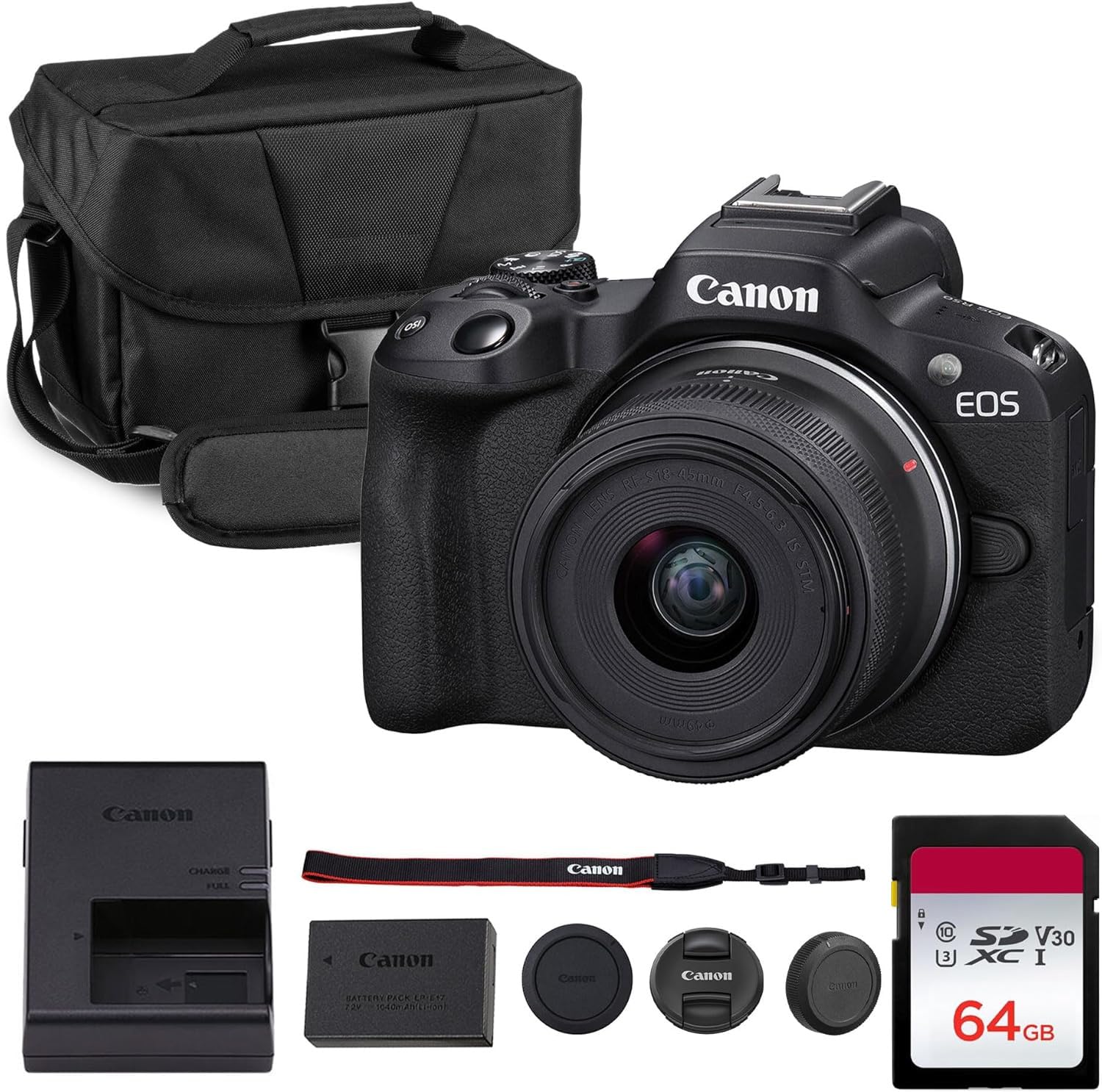
The Canon EOS R50 strikes the hardest-to-beat balance of wireless features, image quality, and beginner-friendly design in today’s mirrorless market. Its 24.2MP APS-C sensor paired with the DIGIC X processor delivers oversampled 4K video and clean stills that rival cameras costing significantly more, while the included RF-S 18-45mm lens covers the essential wide-to-portrait range right out of the box.
Dual Pixel CMOS AF II provides near-instant phase-detection autofocus across the frame, with reliable face and eye tracking for both humans and animals. The vari-angle touchscreen flips out for vlogging or low-angle work, and Creative Assist mode offers in-camera guides that help beginners understand exposure and color adjustments without guessing. WiFi and Bluetooth connect reliably to the Canon Camera Connect app for remote control and wireless image transfer.
The kit lens is adequate for general use, but upgrading to a prime like the RF 50mm f/1.8 dramatically improves sharpness and low-light capability. Battery life holds up for a full day of casual shooting, and the lightweight body makes it easy to bring everywhere. For most users upgrading from a phone or older point-and-shoot, the R50 is the clear winner.
Why it’s great
- Fast, reliable Dual Pixel AF II with eye tracking
- Oversampled 4K video with great detail
- Compact body with vari-angle touchscreen
Good to know
- Kit lens is decent but not exceptional
- Single UHS-I SD card slot
2. Canon EOS R10
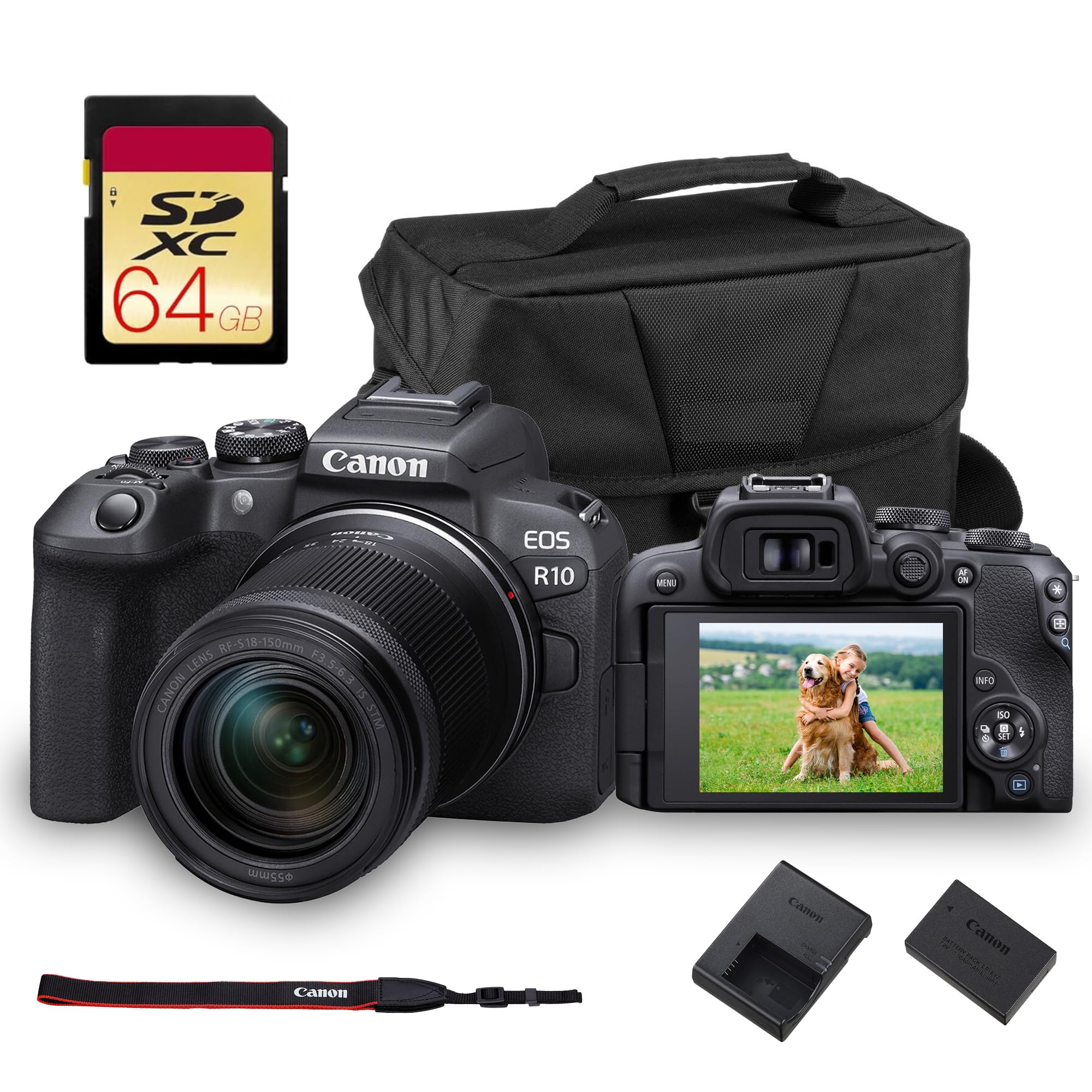
The Canon EOS R10 takes everything the R50 does well and pushes the speed ceiling higher, making it the top choice for parents, sports shooters, and anyone who regularly captures motion. At 23 frames per second with the electronic shutter and 15 fps mechanical, you never miss a peak moment, and the Dual Pixel CMOS AF II tracks subjects across the entire frame with sticky precision.
The bundled RF-S 18-150mm lens is the standout feature of this kit: it replaces the need for two separate lenses by covering wide-angle landscapes all the way to 240mm equivalent telephoto reach. This single-lens versatility makes it ideal for travel where swapping glass mid-hike isn’t practical. 4K 60p oversampled from 6K delivers gorgeous video with smooth motion. WiFi and Bluetooth integration with Canon Camera Connect works flawlessly for remote shooting and file transfer.
The camera body is very compact given its speed, with a deep grip that feels secure even with larger lenses. The shoulder bag included in this bundle is basic but functional for daily carry. The only real trade-off is the single SD card slot and no in-body stabilization — you rely on lens-based IS for smooth handheld video.
Why it’s great
- Blazing 23fps electronic shutter with AF tracking
- Versatile 18-150mm lens covers wide to telephoto
- Oversampled 4K 60p video quality
Good to know
- No in-body image stabilization
- Single SD card slot only
3. Sony Alpha a6400

The Sony a6400 remains a benchmark for mirrorless autofocus speed, locking onto subjects in just 0.02 seconds with Real-time Eye AF and object tracking that can keep a moving subject in focus even as it leaves and re-enters the frame. The 24.2MP APS-C Exmor sensor with front-end LSI delivers excellent dynamic range and clean images up to ISO 51200.
4K video is oversampled from the full sensor width with no pixel binning, producing sharp footage with very good rolling shutter control. The 180-degree tilting touchscreen makes the a6400 a solid selfie and vlogging camera, and the microphone jack supports external audio. WiFi and NFC are onboard for quick file transfer to Sony’s Imaging Edge app, though the app experience is less polished than Canon’s.
The included E PZ 16-50mm power zoom lens is very compact, making this setup one of the most portable APS-C kits available. Battery life is decent for stills but drains faster during video recording, so carrying spare batteries is recommended for full-day shoots. The menu system still feels dense compared to Canon’s intuitive layout, but the speed performance is undeniable once you learn the controls.
Why it’s great
- Industry-leading 0.02s autofocus speed
- Real-time Eye AF for humans and animals
- Oversampled 4K from full sensor width
Good to know
- Menu system is complex for beginners
- Battery life drops significantly during video
4. Panasonic LUMIX S9

The Panasonic LUMIX S9 redefines what a full-frame connected camera can be by packing the L-mount sensor into a body that slips into a jacket pocket with the compact S 18-40mm lens attached. The full-frame sensor delivers professional-grade dynamic range and low-light performance that APS-C cameras simply can’t match, while Open Gate recording allows you to shoot in one aspect ratio and reframe vertically for social platforms later.
LUMIX Lab enables ultra-fast WiFi transfer to your phone — the app works seamlessly to push full-resolution photos into your camera roll for immediate editing and sharing. The in-body 5-axis stabilization keeps handheld shots steady even in challenging light, and the internal microphone performs better than most mirrorless cameras in this class. The camera records 4K 30fps without overheating issues even during extended takes.
There is no hotshoe or built-in flash, which limits the ability to use external lighting or triggers. The camera also lacks an electronic viewfinder, relying entirely on the LCD screen for composition, which can be challenging in bright sunlight. The L-mount lens ecosystem is still growing and carries a premium price compared to Micro Four Thirds or APS-C systems.
Why it’s great
- Incredibly compact full-frame body
- LUMIX Lab app for fast WiFi transfer
- Excellent IBIS for handheld shooting
Good to know
- No hotshoe or built-in flash
- No electronic viewfinder
5. OM SYSTEM Olympus E-M10 Mark IV

OM SYSTEM’s E-M10 Mark IV packs 5-axis in-body image stabilization into one of the smallest interchangeable-lens camera bodies available, delivering four-stop compensation even with non-stabilized lenses. The 20MP Micro Four Thirds sensor produces excellent image quality for its size, and the 14-42mm EZ pancake lens collapses to make the whole setup pocketable with a jacket.
The flip-down monitor activates a dedicated selfie mode automatically, making this camera very friendly for content creators who shoot themselves. Bluetooth maintains an always-on connection to the OI Share app for geotagging and background transfer, while WiFi handles full-resolution file transfers. The 121-point contrast-detect autofocus is snappy in good light, though it can hunt in very dim conditions. 4K video is solid but lacks the oversampling found on newer competitors.
The camera uses a unique metal body design that feels more premium than its price suggests, and the massive library of Micro Four Thirds lenses offers incredible flexibility for future upgrades. No external charger is included — you charge the battery inside the camera via USB — and the app connection speed is slower than Canon or Sony alternatives.
Why it’s great
- Exceptional 5-axis IBIS in a compact body
- Flip-down screen with auto selfie mode
- Massive lens library available
Good to know
- No external charger included
- App transfer speed is slower than competitors
6. Panasonic LUMIX G85

The Panasonic LUMIX G85 pairs its 16MP Micro Four Thirds sensor with class-leading 5-axis in-body stabilization that works in concert with the lens-based Power O.I.S. to produce virtually tripod-like handheld footage even in 4K. The no-low-pass-filter design delivers noticeably sharper images than typical 16MP sensors, with excellent detail resolution for prints and crops.
The included 12-60mm Power O.I.S. lens provides a versatile 24-120mm equivalent range with solid optical quality throughout the zoom span. The weather-sealed magnesium alloy body feels robust and inspires confidence in damp or dusty conditions. The OLED viewfinder and articulating touchscreen offer excellent visibility for shooting at any angle, and the camera supports 4K Photo mode for extracting 8MP stills from video at 30fps.
The 49-point contrast-detect autofocus system can feel sluggish in low light compared to phase-detection alternatives, and the battery life is modest at around 330 shots per charge. WiFi functionality works reliably for image transfer and remote control, though the app interface feels dated compared to modern implementations.
Why it’s great
- Outstanding Dual I.S. for handheld video
- Weather-sealed magnesium alloy build
- Sharp kit lens with versatile zoom range
Good to know
- Low-light autofocus can be slow
- Battery life is below average
7. Sony RX100 VII
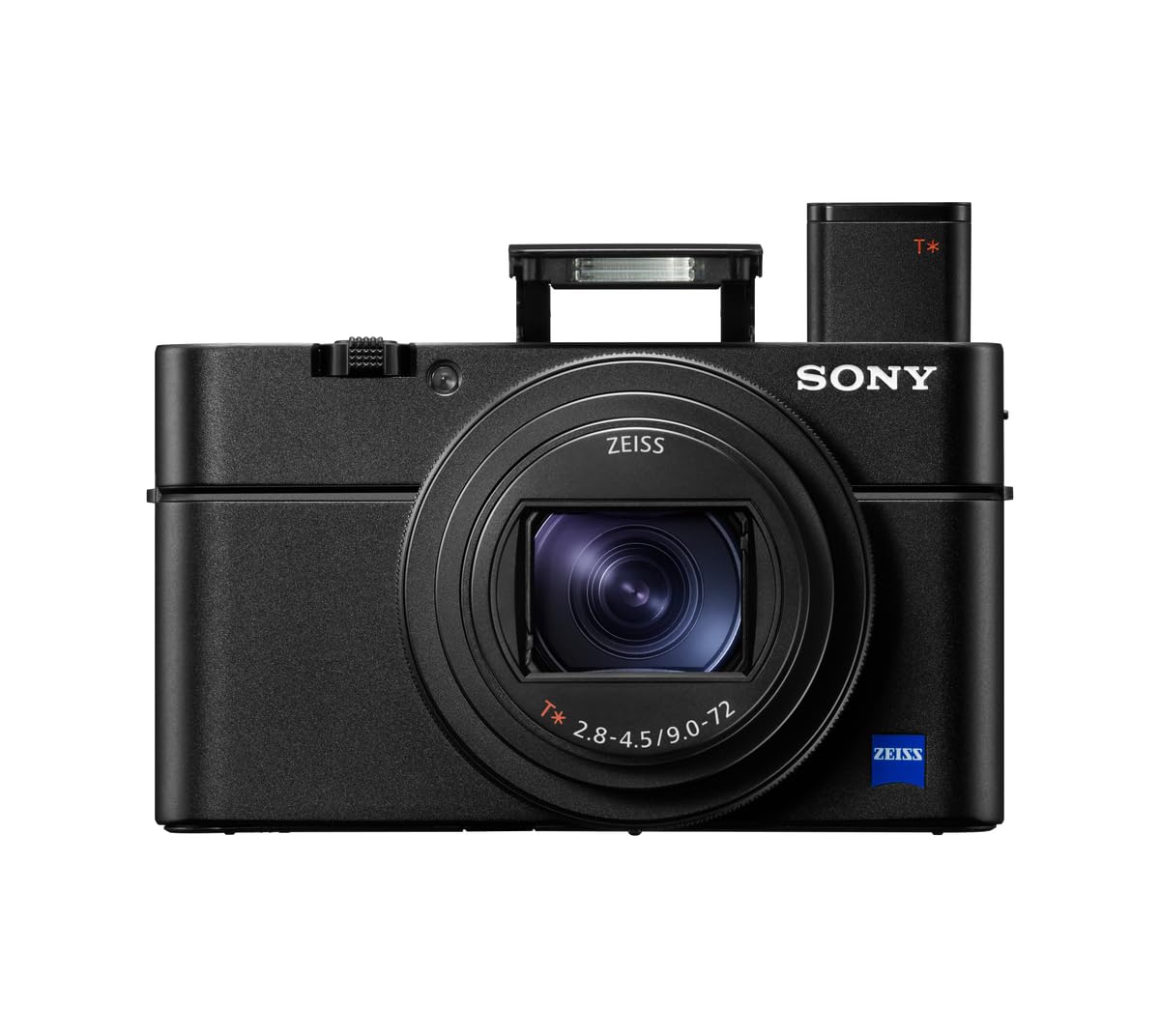
The Sony RX100 VII proves that a camera small enough to slide into a jeans pocket can still deliver excellent image quality and a massive 24-200mm equivalent zoom range. The 20.1MP 1-inch stacked CMOS sensor with DRAM chip enables readout speeds fast enough for blackout-free continuous shooting at 20fps with full AF/AE tracking, performance that rivals much larger cameras.
The Zeiss Vario-Sonnar T* lens maintains f/2.8 at 24mm and only stops to f/4.5 at 200mm, making it quite bright for a superzoom compact. Real-time Eye AF works for both humans and animals during stills, and the 357-point phase-detection system covers nearly the entire sensor area. 4K video includes S-Log3 and a microphone jack, making it a capable vlogging tool despite its tiny size. WiFi and NFC are baked in for quick transfers.
The RX100 VII commands a premium price that approaches mid-range mirrorless cameras, so you’re paying for pocketability over sensor size. The body is also smooth and slightly slippery — adding a grip accessory is recommended, especially with longer focal lengths. The touchscreen is limited to touch-to-focus rather than fully interactive menus.
Why it’s great
- True pocketable form with 24-200mm zoom
- 20fps blackout-free shooting with AF
- Real-time Eye AF and phase-detection
Good to know
- Premium price for a compact camera
- Slippery body needs an additional grip
8. Canon EOS R100

The Canon EOS R100 serves as the most affordable entry point into the RF-mount mirrorless system, pairing a 24.1MP APS-C sensor with the DIGIC 8 processor for clean JPEGs and solid 4K video at 24fps. The RF-S 18-45mm kit lens is small and lightweight, keeping the total package compact enough for daily carry without weighing you down.
Dual Pixel CMOS AF with 143 zones and face/eye detection delivers reliable autofocus for stills, and the camera can shoot continuous bursts at 6.5fps. WiFi and Bluetooth are built in for wireless image transfer and remote control using the Canon Camera Connect app, which works without the compatibility hiccups found on some older cameras. The user interface is beginner-friendly with guided mode suggestions.
The biggest limitation is the lack of a vari-angle touchscreen — the fixed LCD panel makes waist-level or high-angle shooting awkward. 4K video is capped at 24fps with a crop, which limits its appeal for video-first creators. No in-body stabilization means you rely entirely on lens-based IS, and the single SD slot operates at UHS-I speeds.
Why it’s great
- Affordable entry into Canon RF system
- Dual Pixel CMOS AF with eye detection
- Lightweight and compact body design
Good to know
- Fixed screen, no vari-angle
- 4K video is 24fps with crop
9. Nikon COOLPIX P950

The Nikon COOLPIX P950 delivers an insane 83x optical zoom — a 24-2000mm equivalent range — in a single non-interchangeable lens design that wildlife and birding enthusiasts will find transformative. The 16MP 1/2.3-inch CMOS sensor isn’t competitive with larger sensors for low-light performance, but the zoom reach is unmatched by any mirrorless or DSLR lens at anywhere near this price bracket.
4K video recording at 30fps is sharp even at full zoom thanks to the built-in VR image stabilization. WiFi and Bluetooth are onboard for sharing your long-range shots directly to a phone, and the camera features a hotshoe and microphone jack for serious video work. The bundle includes a telephoto lens attachment, UV and polarizing filters, plus a cleaning kit, making it ready for field use immediately.
The sensor size limits image quality in dim light, producing noticeable noise above ISO 800, and the autofocus can hunt for focus at extreme zoom lengths. The camera body is larger and heavier than mirrorless options, but that’s the trade-off for the phenomenal reach. The 171-point contrast-detect autofocus works well in good light but struggles with fast-moving subjects in shaded woodland settings.
Why it’s great
- Unmatched 83x optical zoom capability
- 4K video with VR stabilization at full zoom
- Feature-rich bundle includes telephoto lens
Good to know
- Small sensor struggles in low light
- Body is larger and heavier than mirrorless
10. Canon EOS M100

The Canon EOS M100 is the lightest and most compact APS-C mirrorless camera with wireless connectivity, designed specifically for smartphone users who want dramatically better image quality without a learning curve. The 24.2MP APS-C sensor combines with the DIGIC 7 processor to produce DSLR-quality photos with shallow depth-of-field effects that phones simply cannot replicate.
Built-in WiFi, Bluetooth, and NFC provide multiple wireless transfer options, and the camera interface is fully touch-driven just like a phone screen. The 3-inch tilt-type LCD tilts 180 degrees for selfies, and Dual Pixel CMOS AF delivers fast, reliable autofocus via the touchscreen. The EF-M 15-45mm kit lens collapses down for easy portability.
The M100 lacks 4K video entirely, maxing out at 1080p 60fps, and there’s no hotshoe for external flash or microphone. The EF-M lens mount is a dead-end system with limited native lens options. The interface is designed for simplicity over manual control, so enthusiasts seeking aperture rings and exposure dials will find it frustrating.
Why it’s great
- APS-C sensor in a very compact body
- Full touchscreen interface like a phone
- Fast Dual Pixel CMOS AF with touch focus
Good to know
- No 4K video recording
- EF-M mount has limited lens options
11. Canon EOS R100 Bundle
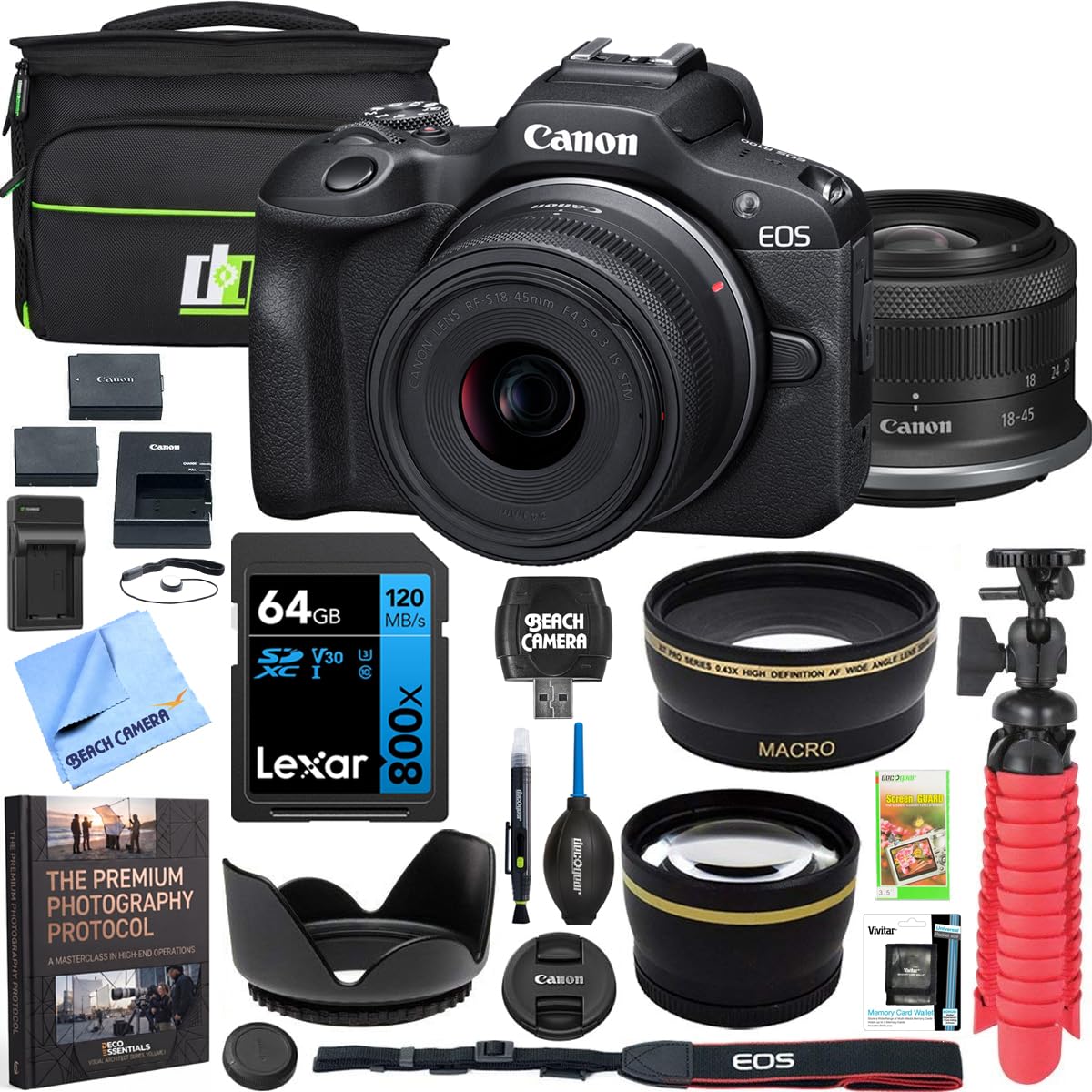
This Canon EOS R100 bundle amplifies the value of the base camera by including a Deco Gear deluxe case, a spare compatible LP-E17 battery, a Lexar 64GB SDXC card, a card reader, a 12-inch tripod grip, and additional lens attachments. For anyone starting fresh with no existing camera accessories, this kit removes the need to hunt down essentials separately.
The core camera remains the same EOS R100: a 24.1MP APS-C sensor with DIGIC 8 processor, Dual Pixel CMOS AF with face and eye detection, 4K video at 24fps, and built-in WiFi and Bluetooth. The RF-S 18-45mm kit lens is included, and the wide-angle and telephoto attachments give beginners room to experiment with different looks without buying additional glass.
The bundle’s tripod grip is basic and may not hold steady for long exposures, and the wide-angle/telephoto attachments affect image quality compared to native lenses. The spare battery is a third-party unit, which may not match the longevity of the genuine Canon LP-E17. Still, for the price of entry, this bundle represents exceptional value for someone wanting a complete starter kit.
Why it’s great
- Everything you need in one box
- Spare battery and 64GB card included
- Great value for first-time buyers
Good to know
- Included tripod grip is basic
- Spare battery is third-party, not OEM
FAQ
Can I transfer RAW files wirelessly from a camera to my phone?
Does Bluetooth drain the camera battery faster when left always on?
How long does it take to transfer a 20MP photo via WiFi?
Can I use a camera’s WiFi for remote live view and shutter control?
Final Thoughts: The Verdict
For most users, the best digital camera with bluetooth and wifi winner is the Canon EOS R50 because it pairs excellent 24.2MP image quality with reliable Dual Pixel AF II and a beginner-friendly interface that includes a vari-angle touchscreen for vlogging. If you need blazing speed for action shots, grab the Canon EOS R10 with its 23fps burst rate and versatile 18-150mm kit lens. And for pocketable superzoom performance that fits in a jacket, nothing beats the Sony RX100 VII.

Mo Maruf
I created WellFizz to bridge the gap between vague wellness advice and actionable solutions. My mission is simple: to decode the research and give you practical tools you can actually use.
Beyond the data, I am a passionate traveler. I believe that stepping away from the screen to explore new environments is essential for mental clarity and physical vitality.