Our readers keep the lights on and my smoothie glass nicely filled. As an Amazon Associate, I earn from qualifying purchases.
Smartphone cameras keep getting better, but they still hit a wall when you need real optical zoom, a dedicated shutter button, or the freedom to shoot without draining your phone’s battery. A dedicated point-and-shoot solves those pain points with a purpose-built lens and sensor in a pocketable body.
I’m Mohammad Maruf — the founder and writer behind WellFizz. I’ve spent hundreds of hours analyzing product specifications, reading verified customer feedback, and comparing real-world performance data to separate marketing hype from genuine value in the compact camera market.
Whether you are chasing wildlife shots from a distance, diving into underwater macro photography, or just want a reliable travel companion that fits in a jacket pocket, this guide to the best digital camera point and shoot options will help you find the right tool for your specific needs.
How To Choose The Best Digital Camera Point And Shoot
Selecting the right compact camera depends on matching its core specs to your primary use case. Start by identifying whether you need extreme zoom reach, rugged durability, or the best possible image quality in a tiny body.
Optical Zoom Range
Optical zoom is the single most differentiating feature between point-and-shoot models. A 5x zoom covers everyday snapshots, while 30x to 83x brings distant subjects like wildlife or stage performers into clear view. Digital zoom crops into the image and degrades quality, so always prioritize optical zoom power.
Sensor Size and Type
The sensor determines how much light the camera captures, directly affecting low-light performance and dynamic range. A 1/2.3-inch CMOS sensor is standard in budget and superzoom cameras. A 1-inch stacked CMOS sensor, found in premium models, delivers significantly better detail and less noise in dim conditions.
Ruggedness and Environmental Sealing
If you shoot near water, in dusty conditions, or in freezing weather, look for a camera with official waterproof, shockproof, and freezeproof ratings. These specifications allow you to use the camera in environments that would destroy a standard compact.
Video Capabilities
4K video recording at 30p is now common, but check for features like microphone input for better audio, image stabilization for smooth handheld footage, and slow-motion modes. These details matter if you plan to use the camera for vlogging or capturing action sequences.
Quick Comparison
On smaller screens, swipe sideways to see the full table.
| Model | Category | Best For | Key Spec | Amazon |
|---|---|---|---|---|
| Sony RX100 VII | Premium | Best overall image quality | 1-inch Stacked CMOS, 24-200mm f/2.8-4.5 | Amazon |
| Panasonic LUMIX ZS99 | Mid-Range | Travel with 30x zoom | 24-720mm LEICA lens, 30x Zoom | Amazon |
| OM System TG-7 | Rugged | Underwater and adventure | Waterproof 15m, Shockproof 2.1m | Amazon |
| Nikon COOLPIX P950 | Superzoom | Extreme telephoto reach | 83x Optical Zoom (24-2000mm eq.) | Amazon |
| Panasonic LUMIX FZ80D | Bridge | Versatile all-in-one zoom | 60x Zoom, 18.1MP, 4K Video | Amazon |
| Canon PowerShot SX740 HS | Compact | Pocketable 40x zoom | 40x Zoom, 20.3MP, 4K UHD | Amazon |
| OM System E-M10 Mark IV | Mirrorless | Interchangeable lens starter | 20MP, 5-Axis IBIS, Selfie Screen | Amazon |
| KODAK PIXPRO FZ55 (Red) | Entry-Level | Beginner-friendly bundle | 16MP, 5x Zoom, 1080p Video | Amazon |
| KODAK PIXPRO FZ55 (Black) | Entry-Level | Budget-friendly compact | 16MP, 5x Zoom, 28mm Wide Angle | Amazon |
In‑Depth Reviews
1. Sony RX100 VII
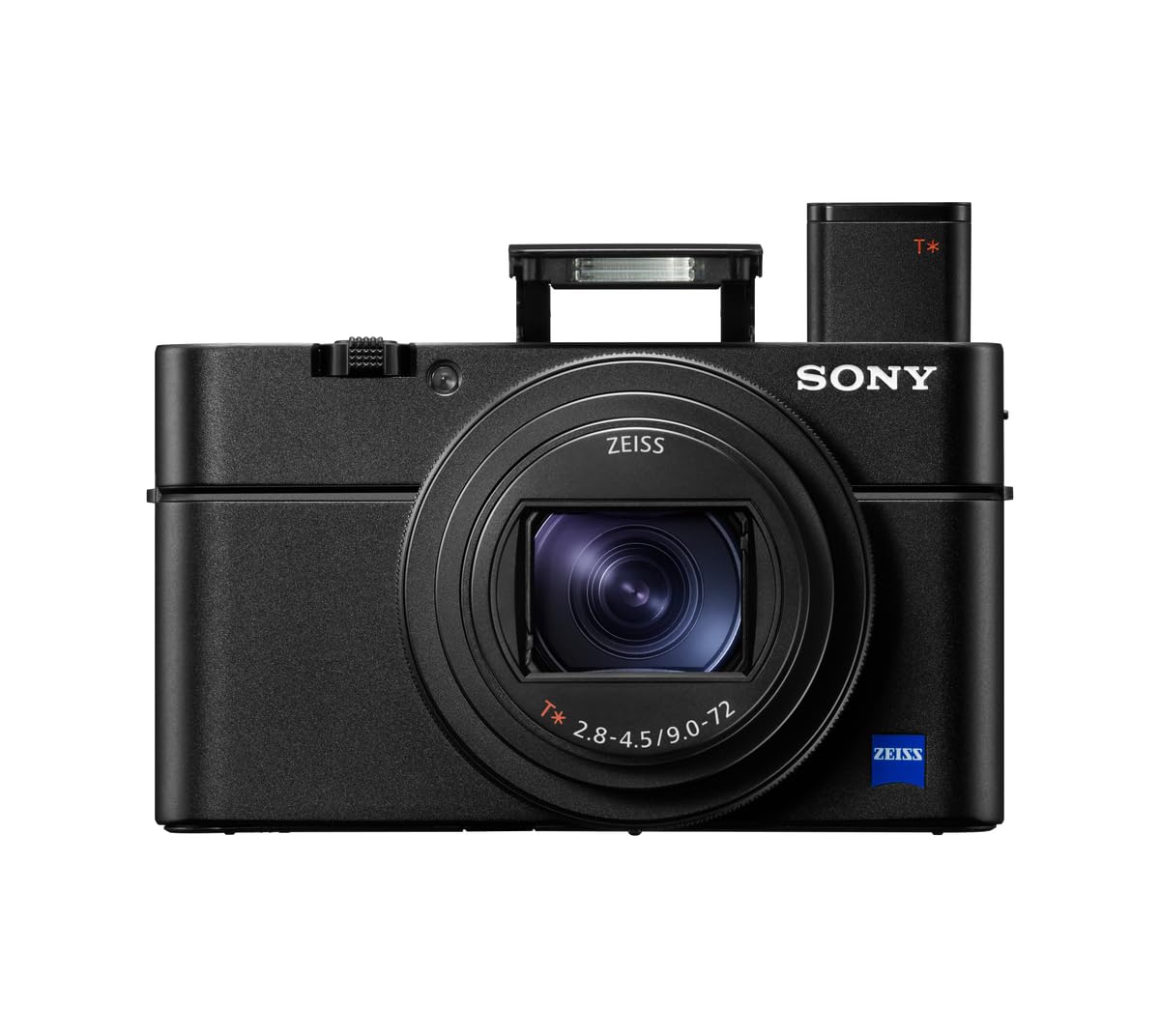
The Sony RX100 VII delivers the best image quality of any point-and-shoot in this roundup, thanks to its 20.1MP 1-inch stacked CMOS sensor. The Zeiss Vario-Sonnar T 24-200mm f/2.8-4.5 lens provides a versatile zoom range that covers wide landscapes to moderate telephoto shots, all within a body that slides into a jacket pocket. With 357 phase-detection AF points and real-time eye tracking, autofocus is instant and reliable.
Video shooters benefit from 4K recording with no pixel binning, a microphone jack for external audio, and active image stabilization that smooths out handheld footage. The blackout-free continuous shooting at 20 fps makes it capable of capturing fast action. The pop-up electronic viewfinder is a valuable addition for bright-day composition, though the lens lacks weather sealing.
Battery life lasts for hours of real-world shooting, and the USB charging is convenient for travel. The menu system is deep and rewards users who invest time in customizing settings. For anyone who demands the highest possible image quality from a genuinely compact body, this is the definitive choice.
Why it’s great
- Class-leading 1-inch sensor for superior low-light performance
- Real-time eye AF and 20 fps burst shooting
- 4K video with microphone input and stabilization
- Pop-up EVF and pocketable design
Good to know
- Very expensive compared to other compacts
- No weather sealing
- Grip is slippery, aftermarket accessory recommended
2. Panasonic LUMIX ZS99

The Panasonic LUMIX ZS99 balances a powerful 30x LEICA DC Vario-Elmar zoom lens with a genuinely compact body that fits in most pockets. Its 24-720mm equivalent focal range covers sweeping landscapes and distant concert stages alike, while the 20.3MP BSI CMOS sensor delivers clean, detailed images in good light. Optical image stabilization keeps long shots steady without requiring a tripod.
The tiltable 1,840k-dot touchscreen simplifies low-angle and overhead shooting, and the dedicated Send Image button makes wireless transfers to your smartphone seamless via Bluetooth 5.0. 4K video at 30p and 4K PHOTO burst mode provide flexibility for capturing split-second moments. The stepped zoom function and lens position resume feature are thoughtful additions for photographers who frequently shoot at specific focal lengths.
Color fidelity straight out of camera is pleasing, reducing the need for heavy editing. The camera performs well up to ISO 1600, with noticeable softening beyond that. The European variant may appear on the market, so confirming the region-specific model with the seller is wise. For travelers who want substantial zoom without lugging a bridge camera, this is a top contender.
Why it’s great
- 30x optical zoom in a pocketable body
- LEICA lens with excellent color and sharpness
- Tiltable touchscreen for flexible shooting angles
- Fast Bluetooth image transfer
Good to know
- Image quality degrades above ISO 1600
- Autofocus can be slow in low contrast scenes
- LCD visibility drops in direct sunlight
3. OM System Olympus Tough TG-7

The OM System Tough TG-7 is the undisputed king of rugged point-and-shoots, rated waterproof to 15 meters, shockproof from 2.1 meters, crushproof to 100 kgf, and freezeproof down to -10°C. Its F2.0 lens and back-illuminated CMOS sensor are optimized for underwater and macro photography, with five dedicated underwater modes including a microscope mode that captures subjects as close as 1 cm from the lens.
4K video recording at 30p and 120 fps high-speed movie capture add creative versatility, while the variable macro system offers four distinct macro modes for everything from wide-angle underwater scenes to extreme close-ups of tiny marine life. The built-in flash and anti-fog coating on the lens window are practical details that make a real difference in humid or wet conditions.
Battery life is good but dies without warning when low, so carrying a spare is recommended. Low-light performance is limited by the small sensor, but in bright outdoor or underwater conditions, the TG-7 produces vibrant, detailed images that no phone can match in those environments. If your photography involves water, dust, drops, or freezing temperatures, this is the camera to get.
Why it’s great
- Waterproof to 15 meters without a housing
- Macro microscope mode captures incredible detail
- Shockproof, crushproof, and freezeproof
- Multiple underwater shooting modes
Good to know
- Small sensor struggles in low light
- Battery dies abruptly without low warning
- Bulky compared to standard point-and-shoots
4. Nikon COOLPIX P950

The Nikon COOLPIX P950 offers an extraordinary 83x optical zoom, reaching an equivalent of 24-2000mm. This is the camera for photographing birds in distant trees, the moon in detail, or wildlife from a safe distance. The 16MP CMOS sensor is paired with Nikon’s Dual Detect Optical Vibration Reduction, which keeps framing steady even at the telephoto extreme.
Built-in Bird and Moon modes simplify shooting these challenging subjects by automatically optimizing settings. The rotating LCD screen and high-resolution electronic viewfinder give flexibility in composing shots from awkward angles. 4K UHD video recording is supported, and the camera can output raw format for greater post-processing control.
The autofocus can hunt at extreme zoom ranges, particularly when tracking small, fast-moving birds against busy backgrounds, but the manual focus wheel on the left side of the lens provides a quick workaround. The small aperture at maximum zoom limits depth of field, so precise focus is critical. Macro performance is decent but not exceptional compared to dedicated macro cameras. For pure optical reach, the P950 stands alone in its class.
Why it’s great
- 83x optical zoom reaches subjects other cameras cannot
- Dedicated Bird and Moon scene modes
- Effective image stabilization for handheld telephoto
- Rotating LCD and electronic viewfinder
Good to know
- Autofocus hunts at maximum zoom
- Small aperture limits low-light performance
- Large and heavy, not pocketable
5. Panasonic LUMIX FZ80D
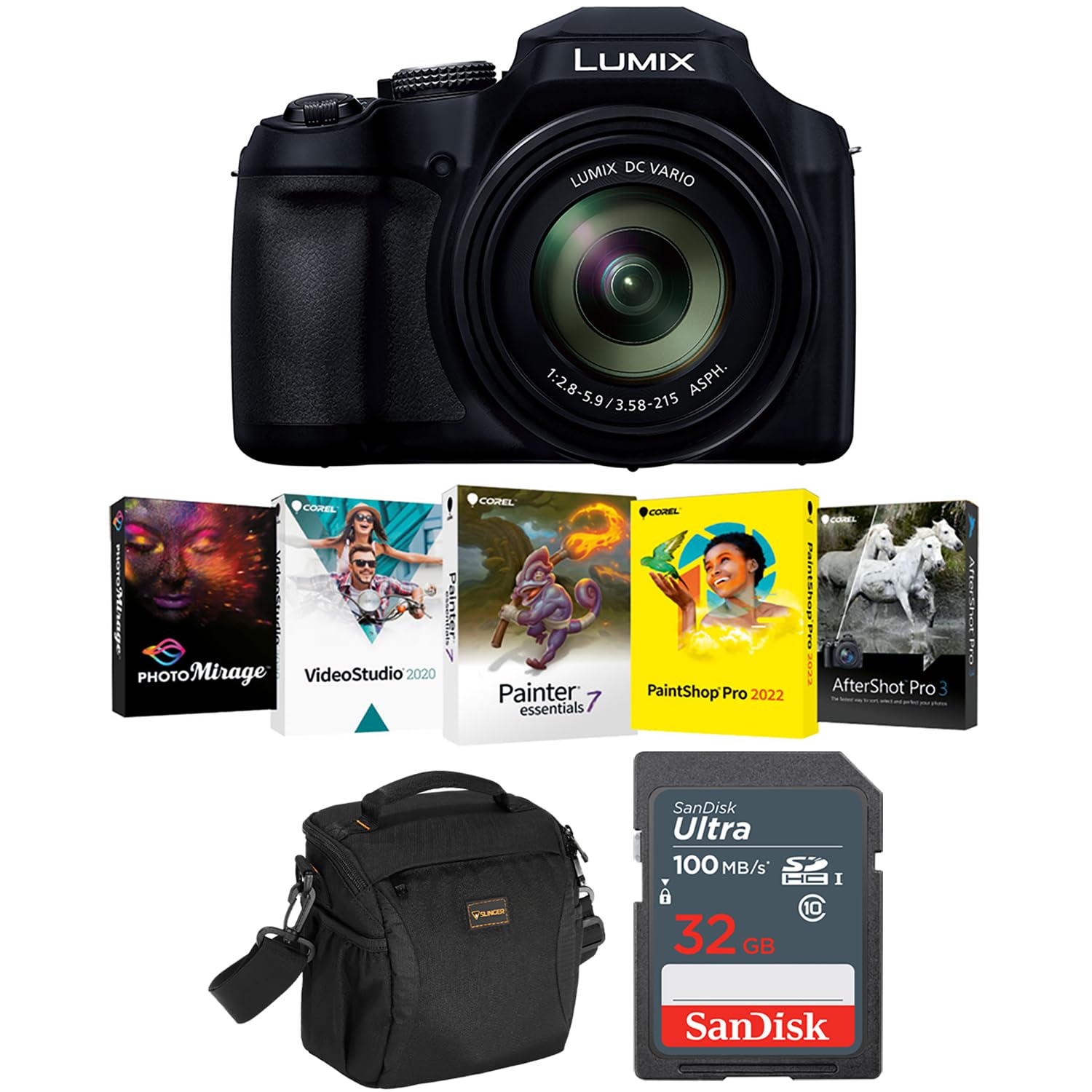
The Panasonic LUMIX FZ80D packs a 60x optical zoom lens with a 20-1200mm equivalent range, providing exceptional versatility from wide-angle landscapes to super-telephoto action shots. The 18.1MP MOS sensor and Venus Engine processor deliver sharp 4K UHD video at 30p and full-resolution stills at up to 10 fps continuous shooting, making it suitable for sports and wildlife.
Power O.I.S. image stabilization is a critical feature at the long end of the zoom, effectively reducing camera shake. The 2.36m-dot OLED live viewfinder offers a bright, lag-free preview, while the 3.0-inch LCD provides touch control for quick menu navigation. The built-in flash provides fill light when needed, and the lens features a flexible f/2.8-5.9 aperture range.
The camera lacks Bluetooth, relying on WiFi for connectivity, which some users find less convenient. The included software suite requires an unsecured download, which may deter security-conscious users. The manual is dense and technical, so downloading the 250-page advanced manual is advisable. For its zoom reach, video capabilities, and bundled accessories, this is a strong mid-range choice.
Why it’s great
- 60x zoom covers 20-1200mm range
- 4K video and 10 fps continuous shooting
- Effective Power O.I.S. stabilization
- Clear OLED electronic viewfinder
Good to know
- No Bluetooth, WiFi-only connectivity
- No microphone jack for external audio
- Software download process is cumbersome
6. Canon PowerShot SX740 HS
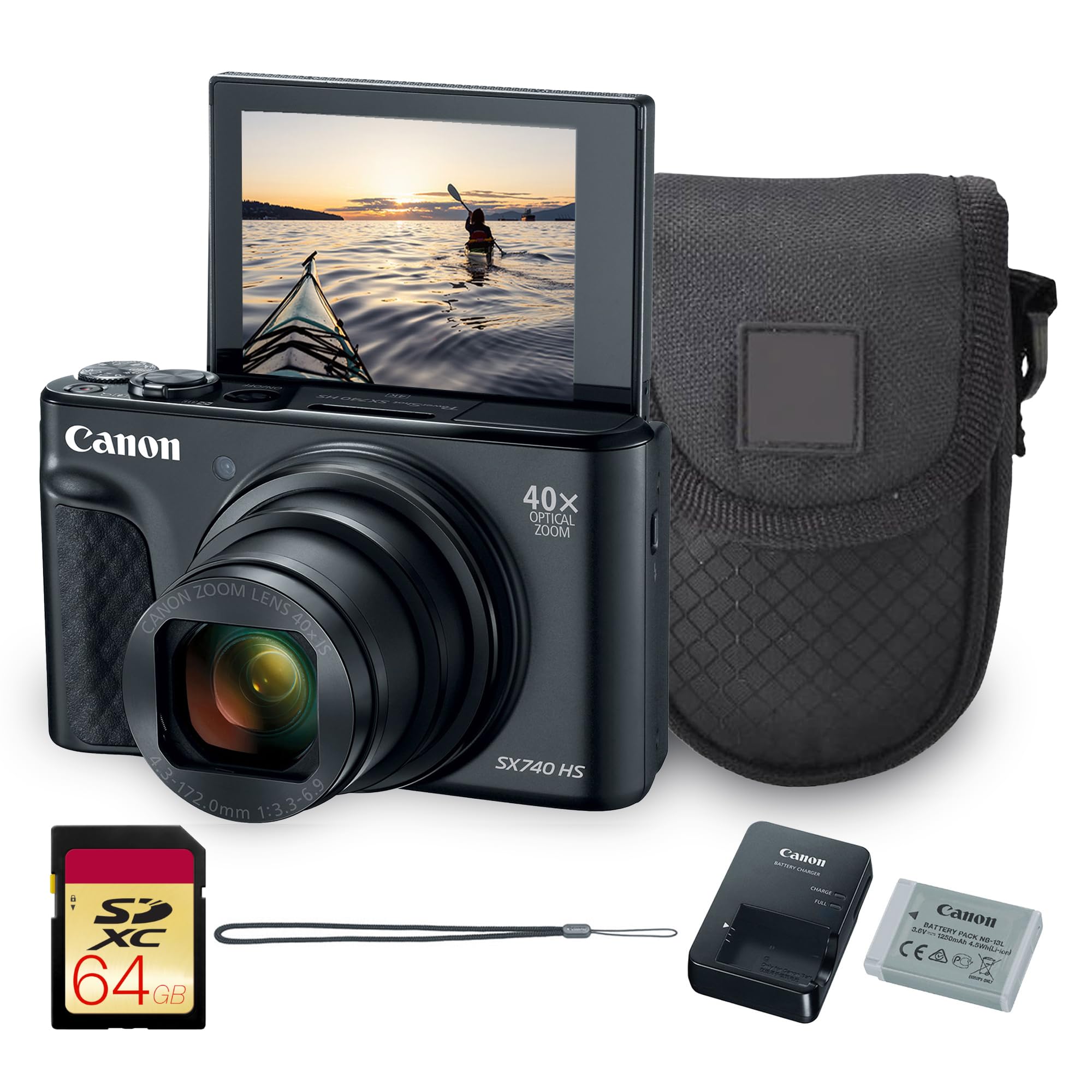
The Canon PowerShot SX740 HS combines a 40x optical zoom lens (24-960mm equivalent) with a 20.3MP CMOS sensor and the DIGIC 8 image processor, delivering sharp images and responsive performance in a compact body. The 4K UHD video recording at 30p, supported by 5-axis image stabilization, produces smooth handheld footage suitable for travel vlogs and family events.
Built-in Wi-Fi and Bluetooth allow seamless image transfer to a smartphone via the Canon Camera Connect app, and the dedicated 4K frame grab feature lets users extract 8.3MP stills from 4K video. The 3.0-inch LCD tilts 180 degrees for selfies, making it a practical choice for vloggers. Battery life comfortably lasts through a full day of moderate shooting, with real-world reports of three to five days of travel use without needing a recharge.
Some units sold online are international models that cannot be registered for a US warranty, so verifying the seller and region-specific model number is essential. The camera lacks a built-in electronic viewfinder, which can be an issue in bright sunlight. Despite these caveats, the SX740 HS offers tremendous zoom reach in a genuinely pocketable package.
Why it’s great
- 40x optical zoom in a compact body
- 4K UHD with 5-axis stabilization
- Flip-up screen for vlogging and selfies
- Long real-world battery life
Good to know
- No electronic viewfinder
- No built-in flash
- International models may lack US warranty
7. OM System E-M10 Mark IV

The OM System E-M10 Mark IV is a mirrorless interchangeable lens camera that bridges the gap between point-and-shoot simplicity and advanced system camera flexibility. Its 20MP Live MOS sensor, paired with 5-axis in-body image stabilization offering up to 4.5 stops of compensation, produces sharp images even in challenging handheld conditions. The flip-down touchscreen enables intuitive selfie mode, automatically activating when the screen is rotated downward.
The kit lens, a M.Zuiko Digital ED 14-42mm F3.5-5.6 EZ pancake zoom, is compact enough to keep the system nearly pocketable. Sixteen art filters, including a new Instant Film mode, add creative options without requiring post-processing. Bluetooth and WiFi connectivity allow easy image sharing through the OI Share app.
The 14-42mm kit lens is decent for general use, but upgrading to a sharper lens like the OM System 12-45mm f/4 PRO significantly improves resolution. The camera charges via a proprietary cable rather than USB-C, and the wireless transfer speed is slow. For beginners who want room to grow into a full system, this is a compelling entry point.
Why it’s great
- Excellent in-body 5-axis image stabilization
- Flip-down screen with dedicated selfie mode
- Interchangeable lenses for system growth
- Lightweight and compact mirrorless body
Good to know
- Kit lens is only decent, upgrade recommended
- No USB-C charging, proprietary cable only
- Wireless transfer is slow
8. KODAK PIXPRO FZ55 (Red)
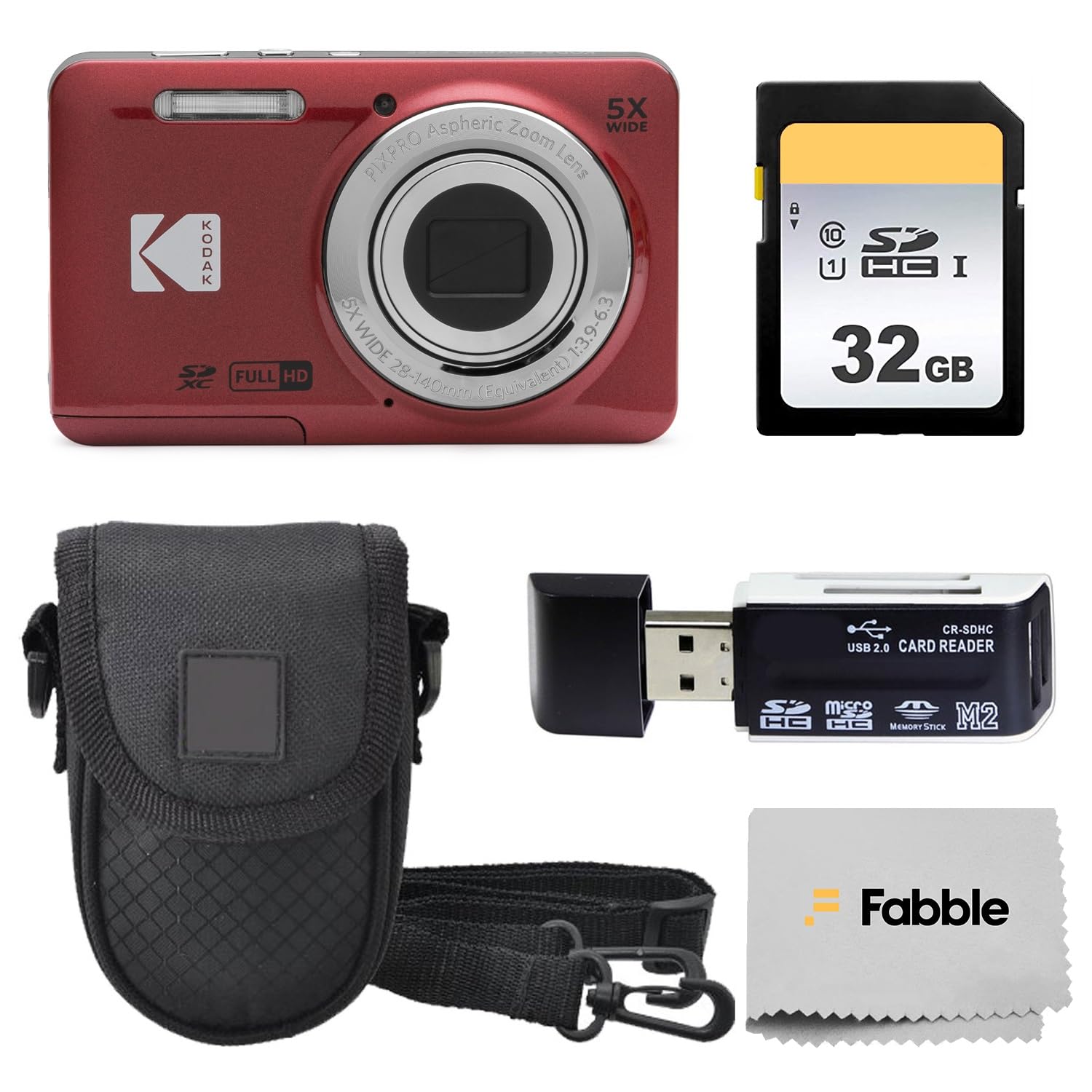
The KODAK PIXPRO FZ55 in Red is an entry-level point-and-shoot designed for simplicity and affordability. The 16MP sensor captures decent daytime images, and the 5x optical zoom with 28mm wide-angle lens covers standard framing needs for family gatherings, travel snapshots, and job site documentation. 1080p Full HD video recording is adequate for casual use.
The bundle includes a 32GB SD card, a protective case, a high-speed card reader, and a cleaning cloth, providing everything a first-time user needs out of the box. The 2.7-inch LCD screen is sufficient for composition and review. User reports consistently highlight the camera’s ease of use, compact size, and vibrant color reproduction for its price tier.
The small body may feel cramped for users with larger hands. Battery life is reported at six to eight hours of use, which is good for an entry-level model. Image quality is not competitive with higher-end sensors — expect clean results in bright light and noticeable noise indoors. For a budget-friendly introduction to dedicated photography, this bundle is hard to beat.
Why it’s great
- Complete bundle with case and memory card
- Easy to use, ideal for beginners and children
- Compact size fits in a pocket or small bag
- Vibrant colors in daytime shots
Good to know
- Small buttons may be awkward for large hands
- Image quality drops in low light
- Limited optical zoom compared to premium models
9. KODAK PIXPRO FZ55 (Black)
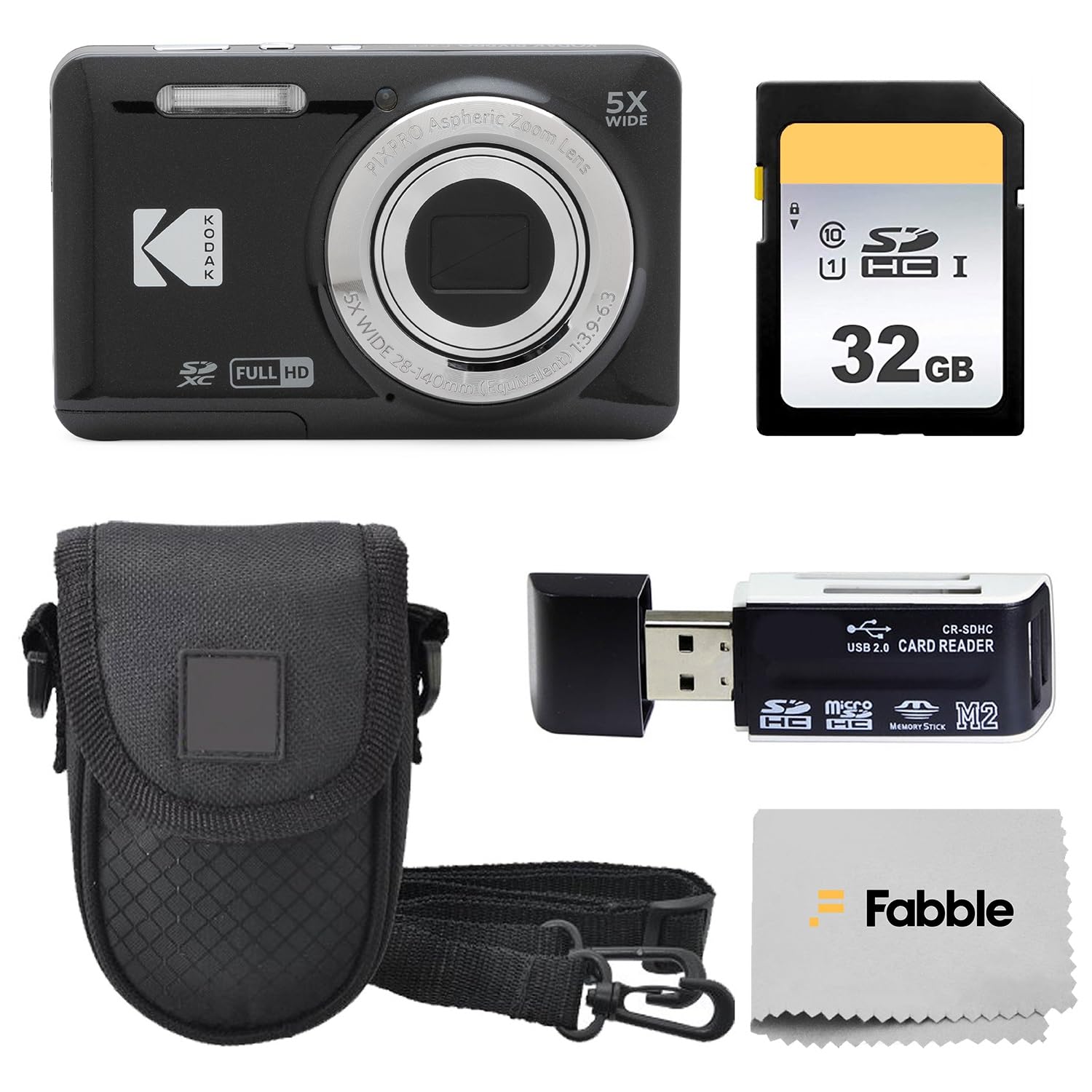
The KODAK PIXPRO FZ55 in Black is functionally identical to the red version, offering the same 16MP sensor, 5x optical zoom, 28mm wide-angle lens, and 1080p Full HD video recording. The black finish provides a more understated aesthetic for users who prefer a classic look. Like its counterpart, it comes bundled with a 32GB SD card, protective case, card reader, and cleaning cloth.
The camera features contrast-detection autofocus with 179 points, which is responsive in good lighting conditions. Built-in flash and optical image stabilization assist in moderate indoor settings. The 2.7-inch LCD has no touch capability, but the simple menu layout makes navigation straightforward. Users consistently praise the camera’s reliability for casual shooting over months of use.
Batteries are not included despite the bundle, so a separate purchase of AA or compatible lithium-ion cells is required. The plastic body feels light but durable enough for everyday carry. As with the red variant, the FZ55 is best suited for bright, outdoor conditions where the sensor’s limitations are minimized. This is a solid, no-frills entry point for those new to dedicated cameras.
Why it’s great
- Classic black finish suits any style
- Bundle includes essential accessories
- Simple interface for first-time users
- Portable and lightweight design
Good to know
- Batteries not included in the bundle
- No touchscreen or 4K video
- Low-light performance is limited
FAQ
Is a 1-inch sensor camera worth the higher cost over a 1/2.3-inch model?
Can a waterproof camera like the TG-7 replace a smartphone for everyday shooting?
What is the practical difference between 30x and 83x optical zoom?
Final Thoughts: The Verdict
For most users, the best digital camera point and shoot winner is the Sony RX100 VII because it combines a true 1-inch sensor, a versatile 24-200mm zoom, and class-leading autofocus in a genuinely pocketable body. If you need extreme zoom for wildlife or the moon, grab the Nikon Coolpix P950. And for underwater adventures and rugged outdoor use, nothing beats the OM System Tough TG-7.

Mo Maruf
I created WellFizz to bridge the gap between vague wellness advice and actionable solutions. My mission is simple: to decode the research and give you practical tools you can actually use.
Beyond the data, I am a passionate traveler. I believe that stepping away from the screen to explore new environments is essential for mental clarity and physical vitality.