Our readers keep the lights on and my smoothie glass nicely filled. As an Amazon Associate, I earn from qualifying purchases.
Choosing between a pocket-sized superzoom, a purpose-built cinema rig, or a compact full-frame body comes down to understanding the sensor and lens system that drives the image. The right digital film camera doesn’t just capture light; it captures the specific look, color science, and workflow you need for your style of shooting.
I’m Mohammad Maruf — the founder and writer behind WellFizz. I’ve spent hundreds of hours analyzing sensor specifications, autofocus systems, lens mount adaptability, and video codec support across the current camera market to separate genuine capability from marketing talk.
Whether you are after a compact travel companion with film simulations or a full-frame cinema body with RAW internal recording, this guide breaks down the specs that matter for your next digital film camera.
How To Choose The Best Digital Film Camera
Selecting a digital film camera requires balancing sensor performance, lens ecosystem, video capabilities, and physical form factor. Your intended use — run-and-gun documentary, studio-controlled narrative, travel vlogging, or everyday personal shooting — determines which specifications deserve your priority. Understanding the core trade-offs between sensor size, codec support, and autofocus technology is the first step toward a well-informed investment.
Sensor Size and Type
The sensor is the heart of any digital film camera. Full-frame sensors (typically 35mm-format) offer the widest dynamic range, the shallowest depth of field, and the best high-ISO performance. APS-C sensors, found in the Sony FX30 and Canon R50, provide excellent image quality in a more compact, cost-effective body. Micro Four Thirds sensors, as seen in the Panasonic GH7, trade some shallow depth of field for a smaller overall system size and impressive stabilization. Beginners often overestimate the importance of sensor size: a capable APS-C body with a fast lens can produce images indistinguishable from full-frame in most real-world conditions, especially in good light.
Video Codec and Bit Depth
For serious filmmaking, bit depth and codec choice matter more than megapixels. 10-bit 4:2:2 color sampling provides vastly more color grading flexibility than 8-bit, reducing banding in skies and shadows. Codecs like Apple ProRes, REDCODE RAW (R3D), and Panasonic’s All-Intra 400Mbps allow for efficient post-production workflows. A camera that records 10-bit internally, such as the Panasonic GH7 or the Canon R6 Mark III, saves you the cost and complexity of an external recorder. Consider whether the camera offers internal recording of high-quality codecs or requires an external recorder to achieve professional standards.
Autofocus System
Modern autofocus technology dramatically changes how you shoot. Phase-detection autofocus (PDAF) with subject tracking — especially human eye/face detection — allows you to concentrate on composition rather than manual focus. Sony’s Real-Time Eye AF, Canon’s Dual Pixel CMOS AF II, and the latest Panasonic PDAF systems are all highly reliable. Contrast-detection-only systems are generally slower and less accurate for moving subjects. If your work involves unpredictable action, interviews, or gimbal use, a camera with robust PDAF and customizable tracking responsiveness is essential.
Lens Mount and Ecosystem
The lens mount determines which lenses you can use, which directly influences image character and long-term cost. Canon’s RF mount offers fast, sharp glass but limited third-party options. Sony’s E-mount has the most extensive native and third-party lens library (Sigma, Tamron, Viltrox). Micro Four Thirds has a mature catalog with many affordable and compact lenses. Nikon’s Z mount, especially with the new RED Z Cinema, is still young but growing. A beginner’s common misstep is buying into a mount without confirming that affordable, fast-aperture lenses exist for the specific focal lengths you’ll need.
Quick Comparison
On smaller screens, swipe sideways to see the full table.
| Model | Category | Best For | Key Spec | Amazon |
|---|---|---|---|---|
| Sony A7C II | Full-Frame | Compact hybrid shooting | 33MP Exmor R CMOS | Amazon |
| Nikon RED Z Cinema | Cinema | Professional RAW video | 6K Full-Frame, 15+ stops | Amazon |
| Canon EOS R6 Mark III | Full-Frame | Action and low-light | 32.5MP, 8.5 stops IBIS | Amazon |
| Sony FX30 | Cinema | Indie filmmaking | 20.1MP Super 35, 14+ stops | Amazon |
| Panasonic GH7 | Micro Four Thirds | Advanced video workflows | 25.2MP, 32-bit float audio | Amazon |
| FUJIFILM X100VI | Fixed Lens | Everyday travel and street | 40.2MP, 23mm F2 lens | Amazon |
| Sony FX6 | Full-Frame Cinema | Professional documentary | 4K 120p, internal ND | Amazon |
| Canon EOS 5D Mark II | Full-Frame DSLR | Vintage lens compatibility | 21.1MP, EF mount | Amazon |
| Canon EOS R50 | APS-C Mirrorless | Beginner content creation | 24.2MP, 4K oversampled | Amazon |
| Canon PowerShot SX740 HS | Compact Superzoom | Travel reach in pocket | 20.3MP, 40x optical zoom | Amazon |
| Nikon COOLPIX P1000 | Superzoom Bridge | Extreme telephoto reach | 16MP, 125x optical zoom | Amazon |
In‑Depth Reviews
1. Sony Alpha 7C II

The Sony Alpha 7C II packs a 33MP full-frame Exmor R CMOS sensor into a body that weighs just over a pound, making it one of the lightest full-frame cameras available. The BIONZ XR processor and dedicated AI processing unit deliver exceptional subject recognition and tracking, reliably locking onto human eyes, animal eyes, and vehicles across the entire 759-point phase-detection autofocus area. For video, it records 4K 4:2:2 10-bit at up to 60p, with full-frame oversampling for sharp detail and S-Cinetone color science for a filmic look straight out of camera.
The compact size does not compromise image quality — dynamic range and color depth rival much larger bodies. The in-body image stabilization provides up to 5.5 stops of correction, which is sufficient for most handheld work. Users report excellent battery life, often lasting a full day of mixed stills and video. The menu system has been significantly improved over earlier Sony generations, with a fully touch-responsive interface and customizable quick menu.
Some trade-offs exist in the viewfinder and rear screen, which are lower resolution than those in the larger A7 IV. The single SD card slot may be a concern for paid work that requires immediate backup. For travel creators, hybrid shooters, and anyone wanting full-frame quality in a truly portable package, the A7C II delivers a nearly unbeatable balance of performance and size.
Why it’s great
- Full-frame image quality in a compact, lightweight body
- Reliable eye-tracking autofocus with AI processing
- Excellent 4K 10-bit video with S-Cinetone
- Strong battery life for all-day shooting
Good to know
- Lower resolution viewfinder and rear LCD
- Single SD card slot limits backup options
- Gets warm during extended 4K recording; firmware improves it
2. Nikon RED Z Cinema

The Nikon RED Z Cinema merges RED’s color science with Nikon’s Z-mount engineering in a dedicated cinema body weighing only 1.18 pounds. It records 6K full-frame REDCODE RAW (R3D) internally at 60fps, delivering 15+ stops of dynamic range and Dual Base ISO for clean low-light footage. The 32-bit float audio recording via XLR adapters eliminates the need to set audio levels during shooting, a breakthrough for solo filmmakers who cannot monitor sound continuously.
The extra-large 4-inch DCI-P3 touchscreen monitor swivels for high-visibility framing, and the Z-mount is advertised as the widest and most adaptable full-frame lens mount currently available. Users who have made the switch from other cinema cameras, including the RED Komodo, praise the faster boot time, the elimination of black shade calibration, and the intuitive menu layout. The R3D format provides maximum grading flexibility in post, though file sizes are very large and require fast CFexpress Type B storage.
It is important to note that this is a pure video/cinema camera, not a hybrid stills shooter. It lacks a mechanical shutter and is designed exclusively for filmmaking workflows. Some users report that R3D NE RAW files cannot be edited in Adobe Premiere Pro without additional plugins. If your priority is professional RAW video capture with minimal bulk, the RED Z Cinema is a uniquely capable tool.
Why it’s great
- 6K full-frame R3D RAW internal recording at 60fps
- Ultra-compact and lightweight body for cinema standards
- 32-bit float audio eliminates level monitoring
- Fast boot, no black shade calibration needed
Good to know
- Purely a cinema camera — no photo shutter
- Very large file sizes require fast CFexpress Type B cards
- Requires workflow adjustments for some NLEs
3. Canon EOS R6 Mark III
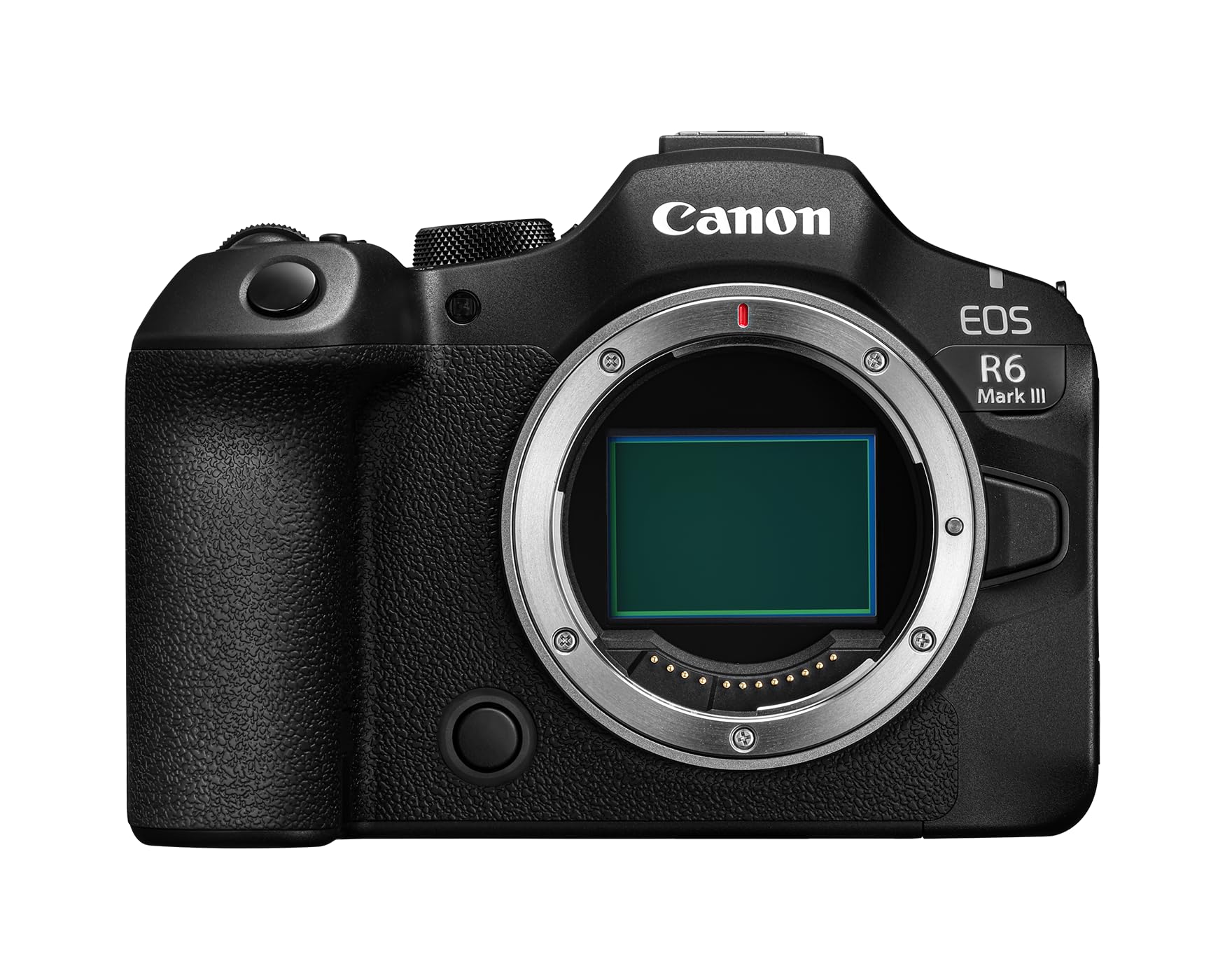
The Canon EOS R6 Mark III pairs a 32.5MP full-frame CMOS sensor with the DIGIC X processor to deliver up to 40 fps electronic shutter shooting with 20 frames of pre-continuous capture. The in-body image stabilization system provides up to 8.5 stops of correction at the center and 7.5 stops at the periphery, making it one of the most effective stabilization systems available. Dual Pixel CMOS AF II with People, Animal, and Vehicle detection works reliably even in challenging light, and the Register People Priority feature is invaluable for event work.
Video performance includes oversampled 4K capture with 10-bit color depth, and the dual card slot configuration — one CFexpress Type B for high-bitrate recording and one UHS-II SD for overflow or backup — addresses a key limitation of smaller bodies. Low-light performance is outstanding, with users reporting clean files even at ISO 12,800. The body feels robust with extensive weather sealing, and the ergonomics are well-suited for long shooting sessions.
The main trade-off is size and weight; it is a full-featured body more comparable to the Sony A7 IV than the compact A7C II. Some users report overheating during extended 4K 60p recording, though Canon’s firmware updates have improved thermal management. For hybrid shooters who need speed, stabilization, and dual card slots without taking the step to a dedicated cinema camera, the R6 Mark III is a compelling choice.
Why it’s great
- Very high frame rate with pre-capture for action
- Industry-leading in-body stabilization
- Dual card slots (CFexpress B + UHS-II SD)
- Clean high-ISO performance
Good to know
- Larger and heavier than compact full-frame options
- Can overheat during extended 4K 60p recording
- RF lens ecosystem has fewer affordable third-party lenses
4. Sony Cinema Line FX30

The Sony FX30 is built on a 20.1MP Exmor R APS-C (Super 35) sensor with a wide dynamic range and Dual Base ISO architecture that provides clean images across different lighting conditions. It offers Cine EI, Cine EI Quick, and Flexible ISO modes, allowing for optimized exposure logic whether you are using S-Log3 for maximum grading latitude or shooting straight to a LUT. The 6K oversampling produces exceptionally sharp 4K footage, and the camera supports internal recording of 10-bit 4:2:2 up to 4K 60p with reliable active cooling that prevents overheating during long takes.
Autofocus performance mirrors the acclaimed Sony system, with 495 phase-detection points covering the majority of the frame and Real-Time Eye Tracking for humans and animals. Users consistently note that the FX30 delivers about 90% of the FX3’s image quality at a significantly more accessible investment point. The body feels like a smaller cinema camera with cage-friendly design, dual card slots, and full-size HDMI output. The S-Cinetone color profile provides attractive skin tones without heavy grading.
Battery life is average at 1-2 hours of continuous recording, so users planning long shoots should budget for external battery solutions or a battery grip. The APS-C sensor means you need to account for the 1.5x crop factor when selecting lenses, though this can be beneficial for telephoto work. For aspiring filmmakers seeking professional cinema line features at a reasonable cost, the FX30 is a top-tier starting point.
Why it’s great
- 6K oversampled 4K with professional Cinema Line features
- Excellent autofocus with reliable subject tracking
- Active cooling prevents overheating
- Dual card slots and full-size HDMI
Good to know
- Mediocre battery life; needs external pack for long shoots
- APS-C crop factor affects lens field of view
- Limited to 4K 60p (no 4K 120p)
5. Panasonic LUMIX GH7
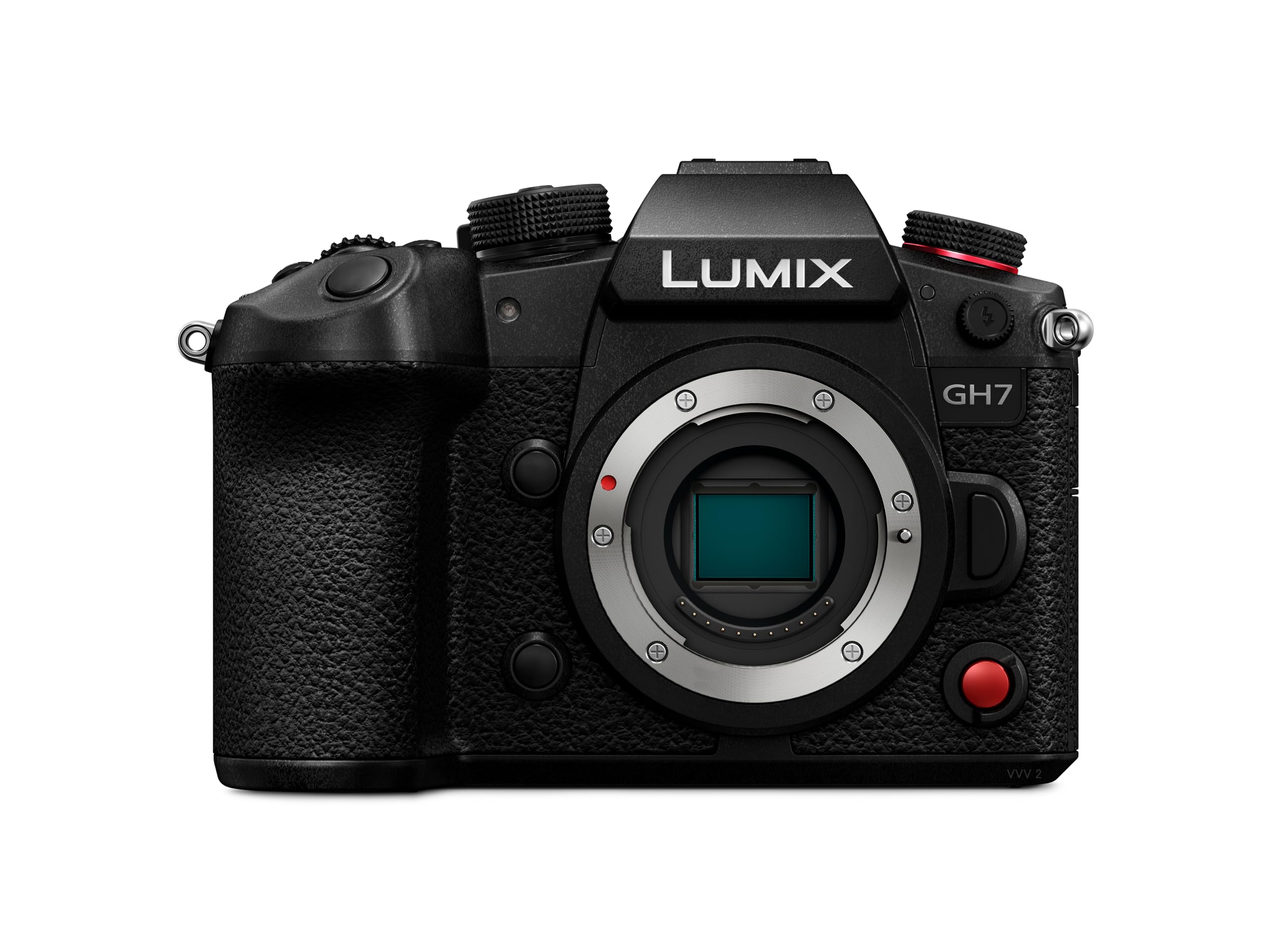
The Panasonic GH7 pushes the Micro Four Thirds platform to new heights with a 25.2MP BSI CMOS sensor offering 13+ stops of dynamic range. It is the first camera in its class to record 32-bit float audio internally when using the DMW-XLR2 adaptor, meaning you never have to set audio levels during a take. Internal recording of 5.7K 30p Apple ProRes 422 HQ and Apple ProRes RAW HQ provides maximum codec flexibility for post-production. Open Gate mode records the full sensor area, allowing you to crop to any aspect ratio (16:9, 4:3, vertical) in post while maintaining high resolution.
The GH7 features a 315-point phase-detection autofocus system, a major upgrade from the older contrast-detect-only GH models, and it locks onto subjects reliably with face and eye detection. The in-body image stabilization (IBIS) is among the best in any camera system, providing smooth handheld footage even with long focal lengths. Adobe Cloud compatibility via Frame.io enables direct upload of stills and proxy videos, streamlining collaborative workflows. Users who shoot all-day events report no overheating issues during 3-7 hour continuous recording sessions.
The Micro Four Thirds sensor has a 2x crop factor, which means lenses will have a narrower field of view compared to full-frame. High ISO performance is not as clean as larger sensors, though the GH7 handles up to 500 ISO very well. Some users find the battery life drains faster when recording high bitrate codecs. For videocentric creators who prioritize advanced codecs, stabilization, and audio flexibility over full-frame shallow depth of field, the GH7 is a uniquely capable tool.
Why it’s great
- Internal 5.7K Apple ProRes RAW and 32-bit float audio
- Class-leading in-body stabilization
- Open Gate recording for flexible aspect ratio cropping
- No overheating during extended recording
Good to know
- 2x crop factor limits wide-angle lens options
- High ISO performance trails full-frame sensors
- Battery drains quickly with high bitrate codecs
6. FUJIFILM X100VI

The FUJIFILM X100VI is a fixed-lens compact camera built around a 40.2MP X-Trans CMOS 5 HR sensor and a 23mm F2 lens (35mm full-frame equivalent). It introduces up to 6.0 stops of in-body image stabilization, a first for the X100 series, and a 4-stop internal ND filter for shooting wide-open in bright conditions. The 20 Film Simulation modes, including the new REALA ACE, allow users to achieve distinct looks straight out of camera without post-processing — a major draw for those who want a classic film aesthetic with digital convenience.
The hybrid viewfinder lets you switch between optical and electronic viewing, providing a traditional rangefinder-style experience with modern information overlays. The 1.4x and 2x digital teleconverter functions give some framing flexibility despite the fixed lens. Users consistently praise the image quality and color science, often preferring its natural rendering over full-frame alternatives for everyday and travel photography. The compact size fits easily into a small bag or even a larger jacket pocket.
The fixed lens means you cannot change focal lengths, which is either a creative constraint or a limitation depending on your style. Autofocus is reliable but not class-leading, and the battery life is moderate for a camera of this size. For photographers who value portability, film-inspired color, and a tactile shooting experience, the X100VI is deeply rewarding.
Why it’s great
- Exceptional film simulations for straight-out-of-camera looks
- High-resolution 40.2MP sensor in a compact body
- IBIS is a huge upgrade for low-light handheld shooting
- Beautiful design and tactile controls
Good to know
- Fixed 23mm lens offers no zoom capability
- Moderate battery life for a compact camera
- Autofocus is slower compared to Sony or Canon competition
7. Sony ILME-FX6

The Sony ILME-FX6 is a full-frame cinema camera designed for professional production environments. Its 10.2MP 4K sensor delivers exceptional sensitivity up to ISO 409,600 with a 15+ stop dynamic range, providing clean, detailed images in extremely low light. The electronically controlled variable ND filter (1/4 to 1/128) is a standout feature — it allows the operator to adjust exposure continuously without swapping filters, a huge time saver on documentary or run-and-gun shoots. Fast Hybrid AF with 627 phase-detection points and Eye-AF provides reliable tracking even with shallow depth of field.
The FX6 records up to 4:2:2 10-bit QFHD 4K at 120p, DCI 4K up to 60p, and FHD up to 240p, all internally. The modular body design includes a detachable handle and grip, making it adaptable to shoulder rigs, gimbals, or drone work. Professional XLR audio inputs are integrated into the handle module, though the camera lacks a 3.5mm microphone jack. Users praise the improved color science over older Sony cinema models and the convenience of the Auto ND function, which automatically adjusts exposure as lighting changes.
The FX6 is a significant investment and is best suited for professionals who need a reliable, all-in-one production camera. The menu system is more complex than consumer mirrorless cameras, and some users report it is less customizable than expected. The lack of a 3.5mm audio input on the body may require adapters. For documentary, corporate, and narrative work, the FX6 provides a complete sensor-to-workflow solution.
Why it’s great
- Variable internal ND filter for precise exposure control
- Excellent high-ISO performance with 15+ stops of DR
- Solid autofocus with reliable subject tracking
- Modular, cage-friendly design for rigging
Good to know
- No 3.5mm microphone input on the body
- Complex menu system with limited customization
- High initial investment; requires additional accessories
8. Canon EOS 5D Mark II

The Canon EOS 5D Mark II remains an iconic full-frame DSLR, especially for users interested in adapting vintage lenses or exploring the classic Canon color science. Its 21.1MP full-frame CMOS sensor captures detailed images with 14-bit A/D conversion and a native ISO range of 100-6400. The DIGIC 4 processor enables 3.9 fps continuous shooting and Full HD 1080p video recording, which was groundbreaking at launch and still usable for controlled work. The included EF 24-105mm f/4 L IS USM lens provides a versatile zoom range with image stabilization and silent autofocus.
The large optical viewfinder is a joy to use for photographers who prefer an optical view. The full-frame sensor delivers excellent depth of field control and clean high-ISO results compared to APS-C cameras of the same era. Many users pair it with vintage lenses via adapters, taking advantage of the focus assist features. The RAW files offer good dynamic range for recovery in post, and the L-series kit lens is built to a professional standard with weather sealing.
The autofocus system is limited to 9 points and is slow by modern standards, especially in low light. The camera is heavy, and the shutter is loud, which may be disruptive in quiet environments. Video recording is limited to 4GB per clip, and the built-in microphone is noisy. For someone seeking an affordable full-frame body to explore the EF lens ecosystem or to use as a dedicated film camera with vintage glass, the 5D Mark II still holds value.
Why it’s great
- Full-frame sensor with excellent image quality for its era
- Compatible with a huge catalog of EF lenses
- Bright optical viewfinder
- Good dynamic range in RAW files
Good to know
- Slow 9-point autofocus system, especially in low light
- Heavy and loud shutter
- Video limited to 4GB per clip with noisy internal mic
9. Canon EOS R50
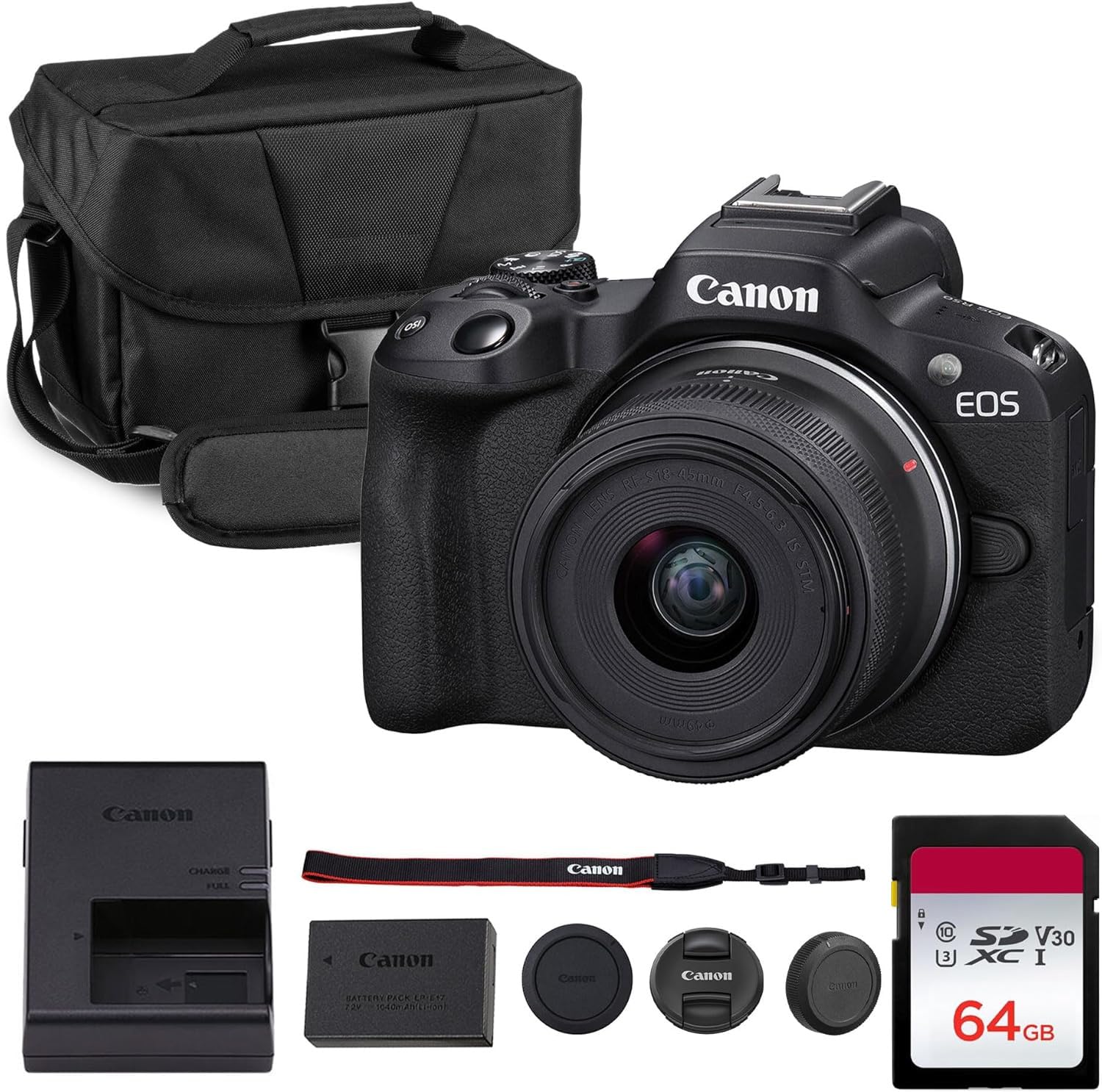
The Canon EOS R50 is an entry-level APS-C mirrorless camera designed for beginners and vloggers. It features a 24.2MP sensor paired with Canon’s Dual Pixel CMOS AF II, providing reliable face and eye detection for people and animals. The kit includes the RF-S 18-45mm f/4.5-6.3 IS STM lens, a compact zoom that covers wide to standard focal lengths, making it suitable for daily content, portraits, and street photography. The camera records oversampled 4K video at up to 30p, which delivers noticeably sharper footage than standard 4K, and includes Creative Assist modes for in-camera color adjustments.
The vari-angle touchscreen is ideal for vlogging and self-recording, and the vertical video mode makes it easy to create content formatted for social platforms. The body is lightweight, making it comfortable for long shooting days. Users report that the battery charges quickly and that the image quality is impressive for the class. The kit lens is versatile but somewhat slow in low light, so many users recommend pairing the body with a faster lens like a 50mm f/1.8 for better results indoors.
The R50 lacks in-body image stabilization, relying on lens-based stabilization for steady shots. The RF lens mount currently has a limited selection of affordable third-party lenses compared to Sony’s E-mount. It is not designed for professional or high-end video work. For content creators entering the mirrorless world, the R50 offers a straightforward, high-quality starting point.
Why it’s great
- User-friendly controls and vari-angle touchscreen
- Oversampled 4K video with reliable Dual Pixel AF
- Lightweight and compact for portability
- Creative Assist modes for in-camera color grading
Good to know
- No in-body stabilization
- Kit lens aperture is slow for low light
- Limited third-party RF-S lens options
10. Canon PowerShot SX740 HS
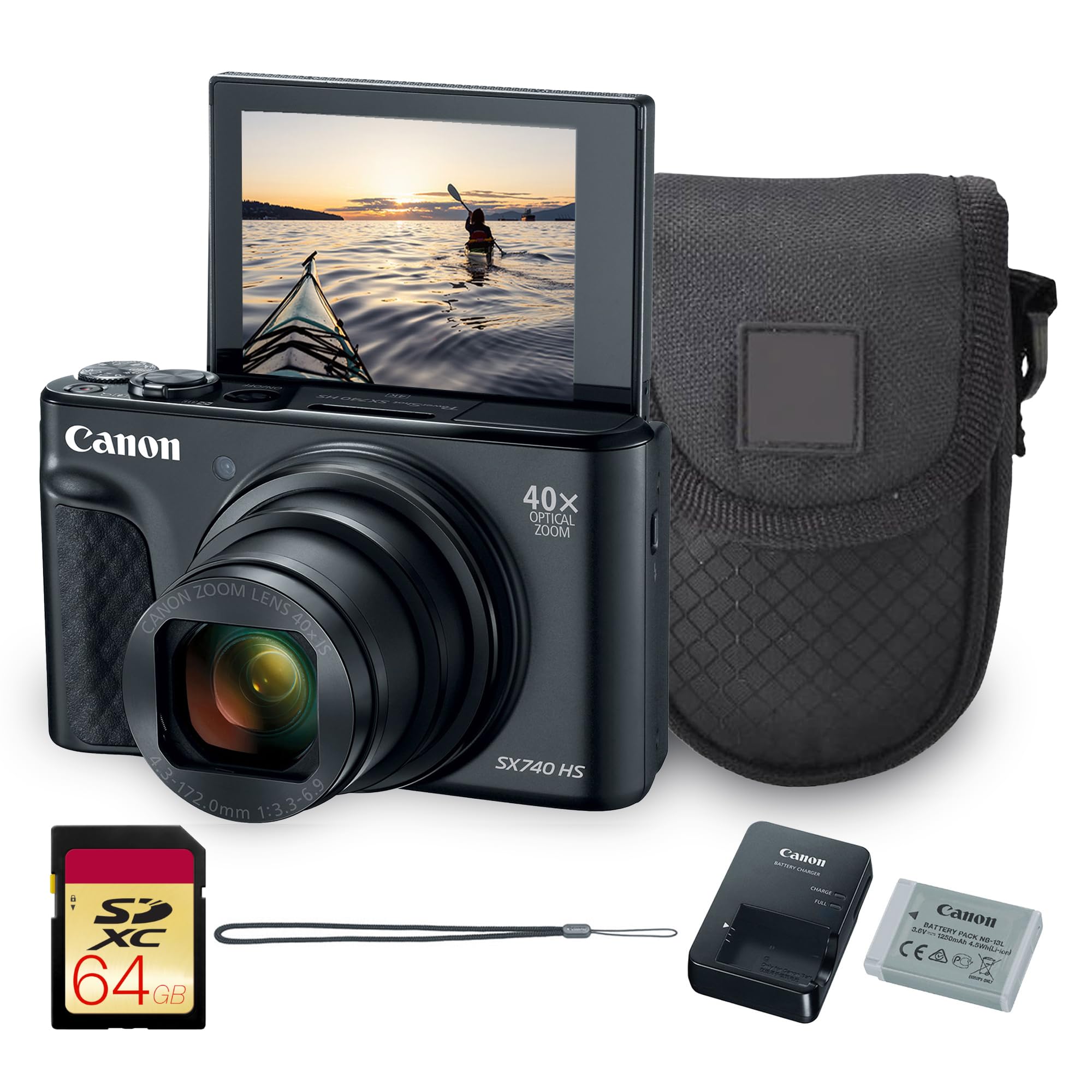
The Canon PowerShot SX740 HS is a compact point-and-shoot with a 40x optical zoom lens that covers a 24-960mm equivalent focal range. The 20.3MP CMOS sensor and DIGIC 8 processor deliver sharp stills and 4K UHD video at 30p with 5-axis image stabilization for smoother handheld footage. This is the kind of camera you can slip into a jacket pocket and bring to a sporting event, concert, or wildlife outing where a big zoom is essential but a large camera is impractical.
Wi-Fi and Bluetooth connectivity allow easy pairing with the Canon Camera Connect app for remote control and instant image transfer to your phone. The flip screen is helpful for selfies and vlogging. Users consistently report impressive battery life, with one noting five days of travel use without needing to recharge. The photo quality is described as “better than iPhone,” and the 40x zoom captures details that are simply impossible with a smartphone sensor.
The small sensor (1/2.3-inch) produces more noise than larger-sensor cameras, especially at higher ISO values. The autofocus system is functional but not as fast as modern mirrorless systems. Some units may be international versions that cannot be registered with Canon USA. For someone who values extreme zoom in a pocketable size over shallow depth of field and high-ISO performance, the SX740 HS is a practical travel companion.
Why it’s great
- Pocketable body with 40x optical zoom (24-960mm)
- Good battery life for a compact camera
- 4K video with 5-axis stabilization
- Easy Wi-Fi and Bluetooth sharing
Good to know
- Small sensor with noticeable noise at higher ISO
- Autofocus is slower than modern mirrorless cameras
- Some units are international versions with limited US warranty
11. Nikon COOLPIX P1000
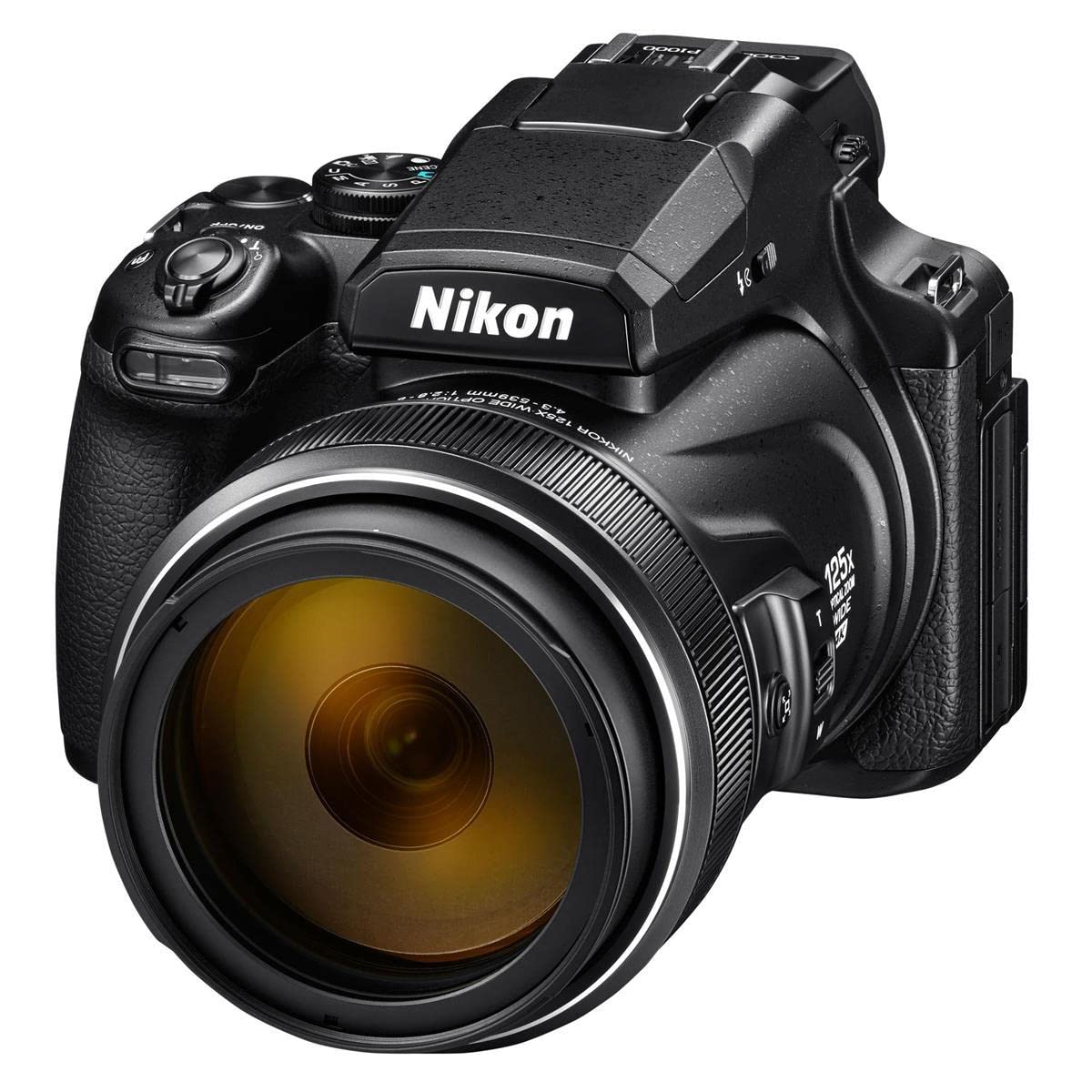
The Nikon COOLPIX P1000 holds the record for the most powerful optical zoom ever placed in a compact digital film camera: 125x optical zoom, equivalent to a 24-3000mm lens range. This means you can photograph the craters on the moon, distant wildlife, or performers on a faraway stage with impressive clarity. The 16MP CMOS sensor records 4K Ultra HD video with stereo sound, and the dual-detect image stabilization (lens-shift plus electronic) helps keep your shots steady at extreme telephoto lengths.
The camera offers full manual controls, RAW format recording, time-lapse and super-lapse modes, and a vari-angle 3.2-inch LCD screen for shooting from awkward angles. The electronic viewfinder is also present for bright-sun viewing. The macro capability is excellent, focusing as close as 0.4 inches from the lens at wide-angle. This camera is built for one specific job — bringing distant subjects into view — and it does that job better than any other mass-market camera.
The 16MP sensor is relatively low resolution for its class, and image quality at high ISO is soft, especially at the long end of the zoom. The camera is not small; it handles more like a DSLR despite being a fixed-lens design. Autofocus can hunt in low light, and the electronic viewfinder is lower resolution than what you would find on modern mirrorless cameras. For birders, astronomers, and wildlife enthusiasts who need that extreme reach, the P1000 is a one-of-a-kind tool.
Why it’s great
- Unmatched 125x optical zoom (24-3000mm equivalent)
- Good dual-detect image stabilization for telephoto shooting
- 4K video with stereo sound
- Full manual controls and RAW format support
Good to know
- 16MP sensor is limited at high ISO
- Bulky body similar to a DSLR in size
- Autofocus struggles in dim light
FAQ
What is the difference between a full-frame and an APS-C sensor in practice?
What is a professional cinema camera compared to a standard mirrorless camera?
Is it worth buying an older DSLR like the Canon 5D Mark II in 2025?
How much does the lens mount ecosystem affect my camera choice?
Final Thoughts: The Verdict
For most users, the digital film camera winner is the Sony Alpha 7C II because it combines full-frame image quality, reliable autofocus, and compact portability into one package that suits content creators, travelers, and hybrid shooters alike. If you need professional cinema features with RAW internal recording and a compact body, the Nikon RED Z Cinema is the top choice. And for maximum reach in a pocketable form, nothing beats the Nikon COOLPIX P1000.

Mo Maruf
I created WellFizz to bridge the gap between vague wellness advice and actionable solutions. My mission is simple: to decode the research and give you practical tools you can actually use.
Beyond the data, I am a passionate traveler. I believe that stepping away from the screen to explore new environments is essential for mental clarity and physical vitality.