Our readers keep the lights on and my smoothie glass nicely filled. As an Amazon Associate, I earn from qualifying purchases.
The frustration of parking your RV after a long drive, cranking up a heavy batwing antenna, and then fiddling with its direction for ten minutes just to get a grainy picture is a familiar pain for many travelers. A digital RV antenna promises to eliminate that ritual, delivering clearer over-the-air signals so you can watch local news, sports, and network shows without a monthly bill or a weak, pixelated stream.
I’m Mohammad Maruf — the founder and writer behind WellFizz. I’ve spent hundreds of hours analyzing signal reception specs, amplifier gain figures, and installation hardware across dozens of rooftop and portable models to separate effective performers from overpriced designs. This guide focuses purely on the technical merits that determine real-world channel counts and signal stability for RV use.
Ready to cut the campground cable cord? After rigorous spec analysis, here are my expert recommendations for the best digital rv antenna that balances reception range, durability, and ease of installation.
How To Choose The Best Digital RV Antenna
Selecting the right antenna for your recreational vehicle isn’t about picking the biggest or cheapest model. It’s about matching the antenna’s reception pattern and amplifier capabilities to your typical travel routes and the local broadcast environment. Here are the critical factors that determine whether you’ll watch crystal-clear football or a frozen spinner.
Directional vs. Omnidirectional: The Core Trade-Off
A directional antenna, like the classic batwing design, focuses its gain in one direction, which can pull in weaker signals from further away (often 55+ miles). The catch is you must manually aim it at the broadcast towers, a process that becomes tedious after every setup. An omnidirectional antenna captures signals from a full 360-degree radius, so you never need to aim it. However, they typically have a lower effective range (around 40-55 miles) and can struggle in deep fringe areas. Your choice depends on whether you prioritize convenience (omni) or raw pulling power (directional).
Amplifier Quality and 4G/LTE Filtering
The built-in amplifier boosts the captured signal to compensate for the long cable run inside your RV. A poor amplifier introduces noise rather than clean gain. Look for an antenna that specifies a low noise figure. More importantly, an integrated 4G/LTE filter is non-negotiable in 2025. Without it, nearby cell towers and your own mobile hotspot will swamp the antenna’s input, causing total signal loss on certain channels. This filter physically blocks those radio frequencies before they reach the tuner.
Physical Compatibility and Installation
Not all antennas fit all RVs. If you are replacing an existing unit, measure the mounting hole pattern on your roof. Many premium models are designed as direct replacements for common legacy mounts like the Winegard Sensar or the older batwing mechanisms. Others require you to drill new holes and seal them with butyl tape and Dicor. Pay attention to the antenna’s height and weight; a heavy, wind-catching design is more likely to be damaged by low-hanging branches or high highway speeds.
Quick Comparison
On smaller screens, swipe sideways to see the full table.
| Model | Category | Best For | Key Spec | Amazon |
|---|---|---|---|---|
| Winegard Air 360+ V2.S | Omnidirectional | All-in-one connectivity | 55-mile range + Wi-Fi/Cellular port | Amazon |
| Winegard Sensar III Batwing | Directional | Maximum fringe-area range | 55-mile range, batwing design | Amazon |
| Antennas Direct ClearStream 2 RV | Multi-directional | Rural/remote camping | 60+ mile range, 4K/8K UHD | Amazon |
| Channel Master Omni+ 50 | Omnidirectional | Home/RV dual use | 50-mile range, 360-degree | Amazon |
| King OA8301 Jack Replacement | Directional | Quick batwing upgrade | 5-minute retrofit, enhanced UHF | Amazon |
| Magnadyne TV-1W Wing Style | Omnidirectional | Cost-effective full replacement | 24″ wing, AM/FM + TV | Amazon |
| Continu.us CA1500 | Omnidirectional | Low-profile no-aim solution | 55-mile range, 7″ tall | Amazon |
In‑Depth Reviews
1. Winegard Air 360+ V2.S
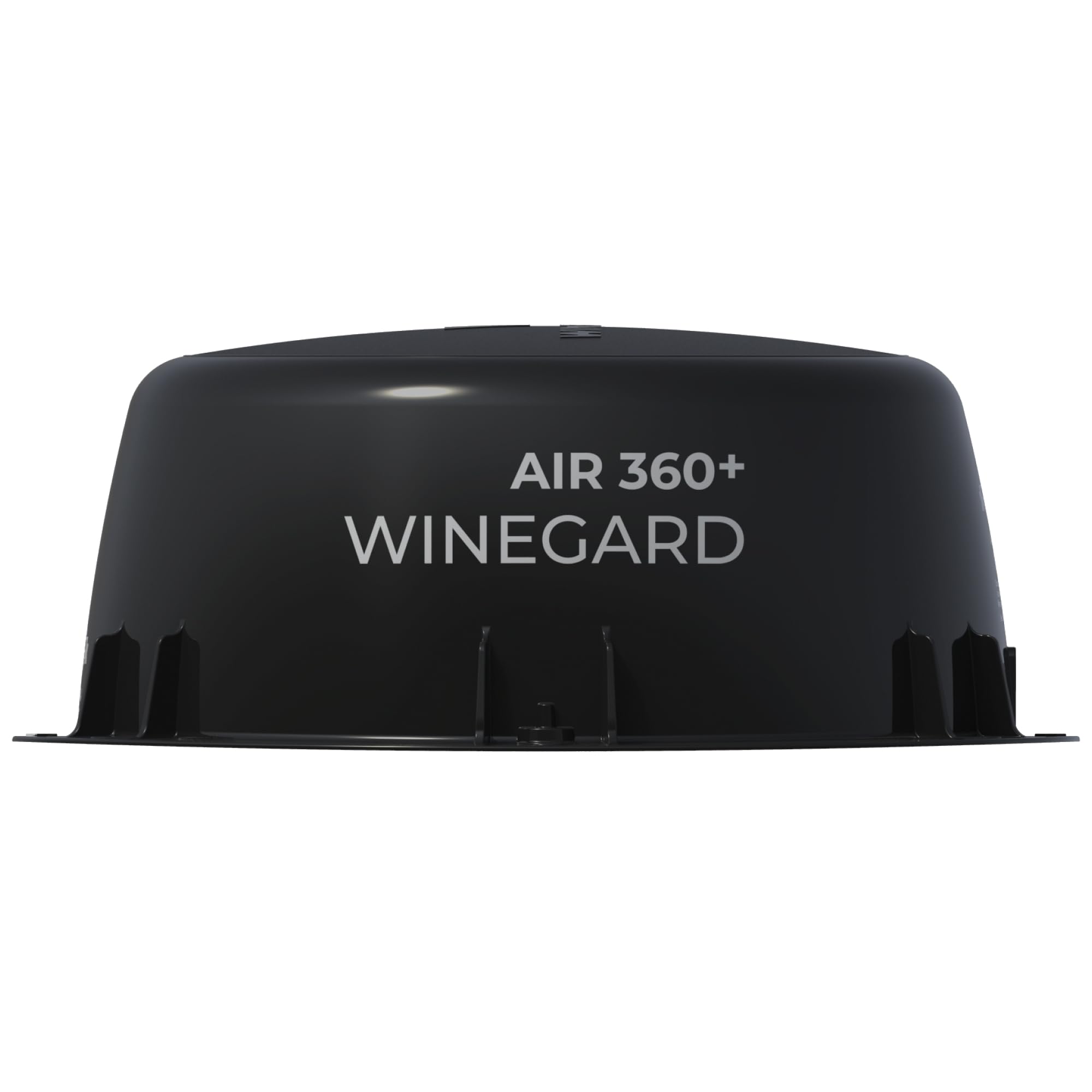
The Winegard Air 360+ V2.S is the most forward-thinking option on this list, functioning not just as an HDTV and FM antenna but also as a mounting platform for future upgrades. Its low-profile dome is rugged and weather-sealed, designed to stay on your roof permanently without needing to be cranked down. The omnidirectional reception means you never have to aim it, making arrival and setup nearly instantaneous.
A standout feature is the built-in satellite port and the pre-installed Wi-Fi and cellular antennas, which are ready for a Winegard Gateway 4G router. This eliminates the need to drill additional holes for a separate cellular booster or satellite dish. Owners consistently report receiving 50+ stable channels and sharp picture quality, even when parked near metal structures that normally cause signal degradation.
The antenna’s 290,400-foot range (roughly 55 miles) is reliable for most campgrounds, though performance in deep fringe areas is naturally lower than a dedicated directional antenna. Some users note that while the included hardware covers new installations, replacing an existing batwing requires purchasing butyl tape and Dicor sealant separately for a watertight seal.
Why it’s great
- True all-in-one: TV, FM, satellite port, and cellular ready.
- No cranking or aiming required, saving time at every stop.
- Rugged, low-profile design that stays mounted during travel.
Good to know
- Premium price point reflects the multi-function hardware.
- Sealant and butyl tape not included for final installation.
- Range is slightly less than high-end directional models in fringe areas.
2. Winegard Sensar III Batwing (RV-3095)
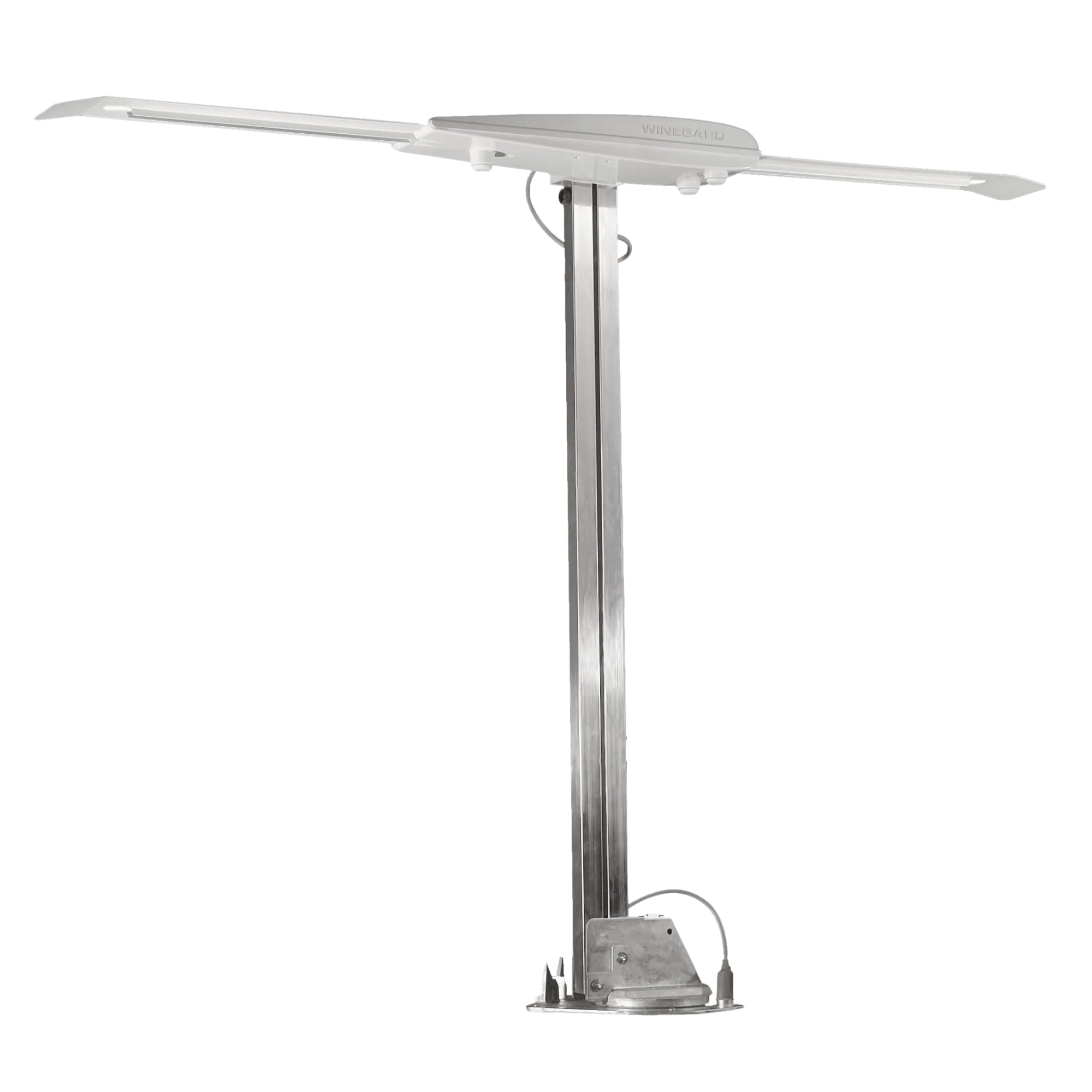
This is the classic batwing design that has dominated RV roofs for over two decades, and the Sensar III model is the most refined version yet. It offers a fully directional reception pattern that, when aimed correctly, delivers the strongest possible signal for its class. The 55-mile range rating is conservative in practice; many users report locking onto stable signals at greater distances with the included amplifier engaged.
The physical unit is substantial, with a 48.5-inch wingspan and a weight of 6.5 pounds. This size contributes to its gain, but it also requires a solid mounting base and careful clearance for low branches. The crank-up mechanism is tried and tested, and replacement parts are widely available. Users replacing older Winegard models find the bolt pattern matches perfectly, making it a straightforward upgrade.
Because it is a directional design, you will need to stop, find the broadcast tower locations using an app, and aim the antenna manually. For travelers who frequent deep-woods or mountainous campsites where signals are weak, this aiming effort is the price of admission for superior reception. The amplifier is effective but lacks a dedicated 4G/LTE filter, so interference from nearby cell towers is a possible issue.
Why it’s great
- Excellent directional gain for fringe-area reception.
- Proven, durable mechanical design with over 20 years of field testing.
- Direct replacement for many existing Winegard batwing bases.
Good to know
- Requires manual aiming and cranking at each campsite.
- Large physical profile catches wind and may hit low branches.
- No integrated 4G/LTE filter in the amplifier.
3. Antennas Direct ClearStream 2 RV
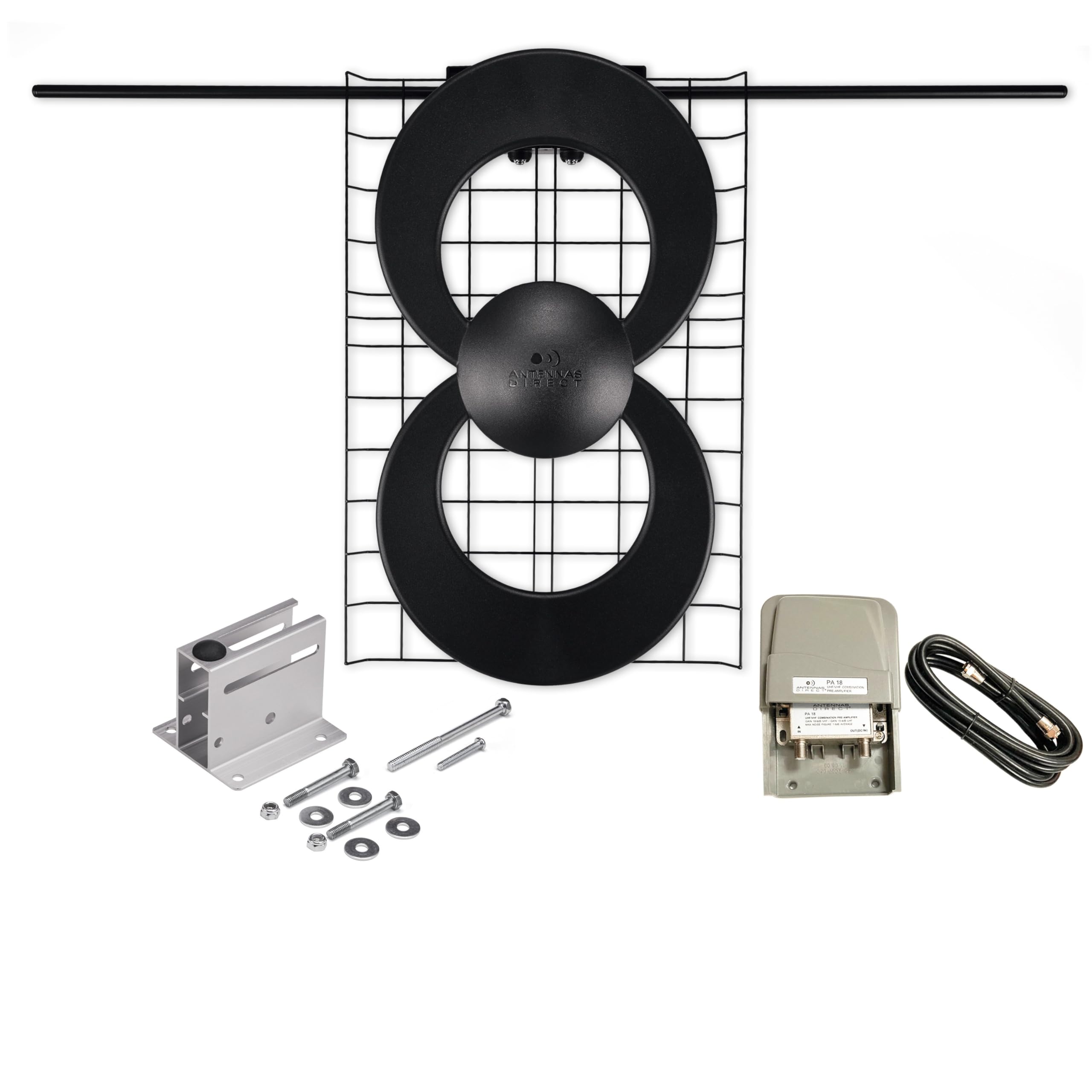
The ClearStream 2 RV is a beast for rural and remote camping, utilizing two patented UHF loops and a reflector to achieve a class-leading 60+ mile range. It is technically a multi-directional antenna, meaning it has a wide forward-facing reception arc rather than a full 360-degree pattern. This balances the convenience of less frequent aiming with the signal-grabbing power of a directional design.
Its bracket is specifically engineered to install on existing RV elevating mast gear, making it a direct upgrade path for many owners. The preamplifier is integrated and designed to boost the signal while the reflector adds forward gain and rejects rear interference. This antenna is also fully 4K and 8K UHD compatible, ensuring it will not be obsolete as broadcast standards evolve. Users switching from older batwings report gaining channels they previously could not lock in.
The major caveat is compatibility. If you are replacing a Winegard Sensar, the bracket works well. However, if you have an older or less common “batwing” mechanism like the AntennaTek, you will need to drill a new hole and possibly source a different mounting pin. The included RG59 cabling is also a weak link for 60-mile range performance; upgrading to RG6 coax will maximize its potential.
Why it’s great
- Highest rated range on this list at 60+ miles.
- Excellent UHF/VHF gain with integrated preamp.
- 4K/8K UHD and NextGen TV compatible.
Good to know
- May require drilling for non-Winegard mounting systems.
- Supplied RG59 cable limits performance over long runs.
- Not fully omnidirectional — still requires general orientation.
4. Channel Master Omni+ 50

The Channel Master Omni+ 50 is a versatile performer that straddles the line between home and RV use, offering a true 360-degree omnidirectional pattern. It uses a clever separate VHF dipole that rotates independently from the main UHF element, allowing you to optimize VHF reception without moving the entire antenna. This design choice pays off for viewers in markets where strong VHF channels like RF 2 or 6 are critical.
At 28.75 inches long, it is a sizable unit but very lightweight. The included mounting bracket fits standard wall, mast, or satellite mounts, making roof installation straightforward. Users consistently report dramatic improvements in signal-to-noise ratio, often jumping from a 60% to 95% signal quality score. It handles heavy rain and wind well, maintaining a stable signal where smaller antennas pixelate.
The 50-mile range is realistic for metropolitan and suburban campgrounds but may fall short in extremely remote areas. It is not an amplified antenna by default, so if your RV has a long cable run, you may want to pair it with a separate Channel Master preamp. Some users also note that while it works for RV roof mounting, its elongated shape is less aerodynamic than low-profile dome options.
Why it’s great
- True omnidirectional pattern with no aiming required.
- Independent VHF dipole for superior low-band reception.
- High build quality with excellent weather resistance.
Good to know
- Not amplified, may need external preamp for long cables.
- Elongated shape is less aerodynamic on the highway.
- 50-mile range is lower than some multi-directional competitors.
5. King OA8301 Jack Replacement Head
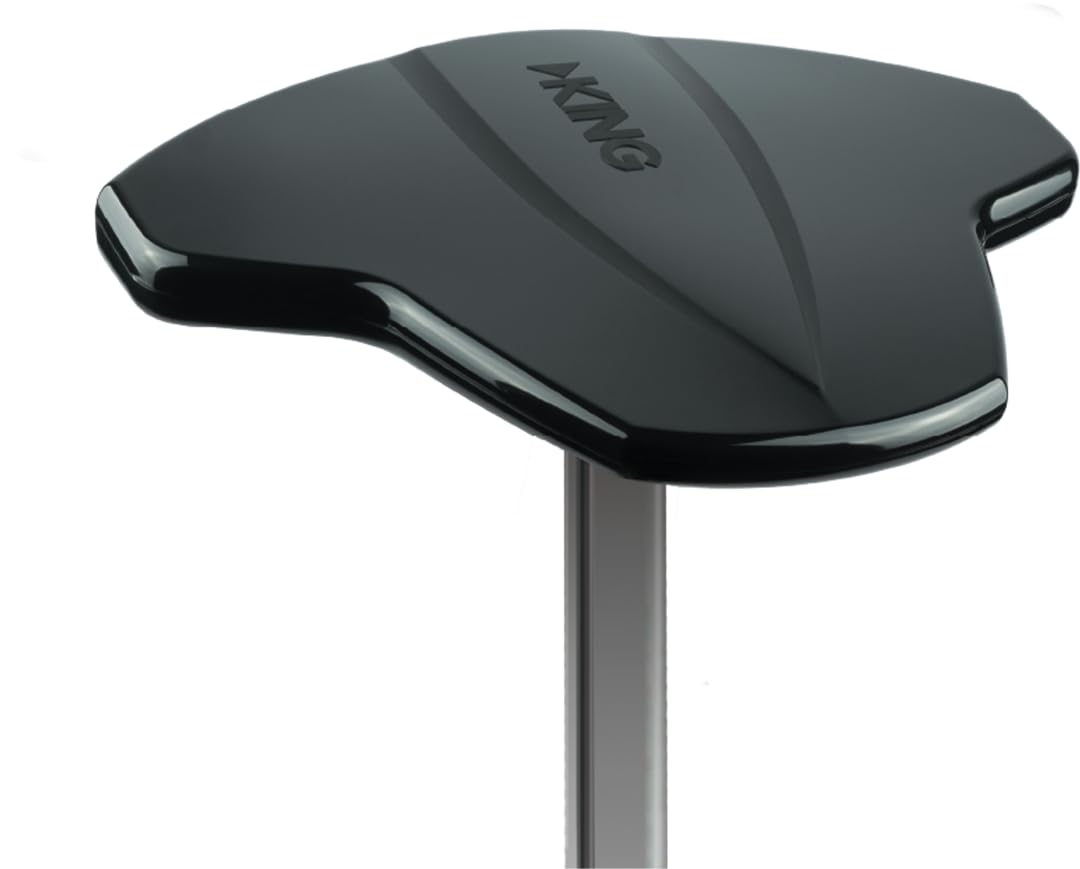
The King OA8301 is a targeted solution for owners of older batwing-style antennas. It is a replacement head that retrofits onto your existing mast and base assembly, promising a complete digital upgrade in about five minutes. The new head is specifically engineered to improve UHF signal acquisition while maintaining support for remaining VHF channels, filling a gap that many older digital antennas struggled with.
Users report that the new design is less sensitive to exact directional alignment than the original equipment it replaces, making fine-tuning less tedious. Several customers with motorhomes noted that the smaller, lighter head reduced wind load on their masts and still matched or exceeded the channel count of their older units. The included AC to DC power supply also allows for home use, adding versatility.
However, the “universal mounting” claim requires caution. Some buyers found that specific older batwing bases required additional brackets or had misaligned bolt holes, which the manufacturer was slow to provide. The product is best suited as a direct swap for a King brand Jack or a closely compatible Winegard Sensar wing, and not as a universal fit for every aftermarket batwing design.
Why it’s great
- Extremely fast and simple retrofit for compatible bases.
- Improved UHF reception over older wing designs.
- Lighter weight reduces stress on existing mast assembly.
Good to know
- Mounting compatibility is not universal.
- Customer support for missing brackets can be inconsistent.
- Still a directional design requiring manual aiming.
6. Magnadyne TV-1W Wing Style

The Magnadyne TV-1W is an entry-level full-system replacement that offers a compelling value proposition. It replaces the entire old dome or wing assembly with a sleek 24-inch aerodynamic wing that includes integrated reception for TV (UHF/VHF) and AM/FM radio. The included wall plate features dual TV outputs and a selectable shore cable input, simplifying your entertainment panel.
Installation is notably easy for a full replacement. The antenna uses pre-assembled Motorola and F-connectors, and the base plate is designed to cover most common roof mounting hole patterns without the need for drilling. Owners in suburban areas, roughly 30-40 miles from transmitters, report pulling in 80+ channels with a strong, stable signal. The 4G LTE filter is a welcome inclusion that prevents interference from nearby mobile signals.
The reception range is realistically best for urban and suburban campgrounds. In deep fringe areas beyond 40 miles, the non-amplified nature of the standard wing can result in channel dropouts. Some users also mention that the plastic wing feels less rugged than metal competitors, though it holds up fine under normal highway conditions. It is a solid budget-friendly choice for the casual traveler.
Why it’s great
- Excellent value for a complete antenna and wall plate kit.
- Simple installation with pre-assembled connectors.
- Includes AM/FM radio reception and 4G LTE filtering.
Good to know
- Performance drops off significantly beyond 40 miles.
- Plastic construction is less durable than metal designs.
- Not suitable for deep fringe-area reception.
7. Continu.us CA1500

The Continu.us CA1500 is the definition of set-it-and-forget-it convenience. This dome-style antenna sits just 7 inches tall on your RV roof, presenting almost no wind resistance and eliminating the risk of damage from low-hanging branches. It is an amplified, omnidirectional unit that promises 55-mile range and includes two TV outputs from the wall plate, making it easy to feed a main TV and a bedroom set.
Its built-in amplifier covers both UHF and VHF frequencies, and the weatherproof rating (-25°F to 145°F) and UV resistance mean it will look and function like new for years. For travelers who frequently move campsites and hate cranking antennas, this is a huge time saver. Users switching from broken batwings or dome units report a significant jump in channel count—sometimes quadrupling—especially when upgrading older, unamplified units.
The trade-off for this convenience is that you are relying entirely on the omnidirectional amplifier’s gain. The antenna cannot be aimed to punch through a hill or dense forest. In very weak signal areas, a directional batwing will still outperform it. Additionally, the included wiring instructions for the control panel are notoriously sparse, leaving some users frustrated during the initial hardwire setup.
Why it’s great
- Extremely low-profile and aerodynamic, ideal for travel.
- No aiming or cranking required whatsoever.
- Weatherproof and UV resistant for long outdoor life.
Good to know
- Omnidirectional gain is lower than directional alternatives in fringe zones.
- Wiring instructions are poorly documented.
- Requires 12V DC power to the amplifier to function.
FAQ
Do I need a directional or omnidirectional antenna for my RV?
Will a digital TV antenna receive 4K or NextGen TV signals?
Why am I losing channels when my cell phone is charging nearby?
Final Thoughts: The Verdict
For most users, the best digital rv antenna winner is the Winegard Air 360+ V2.S because it eliminates the need for aiming while providing a future-ready platform for satellite and cellular connectivity. If you want maximum raw range for fringe-area camping, grab the Antennas Direct ClearStream 2 RV with its 60+ mile reach. And for a simple, budget-friendly replacement that covers all the basics, nothing beats the Magnadyne TV-1W.

Mo Maruf
I created WellFizz to bridge the gap between vague wellness advice and actionable solutions. My mission is simple: to decode the research and give you practical tools you can actually use.
Beyond the data, I am a passionate traveler. I believe that stepping away from the screen to explore new environments is essential for mental clarity and physical vitality.