Our readers keep the lights on and my smoothie glass nicely filled. As an Amazon Associate, I earn from qualifying purchases.
Choosing the wrong premix oil for your two-stroke dirt bike isn’t just about smoke or smell — it directly determines piston life, ring seal, and whether carbon locks your power valve mid-race. Every batch of fuel you mix is a decision about how long your top end lasts.
I’m Mohammad Maruf — the founder and writer behind WellFizz. After logging dozens of hours researching flash points, ester content, and additive chemistries across the major premix oils on the market, I built this guide to cut through the marketing and tell you exactly what each bottle delivers for your specific riding style.
Whether you’re chasing max rpm on a motocross track or lugging single-track in the woods, the right oil prevents seizure and extends rebuild intervals. This guide breaks down the best dirt bike 2 stroke oil for every type of rider and budget.
How To Choose The Best Dirt Bike 2 Stroke Oil
Two-stroke premix oil isn’t a one-size-fits-all purchase. The viscosity grade, base stock (mineral, semi-synthetic, or full synthetic), and additive system all affect how the oil burns, how much carbon it leaves behind, and how well it protects at sustained high rpm. Here are the key factors to evaluate before pouring.
Ester vs. conventional synthetic base stocks
Ester-based synthetics (common in premium racing oils) create a polar molecular bond that clings to metal surfaces even after the engine shuts off. This “cling” provides instant protection on cold starts and reduces wear during the first seconds of operation. Conventional synthetic base stocks shear more easily under extreme heat and don’t offer the same film strength at redline.
Flash point and burn characteristics
A higher flash point means the oil vaporizes at a higher temperature, which reduces pre-ignition and keeps the combustion chamber cleaner. Oils with flash points above 250°C are ideal for high-compression, high-rpm engines. Lower flash point oils burn more completely at lower temperatures, which can be preferable for trail riding or cold climates where the engine rarely hits peak heat.
Viscosity grade for your climate
Most premix oils carry a SAE viscosity grade like 10W-30 or straight 50 weight. Thinner viscosity (10W-30) flows better in cold weather and mixes more easily, while heavier grades (SAE 50 or 20) provide thicker film at extreme operating temperatures. For desert riding or high-performance builds, a heavier base oil often reduces scuffing and ring wear.
Detergent package and power valve compatibility
If your bike has a power valve, you need an oil with a robust detergent additive that prevents carbon buildup on the valve stem and exhaust port. Low-ash, low-smoke formulations with active detergents keep the valve moving freely and extend the interval between top-end teardowns. Without it, sticky power valves rob top-end power gradually until you notice the loss at the track.
Quick Comparison
On smaller screens, swipe sideways to see the full table.
| Model | Category | Best For | Key Spec | Amazon |
|---|---|---|---|---|
| Motul 800 2T | Premium | High-rpm racing & sustained load | Flash point 274°C, ester-based | Amazon |
| Red Line 40603 | Premium | Dyno-proven power gains | SAE 50, synthetic racing | Amazon |
| Maxima Formula K2 | Mid-Range | Aggressive trail & track use | 16 fl oz, surface-active ester | Amazon |
| Triax Power Sport 2T | Value | Fleet & multi-machine owners | 1 quart, virtually smokeless | Amazon |
| Royal Purple Max Cycle | Mid-Range | Air-cooled & big-bore builds | 10W-40, Synerlec additive | Amazon |
In‑Depth Reviews
1. Motul 800 2T Road Racing Premix

The Motul 800 2T sits at the top of the premix hierarchy because its 100% ester-based synthetic formula delivers the highest flash point in this roundup at 274°C. That extreme thermal stability means the oil resists vaporizing before ignition, reducing pre-ignition knock and keeping the piston crown, exhaust port, and power valve virtually carbon-free even after hard motocross sessions or wide-open desert runs.
Ester molecules form a strong polar bond with metal surfaces, which provides a sacrificial film that stays on cylinder walls and bearings after the engine shuts off. That film prevents scuffing on cold starts — the moment when most two-stroke wear actually occurs. The 1-liter can size mixes at standard ratios (50:1 works well, though many racers run 45:1 for extra protection under sustained load).
Users report that this oil runs cooler than conventional synthetics in high-compression builds, and chainsaw millers using it on MS880 saws note a measurable drop in operating temperature. The primary consideration is cost — it’s the most expensive bottle per ounce here — but for riders who want the longest possible top-end life on a built motor, the premium is justified.
Why it’s great
- Highest flash point (274°C) reduces carbon deposits and pre-ignition
- Ester base clings to metal for instant cold-start protection
- Runs cooler in high-compression and sustained-load engines
Good to know
- Most expensive option per ounce in this roundup
- Packaged in a can rather than a squeeze bottle
2. Red Line 40603 Two-Stroke Oil Racing Synthetic
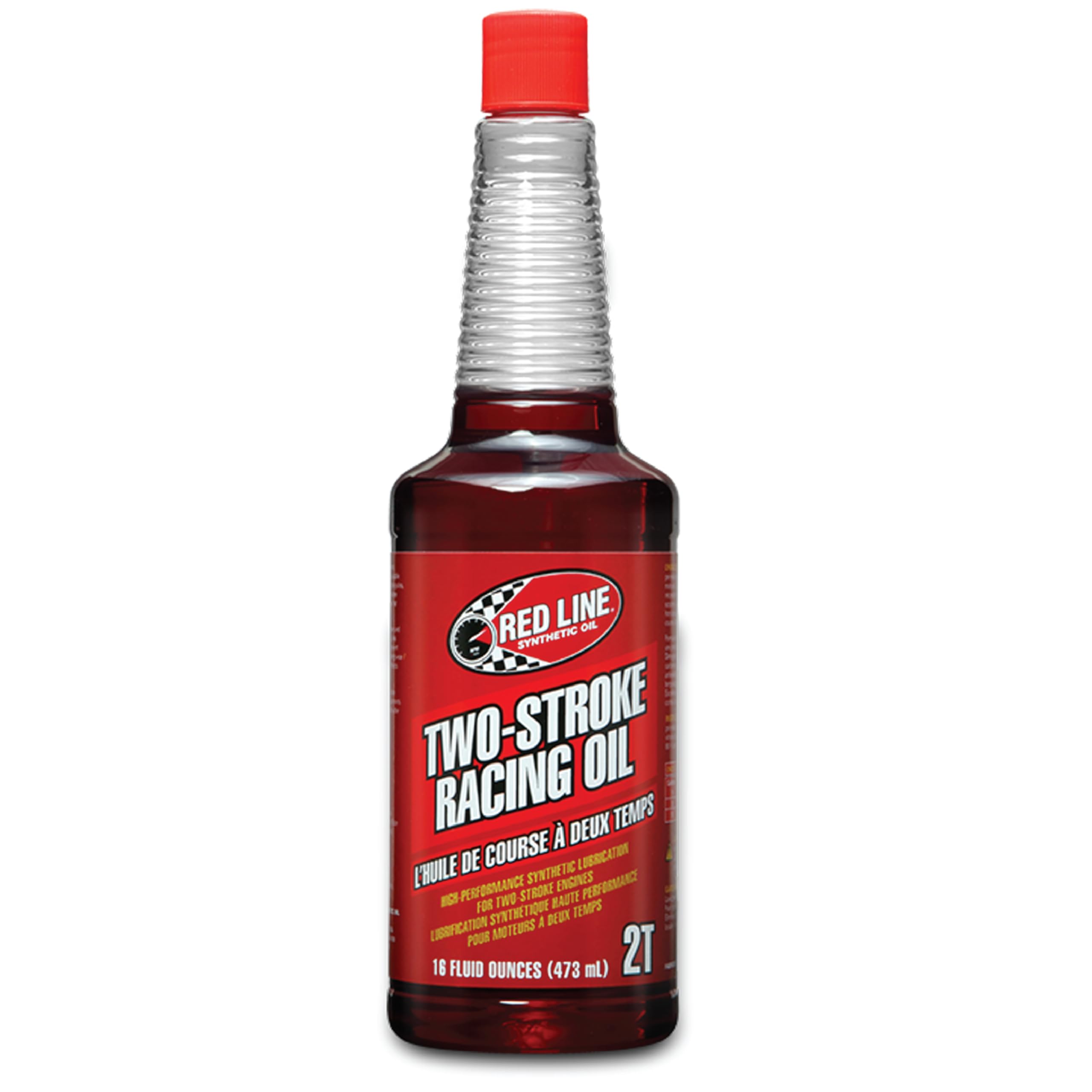
Red Line’s 40603 is one of the few premix oils that comes with dyno-verified power claims — the company states a 3-5% horsepower gain over standard synthetics, and users who have switched from other brands consistently report snappier throttle response and quicker rpm recovery. The SAE 50 viscosity grade provides a thicker hydrodynamic film than lighter 10W-30 blends, which is particularly beneficial in engines running high compression ratios or extended wide-open-throttle sections.
The additive system in this oil is engineered to prevent deposits on the combustion chamber, exhaust ports, upper ring groove, and piston crown. Those are the exact spots where carbon buildup robs compression and eventually causes ring sticking.
One user noted that switching to Red Line improved low-end throttle snappiness and gave a sweeter exhaust smell. The trade-off is that the heavier viscosity can make cold starts take a few extra pulls in winter, and some trail riders find that run time per tank decreases slightly because the engine revs harder. It’s optimized for racing and aggressive riding, not casual puttering.
Why it’s great
- Dyno-proven 3-5% horsepower improvement over standard synthetics
- SAE 50 viscosity provides superior film strength for high-rpm engines
- Exceptional deposit control keeps rings and ports clean for years
Good to know
- Heavy viscosity can make cold starts a bit harder in winter
- Not ideal for low-rpm trail riding or casual yard equipment
3. Maxima Formula K2 100% Synthetic Racing Premix

Maxima’s Formula K2 was developed alongside factory race teams, and its chemistry reflects that pedigree. The oil uses a proprietary surface-active additive system that aggressively attaches to engine surfaces, creating a bonded layer that stays in place even under extreme shear forces. This is the type of protection that matters when you’re on the pipe for an entire moto and the engine is living at 12,000 rpm for minutes at a time.
Optimal ring seal is one of the headline claims, and it’s backed by the additive approach: the oil fills microscopic gaps between the ring and cylinder wall, preventing blow-by and maximizing the pressure that pushes the piston down. Riders who have switched from conventional blends report a cleaner-running engine with noticeably less spooge dripping from the silencer, which indicates a more complete burn.
The 16-ounce bottle size means one bottle mixes roughly 4-5 gallons at a 40:1 ratio, which is typical for aggressive off-road riding. Users consistently mention the distinctive sweet smell of the exhaust, and several noted that it revived old engines that were down on power. The only downside is that the smaller bottle size means you’ll buy it more frequently compared to quart or gallon jugs.
Why it’s great
- Surface-active esters cling to metal for superior wear protection
- Designed with factory race teams for extreme riding conditions
- Reduces spooge and keeps combustion chambers remarkably clean
Good to know
- 16 oz bottle requires frequent repurchase for high-volume riders
- May be overkill for casual trail riding or low-rpm use
4. Triax Power Sport 2T Full Synthetic
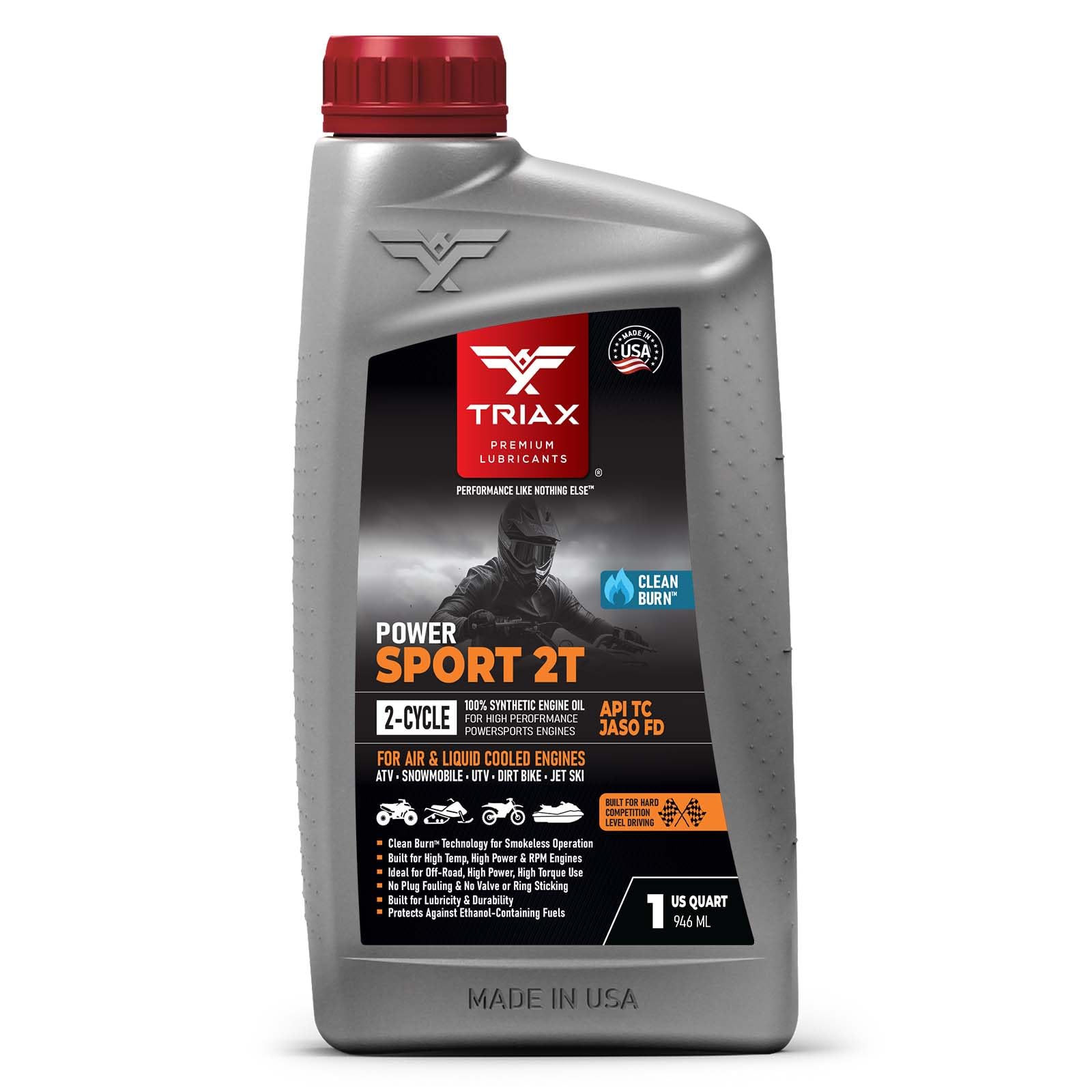
Triax Power Sport 2T punches well above its price point by offering a full synthetic 10W-30 formula that burns virtually smokeless and keeps power valves free of sticky deposits. Multiple long-term users report switching from premium brands like Amsoil and Klotz without noticing any drop in performance, while the per-gallon mixing cost drops significantly — one chainsaw user calculated a saving of roughly 80% per gallon compared to Stihl synthetic oil.
Clean Burn Technology is the key differentiator here: the synergistic detergent chemistry actively cleans existing deposits while preventing new carbon buildup on piston rings and exhaust ports. Snowmobile riders who switched from OEM “red” oil reported an immediate reduction in smoke at startup and no change in idle quality or power output. The easy-pour spout on the bottle is a small but appreciated detail that makes mixing clean and fast.
This oil is compatible with premix and direct injection systems, and it’s rated for air-cooled and liquid-cooled engines across ATVs, UTVs, snowmobiles, and dirt bikes. The 1-quart size gives you more volume per purchase than the 16 oz bottles, making it a strong choice for riders who maintain multiple machines or burn through premix quickly. The only real limitation is that it’s a 10W-30, so it doesn’t offer the same extreme high-temp film strength as heavier SAE 50 racing oils.
Why it’s great
- Full synthetic formula at the most cost-effective price in this roundup
- Clean Burn Technology actively reduces smoke and prevents carbon deposits
- Compatible with premix and direct injection across multiple vehicle types
Good to know
- 10W-30 rating lacks the extreme heat film strength of SAE 50 racing oils
- Not specifically formulated for high-compression race engines
5. Royal Purple Max Cycle 10W-40 Synthetic

Royal Purple’s Max Cycle 10W-40 stands out for its Synerlec additive technology, which creates a microscopically bonded film that reduces friction more effectively than standard synthetic base stocks alone. The real-world result for air-cooled big-bore bikes — like the highly modified XR650L that one rider runs in Arizona summer heat — is a dramatic drop in oil temperature from over 300°F down to 210-225°F, which directly extends top-end rebuild intervals from 5,000 miles to 7,000-10,000 miles.
The 10W-40 viscosity strikes a balance between cold-flow and high-temp film strength that works well for air-cooled engines that see both cool morning rides and blistering afternoon desert runs. Riders also report that the clutch action improves significantly after switching — no drag, no slip, and smoother engagement. One CBR 600F4i owner noted that the oil eliminated rough warm shifting that had plagued the bike for months.
Royal Purple is not the cheapest option on the shelf, but the temperature reduction and wear prevention it offers for air-cooled and high-mileage engines make it a cost-effective choice when you factor in reduced rebuild frequency. It’s a motorcycle-specific formulation, so it includes the proper friction modifiers for wet clutch compatibility — a critical detail that general-purpose engine oils don’t address.
Why it’s great
- Synerlec additive reduces friction and lowers operating temperature dramatically
- 10W-40 viscosity balances cold-start flow with high-heat film strength
- Wet-clutch compatible with smoother engagement and no slip
Good to know
- Priced higher than value options like Triax
- Primarily a 4-stroke formulation — confirm your 2T premix ratio needs
FAQ
What premix ratio should I use with these oils?
Can I use dirt bike 2 stroke oil in my chainsaw or weed whacker?
Does a higher flash point always mean better protection?
How often should I change my premix ratio for different riding conditions?
Final Thoughts: The Verdict
For most riders, the best dirt bike 2 stroke oil winner is the Motul 800 2T because its 274°C flash point and ester base provide unmatched carbon control and cold-start protection for everything from casual trail rides to full motos. If you want dyno-proven power gains and long-term piston cleanliness, grab the Red Line 40603. And for budget-conscious riders who maintain multiple machines, nothing beats the value of the Triax Power Sport 2T — full synthetic protection at less than half the per-gallon cost of premium brands.

Mo Maruf
I created WellFizz to bridge the gap between vague wellness advice and actionable solutions. My mission is simple: to decode the research and give you practical tools you can actually use.
Beyond the data, I am a passionate traveler. I believe that stepping away from the screen to explore new environments is essential for mental clarity and physical vitality.