Our readers keep the lights on and my smoothie glass nicely filled. As an Amazon Associate, I earn from qualifying purchases.
Live IPTV demands a device that can handle rapid channel switching, high-bitrate streams, and the occasional EPG refresh without freezing mid-game. A sluggish processor or limited RAM turns a seamless viewing experience into a frustrating session of spinning wheels.
I’m Mohammad Maruf — the founder and writer behind WellFizz. I’ve spent hundreds of hours dissecting the chipsets, codec support, and real-world networking performance of media players to separate hardware that delivers from gear that promises.
After analyzing the architecture that governs latency and playback stability, here is my curated list of the best device for iptv in 2024.
How To Choose The Best Device For IPTV
Selecting the right box for IPTV goes beyond picking the most popular streaming stick. You need hardware that prioritizes sustained throughput, low-latency video decoding, and an operating system that doesn’t gate your third-party apps.
Processor Power and Memory
IPTV apps are more demanding than Netflix. Look for a quad-core processor and at least 2GB of RAM. Lower specs lead to stutter when browsing EPG grids or switching streams rapidly. 4GB of storage is a starting point, but 8GB or 32GB gives breathing room for PVR recordings and app caching.
Codec Support
HEVC (H.265) and AV1 are the codecs most IPTV providers use to deliver 4K at lower bitrates. Devices that lack hardware decoding for these codecs will force software rendering, causing buffering and poor image quality. Check the spec sheet for native HEVC and AV1 support.
Operating System
Android TV / Google TV offers the widest app compatibility and sideloading capabilities, making it the most flexible for IPTV. Linux-based STBs (like Infomir MAG) are locked to specific middleware but often provide a more stable, dedicated experience for authorized services. Roku and Fire OS have stricter app store limits, which can be a hurdle.
Network Connectivity
Ethernet remains the gold standard for IPTV because it eliminates Wi-Fi interference. A 100Mbps Ethernet port is adequate for most streams, but Gigabit Ethernet future-proofs your setup. If Wi-Fi is necessary, dual-band Wi-Fi 5 or Wi-Fi 6 ensures consistent throughput.
Quick Comparison
On smaller screens, swipe sideways to see the full table.
| Model | Category | Best For | Key Spec | Amazon |
|---|---|---|---|---|
| Google TV Streamer 4K | Google TV | All-Around Performance | 2GB RAM / 32GB Storage | Amazon |
| Xiaomi TV Box S 3rd Gen | Android TV | Budget 4K & Wi-Fi 6 | 2GB RAM / 8GB Storage | Amazon |
| Roku Ultra | Roku OS | Cord-Cutting Simplicity | Wi-Fi 6 & Ethernet | Amazon |
| Infomir MAG544w3 | Linux STB | Operator Middleware Stability | 1GB RAM / 4GB eMMC | Amazon |
| Formuler Z10 NEO | Android 10 | Dedicated IPTV Box | 2GB RAM / 4GB ROM | Amazon |
In‑Depth Reviews
1. Google TV Streamer 4K

Google TV Streamer 4K solves the biggest IPTV frustrations: lag and storage limits. Its quad-core processor is 22% faster than the previous Chromecast generation, and the 32GB internal memory means you can install multiple IPTV apps plus PVR recording space without clearing cache weekly. The switch here is tangible — no more waiting for the EPG to populate.
Video output hits 4K HDR with Dolby Vision and Dolby Atmos pass-through, which matters for IPTV providers pushing premium movie channels. Real-world tests show fast channel hopping and zero frame drops on 50 Mbps HEVC streams. The Ethernet port ensures stable throughput during live sports, though the box ships without an HDMI 2.1 cable, so budget for one if you need the full spec.
The redesigned voice remote includes a customizable button and a “find my remote” feature — a small but practical win when the remote vanishes in sofa cushions. The minor drawback is the occasional Gemini pop-up during voice searches, but a quick workaround resolves it. For mainstream IPTV users, this is the most balanced pick.
Why it’s great
- Plentiful 32GB storage for IPTV apps and recordings
- Smooth navigation and rapid app switching
- Dolby Vision and Atmos support for premium streams
Good to know
- HDMI 2.1 cable not included
- Occasional Gemini pop-up bug
2. Xiaomi TV Box S 3rd Gen
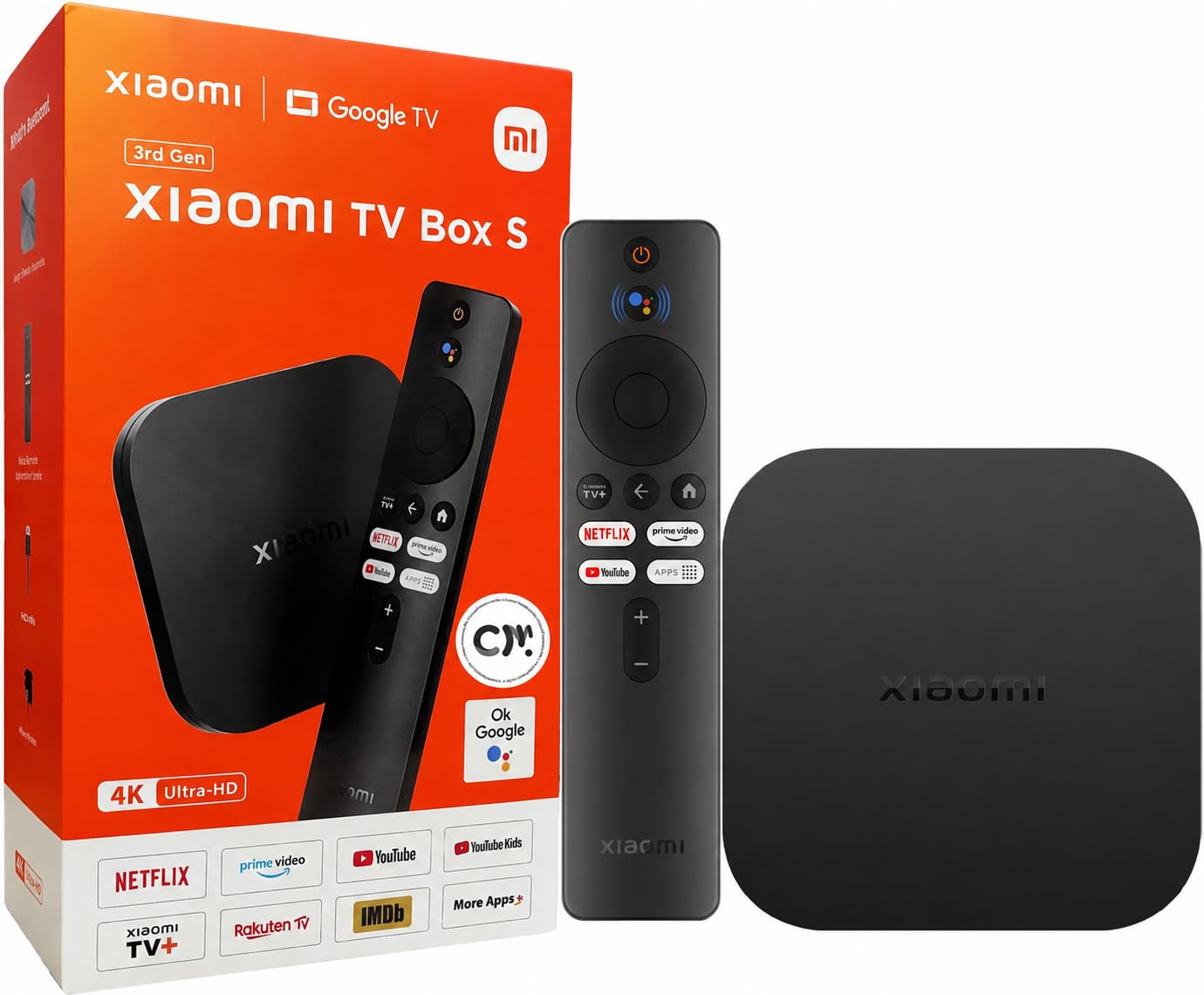
The Xiaomi TV Box S 3rd Gen brings Wi-Fi 6 connectivity to the mid-range IPTV market, which means faster throughput and lower latency for wireless setups. Its 6nm chipset handles 4K UHD playback at 60fps without breaking a sweat, and the 2GB RAM keeps the Android TV interface responsive even with multiple background services running.
Real-world experience from users who upgraded from older TVs shows this box revives aging panels with smooth 4K output. The Dolby Vision and DTS:X audio support cover the major surround sound formats, making it a solid companion for a home theater. The remote uses Bluetooth 360° control, so you don’t need line-of-sight to change channels.
The 8GB storage is the only constraint here — heavy PVR users will need to manage space or offload recordings. Also, the power button behavior can be finicky: one user noted it turns the device on but not off. If your IPTV usage leans on Wi-Fi 6 and you don’t need massive storage, this is the sweet spot for budget and performance.
Why it’s great
- Wi-Fi 6 for faster wireless streaming
- Compact size with 4K HDR and Dolby Atmos support
- Affordable entry into Android TV IPTV ecosystem
Good to know
- 8GB storage fills up fast with IPTV apps
- Power button control may be inconsistent
3. Roku Ultra

Roku Ultra is 30% faster than any other Roku model, making it the performance flagship of the Roku ecosystem. For IPTV, the Ethernet port is a key advantage — it guarantees a consistent wired connection for live streams. The rechargeable Voice Remote Pro with backlit buttons is a standout, solving the dual frustrations of dead batteries and fumbling in the dark.
The device supports Dolby Vision and HDR10+ for picture quality, and Dolby Atmos for immersive audio. Bluetooth headphone pairing is a quiet gem: you can watch late-night IPTV channels without waking the house. The interface is famously simple, which older users or IPTV newbies appreciate, though it lacks the sideloading flexibility of Android TV.
Some users report bugs with closed captioning and resume playback, which Roku has acknowledged. The standby light cannot be turned off, which may annoy dark-room viewers. For those who prioritize a dead-simple interface, a fantastic remote, and wired reliability over sideloading apps, the Ultra is a top contender.
Why it’s great
- Best-in-class rechargeable backlit remote
- Wired Ethernet for lag-free IPTV
- Bluetooth headphone mode for private listening
Good to know
- Cannot sideload IPTV apps easily
- Standby light stays on permanently
4. Infomir MAG544w3

The Infomir MAG544w3 is a dedicated Linux-based set-top box engineered for IPTV operators. It runs on an Amlogic S905Y4-B chipset with a quad-core Cortex-A35 processor pushing 16,500 DMIPS, and it supports AV1 and HEVC hardware decoding — both critical for modern IPTV streams that compress 4K into lower bitrates. The Linux 4.9 kernel provides a locked-down, stable environment optimized for middleware like Ministra PRO.
Video output goes up to 2160p at 60fps, with HDR support and Dolby Digital Plus eight-channel audio. The dual-band 2T2R Wi-Fi and 100Mbps Ethernet port cover connectivity, though the Ethernet is not Gigabit. Setup is straightforward for users with a compatible IPTV provider, and response times are near-instant due to the lean OS.
Durability is the main concern here — several reviews mention units failing after 6 to 10 months, which is alarming for a device in this tier. The 1GB RAM is also tight for multitasking. This box shines in controlled operator environments, but for general consumers, the reliability reports make it a cautious recommendation.
Why it’s great
- Native AV1 and HEVC hardware decoding for IPTV
- Lean Linux OS with fast channel switching
- Optimized for professional middleware
Good to know
- Multiple reports of hardware failure within a year
- Only 1GB RAM limits multitasking
5. Formuler Z10 NEO
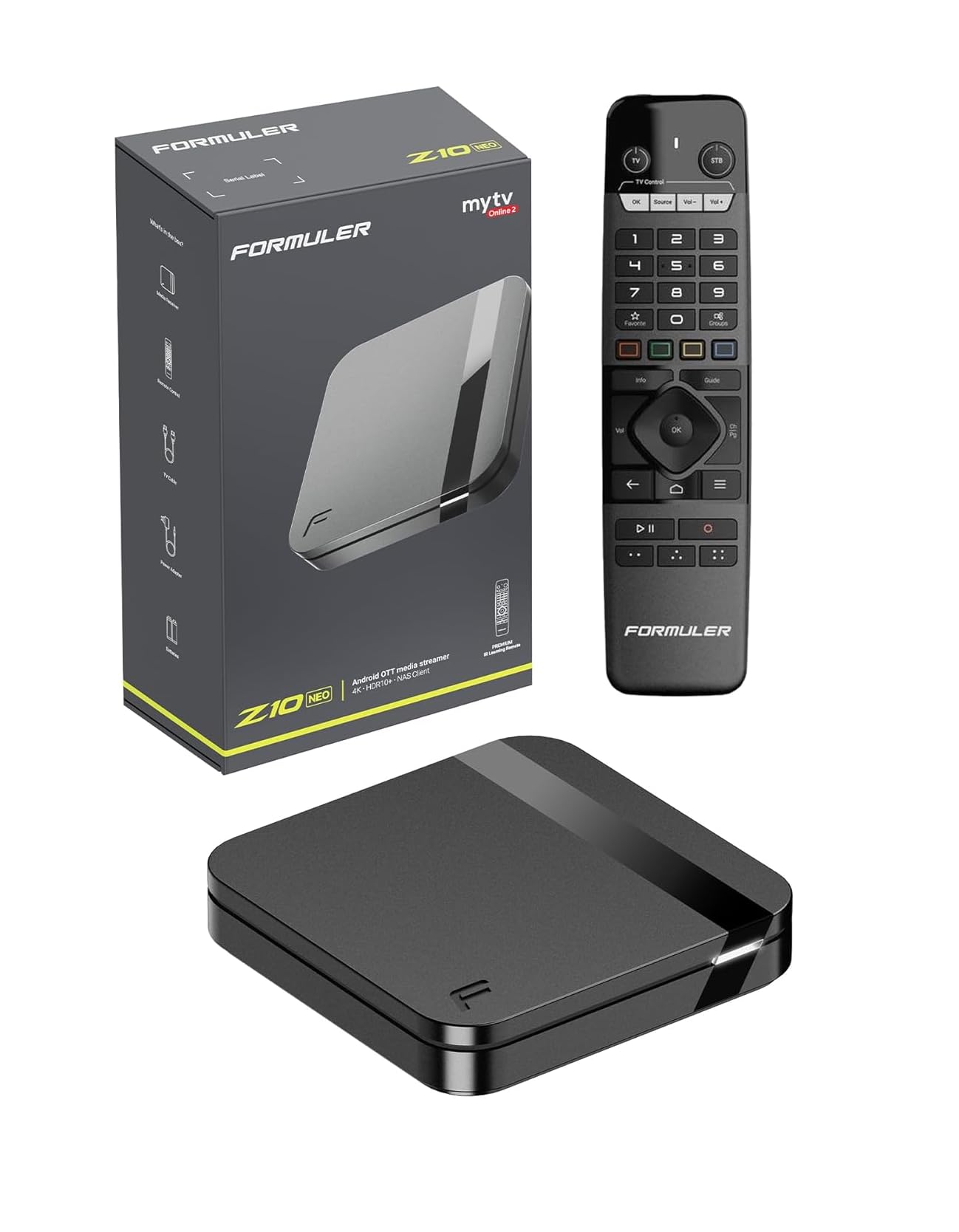
The Formuler Z10 NEO is built from the ground up for IPTV enthusiasts. Running Android 10, it skips the bloatware of general-purpose streamers and focuses on a clean interface optimized for third-party IPTV apps. The 2GB RAM and 4GB ROM handle moderate IPTV usage without stutter, but the storage is tight for heavy downloaders.
Picture quality is solid with 4K at 60fps and HDR10+ support, delivering vibrant colors for live sports and premium channels. The single-band 2.4GHz Wi-Fi is a notable limitation — it’s slower and more prone to interference than dual-band alternatives. An Ethernet 10/100 port is available for those who want a wired connection to compensate.
Users praise the easy setup and immediate compatibility with IPTV providers, as well as good image quality out of the box. However, the cheap bundled accessories (USB cables, phone mount) feel unnecessary and pad the cost. If you need a no-frills Android box strictly for IPTV, the Z10 NEO works well — just pair it with Ethernet for best results.
Why it’s great
- Optimized Android OS for IPTV apps
- Good 4K HDR10+ image quality
- Easy plug-and-play setup with providers
Good to know
- Single-band 2.4GHz Wi-Fi is slow
- 4GB storage is tight for apps and PVR
FAQ
Do I need an Android box for IPTV?
Why does my IPTV box buffer during live sports?
How much RAM and storage do I really need for IPTV?
Is Wi-Fi 6 important for a streaming box?
Final Thoughts: The Verdict
For most users, the device for iptv winner is the Google TV Streamer 4K because it balances 32GB storage, smooth navigation, and broad codec support without sacrificing app flexibility. If you want a rock-solid remote and wired simplicity, grab the Roku Ultra. And for budget-conscious viewers who still need Wi-Fi 6 and solid 4K, the Xiaomi TV Box S 3rd Gen delivers the best value.

Mo Maruf
I created WellFizz to bridge the gap between vague wellness advice and actionable solutions. My mission is simple: to decode the research and give you practical tools you can actually use.
Beyond the data, I am a passionate traveler. I believe that stepping away from the screen to explore new environments is essential for mental clarity and physical vitality.