Our readers keep the lights on and my smoothie glass nicely filled. As an Amazon Associate, I earn from qualifying purchases.
When limescale builds up inside your coffee machine, it doesn’t just slow down the brew cycle—it steals the heat your water needs to extract the right flavors from the grounds, leaving you with a weak, sour, or bitter cup. The internal heating element works harder, the flow rate drops, and eventually, error lights or strange knocking sounds signal that scale has taken over.
I’m Mohammad Maruf — the founder and writer behind WellFizz. I’ve spent countless hours analyzing descaler formulations, reading through lab data and user reports on compatibility with specific brands, and comparing active ingredient concentrations to separate genuinely effective solutions from overpriced vinegar alternatives.
This guide cuts through the marketing noise to help you find the best descaler for coffee machines that will restore your machine’s performance and keep your coffee tasting fresh.
How To Choose The Best Descaler For Coffee Machines
Not all descalers are built the same. The chemistry inside the bottle dictates how quickly it dissolves mineral scale, whether it leaves a chemical aftertaste, and whether it’s safe for your machine’s internal seals and gaskets. Here are the critical factors to consider before buying.
Active Ingredient: Citric Acid vs. Lactic Acid vs. Sulfamic Acid
Citric acid is the most common active in budget-friendly and mid-range descalers. It works fast on calcium carbonate scale but can be aggressive on rubber seals if left sitting too long. Lactic acid, found in premium products like the De’Longhi EcoDecalk, is plant-derived, biodegradable, and gentler on machine components while still being highly effective. Sulfamic acid (used in some IMPRESA formulas) is a stronger descaler suited for heavy scale but requires careful rinsing to avoid residue. For standard home use, citric or lactic acid provides the best balance of speed and safety.
Bottle Size and Per-Use Cost
A 8-ounce bottle that gives you 2 uses costs roughly the same per session as a 32-ounce bottle that gives you 10 uses. The price per descaling session is the number that actually matters for your wallet. If you live in a hard-water area and need to descale every 2-3 months, a value-sized bottle saves money over time. Single-dose pouches are convenient but carry the highest per-use cost. Always calculate how many sessions a bottle delivers before comparing prices.
Compatibility and Certifications
Most liquid descalers claim universal compatibility, but some brands (like Keurig or Breville) recommend specific solutions to avoid voiding the warranty. Check whether the descaler is certified safe for your machine’s internal materials. Products made with food-grade or plant-based acids are generally safe for all brands, including De’Longhi, Breville, Nespresso, and Ninja. Avoid descalers that contain phosphoric acid or harsh solvents, which can damage aluminum heating elements and plastic water lines.
Ease of Use and Aftertaste
The best descalers dissolve scale without leaving a lingering chemical smell or taste that carries over into your next brew. Vinegar works but the smell can persist through multiple rinse cycles. Liquid descalers with clear measuring marks on the bottle make dosing simple. Some products require a 15-30 minute soak in the reservoir, while others work fully through the brew cycle. Choose the method that fits your patience level and machine’s descaling program.
Quick Comparison
On smaller screens, swipe sideways to see the full table.
| Model | Category | Best For | Key Spec | Amazon |
|---|---|---|---|---|
| De’Longhi EcoDecalk | Premium | Plant-based formula safety | Lactic acid, 5 uses | Amazon |
| IMPRESA 32oz | Value | Best per-use cost | 10 uses per bottle | Amazon |
| Essential Values Universal | Mid-Range | Gentle citric acid cleaning | Citric acid, 4 uses (2-pack) | Amazon |
| Bar Keepers Friend | Stain Remover | Heavy mineral stain removal | Oxalic acid, 12 oz | Amazon |
| IMPRESA 2-Pack | Mid-Range | Budget multi-bottle pack | Citric/sulfamic, 4 uses | Amazon |
In‑Depth Reviews
1. De’Longhi EcoDecalk Descaler

De’Longhi’s EcoDecalk uses plant-derived lactic acid as its active descaling agent — a significant differentiator from the citric acid formulas that dominate the market. Lactic acid breaks down calcium carbonate effectively while being gentler on rubber seals, gaskets, and plastic water lines inside your machine. The solution is biodegradable and unscented, leaving no chemical residue or sour vinegar smell after rinsing.
Each 16.9-ounce bottle delivers 5 descaling sessions, each using 100ml per dose. The bottle has clear measurement markings, and the instructions are printed under the label for easy reference. Users running De’Longhi, Breville, and Nespresso machines report restored brew speed and improved crema texture after treatment. The plant-based formula also reduces the frequency of descaling needed compared to standard citric acid descalers.
The one downside: the bottle design can be slightly top-heavy when pouring, and the cost per use is higher than value-sized alternatives. But for the combination of safety, performance, and eco-friendly ingredients, this is the best all-around choice for most home baristas.
Why it’s great
- Plant-based lactic acid is gentler on machine internals
- Biodegradable and unscented — no chemical aftertaste
- 5 descaling sessions per bottle extends supply
- Works well on De’Longhi, Breville, Nespresso, and Ninja machines
Good to know
- Higher per-use cost than bulk citric acid options
- Bottle can be awkward to pour from when full
2. IMPRESA 32oz Coffee Machine Descaler

The IMPRESA 32-ounce bottle is the most cost-effective option in this lineup, delivering a full 10 descaling sessions from a single container. With a formula that blends citric acid (7-10%) and sulfamic acid (3-7%), it tackles both light mineral buildup and stubborn limescale deposits that can clog water lines in older machines. Despite the stronger active ingredients, it remains scent-free and leaves no discernible aftertaste after a thorough rinse.
Users running Keurig, Nespresso, Breville, Cuisinart, and Bunn machines report that the solution restores normal flow rates and eliminates knocking sounds caused by scale on the heating element. The bottle is compact for its capacity, fitting easily under a cabinet. The formula is also safe for use in electric kettles and water heaters, adding versatility for households with multiple appliances.
The primary trade-off is that the sulfamic acid component is more aggressive than lactic acid, so users must follow the rinse instructions carefully — especially on machines with aluminum heating elements. Occasional reports of unclear instructions for Keurig’s auto-descaling cycle suggest checking your machine’s user manual before starting.
Why it’s great
- 10 descaling sessions per bottle — excellent per-use value
- Works on virtually all single-serve and drip machines
- No sour vinegar smell or lingering chemical taste
- Also effective for kettles and water heaters
Good to know
- Sulfamic acid requires careful rinsing for safe use
- Instructions could be clearer for specific machines
3. Essential Values Universal Descaling Solution
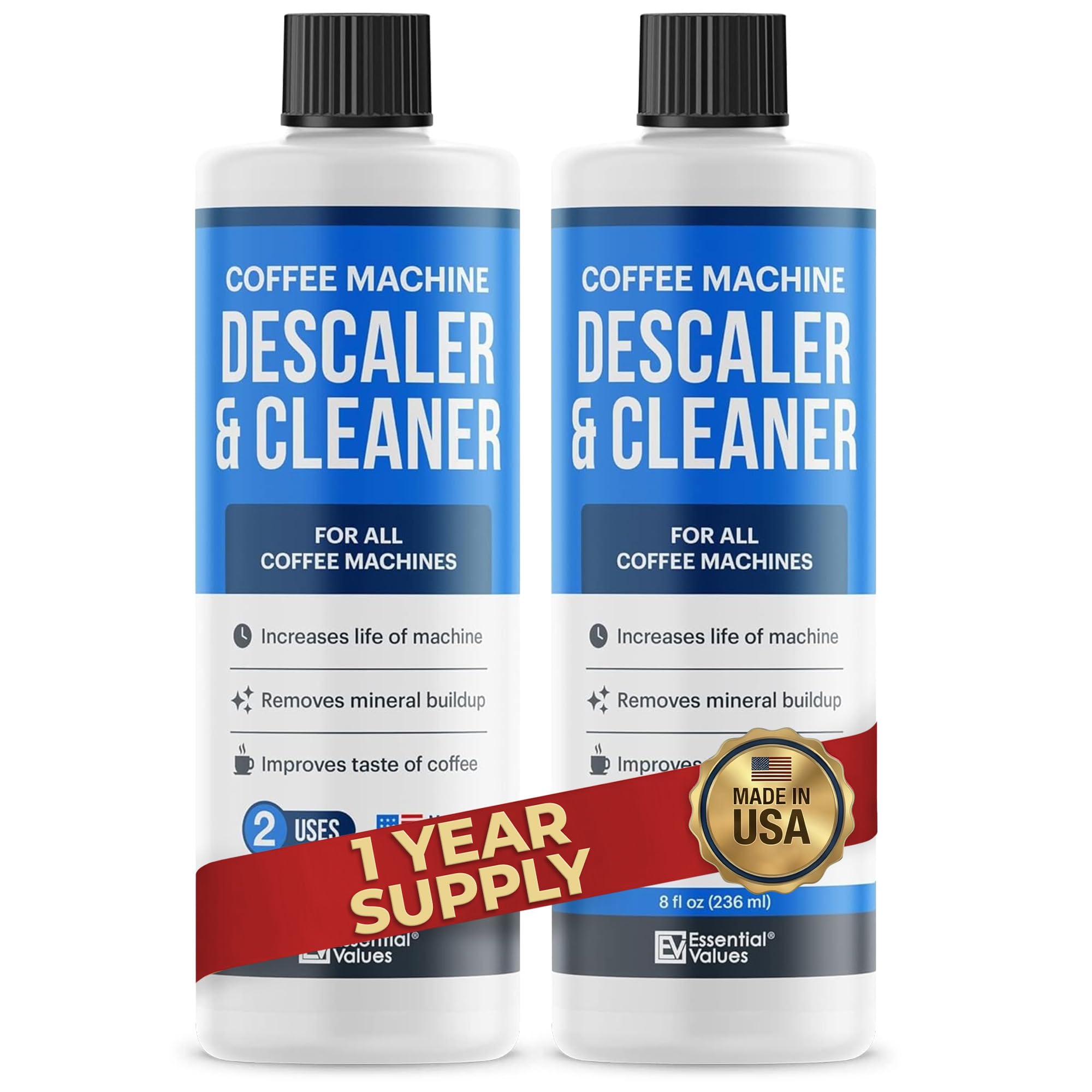
Essential Values keeps things simple with a straight citric acid formula — no sulfamic acid, no lactic acid, just food-grade citric acid that dissolves calcium carbonate effectively without risking internal components. The 2-pack provides 4 total uses (2 per 8-ounce bottle), making it a solid mid-range option for users who want a no-fuss, reliable descaler without paying for extra features they don’t need.
Users consistently report that this solution stops knocking noises in both Keurig and drip machines by clearing scale from the heating element and water lines. The fragrance-free formula leaves no aftertaste, and the recyclable PET bottle adds an eco-friendly perk. It’s also safe for use on shower doors and faucets at full strength — a versatility bonus for households dealing with hard water stains beyond the coffee maker.
On the downside, the bottle lacks clear measurement markings, which makes dosing less precise than competitors with etched lines. Two users noted that the included instructions are sparse, and you may need to consult your machine’s manual for the proper descaling cycle. Not a dealbreaker, but worth noting for first-time users.
Why it’s great
- Pure citric acid — safe and gentle on machine seals
- Fragrance-free with no lingering aftertaste
- Effective at eliminating scale-related knocking sounds
- Recyclable PET bottle and versatile for household use
Good to know
- No measurement markings on the bottle
- Instructions are thin — check your machine’s guide
4. Bar Keepers Friend Coffee Maker Descaler
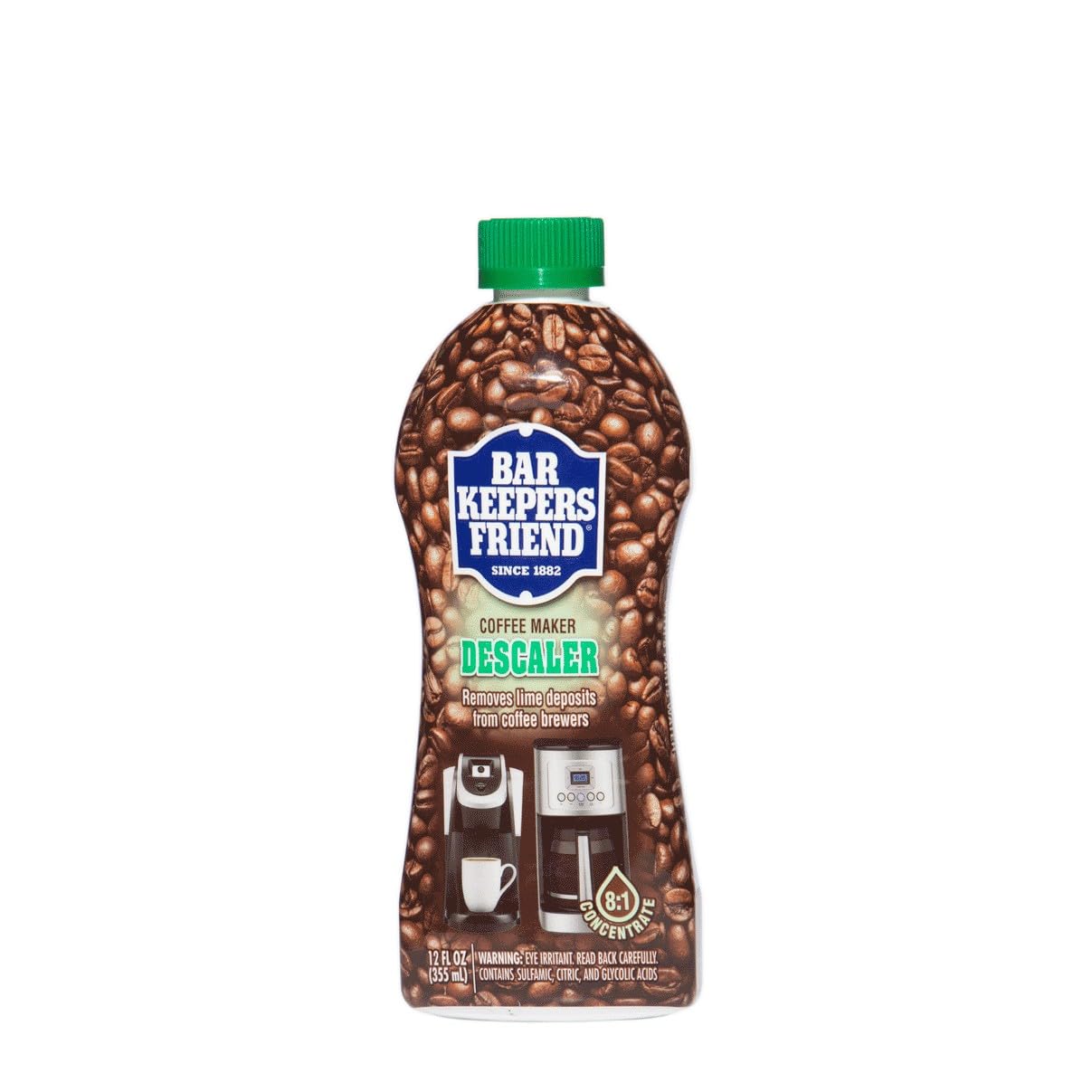
Bar Keepers Friend takes a different approach — its active ingredient is oxalic acid, a powerful mineral solvent that excels at removing hard water stains from stainless steel surfaces, glass carafes, and plastic reservoirs. If your coffee maker has visible white scale deposits or brown coffee stains that standard citric acid descalers can’t touch, this formula cuts through them quickly. The 12-ounce bottle lasts multiple descaling sessions (roughly 8-12 uses depending on your machine’s reservoir size).
Users with Breville and older Keurig machines report that this descaler restored their brew temperature and eliminated sluggish flow after just one cycle. The oxalic acid also works on shower doors, glass cooktops, and stainless steel sinks — making it a multitasking cleaner for the kitchen. The formula is non-toxic and chlorine-free, though it requires careful handling (keep it away from eyes and skin).
The major drawback: oxalic acid is more aggressive than citric or lactic acid, so it’s not the best choice for sensitive machines with plastic water lines or rubber gaskets that are already worn. Some users note a faint metallic smell during the descaling cycle, which dissipates after two full rinse cycles. Best reserved for machines with visible hard water stains rather than routine monthly maintenance.
Why it’s great
- Oxalic acid removes tough mineral and coffee stains
- Works great on stainless steel and glass carafes
- Multiple uses per bottle — good value for heavy scale
- Also useful for household cleaning tasks
Good to know
- Too aggressive for routine maintenance on delicate machines
- Requires careful handling and thorough rinsing
5. IMPRESA Descaler 2-Pack
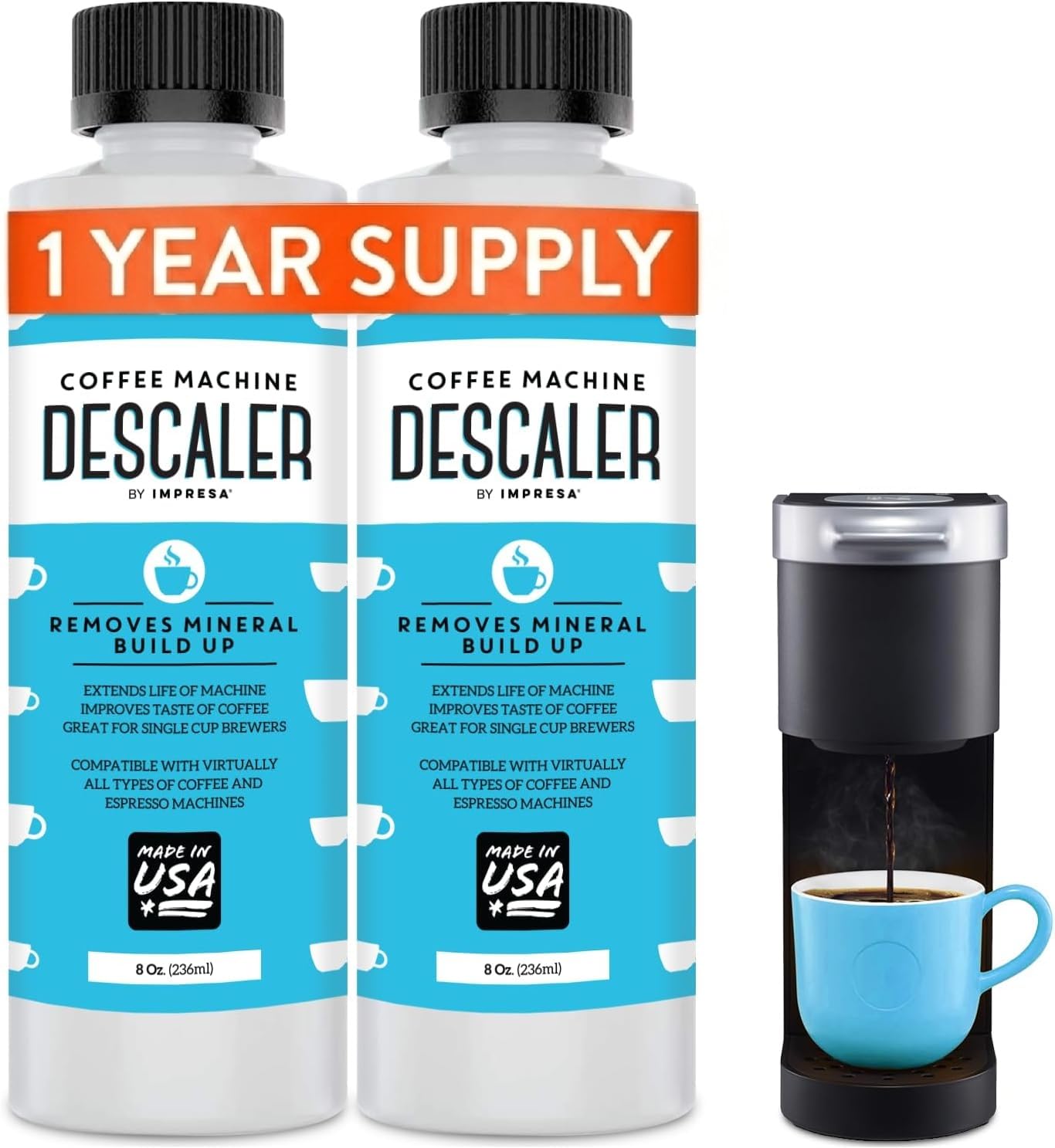
The IMPRESA 2-pack is the entry-level option in this lineup, offering two 8-ounce bottles with a combined total of 4 descaling sessions. The formula uses a blend of citric acid (7-10%) and sulfamic acid (3-7%) — the same active ingredients found in the larger IMPRESA bottle, just in a smaller package. This makes it a good trial size for users who want to test the formula before committing to the 32-ounce bulk version.
Users report that the solution effectively removes hard water scale from Keurig, Cuisinart, Bunn, and Black + Decker machines, with no sour vinegar smell or chemical aftertaste. The 4-ounce dose per session is easy to measure, and the bottle design fits neatly into standard water reservoirs. Customers also praise its effectiveness in electric kettles — a nice bonus for multi-appliance households.
The main limitation is the per-use cost, which is higher than the larger IMPRESA bottle. Two bottles also means more plastic waste compared to a single bulk container. Some users found the instructions vague for machines with automatic descaling cycles, so have your machine’s manual handy. A solid entry point for light descaling needs, but frequent users should upgrade to the 32-ounce version for better value.
Why it’s great
- No vinegar smell or lingering aftertaste
- Works universally across most major brands
- Easy to dose at 4 ounces per session
- Also effective for electric kettles
Good to know
- Higher per-use cost than the bulk 32oz bottle
- Instructions lack detail for automatic descaling cycles
FAQ
How often should I descale my coffee machine?
Can I use white vinegar instead of a commercial descaler?
Will using a universal descaler void my warranty?
Why does my coffee taste sour after descaling?
Final Thoughts: The Verdict
For most users, the best descaler for coffee machines winner is the De’Longhi EcoDecalk because its plant-based lactic acid formula strikes the perfect balance between cleaning power and component safety across all major machine brands. If you want the lowest per-use cost for heavy descaling frequency, grab the IMPRESA 32oz. And for removing stubborn coffee stains and white mineral deposits that other descalers can’t touch, nothing beats the Bar Keepers Friend.

Mo Maruf
I created WellFizz to bridge the gap between vague wellness advice and actionable solutions. My mission is simple: to decode the research and give you practical tools you can actually use.
Beyond the data, I am a passionate traveler. I believe that stepping away from the screen to explore new environments is essential for mental clarity and physical vitality.