Our readers keep the lights on and my smoothie glass nicely filled. As an Amazon Associate, I earn from qualifying purchases.
A laptop screen glows with notifications, browser tabs, and the endless pull of the internet—the last thing you need when you’re trying to sink into a draft. The right writing device strips that noise away, leaving only the blank page and your thoughts. Whether you need a distraction-free e-ink slab or a hybrid tablet that converts your scribbles into text, the choice hinges on battery philosophy, screen feel, and how much digital clutter you’re willing to tolerate.
I’m Mohammad Maruf — the founder and writer behind WellFizz. I’ve spent countless hours analyzing the hardware, screen technologies, and note-taking software that define this category, from color e-ink panels to pressure-sensitive stylus systems.
This guide cuts through the marketing to help you find the best device for writers — one that keeps you in a flow state rather than pulling you into a settings menu.
How To Choose The Best Device For Writers
Not all writing-focused devices are created equal. The gap between a color e-ink tablet and a paper-digitizer hybrid is enormous, and picking the wrong one can sabotage your writing habits. Here are the key factors that matter most.
Screen Type: E-Ink, LCD, or Paper Digitizer
E-ink displays (like those on the Kindle Scribe or reMarkable) produce zero blue-light glare and consume power only when the page changes, giving you weeks of battery life. The trade-off is a slower refresh rate and often a grayscale-only canvas—color models exist but come with lower resolution. LCD tablets like the XPPen Magic Note Pad offer vivid color and smooth 90Hz scrolling but drain their battery in hours and generate more eye strain during long sessions. Paper-digitizer tools (like the Huion Note) let you write on real paper and digitize the strokes, preserving the tactile feel but requiring a phone app for storage and often producing lower-fidelity digital output.
Pen Technology: Battery-Free vs. Rechargeable, Latency, and Nib Feel
A battery-free stylus (found on the Kindle Scribe and XPPen X3 Pro Pencil 2) never needs charging, which eliminates one more distraction. Pressure sensitivity levels range from 4,096 to 16,384—the higher number matters for shading and line variation, but for pure note-taking and prose drafting, 4,096 is already overkill. The nib material defines the writing sensation: soft nibs glide like a felt-tip marker, while hard plastic nibs feel scratchy like a pencil on rough paper. Latency—the delay between your hand moving and the ink appearing—matters most when you write fast; sub-20ms latency is nearly imperceptible.
Operating System and Ecosystem Lock-In
Devices running a stripped-down Linux-based OS (reMarkable, Penstar eNote) are distraction-free by design but limit you to the built-in apps and cloud sync options. Android-based e-ink tablets (BOOX Note Air 5C, XPPen Magic Note Pad) let you install Google Play apps, including Scrivener, Evernote, Google Docs, and any note-taking tool you already use—but that very flexibility invites the same digital noise you sought to escape. Proprietary ecosystems (Kindle Scribe) lock you into Amazon’s book store and Whispersync, which is perfect if you read and write exclusively within that walled garden, but frustrating if you want to export to other platforms.
Battery Philosophy: Weeks vs. Days vs. Hours
E-ink devices boast weeks of typical use because they only draw power when refreshing the page—ideal for writers who want to grab a device and never think about charging. LCD-based Android tablets last one to two full days of note-taking, which still beats a laptop but requires a nightly charging habit. Paper-digitizer hybrids have their own rechargeable pen and Bluetooth connection, giving you roughly 18 hours of active use before needing a top-up. Match the battery life to your workflow: a week-long trip with no charging access demands an e-ink device; a daily desk setup can tolerate a nightly plug-in.
Quick Comparison
On smaller screens, swipe sideways to see the full table.
| Model | Category | Best For | Key Spec | Amazon |
|---|---|---|---|---|
| Amazon Kindle Scribe (newest) | E-Ink | Deep reading & writing hybrid | 11″, 300ppi, front light, 40% faster | Amazon |
| Penstar eNote Pro | Color E-Ink | Color note-taking & document mark-up | 10.3″ Kaleido 3, 300ppi B/W, 128GB | Amazon |
| reMarkable Paper Pro Move | E-Ink | Ultraportable pocket notebook | 7.3″ color display, 64GB, 15-day battery | Amazon |
| BOOX Note Air 5 C | Color E-Ink | Android app flexibility with e-ink | 10.3″, 6GB RAM, Android 15, 4096 press. | Amazon |
| Penstar eNote 2 | E-Ink | Paper-white, pen-only focus | 10.3″, 300ppi, 128GB, 9 shortcut keys | Amazon |
| Amazon Kindle Scribe (refurb) | E-Ink | Budget e-ink reading & note-taking | 10.2″, 300ppi, Premium Pen included | Amazon |
| XPPen Magic Note Pad | Android LCD | Vivid color notes, 90Hz smoothness | 10.95″, 16K pressure, AG etched display | Amazon |
| TCL NXTPAPER 11 Gen 2 | Android LCD | Budget-friendly tablet with pen | 11″ 2K, 8000mAh, 4096 press. T-PEN | Amazon |
| Huion Note | Paper Digitizer | Real paper feel with digital backup | A5, 18hr battery, Bluetooth 5.0 | Amazon |
In‑Depth Reviews
1. Amazon Kindle Scribe (newest model)
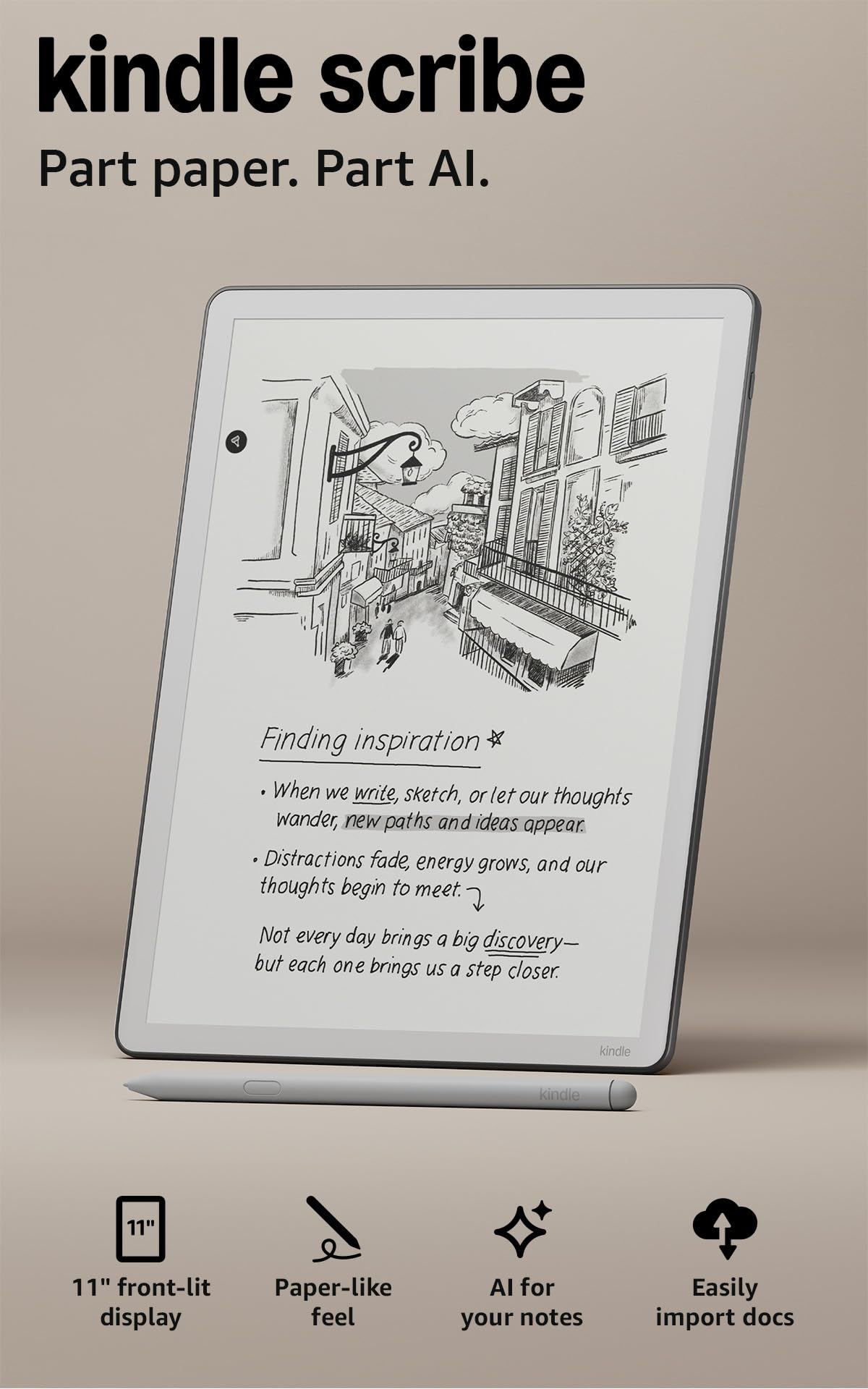
The newest Kindle Scribe is thinner (5.4mm), lighter (400g), and 40 percent faster than the previous generation, making it the most refined e-ink writing device on the market. The 11-inch paper-like display with automatic front-light adjustment means you can write in direct sunlight or a dim bedroom without manually fiddling with brightness. The textured screen surface paired with the Premium Pen (which requires no charging) delivers a writing latency that feels instantaneous—your strokes appear as fast as your hand moves, which keeps prose flowing without technical hesitation.
Beyond the hardware, Amazon has added AI-powered note tools that let you search handwritten notes by keyword, convert them to typed text, and even ask questions about your notebook content to surface insights. The Active Canvas feature automatically makes room for your writing inside any Kindle book, letting you annotate margins without losing page layout. Integration with Google Drive and Microsoft OneDrive means you can import documents for mark-up and export your notebooks directly to OneNote—a huge leap for writers who work across platforms.
The biggest drawback remains the walled-garden ecosystem: you are buying into Amazon’s world, and while Whispersync is excellent for backing up notes and syncing across devices, power users who want to export to Notion, Obsidian, or other third-party tools will hit friction. Also, no color screen means charts, highlighted PDFs, or color-coded notes won’t transfer visually. For pure reading and writing, however, this is the most polished, distraction-free device available in this form factor.
Why it’s great
- Remarkably thin and light for an 11-inch screen
- Zero-lag Premium Pen with no charging required
- AI notebook search and text conversion works accurately
- Active Canvas for writing inside Kindle books
Good to know
- Locked into Amazon ecosystem for note export
- No color display for rich document mark-up
- No waterproofing like other Kindle models
2. Penstar eNote Pro
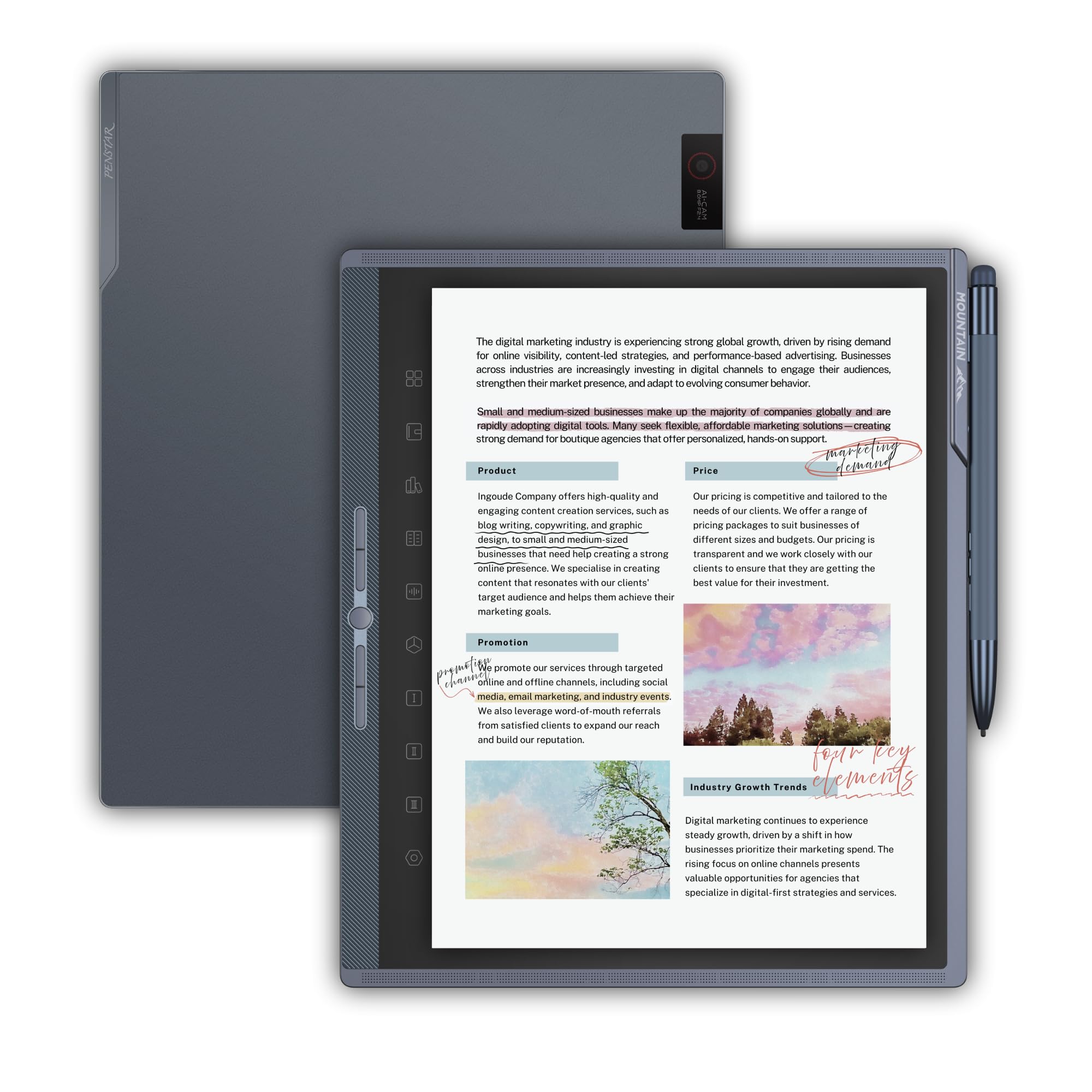
The Penstar eNote Pro brings the Kaleido 3 color e-ink panel to the writing world, delivering 300 PPI in black-and-white mode and 150 PPI in color. That color resolution is enough to make charts, diagrams, and color-coded notes pop without the backlit glare of an LCD. The aluminum-alloy B6 stylus feels substantial in hand and offers a precise, pencil-like scratch when you write on the etched glass surface—some users prefer a slicker feel, but for those who want paper-like friction, this is a win. The 5 customizable physical shortcut buttons let you map frequently used tools (pen type, eraser, undo) so you rarely need to navigate menus.
The built-in MyScript engine converts handwritten notes to typed text with impressive accuracy across 66 languages, and the AI voice-to-text can transcribe meetings in real time across 52 languages, making it a dual-purpose tool for both drafting and dictation. The eNote Pro runs Android 14, which gives access to a wide ecosystem of apps, but there is a catch: it lacks Google Play certification, meaning many standard Android apps cannot be installed directly. The native note-taking app is excellent, with templates, PDF annotation, and cloud sync via Google Drive, OneDrive, or Dropbox, but the lack of a full app store limits its versatility compared to a BOOX device.
The color e-ink screen requires the front light in dim rooms—it is noticeably darker than an LCD even with the light on. Some users report that the writing feel is slightly slicker than true paper, and the highlighter tool in the native app can obscure text rather than highlight it. Still, for a writer who needs color for document annotation, diagramming, or reviewing marked-up PDFs, this is the most capable color e-ink option available at this price.
Why it’s great
- Color e-ink makes charts and annotations readable
- MyScript handwriting conversion supports 66 languages
- Five customizable shortcut buttons speed up workflow
- 128GB storage for large document libraries
Good to know
- No Google Play certification limits app choices
- Front light needed in low ambient light
- Highlighting tool can obscure text in notes
3. reMarkable Paper Pro Move
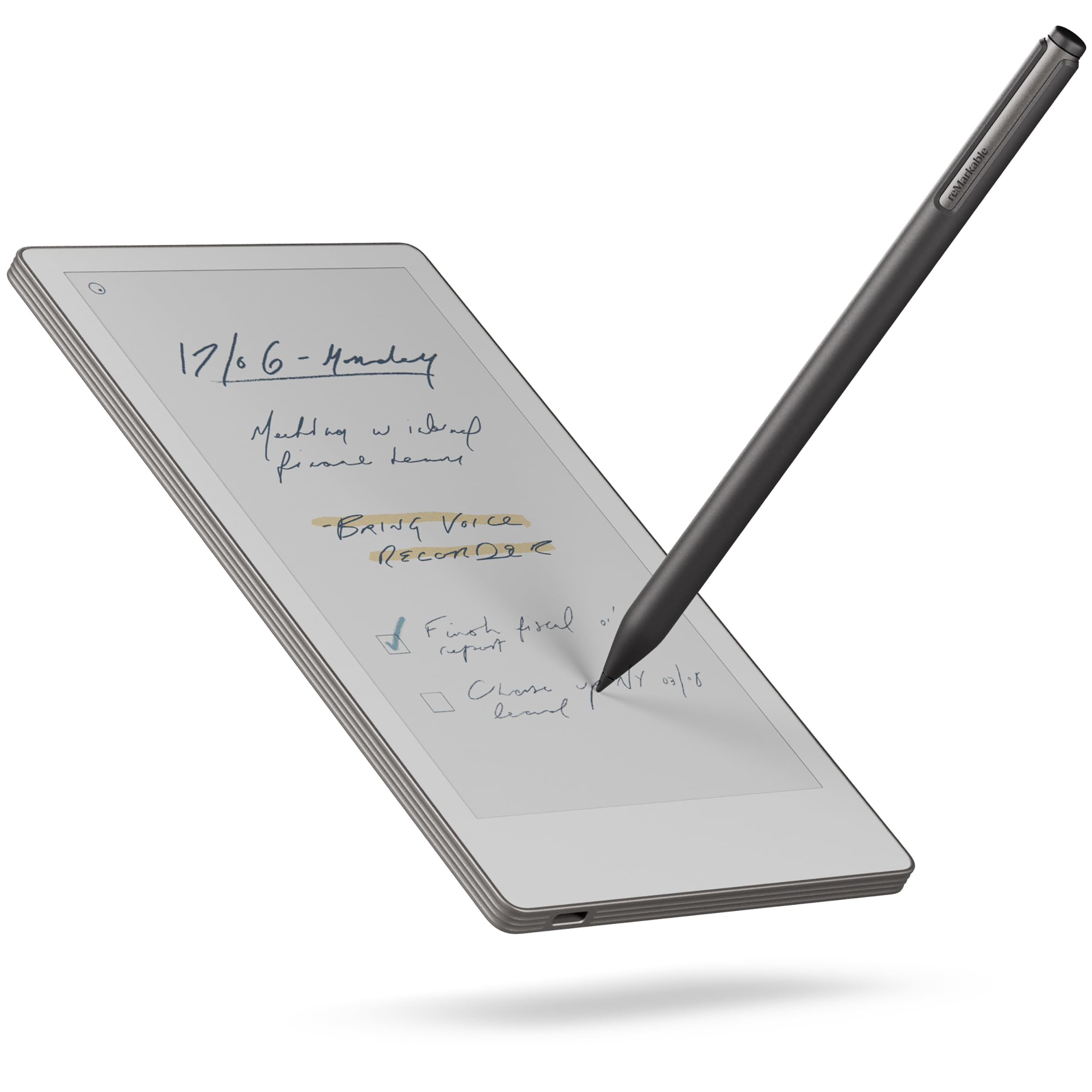
The reMarkable Paper Pro Move is the smallest color e-ink device on this list at 7.3 inches and just 248 grams—smaller than a paperback and thin enough to slide into a jacket pocket. The Canvas Color display mimics the visual texture and acoustic feedback of real paper, producing a faint rustle as the stylus moves across the surface. The Marker Plus stylus attaches magnetically with a satisfyingly strong hold and never needs pairing or charging, true to the reMarkable philosophy of eliminating all digital friction.
The software remains delightfully minimal: no notifications, no app store, no web browser—just notebooks, documents, and PDFs. The handwriting-to-text conversion works well, and the new search capability (part of the Connect subscription) lets you find handwritten notes by keyword, which is a significant upgrade for organizing years of notebooks. The 64GB internal storage is generous for a device this size, and the 15-day battery life means you can leave the charger at home on a two-week writing retreat. The color screen, while not as vivid as Kaleido 3 panels, is sufficient for color-coded notes and light document annotation.
The major downsides are the subscription requirement (/month) for full features like cloud sync, search, and handwriting conversion—without it, the device is largely offline and local-only. The small screen size means you will page-turn more frequently during long writing sessions, and some users report a slight delay between writing and the appearance of ink, which can be distracting for fast note-takers. The screen also shows some light bleed at the top edge in certain units, and the color saturation is muted compared to LCD alternatives. For the writer who prizes absolute portability and distraction reduction above all else, however, this is an unmatched companion.
Why it’s great
- Smallest and lightest color e-ink writer available
- Distraction-free OS with no notifications or browser
- 15-day battery life for extended trips
- Magnetic stylus attachment is strong and reliable
Good to know
- Subscription needed for cloud sync and search features
- Small screen requires frequent page turns
- Slight writing latency compared to larger e-ink models
4. BOOX Note Air 5 C
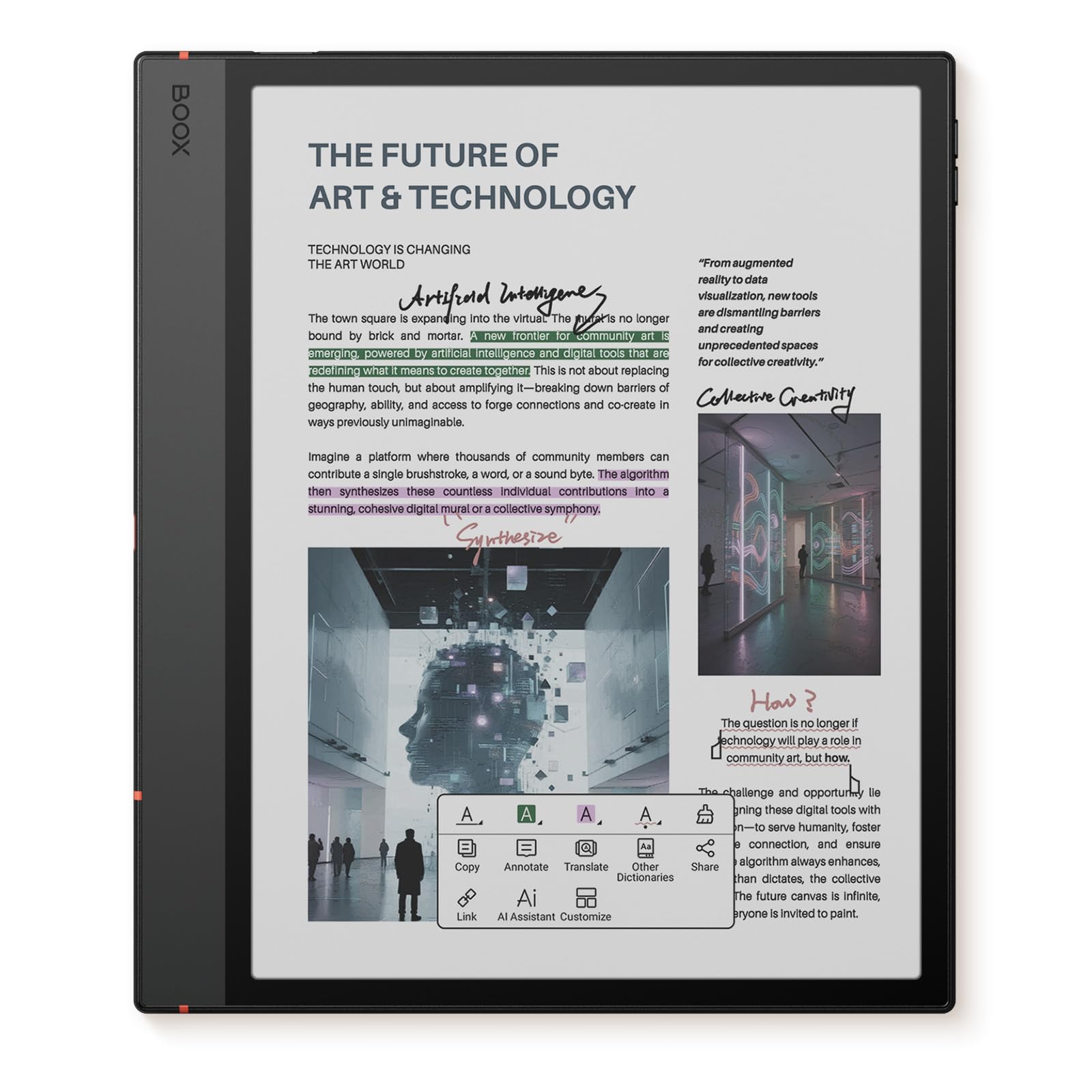
The BOOX Note Air 5 C is the device for writers who refuse to choose between e-ink comfort and app flexibility. Its 10.3-inch Kaleido 3 color display runs Android 15 natively, meaning you can install Google Play apps like Scrivener, Evernote, Google Docs, and Obsidian directly on the device. The 6GB of RAM ensures smooth multitasking for split-screen note-taking alongside a reference PDF, and the fingerprint sensor on the power button provides quick, secure access. The 4096-pressure-level stylus (included with the device) offers a scratchy, pencil-like feel that many writers prefer for long drafting sessions.
The native note-taking app is robust, with templates, pressure-sensitive brushes, and excellent PDF annotation tools. Handwriting-to-text conversion works offline without a subscription, which sets it apart from both reMarkable and Kindle Scribe. The built-in dual speakers and microphone support voice dictation and audio recording alongside written notes—useful for capturing spoken drafts during walks. The 3700mAh battery provides around 3-4 days of heavy use, which is less than dedicated e-ink devices but far longer than any LCD tablet. The device supports a microSD card slot (up to 1TB) in addition to the 64GB internal storage, giving you room for a library of references and drafts.
Color e-ink is inherently darker than grayscale e-ink, and the Note Air 5 C is no exception—you will need the front light in any room without bright overhead illumination. Third-party Android apps (like Scrivener or Google Docs) show noticeable lag compared to the native writing app, so writers who plan to work inside third-party tools should temper their expectations. The “screen door” effect from the color e-ink grid can make fine text appear slightly grainy, and some users report ghosting in navigation-heavy apps. The magnetic pen holder also sits awkwardly near the volume button, leading to accidental presses. For the writer who needs full Android access alongside an e-ink display, however, this is the most capable option on the market.
Why it’s great
- Full Android 15 with Google Play app support
- Offline handwriting-to-text conversion (no subscription)
- MicroSD slot for expandable storage
- Fingerprint sensor and split-screen multitasking
Good to know
- Color e-ink is darker than B&W e-ink; front light needed
- Third-party apps lag compared to native writing app
- Battery life shorter than dedicated e-ink devices
5. Penstar eNote 2
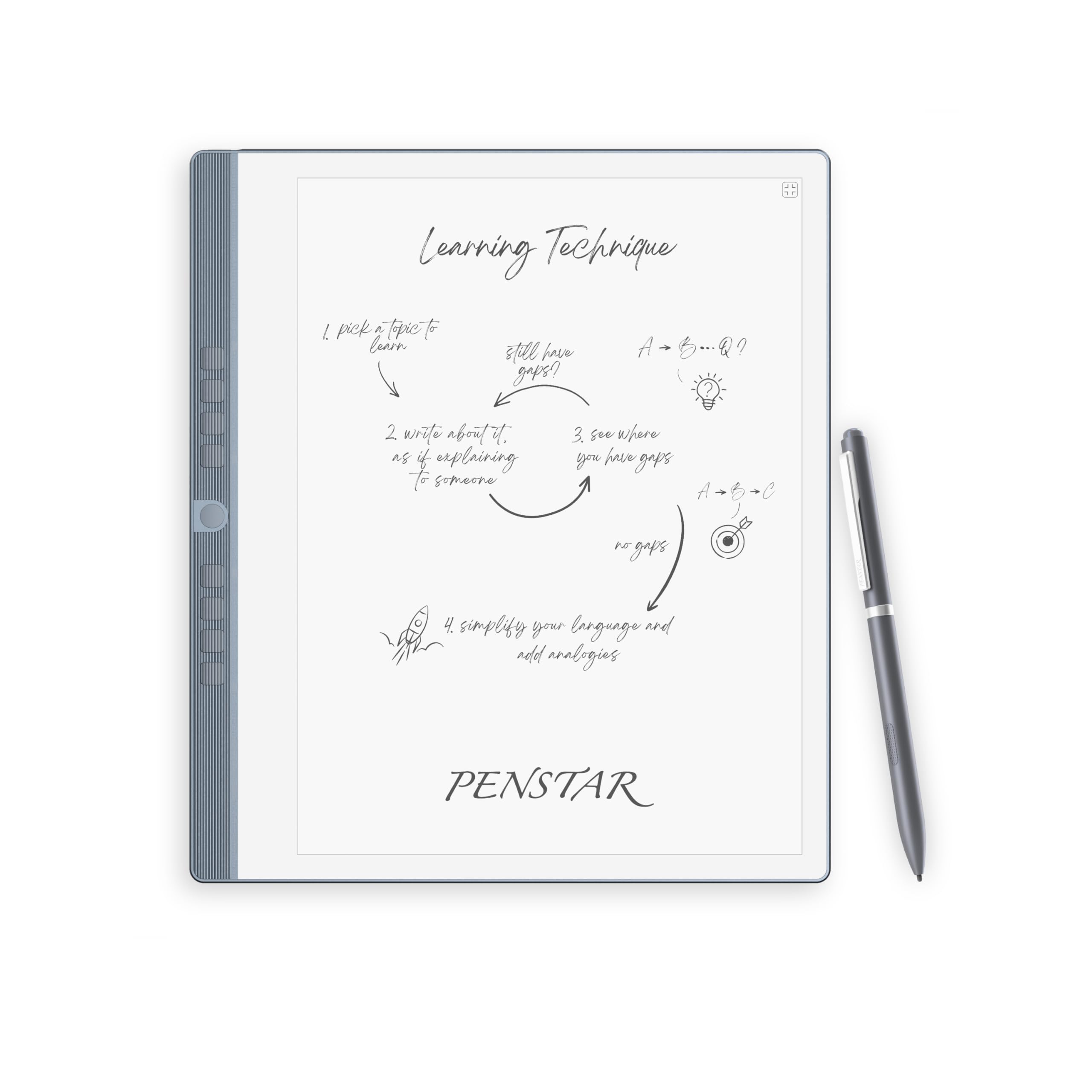
The Penstar eNote 2 is designed for the writer who wants the absolute closest experience to pen on paper without any touchscreen interference. The PureView display is a pen-only ePaper screen—meaning your palm resting on the surface won’t register as input, and you will never accidentally trigger a menu swipe. The 300 PPI resolution produces sharp, high-contrast text that mimics the appearance of laser-printed notes, and the surface has a slight tooth that resists the stylus just enough to feel like a premium fountain pen on cotton paper. The bundle includes two B5 pens (each with four internal nibs plus an extra 10-nib kit), so you have 18 spare nibs from day one.
The MyScript engine converts handwriting to text with industry-leading accuracy, and the AI voice-to-text transcribes in real time across 52 languages. The nine physical shortcut keys are reprogrammable, letting you map frequently used tools, switching between writing templates, reading modes, and cloud sync without ever tapping a screen icon. The device works fully offline with no sign-in or subscription required, which makes it ideal for writers handling sensitive material—lawyers, therapists, journalists, and researchers will appreciate that no data ever leaves the device unless they choose to sync it. Cloud sync works with Google Drive, OneDrive, and Dropbox when you do go online.
The trade-off for that pure writing experience is limited versatility. The eNote 2 has no app store, no browsing capability, and no color screen. The device is thin—just 0.22 inches thick and 0.97 kilograms—but that thinness makes it feel fragile in the hand, and the folding fabric case included in the box offers minimal drop protection. Some users report that the screen is not as “white” as real paper (it has a slightly warm tint), and the lack of a front light means you need external light to write in dark environments. For the dedicated writer who wants a single-purpose tool that perfectly replicates notebook writing, however, the eNote 2 is hard to beat.
Why it’s great
- Pen-only screen prevents accidental palm input
- No subscription or sign-in required for handwriting conversion
- Nine programmable shortcut keys accelerate workflows
- Includes two pens and 18 total nibs out of the box
Good to know
- No app store, browser, or color support
- Thin body feels fragile without a padded case
- No front light; requires ambient light for writing
6. Amazon Kindle Scribe (refurb)

The Like-New refurbished Kindle Scribe offers the same 10.2-inch 300 ppi glare-free Paperwhite display and Premium Pen as the original model at a fraction of the cost. This is the entry point for writers who want to test the e-ink writing experience without making a large investment. The display quality is identical to the more expensive Scribe models—sharp, front-lit, and readable in any lighting—and the Premium Pen requires zero charging while providing accurate, low-latency writing on the Paperwhite surface.
The built-in notebook supports multiple templates (lined, grid, blank, daily planner), and the Active Canvas feature works on Kindle books stored on the device, creating space for margin notes without destroying the page layout. The battery life is exceptional: Amazon states “months” of reading and “weeks” of writing on a single charge, which in real use translates to about two to three weeks of daily note-taking sessions. The 16GB capacity is enough for thousands of books and hundreds of notebook pages, and the USB-C charging is standard.
The downsides are typical of the first-generation Scribe: slower page turns and writing latency compared to the newest model, a heavier build (433g), and the absence of the AI notebook tools and OneDrive/Google Drive integration that arrived with the 2025 generation. The refurbished device comes in a generic Amazon-branded box with the same limited warranty as new, but some users report minor cosmetic wear. If you are willing to trade speed and cloud integration for a dramatically lower entry price, this is a reliable way to start writing on e-ink.
Why it’s great
- Excellent 300ppi display with front light
- Premium Pen requires no charging or pairing
- Weeks of battery life on a single charge
- Refurbished pricing makes e-ink writing accessible
Good to know
- Slower writing latency than newer Scribe models
- No AI tools or direct cloud integration
- May show minor cosmetic wear from refurbishment
7. XPPen Magic Note Pad

The XPPen Magic Note Pad is an Android tablet that disguises itself as a digital notebook. The 10.95-inch AG nano-etched LCD (powered by TCL NXTPAPER 3.0 technology) reduces 95 percent of ambient light interference and gives the screen a matte, paper-like finish that eliminates glare. The 90Hz refresh rate makes scrolling through long documents and switching between apps feel fluid, a stark contrast to the slower refresh of e-ink. The X3 Pro Pencil 2 delivers a staggering 16,384 levels of pressure sensitivity, producing line variation that responds to the lightest touch—overkill for prose writers but excellent for diagramming or sketching alongside written notes.
The native note-taking app (XPPen Notes) supports handwriting-to-text conversion, audio recording synced to handwritten notes, PDF import and mark-up, and automatic cloud backup to Google Drive and OneDrive. The Android 14 OS gives access to the Google Play Store, so you can install your preferred writing tools, reference apps, and even split-screen a draft alongside a web research page. The 128GB storage is spacious for document-heavy workflows, and the 8000mAh battery delivers a full day of active note-taking before needing a charge. The TÜV SÜD low-blue-light certification and the 3-mode display system (monochrome, light color, nature color) let you reduce eye strain during marathon writing sessions.
The AG etched glass screen has a narrow optimal viewing angle—if you tilt the tablet, colors shift and contrast drops, which is a byproduct of the etched surface design. The battery life, while good for an LCD device, cannot compete with e-ink tablets: expect to charge nightly after heavy use. Some users find the 4-hour battery life rating under maximum load to be conservative but realistic during video or multitasking sessions. Additionally, the stylus uses a proprietary XPPen chip and won’t work with standard capacitive pens. For writers who want vivid color, smooth scrolling, and access to the full Android ecosystem, this is a compelling option.
Why it’s great
- Excellent matte screen reduces glare in bright light
- 16K pressure sensitivity captures extremely light touches
- Dual-window and split-screen multitasking
- 128GB storage plus Google Drive backup
Good to know
- Narrow viewing angle due to etched glass
- LCD battery life requires nightly charging
- Stylus uses proprietary chip; no standard capacitive pens
8. TCL NXTPAPER 11 Gen 2
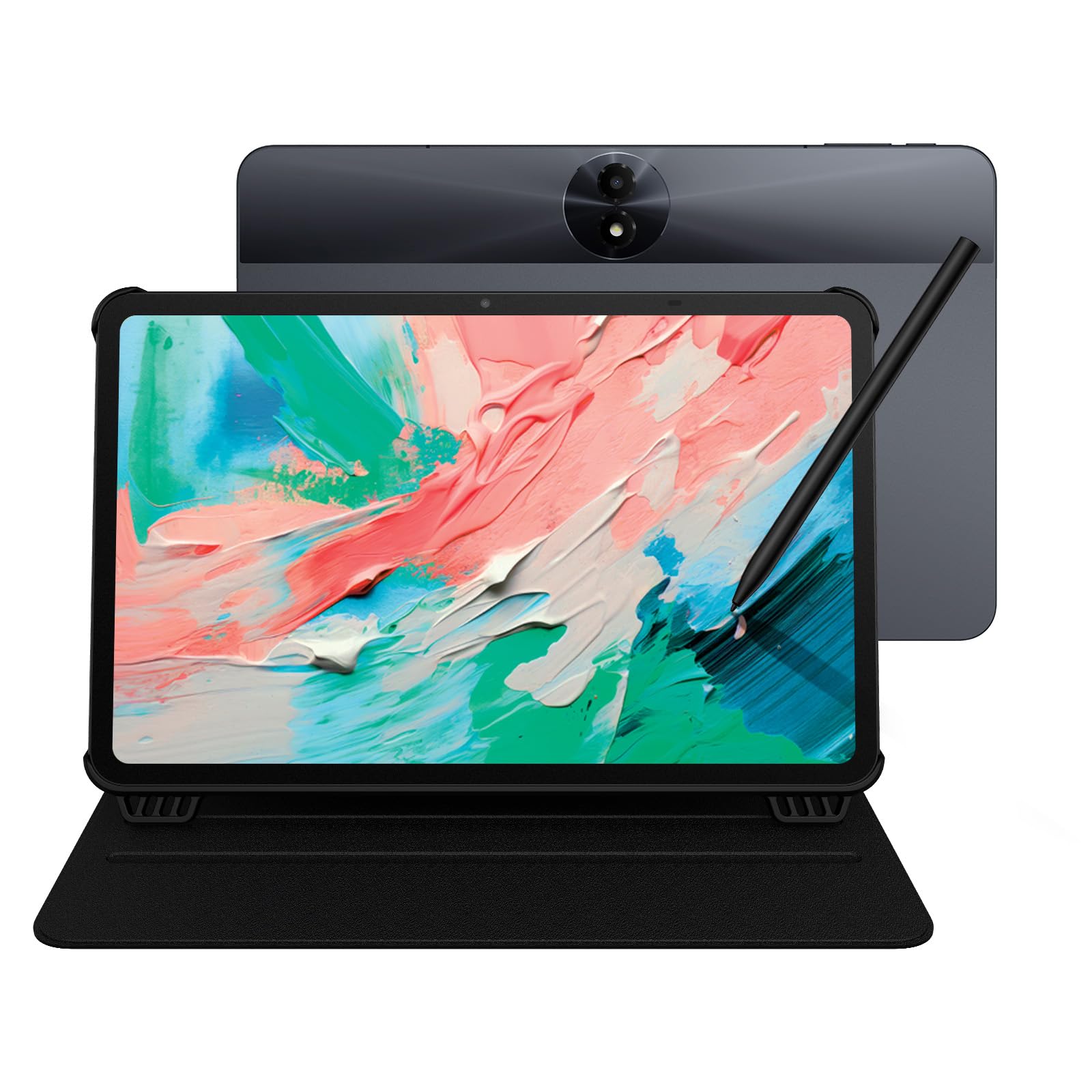
The TCL NXTPAPER 11 Gen 2 is the budget-friendly option that still delivers a genuine paper-like writing experience. The 11-inch 2K NXTPAPER 4.0 display incorporates TÜV-certified low blue light, DC dimming, and an anti-glare coating that makes it comfortable for extended reading and note-taking sessions. The included T-PEN stylus supports 4096 levels of pressure sensitivity, which is sufficient for natural handwriting and basic sketching. The matte screen finish reduces fingerprints and reflections, and the three VersaView display modes (Regular, Ink Paper, Color Paper) let you switch between vibrant streaming colors and a muted e-reader-style grayscale for focused writing.
Under the hood, the MediaTek Helio G80 processor combined with 8GB+8GB of RAM (8GB physical plus 8GB virtual) handles Google Docs, Evernote, and split-screen multitasking without major stuttering. The 128GB storage is expandable via microSD to 1TB, giving you enormous capacity for research libraries and draft collections. The 8000mAh battery is the standout feature for this price tier—it easily lasts through a full day of note-taking and reading, and its reverse charging capability allows you to top up your phone or earbuds on the go. The flip case included in the box doubles as a stand and provides basic protection.
The T-PEN stylus is functional but not premium—the pressure sensitivity is less responsive than the XPPen’s 16K or the Kindle Scribe’s dedicated Premium Pen, and the pen body is lightweight with a plasticky feel. The processor is adequate for writing apps but will struggle with heavy multitasking or graphics-intensive applications. The front camera is mediocre (5MP), and the rear camera (8MP) is usable only for quick document scanning. For the writer on a tight budget who wants a large, eye-friendly screen and the full Android ecosystem, however, the NXTPAPER 11 Gen 2 represents exceptional value.
Why it’s great
- Large 11-inch 2K display with excellent blue-light filtering
- Expandable storage up to 1TB via microSD
- 8000mAh battery lasts full day plus reverse charging
- Includes stylus and flip case at an accessible price point
Good to know
- Stylus feels cheap with less accurate pressure sensitivity
- Processor lags under heavy multitasking
- Cameras are low quality; only useful for scanning
9. Huion Note

The Huion Note is a niche but brilliant tool: a 2-in-1 digital notebook that lets you write on real A5 paper with a real ballpoint pen while simultaneously capturing every stroke as a vector line in its companion app. The battery-free pen has an internal ballpoint refill and writes on any standard A5 pad placed inside the notebook sleeve. Bluetooth 5.0 pairs automatically with the Huion Note app on iOS and Android, and each stroke appears on your phone or tablet in real time. The app organizes pages into groups, allows merging and splitting, and exports as images, PDFs, or MP4 files (showing the stroke replay).
The audio recording feature synchronizes with your handwriting: if you record a meeting or lecture, tapping a note later plays back the audio that was captured at that exact moment. This is a killer feature for journalists, students, and professionals who need to revisit spoken context around their written notes. The 18-hour battery life and 30-day standby mean you can leave the device in your bag between uses without worrying about a dead battery. The magnetic pen sleeve holds the stylus securely when not in use, and the included USB-C cable charges the device quickly.
The caveats are significant. The Huion Note only works with the included battery-free pen—if you lose or break it, you are locked out of digitization until you buy a replacement (which can be pricey and occasionally out of stock). The digitization is not perfect: very light scribbles, fine shading, or text below a certain size may not capture accurately. The app, while functional, lacks the polish and features of dedicated note-taking apps on Android or iOS. The blue placeholder pen nib (used for digitizing without leaving ink on paper) has a limited lifespan of around 400 meters of writing. For the writer who cannot give up the feel of real paper but wants a digital backup, however, the Huion Note is uniquely suited.
Why it’s great
- Writes on real paper with a real ballpoint refill
- Audio-recording syncs handwriting to spoken context
- 18-hour battery with 30-day standby
- Exports notes as images, PDFs, or MP4 stroke replays
Good to know
- Digitization misses very light strokes and fine shading
- Only works with proprietary pen (replacement cost high)
- App is functional but lacks advanced organization features
FAQ
Is an e-ink display really better for writing than an LCD?
Can I use a device for writers with a subscription or app for long-form drafting?
How important is the number of pressure sensitivity levels for a writer?
Final Thoughts: The Verdict
For most users, the best device for writers winner is the Amazon Kindle Scribe (newest model) because it combines the most refined e-ink writing experience with AI-powered note tools, excellent build quality, and the largest library of reading material at your fingertips. If you want color document annotation and don’t mind a slicker writing surface, grab the Penstar eNote Pro. And for absolute pocket portability and a distraction-free writing environment that fits in your jacket, nothing beats the reMarkable Paper Pro Move.

Mo Maruf
I created WellFizz to bridge the gap between vague wellness advice and actionable solutions. My mission is simple: to decode the research and give you practical tools you can actually use.
Beyond the data, I am a passionate traveler. I believe that stepping away from the screen to explore new environments is essential for mental clarity and physical vitality.