Our readers keep the lights on and my smoothie glass nicely filled. As an Amazon Associate, I earn from qualifying purchases.
A loose dive boot is a recipe for heel lift, fin chafing, and cold feet halfway through a dive. The right pair locks your foot into your fin pocket, protects your soles on sharp rocks and boat ladders, and keeps warmth locked in through multiple dives. This guide breaks down the best options for every dive style and budget.
I’m Mohammad Maruf — the founder and writer behind WellFizz. I’ve spent hundreds of hours analyzing dive boot specifications, customer feedback, and industry standards to separate durable, high-performance boots from those that fall apart after a season.
Whether you need a thin tropical split-toe boot or a thick insulated model for cold water, this guide to the best dive boots will help you find the right fit and features for your next underwater adventure.
How To Choose The Best Dive Boots
Selecting the right dive boot comes down to balancing water temperature, fin type, and fit. The wrong thickness or sole design can ruin a dive trip. Here are the key factors to consider before you buy.
Neoprene Thickness: Match to Water Temperature
Boots are measured in millimeters of neoprene. For warm tropical waters above 75°F, a 2mm or 3mm boot provides enough protection from fin rub without overheating. For moderate conditions between 60-75°F, 5mm boots offer a good balance of warmth and flexibility. For cold water below 60°F, 6mm or 7mm boots are essential to prevent foot numbness and maintain dive time. The thicker the neoprene, the stiffer the boot — so expect a break-in period with 5mm and above.
Sole Design and Tread Depth
A dive boot’s sole must handle slippery boat decks, sharp rocks, and barnacle-covered jetties. Look for a full rubber outsole with deep treads for traction. Boots with reinforced toe and heel caps add durability where you need it most. Some budget boots use thin rubber that offers little puncture resistance — inspect the sole thickness in millimeters before purchasing, especially if you do shore dives.
Closure System: Zippers, Pull-Ons, and Drawstrings
Side zippers make donning and doffing significantly easier, especially with 5mm and thicker neoprene. Look for heavy-duty YKK zippers that resist saltwater corrosion. Pull-on boots (without zippers) are simpler and less prone to mechanical failure but can be difficult to remove when wet. Drawstring closures, common on surf booties, provide a tight seal but can loosen during a dive session if not secured properly.
Quick Comparison
On smaller screens, swipe sideways to see the full table.
| Model | Category | Best For | Key Spec | Amazon |
|---|---|---|---|---|
| SCUBAPRO Delta Dive Boot | 5mm Premium | Cold water & wide feet | 5mm X-Foam neoprene | Amazon |
| Aqualung Superzip Dive Boot | 5mm Premium | Heavy shore use & rocky terrain | 8mm thick treaded sole | Amazon |
| SEAC Pro HD 6mm Boot | 6mm Premium | Cold water & maximum insulation | 6mm neoprene with side zip | Amazon |
| O’Neill Superfreak 2mm Boot | 2mm Surf | Surfing & warm water paddleboarding | Split-toe design | Amazon |
| Mares Classic 3mm Boot | 3mm Mid-Range | Warm water diving & wide feet | Leveled rubber sole | Amazon |
| Neosport 3mm Hi-Top Boot | 3mm Value | Jet skiing & moderate water | Heavy-duty #10 zipper | Amazon |
| Cressi Minorca Short Boot | 3mm Entry-Level | Snorkeling & warm water travel | Rubber heel and toe cap | Amazon |
In‑Depth Reviews
1. SCUBAPRO Delta Diving Boot, 5mm
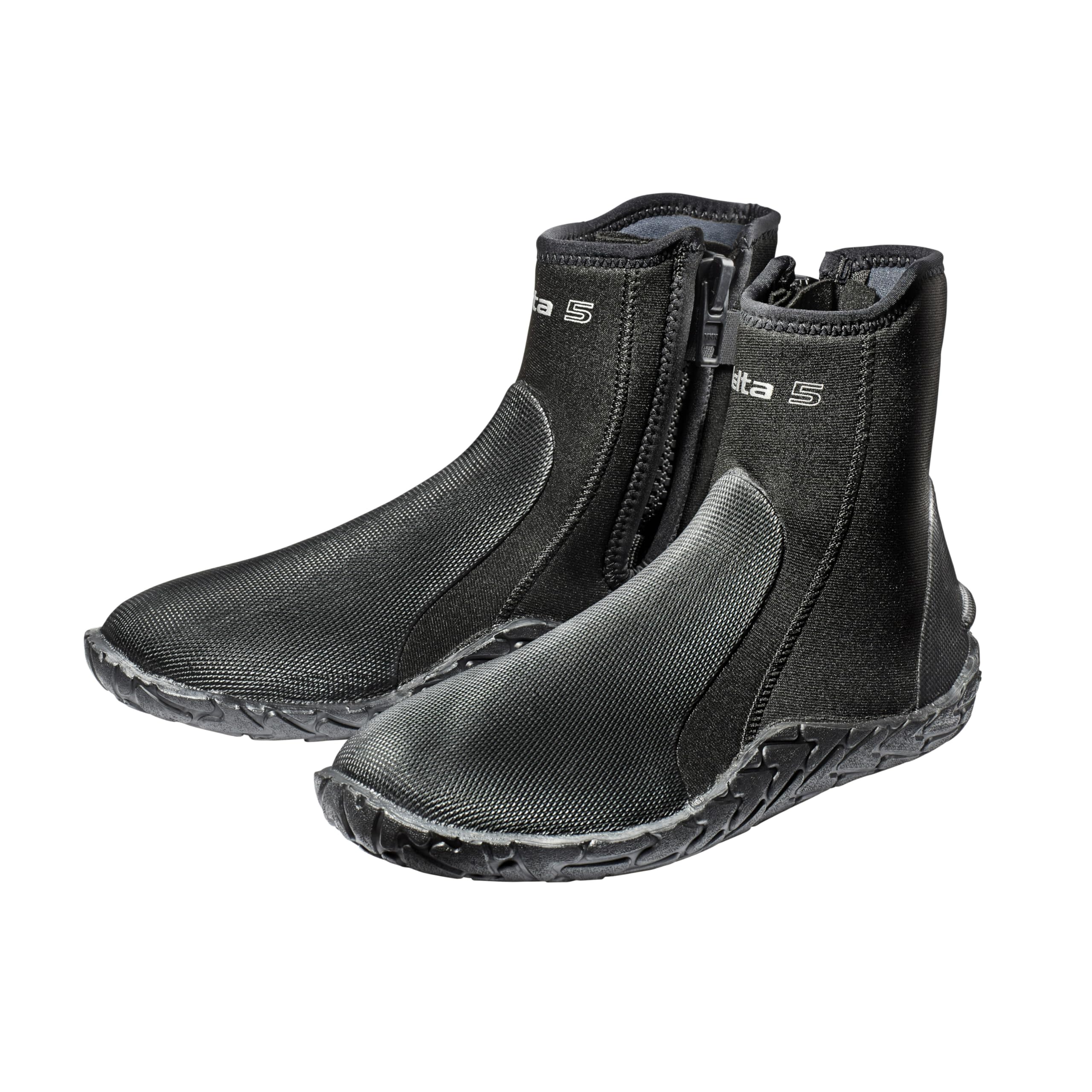
The SCUBAPRO Delta delivers everything you want from a premium dive boot: a roomy full-cut design that accommodates wide feet without cramping toes, plus a rubberized armor shell that protects the metatarsal area from fin strap pressure and rock impacts. The 5mm X-Foam neoprene provides excellent insulation for moderate to cool water without feeling overly stiff, and the anti-slip tread grips boat decks without leaving marks.
The revised ankle diameter makes sliding the YKK zipper up and down significantly easier than previous SCUBAPRO models. The contoured top edge prevents water from flushing through the boot opening, reducing cold spots during longer dives. Multiple customer reports praise the comfort for all-day wear, even for divers with bunions or wide forefeet.
If you dive in cooler waters frequently or need a boot that handles shore entries and boat ladders with equal competence, the Delta is a top-tier choice. The sole could be slightly stiffer for borderline rocky climbouts, but the tradeoff is a more natural walking gait on flat surfaces.
Why it’s great
- Full-cut toebox prevents cramping for wide feet
- Durable rubberized armor on top and sides
- Contoured ankle design improves fit and zipper function
Good to know
- Sole could be stiffer for extreme rocky terrain
- Premium price point
2. AQUALUNG Unisex Superzip Dive Boots, 5mm
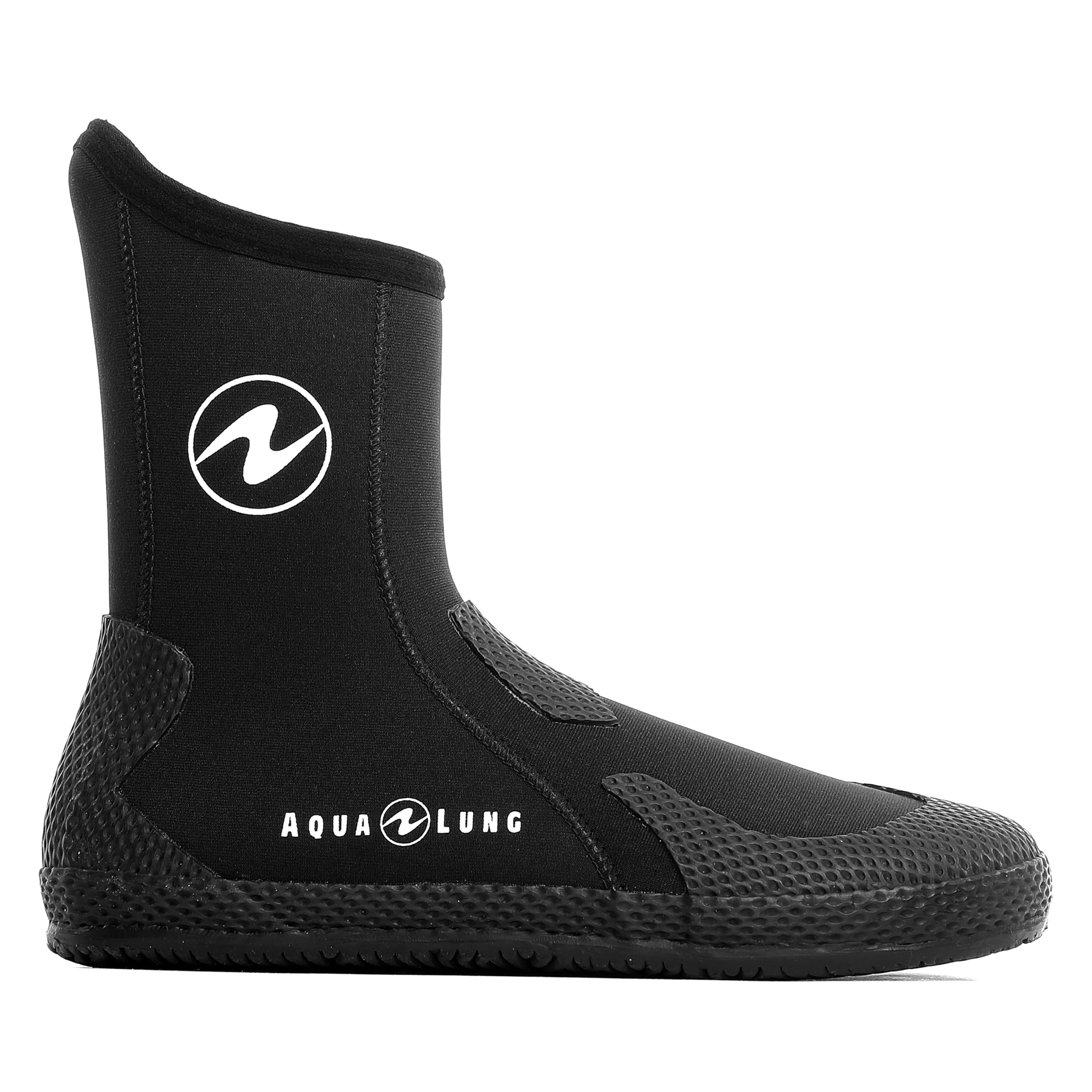
The Aqualung Superzip stands out for its unusually thick 8mm treaded sole, which provides confident traction on slippery rocks, barnacle-covered jetties, and muddy shorelines. The reinforced toe, heel, and upper panels are twice as thick as standard boots, making this a rugged option for divers who frequently do shore entries or rock-hounding excursions where puncture resistance matters.
The patented ERGO-shaped footbed follows the natural contours of your foot, reducing foot fatigue during long surface swims and walkouts. The #10 YKK toothed zipper is heavy-duty and non-corrosive, holding up well to repeated saltwater exposure. The elastic cuff binding helps reduce water entry at the top of the boot without restricting circulation.
This 5mm boot balances warmth and flexibility well for moderate-water diving. The extra padding in the sole does add slight stiffness — expect a brief break-in period. Several long-term users report these boots lasting five or more years with regular use, which speaks to the build quality.
Why it’s great
- 8mm thick sole offers excellent puncture protection
- Reinforced panels outlast standard boots
- ERGO footbed reduces foot fatigue
Good to know
- Thick sole can feel stiff before break-in
- Some units may run slightly small
3. SEAC Pro HD 6mm Neoprene Wetsuit Boots

The SEAC Pro HD provides the thickest neoprene in this lineup at 6mm, making it the go-to choice for cold-water divers who need maximum insulation without sacrificing mobility. The full rubber sole extends up the toe and heel for robust protection against sharp rocks and ladder rungs, and the side zipper makes entry and exit manageable despite the thick material.
Fit runs slightly small — several users with wide feet recommend going up half a size to avoid toe pressure. The heel ridge on the boot works well with Oceanic Manta Ray and similar fin straps, preventing the boot from slipping inside the fin pocket. The thick sole provides stable walking on boat decks, though it retains some water after a dive and needs to be removed to drain fully.
For sit-on-top kayak fishing in cooler months, these boots offer enough warmth for multi-hour sessions without overheating in summer. The build quality is consistent with SEAC’s reputation for durable scuba gear. If you dive consistently in water below 65°F, the extra 1mm over standard 5mm boots makes a noticeable difference in foot comfort.
Why it’s great
- 6mm thickness provides superior cold-water insulation
- Full rubber sole with heel ridge fin strap grip
- Strong side zipper withstands saltwater
Good to know
- Runs small — consider sizing up for wide feet
- Retains water inside after diving
4. O’Neill Superfreak 2mm Tropical Split Toe Boot
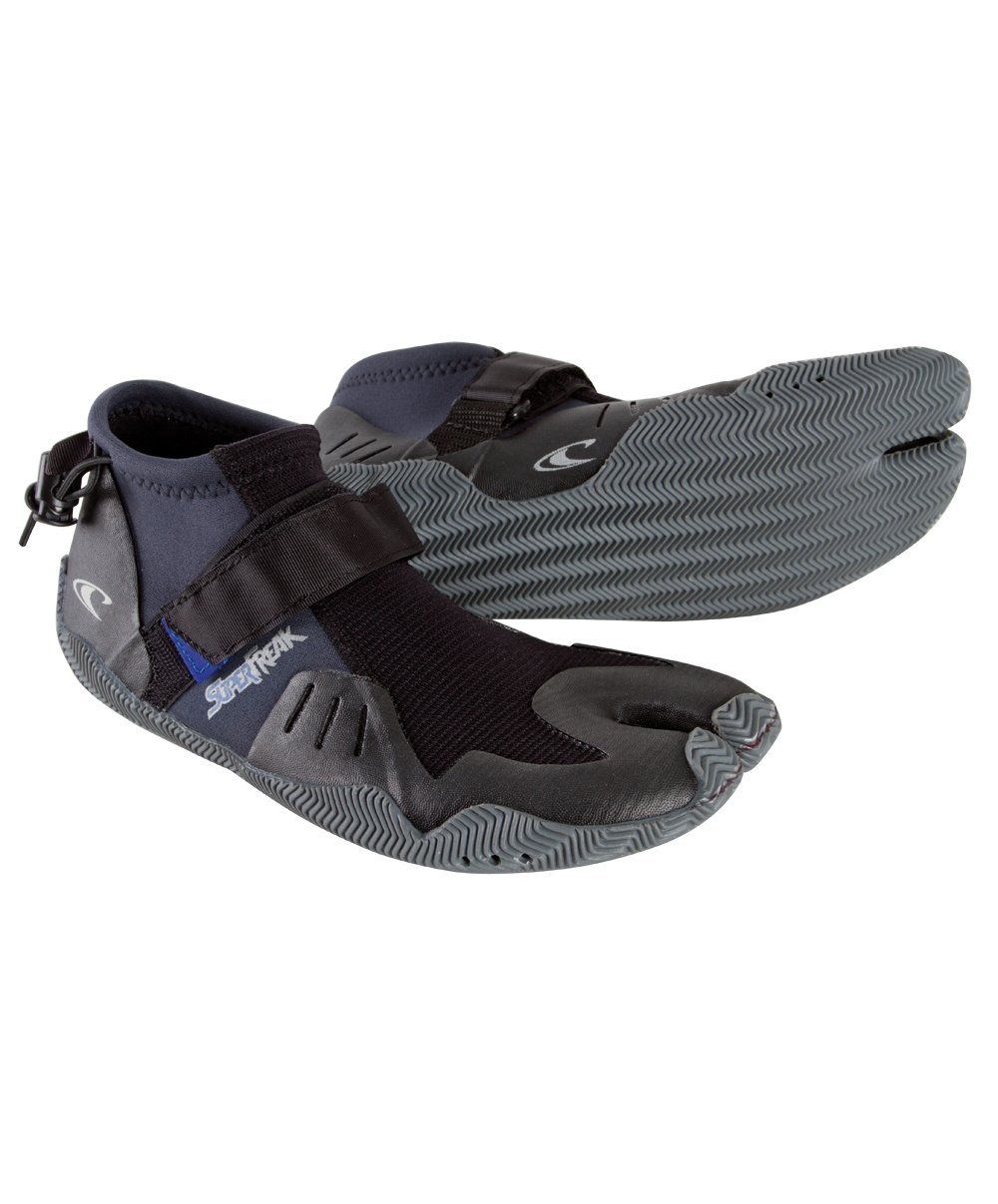
The O’Neill Superfreak is purpose-built for warm-water surfing and snorkeling where maximum dexterity matters more than insulation. The 2mm FluidFlex neoprene is incredibly lightweight and flexible, and the split-toe design separates your big toe for better balance and board feel — a feature surfers will appreciate when paddling out and popping up.
The textured rubber sole provides adequate grip on reefs and boat decks, though the thin rubber offers limited protection against sharp rocks. A cinch cord with a forefoot strap locks the boot in place and prevents sand from getting inside. The seam construction uses low-profile Flatlock stitching that minimizes chafing on the Achilles and ankle bones.
Fit is critical here: the boots should be snug like a sock. Ordering true to size or half a size down works for most, but going a full size down can cause toe numbness. The thin neoprene does stretch slightly after a few uses, so err toward a snug initial fit. Great for tropical, not for cold water.
Why it’s great
- Split-toe design enhances balance and board feel
- Ultra-lightweight 2mm FluidFlex neoprene
- Forefoot strap locks boot in place
Good to know
- Thin sole offers minimal puncture protection
- Sizing is critical — too tight causes numbness
5. Mares Adult Classic 3mm Neoprene High Top Scuba Diving Boot

The Mares Classic 3mm boot is a perennial favorite among divers with wide feet. The wide toecap design provides natural toe splay without pressure points, and the leveled rubber sole offers stable footing on wet surfaces. The side zip makes these easy to pull on and off, even when wet, which is a major convenience for dive trips with multiple entries.
Quality is consistent with Mares’ reputation: the glued-and-sewn seams hold up well, and the 3mm neoprene provides sufficient warmth for tropical and moderate-water diving. Multiple reviewers note that the boots run large — ordering a full size down from your street shoe size is common advice. A size 11 street shoe fits perfectly into a size 10 boot according to many reports.
These boots pair well with open-heel scuba fins and provide enough padding to prevent strap rub on the top of the foot. For warm-water divers who prioritize toe comfort and a secure zip closure, the Mares Classic delivers reliable performance at a mid-range price point.
Why it’s great
- Wide toecap accommodates bunions and natural toe splay
- Smooth side zip for quick donning and doffing
- Leveled sole provides stable traction
Good to know
- Runs large — order a full size down from street shoe
- Size chart is inaccurate according to customer reports
6. Neosport 5mm Hi-Top Zipper Dive Boot

The Neosport 5mm Hi-Top Boot is a practical mid-range option that excels for divers with narrow feet. Many brands cater to wide-foot divers, leaving narrow-footed users with heel slip, but this boot’s cut provides a snug fit that stays in place. The puncture-resistant sole and glued-and-sewn construction offer reliable durability for moderate conditions.
The #10 heavy-duty zipper is supplemented by a Water Entry Barrier (WEB) behind the zipper to help keep warm water in and cold water out. The rugged traction sole handles boat decks and muddy launches well, and the 5mm thickness offers a good warmth-to-flexibility ratio for water temperatures between 60-75°F. The hi-top design provides decent ankle support that helps with fin retention.
Available in 3mm, 5mm, and 7mm variants, this boot lets you dial in the exact thickness for your typical dive conditions. Some users report the toe box can feel snug initially but breaks in after a few dives. For the price, the build quality and comfort are commendable.
Why it’s great
- Great fit for narrow feet and ankles
- WEB system reduces water flush-through
- Available in 3mm, 5mm, and 7mm thickness
Good to know
- Toe box may be tight for wide feet before break-in
- Not ideal for very cold water in the 5mm version
7. Cressi Minorca Short 3mm Boot

The Cressi Minorca Short is an entry-level pull-on boot ideal for snorkeling, warm-water scuba, and travel where packing light is a priority. At 14.4 ounces per pair, these are significantly lighter than zippered alternatives. The 3mm super elastic nylon neoprene provides flexibility, while the rubber heel and toe cap add durability in high-wear areas.
The anti-slip sole does a decent job on wet boat decks and pool ladders, but the short boot height means less ankle protection and less insulation if water flushes in from the top. Pull-on design means no zipper to fail, but donning takes more effort compared to side-zip boots — especially when the neoprene is wet. The boots run slightly large, so sizing down by half is common advice among repeat buyers.
For budget-conscious divers who primarily dive in warm water and want a simple, low-maintenance boot, the Cressi Minorca Short delivers reliable performance from a trusted Italian brand. Just don’t expect the same insulation or protection as a 5mm hi-top boot with a zipper.
Why it’s great
- Very lightweight and packable for travel
- Rubber heel and toe cap for added durability
- Pull-on design eliminates zipper failure risk
Good to know
- Short height offers less ankle protection
- Difficult to remove when wet
FAQ
How should dive boots fit compared to street shoes?
What thickness dive boot do I need for 70 degree water?
Can I use surf booties for scuba diving?
Final Thoughts: The Verdict
For most divers, the best dive boots winner is the SCUBAPRO Delta 5mm because it combines a roomy, comfortable fit for wide feet with durable armor protection and reliable warmth. If you prioritize a thick puncture-resistant sole for rocky shore entries, grab the Aqualung Superzip. And for cold-water divers who need maximum insulation without bulk, the SEAC Pro HD 6mm is the clear choice.

Mo Maruf
I created WellFizz to bridge the gap between vague wellness advice and actionable solutions. My mission is simple: to decode the research and give you practical tools you can actually use.
Beyond the data, I am a passionate traveler. I believe that stepping away from the screen to explore new environments is essential for mental clarity and physical vitality.