Our readers keep the lights on and my smoothie glass nicely filled. As an Amazon Associate, I earn from qualifying purchases.
If your lawn feels more like concrete than soil, you know the struggle: water pools on the surface, roots can’t penetrate, and grass stays thin and yellow no matter how much you water or fertilize. The fix isn’t more seed or a sprinkler timer — it’s the right dirt for lawn applications that target soil structure and chemistry at the ground level.
I’m Mohammad Maruf — the founder and writer behind WellFizz. After hundreds of hours analyzing soil amendment specifications, application rates, and verified customer outcomes, I’ve built this guide around the products that actually change the physical composition of your lawn’s root zone.
Whether you’re battling clay compaction, high pH levels, or nutrient-depleted topsoil, the best dirt for lawn solutions here address each specific soil deficiency with targeted, measurable results.
How To Choose The Right Dirt For Lawn
Not all dirt is the same, and throwing any bag on your lawn can waste money or even harm existing grass. The key is matching the amendment to your specific soil deficiency — clay, pH imbalance, or low organic matter.
Identify Your Soil Type First
Do the squeeze test: grab a moist handful of soil and squeeze it. If it forms a tight ball that doesn’t crumble, you have heavy clay. If it falls apart immediately, you have sandy soil. Clay responds to gypsum, which flocculates clay particles to improve drainage. Sandy soil needs organic compost to boost water and nutrient retention.
Check Your Soil pH
Grass prefers a pH between 6.0 and 7.0. If your pH is above 7.5, elemental sulfur granules lower it over several weeks, unlocking nutrients your lawn can’t currently access. If your pH is already balanced, sulfur will do nothing positive — and can make soil too acidic.
Consider Long-Term vs. Quick Fix
Gypsum and sulfur work within weeks to months, addressing chemistry and structure. Organic compost and biochar build long-term soil health, feeding microbial life and improving water-holding capacity for years. Many lawn care experts recommend a layered approach: use a fast-acting amendment first, then build organic matter over time.
Quick Comparison
On smaller screens, swipe sideways to see the full table.
| Model | Category | Best For | Key Spec | Amazon |
|---|---|---|---|---|
| Earth Science Fast Acting Gypsum | Soil Conditioner | Breaking up compacted clay | Nutri-Bond reduces runoff by 50% | Amazon |
| Earth Science Fast Acting Sulfur | pH Adjuster | Lowering alkaline soil pH | Elemental sulfur, 5 lb bag | Amazon |
| R&M Organics Premium Compost | Organic Compost | Adding organic matter and moisture retention | Dairy manure compost, 10 lb bag | Amazon |
| Michigan Peat Baccto Top Soil | Top Soil | Top-dressing lawns and garden beds | Reed sedge peat and sand mix, 50 lb | Amazon |
| The Andersons BioChar DG | Biochar Amendment | Long-term soil structure improvement | DG Technology granules, 10 lb | Amazon |
In‑Depth Reviews
1. Earth Science Fast Acting Gypsum
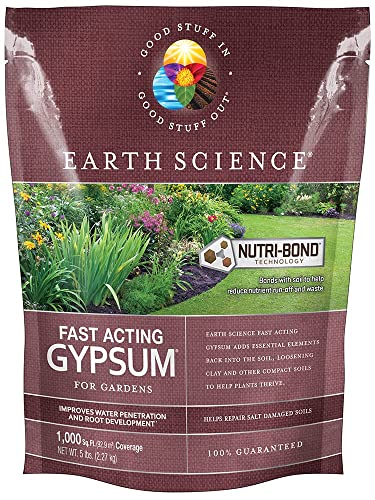
This gypsum conditioner directly attacks the number one lawn complaint: clay soil that doesn’t drain. The pelletized format spreads cleanly with a broadcast spreader and dissolves quickly even in heavy soil, flocculating clay particles to create air pockets and improve water penetration. Customers report measurable softening of rock-hard clay within weeks, enabling grass roots to finally push deeper.
The Nutri-Bond coating is a real differentiator — it bonds with soil to reduce nutrient runoff by up to 50%, meaning every application lasts longer and fewer nutrients wash away during rain. This makes it particularly effective for lawns near slopes or areas where water tends to pool and run off.
Gypsum also adds calcium to soil, which helps counteract salt damage from pet urine or de-icing salts. Multiple verified reviews note that puppy urine spots greened up after application, and gardeners report it eliminated blossom-end rot in nearby vegetables. Safe for kids and pets immediately after spreading.
Why it’s great
- Starts working immediately to loosen clay
- Nutri-Bond reduces nutrient runoff by 50%
- Safe for all grass types and pets/kids
- Pelletized — low dust, easy spreader use
Good to know
- Requires annual reapplication for ongoing clay maintenance
- Does not add NPK — purely a soil structure tool
- 5 lb bag covers only small to medium lawns
2. Earth Science Fast Acting Sulfur

When soil pH climbs above 7.5, grass struggles to absorb iron and other micronutrients, leading to yellowing. This sulfur formulation uses elemental sulfur to gradually lower pH, unlocking nutrients that were previously unavailable. Verified reviews show hydrangeas, azaleas, and blueberries responding dramatically — blooms became more vibrant and foliage greened up within weeks.
The pelletized design minimizes dust during application, though some users note the pellets require several waterings to fully dissolve compared to powdered alternatives. This slower dissolution actually provides steadier pH adjustment, reducing the risk of overshooting into overly acidic territory. The Nutri-Bond technology applies here too, keeping the sulfur where you spread it.
It’s important to only use this product if a soil test confirms high pH. Applying sulfur to neutral or acidic soil can harm grass and create conditions that invite moss. For alkaline-heavy clay regions, this is a targeted solution that works as advertised — just don’t expect immediate results in 24 hours.
Why it’s great
- Effectively lowers alkaline soil pH
- Improves color and bloom vibrancy
- Nutri-Bond reduces runoff and waste
- Safe for people and pets immediately
Good to know
- Pellets dissolve slower than powder forms
- Only useful if soil pH is above 7.0
- Needs soil test before first application
3. The Andersons BioChar DG
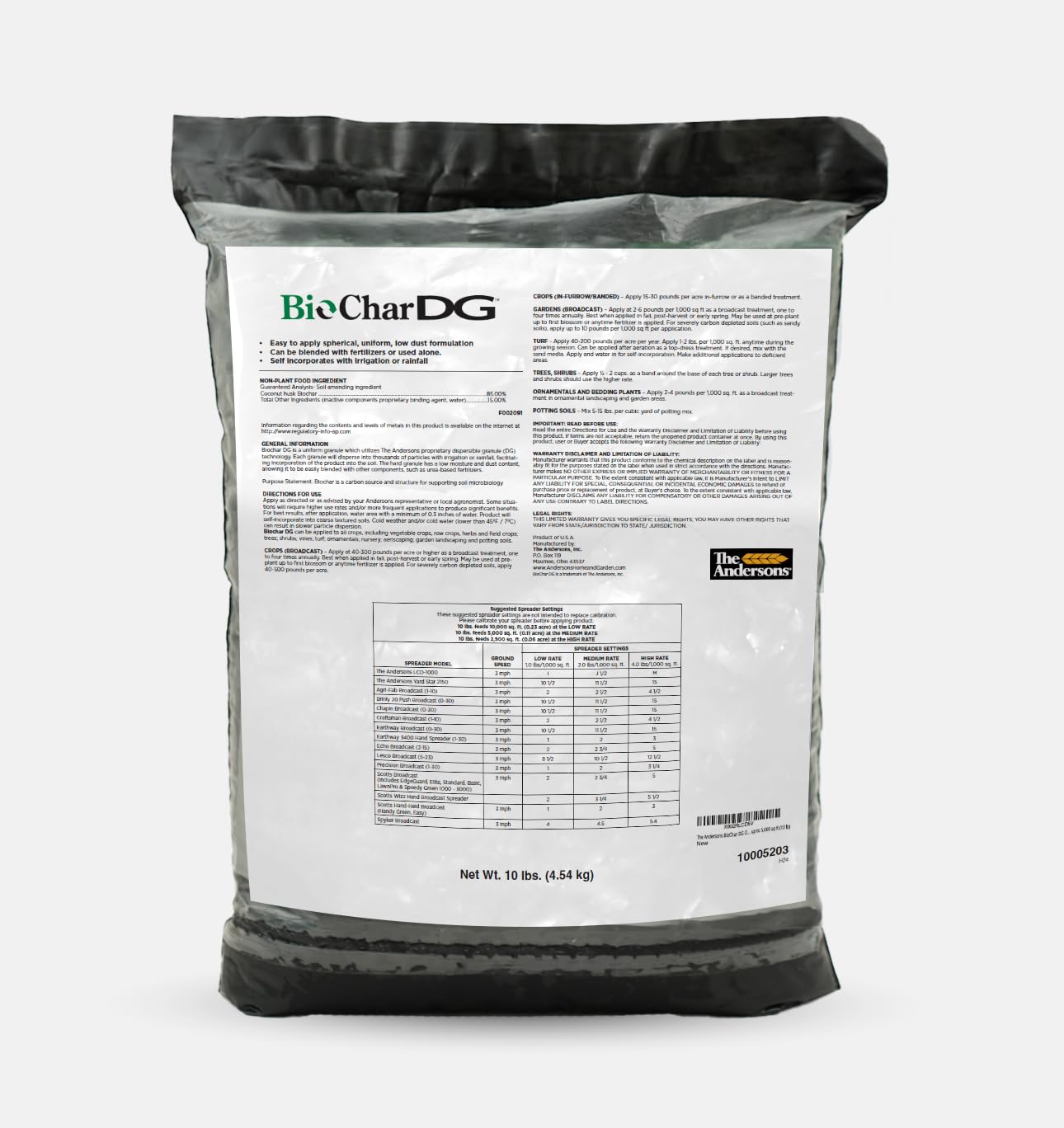
Biochar is a long-game soil amendment, and Andersons’ Dispersible Granule (DG) formulation solves the application headache typical of loose charcoal dust. The small spherical pellets flow through a spreader with minimal dust and disperse into the soil quickly once watered. Each granule creates microscopic carbon structures that host beneficial bacteria and retain moisture for years.
Verified users in heavy clay regions report dramatic soil transformation over 2-3 years: clay turns dark brown, grass roots grow deeper and denser, and drought tolerance improves noticeably. This isn’t an instant greening product — it works below the surface to build soil structure that holds nutrients and water.
The 10 lb bag covers up to 5,000 sq ft, making it one of the highest-value coverage options per bag. One caveat: biochar should be “charged” with nutrients before application to avoid temporarily locking up soil nitrogen. Andersons states their product is precharged, but some users experienced yellowing and recovered after adding a liquid fertilizer.
Why it’s great
- Long-term soil structure improvement for years
- DG Technology — low dust, easy spreader application
- Covers up to 5,000 sq ft per bag
- Attracts beneficial microbes and retains water
Good to know
- Higher upfront investment than gypsum or sulfur
- May require supplemental nitrogen to avoid yellowing
- Takes multiple seasons to see full benefits
4. Michigan Peat Baccto Top Soil

When you need actual soil to spread over a patchy lawn, fill low spots, or prepare a new garden bed, this 50 lb blend of reed sedge peat and screened sand delivers. It’s darker and cleaner than most hardware store topsoil, with minimal wood debris. Regular buyers report ordering in bulk — one customer purchased 18 bags across three orders, indicating consistent quality.
The mix improves drainage in heavy soil while adding organic matter that holds moisture. It works well as a topdressing for lawns: spread a quarter-inch layer, rake it in, and overseed. The peat component slowly releases organic acids that help with pH buffering, though it’s not a primary pH adjuster like sulfur.
Some bags do contain twigs and small sticks that require manual sifting — a common issue with natural topsoil products. The price per pound is notably low relative to other premium bagged soils, making it a practical choice for larger areas where you need bulk dirt rather than a concentrated amendment.
Why it’s great
- Large 50 lb bag provides ample coverage
- Dark, clean texture — minimal wood content
- Improves drainage and nutrient retention
- Great for topdressing and filling bare spots
Good to know
- May contain twigs — sifting recommended
- Not a concentrated amendment like gypsum or sulfur
- Heavy bag; requires lifting assistance
5. R&M Organics Premium Compost
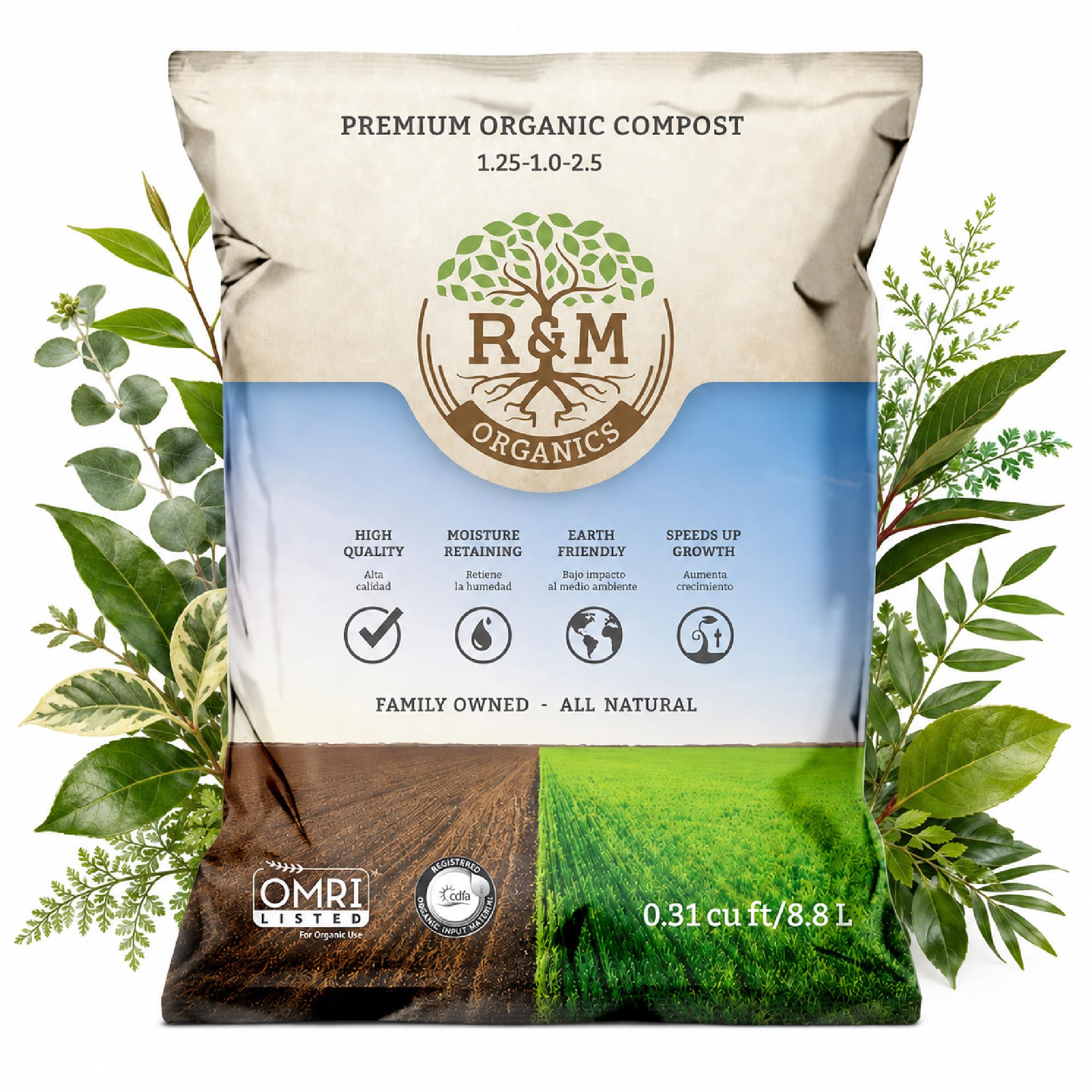
For lawns that need organic matter more than pH correction, this fully composted dairy cow manure delivers a rich, earthy amendment with a fine, clump-free texture. The composting process includes continuous aeration, which eliminates the strong ammonia smell typical of raw manure. Users describe it as having a “clean soil-like scent,” suitable for both indoor pots and outdoor garden beds.
It excels at improving moisture retention — the organic particles hold water like a sponge, reducing watering frequency. Verified reviews highlight its ability to revive stressed plants: yellow tomato leaves turned green within a week, and azaleas recovering from roof-cleaning chemicals bounced back after topdressing. The 10 lb bag is compact and easy to carry, though you’ll need multiple bags for larger lawns.
Since it’s a true compost rather than a chemical amendment, results build slowly as soil microbes break down the organic material. It pairs well with gypsum or sulfur if you need both structure correction and organic matter. A little goes a long way — a quarter-inch layer mixed into the top few inches is enough to see improvement.
Why it’s great
- Low odor — suitable for indoor and outdoor use
- Fine texture with no clumps or debris
- Improves moisture retention significantly
- Revives stressed plants quickly
Good to know
- 10 lb bag covers limited area
- Not a fast fix — organic breakdown takes weeks
- Higher cost per pound than bulk topsoil
FAQ
Can I use gypsum and sulfur together on my lawn?
How often should I apply organic compost to my lawn?
Will biochar help my lawn if I already have good soil?
Final Thoughts: The Verdict
For most users, the best dirt for lawn winner is the Earth Science Fast Acting Gypsum because it directly solves the most common lawn problem — compacted clay — with fast, measurable results and minimal fuss. If you need to lower alkaline soil pH, grab the Earth Science Fast Acting Sulfur. And for long-term soil transformation with deep root development, nothing beats the The Andersons BioChar DG.

Mo Maruf
I created WellFizz to bridge the gap between vague wellness advice and actionable solutions. My mission is simple: to decode the research and give you practical tools you can actually use.
Beyond the data, I am a passionate traveler. I believe that stepping away from the screen to explore new environments is essential for mental clarity and physical vitality.