Our readers keep the lights on and my smoothie glass nicely filled. As an Amazon Associate, I earn from qualifying purchases.
A digital zoom camera is the tool you reach for when the subject you want to photograph is simply too far away for your smartphone to handle. Whether you are tracking a bird in a distant tree, catching a performer on a distant stage, or documenting a wildlife safari, the gap between what you see and what you can capture shrinks dramatically with optical reach. The market offers a wide spectrum of these devices, from compact travel companions to superzoom bridges that rival telescopes.
I’m Mohammad Maruf — the founder and writer behind WellFizz. My research into digital zoom cameras involves parsing sensor sizes, stabilization systems, and real-world lens performance across dozens of models to identify which ones deliver sharp, usable images at full extension.
For anyone evaluating their options, the best digital zoom camera balances reach, stability, and image quality without making compromises that leave you with blurry, unusable photos at the distances you care about most.
How To Choose The Best Digital Zoom Camera
The right digital zoom camera depends on your primary subject, your willingness to carry weight, and your budget. A birder has different needs than a concertgoer, and understanding where the trade-offs lie will narrow your options considerably.
Optical Zoom Range vs. Reach
Optical zoom is the only real zoom. Digital zoom crops into the image and degrades quality, so the number that matters is the optical magnification. A 30x zoom covers most family and travel needs, while 60x and above puts distant wildlife within reach. Know your typical distance before choosing a range.
Image Stabilization Is Non-Negotiable
At 600mm equivalent or beyond, every hand tremor becomes visible. Optical image stabilization (OIS) compensates for motion and is essential for handheld shooting at long focal lengths. Without it, you will need a tripod for sharp results on almost every telephoto shot.
Sensor Size and Low Light Performance
Most superzoom cameras use small sensors (1/2.3-inch), which struggle in dim conditions. A 1-inch sensor, like the one in the Sony RX100 VII, offers dramatically better low-light quality but caps zoom range. Decide if you prioritize reach in daylight or quality in low light.
Quick Comparison
On smaller screens, swipe sideways to see the full table.
| Model | Category | Best For | Key Spec | Amazon |
|---|---|---|---|---|
| NIkon COOLPIX P950 | Superzoom | Extreme Wildlife Reach | 83x Optical Zoom | Amazon |
| Sony RX100 VII | Compact Premium | Pocketable All-Rounder | 1.0-Type Stacked CMOS | Amazon |
| Panasonic LUMIX FZ80D | Bridge | 4K Video with Zoom | 60x Optical Zoom | Amazon |
| Minolta Pro Shot 20MP | Bridge | Versatile Outdoor Shooting | 67x Optical Zoom | Amazon |
| Canon PowerShot SX740 | Compact Travel | Portable 4K Zoom | 40x Optical Zoom | Amazon |
| Canon PowerShot SX530 HS | Renewed Mid-Range | Budget Superzoom Entry | 50x Optical Zoom | Amazon |
| NIkon COOLPIX P1000 | Extreme Superzoom | Maximum Lens Reach | 125x Optical Zoom | Amazon |
| Panasonic LUMIX TZ/ZS99 | Ultra-Compact | Pocket Travel Zoom | 30x Leica Lens | Amazon |
| Kodak PIXPRO AZ255 | Entry-Level Bridge | Budget-Friendly Learning | 25x Optical Zoom | Amazon |
In‑Depth Reviews
1. NIkon COOLPIX P950

The Nikon COOLPIX P950 delivers an 83x optical zoom lens that reaches an equivalent of 2000mm at the telephoto end, making it one of the most capable superzoom cameras for wildlife and moon photography at its price. Its dual-detect image stabilization works well enough that you can often produce sharp handheld shots at full extension, though a tripod remains the most reliable path to maximum clarity. The built-in Bird and Moon modes tailor the camera’s settings automatically for these specific subjects, which is a thoughtful touch for enthusiasts who do not want to dig through menus.
The 16-megapixel sensor is paired with a contrast-detect autofocus system that includes 399 focus points, and while it generally locks on reliably in good light, it can hunt when tracking fast-moving subjects against busy backgrounds. The rotating LCD screen and electronic viewfinder provide flexibility for composing shots from awkward angles, and the 4K UHD video capability adds a modern layer to an already impressive feature set. The camera also supports RAW format capture, giving you more latitude in post-processing.
Where the P950 truly shines is in its ability to bring distant subjects into frame with minimal optical compromise. Users consistently report sharp, detailed images of birds, the moon, and landscapes that would be invisible to a standard lens. The main trade-offs are its modest low-light performance compared to larger-sensor cameras and the occasional autofocus hesitation at extreme zoom distances, but for its zoom range and price, the P950 sets a high bar for the superzoom class.
Why it’s great
- 83x optical zoom provides extraordinary reach
- Dual-detect image stabilization enables decent handheld shots at long distances
- Dedicated Bird and Moon modes simplify complex settings
Good to know
- Autofocus can struggle with fast-moving subjects
- Small sensor limits low-light performance compared to premium compacts
2. Sony RX100 VII
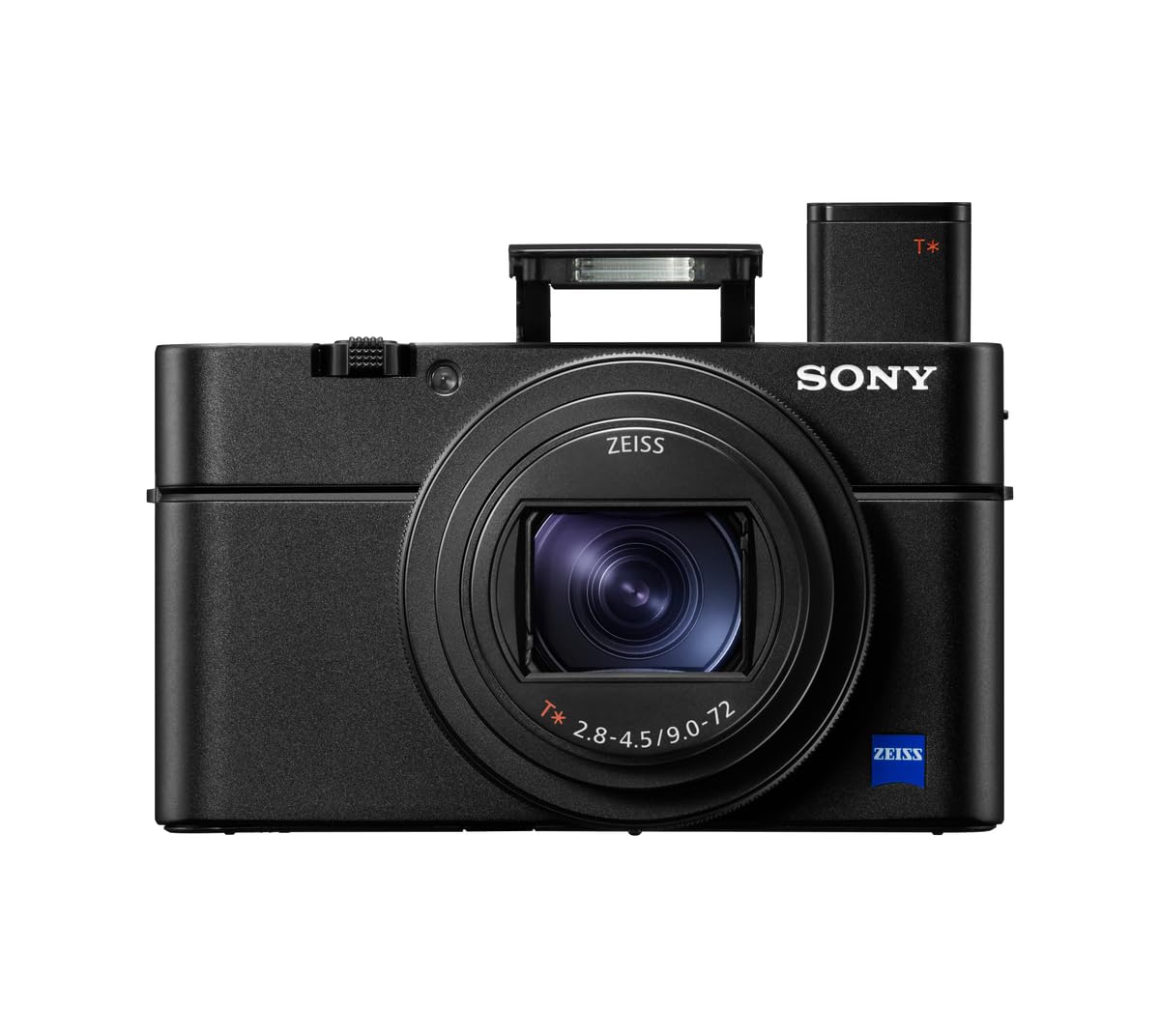
The Sony RX100 VII represents a different philosophy from superzoom cameras: it prioritizes image quality and pocketability over sheer optical reach. Its 1.0-type stacked CMOS sensor is dramatically larger than the 1/2.3-inch sensors found in most superzoom cameras, which translates to superior noise control, dynamic range, and low-light performance. The Zeiss Vario-Sonnar T 24-200mm f2.8-4.5 lens offers a useful 8.3x zoom range, making it versatile for travel, street, and portrait photography without sacrificing image quality.
The autofocus system is the RX100 VII’s standout feature: 357 phase-detection points and 425 contrast-detection points deliver 0.02-second acquisition speeds, and Real-time Eye AF for humans and animals ensures focus stays locked on moving subjects. You can shoot at 20 frames per second without blackout, which is rare for a compact camera. The 4K video features include mic input, S-Log3 profiles, and active image stabilization, making this a serious option for vloggers and videographers.
The trade-off is reach: 200mm equivalent may not be enough for wildlife or far-away stage performers. The camera also lacks an included wall charger and has a somewhat slippery grip that many users address with an add-on. But for buyers who value a camera that fits in a pocket and produces near-DSLR-quality images, the RX100 VII is a class leader in the premium compact segment.
Why it’s great
- Large 1.0-type sensor offers excellent image quality in low light
- World-class autofocus with Real-time Eye AF
- 20 fps blackout-free shooting for action
Good to know
- 200mm maximum reach is limited for distant subjects
- No wall charger included; grip is slippery without an add-on
3. Panasonic LUMIX FZ80D

The Panasonic LUMIX FZ80D combines a 60x optical zoom lens (20-1200mm equivalent) with an impressive 4K video and photo system that sets it apart from many bridge cameras. The Power O.I.S. stabilization is effective enough to support handheld 4K video capture at long zoom ranges, and the 4K Photo mode lets you extract 8-megapixel frames from your footage — useful for capturing fleeting moments. The 2,360K-dot electronic viewfinder with 0.74x magnification provides a bright, clear view even in direct sunlight.
The Post Focus feature allows you to select your focus point after taking the shot, which is a genuinely useful tool for macro photography and still-life compositions. The camera’s autofocus is fast and reliable in good light, though it naturally slows as light drops. The included 20-1200mm lens covers a huge range of scenarios, from sweeping landscapes to distant wildlife, and the built-in flash adds flexibility for nearby subjects.
The sensor remains a 1/2.3-inch type, which imposes limitations in low light — images get grainy at higher ISO settings. The menu system can also feel deep and non-intuitive to new users. However, for its price point and feature set — particularly if 4K video is a priority — the FZ80D offers excellent value for travel and outdoor shooting.
Why it’s great
- 60x zoom with effective O.I.S. for stable 4K video
- Post Focus and 4K Photo features add creative flexibility
- High-resolution EVF works well in bright conditions
Good to know
- Small sensor impacts low-light image quality
- Menu system can be complex for beginners
4. Minolta Pro Shot 20MP

The Minolta Pro Shot 20MP brings a 67x optical zoom lens and a 20-megapixel sensor to the table, giving it both reach and resolution that out-specs many competitors in its price range. The optical image stabilization system helps keep handheld shots sharp, and the articulating 3-inch LCD with 920K dots is useful for composing shots from low or high angles. The camera includes 27 scene modes, face/smile/blink detection, and built-in Wi-Fi for easy sharing.
Users consistently praise its zoom performance for outdoor subjects like birds and airshows, noting that it significantly outperforms smartphone digital zoom at distance. The 20-megapixel sensor allows for more aggressive cropping without losing detail, which is a real advantage for wildlife shooters. The bundle includes a 16GB SD card, which is a nice value-add for first-time buyers who may not have memory cards on hand.
On the downside, indoor image quality does not surpass a modern phone’s output, and some users report quality control issues with card readers and charging. The zoom stabilization can also feel less assured than on premium competitors, particularly at maximum extension. As a mid-range bridge camera with strong outdoor performance, the Minolta Pro Shot is a solid choice for hiking and travel photographers who want reach without a premium price tag.
Why it’s great
- 67x optical zoom delivers impressive reach for outdoor subjects
- 20MP sensor allows for detailed crops
- Articulating screen and Wi-Fi add convenience
Good to know
- Indoor image quality is comparable to a smartphone at best
- Some quality control reports from users
5. Canon PowerShot SX740

The Canon PowerShot SX740 is a compact camera that packs a 40x optical zoom lens (24-960mm equivalent) and 4K video into a form factor that fits in a jacket pocket. The Optical Image Stabilizer and Zoom Framing Assist feature help you keep distant subjects in view, which is particularly helpful when tracking action at maximum zoom. The 20.3-megapixel CMOS sensor and DIGIC 8 image processor deliver solid daylight performance with pleasing colors straight out of camera.
The tilt LCD screen makes it easy to compose selfies and vlogs, and the built-in Wi-Fi and Bluetooth allow quick transfer of images to your phone. Continuous shooting at 7.4 fps with autofocus tracking is sufficient for casual action shots, and the 4K time-lapse movie function is a nice creative addition. Users often praise its simplicity and the clarity of zoomed images compared to phones.
Some buyers have reported reliability concerns, with units failing after short periods of use, and others note that image quality is only marginally better than older, lower-resolution compacts. The autofocus can also be slow to lock at full zoom. However, for its combination of zoom, 4K video, and pocket size, the SX740 is a convenient travel companion for users who prioritize portability over absolute sharpness.
Why it’s great
- Compact and portable with 40x optical zoom
- 4K video and time-lapse in a pocket-sized body
- Simple controls and good daylight image quality
Good to know
- Some reliability issues reported
- Autofocus can be slow at maximum zoom
6. Canon PowerShot SX530 HS (Renewed)

The renewed Canon PowerShot SX530 HS is a budget-friendly entry point into superzoom photography, offering a 50x optical zoom lens (24-1200mm equivalent) at a fraction of the cost of newer models. Its 16-megapixel CMOS sensor and DIGIC 4+ processor deliver decent image quality in bright conditions, and the built-in Wi-Fi and NFC allow wireless transfers to your phone for quick sharing. The 3-inch LCD with 461K dots provides adequate viewing for composition and review.
Users consistently highlight the zoom range as a standout feature, noting that it reveals details invisible to the naked eye at maximum extension. The camera is lightweight and easy to handle, and the continuous shooting at 1.6 fps is modest but usable for static subjects. The included lithium-ion battery and charger add convenience, and many users find the image quality more than satisfactory for family events and travel.
The main downsides are the camera’s age: the DIGIC 4+ processor lacks the speed and features of modern processors, and the 1.6 fps burst rate is too slow for any kind of action photography. The autofocus can also be slow when zooming quickly. As a renewed product, condition varies, but for buyers who want maximum optical zoom without a big investment, the SX530 HS remains a viable option.
Why it’s great
- 50x optical zoom offers impressive reach for the price
- Lightweight and easy to carry
- Wi-Fi for quick image sharing
Good to know
- Older processor limits continuous shooting speed
- Autofocus can be slow when zooming rapidly
7. NIkon COOLPIX P1000
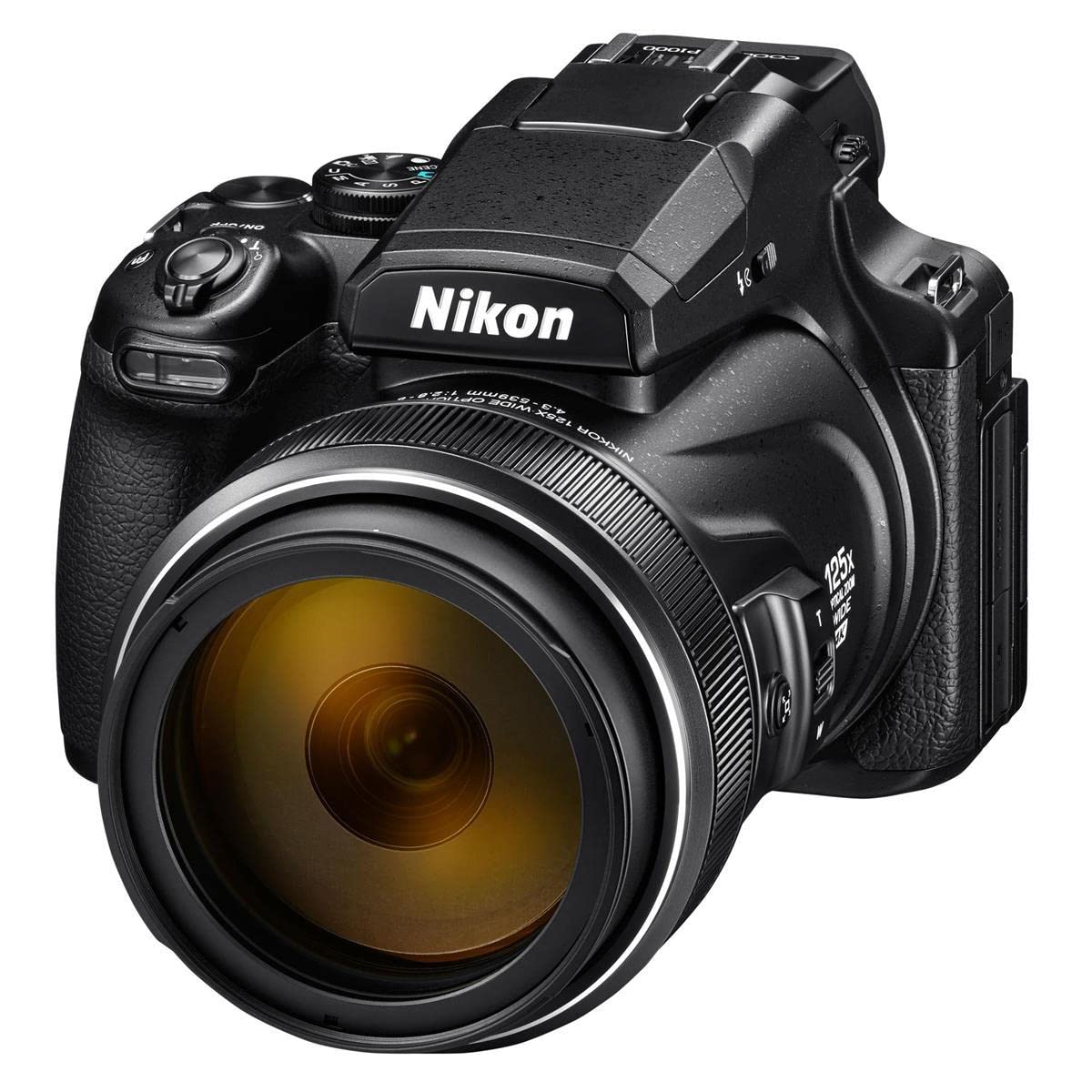
The Nikon COOLPIX P1000 holds the title for the longest optical zoom lens ever put on a digital camera: a staggering 125x optical zoom reaching 3000mm equivalent. This puts subjects like the moon, distant mountains, and far-off wildlife within frame with a clarity that no other compact camera can match. The dual-detect image stabilization and electronic VR work together to steady the shot, but at 3000mm, a tripod is practically essential for sharp results. The camera also records 4K UHD video with stereo sound and an accessory hot shoe for external microphones.
Beyond its zoom, the P1000 is a full-featured camera with manual controls, RAW capture, time-lapse and super-lapse modes, and a vari-angle 3.2-inch LCD with anti-reflection coating. The electronic viewfinder is OLED with 2,359K dots, providing a clear view for composition. Users who need to identify distant birds, capture moon craters, or document scenery at extreme distances find the P1000 transforms what is photographically possible.
However, the camera is large and heavy — it is not a casual carry. The small 1/2.3-inch sensor means image quality degrades noticeably at high ISO, limiting low-light use. At max focal lengths beyond 1500mm, atmospheric shimmer and motion blur become significant challenges. The premium price reflects the unique lens, not overall image quality. For users whose priority is maximum optical reach above all else, the P1000 is unmatched.
Why it’s great
- 125x optical zoom (3000mm) is the longest available in a digital camera
- RAW capture and full manual controls for creative shooting
- 4K video with hot shoe for external audio
Good to know
- Large and heavy; a tripod is needed for sharp shots at max zoom
- Small sensor leads to poor low-light performance
8. Panasonic LUMIX TZ/ZS99

The Panasonic LUMIX TZ/ZS99 is designed for travelers who refuse to check a camera bag. Its 30x Leica DC Vario-Elmar lens (24-720mm equivalent) collapses into a body that slips easily into any pocket, and the 60x Intelligent Zoom extends the reach further with digital processing. The 20.3-megapixel sensor captures detailed 4K video and 4K Photo bursts at 30 fps, and the tiltable 1,840K-dot touchscreen makes for flexible composition and intuitive control.
Built-in Bluetooth 5.0 and a dedicated Send Image button allow almost instant photo transfers to your smartphone, which is a real convenience for social media sharing on the go. The USB Type-C charging means you can top up with the same cable you use for your phone, simplifying travel gear. The stepped zoom and Lens Position Resume features are thoughtful additions that let you quickly jump to frequently used focal lengths and remember your last zoom position when powering on.
While the image quality is good for its class, it does not match the larger-sensor Sony RX100 VII in low light or overall sharpness. The autofocus can be quirky, and the LCD can be difficult to read in bright daylight. Some users also report color aberration in the corners of the frame. For a pocketable zoom camera that covers 24-720mm, the ZS99 is a strong travel companion for daytime use and casual shooting.
Why it’s great
- Pocket-sized body with a 30x Leica lens
- Bluetooth 5.0 and USB Type-C for easy charging and sharing
- Stepped zoom and Lens Position Resume for quick access
Good to know
- Image quality does not match larger-sensor compacts
- Autofocus can be unreliable; LCD is difficult to see in bright light
9. Kodak PIXPRO AZ255

The Kodak PIXPRO AZ255 is a budget-friendly bridge camera that offers a 25x optical zoom lens (24-600mm equivalent) and a 16-megapixel sensor in a simple, beginner-friendly package. Its optical image stabilization helps reduce blur at distance, and the 1080p Full HD video recording is adequate for casual memories. The camera runs on AA batteries, which are included in the box, making it easy to keep shooting when you have access to batteries anywhere in the world.
The macro feature performs well for close-up shots, and users find the zoom quality surprisingly clean and free from noticeable distortion. The auto mode works reliably for beginners, and there are enough manual settings (aperture modes, scene selection) for learning the basics of photography. It accepts SD, SDHC, and SDXC cards up to 512GB, giving you plenty of storage for a day of shooting.
The plastic construction feels less robust than metal-bodied bridge cameras, and the AA battery system, while convenient, means shorter battery life compared to a dedicated lithium-ion pack. The camera is also bulky enough that it will not fit in a small purse. For the price, the AZ255 is a capable starter camera for beginners who want to learn on a point-and-shoot with real optical zoom.
Why it’s great
- Affordable entry point with 25x optical zoom
- AA battery system is easy to replenish anywhere
- Good macro performance and clean zoom quality for the price
Good to know
- AA batteries offer shorter life than lithium-ion packs
- Build quality is plastic and feels less premium
FAQ
What is the difference between optical zoom and digital zoom in a camera?
Do I need a tripod for a superzoom camera?
Can a digital zoom camera replace my DSLR for wildlife photography?
Final Thoughts: The Verdict
For most users, the best digital zoom camera winner is the Nikon COOLPIX P950 because it delivers an exceptional 83x optical zoom with reliable stabilization, dedicated wildlife modes, and 4K video at a manageable price point. If you value pocketability and image quality over extreme reach, grab the Sony RX100 VII. And for maximum optical reach on a budget, nothing beats the Nikon COOLPIX P1000.

Mo Maruf
I created WellFizz to bridge the gap between vague wellness advice and actionable solutions. My mission is simple: to decode the research and give you practical tools you can actually use.
Beyond the data, I am a passionate traveler. I believe that stepping away from the screen to explore new environments is essential for mental clarity and physical vitality.