Our readers keep the lights on and my smoothie glass nicely filled. As an Amazon Associate, I earn from qualifying purchases.
Your desktop is your command center, and the panel in front of it is the single most important link between your intentions and the pixels that execute them. Whether you’re editing 4K RAW footage, racing through a lap in a sim, or simply reading code for eight hours straight, the wrong display monitor introduces fatigue, color errors, and motion blur that no software update can fix.
I’m Mohammad Maruf — the founder and writer behind WellFizz. I’ve spent hundreds of hours analyzing display specifications, comparing panel technologies like IPS, VA, and OLED, and cross-referencing real-world user feedback with the measurable metrics that actually determine image quality.
This guide breaks down nine carefully selected models across value, performance, and professional tiers. If you’re searching for the best display monitor to match your specific work or play style, these reviews will help you decide based on specs that matter.
How To Choose The Best Display Monitor
Selecting a display monitor is a decision between resolution, refresh rate, panel technology, and connectivity — and the right balance depends entirely on how you use your screen. A gaming monitor with 240 Hz will feel wasted on a still-image editor, just as a color-accurate 4K panel may feel sluggish to a competitive FPS player. Start with your primary use case, then weigh the specs accordingly.
Panel Technology: IPS, VA, or OLED
IPS panels dominate the market for their wide 178-degree viewing angles and consistent color reproduction, making them the default for photo editing and general productivity. VA panels deliver deeper blacks and higher native contrast ratios — typically around 3000:1 — which makes them excellent for media consumption and dark-room gaming. OLED panels offer true blacks and infinite contrast, but come with higher cost and potential burn-in risk for static desktop use. For most buyers, a high-quality IPS panel provides the best all-around versatility unless you prioritize contrast above all else.
Resolution and Refresh Rate Tradeoff
4K (3840 × 2160) delivers exceptional sharpness on a 27-inch panel, ideal for design, video editing, and reading fine text. However, driving 4K at high frame rates requires a powerful GPU. QHD (2560 × 1440) strikes a popular middle ground — noticeably sharper than 1080p without the GPU tax of 4K. If you play fast-paced shooters, a 144 Hz or higher refresh rate at QHD often feels better than a 60 Hz 4K panel. Budget options often pair 4K with 60 Hz, while mid-range and premium models push 120 Hz or higher at 4K using HDMI 2.1 or DisplayPort 1.4 with DSC.
Connectivity and Ergonomics
Modern monitors should offer at least one HDMI 2.0 (or 2.1 for 4K high-refresh) and a DisplayPort. USB-C with power delivery transforms a monitor into a laptop docking station — single-cable video, data, and charging. VESA mount compatibility and a fully adjustable stand (height, tilt, swivel, pivot) separate a comfortable long-term workstation from an ergonomic headache. Built-in speakers are a convenience feature but rarely match dedicated desktop speakers in clarity or bass response.
Quick Comparison
On smaller screens, swipe sideways to see the full table.
| Model | Category | Best For | Key Spec | Amazon |
|---|---|---|---|---|
| SAMSUNG Odyssey G5 G53F | Gaming | High-refresh QHD gaming | 200 Hz, IPS, 1ms MPRT | Amazon |
| ASUS ROG Strix XG27UCG | Gaming | Dual-mode 4K/FHD gaming | 4K 160 Hz or FHD 320 Hz | Amazon |
| LG 27GR83Q-B UltraGear | Gaming | Competitive 240 Hz QHD | 240 Hz, IPS, 1ms GtG | Amazon |
| Dell UltraSharp U2725QE | Professional | Color-critical creative work | 99% DCI-P3, Delta E less than 1.5 | Amazon |
| Alienware AW3425DWM | Ultrawide | Immersive WQHD ultrawide | 34-inch 1500R, WQHD 3440×1440 | Amazon |
| Dell 34 Plus S3425DW | Ultrawide | Productivity with USB-C | VA 3000:1, 120 Hz, USB-C 65W | Amazon |
| Dell 27 Plus S2725QS | Productivity | 4K high-refresh office use | 4K 120 Hz, 99% sRGB | Amazon |
| KTC H27P27 | Budget | Affordable 4K SDR | 27-inch 4K 60 Hz, HDR 400 | Amazon |
| Acer Nitro KG271U | Budget | Entry-level QHD fast gaming | QHD 180 Hz, AMD FreeSync | Amazon |
In-Depth Reviews
1. SAMSUNG 27″ Odyssey G5 G53F
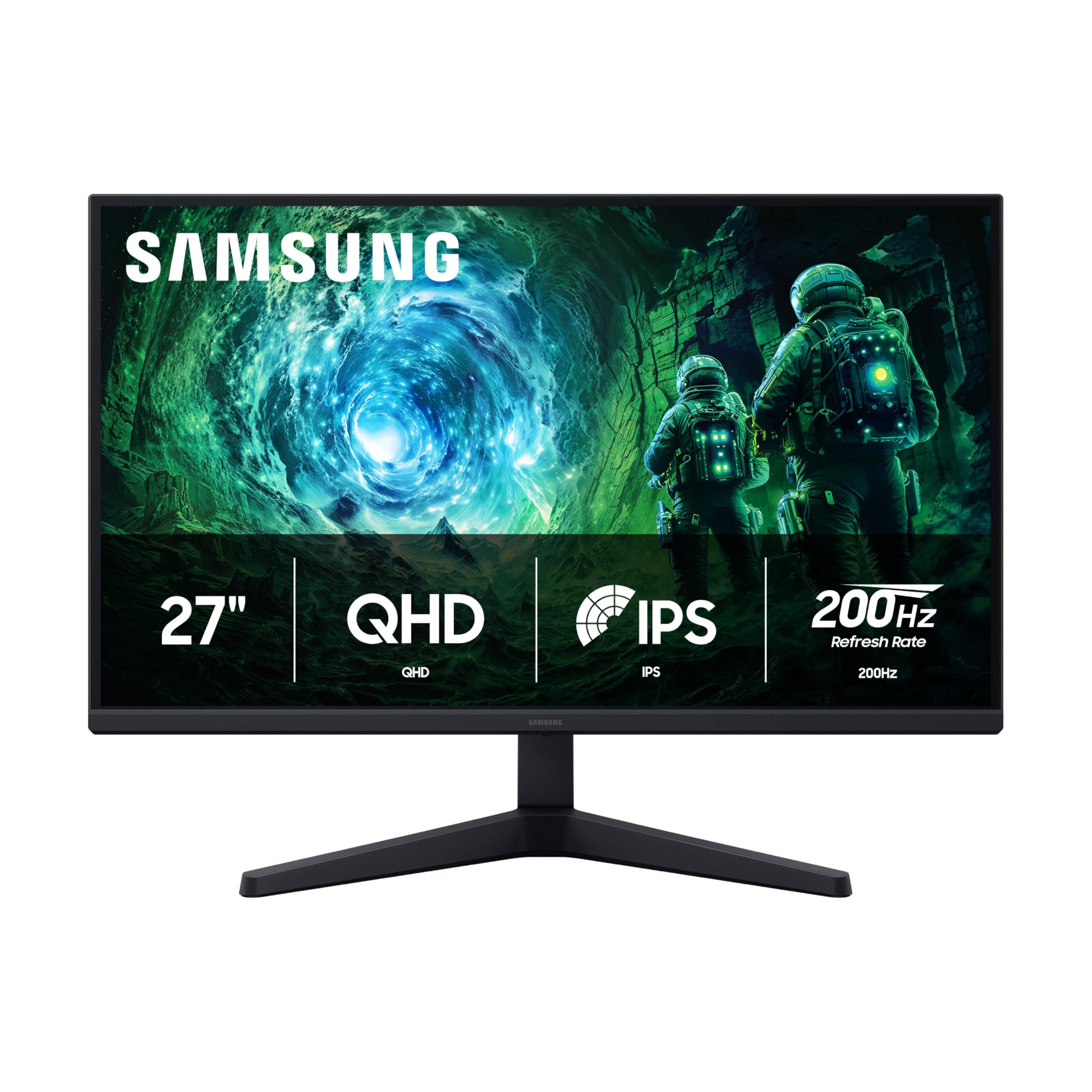
The Odyssey G5 G53F achieves a rare balance: a 200 Hz IPS panel at QHD resolution packed with gaming-first features like Black Equalizer and Virtual Aim Point, yet priced competitively enough to appeal to everyday users. Its 27-inch matte screen delivers sharp detail at 2560 x 1440, and the IPS wide viewing angle ensures consistent color whether you’re leaning in for a match or stepping back to review a document. AMD FreeSync Premium locks out tearing across the full frame rate range, making this a smooth operator for both fast shooters and open-world exploration.
Brightness peaks at 300 cd/m² with HDR10 support, which adds depth to highlights and shadows without the panel struggling to maintain color accuracy. The 1ms MPRT response time keeps motion clear, and the Auto Source Switch+ feature eliminates the hassle of manually toggling between a desktop and a console. Out of the box, the image requires very little calibration — users consistently report clean, vibrant color and zero dead pixels on arrival.
The stand allows only tilt adjustment and feels lightweight compared to the monitor itself, so mounting the display on an aftermarket arm is a common upgrade. There’s also no USB hub or built-in speakers, which keeps the port selection minimal but the overall footprint clean. For anyone seeking a mid-range QHD monitor that performs well above its tier, this is the pick.
Why it’s great
- 200 Hz refresh rate with 1ms MPRT for fluid gaming
- QHD IPS panel with wide viewing angles and factory-accurate color
- FreeSync Premium and Auto Source Switch+ reduce daily friction
Good to know
- Stand offers tilt-only adjustment, no height or swivel
- No built-in speakers, no USB hub ports
2. ASUS ROG Strix 27″ XG27UCG

The XG27UCG introduces a dual-mode feature that lets you switch between native 4K at 160 Hz and FHD at 320 Hz, adapting to the performance demands of different game genres without changing hardware. The 27-inch Fast IPS panel achieves a 1ms GtG response time, and ASUS Extreme Low Motion Blur Sync works in parallel with variable refresh rate to eliminate both ghosting and tearing simultaneously — a rare capability even among premium gaming monitors. The DCI-P3 95% color gamut, combined with advanced gray-scale tracking, delivers smooth gradations that benefit both creative tasks and rich game worlds.
Build quality is substantial: the stand offers full ergonomic adjustment — height, swivel, pivot, and tilt — and the chassis feels solid without excessive weight. Connectivity includes HDMI 2.1, DisplayPort, and USB-C, which eliminates the need for a separate docking station when connecting a modern laptop. The DisplayWidget Center software allows settings control via mouse, which is more convenient than fumbling with rear buttons during a session.
The contrast ratio of 400:1 is modest, so blacks won’t match VA or OLED panels in a dark room. And at 27 inches, 4K resolution means text and icons appear very small at default scaling on Windows. Buyers who want the flexibility of a single monitor that spans both 4K immersion and esports-speed frame rates will find this a versatile powerhouse.
Why it’s great
- Dual-mode: 4K 160 Hz or FHD 320 Hz on a single panel
- ELMB Sync works with VRR for tear-free, blur-free motion
- USB-C connectivity and full ergonomic stand included
Good to know
- Contrast ratio is typical for IPS, not suited for pure blacks
- 4K at 27 inches requires scaling adjustments on Windows
3. LG 27GR83Q-B UltraGear
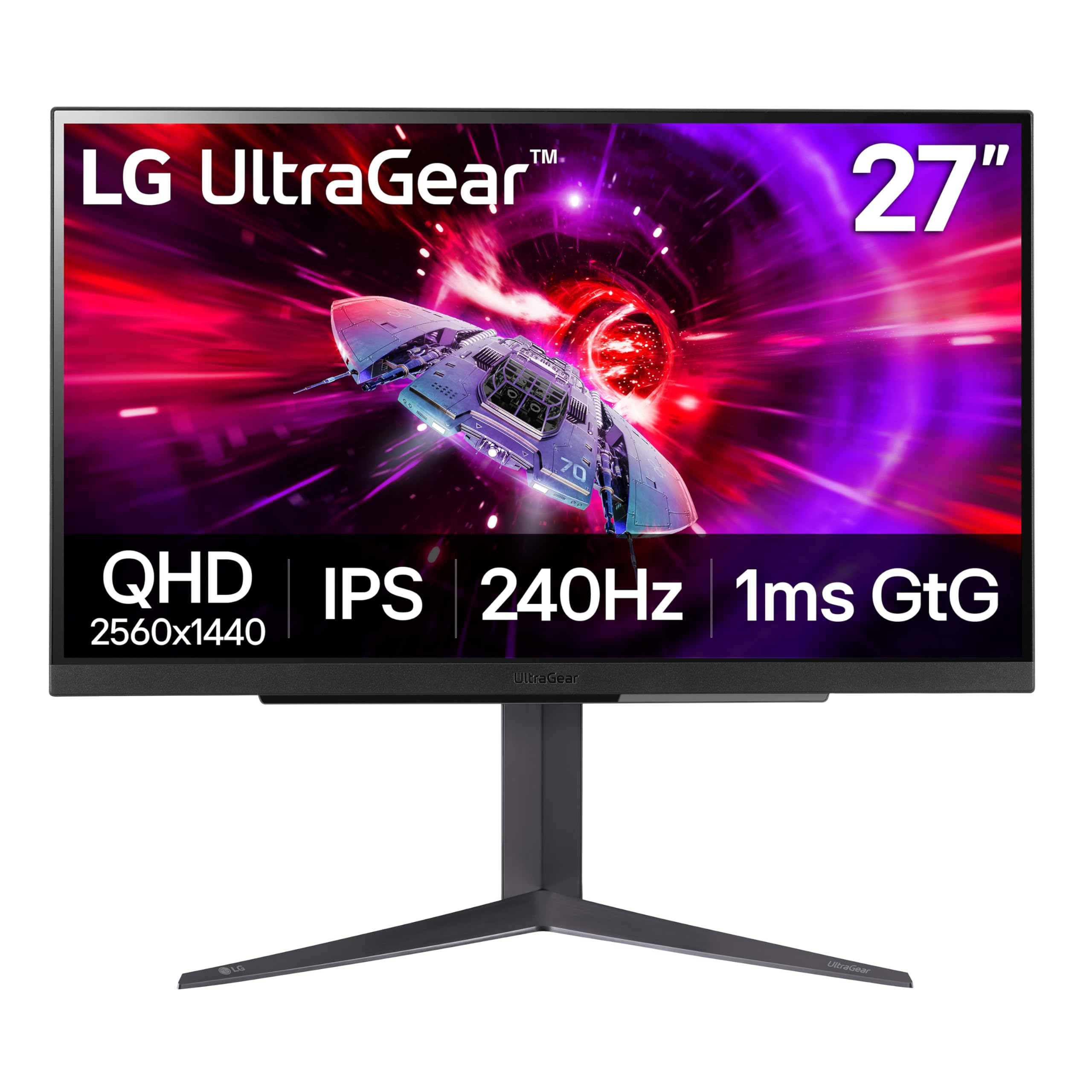
The LG 27GR83Q-B targets the competitive segment directly with a 240 Hz refresh rate at QHD resolution, delivered through both HDMI 2.1 and DisplayPort 1.4 — meaning consoles and high-end PCs alike can drive the full 240 Hz without compromise. The 1ms GtG IPS panel is NVIDIA G-Sync Compatible and also supports AMD FreeSync Premium, so tearing is eliminated regardless of GPU brand. HDR 400 certification and DCI-P3 95% color gamut ensure that the vivid output matches the smooth motion.
LG includes gaming-specific features like Dynamic Action Sync for reduced input lag, Black Stabilizer for dark scene visibility, and a crosshair overlay that reduces the need for third-party overlays. The 4-pole headphone out with DTS Headphone:X provides virtual 3D audio spatialization, a welcome addition for competitive players who rely on directional sound cues. The stand is fully height-adjustable with tilt, swivel, and pivot options, and the OSD is controlled by a responsive joystick.
Quality control reports note occasional stuck or dead pixels — a known issue across multiple units from some batches. The 400 cd/m² brightness is adequate but not class-leading, and the IPS contrast ratio of 1000:1 means deep blacks are not the strong suit. For a pure competitive gaming setup where every millisecond matters, the combination of 240 Hz, G-Sync, and low input lag makes this a top contender.
Why it’s great
- Full 240 Hz through both HDMI 2.1 and DisplayPort 1.4
- NVIDIA G-Sync Compatible and AMD FreeSync Premium
- Height/pivot stand and responsive joystick OSD control
Good to know
- Occasional reports of stuck/dead pixels out of box
- IPS glow is visible in dark scenes at high brightness
4. Dell UltraSharp U2725QE
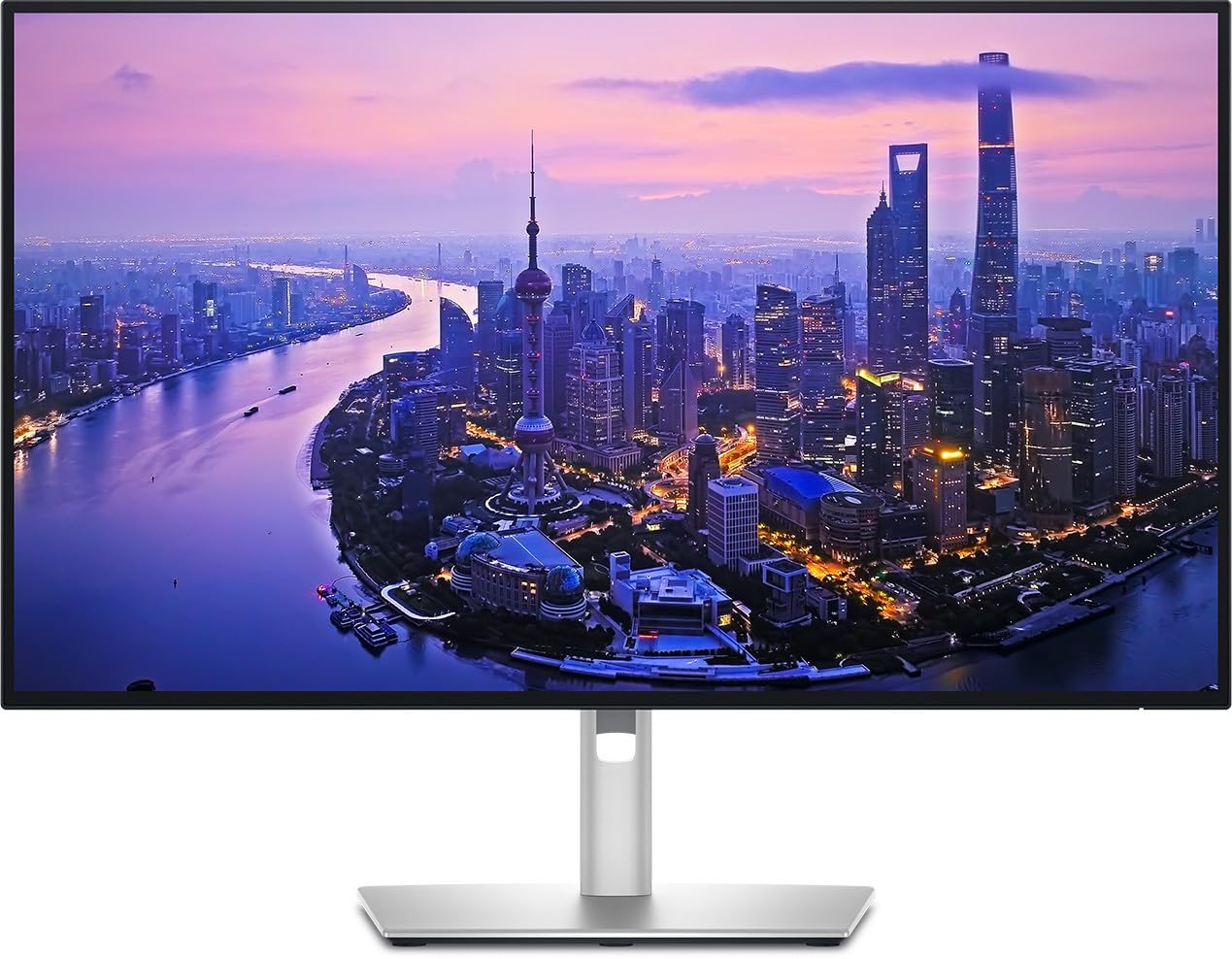
The Dell UltraSharp U2725QE is engineered for color-critical workflows where accuracy is non-negotiable. Its 27-inch 4K IPS Black panel covers 99% DCI-P3 and is factory-calibrated to a Delta E of less than 1.5, meaning the colors you see match industry standards right out of the box — no calibration puck required. The 120 Hz refresh rate is a significant upgrade from the typical 60 Hz productivity monitor, providing fluid cursor movement and smoother scrolling without sacrificing color fidelity.
Thunderbolt 4 connectivity delivers up to 140 watts of power delivery, enough to charge a high-end laptop while transmitting video data over a single cable. Daisy-chain support allows a clean desk setup with two additional 4K monitors, and the built-in Gigabit Ethernet port provides a stable wired network connection. ComfortView Plus reduces blue light emissions to under 35 percent while maintaining color accuracy — a meaningful feature for professionals who spend ten-plus hours in front of the screen.
The full ergonomic stand adjusts in height, tilt, swivel, and pivot, and the anti-glare coating on the matte screen is reported to be among the best in its class, with minimal graininess. The 450 cd/m² brightness also makes it usable in brightly lit offices. Some Mac users have reported a compatibility error with the Thunderbolt connection on certain macOS versions, though a firmware update or an alternative USB-C cable often resolves the behavior.
Why it’s great
- Delta E less than 1.5 out-of-box color accuracy
- Thunderbolt 4 with 140W power delivery and daisy chain
- IPS Black panel delivers deeper blacks than standard IPS
Good to know
- Premium pricing reflects professional-grade components
- Some Mac users need a firmware update for full Thunderbolt compatibility
5. Alienware 34 AW3425DWM

The Alienware AW3425DWM delivers a 34-inch ultrawide 21:9 experience with a 1500R curve that wraps the screen gently around your peripheral vision. The WQHD resolution (3440 x 1440) provides significantly more horizontal space than a standard 27-inch monitor, making it ideal for flight sims, racing games, and productivity tasks like spreadsheets and video timelines. The VA panel achieves a native 3000:1 contrast ratio, producing deep blacks that make HDR content look rich and dimensional.
Refresh rate hits 180 Hz over DisplayPort, with a 1ms gray-to-gray response time that keeps fast motion crisp. AMD FreeSync Premium and VESA AdaptiveSync lock out tearing, and the dedicated console mode optimizes parameters for PlayStation and Xbox inputs. The stand offers tilt and height adjustment, and the three-sided virtually borderless design keeps the focus on the expansive image.
The VA panel’s viewing angles are less forgiving than IPS — colors shift if viewed from extreme angles, and the lack of side-to-side tilt adjustment on the stand is a minor ergonomic limitation. There are no built-in speakers, and the only downstream ports are USB-A (no USB-C downstream). For a mid-range ultrawide that competes well above its price tier in immersion and smoothness, this remains a strong option.
Why it’s great
- 1500R VA panel with 3000:1 contrast for deep blacks
- 180 Hz with FreeSync Premium and VESA AdaptiveSync
- Excellent for immersive sims, racing games, and productivity multitasking
Good to know
- VA viewing angles are narrower than IPS panels
- No built-in speakers; no USB-C downstream ports
6. Dell 34 Plus S3425DW

The Dell 34 Plus delivers a VA ultrawide experience with a focus on productivity and color accuracy. Its 34-inch panel covers 99% sRGB and 95% DCI-P3, and the 3000:1 contrast ratio produces noticeably deeper blacks than IPS alternatives — ideal for video editors and designers who need shadow detail without blooming. The 120 Hz refresh rate supports AMD FreeSync Premium, making casual gaming and 60 fps video look smooth without the high GPU demands of a 240 Hz panel.
Single-cable USB-C connectivity with 65 watts of power delivery turns the monitor into a clean laptop docking solution. The built-in speakers have been redesigned with greater output power and deeper frequency response than previous Dell generations — they are genuinely usable for meetings and media, not just an afterthought. ComfortView Plus reduces blue light to less than 35 percent without the yellow tint that affects many software solutions.
The stand lacks swivel and pivot adjustments, and the VESA mount has a recessed design requiring bracket assembly that adds complexity. The port selection is limited to HDMI, USB-C, and USB-A — there is no DisplayPort input, which may be a limitation for certain GPU setups. For workflow-focused users who want a wide canvas with strong contrast and USB-C simplicity, this delivers excellent value.
Why it’s great
- VA panel with 3000:1 contrast ratio for deep blacks
- Single USB-C cable with 65W power delivery
- Built-in speakers with improved sound quality versus prior models
Good to know
- No DisplayPort input; limited to HDMI and USB-C
- VESA mount requires bracket assembly due to recessed design
7. Dell 27 Plus S2725QS

The Dell 27 Plus S2725QS bridges the gap between a pure office display and a gaming-ready panel by pairing 4K resolution with a 120 Hz refresh rate, making every interaction — from cursor movement to video playback — noticeably smoother than a standard 60 Hz monitor. The 27-inch IPS panel covers 99% sRGB, and the 1500:1 contrast ratio is slightly higher than typical IPS panels, delivering good depth in mixed-content use. AMD FreeSync Premium reduces tearing in supported applications.
ComfortView Plus cuts blue light emissions to under 35 percent while keeping colors accurate, an important advantage over software-based blue light filters that often shift the white point. The ash white finish and ultra-thin bezel give the workstation a modern, clean look. The ergonomic stand supports height, tilt, swivel, and pivot adjustments — a rare set at this price point. The built-in speakers produce more output power and frequency range than the previous generation, suitable for podcasts and video calls.
Some users report a slight yellow tint on certain units that may require manual color calibration, and the 5ms response time means it is not optimized for competitive fast-paced gaming — motion blur may be noticeable in high-speed scenes. The included HDMI 2.1 cable and G-Sync compatibility, however, make it a capable choice for a mix of productivity and 60 fps console gaming.
Why it’s great
- 4K at 120 Hz provides smooth daily workflow visuals
- Full ergonomic stand with height, swivel, tilt, and pivot
- Low blue light emission without color degradation
Good to know
- Some units may exhibit a slight yellow tint at default settings
- Response time not ideal for high-competitive gaming
8. KTC 27 Inch 4K H27P27

The KTC H27P27 brings 4K UHD resolution to a 27-inch IPS panel at an accessible price point, making high-pixel-density desktop computing affordable for budget-conscious buyers. With 3840 x 2160 resolution and 95% DCI-P3 color coverage, the display produces sharp text and vivid colors that are well-suited for photo editing, document work, and media consumption. HDR 400 certification adds extra brightness range for compatible content, and the 60 Hz refresh rate is standard for this tier.
Connectivity includes two HDMI 2.0 ports and one DisplayPort 1.4, supporting 4K at 60 Hz without chroma subsampling. The matte screen finish reduces glare in bright rooms, and the 178-degree viewing angle means colors remain consistent off-axis. The VESA 100×100 mount compatibility and basic tilt adjustment give you some flexibility in positioning.
The 60 Hz refresh rate will feel limiting if you are accustomed to high-refresh panels — fast cursor movement and scrolling appear less fluid, and the input lag is not optimized for competitive gaming. The stand offers only tilt adjustment, no height or swivel, and some users reported a bug where the on-screen button controls become unresponsive after the monitor exits sleep mode. For a secondary display or a primary monitor for static productivity tasks, the sharp 4K panel is hard to match at this budget-friendly tier.
Why it’s great
- 4K IPS panel with 95% DCI-P3 at a low entry cost
- Matte finish and wide viewing angles for bright-room use
- VESA mount compatible for flexible setup
Good to know
- 60 Hz refresh rate limits motion fluidity
- Stand supports tilt only; no height or swivel adjustment
9. Acer Nitro KG271U
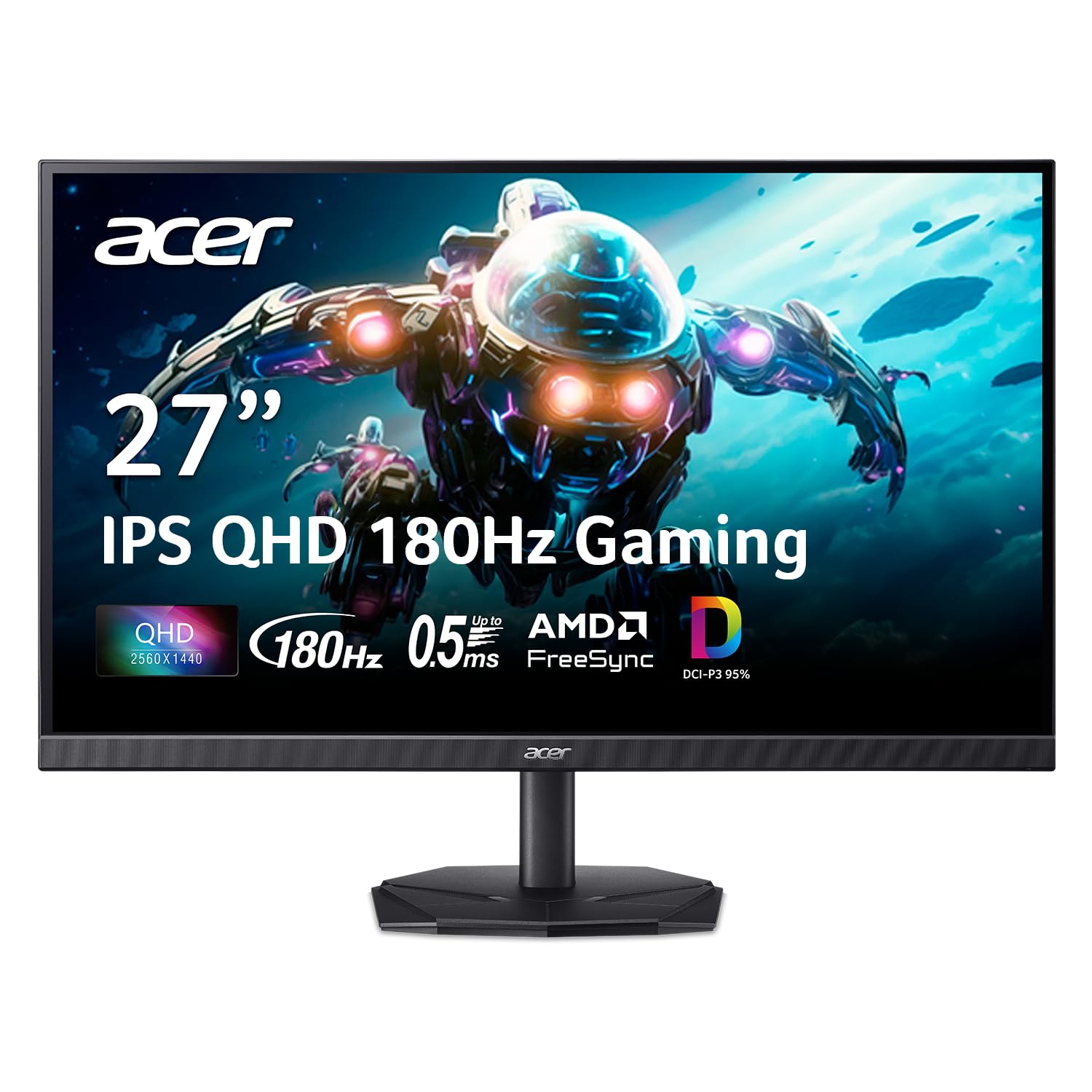
The Acer Nitro KG271U offers an impressive refresh rate of 180 Hz at QHD resolution, combined with a 0.5ms GtG response time — specs that normally belong in a higher price bracket. The 27-inch IPS panel produces the wide viewing angles and decent color coverage expected of the technology, supporting DCI-P3 95% and HDR10 for added dynamic range in games and movies. AMD FreeSync eliminates tearing, and the zero-frame design maximizes screen space without unnecessary bulk.
The monitor includes two HDMI 2.0 ports (limited to 120 Hz on consoles) and one DisplayPort 1.2 that enables the full 180 Hz on PC. The response time and refresh rate make fast-paced titles feel responsive, with no visible ghosting in normal gameplay scenarios. The low price point makes it one of the most accessible ways to enter high-refresh QHD gaming.
The stand is the primary compromise — flimsy construction, no height adjustment, and noticeable wobble on non-sturdy desks make a VESA arm or aftermarket stand a near-necessity for a clean setup. Built-in speakers are passable but lack bass and volume. Some users noted that the stand cannot swivel or pivot. For a pure gaming monitor where the panel performance matters most and the desk setup is already equipped with an arm, the KG271U delivers high-speed pixels at a low entry barrier.
Why it’s great
- 180 Hz at QHD with 0.5ms GtG response time
- DCI-P3 95% color coverage with HDR10 support
- Excellent price-to-performance ratio for competitive gaming
Good to know
- Stand is flimsy, wobbles, and has no height adjustment
- Built-in speakers are basic and lack low-end response
FAQ
What panel type should I choose for photo editing versus gaming?
Is 4K at 27 inches worth it for everyday office work?
How important is VESA mount compatibility?
Final Thoughts: The Verdict
For most users, the best display monitor winner is the SAMSUNG Odyssey G5 G53F because it combines a smooth 200 Hz QHD IPS panel with coherent gaming features at a price that does not punish everyday use. If you want uncompromised color accuracy for professional creative work, grab the Dell UltraSharp U2725QE with its factory-calibrated 4K IPS Black panel and Thunderbolt 4 connectivity. And for immersive ultrawide performance without breaking the premium ceiling, nothing beats the Alienware AW3425DWM with its 34-inch WQHD VA panel and 180 Hz refresh rate.

Mo Maruf
I created WellFizz to bridge the gap between vague wellness advice and actionable solutions. My mission is simple: to decode the research and give you practical tools you can actually use.
Beyond the data, I am a passionate traveler. I believe that stepping away from the screen to explore new environments is essential for mental clarity and physical vitality.