Our readers keep the lights on and my smoothie glass nicely filled. As an Amazon Associate, I earn from qualifying purchases.
Finding a digital microscope for the classroom means sorting through endless claims about magnification power and screen clarity while knowing your real goal is to get students genuinely excited about the micro-world. The wrong choice results in frustrated kids fighting with tiny eyepieces, blurry images that teach nothing, or a device so complex it sits unused in the corner. A classroom microscope needs to balance durability, ease of use, and enough optical quality to make every lesson a discovery moment.
I’m Mohammad Maruf — the founder and writer behind WellFizz. My approach to this guide involved analyzing the real-world specifications that matter most in a shared learning environment: screen size for group viewing, working distance for handling specimens, and the actual optical path quality that determines whether students see clear cell walls or just fuzzy blobs under the lens.
After comparing display resolution, stand stability, lighting systems, and available accessories across the most practical classroom-ready models, I’ve narrowed the field to the seven units that actually deliver on their promises. This is your complete resource for finding the right digital microscope for classroom that will serve your students well without breaking your budget or your sanity.
How To Choose The Best Digital Microscope For Classroom
When shopping for a classroom microscope, the biggest mistake is chasing the highest magnification number printed on the box. A 2000X or 2500X spec sounds impressive, but at those extreme levels, optical clarity often drops, and the working distance becomes so tight that students can barely fit a slide under the lens. What actually matters for a shared classroom environment is screen size, lighting flexibility, stand stability, and how easy it is for multiple students to view the same image at once. These factors determine whether the microscope becomes a daily teaching tool or a dust collector on the shelf.
Screen Size and Resolution
A 10.1-inch IPS display with a wide viewing angle allows several students to gather around and see the same image clearly without fighting for a single eyepiece. Models with 1080P or 2K resolution provide enough detail for identifying cell structures, bacteria, and tissue samples. Smaller screens under 7 inches are harder to view in a group setting, making them more suitable for individual work than full classroom instruction.
Stand Stability and Working Distance
A wobbly microscope frustrates every student who touches it. Look for a metal stand with a large, weighted base that keeps the unit planted during use. Working distance — the space between the lens and the specimen — is critical for classroom scenarios where students constantly swap slides and handle objects. A working distance of at least 10 inches gives enough room for coins, circuit boards, and larger specimens while still allowing comfortable focus adjustments.
Lighting System Versatility
Proper illumination makes or breaks a classroom viewing session. Top LED lights handle opaque objects like coins and insects, bottom transmitted lights are essential for biological slides, and gooseneck side lights allow you to eliminate shadows on 3D specimens. Adjustable brightness controls let you adapt to different sample types without washing out details or causing glare on the screen.
Quick Comparison
On smaller screens, swipe sideways to see the full table.
| Model | Category | Best For | Key Spec | Amazon |
|---|---|---|---|---|
| Andonstar AD249S-M | Premium | Multi-Lens Classroom Demos | 2160P UHD Video, 3 Lenses, 13″ Stand | Amazon |
| TOMLOV TriL110 | Premium | Versatile 3-Lens Observations | 2K Video, 3 Lenses, 12.6″ Stand | Amazon |
| TOMLOV DM9 Max | Premium | Detailed Inspections & Recording | 20MP Photo, 10 LEDs, 12.6″ Stand | Amazon |
| Andonstar AD210 | Mid-Range | All-Purpose Classroom Station | 12MP Photo, 10.1″ IPS Screen, 32GB Card | Amazon |
| JOYALENS JL210 | Mid-Range | Coin & Slide Dual Use | 12MP Photo, 10.1″ IPS, 32GB Included | Amazon |
| JECONE 40X-2500X | Entry-Level | Beginner Biology & Slides | 2500X Mag, Phone Holder, 5-Color Filter | Amazon |
| Herwicm 100X-2000X | Entry-Level | Homeschool Basic Science | 2000X Mag, Metal Arm, Carrying Case | Amazon |
In‑Depth Reviews
1. Andonstar AD249S-M 10.1 Inch HDMI Digital Microscope

The Andonstar AD249S-M earns the top spot because it solves the single biggest classroom problem: one device that handles everything from biological slides to soldering lessons to coin inspections. Its three-lens system — Lens A for whole coin views, Lens L for soldering and repair work, and Lens D for high-detail biological slide observation — makes it the most versatile unit in this lineup. The pro boom arm stand allows front-to-back and left-to-right adjustment, giving teachers the flexibility to position the camera precisely for any specimen without moving the heavy base. At 13 inches tall with a 7×7.8-inch metal base, this stand eliminates the wobble that plagues cheaper models during student use.
The 2160P UHD video recording capability sets a new standard for classroom documentation. Teachers can record their own specimen demonstrations and replay them on a larger screen via HDMI output, which is invaluable for lectures where the whole class needs to see the same detail at the same time. The included 32GB Micro SD card provides ample storage for a semester’s worth of lesson recordings and student projects. The remote control adds another layer of convenience, allowing the teacher to capture images or adjust digital zoom without touching the microscope body — a feature that minimizes vibrations during critical observations.
What truly pushes this model ahead is its professional measurement software for Windows PCs. Older students can measure object length, calculate area, and capture calibrated photos directly through the software, turning a simple observation into a full data-collection exercise. The eight-level adjustable LED lights provide consistent illumination across all three lenses, and the included prepared slides, observation box, and tweezers mean you can start teaching the moment the package arrives. For a classroom that needs one microscope to serve multiple grade levels and subjects, this is the definitive choice.
Why it’s great
- Three interchangeable lenses cover slides, coins, and soldering in one unit
- 2160P UHD video with HDMI output enables whole-class demonstrations
- Professional boom arm stand allows full positional adjustment without instability
- Includes measurement software for STEM data exercises
Good to know
- Lens swapping requires screw removal rather than a quick-change barrel
- Measurement software is Windows-only, limiting Mac classroom use
- Premium price point reflects the advanced stand and multi-lens system
2. TOMLOV TriL110 3-Lens Digital Microscope
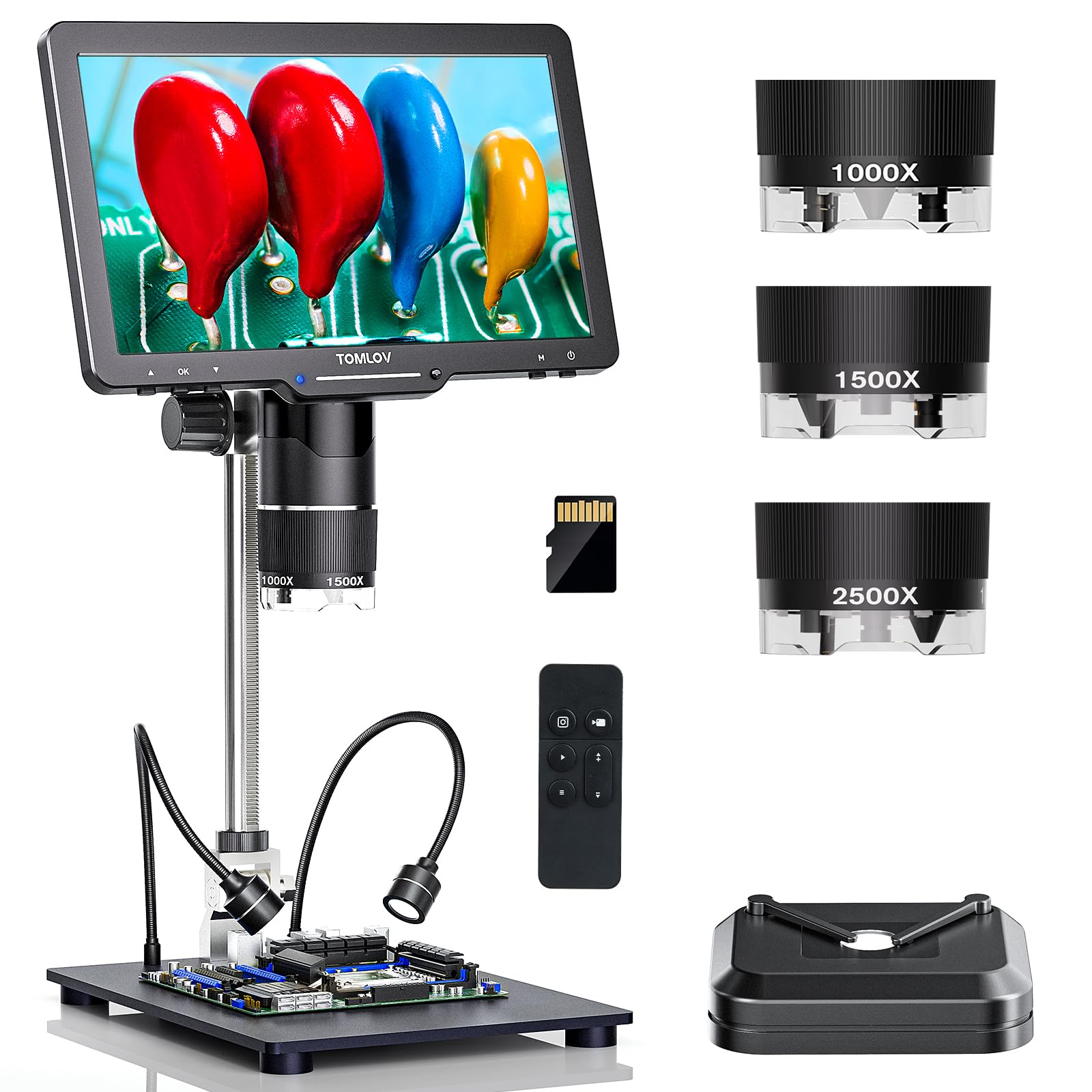
The TOMLOV TriL110 takes the multi-lens concept and makes it significantly more teacher-friendly by using a rotating lens barrel instead of removable screws. Switching from the 1000X coin lens to the 1500X soldering lens or the 2500X biological lens happens in seconds without losing your specimen position. This rotating mechanism is a genuine classroom advantage because it lets you demonstrate three different types of microscopy in a single class period without the fumbling that kills student engagement. The 10.1-inch IPS screen delivers 2K video resolution (compared to 1080P on many competitors), and the 178-degree viewing angle means students sitting off to the side still see a crisp image.
The 24MP photo resolution provides enough detail for students to zoom into images on a classroom computer after the lesson, making it easier to point out cell walls, nuclei, or coin mint marks during follow-up discussions. The included wireless remote allows the teacher to adjust magnification, capture photos, and start recording from across the room, which is especially useful when you’re managing a lab full of students. The 14-LED lighting system combines 12 built-in lens LEDs with 2 gooseneck side lights and a bottom slide light, giving you complete control over how each specimen is illuminated.
One feature that teachers will appreciate is the pre-installed Micro SD card — it arrives already in the slot rather than loose in the box, which prevents the common frustration of losing the tiny card before the first use. The 12.6-inch stand with a 7×8-inch base provides enough clearance for large specimens, and the Lens 1000X can capture the full view of an entire silver dollar. Keep in mind that the Lens 2500X biological lens requires a working distance of only 3-4mm, meaning it must be extremely close to the slide material to focus. This is normal for high-magnification viewing but can surprise first-time users who expect a larger gap.
Why it’s great
- Rotating lens barrel allows instant switching between three magnification ranges
- 2K video resolution and 24MP photos provide exceptional classroom detail
- 14-LED lighting system covers every specimen type with independent control
- Pre-installed Micro SD card eliminates setup frustration
Good to know
- Lens 2500X requires extremely close working distance of 3-4mm
- Some users report HDMI cable compatibility issues
- Magnification adjustment wheel can feel slightly finicky at fine settings
3. TOMLOV DM9 Max Digital Microscope
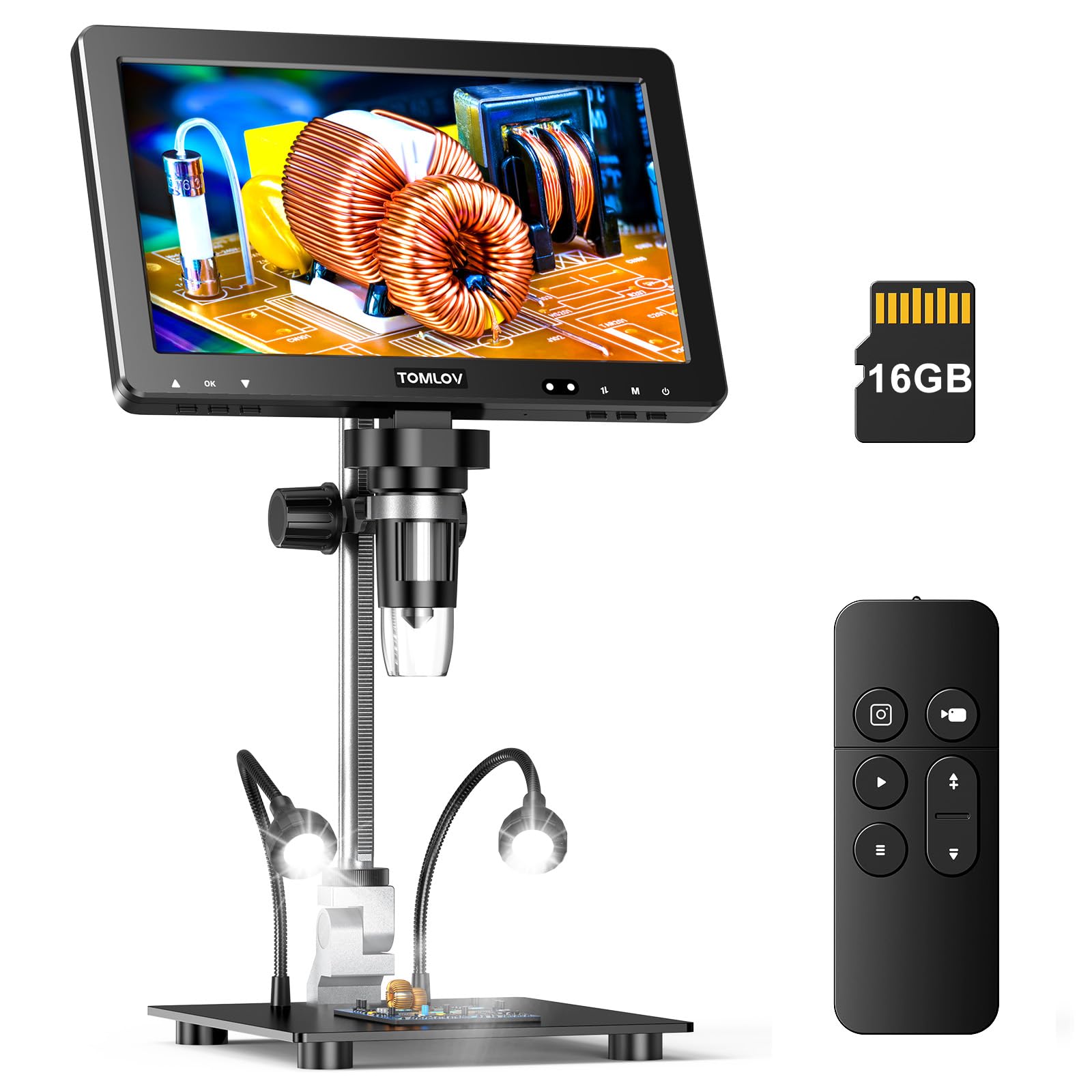
The TOMLOV DM9 Max stands out for classrooms that prioritize image quality above all else. With a 20MP photo sensor that captures at 6096×3424 resolution, this microscope produces the sharpest still images in this comparison. For teachers who want students to examine intricate details like insect wing patterns, plant stoma, or coin mint varieties, this sensor resolution means every digital zoom still retains visible detail. The 1500X maximum magnification is more honest than the inflated 2500X figures on some competitors, and the image holds together well at the upper end of the range because the optical path isn’t pushed beyond its physical limits.
The 10.1-inch IPS display uses a 178-degree viewing angle that’s identical to the TriL110, but the DM9 Max adds an advanced noise reduction chip and an ultra-sensitive microphone for recording video lectures with clear audio. This combination makes it an excellent tool for recording flipped-classroom content where the teacher narrates while demonstrating slide preparation or specimen identification. The 10-LED lighting setup splits into 8 adjustable LEDs around the lens and 2 gooseneck side lights, and the light barrier included in the box reduces glare when working with reflective surfaces like coins or polished minerals — a thoughtful addition for geology and material science lessons.
Battery-powered operation gives this model a classroom flexibility advantage because you can move it between workstations without hunting for an outlet. Real-world testing shows the screen battery lasts about an hour and the base holds a charge longer, but the manufacturer recommends keeping it plugged in for extended use. The wireless remote includes an extra 18x digital zoom function that works well for magnifying specific areas of a specimen without moving the camera head. The 12.6-inch stand and 7×8-inch base provide identical stability to the TriL110, and the aluminum alloy enclosure gives the entire unit a solid feel that survives day-to-day student handling.
Why it’s great
- 20MP sensor captures the highest resolution still images in this lineup
- Advanced noise reduction chip and microphone enable quality lecture recordings
- Battery-powered operation allows flexible classroom workstation placement
- Included light barrier reduces glare on reflective coin and mineral specimens
Good to know
- Battery runtime is limited; best used plugged in for long sessions
- Requires a 2-port USB/AC adapter not included in the box
- Included USB cables are shorter than ideal for some classroom setups
4. Andonstar AD210 10.1 Inch LCD Digital Microscope

The Andonstar AD210 delivers almost all the functionality of the premium models at a price that makes it accessible for budget-conscious classroom purchases. The 10.1-inch IPS display with 1080P video and 12MP photo capture produces clear, detailed images that work well for group viewing, and the 178-degree viewing angle ensures students on both sides of the table see the same content. The upgraded 12.6-inch metal stand with a larger base provides the same working distance as the pricier TOMLOV models, allowing full views of coins up to 38.1mm and plenty of clearance for soldering or electronics repair projects.
What sets the AD210 apart in the mid-range is its triple LED illumination system with adjustable brightness. The top light works for opaque items, the side lights eliminate shadows on textured surfaces, and the bottom stage light enables biological slide observation. Having all three lighting modes in one unit means this single microscope can cover a full biology unit on slide observation and then switch seamlessly to a lesson on coin collecting or circuit board repair without requiring any additional equipment. The included 32GB SD card and card reader give teachers the capacity to save hundreds of images and videos across multiple class periods before needing to transfer files.
The remote control provides the same convenience features found on the premium models, including digital zoom, image capture, and video recording without touching the microscope body. The direct vertical movement of the upgraded stand makes height adjustment straightforward for younger students, and the metal construction ensures the unit won’t flex or sag as students lean on the work surface. While the 260X maximum magnification is lower than the 1500X or 2500X claims on other models, the optical quality at its max range is more consistent and doesn’t suffer from the digital noise that plagues cheaper units at extreme zoom levels.
Why it’s great
- Triple LED lighting system covers slides, opaque objects, and reflective surfaces
- Upgraded 12.6-inch metal stand with large base provides excellent stability
- Included 32GB SD card offers generous storage for classroom image capture
- Remote control minimizes vibration during photo and video capture
Good to know
- At 4X digital zoom, the lens does not fully cover a penny in one view
- Included biological slides appear lackluster at this magnification level
- Some users report the display and remote feel slightly less durable than metal-bodied units
5. JOYALENS JL210 10.1” Digital Microscope

The JOYALENS JL210 brings a carefully balanced feature set that makes it a strong contender for classrooms that need both coin inspection and biological slide capabilities. The 10.1-inch IPS display delivers vibrant colors and wide viewing angles that match the Andonstar AD210’s screen quality, while the 12MP camera sensor with 1080P video recording captures enough detail for most middle school and high school science applications. The 12.6-inch metal stand provides a 10.2-inch working distance that can capture the full view of large silver dollars, and the 7.1×7.9-inch base is wide enough to prevent tipping even when students bump the workstation.
The lighting system on the JL210 is one of its strongest features for classroom use. Eight built-in LED lights around the lens handle general illumination, while 2 gooseneck spotlights provide directional lighting for eliminating shadows on 3D specimens like coins, rocks, and circuit boards. A dedicated bottom stage light handles biological slide transmission. Having all three light sources adjustable independently means a teacher can set up the perfect lighting profile for a specimen and save it for repeat viewings across multiple class periods, which saves valuable lab time.
The included 32GB memory card provides substantial storage, and the wireless remote control enables hands-off operation that keeps the image stable during group sharing. The biological microscope kit includes 5 prepared slides, a slide holder, and a bottom light stage for transparent specimens, giving new classroom users everything they need to start exploring immediately. The metal construction of the stand and clips adds a level of durability that plastic-bodied alternatives can’t match, and the remote control’s ability to zoom, rotate, and capture without touching the microscope body is a practical advantage in a busy classroom lab setting.
Why it’s great
- Triple lighting system with 8 built-in, 2 gooseneck, and 1 bottom stage LED
- 12.6-inch metal stand with large base offers premium stability at a mid-range price
- Includes 5 prepared slides and all necessary accessories for immediate classroom use
- Wireless remote control eliminates vibration during image capture
Good to know
- Fixed mount design limits access to very large circuit boards
- Rolling shutter effect noticeable with fast-moving grinding tools
- LED lights have no off switch and power on automatically with the unit
6. JECONE 40X-2500X Compound Microscope with Phone Holder
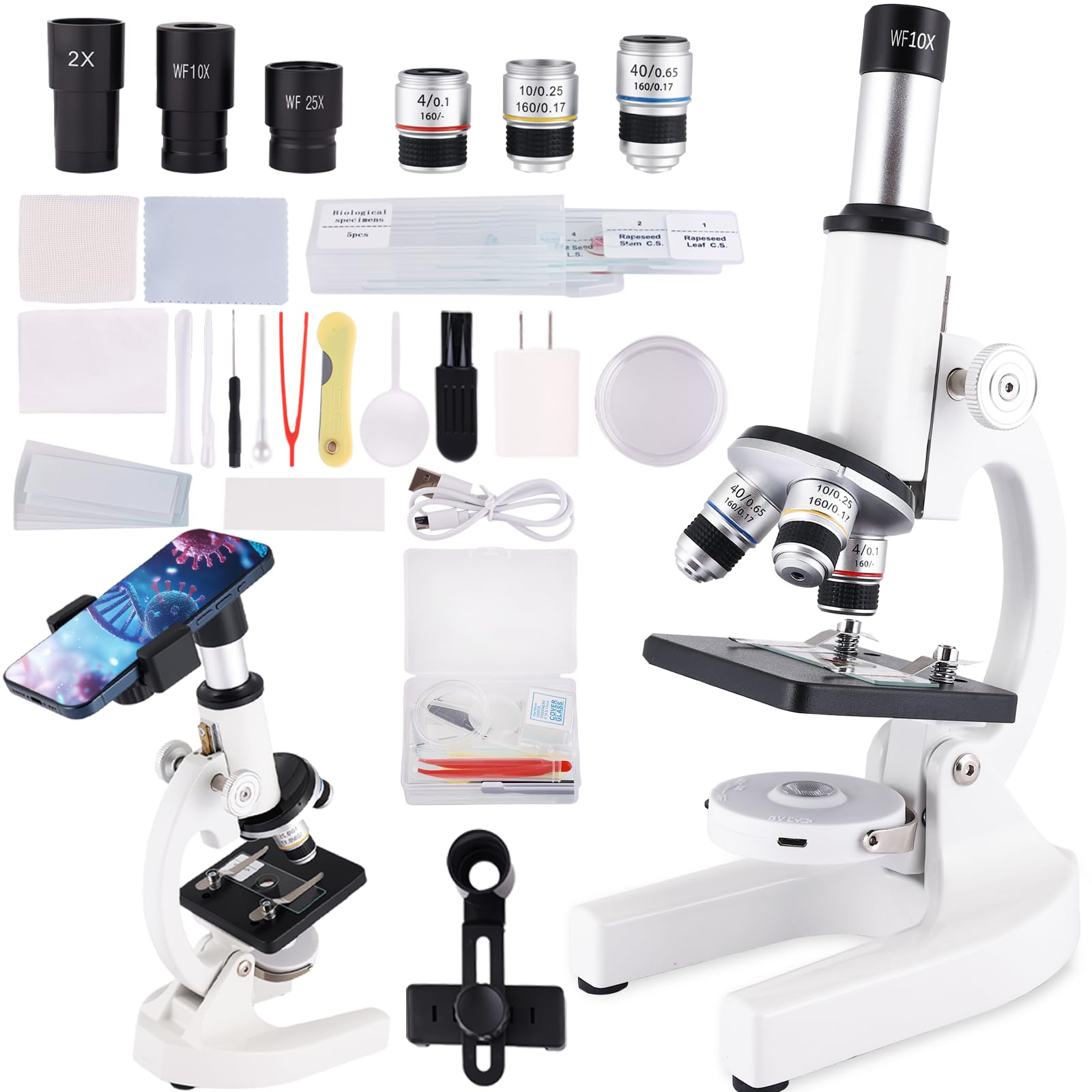
The JECONE 40X-2500X is the best entry-level option for classrooms that need a traditional compound microscope with the added benefit of a phone holder for digital capture. Unlike the screen-based digital models above, this unit uses a monocular eyepiece for direct viewing but includes a smartphone adapter that lets students capture and share images on their devices. This hybrid approach is ideal for classrooms that already have tablets or smartphones available and want to avoid the cost of a dedicated screen. The dual illumination system provides both incident LED light from above for opaque objects and transmitted LED light from below for slides, with a dimmer knob to adjust brightness.
One feature that classroom teachers will appreciate is the 5-color filter wheel built into the rotating disk under the slide stage. Instead of needing to stain slides with chemical dyes, students can rotate through yellow, red, blue, green, and purple filters to increase contrast on transparent specimens. This saves preparation time and eliminates the need for staining supplies, making it easier to set up multiple lab stations quickly. The dual control focusing system with coarse and fine knobs helps younger students learn proper focusing technique without overshooting the optimal image, and the 360-degree rotating eyepieces allow comfortable viewing from any angle around the workstation.
The included accessory kit is generous for the price, containing 5 prepared slides, 5 blank slides, tweezers, droppers, and a phone holder. The 2500X maximum magnification requires the 100X oil immersion objective to reach, and the optical quality at that level is serviceable but not comparable to the dedicated digital microscopes at higher price points. The lightweight construction and absence of a large screen mean this unit is much more portable than the all-in-one digital models, making it suitable for classrooms where microscopes need to be stored and moved between lessons. Just be aware that the included slicing tool is sharp and should be removed before younger students use the kit.
Why it’s great
- 5-color filter wheel eliminates need for chemical slide staining in many lessons
- Dual LED lighting with dimmer works for both slides and opaque objects
- Phone holder enables digital capture without requiring a built-in screen
- Dual focusing system with coarse and fine knobs teaches proper technique
Good to know
- Maximum magnification requires oil immersion and careful technique
- Included slicing tool is a sharp razor blade — remove before student use
- Kit lacks a dedicated storage case for the microscope body and accessories
7. Herwicm 100X-2000X Compound Microscope with Phone Adapter
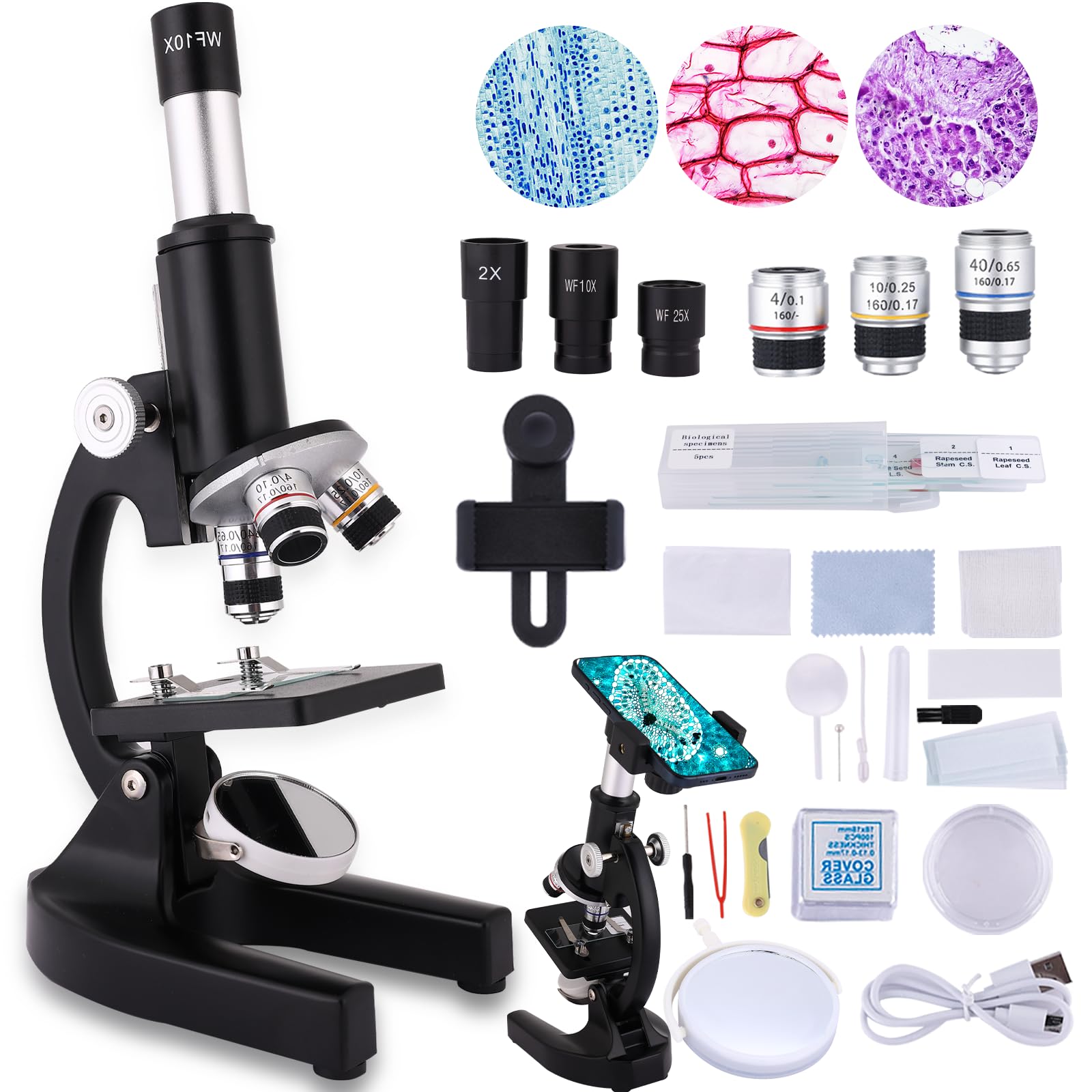
The Herwicm 100X-2000X compound microscope is the most affordable option in this list that still delivers genuine metal construction and proper glass optics. Unlike plastic-bodied toy microscopes that frustrate students with blurry images, this unit uses a sturdy metal arm with a 45-degree tiltable head that adapts to different desk heights and student heights. The achromatic objective lenses (4X, 10X, and 40X) produce clear images at the commonly used magnification ranges, and the included cell phone holder allows students to capture what they see without needing a dedicated camera system. For classrooms on the tightest budgets, this microscope gets the basics right without wasting money on features that won’t be used.
The dual lighting modes give teachers flexibility for different specimen types, and the rechargeable battery eliminates the need for constant AAA battery replacements. One important setup note: the light ships in a power-off state for shipping safety, so you need to charge it for at least 2 hours before first use. After that initial charge, subsequent charges take only about 30 minutes, making it practical for daily classroom use. The included carrying case and shock-resistant bag protect the microscope during storage and transport, which is a significant advantage for classrooms where equipment moves between rooms or gets stored at the end of each semester.
Real-world feedback from homeschool families and elementary teachers confirms that this microscope is easy enough for a 7-year-old to assemble independently, yet the image quality is good enough for serious specimen examination up to 400X-600X. The 2000X maximum magnification is achievable with the 40X objective combined with digital zoom through the phone adapter, but optical quality at that level is limited. The instruction manual is unfortunately vague, and you may need to spend a few minutes experimenting with the focus and lighting controls to get optimal results. The kit includes only 2 blank slides, which is surprisingly stingy, so plan to purchase additional slide sets for any meaningful classroom lab work.
Why it’s great
- Metal arm construction provides genuine durability unlike plastic toy microscopes
- 45-degree tiltable head accommodates different student heights and desk setups
- Rechargeable battery and carrying case make it practical for mobile classroom use
- Achromatic objective lenses deliver clear images at commonly used magnifications
Good to know
- Only 2 blank slides included — additional slide sets required for full labs
- Instructions are poorly written, requiring trial-and-error setup
- 2000X upper magnification is mostly digital and lacks optical clarity
FAQ
Can a digital microscope replace a traditional compound microscope for high school biology?
What magnification range is actually useful for teaching elementary and middle school students?
Do I need a digital microscope with a screen, or can I use a phone adapter with a traditional model?
What should I look for in the stand to ensure classroom durability?
Final Thoughts: The Verdict
For most classrooms, the digital microscope for classroom winner is the Andonstar AD249S-M because its three-lens system, 2160P UHD video, and professional boom arm stand deliver the most versatile teaching tool across biology, electronics, and earth science units. If you want a rotating lens barrel for instant switching between specimen types, grab the TOMLOV TriL110. And for the best balance of features and affordability in a shared classroom station, nothing beats the Andonstar AD210 with its triple LED lighting system and generous 32GB storage capacity.

Mo Maruf
I created WellFizz to bridge the gap between vague wellness advice and actionable solutions. My mission is simple: to decode the research and give you practical tools you can actually use.
Beyond the data, I am a passionate traveler. I believe that stepping away from the screen to explore new environments is essential for mental clarity and physical vitality.