Our readers keep the lights on and my smoothie glass nicely filled. As an Amazon Associate, I earn from qualifying purchases.
Choosing a die grinder often means navigating a noisy battlefield of RPM claims and vague power ratings. The real challenge isn’t finding one that spins fast — it’s finding one that holds its speed when the burr bites into steel and doesn’t leave your hands vibrating after an hour of porting.
I’m Mohammad Maruf — the founder and writer behind WellFizz. I’ve spent countless hours cross-referencing motor wattage, collet precision, and real-world torque curves to separate the grinders that deliver sustained material removal from those that barely finish a single cut.
Whether you’re cleaning up welds, carving wood, or polishing engine parts, the right tool comes down to grip ergonomics, speed regulation, and build integrity. This guide cuts through the marketing to show you a truly curated best die grinder lineup built for real workshop demands.
How To Choose The Best Die Grinder
Die grinders live at the intersection of speed and durability. A single-speed unit that runs at 25,000 RPM can tear through metal quickly, but lacks the finesse for delicate burr work on aluminum or wood. The wrong grip profile can also cause fatigue during extended shaping sessions. Focus on these three factors to zero in on a grinder that matches your actual workload.
Motor Power and Speed Stability
Look beyond the headline RPM number. A 2.2-amp motor at 28,000 RPM will bog down under moderate pressure, while a 6.6-amp unit with constant-speed electronics maintains torque as the load increases. For heavy material removal — porting cylinder heads or cutting 1/8-inch steel — a higher wattage motor with electronic current limiting prevents overheating and stalls.
Grip Style and Collet System
Pencil-grip bodies (inline, narrow barrel) offer precision for detail work but can lack leverage. Straight-body grinders with a contoured neck or secondary grip position provide better control during aggressive cuts. A precision-ground 1/4-inch collet reduces runout; look for a round collet nut design that won’t scratch your workpiece. Some models accept 1/8-inch reducing sleeves for smaller bits.
Variable Speed and Soft-Start Features
If you swap between polishing pads, carbide burrs, and wire wheels, a variable-speed dial (typically 7,000–28,000 RPM) prevents over-spinning fragile accessories. Soft-start circuitry reduces the sudden torque kick on startup, protecting both the gear train and your workpiece from accidental gouges.
Quick Comparison
On smaller screens, swipe sideways to see the full table.
| Model | Category | Best For | Key Spec | Amazon |
|---|---|---|---|---|
| Makita GD0800C | Premium | Variable-speed heavy material removal | 6.6A / 750W motor with SJS clutch | Amazon |
| DEWALT DWE4887 | Mid-Range | Industrial grinding with AC/DC flexibility | 4.2A / 25,000 RPM paddle switch | Amazon |
| Milwaukee 2486-20 | Mid-Range | Cordless precision in tight spaces | 0.3 HP brushless, 3-mode RPM control | Amazon |
| Makita GD0600 | Premium | Quiet, high-torque pencil-style grinding | 3.5A / 400W motor, 73dB noise level | Amazon |
| Makita GD0603 | Mid-Range | Compact, lightweight detail work | 2.2A / 240W motor, 2.1 lbs weight | Amazon |
In‑Depth Reviews
1. Makita GD0800C 1/4″ SJS Die Grinder

The Makita GD0800C sits at the top of the corded die grinder class thanks to its 6.6-amp motor that delivers a usable 7,000 to 28,000 RPM range. The Super Joint System (SJS) acts as a mechanical clutch — if the wheel jams, the drive shaft slips to protect the gears and motor windings. Real-world users consistently report that the electronic constant-speed control keeps the RPM stable even when leaning into a carbide burr on cast iron, unlike single-speed grinders that bog down under load.
The variable-speed dial offers five distinct settings, letting you dial in the exact speed for aluminum porting (low end) or stainless steel blending (high end). Soft-start circuitry eliminates the jarring startup kick, and the labyrinth construction seals the bearings against fine metal dust. At 3.5 pounds with the included side handle, the weight helps damp vibration during extended sessions, though the trade-off is reduced one-handed maneuverability.
A common gripe among owners is the collet nut — it can be difficult to loosen if overtightened, and the lock mechanism requires two wrenches. Some users also wish for an optional handguard. Still, for sustained torque, speed control, and build longevity, this is the most capable corded grinder in the lineup.
Why it’s great
- Electronic constant-speed maintains torque under heavy load
- SJS clutch protects motor and gears from jams
- Wide variable speed range suitable for polishing to cutting
Good to know
- Collet nut can seize if overtightened
- Heavier than pencil-style grinders at 3.5 lbs
- Two wrenches required for bit changes
2. DEWALT DWE4887 Die Grinder, 4.2-Amp

The DEWALT DWE4887 delivers a consistent 25,000 RPM from a 4.2-amp motor, and its AC/DC capacity means you can run it off a welding machine or generator when shop power isn’t available. The paddle switch with a lock-on button provides natural grip control — squeeze to start, push the button to lock for continuous operation. That paddle design is a clear advantage for welders and fabricators who need to set the tool down between passes without killing the motor.
At 4.74 pounds, this is one of the heavier corded options, but the weight translates to reduced vibration during aggressive 1-1/2-inch grinding operations. The precision 1/4-inch collet holds accessories securely, though the tool does not include an 1/8-inch reducing sleeve as standard — you’ll need to buy that separately. Multiple long-term reviews from industrial settings confirm the motor lasts years under daily use, outliving several competitors in the same price tier.
The single-speed nature limits its versatility for delicate work — there is no dial to slow down for polishing or soft materials. A few owners also noted the absence of a chuck lock button and wrench holder, minor annoyances when swapping bits frequently. For continuous heavy grinding where speed consistency matters more than RPM range, this DeWalt holds its own.
Why it’s great
- AC/DC operation works with generators and welders
- Paddle switch with lock-on reduces hand fatigue
- Long-term durability proven in industrial use
Good to know
- Single-speed only — no variable speed dial
- Heavier build can cause fatigue overhead
- No included 1/8-inch collet reducing sleeve
3. Milwaukee 2486-20 M12 FUEL In-Line Die Grinder

The Milwaukee 2486-20 breaks away from air hoses and wall outlets with its M12 FUEL brushless motor that delivers 0.3 HP — enough to outperform many pneumatic pencil grinders by about 20 percent. The 3-mode RPM control (with a responsive variable-speed trigger) lets you feather the speed from 0 to 21,000 RPM, giving you precise control for detail work on aluminum, plastic, or soft steel. At just 1.2 pounds (tool only), it’s the lightest option here, ideal for one-handed use in awkward positions.
The inline body measures roughly 14 inches long with a battery attached, which surprised some buyers expecting a shorter form factor. This length actually helps when reaching into engine bays or behind panels, but it can feel cumbersome in tight corners compared to a right-angle grinder. The collet uses standard 1/4-inch accessories, and bit swaps are quick thanks to the spindle lock — a feature absent on some corded competitors.
The biggest limitation is runtime. Under heavy continuous use — such as grinding cast iron or using a firm carbide burr — an M12 4.0Ah battery drains in roughly 15-20 minutes. The tool also lacks the raw torque of a 6.6-amp corded unit; it will stall if you push too hard on thick metal. For light fabrication, porting, and polishing where cordless mobility is the priority, it’s a superb fit.
Why it’s great
- Extremely lightweight at 1.2 lbs for fatigue-free use
- Variable-speed trigger with 3-mode RPM presets
- Outperforms most pneumatic pencil grinders
Good to know
- Short runtime under heavy loads
- Long 14-inch overall length with battery
- Bogs down on aggressive carbide burr work
4. Makita GD0600 1/4″ Paddle Switch Die Grinder
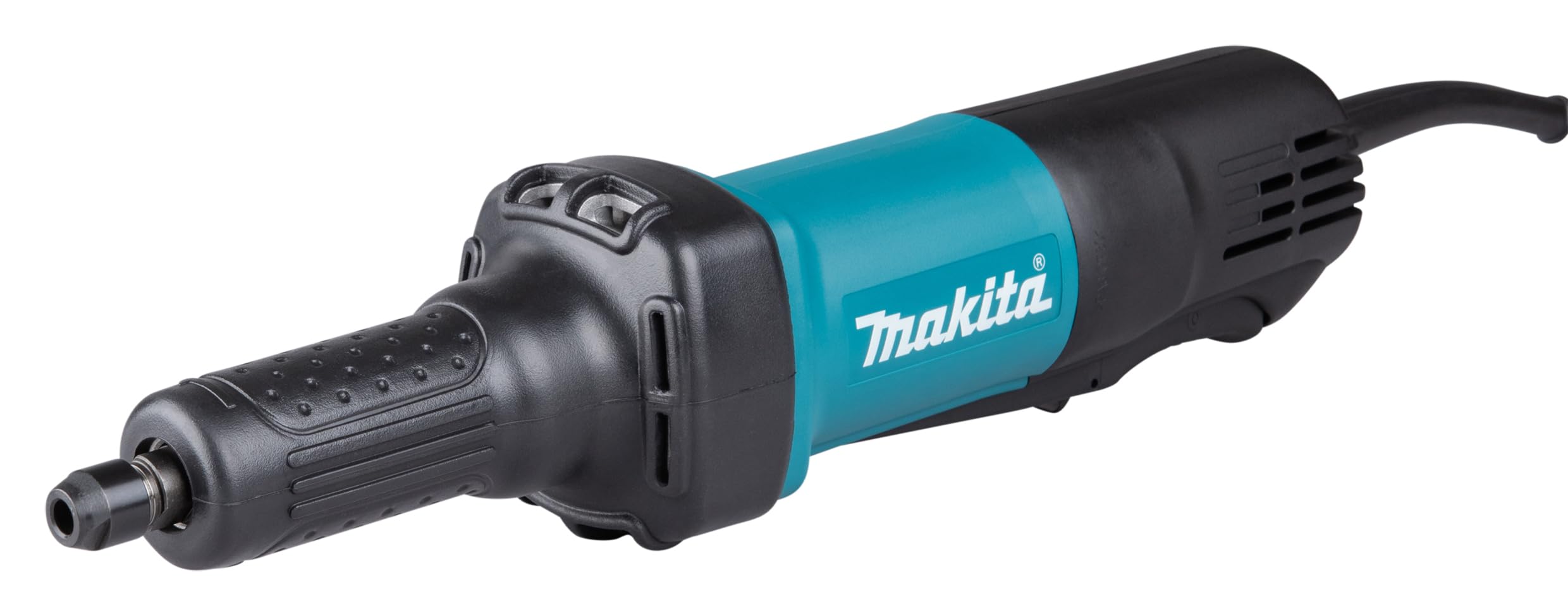
The Makita GD0600 runs noticeably quieter than most die grinders — 73 dB(A) is about 10 decibels lower than typical 25,000 RPM units, a meaningful difference when you’re wearing ear protection for hours. The 3.5-amp, 400-watt motor spins at a fixed 25,000 RPM, and the paddle switch with AC/DC capacity allows operation off a generator or inverter. The small-diameter barrel grip (pencil style) works well for detail porting and controlled passes.
Directional air-flow vents push exhaust away from your face — a smart detail when grinding steel or cleaning castings. The round collet nut reduces the risk of scratching the workpiece, and the overall build quality is what you’d expect from Makita’s metal-bodied tools: stiff, balanced, and precise. Pipe welders and automotive porters consistently praise its smoothness and the predictable power delivery.
The main downside is the lack of variable speed. The listing has confused some buyers, as the product does not include a speed dial — it runs at a constant 25,000 RPM. This limits its use for polishing plastics or working with large-diameter flap wheels. Additionally, the paddle switch doesn’t have a lock-on button, meaning you have to hold it continuously during operation, which can fatigue the hand over long sessions.
Why it’s great
- Very quiet operation at 73dB
- AC/DC compatible for job site flexibility
- Pencil grip offers excellent control for detail work
Good to know
- Fixed speed — no variable speed control
- No lock-on button for continuous use
- Limited torque compared to 6.6-amp models
5. Makita GD0603 1/4″ Compact Die Grinder
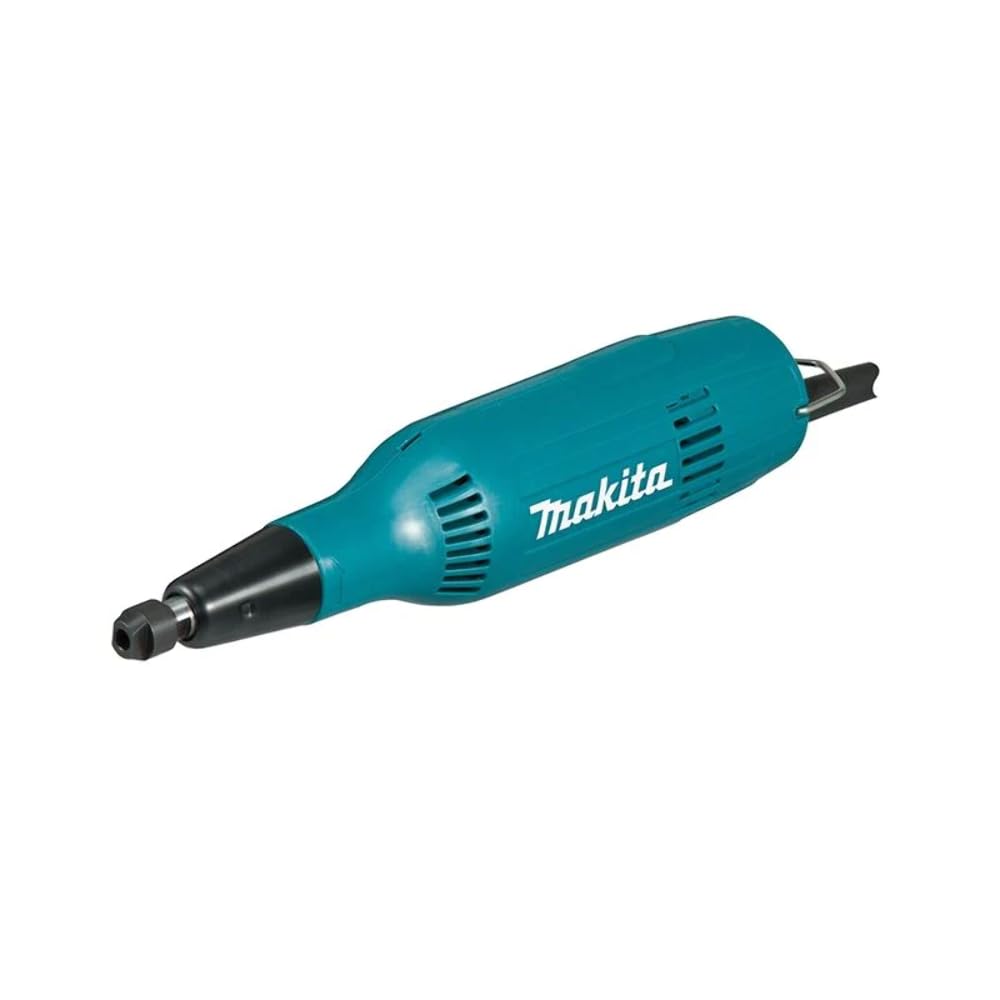
The Makita GD0603 prioritizes maneuverability above all else. With a 2-1/2-inch diameter barrel and a weight of just 2.1 pounds, it’s easy to grip like a fat pencil and control with one hand for extended carving sessions. The 2.2-amp motor generates 25,000 RPM — enough for wood carving, light metal deburring, and polishing. The contoured neck grip provides a secondary hand position that helps with precision during detailed cuts.
Users who carve hardwoods and shape aluminum report that the GD0603 delivers sufficient power for their needs, especially when paired with quality carbide burrs or diamond bits. The powder-coated field layer protects the motor from fine dust ingress, a common failure point in cheaper compact grinders. The round collet nut is also a nice touch for protecting finished surfaces.
The limitation is clear: at 2.2 amps, this grinder stalls easily under heavy pressure. It is not built for aggressive porting of cylinder heads or cutting through thick steel. It also lacks a variable speed dial, so you’re locked into 25,000 RPM. For detail-oriented users who prioritize a light touch and compact dimensions over raw torque, this Makita fits perfectly. For heavy material removal, look to the GD0800C instead.
Why it’s great
- Extremely compact and lightweight at 2.1 lbs
- Contoured neck provides secondary grip for control
- Powder-coated field resists dust ingress
Good to know
- Motor stalls under heavy material removal
- Single-speed only — no variable speed dial
- Not suitable for heavy industrial cutting
FAQ
Why does my die grinder bog down when I apply pressure?
Can I use 1/8-inch bits in a 1/4-inch collet die grinder?
Should I buy a corded or cordless die grinder for automotive porting?
Final Thoughts: The Verdict
For most users, the best die grinder winner is the Makita GD0800C because its 6.6-amp motor, electronic constant-speed control, and SJS clutch deliver unmatched torque stability and protection for heavy cutting. If you want cordless freedom and lightweight detail work, grab the Milwaukee 2486-20. And for a quiet, precise pencil-grip grinder that excels on porting and polishing without disturbing the whole shop, nothing beats the Makita GD0600.

Mo Maruf
I created WellFizz to bridge the gap between vague wellness advice and actionable solutions. My mission is simple: to decode the research and give you practical tools you can actually use.
Beyond the data, I am a passionate traveler. I believe that stepping away from the screen to explore new environments is essential for mental clarity and physical vitality.