Our readers keep the lights on and my smoothie glass nicely filled. As an Amazon Associate, I earn from qualifying purchases.
A restless dog is rarely a destructive one out of spite — most chewing, barking, and digging stems from a mind that’s under-challenged. Physical exercise tires the body, but mental puzzles exhaust the brain in a way that creates genuine calm. The right toy turns mealtime, treat time, or solo play into a problem-solving session that satisfies a dog’s natural instinct to hunt, manipulate, and work for food.
I’m Mohammad Maruf — the founder and writer behind WellFizz. I’ve spent countless hours analyzing how different textures, dispensers, and puzzle levels engage a dog’s problem-solving drive, comparing cycle times, durability metrics, and difficulty progression across enrichment products.
This guide distills the top contenders into a clear list built on real-world use patterns and material quality. Read on to find the best dog toys for mental stimulation that will turn your dog’s idle hours into focused, rewarding play.
How to choose the right mental stimulation toy for your dog
The right toy depends less on your dog’s breed and more on their bite pressure, persistence, and problem-solving style. A toy that is too easy leads to boredom; one too hard causes frustration. Matching the toy type to your dog’s natural drive is the key to sustained engagement.
Know your dog’s puzzle level
Manufacturers often label puzzles by difficulty (Level 1 through Level 3 or Intermediate). Level 1 toys, like simple treat-dispensing balls, work for puppies or dogs new to puzzles. Level 2 toys, such as sliding tiles or spinning layers, add sequencing and require paw or nose manipulation. Level 3 toys combine multiple mechanisms — rotation, sliding, and flipping — for experienced problem solvers. Start one level below what you think your dog can handle to build confidence.
Material durability vs. chew drive
Plush toys with squeakers are gentle enrichment for non-destructive dogs, while heavy chewers need nylon, food-grade rubber, or composite wood fiber blends. A toy’s “indestructible” claim only holds against the right jaw. Check the wall thickness and whether the toy has seams or hollow sections — these fail first. For frozen treat toys, silicone molds should be flexible enough to release frozen blocks without cracking.
Type of engagement: foraging vs. manipulation
Foraging toys, like slow feeder bowls and snuffle mats, tap into a dog’s instinct to sniff and work for food spread across a surface. Manipulation puzzles, like sliding compartments or spinning layers, require the dog to use paws or nose to move parts. Hide-and-seek plush toys engage the prey drive by letting the dog “hunt” hidden squeakers. Rotating between these types prevents habituation and keeps the challenge fresh.
Quick comparison
On smaller screens, swipe sideways to see the full table.
| Model | Category | Best For | Key Spec | Amazon |
|---|---|---|---|---|
| Outward Hound Hide-A-Squirrel | Plush Puzzle | Hide-and-seek prey drive | 6 squeaky squirrels, 12.25″ trunk | Amazon |
| Outward Hound Dog Tornado | Spinning Puzzle | Intermediate treat puzzles | 3 spinning layers, 1/2 cup capacity | Amazon |
| ATDOALL Slow Feeder Bowl | Maze Feeder | Fast eating & boredom | 3-level maze, 1.5 cup capacity | Amazon |
| kogven Tree Stump Toy | Frozen Chew | Aggressive chewers | Nylon + coffee wood fiber, 6″ stump | Amazon |
| luckdoor Frozen Treat Ball | Lick Mat Ball | Calm licking & slow feeding | 4″ sphere, natural rubber | Amazon |
In‑depth reviews
1. Outward Hound Hide-A-Squirrel Dog Toy

The Hide-A-Squirrel remains a cult favorite for a reason: it turns a dog’s natural hunting instinct into a structured puzzle. The XL trunk measures 12.25 inches and holds six plush squirrels, each with its own squeaker, that the dog must find and tug out. The soft plush body encourages carrying and nesting behavior, while the trunk’s fabric holds up well under gentle play. This is not a toy for a determined chewer — the squeaker and stitching are vulnerable to sharp teeth — but for moderate players, the engagement per dollar is outstanding.
The squirrels themselves are remarkably durable — many owners report them surviving three years or more, even with small terriers. The trunk, by contrast, tends to get chewed open faster, so buying squirrel refills separately becomes a smart long-term strategy. The prey-drive satisfaction here is different from a food puzzle; the dog’s reward is the squeak and the “capture” of the squirrel, which makes it excellent for rotation feeding of mental exercise without adding calories.
Where this toy truly shines is in its multi-dog adaptability. A single stump can engage multiple dogs sequentially — one pulls, the other waits to re-stuff. The “stuffing” action also becomes a bonding ritual for owners. For dogs that love fetch and tug, this is a low-calorie, high-engagement alternative to endless ball throws. The one caveat: supervise if your dog tends to eat fabric, as swallowed stuffing can cause blockages.
Why it’s great
- Engages prey drive without adding calories
- Squirrel durability outlasts the trunk by years
- Works well for multi-dog households
Good to know
- Trunk fabric fails under persistent chewing
- Squeakers are loud and may annoy some owners
2. Outward Hound by Nina Ottosson Dog Tornado

The Dog Tornado is a Level 2 intermediate puzzle that uses three rotating layers with compartments. The dog must spin the layers to align openings before retrieving hidden kibble or treats. This sequencing requirement — spin the top, then spin the middle, then the bottom — provides a genuine cognitive workout that rewards patience over brute force. The plastic construction is lightweight at 1.2 pounds, making it portable, but several owners report that determined chewers can break out the pieces after repeated use. The sliding tray on the top layer is easy to fill, and the bottom tray locks into place to prevent tipping.
The real magic of this toy is the 15-minute engagement window: a session here equals roughly 30 minutes of physical exercise in mental fatigue. For a high-energy husky or border collie that has already run five miles and still wants to play, the Tornado provides a different kind of exhaustion. The 1/2-cup capacity also doubles as a slow feeder for fast eaters who need a mealtime challenge. The main durability concern is the second layer, which can pop out under heavy pawing, though it snaps back easily.
This toy is best suited for dogs who already understand “nose work” or paw-targeting. Puppies under six months may struggle with the spinning motion and get frustrated. One tip: start by leaving the top layer off and let the dog find treats in the exposed compartments, then gradually add layers. The included “Tips and Tricks” card is genuinely helpful for adjusting difficulty. Expect a typical dog to master all three layers within a week — then it’s time to increase the treat difficulty or replace the puzzle.
Why it’s great
- True intermediate cognitive challenge
- Portable and easy to clean
- Slows fast eaters during mealtime
Good to know
- Not chew-proof; plastic can crack under pressure
- Mastered quickly by experienced puzzle dogs
3. ATDOALL Slow Feeder Dog Bowl 3 Levels
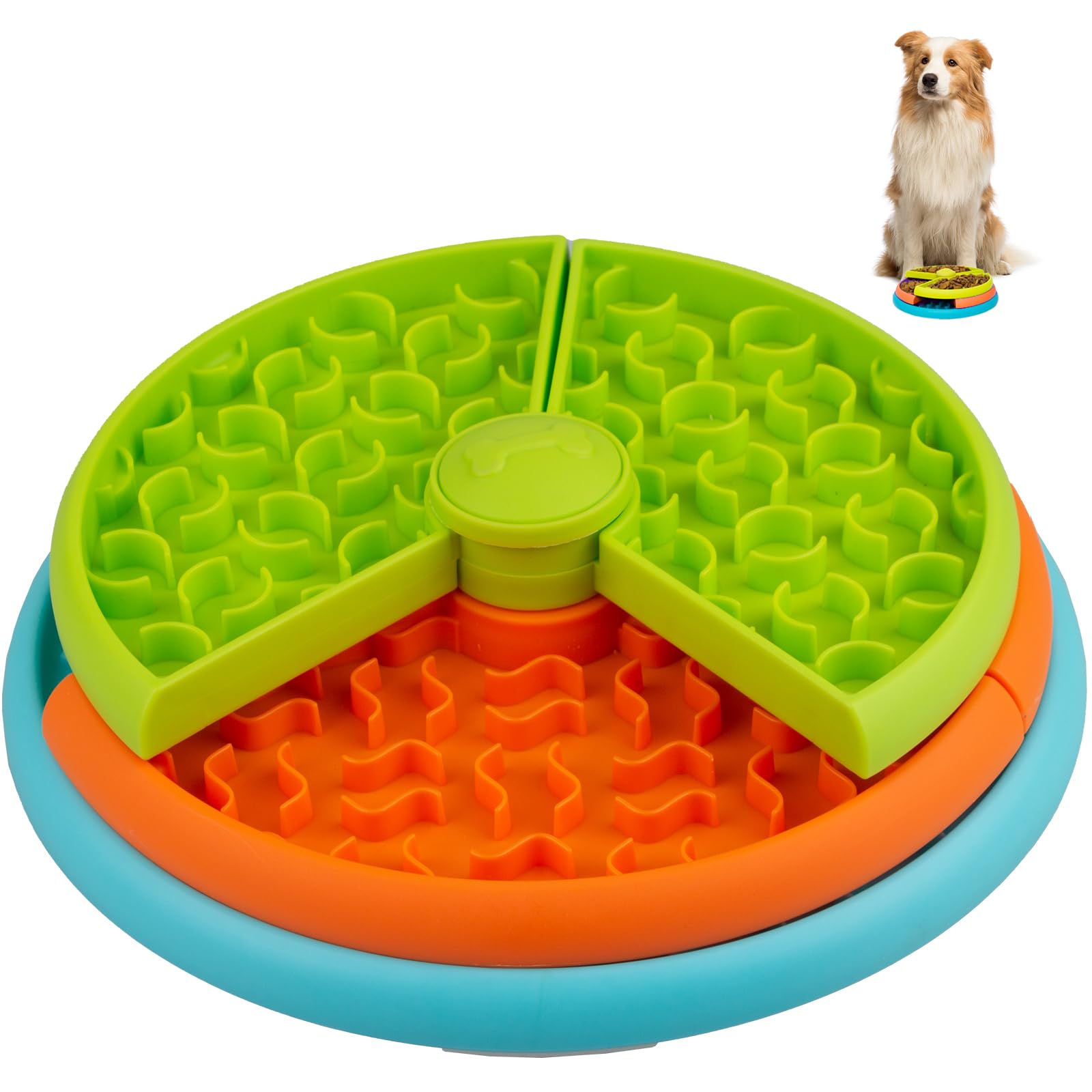
The ATDOALL bowl is a three-tier rotating maze that forces the dog to spin each level to access hidden kibble. The top layer rotates freely, the middle layer reveals compartments beneath, and the bottom layer holds the deepest reservoirs. This design accomplishes two goals simultaneously: it slows a gulper to a healthy pace and provides a cognitive challenge that drains mental energy. At 10.35 inches wide, it fits standard medium to large dog heads comfortably, and the 1.5-cup capacity holds a full meal for most breeds up to 55 pounds. The plastic is BPA-free and non-toxic, with rounded edges that protect gums during frantic feeding.
The rubberized non-slip base is a critical feature — without it, the bowl slides across tile or hardwood, which can frustrate the dog and spill food. Some owners report that the feet lack suction power on very smooth surfaces, so placing it on a mat or rug is advisable. The maze itself is dishwasher-safe on the top rack, which makes cleaning much easier than puzzle toys with narrow crevices. The orange color is surprisingly helpful for visibility: dogs find it easier to spot against flooring, reducing the time they spend sniffing for the bowl.
The biggest win here is the dual function: you can use it as a slow feeder for meals and as a standalone puzzle toy with a few treats scattered between layers. Dogs who already understand “touch” or “paw” commands adapt quickly. Expect a food-motivated dog to solve the spin mechanism within two to three sessions, but the bowl still slows eating because the dog must pause to rotate each level. It is not designed for heavy chewers — if your dog lifts and drops toys, this bowl will not survive — but for station-based feeding, it is one of the most effective enrichment tools in its category.
Why it’s great
- Slows eating while providing cognitive work
- Dishwasher-safe and easy to clean
- Large capacity fits full meal for medium dogs
Good to know
- Non-slip base may slide on hard floors
- Not durable against dogs that chew plastic
4. kogven Interactive Dog Toy for Aggressive Chewers
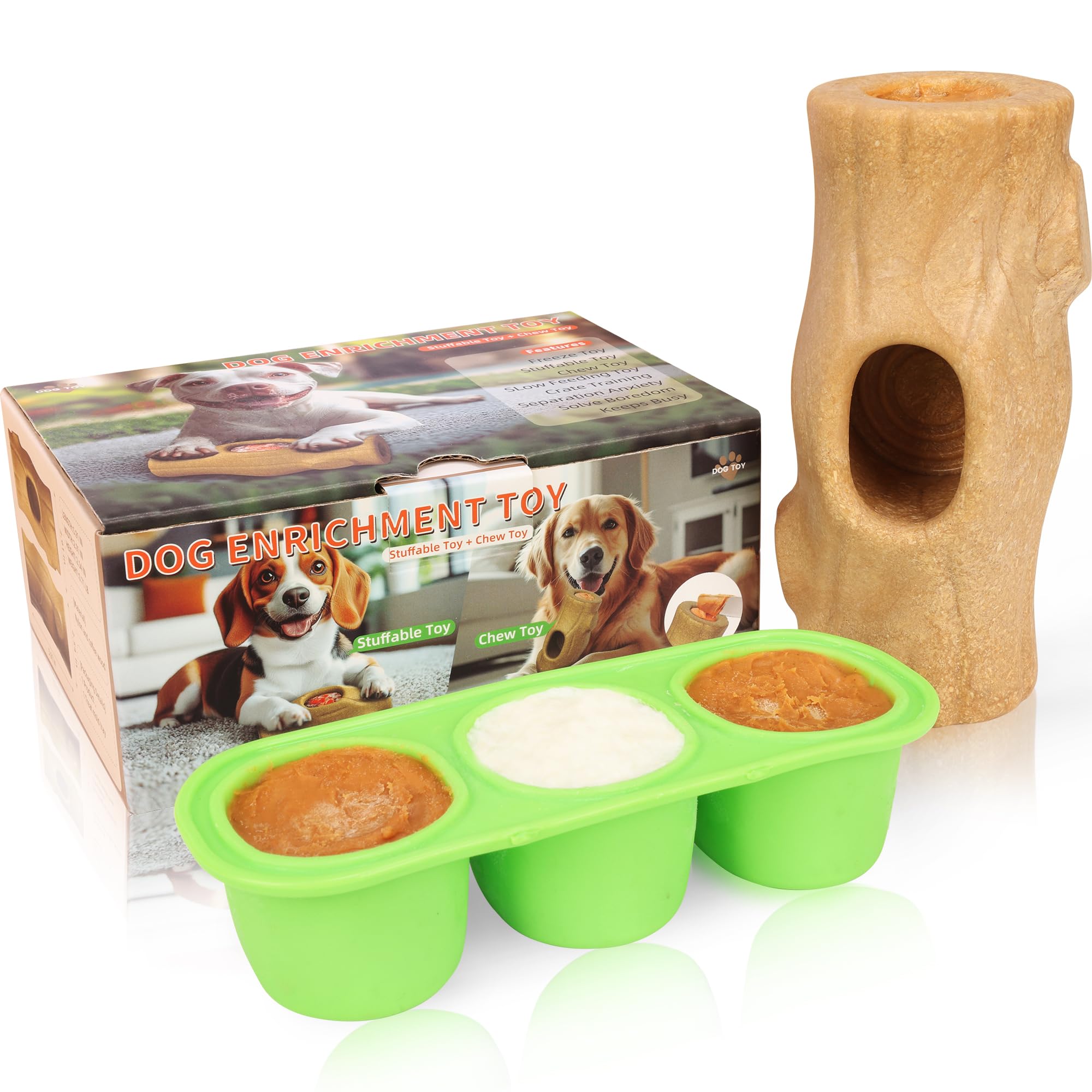
The kogven tree stump toy tackles a specific pain point: owners of power chewers like Rottweilers, pit bulls, and huskies who destroy standard plastic puzzles in minutes. The body is made from thick food-safe nylon blended with natural coffee wood fiber — a composite that is harder than typical TPR or silicone but still gentle on gums. The 6-inch stump shape is ergonomically designed so the dog can grip it with both paws while licking or chewing, promoting a natural posture that reduces neck strain. The most innovative feature is the three-hole silicone mold system: you fill the molds with yogurt, pumpkin, or peanut butter, freeze them, and insert them into the stump. This creates a 30-minute frozen treat challenge that simultaneously provides mental stimulation and chewing satisfaction.
The nylon body has survived more than 20 sessions with strong chewers who have destroyed Kongs in the past. The coffee wood fiber adds a subtle flavor that dogs seem to find appealing, increasing initial interest. The main drawback is the frozen treat extraction: the silicone molds are sturdy, and frozen blocks can be difficult to pop out. Running the mold under warm water for 30 seconds solves this, but it adds preparation time. Some users also note that the molds can warp in the dishwasher, so hand washing is recommended. The stump itself has no internal seams or hollow sections, which eliminates the failure points common in cheaper frozen toys.
This toy works best as a supervised enrichment tool rather than an unsupervised chew toy. The nylon composite can still show tooth marks over weeks of heavy use, but it does not splinter or crack like acrylic toys. For dental health, the chewing action scrapes tartar off incisors and canines, and many owners report fresher breath after a few weeks of regular use. The 3-in-1 versatility — puzzle feeder, outdoor fetch toy, and crate calming tool — makes it a strong choice for owners who want one toy that covers multiple functions. Just keep in mind the frozen mold prep time and the fact that the molds hold small portions, so you may need to refill for larger dogs.
Why it’s great
- Withstands persistent heavy chewing
- Frozen treat molds provide long engagement
- Dental cleaning benefit from chewing texture
Good to know
- Frozen treats require prep and warm water release
- Molds can warp in dishwasher
5. luckdoor Dog Enrichment Frozen Treat Toy

The luckdoor toy is a spherical licking enrichment that uses a frozen treat core to occupy a dog for 15 to 30 minutes. The 4-inch sphere is made from food-grade natural rubber, which offers a soft but durable texture that is gentle on teeth and gums. The design includes an interior compartment with a screw-top lid and a removable key that locks the two halves together. You fill the interior with a wet mix — yogurt, peanut butter, pumpkin puree, or applesauce — and freeze it for 5 to 6 hours. Once frozen, the dog must lick and nudge the ball to extract the treat, which combines the calming effect of licking with the mental challenge of figuring out how to access the reward.
The rubber material has survived a Rottweiler power chewer, according to multiple reviews, which is impressive for a toy in this price tier. The main weak point is the screw-top mechanism: some dogs learn to unscrew the lid, especially if they are persistent treat-motivated chewers. The locking key helps, but it is removable and can be lost. Another common issue is that the interior compartments can trap bits of frozen treat, making cleaning a bit tedious. A small brush or hot water rinse resolves most residue, but it is not as easy to clean as a simple lick mat. Compared to the similarly priced Pupsicle, the luckdoor requires more effort to unscrew (hot water or oil on the threads helps) and the molds hold treats more stubbornly.
Where this toy excels is as a crate-calming tool for dogs with separation anxiety. The licking action releases dopamine and lowers cortisol, creating a genuine relaxation response. The fact that it comes with freezer trays — three molds for making frozen inserts — means you can prep a week’s worth of treats in one go. For dogs that need quiet time in a crate during work hours or car rides, this toy is one of the most effective low-cost solutions available. The only hard rule: supervise the first few uses to ensure your dog does not learn to unscrew the lid and access the frozen core directly, which would defeat the slow-lick purpose.
Why it’s great
- Promotes calm licking behavior for anxiety relief
- Durable rubber withstands moderate chewing
- Comes with freezer trays for batch prep
Good to know
- Some dogs learn to unscrew the lid
- Interior compartments require thorough cleaning
FAQ
How long should a mental stimulation session last for my dog?
Can I use a slow feeder bowl as my dog’s only puzzle toy?
Why does my dog flip the puzzle toy instead of solving it?
Final thoughts: the verdict
For most dogs and owners, the winner for the best dog toys for mental stimulation is the Outward Hound Hide-A-Squirrel because it taps into the deepest prey-drive instincts without requiring food, making it endlessly reusable and low-mess. If you need a frozen treat solution for heavy chewers, grab the kogven tree stump toy. And for dogs that need mealtime enrichment and gulping prevention, the ATDOALL slow feeder bowl turns every meal into a brain game.

Mo Maruf
I created WellFizz to bridge the gap between vague wellness advice and actionable solutions. My mission is simple: to decode the research and give you practical tools you can actually use.
Beyond the data, I am a passionate traveler. I believe that stepping away from the screen to explore new environments is essential for mental clarity and physical vitality.