Our readers keep the lights on and my smoothie glass nicely filled. As an Amazon Associate, I earn from qualifying purchases.
Your tap water is a cocktail of chlorine, lead, microplastics, and forever chemicals that no boiling method removes. The only way to reclaim control is a dedicated domestic water filter that strips out what municipal treatment leaves behind without turning your kitchen into a plumbing project.
I’m Mohammad Maruf — the founder and writer behind WellFizz. I cross-reference NSF certification lists, filter life cycles, flow rates, and real customer test results across dozens of models to separate genuine filtration from marketing fluff.
This guide breaks down the six best configurations — from electric pitchers to under-sink tanks and whole-house systems — so you can pick the right best domestic water filter for your tap chemistry, counter space, and family size.
How To Choose The Best Domestic Water Filter
Before you buy, you need to match the filter type to your water chemistry, installation tolerance, and daily volume. A pitcher works for a couple in an apartment, but a family of four needs an under-sink or whole-house system to keep up.
Certifications Matter More Than Marketing Claims
NSF/ANSI 42 covers basic taste and chlorine reduction. NSF/ANSI 53 is the standard you want for health-related contaminants like lead, mercury, and cryptosporidium. NSF/ANSI 401 covers emerging compounds like PFOA, PFOS, and pharmaceuticals. If a product only lists NSF 42, it isn’t pulling out the dangerous stuff. Always verify the certification numbers — not just the words “certified.”
Filter Lifespan and Cost Per Gallon
Cartridge life is measured in gallons, not months. A 200-gallon filter serving two people lasts about six months; the same filter serving four people lasts three. The real cost isn’t the upfront price — it’s the replacement frequency. Whole-house filters rated for 20,000–30,000 gallons have the lowest per-gallon cost but require more space and plumbing.
Flow Rate vs. Filtration Speed
Gravity pitchers deliver filtered water at 0.1–0.3 gallons per minute — fine for filling a glass but painful for a large pot. Electric dispensers push 0.8 L/min with a pump. Under-sink systems like the SimPure V7 hit 1.6 GPM, so you can fill a pot in under 30 seconds. Whole-house units rated at 10 GPM or more don’t throttle your shower or washing machine.
To Lower TDS or Not
Total Dissolved Solids (TDS) measures dissolved minerals. Carbon-based filters retain calcium and magnesium (good for taste and health). Reverse osmosis systems drop TDS near zero, which some people prefer for flat, pure water but others find too stripped. If you want the mineral taste, stick with carbon block or one of the Waterdrop electric units that specifically state they do not lower TDS.
Quick Comparison
On smaller screens, swipe sideways to see the full table.
| Model | Category | Best For | Key Spec | Amazon |
|---|---|---|---|---|
| Waterdrop KJ600 RO System | Reverse Osmosis + Hot | Instant hot water plus zero TDS | 600 GPD, 0.4 GPM hot flow | Amazon |
| iSpring WCB32C-KS | Whole-House 3-Stage | Whole-home chlorine and PFAS reduction | 30,000 gallons, 12 GPM | Amazon |
| SimPure V7 | Under-Sink 5-Stage | Tool-free quick install under any sink | 20,000 gallons, 1.6 GPM | Amazon |
| Waterdrop ED04W-L Mega | Electric Dispenser | Large family pitcher without lifting | 27 cups, 200-gallon filter | Amazon |
| Waterdrop ED01W | Electric Pitcher | Compact countertop with instant dispense | 15 cups, 200-gallon filter | Amazon |
| LifeStraw Home Glass Pitcher | Gravity Pitcher | Bacteria/parasite removal in a glass carafe | 7 cups, membrane + carbon | Amazon |
In‑Depth Reviews
1. Waterdrop KJ600 Reverse Osmosis System
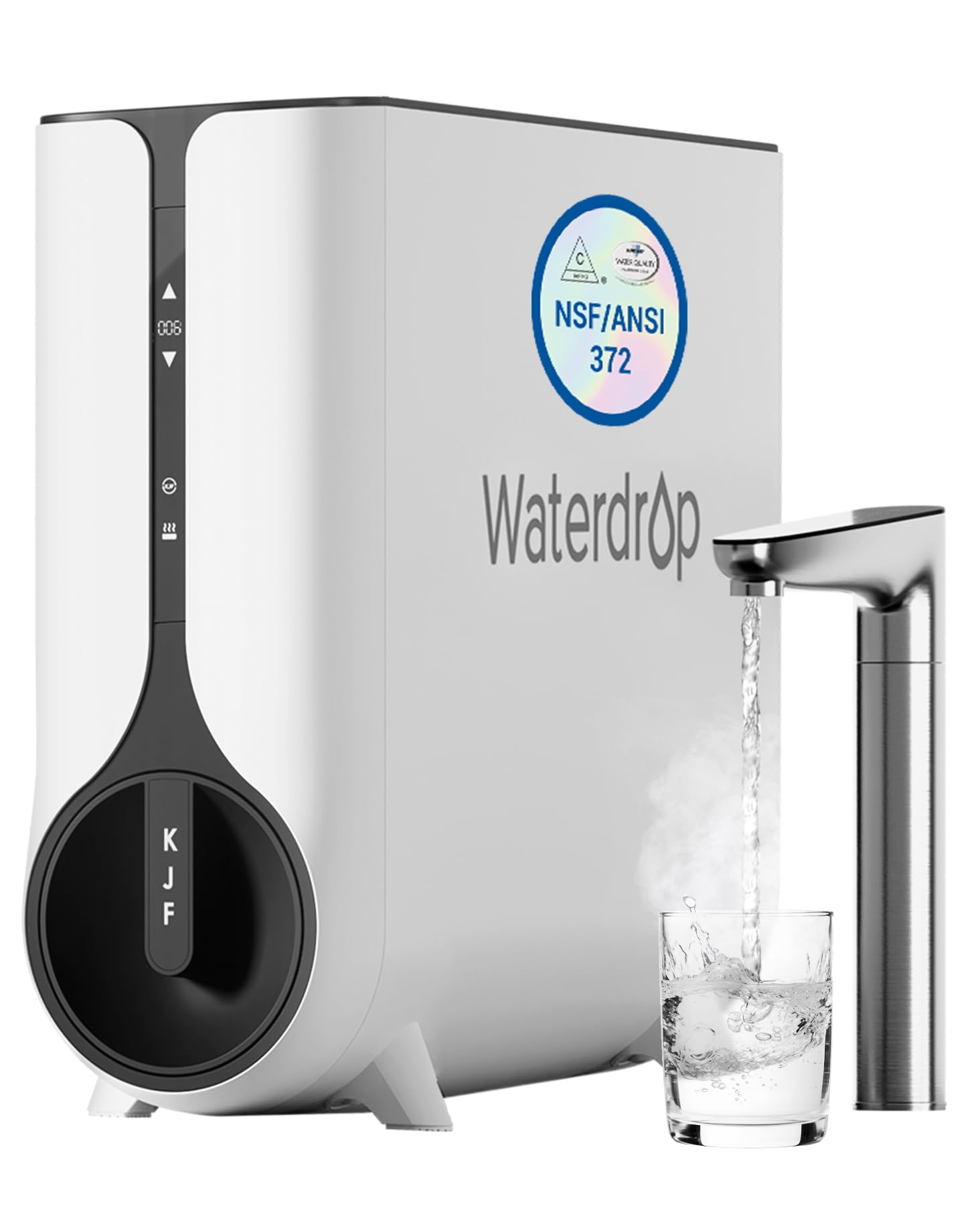
The Waterdrop KJ600 is the only unit on this list that combines a 600 GPD reverse osmosis membrane with a tankless instant hot water dispenser reaching up to 203°F. That means you get near-zero TDS water for drinking and piping-hot water for tea or oatmeal from the same under-sink system — no kettle, no waiting. The 5-in-1 filter cartridge packs an RO membrane, carbon block, and PP cotton into a single twist-in module, making replacements simpler than multi-cartridge RO rigs.
The smart faucet displays TDS levels and filter life in real time, with a child-lock feature that prevents scalding. Flow from the hot tap hits 0.4 GPM, and the cold tap flows freely without a storage tank cluttering your cabinet. Real-world tests show TDS dropping from 200+ ppm to 5 ppm after installation, even on hard well water. The 2:1 pure-to-drain ratio wastes less water than traditional 1:1 RO systems.
The main trade-off is physical bulk — the base unit measures 17.5 x 6.7 x 16.6 inches and eats about a quarter of a standard under-sink cabinet. The system cycles audibly even when idle, which some users find noticeable in quiet kitchens. Replacement filters (WD-KJ600-R) cost more than standalone carbon filters, but the combination of RO purity and instant heat makes the per-gallon spend worthwhile for households that drink hot beverages daily.
Why it’s great
- Instant hot water up to 203°F from a tankless RO system
- Smart faucet shows TDS and filter status with child lock
- 2:1 pure-to-drain ratio saves water compared to older RO designs
Good to know
- Large footprint requires substantial under-sink space
- Pump cycling is audible, especially during idle periods
- Touch sensor on faucet can be finicky with wet fingers
2. iSpring WCB32C-KS Whole House System

The iSpring WCB32C-KS is a three-stage whole-house system built for municipal water supplies. Stage one uses a 5-micron PP sediment filter to catch rust, sand, and silt before they clog your appliances. Stage two combines GAC (granular activated carbon) with KDF-55 media to reduce chlorine, chloramine, PFAS, lead, and hydrogen sulfide. Stage three finishes with a CTO carbon block that polishes out residual tastes and odors. The result is clean water at every tap — kitchen, shower, laundry — without the waste water or electricity of an RO system.
The transparent first-stage housing lets you visually check sediment buildup without disassembling anything. With a 30,000-gallon capacity and a 12 GPM flow rate, a family of four gets about six months between filter swaps, and you never notice a pressure drop during showers or dishwasher cycles. The 3/4-inch inlet/outlet ensures compatibility with standard residential plumbing, and the wall-mount kit makes vertical installation straightforward.
Installation requires basic plumbing skills — specifically cutting into your main cold water line and using Teflon tape or thread sealant on the brass fittings. Several users reported small leaks from the head unit on first install, though iSpring’s customer support (often mentioned by name) replaced defective parts quickly. At 21.5 pounds, the unit is heavy when fully assembled, so a solid wall anchor is recommended.
Why it’s great
- 12 GPM flow rate doesn’t throttle any household appliance
- 30,000-gallon capacity yields very low per-gallon replacement cost
- Transparent first-stage housing simplifies sediment monitoring
Good to know
- Requires cutting into main water line; not a simple push-fit job
- O-rings must be carefully inspected to prevent leaks
- Does not remove dissolved solids — for TDS reduction you need an RO system downstream
3. SimPure V7 Under Sink Water Filter

The SimPure V7 packs five stages of filtration — double sediment membranes, KDF-55, and double-activated carbon blocks — into a single 3.6-inch-wide stainless steel housing. That slim profile fits into even the most cluttered under-sink cabinets, leaving room for a garbage disposal or cleaning supplies. Filtration accuracy hits 0.5 microns, which catches lead, chlorine, sediment, and bad tastes while preserving natural minerals. It does not lower TDS, so the water retains its mineral body.
Installation takes about three minutes with no drilling: the direct-connect design attaches to your cold water line with the included 3/8-inch and 1/2-inch converter fittings. Once installed, the flow rate of 1.6 GPM fills an 8-ounce glass in three seconds with no lag. The single cartridge lasts up to 12 months or 20,000 gallons — whichever comes first — making it one of the lowest-maintenance under-sink options available.
The all-metal construction addresses a common pain point with plastic under-sink filters that can crack under pressure or degrade over time. The food-grade 304 stainless steel is BPA-free and impact-resistant. The main caveat is that water quality varies by municipality — some users report chlorine taste returning after four months even with light usage, suggesting the cartridge’s real-world lifespan can be shorter than advertised depending on your local chloramine levels.
Why it’s great
- Ultra-compact 3.6-inch diameter fits tight under-sink spaces
- All 304 stainless steel housing is far more durable than plastic alternatives
- Three-minute tool-free installation with included fittings
Good to know
- Cartridge life depends heavily on local water quality; some users see chlorine breakthrough before the advertised 12 months
- Does not remove dissolved solids (TDS remains unchanged)
- Only filters cold water line; not designed for dual hot/cold connection
4. Waterdrop ED04W-L Mega Electric Dispenser

The ED04W-L is Waterdrop’s largest electric dispenser, holding 27 cups — enough to serve a group or fill a family’s water bottles without constant refilling. The electric pump pushes water through a 0.5-micron carbon block filter on demand, so you never wait for gravity filtration. The unit sits on the countertop and dispenses at the touch of a button, eliminating the awkward tipping and lifting of traditional pitchers. The filter is certified under NSF/ANSI 42, 53, 401, and 372, covering chlorine, lead, mercury, benzene, PFOA/PFOS, and BPA-free materials.
Battery life is rated at 30 days on a single USB-C charge, and in practice the rechargeable battery holds up well even with daily dispensing for a household of four. The filter lasts 200 gallons or about three months. One clever design detail: the system filters water only when dispensing, so no water sits in a reservoir growing stale — every glass comes directly from the filter path.
Some users note that the water tastes good but not “great” compared to more expensive RO systems, which makes sense given this is a carbon-block filter that retains minerals. The plastic construction feels sturdy but not premium. A few reports mention pump failures after several months, though Waterdrop’s customer support (frequently praised by name) sent replacements quickly. This unit is best for families who want the convenience of a large dispenser without the plumbing commitment of an under-sink system.
Why it’s great
- 27-cup capacity minimizes refills for large households
- On-demand dispensing means no stagnant water sitting in a holding tank
- NSF 53 and 401 certified for lead and PFOA/PFOS reduction
Good to know
- Does not lower TDS; water retains its original mineral content
- Plastic construction may not appeal to those seeking all-metal build quality
- Occasional pump issues reported, though backed by reliable customer service
5. Waterdrop ED01W Electric Pitcher
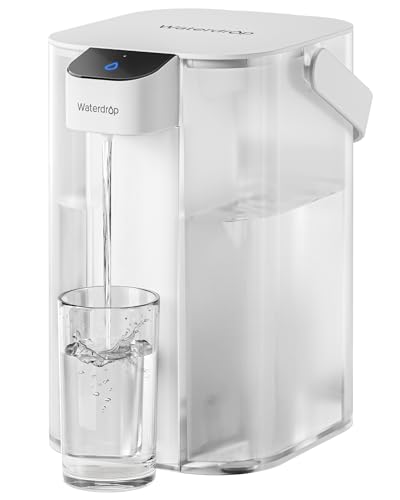
The ED01W is the smaller sibling of the ED04W-L, holding 15 cups rather than 27, but sharing the same electric on-demand pump and 0.5-micron carbon block filter. Its compact footprint (12.5 x 12.2 x 7.8 inches) fits comfortably on a cramped counter or RV galley. The one-touch dispense delivers filtered water in one second — the pump can deliver 0.8 liters per minute, which is fast enough to fill a coffee pot without waiting.
Certification coverage is identical to the larger model: NSF/ANSI 42, 53, 401, and 372, with third-party verification for PFOA and PFOS reduction. The filter lasts 200 gallons and the internal battery holds a 30-day standby charge. The unit is notably quiet in operation — much less audible than larger electric dispensers — making it a suitable choice for open-plan kitchens or bedrooms.
The biggest trade-off is capacity. At 15 cups, you’ll refill the reservoir more often if you have more than two regular drinkers. Some users found that overfilling past the max line causes minor leakage from the dispense area. Customer support, particularly a representative named Olivia, has a strong track record of overnighting replacement units when pumps fail. The ED01W is the right pick for small apartments, RVs, or offices where counter real estate is at a premium but you still want instant electric filtration.
Why it’s great
- Compact footprint fits small kitchens and RVs easily
- One-second dispense eliminates waiting for gravity filtration
- Quiet pump operation doesn’t disrupt conversation or sleep
Good to know
- 15-cup capacity requires frequent refilling for families of three or more
- Does not lower TDS; mineral content remains unchanged
- Must avoid filling past the max line to prevent leaks
6. LifeStraw Home Glass Pitcher

The LifeStraw Home Pitcher is the only unit on this list that removes bacteria and parasites — not just chemicals — thanks to its dual-stage filtration system. A hollow-fiber membrane filter (the same technology used in LifeStraw’s survival straws) traps microorganisms down to 0.2 microns, while an activated carbon and ion exchange cartridge handles chlorine, lead, mercury, PFAS, herbicides, and pesticides. The pitcher body is borosilicate glass with a removable silicone base, so no plastic touches your drinking water.
The membrane filter lasts an impressive 264 gallons or one year, while the carbon cartridge needs swapping every 40 gallons (about two months for a single person). That means this is actually a two-cartridge system with ongoing costs, but the per-gallon cost remains reasonable. Filtration speed is slower than electric options — about five minutes to fill the 7-cup carafe — because gravity is doing the work. Many users pre-filter with a countertop unit to speed things up.
The glass construction looks elegant on a table but is vulnerable to breakage: several users reported the pitcher shattering when trying to remove a stuck membrane filter. The flippy top must be held open while pouring water in, which is a minor ergonomic annoyance. Despite these quirks, the water taste is frequently described as the best of any pitcher tested — clean, crisp, and completely free of chlorine aftertaste. The LifeStraw is ideal for anyone who prioritizes microplastic and pathogen removal above volume and speed.
Why it’s great
- Removes bacteria and parasites, not just chemicals
- Borosilicate glass carafe with no plastic water contact
- Membrane filter lasts one full year before replacement
Good to know
- Slow gravity filtration; can take minutes to fill the 7-cup pitcher
- Glass body can shatter if the membrane filter gets stuck during removal
- Flippy top requires manual holding open while filling
FAQ
What is the difference between a carbon block filter and a reverse osmosis system?
How often should I replace the filter in my domestic water filter system?
Why does my water filter system not lower TDS?
Final Thoughts: The Verdict
For most users, the best domestic water filter winner is the Waterdrop KJ600 Reverse Osmosis System because it delivers near-zero TDS water, instant hot water up to 203°F, and a smart display — all from a single under-sink unit. If you want a whole-house solution that protects showers and appliances without breaking the bank, grab the iSpring WCB32C-KS. And for a tool-free under-sink option that slides into any cabinet, nothing beats the value of the SimPure V7.

Mo Maruf
I created WellFizz to bridge the gap between vague wellness advice and actionable solutions. My mission is simple: to decode the research and give you practical tools you can actually use.
Beyond the data, I am a passionate traveler. I believe that stepping away from the screen to explore new environments is essential for mental clarity and physical vitality.