Our readers keep the lights on and my smoothie glass nicely filled. As an Amazon Associate, I earn from qualifying purchases.
Watching your dog hobble on an injured paw is heartbreaking, and finding a boot that stays on, provides real protection, and doesn’t cause further irritation is a genuine challenge. The wrong boot can twist, trap moisture, or simply fall off, delaying healing and causing frustration for both of you.
I’m Mohammad Maruf — the founder and writer behind WellFizz. I’ve spent countless hours analyzing the construction materials, closure mechanisms, and sole designs of hundreds of dog boots to determine which ones actually protect an injured paw without causing new problems.
This guide cuts through the marketing to deliver research-backed recommendations for the best dog boots for injured paws, focusing on real-world fit, wound-safe materials, and reliable traction for a confident recovery.
How To Choose The Best Dog Boots For Injured Paws
Selecting a boot for an injured paw requires more care than picking daily wear. You need a design that protects the wound without causing friction, stays securely in place without restricting circulation, and provides stable footing to prevent re-injury. Here are the critical factors to evaluate.
Prioritize Paw Width and Closure Security
An injured paw is often swollen or wrapped in a bandage. Weight-based sizing is unreliable here. You must measure the widest part of the paw (or the bandage) and match it to the boot’s internal width. Look for boots with wide split-seam openings and multiple adjustable Velcro straps. These allow you to create a snug fit above the carpal pad—the bony wrist joint—where the boot can anchor without slipping off or rotating, which is critical for a paw that cannot bear misalignment.
Choose the Right Sole and Material for the Injury Stage
The sole material dictates where the boot is safe to use. Soft, textured silicone or thin rubber soles with micro-suction dots provide excellent grip on hardwood floors and tile, preventing slips and falls that worsen injuries. These are ideal for indoor recovery. For outdoor use on hot pavement, snow, or sharp gravel, you need a thicker, rugged rubber sole that protects against puncture and temperature extremes. The boot’s upper should be breathable mesh to avoid trapping moisture against a healing wound, or a waterproof sleeve for licking prevention and keeping bandages dry.
Determine if Licking Prevention is a Primary Need
If your dog is constantly licking or chewing at the injured paw, a standard boot may not be enough. Specialized recovery socks feature a longer sleeve that extends up the leg, often with a belly or body strap, making them impossible for the dog to remove. These are designed specifically for post-surgery wounds, interdigital cysts, and hot spots. They prioritize containment and wound protection over outdoor durability, so verify the material thickness (2.5mm or more) to resist tearing from persistent nibbling.
Quick Comparison
On smaller screens, swipe sideways to see the full table.
| Model | Category | Best For | Key Spec | Amazon |
|---|---|---|---|---|
| QUMY Large Dog Boots (Size 6) | Outdoor Protection | Winter snow & hot pavement | Rugged rubber sole, adjustable straps | Amazon |
| DcOaGt Mesh Boots (Size 8) | Versatile Recovery | 360° slip prevention & indoor grip | 3.0-3.2″ paw width, waterproof toe | Amazon |
| COODEO Recovery Socks (XL) | Wound Protection | Post-surgery & licking prevention | 2.5mm thick sleeve, belly strap | Amazon |
| QUMY Small Dog Shoes (Size 5) | Indoor Stability | Small breeds & hardwood floors | Breathable mesh, anti-slip rubber sole | Amazon |
| LOOBANI Paw Pads (XXXL) | Non-Boot Adhesion | Senior dogs & minimal bulk | Silicone dots, 3-day adhesion | Amazon |
In‑Depth Reviews
1. QUMY Dog Shoes for Large Dogs

This QUMY model earns the top spot because it bridges the gap between rugged outdoor protection and a secure, adjustable fit for an injured paw. The tough slip-proof rubber sole provides reliable stability on snow, hot pavement, and rough terrain, which is essential if your dog needs to go outside for bathroom breaks during recovery. The dual adjustable reflective straps allow you to tighten the boot around the carpal pad, preventing rotation that could aggravate a bandage or wound.
Users report these boots lasting through multiple seasons of heavy winter use, a testament to the stitched fabric and durable sole construction. The material is soft enough to avoid ankle chafing when the straps are snug, but rugged enough to handle sharp stones. One reviewer noted that front and back paws may require different sizes, so careful width measurement (not just weight) is crucial for a proper fit on an injured paw.
While the sole provides excellent traction on pavement, some users found it slightly slippery on ice. The boot’s interior is not heavily insulated, so it won’t trap heat against a wound, but it also won’t keep the foot extremely warm in deep cold. Overall, this is the strongest all-around choice for active recovery that involves both indoor and outdoor movement.
Why it’s great
- Durable rubber sole with strong traction for mixed terrain.
- Reflective straps for secure, customizable fit above the carpal pad.
- Proven long-term durability through multiple seasons.
Good to know
- Front and back feet may require different sizes for optimal fit.
- Sole can be slippery on pure ice surfaces.
2. DcOaGt Dog Shoes for Large Dogs

The DcOaGt boot is specifically engineered for injury recovery, with a 360° anti-slip design at the shoe opening that prevents the boot from slipping off, a common problem when a dog’s gait changes due to pain. The toe section uses a sturdy space leather material that is waterproof and protects bandages from moisture, while the rest of the upper is made from a high-tightly woven air mesh that keeps the wound area ventilated and dry.
Senior dog owners report excellent traction on hardwood floors and stairs, giving an older or recovering dog the confidence to move without fear of slipping. The rubber sole is soft and flexible, providing a comfortable, cushioned step that reduces joint pressure. The wide slit opening and two adjustable Velcro straps make it easy to get the boot over a bandaged paw without causing discomfort.
Some users with giant breeds found that the boot’s top was not tall enough to stay on a very large, muscular leg. For dogs with paw widths within the size chart (up to 3.2 inches), the grip and security are excellent. It is not designed for extreme exercise or all-day hiking, but for controlled recovery walks and indoor stability, it is a top-tier choice.
Why it’s great
- 360° anti-slip opening prevents the boot from falling off.
- Waterproof toe combined with breathable mesh for wound care.
- Excellent traction on wood floors and stairs.
Good to know
- May be too short for giant breed legs with large metacarpals.
- Not intended for high-impact running or extended outdoor play.
3. QUMY 4PCS Dog Shoes for Small Dogs

This QUMY model is the best entry-level choice for small to medium breeds recovering from a paw injury. The breathable air mesh upper keeps debris out while allowing airflow, which is critical for preventing moisture buildup around a wound. The soft, non-slip rubber sole gives older dogs the stability they need to stand confidently on hardwood floors, a common struggle for dogs with weak or injured rear legs.
Users with dogs in the 8 to 12-pound range report that these boots stay on securely during walks and play, thanks to the adjustable reflective strap. The wide split-seam opening makes it simple to slide over a bandaged paw without excessive handling. Many reviews highlight the boot’s comfort and durability through washing, with owners machine washing them after muddy outings.
The primary limitation is sizing. Some users found size 1 to be too large for very small dogs under 8 pounds, causing the boot to twist during walking. Careful width measurement is essential, and the brand’s responsive customer service frequently helps with exchanges. For the price, this is a solid, protective boot for small-breed recovery.
Why it’s great
- Highly breathable mesh for wound health.
- Soft, grippy sole for secure footing on hardwood.
- Machine washable for easy cleaning.
Good to know
- Smallest size may still be roomy for very tiny dogs.
- Best suited for small to medium breeds.
4. COODEO Dog Socks to Prevent Licking Paws

When the top priority is stopping a dog from licking or chewing an injured paw, a specialized recovery sock like the COODEO is the right choice. It is not a walking boot; it is a protective sleeve. The 2.5mm thick material covers the lower leg and paw, with an adjustable belly strap that prevents the dog from pulling the sock off. This makes it ideal for post-surgery wounds, interdigital cysts, hot spots, and eczema where constant licking prevents healing.
Users with medium to large dogs (50-68 pounds) report that the sock stays on during indoor walks and prevents access to wounds and bandages. The soft, flexible material allows for comfortable movement around the house without adding bulk. The design is easy to put on, with a wide opening that fits over a wrapped paw without disturbing the bandage.
The COODEO is not waterproof, so a plastic bag or outer boot is needed for outdoor use in wet conditions. Some dogs with very thick leg coats found the top strap slightly tight, though it is adjustable. It is also not a total cone alternative, as a determined dog may still manage to remove it if left unattended for long periods. For controlled, supervised recovery, this is the most effective licking deterrent available.
Why it’s great
- Durable 2.5mm sleeve resists tearing from licking and chewing.
- Adjustable belly strap prevents removal.
- Comfortable for indoor walking and rest.
Good to know
- Not waterproof; needs separate protection for wet outdoor use.
- May not fit extremely fluffy legs perfectly.
5. LOOBANI Paw Pads for Dogs Traction
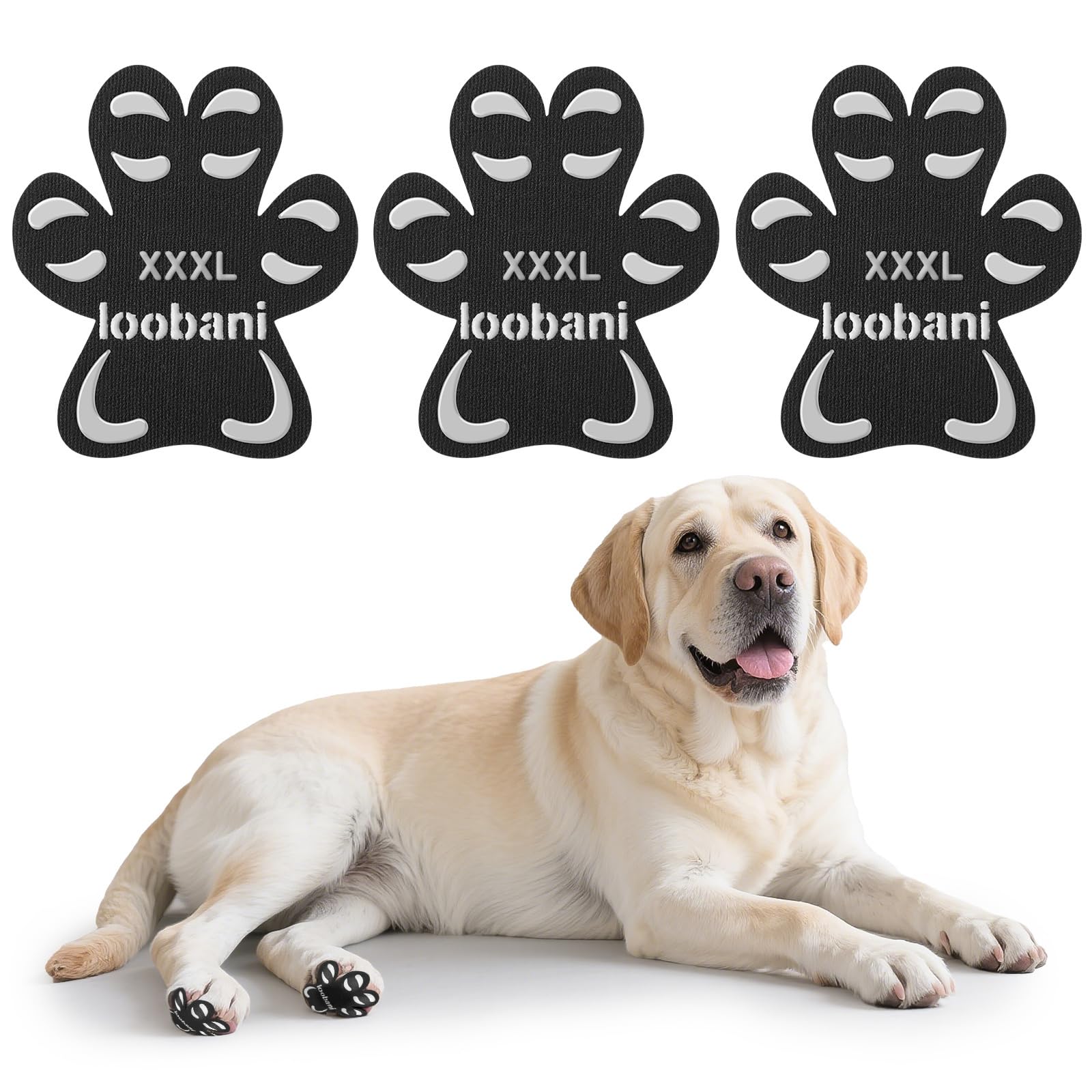
For senior dogs or those with minor paw pad injuries who simply need extra grip on slippery floors, the LOOBANI adhesive paw pads offer a boot-free solution. These silicone pads stick directly to the dog’s paw pads, with raised micro-suction dots that create traction on hardwood, tile, and laminate. They are ideal for dogs that refuse to wear boots or have sensitive bandages that a boot might disturb.
Each pack contains 48 pads (12 sets), and each pad lasts 2 to 5 days depending on activity level. Owners of senior dogs with hip dysplasia or weak rear legs report a dramatic reduction in slipping and falling. The pads are thin and flexible, allowing the paw to move naturally without the bulk of a boot, which is great for dogs that need to feel the ground beneath them for stability.
The adhesion is affected by oil and moisture on the paw pads, so thorough cleaning and drying before application is critical. They are also strictly for indoor use; outdoors, dirt and water will cause them to peel off quickly. For a non-restrictive way to provide traction during indoor recovery, this is an effective and affordable option.
Why it’s great
- Thin, flexible pads allow natural paw movement.
- Provides strong grip for seniors on slick indoor floors.
- Large quantity of pads for frequent replacement.
Good to know
- Only for indoor use; not durable on wet or dirty surfaces.
- Adhesion varies; requires clean, dry paws for best hold.
FAQ
Can I put a dog boot over a bandage or surgical wrap?
How do I stop a dog boot from spinning around an injured paw?
Are adhesive paw pads safe for dogs with open wounds?
Final Thoughts: The Verdict
For most users, the dog boots for injured paws winner is the QUMY Dog Shoes for Large Dogs because it combines a rugged, protective sole with a highly adjustable fit that stays secure during both indoor recovery and necessary outdoor trips. If you need specialized licking prevention for a post-surgery wound, grab the COODEO Dog Socks for its secure sleeve and belly strap design. And for a senior dog that just needs a little extra grip on slippery floors without the bulk of a boot, nothing beats the LOOBANI Paw Pads.

Mo Maruf
I created WellFizz to bridge the gap between vague wellness advice and actionable solutions. My mission is simple: to decode the research and give you practical tools you can actually use.
Beyond the data, I am a passionate traveler. I believe that stepping away from the screen to explore new environments is essential for mental clarity and physical vitality.