Our readers keep the lights on and my smoothie glass nicely filled. As an Amazon Associate, I earn from qualifying purchases.
That moment your dog bolts through the front door after a squirrel or vanishes into the brush during a hike is the split second every owner dreads. A standard leash won’t help, and a microchip only tells you where they were. The modern solution uses satellite connectivity, motion sensors, and algorithm-driven training on a collar that never sleeps, giving you a live map of your dog’s location and the tools to keep them within your boundaries.
I’m Mohammad Maruf — the founder and writer behind WellFizz. I’ve spent over a hundred hours analyzing the hardware architecture, battery chemistries, GPS lock speeds, and real-world tracking accuracy of escape-artist deterrents, hunting companions, and daily-wear trackers so you don’t have to guess which collar actually works when it matters.
Whether you need a lightweight urban tracker or a rugged backcountry trainer, understanding the difference between LTE-dependent devices and satellite-only units is critical. This breakdown of the best dog smart collar systems on the market will help you match the right tech to your dog’s lifestyle.
How To Choose The Best Dog Smart Collar
Before you buy, understand the three distinct architectures: LTE cellular collars that communicate through your phone’s network and require a monthly subscription, radio-frequency (RF) e-collars that use a dedicated handheld remote with no ongoing fees, and hybrid GPS+e-collar systems that pair satellite tracking with in-app training controls. Each serves a different primary use case — daily neighborhood peace of mind, professional field training, or off-grid wilderness tracking.
GPS Accuracy and Update Frequency
The most critical spec is how often the collar reports its position. Consumer-grade collars may update every 30 seconds, which is fine for checking if a dog is in the yard, but useless if you need to track a running dog through a treeline. Premium units like the Garmin Alpha TT 25 and Dogtra Pathfinder 2 achieve updates every two seconds using multi-satellite constellations. LTE collars like the Fi Series 3+ depend on cell tower triangulation, which can be less accurate in rural or wooded areas.
E-Fence vs. Training Stimulation
Some collars use virtual fence boundaries that trigger notifications or corrections when crossed — ideal for containment. Others rely on the handler’s live correction via remote control, which is superior for recall training and off-leash field work. Hybrid systems like the PetSafe Guardian GPS and Dogtra Pathfinder 2 offer both, but require careful setup to avoid false alerts from GPS drift near property lines.
Battery Life That Matches Your Routine
LTE collars with continuous cellular data drain batteries fastest — the Fi collar lasts roughly one week with moderate use. RF remote trainers like the SportDOG SportHunter 1825X can run 140-160 hours per charge because they only transmit when the remote button is pressed. GPS-only tracking collars that ping satellites intermittently (like the Garmin Alpha TT 25) sit in the middle at 68 hours standard, with expanded packs reaching 136 hours. Match runtime to your recharging habits.
Subscription Costs: Budget for the Long Run
LTE-based collars almost always require a monthly or annual fee — Fi starts with six months included, then charges per year. GPS systems that connect directly to your phone via radio frequency or Bluetooth have zero ongoing costs, but require you to carry the handheld remote to track the dog. No-subscription collars like the Dogtra Pathfinder 2 offer free mapping via the MapBox platform, but lose functionality if you leave your smartphone at home.
Quick Comparison
On smaller screens, swipe sideways to see the full table.
| Model | Category | Best For | Key Spec | Amazon |
|---|---|---|---|---|
| Fi Series 3+ | LTE Tracker | Daily escape prevention | 2x improved GPS / 7-day battery | Amazon |
| SportDOG 1275 | RF Trainer | Recall & proximity training | 3/4-mile range / 10 stimulation levels | Amazon |
| SportDOG 1825X | RF Trainer | Hunters & multi-dog owners | 1-mile range / quick-charge battery | Amazon |
| Garmin Alpha TT 25 | GPS Tracker+E-Collar | Precision tracking & training | 9-mile / 2.5-sec updates / LED | Amazon |
| PetSafe Guardian 2.0 | LTE E-Fence | Virtual fence containment | Dual-frequency GPS / 70-hour battery | Amazon |
| Garmin Pro 550 | RF Trainer | Professional multi-dog training | 21 stimulation levels / 1-mile range | Amazon |
| Dogtra Pathfinder 2 Mini | GPS+E-Collar | Hikers with smaller dogs | 4-mile range / 22% smaller receiver | Amazon |
| Dogtra Pathfinder 2 | GPS+E-Collar | Serious field tracking | 9-mile range / 100 stimulation levels | Amazon |
| VERSMELO G726 | Standalone E-Fence | Large property containment | 1999-yard radius / no app required | Amazon |
In‑Depth Reviews
1. Fi New Series 3+ Smart Dog Tracker Collar
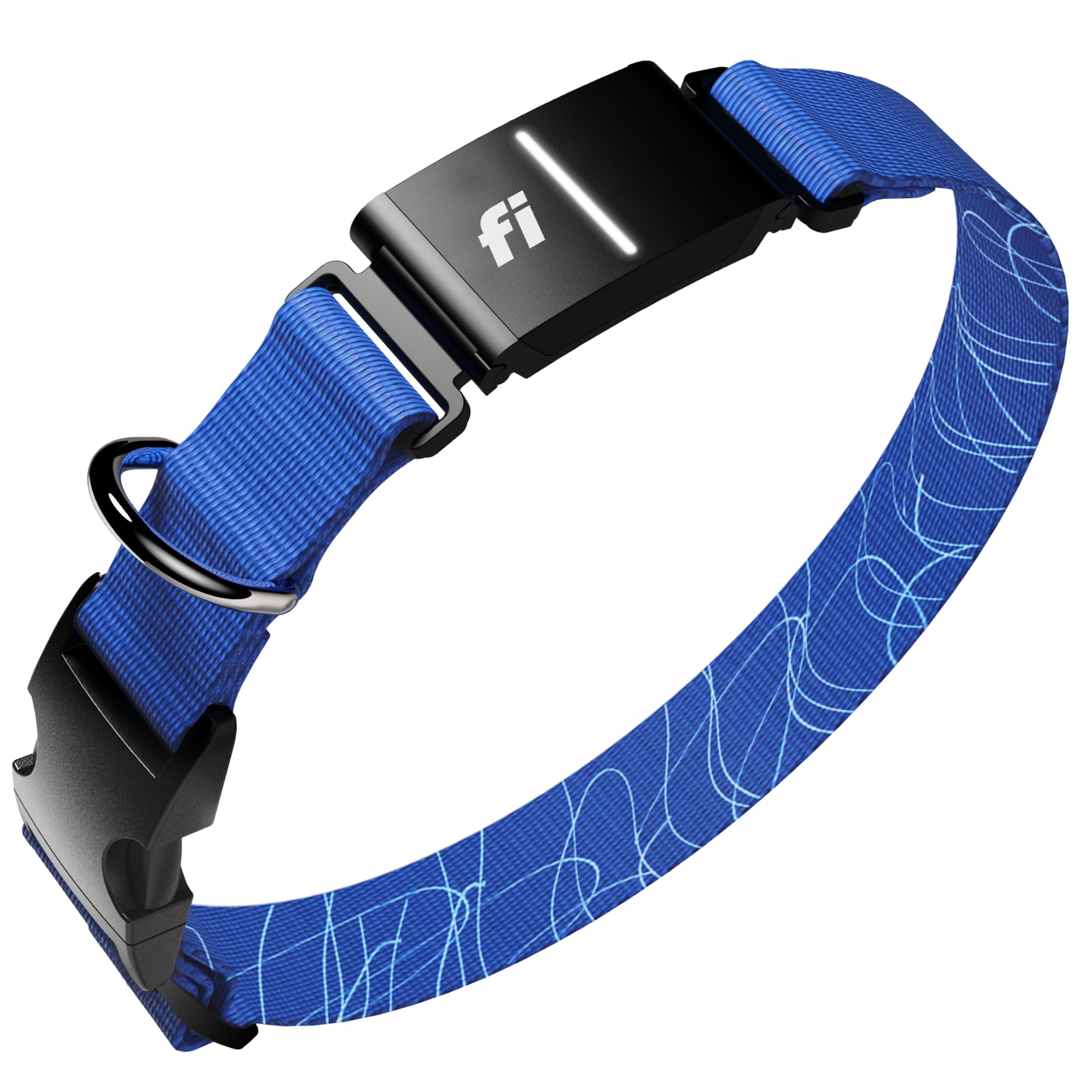
The Fi Series 3+ takes the core concept of an LTE tracker and adds AI-powered health sensing that detects not just movement, but specific behaviors: scratching, licking, eating, and drinking. That data is valuable for owners worried about allergies, post-surgery recovery, or subtle illness signs that change a dog’s daily rhythm. The GPS performance has been doubled from the previous generation, with escape alerts arriving every few seconds when a dog leaves a defined safe zone, and the collar’s built-in LED can be triggered remotely to locate a dog in the dark.
Subscribers gain access to a smart vet records vault inside the app — handy for organizing vaccine certificates and pet insurance documents alongside location history. The collar weighs 77 grams, which hits a sweet spot for breeds from 15 pounds upward without feeling cumbersome. Battery life sits around one week under normal use, which is competitive against other LTE trackers though short compared to RF trainers. The included six-month membership defrays the initial subscription sticker shock.
Apple Watch integration means you can check your dog’s location and activate Lost Mode from your wrist without pulling out your phone. The proprietary collar strap has drawn criticism for limited sizing options — if the included large doesn’t fit, you’ll need to buy a separate kit. A small number of users report a finicky setup process involving QR code scanning and Wi-Fi handshake issues that can take days to resolve. Once connected, however, the peace-of-mind feedback is overwhelmingly positive for both rural and suburban use.
Why it’s great
- AI behavior tracking (eating, scratching, barking) gives health insights beyond location.
- Apple Watch support for quick hands-free location checks and Lost Mode activation.
- Nationwide LTE coverage with improved GPS accuracy and rapid escape alerts.
Good to know
- Requires a subscription after the initial six-month trial ends.
- Proprietary collar strap cannot be swapped for third-party alternatives.
- Initial setup can be time-consuming with reported Wi-Fi and QR code pairing issues.
2. SportDOG Brand SportTrainer 1275 Remote Trainer

The SportTrainer 1275 is a workhorse RF remote trainer with a crisp OLED screen that shows the active dog, stimulation level, and battery status at a glance. With a 3/4-mile advertised range and the ability to control up to six dogs (by purchasing additional collars), it’s built for multi-dog households or training scenarios where consistent recall over distance is non-negotiable. The collar receiver is submersible to 25 feet using DryTek technology — not just splash-proof, but genuinely waterproof for swimming retrievers or waterfowl work.
Training options include 10 levels of continuous and momentary static, plus vibration and tone. The lithium-ion collar battery delivers between 140 and 160 hours per charge, which translates to weeks between charges for most daily training sessions. Owners of 70-pound Golden Retrievers report that level 3 static is sufficient for reliable response, and many transition to using only the beep function after the first week of conditioning. The remote transmitter lasts 50 to 70 hours and charges in roughly two hours.
Some users wish the package included a beginner training tutorial, as the collar is most effective when paired with a structured conditioning program rather than used as a shock-first deterrent. The antenna must remain tight — losing one means a replacement part. There have been isolated reports of the remote failing to charge after several months, but SportDOG customer service has generally replaced units under warranty. For the price, this collar delivers the most refined RF experience in the upper-mid-range segment.
Why it’s great
- OLED remote screen shows stimulation level and dog selection at a glance, even in direct sun.
- DryTek waterproofing rated to 25 feet — safe for swimming and heavy rain exposure.
- Extended battery runtime (140-160 hours) means weekly charging rather than daily.
Good to know
- Antenna can loosen over time and replacements cost extra.
- Limited remote charging failures reported after heavy use, though warranty support is responsive.
- No built-in GPS or subscription service — range depends on line-of-sight RF performance.
3. SportDOG SportHunter 1825X Remote Trainer
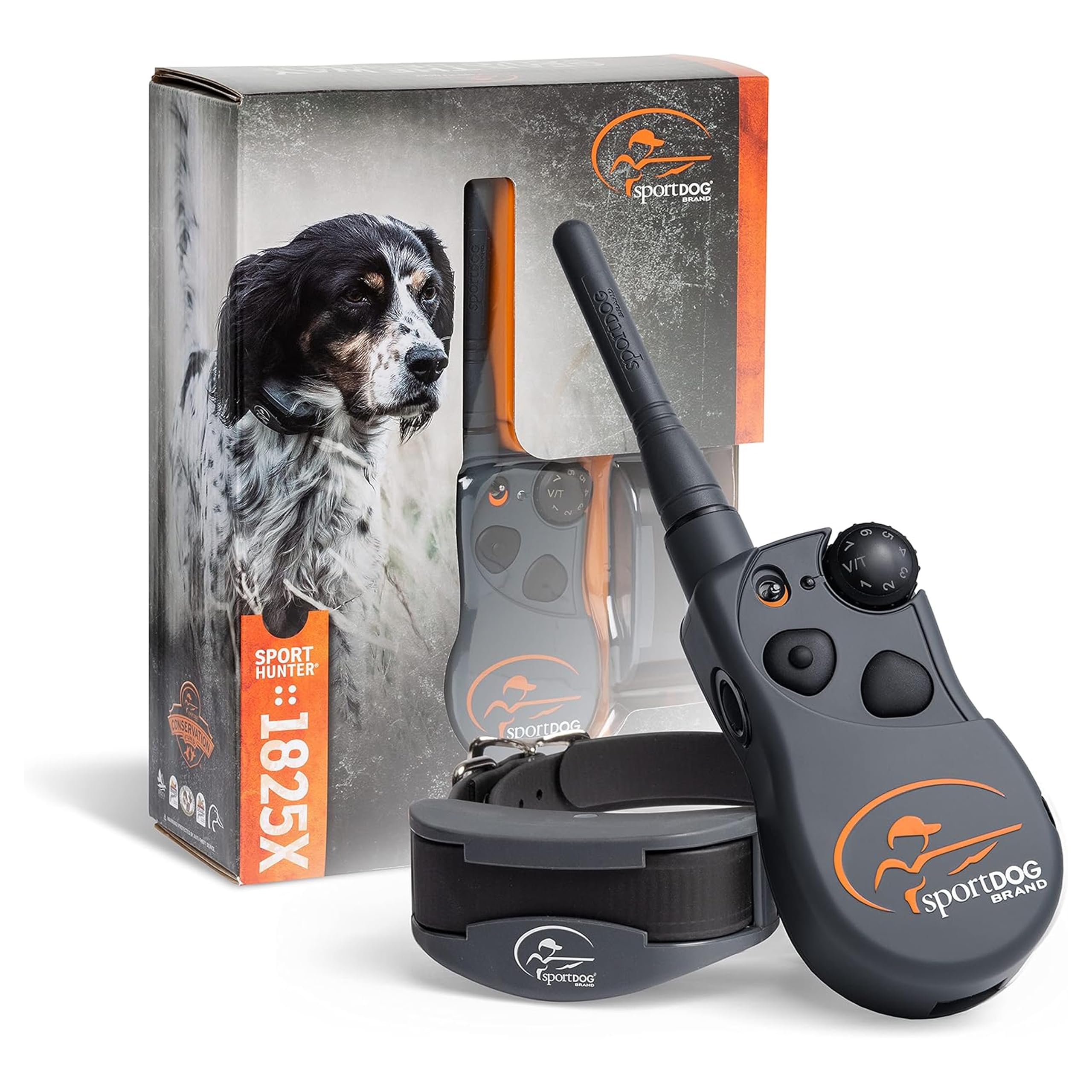
The SportHunter 1825X extends the range to a full mile and uses a 27MHz radio frequency that penetrates moderately wooded terrain better than 2.4GHz alternatives. The collar is built for serious field work — the receiver weighs just 3 ounces and the nylon strap is reinforced for mud, water, and heavy brush without cracking. It supports multi-dog training with the purchase of additional Add-A-Dog collars, and the remote allows toggling between dogs without re-pairing.
Correction types include tone, vibration, and momentary or continuous static. The handheld remote uses a large intensity dial so you can adjust levels without looking — a feature that field trainers specifically praise. The quick-charge lithium battery is a major upgrade over older SportDOG models, reducing charging time considerably. Owners who swim their dogs daily report the collar still functions perfectly after two years of immersion, with no corrosion on the contact points.
One missing detail is a tactile indicator on the intensity dial to confirm when you’re at the lowest setting without staring at the numbers. The remote is also slightly larger than the SportTrainer 1275, which some users find bulky for pocket carry during long walks. If you hunt with a pointing breed or need a collar that can keep up with a high-prey-drive rescue on off-leash hikes without ever cutting out, the 1825X justifies its premium position over cheaper RF alternatives.
Why it’s great
- Full one-mile range with 27MHz radio frequency that holds connection in rolling hills and tree cover.
- Quick-charge battery eliminates the half-day wait common with older RF collars.
- Proven durability — owners report consistent performance after years of daily water exposure.
Good to know
- Remote controller is larger than some competitors and may be bulky for pocket carry.
- Intensity dial lacks a physical marker for the lowest setting, requiring visual confirmation.
- No GPS tracking capability — this is a pure RF training tool, not a locator collar.
4. Garmin Alpha TT 25 GPS Dog Tracking and Training Collar

The Alpha TT 25 is a collar-only unit designed to pair with Garmin’s Alpha series handhelds, offering a 9-mile tracking radius with position updates as fast as every 2.5 seconds. The GPS accuracy is reported to be within one foot under open sky, making it the go-to collar for owners who need to know exactly which thicket their dog is working. The rugged but slim design fits both large and small breeds thanks to the user-replaceable flex band and multiple contact point options
Training is limited to what the paired handheld supports — up to 18 levels of continuous or momentary stimulation plus tone and vibration. The multicolor LED is a standout feature: you can assign specific colors to up to 16 dogs and see which one is where at a glance in low light. Battery life reaches 68 hours with the standard pack or 136 hours with the expanded pack in dynamic tracking mode, which adjusts update frequency based on the dog’s movement to conserve power.
The Alpha TT 25 charges via USB-C and supports Wi-Fi for automatic firmware updates, keeping the device current without a computer. It uses Garmin’s proprietary handheld ecosystem, so you cannot pair it with third-party devices — you need an Alpha or Pro 550 Plus handheld separately. The entry price for the collar alone is steep, especially when factoring in the handheld cost. For professional trainers and dedicated hunters who need foot-level accuracy and multi-day tracking endurance, this system leaves no margin for error.
Why it’s great
- Sub-meter GPS accuracy with updates every 2.5 seconds for real-time tracking precision.
- Dynamic battery mode stretches runtime to 136 hours with the expanded pack.
- Multicolor LED identifies individual dogs in the dark — supports up to 16 different colors.
Good to know
- Requires a separately purchased Garmin handheld remote — not a standalone system.
- Premium cost, especially when combined with the needed handheld device.
- User-replaceable flex band adds long-term value but is not as durable as standard nylon.
5. PetSafe Guardian GPS 2.0 Dog Fence + Tracking

The Guardian GPS 2.0 collar is 50% smaller than its predecessor, making it comfortable for dogs as small as 10 pounds with neck circumferences down to 8 inches. It combines dual-frequency GPS with AccuGuard AI motion detection to reduce false alerts from GPS drift — a common problem with single-antenna systems near tall fences or metal siding. The app allows you to create up to 50 custom virtual fence boundaries, and the collar will push notifications the moment it detects a boundary crossing.
Training modes include tone, vibration, and 10 levels of static correction. The rechargeable battery lasts up to 70 hours, which is excellent for an LTE collar and competitive with some GPS-only trackers. The system is designed for properties of half an acre or larger — PetSafe explicitly warns against using it on smaller lots or under dense tree canopies where the GPS signal may degrade. Set up requires a 2.4 GHz Wi-Fi connection during initial configuration.
A monthly or annual subscription is mandatory, though a one-month free trial is included. Multiple dogs require separate collars and separate subscriptions, which can become expensive for multi-dog households. Real-world reviews highlight that the collar can loosen over time and that GPS accuracy near the boundary line fluctuates — some dogs receive correction while inside the yard due to signal bounce. For owners who want a tidy, no-dig virtual fence for a medium-to-large suburban property, this is the most polished LTE containment system available.
Why it’s great
- Compact collar design fits dogs as small as 10 pounds — rare for a full LTE GPS system.
- Dual-frequency GPS with AI motion detection reduces nuisance false boundary alerts.
- 70-hour battery life is best-in-class among LTE dog collars.
Good to know
- Requires a subscription for each dog — ongoing costs add up with multiple pets.
- GPS boundary accuracy can drift 5-20 feet near property edges, causing inconsistent correction zones.
- Not recommended for properties under half an acre or areas with heavy tree canopy interference.
6. Garmin Pro 550 Dog Training Collar and Handheld

The Pro 550 is Garmin’s non-GPS RF trainer designed for handlers who work multiple dogs simultaneously — up to three with a single remote. The 21 stimulation levels are far more granular than typical 10-level collars, allowing fine-tuned correction for sensitive or stubborn dogs. The top-mounted dial lets you adjust levels without diverting your eyes from the field, and the handheld also includes a built-in BarkLimiter with advanced bark correction technology for nuisance barking at home or in the truck.
Vibration control is exclusive to the Pro 550 (the older Pro 70 model lacked it), and the handheld can remotely trigger the accessory Upland Beeper for flushing dog hunters. The 1-mile range with 27MHz is solid for most hunting grounds and large properties. Battery life on the collar is excellent — the lithium-ion pack lasts through multiple full-day training sessions, and the handheld charges quickly via the included split cable that can juice both the remote and collar simultaneously.
Owners of large, headstrong breeds like Dogo Argentinos report that even level 2 stimulation is effective thanks to the precise control. The handheld is large — some users returned the unit because it would not fit in a pocket or hung upside down when worn on a belt. There is no preset memory per dog, so you must manually dial in the correct level when switching between animals. For professional trainers and serious hunters who need a reliable, high-channel-count RF system without subscription fees, the Pro 550 remains a benchmark.
Why it’s great
- 21 stimulation levels provide exceptional granularity for precise training progression.
- Built-in BarkLimiter helps control nuisance barking without a separate device.
- Simultaneous charging for handheld and collar with the included split adapter cable.
Good to know
- Handheld remote is bulky and lacks a lanyard — difficult to carry hands-free on walks.
- No per-dog stimulation preset memory — must manually adjust when switching dogs.
- Stimulation level numbers are hard to read in low light; no backlit intensity indicator.
7. Dogtra Pathfinder 2 Mini GPS Dog Tracker E-Collar

The Pathfinder 2 Mini shrinks the full-size receiver by 22 percent, making it the best option for owners of dogs between 15 and 35 pounds who don’t want a brick hanging from their pet’s neck. It uses GPS radio frequency rather than LTE — meaning there are zero monthly fees, but it requires a paired smartphone or a dedicated GPS connector (included) to function. The mapping is powered by MapBox with general, satellite, and terrain views that can be downloaded for offline use in areas without cell service.
The e-collar function includes nick, constant, and audible tone, plus a pager vibration mode and an LED locate light. The range is rated at 4 miles, and the system can track up to 21 dogs simultaneously if you’re handling a pack. Smartwatch integration works with Apple Watch Series 5 and Galaxy Watch4 series and above, giving you compass direction and mapping from your wrist. The collar is fully waterproof and saltwater-safe, so coastal hikes or stream crossings won’t damage the electronics.
The main limitation is that the e-collar command must be triggered through the app or the separate GPS connector button — there is no physical dial on the collar itself. Some users report that fumbling with a phone screen in an emergency situation is slower than a dedicated remote. Battery life depends heavily on GPS update frequency, and the e-fence feature requires the app to be actively running with Bluetooth proximity. For hikers who want a lightweight GPS collar for a small breed without paying for a subscription, the Mini is the standout choice.
Why it’s great
- 22% smaller receiver than the standard Pathfinder 2 — designed for dogs from 15 pounds.
- No monthly fees or subscriptions — all mapping and tracking is free via MapBox.
- Smartwatch control provides compass and mapping access without pulling out a phone.
Good to know
- E-collar stimulation requires app or connector button — no physical remote dial for rapid escalation.
- E-fence must be manually turned on each time and resets when the app is closed.
- Battery life is shorter than RF-only collars due to continuous GPS transmission.
8. Dogtra Pathfinder 2 Hunting Ecollar GPS Dog Training Collar

The full-size Pathfinder 2 expands the tracking range to 9 miles and adds 100 levels of nick and constant stimulation — a massive range of control that allows near-surgical precision for the most stubborn or sensitive dogs. Like the Mini, it avoids subscription fees entirely by using satellite-to-smartphone GPS via the Pathfinder 2 app, with offline map saving for wilderness trips where cell coverage is absent. It supports tracking and correction for up to 21 dogs, making it the unmatched choice for serious upland bird hunters or sled dog handlers.
The GPS connector (included) works as a secondary remote that can deliver e-collar commands without opening the app, though the physical buttons are limited to a single programmed function. The app itself offers e-fence, mobile-fence, and geo-fencing alerts, plus a compass view that shows direction to each dog. Correction types include tone, vibration, and 100-level nick or constant stimulation, giving trainers extreme granularity. The collar is built for large dogs over 35 pounds with neck sizes from 12 to 22 inches.
The trade-off is that the system is fundamentally app-based — if your phone dies, you lose GPS tracking and e-fence functionality until it recharges. The e-fence boundary also resets when the app closes, requiring manual reactivation. GPS boundary accuracy can be off by 50 to 80 feet in testing, which is noticeable compared to the Garmin Alpha’s sub-meter precision. Owners of Great Pyrenees and Australian Shepherd mixes have reported excellent results using long contact points, but the collar is overkill for suburban owners who never venture beyond the backyard.
Why it’s great
- 100 levels of nick and constant stimulation for precise training across all temperaments.
- No monthly fees — free MapBox maps with offline terrain, satellite, and general views.
- 9-mile tracking range supports up to 21 dogs for advanced kennel or field operations.
Good to know
- Entirely reliant on smartphone app — loses GPS tracking if phone battery dies.
- E-fence boundary accuracy can drift by 50-80 feet, triggering false alerts near property lines.
- Requires Bluetooth proximity to maintain connection — phone must be near the collar.
9. VERSMELO GPS Wireless Dog Fence System G726
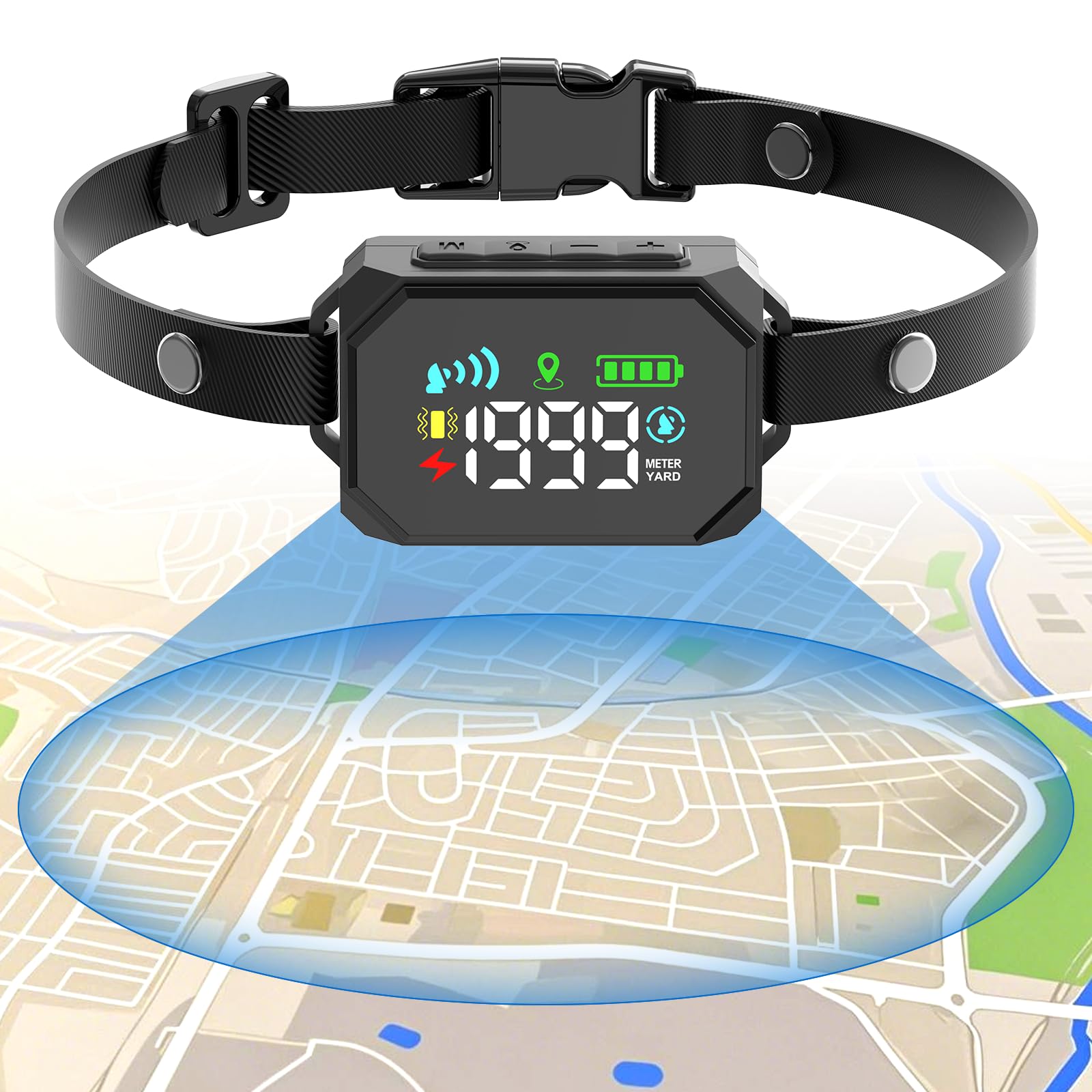
The VERSMELO G726 is a standalone GPS fence system that operates entirely without a smartphone, Wi-Fi, or app — just a handheld base unit and a collar receiver. The circular boundary is adjustable from 33 to 1999 yards in radius, covering up to 2593 acres for owners of large farms or open-range properties. Training corrections progress from sound to vibration to static shock (6 levels), with two correction cycles before the collar enters protection mode to prevent overstimulation. This makes it a humane option for teaching boundaries to new dogs.
Build quality includes IPX7 waterproofing on the collar, meaning it can survive rain, puddles, and even brief submersion. The collar battery lasts 24 to 36 hours per charge, which is acceptable but not class-leading, and the memory function retains boundary settings after power-off so you don’t need to reprogram after every battery swap. It fits most dogs over 18 pounds with neck sizes from 9 to 26 inches, and the no-app design is genuinely liberating for owners who prefer not to manage software.
Reliability is inconsistent: some owners report the collar stops working within days of purchase or loses GPS lock in cloudy weather despite the IPX7 rating. The single-button reset process is difficult, and the manufacturer’s support channel is virtually nonexistent — no website, no helpful documentation. The GPS signal also degrades significantly in wooded areas, which defeats the purpose for many rural owners. For the budget-conscious buyer with a wide-open, flat property and straightforward expectations, the G726 works when it works. For anything else, the gamble may not pay off.
Why it’s great
- Entirely app-free and subscription-free — no smartphone or Wi-Fi required for operation.
- Massive coverage area — up to 2593 acres with a 1999-yard radius adjustment range.
- Gradual correction progression (sound > vibration > static) with overstimulation protection.
Good to know
- GPS lock is unreliable in cloudy weather or wooded terrain — core functionality is intermittent.
- Customer support is absent — no accessible website or help documentation when failures occur.
- Collar battery life (24-36 hours) is low compared to competitors and requires frequent charging.
FAQ
Can a smart collar work without a cellular subscription?
How do I choose between a remote trainer and a GPS tracker?
Is static stimulation safe for all dog breeds?
Why does my GPS collar trigger false boundary alerts?
Final Thoughts: The Verdict
For most users, the best dog smart collar winner is the Fi New Series 3+ because it combines reliable LTE tracking with AI-driven health monitoring in a lightweight package that suits daily urban and suburban life. If you want precise GPS tracking with off-grid capability and no subscriptions, grab the Dogtra Pathfinder 2. And for professional field trainers who need multi-dog RF control with rock-solid reliability, nothing beats the SportDOG SportHunter 1825X.

Mo Maruf
I created WellFizz to bridge the gap between vague wellness advice and actionable solutions. My mission is simple: to decode the research and give you practical tools you can actually use.
Beyond the data, I am a passionate traveler. I believe that stepping away from the screen to explore new environments is essential for mental clarity and physical vitality.