Our readers keep the lights on and my smoothie glass nicely filled. As an Amazon Associate, I earn from qualifying purchases.
Cutting a dovetail by hand is a true test of skill, but for consistent, production-ready joinery, a dedicated jig transforms the router table into a precision cutting station. The difference between a joint that slides together perfectly and one that leaves a gap is often measured in thousandths of an inch, which is why the best dovetail jigs rely on machined templates and repeatable stop systems rather than guesswork.
I’m Mohammad Maruf — the founder and writer behind WellFizz. I’ve spent countless hours analyzing router jig designs, from the micro-adjustment rack teeth on INCRA models to the machined anodized aluminum templates from Peachtree, to understand what separates a frustrating setup from a repeatable one.
Whether you’re building drawer boxes or furniture-grade cabinets, finding the right best dovetail jig means matching your stock thickness range and joint style to a system that offers secure clamping, clear setup guides, and a template that won’t flex under the bit.
How To Choose The Best Dovetail Jig
The wrong jig turns a five-minute operation into an afternoon of test cuts. Focus on three factors: template rigidity, the clamping mechanism, and the range of bit sizes your router can support with the included guide bushings.
Template Material and Machining Tolerance
The template is the brain of the jig. Machined aluminum templates resist wear and flex better than resin or phenolic alternatives. Look for templates with permanently scribed alignment lines—they eliminate guesswork when centering the bit. A 1/32-inch rack or indexing system on the fence adds repeatability for identical joints across multiple workpieces.
Stock Thickness Range and Joint Versatility
Most jigs handle 1/2-inch to 3/4-inch stock, but premium models extend from 3/8-inch up to 1-1/8 inches. If you plan to cut half-blind joints for drawers and through dovetails for furniture, confirm the jig ships with templates for both styles. Adjustable stops allow you to switch between joint types without re-measuring the offset.
Clamping System and Fence Alignment
A jig that walks during routing produces uneven pins. Heavy-duty cam clamps with sandpaper-backed bars grip stock without slipping. Onboard depth gauges and alignment marks on the template let you set bit depth without external calipers. A fence that stays parallel to the miter slot is non-negotiable for wide panels.
Quick Comparison
On smaller screens, swipe sideways to see the full table.
| Model | Category | Best For | Key Spec | Amazon |
|---|---|---|---|---|
| PORTER-CABLE 4210 | Premium | Onboard depth gauges | 12-inch max stock width | Amazon |
| Rockler Dovetail Jig Kit | Premium | All-in-one kit | 1/2″ to 1-1/8″ stock range | Amazon |
| Woodpeckers Spline Jig | Premium | Spline & miter joints | Holds projects up to 3 ft wide | Amazon |
| Peachtree Master System | Mid-Range | First-time dovetail users | 7-degree dovetail bit included | Amazon |
| CMT300 | Mid-Range | 7/16″ to 1″ thick stock | Steel body construction | Amazon |
| INCRA Jig | Mid-Range | Repeatable fence positioning | 1/32-inch rack teeth | Amazon |
| Keller Journeyman | Mid-Range | No test cuts needed | 1/8 to 3/4 inch stock | Amazon |
In‑Depth Reviews
1. PORTER-CABLE Dovetail Jig, 12-Inch (4210)

The PORTER-CABLE 4210 sets the benchmark for a shop-grade dovetail jig with its machined aluminum template and built-in router bit depth gauges that eliminate the need for external measuring tools. The heavy-duty cam clamps with sandpaper-backed locking bars provide a firm grip on the workpiece, reducing the chance of the board shifting mid-cut. The template supports half-blind, rabbeted half-blind, and sliding dovetails, giving you three joint styles from a single system.
Setup requires attention to the offset guide—some users report needing a slight adjustment with tape to achieve the correct 1/2-inch offset—but once dialed in, the jig produces repeatable joints for drawer assembly. The onboard instructions are printed on the jig itself, which saves you from hunting for a manual after setup. The 12-inch max stock width accommodates most cabinet and drawer fronts without repositioning.
At a premium price point, this jig rewards users who value template durability and quick depth changes over a low initial cost. The guide bushing can sometimes be slightly oval; rotating the router 45 degrees during installation resolves the fit. For production work where consistency matters more than speed of setup, the 4210 earns its place on the bench.
Why it’s great
- Onboard depth gauges speed up bit changes
- Machined aluminum template resists wear
- Heavy-duty cam clamps hold stock securely
Good to know
- Offset guide may require manual correction for perfect alignment
- Only one template included in the base package
2. Rockler Dovetail Jig – Versatile Dovetail Jig Kit
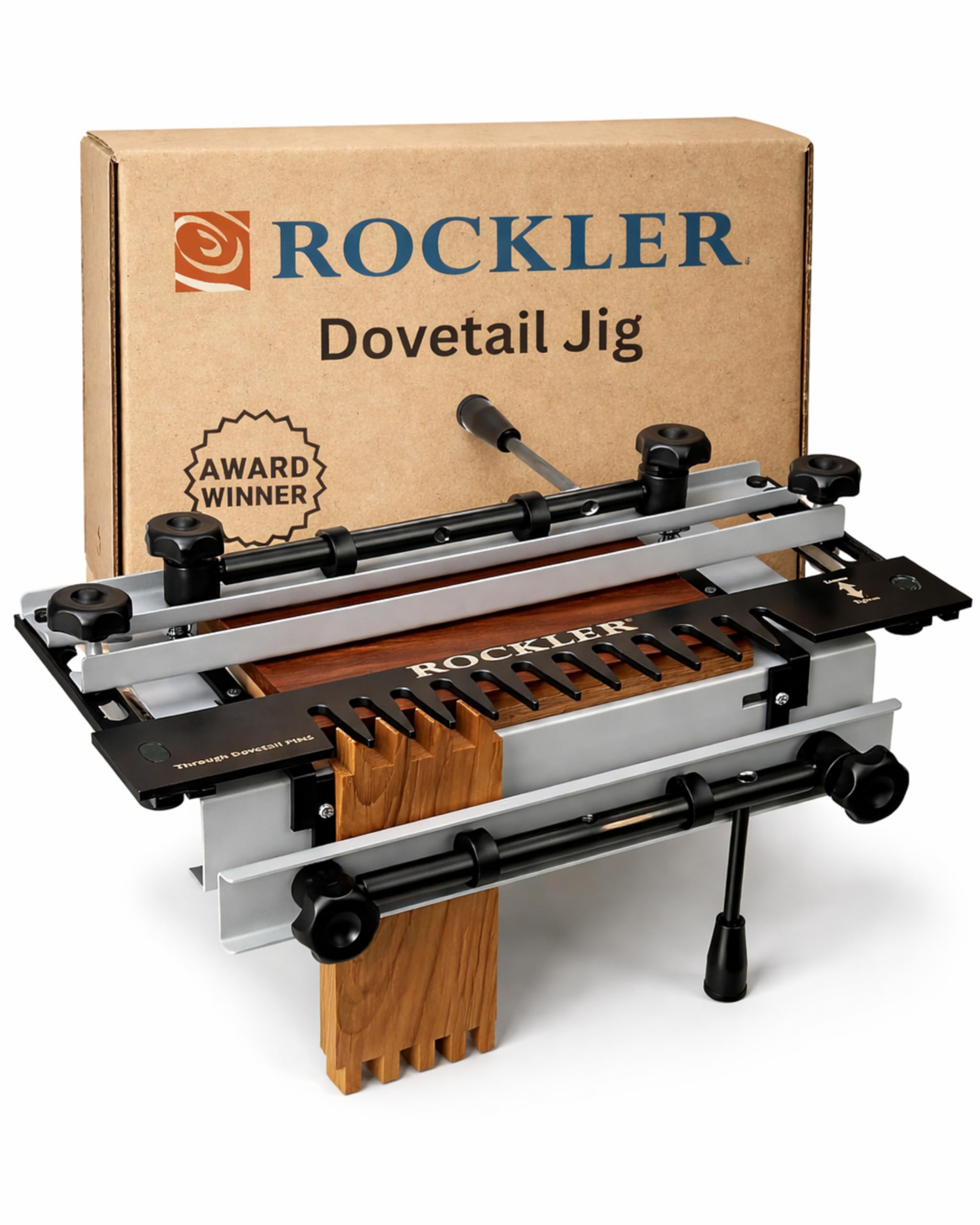
The Rockler Dovetail Jig Kit arrives with two phenolic templates, three carbide-tipped router bits, a collet adapter, and a guide bushing, which means you can start cutting joints immediately without sourcing additional tooling. The compact, lightweight design allows for permanent mounting to a workbench or a shop-built movable base, making it a strong option for small workshops where space is constrained.
Cutting half-blind dovetails from 1/2-inch to 1-1/8-inch thick stock is straightforward after you watch the setup video—the included eight-page booklet helps, but a quick YouTube tutorial removes the friction. Users report that the 8mm collet reducer included in the kit can bind inside some routers; replacing it with a USA-made reducer with an oversized lip eliminates that issue. The one-piece stop system provides a repeatable offset for dead-on joint alignment.
The phenolic templates are functional but less durable than aluminum, and you must avoid nicking them with the bit during setup. For the price, the Rockler kit delivers excellent value for a hobbyist who wants a single purchase that includes everything but the router. Making 20 drawers with consistent fit is realistic after the initial dial-in.
Why it’s great
- Includes bits, bushing, and collet adapter
- Compact design fits small workshops
- Easy to learn half-blind joints on first attempt
Good to know
- Phenolic templates can be damaged if nicked
- Included collet reducer may need replacement
3. Woodpeckers Spline Jig

The Woodpeckers Spline Jig is a different animal—it focuses on cutting splines across miter joints and dovetail keys rather than cutting the pins and tails themselves. The two sections of aluminum Super Track are secured by UHMW glide strip-lined, powder-coated steel legs that keep the jig stable on the router table or table saw. Four molded flip stops maintain spline spacing without measuring each slot.
Narrow projects from 1/2 inch to 16 inches wide fit within the standard track setting, and expanding to 3-foot-wide projects requires only moving the tracks inward. This jig works on both the table saw for narrow splines and the router table for wider dovetail splines, making it a versatile addition for furniture builders who reinforce mitered boxes or add decorative keys. The build quality from the Strongsville, Ohio facility is excellent—machining tolerances are tight, and all edges are deburred.
The plastic sliders on the flip stops do not grip as firmly as some users would like, and the unit can pivot slightly if not locked onto miter rails. The surface stops are small for large picture frames, and the jig ships without a clamping system—just stop blocks. For spline-dedicated work, however, the precision is worth the premium.
Why it’s great
- Handles projects up to 3 feet wide
- Works on both table saw and router table
- Excellent machining and build quality
Good to know
- No clamping system included
- Flip stops are small for large frames
4. Peachtree Woodworking Supply Dovetail Jig Master System

The Peachtree Master System is built around a machined anodized aluminum template with permanently scribed alignment lines, which removes the guesswork when centering the bit for the first cut. The kit includes two 17-inch aluminum tracks and two track clamps, plus a 7-degree dovetail router bit and a flush trim bit, so you have everything needed for half-blind dovetails on stock from approximately 5/8 inch to 3/4 inch thick.
Setup requires patience—first-time users often need two or three test cuts to understand the bit depth relationship with the template—but the learning curve is reasonable for hobbyists. Using two routers eliminates the need to swap bits between the pin and tail cuts, which speeds up production significantly. The compact design stores easily on a shelf and mounts quickly to a router table fence.
Some users note that the included instructions have minor errors and lack a detailed close-up for pin positioning. The overall quality of the components, however, is excellent for the mid-range price. The system produces tight-fitting joints that require only light sanding to seat fully.
Why it’s great
- Anodized aluminum template with scribed lines
- Includes two router bits and tracks
- Excellent value for the included components
Good to know
- Setup requires patience for first-time users
- Instructions have minor errors and missing details
5. CMT300 Universal Dovetail Jig
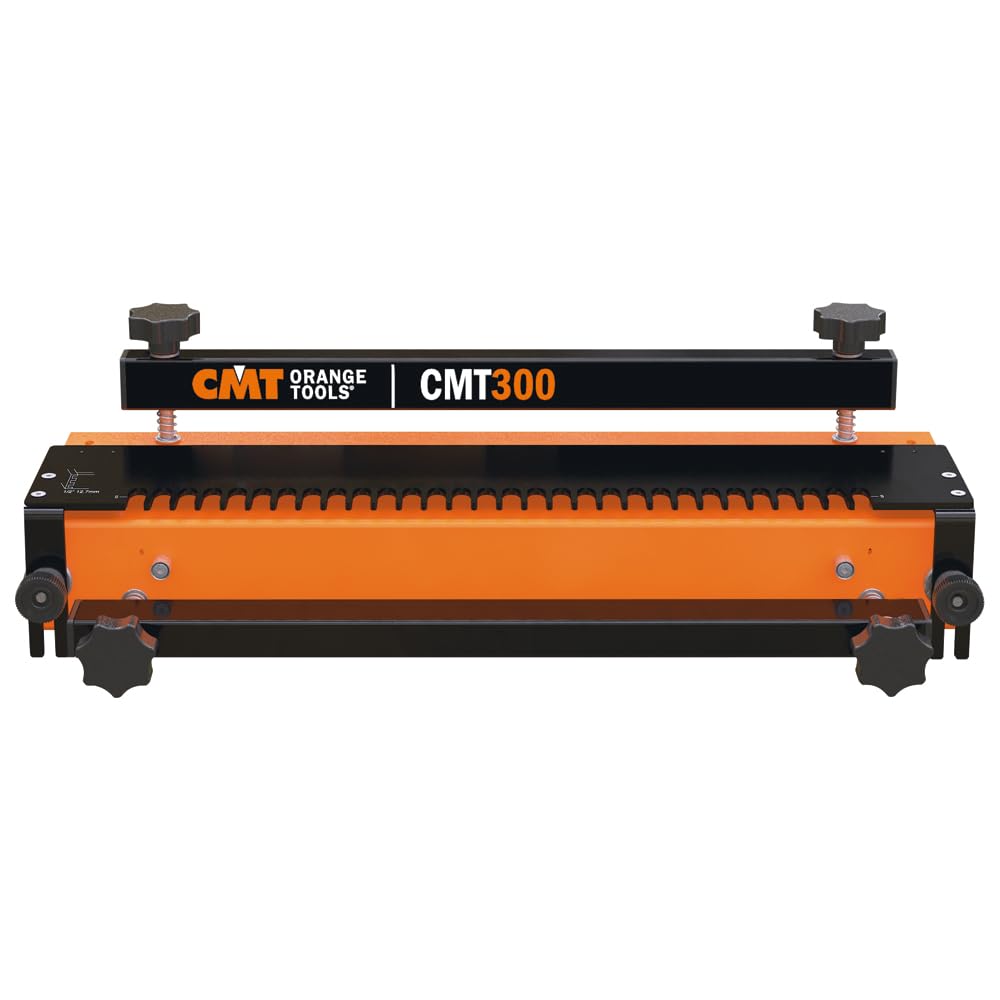
The CMT300 features a steel body construction that provides a rigid platform for routing, with factory-set stops and clamping bars that hold the workpiece securely. The jig accepts stock from 7/16 inch to 1 inch thick, a wider range than many comparable mid-range options, and includes a template for 1/2-inch half-blind joints plus a template guide for expandability with optional templates.
The clamping mechanism is straightforward: position the boards against the stops, tighten the bars, and route. Some users report a significant learning curve when dialing in the bit depth for perfect joint fit, especially when using 1/2-inch plywood with spacer boards. The provided template guide may not fit all common hand routers without an additional adapter, which is an extra cost to consider.
For woodworkers who already own a CMT router setup and value the ability to cut dovetails on stock up to 1 inch thick, the CMT300 is a competent system. The steel body adds weight that reduces vibration, but the setup complexity and potential fit issues with third-party hardware make it less beginner-friendly than aluminum-template systems.
Why it’s great
- Steel body reduces vibration during routing
- Accepts stock from 7/16″ to 1″ thick
- Factory-set stops simplify initial positioning
Good to know
- Learning curve for perfect joint fit
- Template guide may not fit all routers
6. Original INCRA Jig

The INCRA Jig is a glass-reinforced resin body that works as a fence positioner, not a traditional finger-template jig. Its 1/32-inch rack teeth allow precise, repeatable fence positioning to within a hair, which translates to consistent dovetail spacing across multiple workpieces. The jig clamps securely without shifting and keeps the fence perfectly parallel to the miter track—a critical detail for accurate joinery.
The included instructional DVD and manual are essential—the system requires reading and watching before setup makes sense, but once understood, it saves significant time on repeat cuts. The jig is larger than product photos suggest, and fitting it to a router table requires adequate fence rail space. It produces box joints, dovetails, and dadoes with the same level of accuracy.
At a mid-range price, the INCRA offers a unique combination of affordability and repeatability that no other jig in this class matches. The plastic construction is surprisingly rigid at 1/4 inch thick, though you must avoid overtightening the clamps to prevent flex. For a hobbyist who values consistent joint spacing above all else, this is a smart pick.
Why it’s great
- 1/32-inch rack teeth for repeatable fence positioning
- Rigid glass-reinforced resin construction
- Includes instructional DVD and manual
Good to know
- Requires careful reading of instructions before use
- Larger than photos suggest; needs adequate rail space
7. Keller Journeyman DoveTail Jig Template (135-1500)

The Keller Journeyman is a 15-inch precision-milled template that uses a back-to-back design, allowing you to cut both pins and tails without re-adjusting the jig. It accepts wood from 1/8 inch to 3/4 inch thick and unlimited widths and lengths, which makes it unusually flexible for a template-style jig. The selling point is the claim of no test cuts and no wasted wood—setup is based on aligning a scribed line with the template edge.
The system requires a user-made wooden support block (2.25 inches by 3.5 inches by 18 inches) that the template sits on top of, which is not included. This adds a fabrication step before you can make your first cut. Ball-bearing 1/4-inch router bits are recommended, and the template is laminate rather than metal, which means careful handling is needed to avoid chipping at the edges. Owner David Keller is known for excellent phone support if you run into setup trouble.
Tear-out can occur on the end pins, especially in 9-ply Baltic birch, but a slower feed rate and routing left to right for pin cuts mitigates the issue. The Keller system is best for woodworkers who want a different approach—one that prioritizes elimination of test cuts over traditional template-and-bushing methods.
Why it’s great
- Back-to-back template eliminates re-adjustment
- Accepts unlimited widths and lengths
- No test cuts required after proper setup
Good to know
- Requires user-made wooden support block
- Laminate template can chip if not handled carefully
FAQ
What dovetail angle is best for drawer boxes?
Can a dovetail jig work on a benchtop router table?
Why do my dovetail joints fit too tight or too loose?
Final Thoughts: The Verdict
For most users, the best dovetail jig winner is the PORTER-CABLE 4210 because its machined aluminum template and onboard depth gauges deliver repeatable results across half-blind, through, and sliding dovetails without needing aftermarket accessories. If you want an all-in-one kit that includes bits and a collet adapter, grab the Rockler Dovetail Jig Kit. And for spline-reinforced miter joints on projects up to 3 feet wide, nothing beats the Woodpeckers Spline Jig.

Mo Maruf
I created WellFizz to bridge the gap between vague wellness advice and actionable solutions. My mission is simple: to decode the research and give you practical tools you can actually use.
Beyond the data, I am a passionate traveler. I believe that stepping away from the screen to explore new environments is essential for mental clarity and physical vitality.