Our readers keep the lights on and my smoothie glass nicely filled. As an Amazon Associate, I earn from qualifying purchases.
Getting a true Dolby Atmos soundbar with subwoofer is the most direct upgrade you can make to your home theater, transforming flat TV audio into a three-dimensional soundscape with overhead effects and floor-shaking bass. But the market is flooded with bars that slap an Atmos logo on the box without delivering the actual height channel performance needed for that immersive audio bubble.
I’m Mohammad Maruf — the founder and writer behind WellFizz. I’ve spent hundreds of hours dissecting the engineering, driver configurations, and real-world channel separation of every serious Atmos soundbar with a subwoofer on the market to separate genuine spatial audio hardware from marketing hype.
This guide cuts through the noise to identify the best dolby atmos soundbar with subwoofer for your specific room size, budget, and audio expectations.
How To Choose The Best Dolby Atmos Soundbar With Subwoofer
Not all Atmos soundbars are created equal. The key differentiator is whether the bar uses physical up-firing drivers to bounce audio off your ceiling or relies on psychoacoustic virtualization. Beyond that, the subwoofer’s driver size, the presence of rear satellite speakers, and the HDMI connection type (eARC vs ARC) determine whether you get the full lossless Atmos experience or a compressed approximation.
Up-Firing Drivers vs Virtual Atmos
Physical up-firing drivers are small speakers mounted on top of the soundbar that aim sound at the ceiling. When the audio object — say, a helicopter — pans overhead, these drivers bounce sound off the ceiling down to your listening position. True overhead effects require this hardware. Virtual Atmos uses digital signal processing to trick your ears into thinking sound is coming from above. It’s better than plain stereo but lacks the precise object placement and height sensation of a real up-firing system.
Channel Configuration (X.X.X)
The three numbers represent (horizontal channels).(subwoofer channels).(height channels). A 3.1.2 bar has left, center, and right front channels, one sub, and two up-firing drivers. An 11.1.4 system has 11 horizontal channels (including rear and side satellites), one sub, and four height drivers. More horizontal channels create wider soundstage and better rear panning; more height channels create a taller, more convincing overhead dome. For a true bubble, aim for at least 5.1.2.
HDMI eARC: The Gateway to Lossless Atmos
Standard ARC (Audio Return Channel) passes compressed Dolby Digital Plus with Atmos metadata. eARC (enhanced ARC) passes uncompressed Dolby TrueHD with Atmos, which retains the full high-bitrate soundtrack from Blu-ray discs and high-end streaming services. If your TV supports eARC, you want a soundbar that accepts eARC input — otherwise you lose audio fidelity at the source.
Quick Comparison
On smaller screens, swipe sideways to see the full table.
| Model | Category | Best For | Key Spec | Amazon |
|---|---|---|---|---|
| SAMSUNG Q990D | Premium | Ultimate immersive home theater | 11.1.4 channels, 4 up-firing drivers | Amazon |
| Sonos Arc Ultra | Premium | Multi-room music & cinema hybrid | 9.1.4 channels, Sound Motion tech | Amazon |
| Sony BRAVIA Theater System 6 | Premium | 5.1 true surround with dedicated rears | 5.1ch with dedicated rear speakers | Amazon |
| Klipsch Flexus CORE 200 | Premium | Music-first clarity & horn-loaded dialog | 3.1.2ch, dual built-in 4″ subs | Amazon |
| Polk Audio MagniFi Mini AX | Mid-Range | Small-space cinematic Atmos | 10” wireless subwoofer, compact bar | Amazon |
| Hisense AX3120Q | Mid-Range | Up-firing Atmos on a budget | 3.1.2ch with 2 up-firing speakers | Amazon |
| Amazon Fire TV Soundbar Plus | Mid-Range | Seamless Fire TV integration & dialog | 3.1ch with dedicated center channel | Amazon |
| YAMAHA SR-B40A | Mid-Range | Clear Voice dialog & Bass Extension | Wireless subwoofer, Clear Voice | Amazon |
| ULTIMEA Skywave F40 | Budget | Entry-level 5.1.2 with app EQ | 5.1.2ch, 2 rear surround speakers | Amazon |
In‑Depth Reviews
1. SAMSUNG Q990D 11.1.4ch

The Samsung Q990D is the king of all-in-one Atmos soundbars. Its 11.1.4-channel configuration includes a dedicated subwoofer and rear satellite speakers with up-firing and side-firing drivers, creating a complete 360-degree sound bubble right out of the box. The four up-firing drivers (two in the bar, two in the rears) produce the most convincing overhead effects available without mounting ceiling speakers.
Wireless Dolby Atmos transmission removes the need for an HDMI cable between the bar and the rear kit, reducing clutter without sacrificing the lossless TrueHD signal when connected via eARC. Q-Symphony allows the soundbar to work in concert with compatible Samsung TV speakers, expanding the soundstage further. SpaceFit Sound Pro auto-calibrates the EQ based on your room’s reflective surfaces.
Game Mode Pro automatically detects console input and activates optimized 3D audio for gaming, with clear footstep positioning and explosive bass. The only meaningful drawback reported is random audio dropouts on some units when using eARC, though a firmware fix via USB is available. For sheer channel count and out-of-box completeness, nothing else in this class matches the Q990D.
Why it’s great
- 11.1.4 channels deliver true overhead and rear immersion
- Wireless rear speakers with side and up-firing drivers
- SpaceFit Sound Pro room calibration and Game Mode Pro
Good to know
- Occasional eARC audio dropouts on some units
- Requires Samsung TV for full Q-Symphony benefit
2. Sonos Arc Ultra

The Sonos Arc Ultra introduces Sound Motion technology — a new acoustic architecture that packs more drivers into a slim profile without sacrificing output. Its 9.1.4-channel array uses up-firing drivers at the ends of the bar to create a wide, tall soundstage. The dedicated center channel, aided by AI-driven Speech Enhancement, pulls dialogue out of the mix with exceptional clarity even during chaotic action sequences.
Trueplay tuning — available on both iOS and Android — uses the phone’s microphone to measure how sound reflects off your walls, furniture, and ceiling, then adjusts the EQ and delay for your specific room. This calibration is especially valuable for Atmos since ceiling height and material dramatically affect up-firing performance. The Arc Ultra also integrates with Sonos’s multi-room ecosystem, letting you group it with Era speakers for whole-home audio.
For the full 9.1.4 effect, adding a Sonos Sub and Era 300 rears is recommended. Without them, the bar relies on virtualization for rear and deep bass channels. The ecosystem lock-in is real — this bar shines brightest inside a Sonos network. The app-based setup and voice control via Alexa or Sonos Voice are reliable but require a persistent Wi-Fi connection.
Why it’s great
- Best-in-class dialogue clarity with AI Speech Enhancement
- Trueplay room calibration optimizes Atmos height effects
- Seamless multi-room music and TV audio integration
Good to know
- Full rear surround requires separate Era 300 speakers
- Sonos ecosystem is premium-priced and app-dependent
3. Sony BRAVIA Theater System 6 (HT-S60)

Unlike most soundbars that virtualize rear channels, the Sony HT-S60 ships with a pair of physical rear speakers and a wireless subwoofer, giving you a genuine 5.1-channel base for Atmos and DTS:X. The three front-firing speakers include a dedicated center channel, and the rear speakers connect wirelessly to a small amplifier box, so only the sub needs a wired connection to the TV.
Voice Zoom 3 — available when paired with a compatible BRAVIA TV — analyzes the audio stream and isolates vocal frequencies, letting you boost dialogue without raising overall volume. This is especially useful for content with heavy sound effects or accents. Multi Stereo mode plays the same audio from all five speakers, creating a room-filling boost during parties or casual listening.
The BRAVIA Connect app gives granular control over sound profiles, EQ, and channel levels. The subwoofer uses a wired connection to the TV, which ensures zero wireless interference but limits placement flexibility. The shiny soundbar top reflects TV light in bright rooms, and the HDMI cable included is notably stiff, which can stress the port. Sound quality is clean and powerful for medium rooms, with crisp highs and deep bass.
Why it’s great
- Physical rear speakers included for true 5.1 surround
- Voice Zoom 3 enhances dialog without volume hikes
- Multi Stereo mode for room-filling music playback
Good to know
- Subwoofer requires wired connection to TV
- Reflective shiny top and stiff included HDMI cable
4. Klipsch Flexus CORE 200
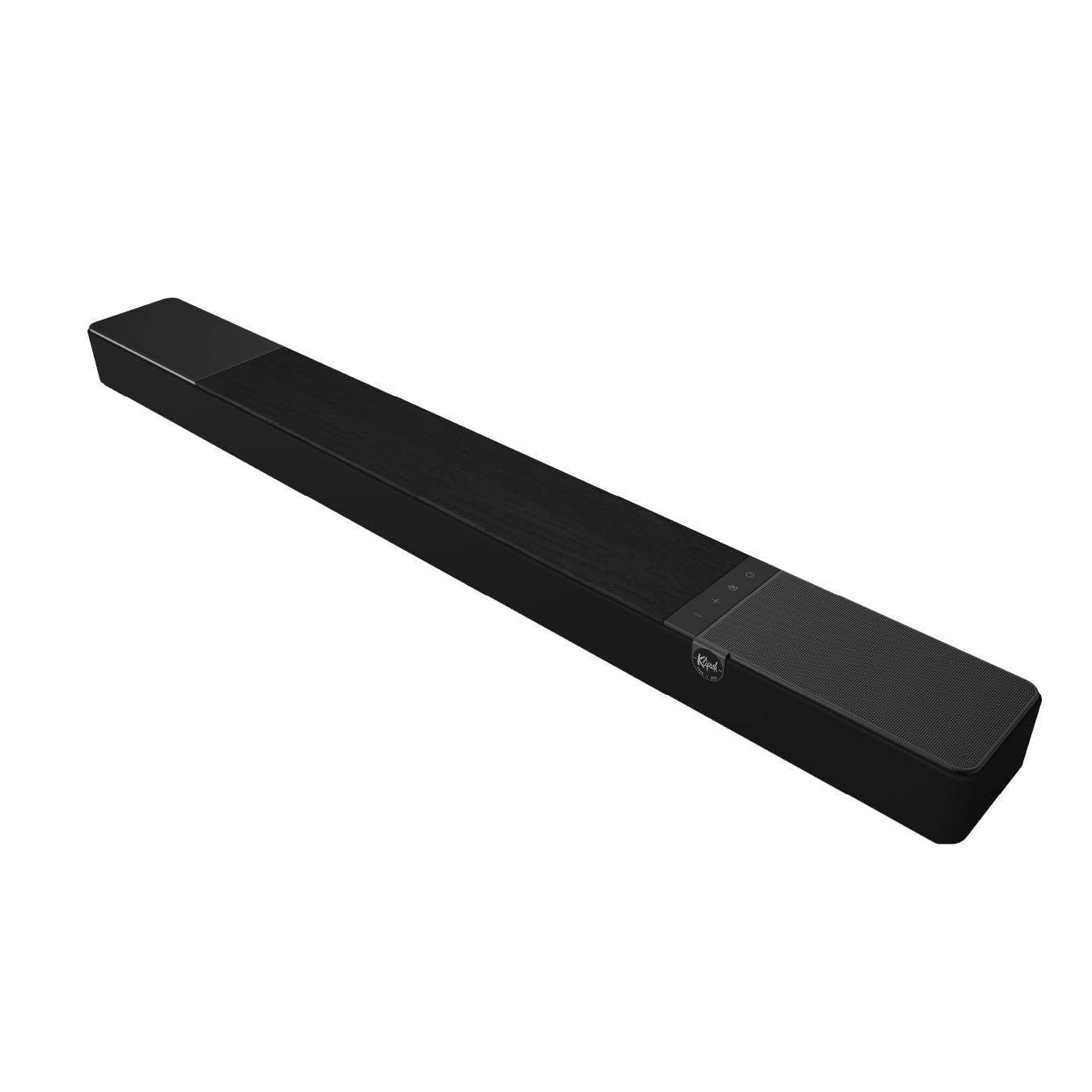
The Klipsch Flexus CORE 200 is built by Klipsch and powered by Onkyo engineering, combining horn-loaded tweeter clarity with robust amplification. Its 3.1.2-channel layout includes two up-firing elevation drivers and dual built-in 4-inch subwoofers, meaning it produces substantial bass without requiring a separate subwoofer box. The four 2.25-inch ceramic woofers deliver tight, articulate mids.
Dedicated center horn-loaded tweeter ensures dialogue remains crystal clear even during dense soundtracks, a signature Klipsch trait that sets it apart from softer-sounding competitors. The wood-and-metal enclosure gives it a premium feel rare at this level. A wired subwoofer output lets you add an external powered sub for deeper extension below 50 Hz if needed, which is flexible for future upgrades.
The Klipsch Connect app offers sound mode selection and EQ control, though users report the interface is less polished than competitors. For music listening, the Core 200 outperforms most soundbars in its tier — the horn tweeters provide excellent high-frequency detail without harshness. The absence of rear surround speakers means the Atmos height effect is limited to the front soundstage; adding the Flexus SURROUND 200 speakers later creates a full 5.1.2 system.
Why it’s great
- Horn-loaded tweeter delivers exceptional vocal clarity
- Dual built-in subwoofers eliminate need for separate sub
- Wired subwoofer output for future expansion
Good to know
- Rear surround speakers sold separately
- Klipsch Connect app has limited features
5. Polk Audio MagniFi Mini AX

The Polk MagniFi Mini AX packs impressive Atmos performance into an ultra-compact soundbar that measures barely wider than most books. The 10-inch down-firing wireless subwoofer produces deep, effortless bass that fills rooms up to 750 square feet. Polk’s VoiceAdjust technology separately boosts the center channel, letting you dial in dialogue clarity without touching the rest of the mix.
SDA (Spatial Definition Array) technology creates a wide soundstage by using precisely timed audio delays between the five drivers, simulating side and rear channel presence without physical surround speakers. For Atmos content, the bar creates a convincing but soft height layer — not as punchy as dedicated up-firing drivers, but effective given the compact footprint. The bar supports Wi-Fi, Bluetooth, Apple AirPlay 2, Chromecast, and Spotify Connect, making it equally capable as a music system.
The included remote offers quick access to Movie, Music, and Night modes, plus a surround level control. Adding Polk’s SR2 wireless surround speakers transforms the system into a true 5.1 Atmos setup. The subwoofer wireless connection has been occasionally reported to drop in high-interference environments, though Polk’s customer support is notably responsive in replacing faulty units.
Why it’s great
- Ultra-compact bar with massive 10-inch subwoofer
- VoiceAdjust tech for customizable dialog levels
- Multi-protocol streaming: AirPlay 2, Chromecast, Spotify Connect
Good to know
- Atmos height effect is mild compared to dedicated up-firing bars
- Some users report wireless subwoofer connection drops
6. Hisense AX3120Q 3.1.2ch
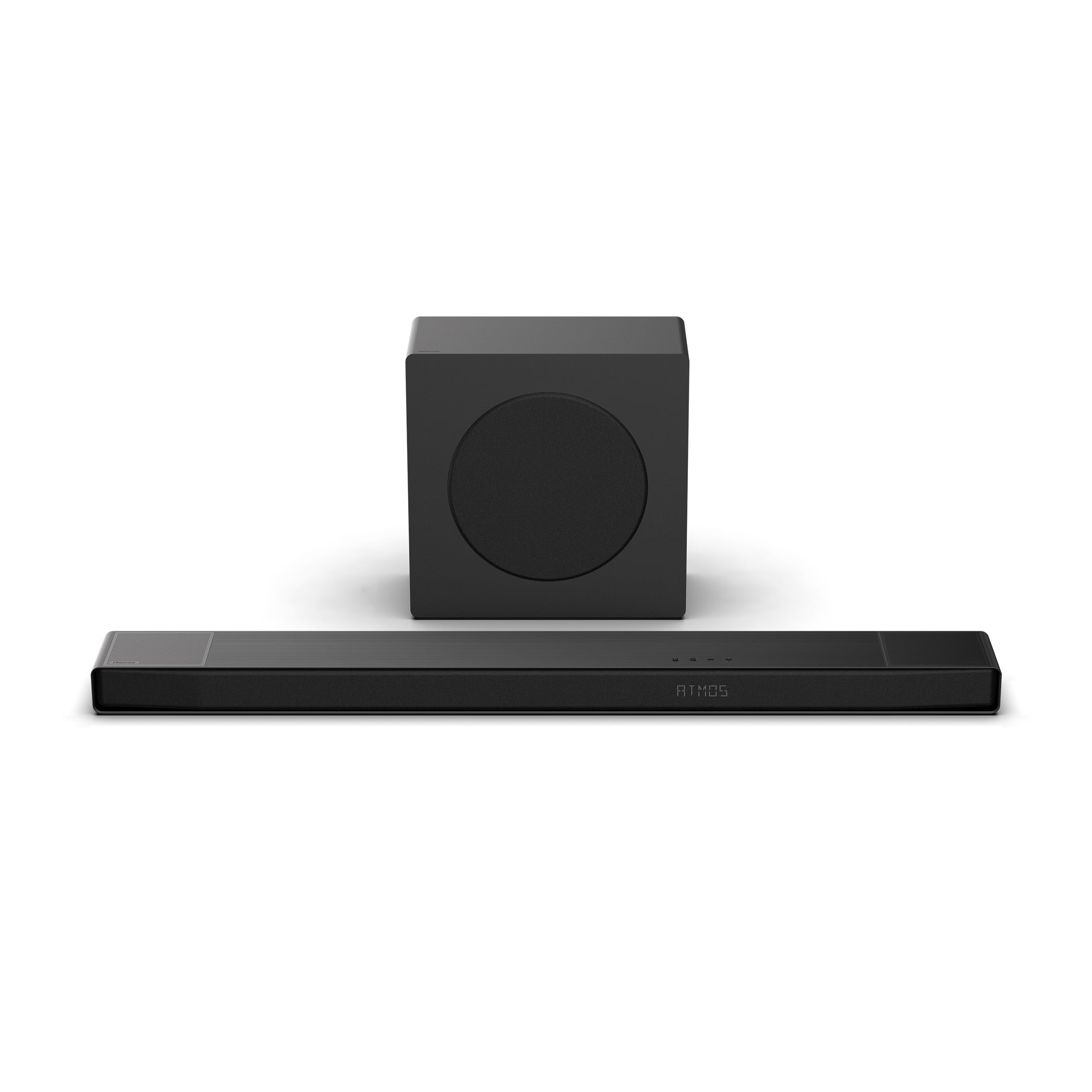
The Hisense AX3120Q is one of the most affordable soundbars to include actual up-firing drivers for Dolby Atmos height effects. The 3.1.2-channel configuration uses two upward-facing speakers built into the bar, plus a 6.5-inch wireless subwoofer. For the price, the overhead effect is tangible — raindrops and flyovers have a distinct vertical layer that cheaper virtualized bars cannot replicate.
Seven Quick Touch EQ presets (Movie, Music, Voice, Stadium, Night, AI, and Standard) let you switch modes via the remote without diving into menus. The AI mode automatically analyzes content and adjusts EQ, which works well for mixed programming. HDMI eARC support ensures lossless audio from compatible TVs and sources, while Bluetooth 5.3 provides stable wireless streaming from a phone or tablet.
The 4K HDR pass-through supports 60Hz video, so you can route a game console through the bar without visual degradation. The spatial audio from Dolby Atmos and DTS:X is genuinely immersive for a bar at this level, though the rear effects are virtualized — there are no physical surround speakers. Build quality is solid, and the 40-inch width fits most 55-inch and larger TVs without overhang.
Why it’s great
- True up-firing drivers for real Atmos height at a low price
- 7 EQ presets include AI auto-detection mode
- HDMI eARC with 4K 60Hz HDR pass-through
Good to know
- No physical rear surround speakers
- Height channel output is less powerful than premium systems
7. Amazon Fire TV Soundbar Plus
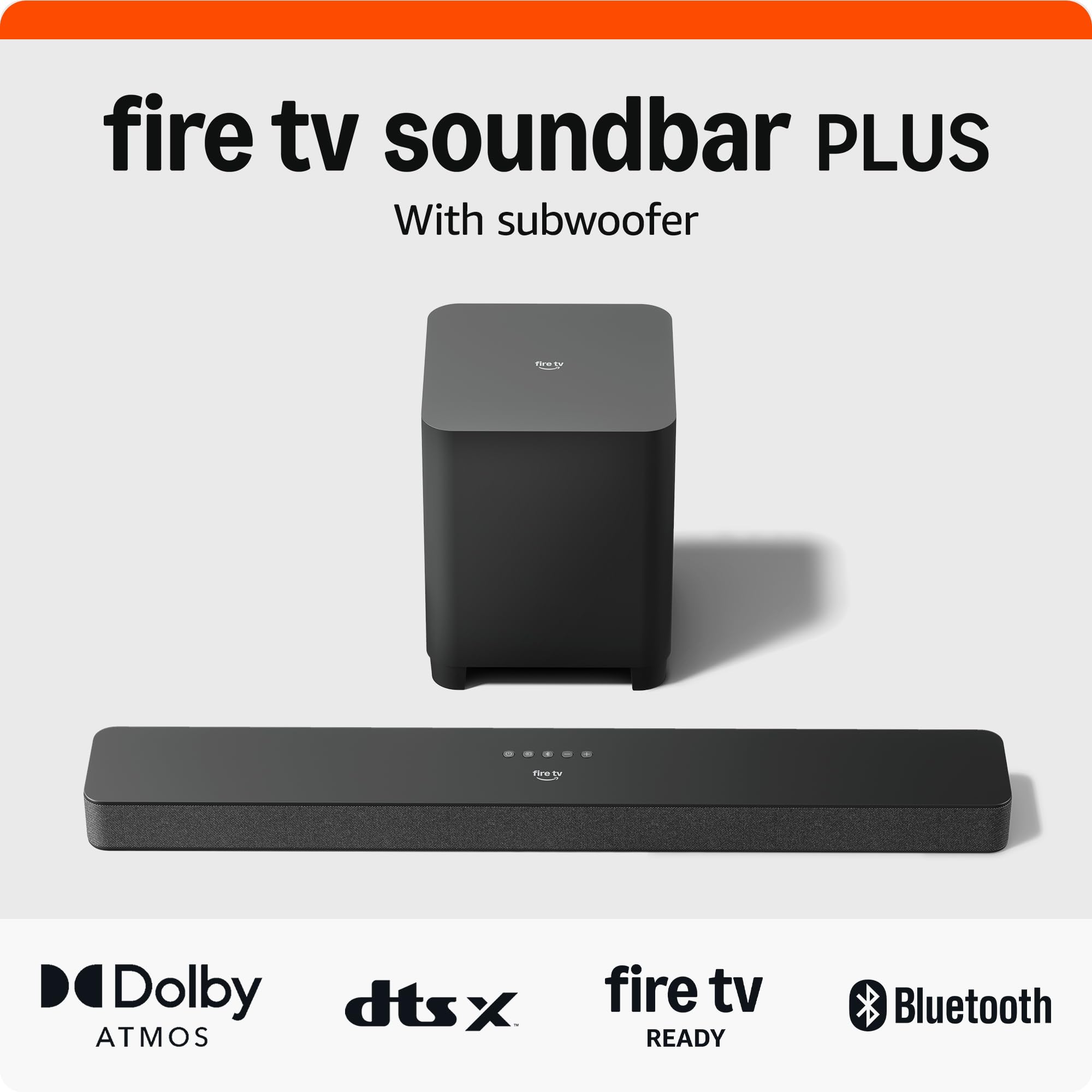
The Amazon Fire TV Soundbar Plus is a 3.1-channel system (left, center, right plus a wireless subwoofer) that supports Dolby Atmos and DTS:X through digital processing. There are no up-firing drivers — the bar uses psychoacoustic virtualization to create the impression of height. What it lacks in overhead hardware, it makes up for with a dedicated center channel that produces exceptionally clear dialogue right out of the box.
The subwoofer connects to the soundbar wirelessly as soon as both are plugged in — no pairing steps required. The bar includes Movie, Music, Sports, and Night modes that adjust the EQ and compression. For Fire TV users, the soundbar integrates directly into the TV’s audio settings menu, allowing you to control volume, EQ, and modes using the same remote without switching inputs.
A teardown review revealed honest engineering: real 2-way L/C/R channels with oval midrange drivers and silk dome tweeters, plus rear-firing drivers that can be toggled on or off for virtual surround. The bar is physically substantial — longer than many competitors — so measure your TV stand width. The subwoofer lacks fine-tuning controls; you cannot adjust crossover frequency or phase. For the price, it delivers clean, detailed sound with impressive bass for its size.
Why it’s great
- Dedicated center channel for crystal clear dialogue
- Seamless integration with Fire TV interface and remote
- Real 2-way front speakers with silk dome tweeters
Good to know
- Virtualized Atmos, no physical up-firing drivers
- Subwoofer has no crossover or phase adjustment
8. YAMAHA SR-B40A
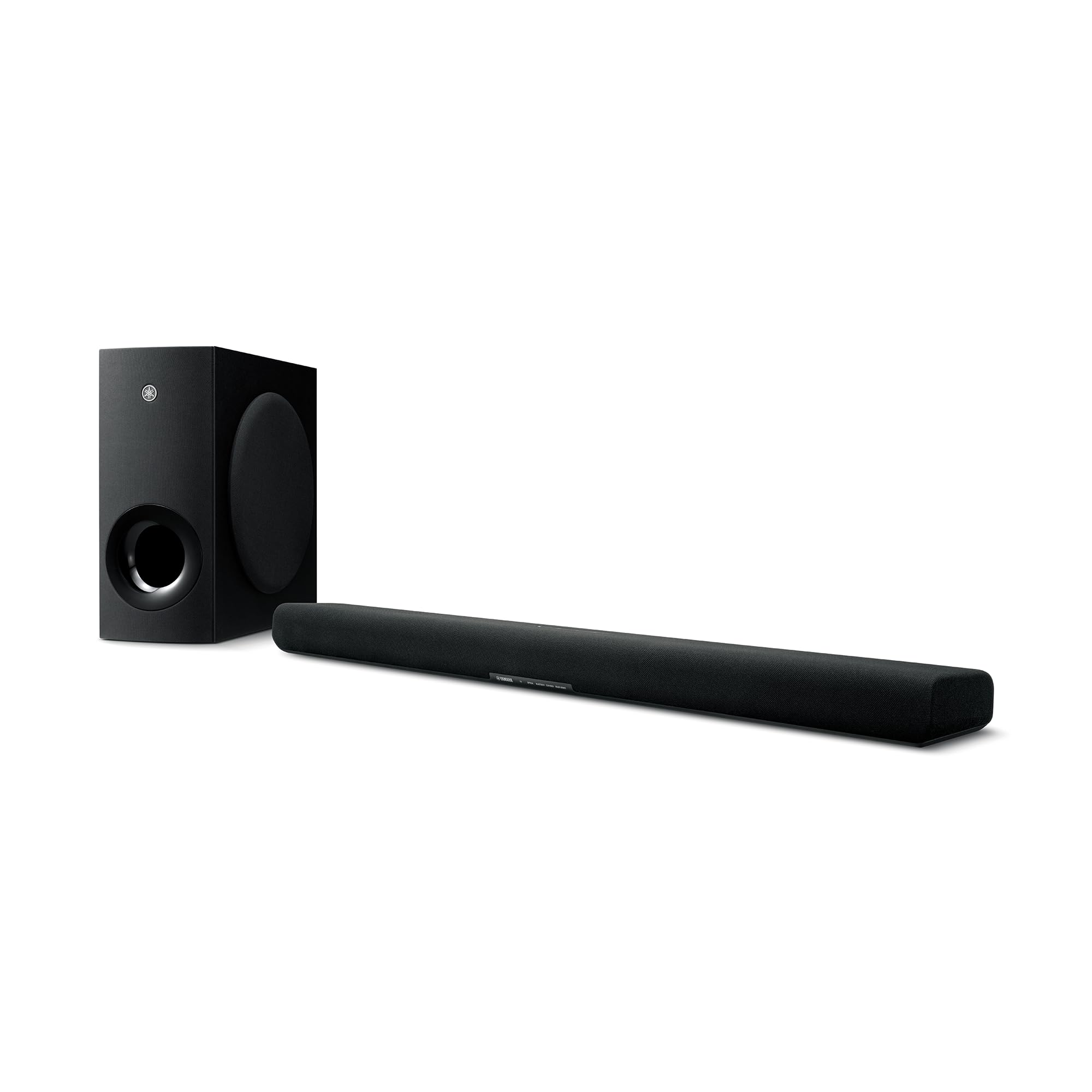
The Yamaha SR-B40A focuses on the fundamentals — dialogue clarity and balanced bass — rather than chasing a high channel count. It supports Dolby Atmos via processing (not up-firing drivers), and Yamaha True Sound tuning ensures a natural, non-fatiguing tonal balance. The wireless subwoofer uses a 6.5-inch driver that delivers tight, controlled bass rather than boomy low end, ideal for apartment dwellers.
Clear Voice technology is the star here: it boosts the center channel frequency range where human speech sits, making dialogue cut through sound effects without making voices sound artificially hollow. Bass Extension mode adds extra rumble for action movies without distorting the sub. Four sound modes — Movie, Stereo, Standard, and Game — let you match the profile to your content type.
HDMI eARC support provides lossless audio from compatible sources, and Bluetooth Multipoint lets you switch between two paired devices (e.g., phone and tablet) without re-pairing. The built-in keyholes simplify wall mounting. The soundstage width is narrower than wider bars with more drivers, so it performs best in rooms under 300 square feet. For older listeners or anyone who constantly struggles with muffled dialogue, the SR-B40A is a very practical choice.
Why it’s great
- Clear Voice technology dramatically improves dialogue audibility
- Tight, non-boomy bass from the wireless 6.5-inch sub
- Bass Extension mode for more impact without distortion
Good to know
- Virtualized Atmos only — no up-firing drivers
- Narrow soundstage; best for small to medium rooms
9. ULTIMEA Skywave F40
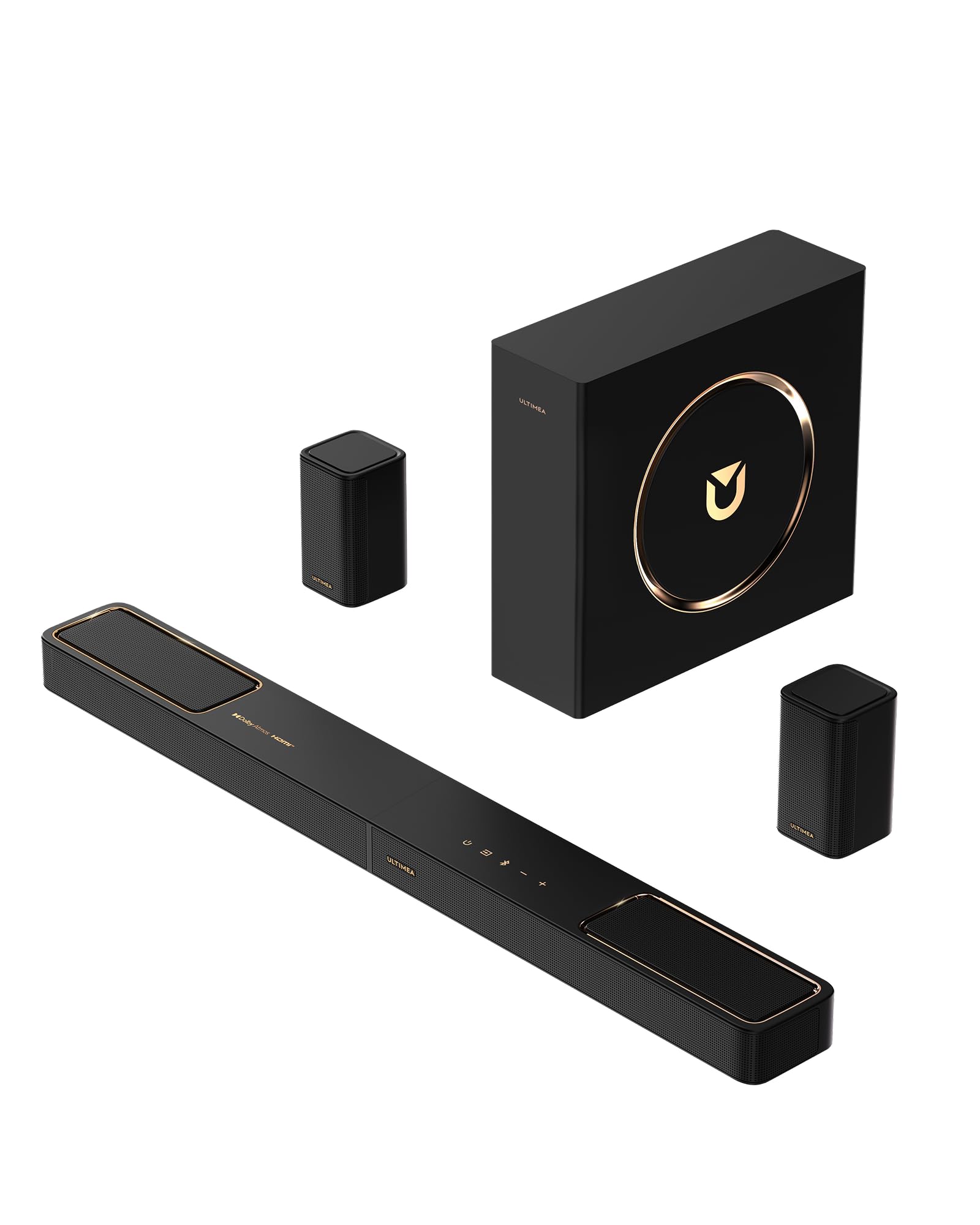
The ULTIMEA Skywave F40 delivers a 5.1.2-channel configuration — including two physical rear surround speakers and dual up-firing Atmos drivers — at an entry-level price point that undercuts most competitors. The rear speakers connect wirelessly to the bar (requiring only power, not an audio cable between them), and the 5.25-inch wired subwoofer adds solid low-frequency presence. For a budget Atmos system, the overhead effect is surprisingly convincing thanks to neodymium-core up-firing drivers.
SurroundX technology uses intelligent spatial algorithms to position audio accurately around and above the listener, though it does not support DTS formats. The Ultimea App offers deep customization: 13-step level adjustment for each channel (-6 to +6), a 10-band graphic EQ, and 121 preset sound settings. OTA firmware updates can unlock new features over time. The HDMI eARC input supports up to 37Mbps bandwidth for lossless 5.1.2-channel audio.
VoiceMX technology focuses on dialogue clarity, and the bar includes adjustable bass, midrange, and treble controls on the remote. The subwoofer’s wired connection to the bar is a limitation for placement flexibility compared to wireless subs. Build quality is good for the price — the bar has a metal enclosure — but the rear speakers are plastic. The 40 Hz frequency response gives the sub reasonable extension for movies, though bass heads will want more output.
Why it’s great
- True 5.1.2 channel layout with physical rear speakers and up-firing drivers
- Deep app control with 10-band EQ and 121 sound presets
- HDMI eARC supports lossless 5.1.2 Atmos audio
Good to know
- Subwoofer is wired, limiting placement options
- Not compatible with DTS audio formats
FAQ
Can I hear overhead effects without ceiling speakers?
Do I need rear speakers for Dolby Atmos?
What is the difference between Dolby Atmos and DTS:X?
Will a Dolby Atmos soundbar work with any TV?
Final Thoughts: The Verdict
For most users, the best dolby atmos soundbar with subwoofer winner is the SAMSUNG Q990D because it delivers an 11.1.4-channel system with rear satellites and up-firing drivers out of the box, creating the most complete Atmos bubble without additional purchases. If you want premium music integration and multi-room audio, grab the Sonos Arc Ultra. And for a budget-friendly entry into true 5.1.2 Atmos with physical rear speakers, nothing beats the ULTIMEA Skywave F40.

Mo Maruf
I created WellFizz to bridge the gap between vague wellness advice and actionable solutions. My mission is simple: to decode the research and give you practical tools you can actually use.
Beyond the data, I am a passionate traveler. I believe that stepping away from the screen to explore new environments is essential for mental clarity and physical vitality.