Our readers keep the lights on and my smoothie glass nicely filled. As an Amazon Associate, I earn from qualifying purchases.
A downrigger release that fails to pop at the first strike means lost fish, tangled gear, and a frustrating day on the water. The difference between a good outing and a great one often comes down to that tiny clip holding your line against the cannonball, waiting for a bite that may never trigger a false release or, worse, one that arrives too late. Getting the release tension right is the single most critical skill in deep-trolling, and the hardware you choose either makes that dialing-in process effortless or impossible.
I’m Mohammad Maruf — the founder and writer behind WellFizz. My approach to this guide involved cross-referencing hundreds of verified buyer experiences, examining material compositions from ABS to brass and stainless steel, and comparing tension ranges, line compatibility, and real-world corrosion resistance across every major release design on the market.
The goal is straightforward: to help you select the best downrigger release that matches your fishing style, target species, and line type without wasting money on clips that slip or lock up when it matters most.
How To Choose The Best Downrigger Release
Selecting a release clip is not a one-size-fits-all decision. The right choice hinges on several interdependent factors: the type of line you run, the species you target, the water conditions you fish, and how much control you want over tension adjustments. A release that works flawlessly for lake trout may frustrate a salmon angler running braid, and a heavy offshore clip can overpower light-biting walleye.
Tension Adjustment Range
Tension range is the single spec that determines whether a clip is versatile or specialized. Spring-loaded releases typically offer coarse tension via a threaded screw or cam that compresses the spring, producing a range often starting around 2 pounds and going up past 20 pounds. Magnetic releases, like those from Chamberlain, offer a finer adjustment scale (0 to 4.5 pounds) using rare-earth magnets, which produce a more consistent breakaway force across the entire adjustment window. For light-line finesse fishing — kokanee, trout, walleye — a lower, more precise adjustment band is preferable. For salmon, stripers, and offshore species pulling big flashers, you need a clip that can hold strong at higher tension settings without slipping.
Line Compatibility and Pad Material
Braided lines are slippery. Their lack of stretch and smooth texture causes many standard foam-padded releases to release prematurely or, conversely, to fail to hold at all. Some releases address this with rubberized or textured pads (Cannon uses a porous foam-like material), while others — like the Black Marine RC95 — feature bare stainless steel jaws that rely on a wrap-and-tuck method to grip braid securely. Monofilament and fluorocarbon hold well in almost any release. If you primarily fish braid, look for a clip specifically noted as braid-compatible, or one that uses a finger-wrap technique to lock the line mechanically rather than relying on pad friction alone.
Stacker vs. Single Release
Stacker releases clip directly onto the downrigger cable at any point above the weight, allowing you to fish multiple lines at different depths from a single cannonball. This is common in salmon trolling where covering multiple depth strata increases hookup rates. Dedicated stacker releases include a secondary clip or sliding mechanism that grips the cable, plus a release jaw for the line. Single releases attach to the weight itself via a wire or swivel and fish only one depth per rig. If you plan to run multiple lines off one downrigger, you need a stacker-compatible release; the Cannon Line Release (pack of 2) is explicitly designed for this role with its secondary stacker clip.
Construction and Corrosion Resistance
Saltwater demands corrosion-proof materials. Brass and stainless steel components (found in the Black Marine RC95) resist rust far better than nickel-plated or zinc-coated hardware. Plastic bodies are standard across most releases, but the quality of the spring, pivot pin, and mounting hardware matters. For coastal anglers or those fishing brackish estuaries, a release with a stainless steel spring and brass adjustment nut will outlast an all-steel clip by multiple seasons. Even if you fish freshwater exclusively, repeated exposure to moisture and UV can degrade ABS plastic over time, so look for UV-stabilized plastics and sealed pivot points.
Quick Comparison
On smaller screens, swipe sideways to see the full table.
| Model | Category | Best For | Key Spec | Amazon |
|---|---|---|---|---|
| J Deez Chamberlain Release | Magnetic Release | Precision light-bite fishing | 0-4.5 lb magnetic tension | Amazon |
| Black Marine RC95 | Braided-Line Compatible | Heavy braid and deep water | Stainless steel jaws | Amazon |
| Cannon Line Release (2-Pack) | Stacker Release | Multi-depth salmon trolling | 2-22 lb tension range | Amazon |
| Cannon Offshore Line Release | Offshore Single | Rough-water offshore trolling | Spring-loaded clothespin | Amazon |
| Honoson 20-Piece Snap Clips | Budget Multi-Pack | Kayak and light freshwater | 1.88 inch ABS plastic | Amazon |
In‑Depth Reviews
1. J Deez Chamberlain Releases for Downriggers, Black

This release is built around a magnetic horizontal adjustment system that delivers a fluid, consistent breakaway force between 0 and 4.5 pounds. Unlike spring-based clips where tension drifts as the spring fatigues, the magnetic mechanism maintains its release point strike after strike. The set includes both the Chamberlain Stacker (Model 101), which clips directly onto the downrigger cable at any depth, and the Original Release (Model 107) for single-line attachment to the weight. Experienced salmon anglers report that this is the only release they have used that reliably triggers on light-biting fish like walleye and small kokanee without false releases from wave action or flasher resistance.
The horizontal magnet adjustment uses two set points — one on the jaw pivot and one on the magnet carrier — that must be tuned in sequence. Most users achieve a spot-on setting after three or four attempts, and once dialed in, the release holds consistently across a full day of trolling. The plastic body is corrosion-resistant, and the small footprint (roughly 2.5 inches long) keeps the release close to the cable, reducing leverage that could cause accidental pops at speed. The stacker version’s cable-grip mechanism slides smoothly on monofilament-coated downrigger cables but requires a firm thumb press to lock, which some anglers find finicky with cold hands.
For anglers who value adjustable precision over brute holding force, this is the finest downrigger release on the market. It excels in scenarios where fish are shy and strikes are subtle — Lake Michigan salmon, deep-reservoir trout, and suspended walleye. The trade-off is that magnetic releases cannot match the raw tension ceiling of heavy-duty spring clips; at 4.5 pounds max, they are not suitable for large offshore lures or high-speed trolling with oversized flashers. But within its intended range, the Chamberlain is unmatched for reliability and finesse.
Why it’s great
- Magnetic tension produces the most consistent release force of any design tested
- Included stacker clip enables multi-depth fishing from a single cable
- Corrosion-resistant plastic and magnets hold up in saltwater
- Small-fish-friendly — releases reliably on light bites that other clips miss
Good to know
- Maximum tension of 4.5 lbs is too low for heavy offshore rigs
- Magnet adjustment has a learning curve — expect three attempts to dial in
- Cable-grip stacker can be stiff to operate in cold weather
2. Black Marine RC95 Downrigger Release Clip

The Black Marine RC95 is purpose-built for anglers who fish braided lines — a demographic that standard foam-padded clips often leave frustrated. Instead of relying on pad friction, the RC95 uses bare stainless steel jaws that require you to wrap your line around your finger with about ten twists before seating it in the release. This mechanical grip method holds braid without slipping, yet releases cleanly when a fish strikes. The 36-inch wire leader provides roughly 31 inches of clearance from the downrigger weight, reducing the risk of line tangles on the drop and allowing inline flasher rigs to spin freely without fouling on the cable.
Tension adjustment on the RC95 is achieved via a thumbscrew that presses a spring against the jaw pivot. It offers a single adjustment point, which some users find less granular than the dual-adjustment Chamberlain design. The brass and stainless steel construction provides exceptional corrosion resistance; charter captains working saltwater daily report the RC95 lasting multiple seasons without rust or stuck pivots. The release works well with heavier setups — 8-pound weights down to 150–200 feet — and is favored by Great Lakes charter operators for chinook salmon and lake trout where braid is standard.
The finger-wrap technique is not intuitive for everyone. Anglers accustomed to simply pinching a pad clip may find the extra step annoying, especially when deploying multiple lines in quick succession. Additionally, the single-adjustment tension mechanism, while robust, offers a coarser tuning range than magnetic alternatives. For ultralight presentations (4-pound test lines, tiny spoons, or dodgers), the RC95’s minimum tension may still be too high, leading to missed strikes from small trout or kokanee. But for serious braid users demanding a release that simply will not slip, the RC95 is the clear choice.
Why it’s great
- Stainless steel jaws grip braided lines reliably without pad failure
- 36-inch wire leader provides clean separation from the cannonball
- Brass and stainless hardware resist corrosion in daily saltwater use
- Strong holding capacity suits heavy weights and high trolling speeds
Good to know
- Finger-wrap loading takes practice and is slower than pad-clip pinch
- Single tension adjustment is less precise than magnetic or dual-spring designs
- Not ideal for ultralight lines under 6-pound test
3. Cannon Line Release (2-Pack)
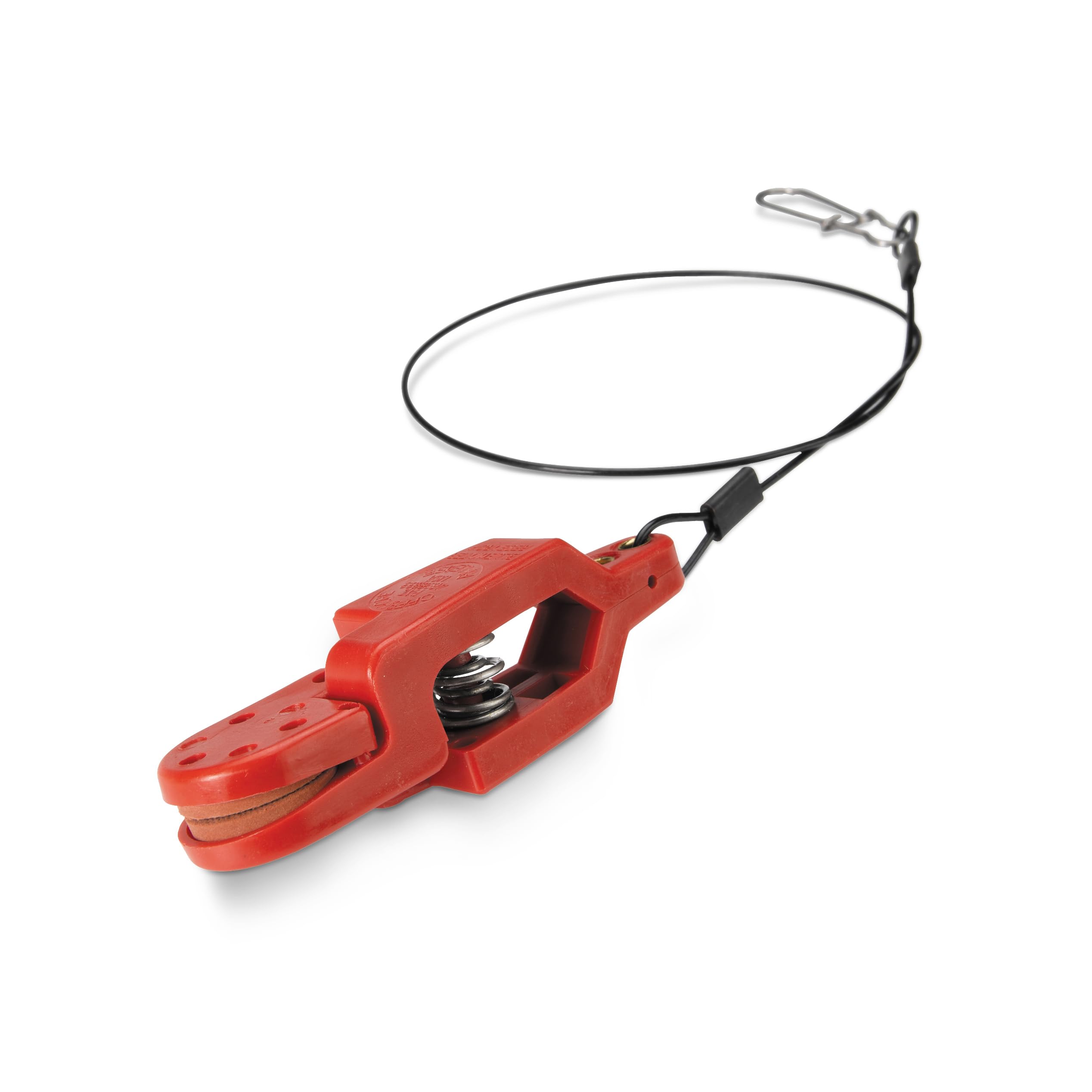
Cannon’s standard line release enjoys near-universal adoption among salmon trollers for good reason: its two-adjustment-point design allows separate control of the jaw clamping force and the overall release tension from 2 to 22 pounds. This range covers everything from light-trolling live bait for walleye at the low end to pulling large plugs with flashers for Chinook at the high end. The pack of two units means you can rig a port and starboard downrigger simultaneously, or use one as a backup. Each release includes an integrated stacker clip, allowing you to fish a second line at a different depth off the same weight without buying additional hardware.
The foam-like padding inside the jaws grips monofilament and fluorocarbon well but struggles with braided lines — users report that braid can slip under moderate resistance, causing false releases. The plastic body and stainless steel spring hold up fine in freshwater and occasional saltwater use, but the pivot pin is not sealed, so salt corrosion can stiffen the action after extended exposure. The stacker clip slides onto the downrigger cable and locks with a positive click; some owners note that the cable grip can loosen over time if the plastic wears, particularly on textured or knotted cables.
For the angler who fishes a mix of species and water types, the Cannon Line Release offers the broadest usable tension window of any clip in this roundup. The 2-pack pricing lands it in mid-range territory, delivering two fully featured releases with stacker capability at a per-unit cost that undercuts most premium options. The trade-off is component longevity — serious saltwater anglers should expect to replace these annually — but for freshwater and moderate coastal trolling, they represent the most versatile all-rounder available.
Why it’s great
- 2–22 lb tension range handles the widest variety of presentations
- Two-adjustment design enables fine-tuning of clamping and release force
- Integrated stacker clip allows multi-depth fishing out of the box
- Pack of two provides immediate dual-rig setup at a sensible per-unit cost
Good to know
- Foam pads do not hold braided lines reliably
- Pivot pin is not sealed against saltwater intrusion
- Stacker cable grip can wear and loosen over time on rough cables
4. Cannon Offshore Line Release

The Cannon Offshore Line Release is a spring-loaded clothespin-style clip engineered for rough water and heavy offshore applications. Its higher baseline tension prevents false releases caused by wave slap, fast trolling speeds, or the pull of large umbrella rigs and spreader bars. The design is simple — squeeze the clothespin tabs open, insert the line, and let the spring close the jaws — which makes deployment fast even in rolling seas. Charter captains on the Chesapeake Bay and along the Atlantic coast rely on this release for bluefish, Spanish mackerel, and striped bass, often fishing it with 30-pound braid or mono without issue.
The plastic body houses a foam pad between the jaws that provides grip on monofilament and fluorocarbon. As with the standard Cannon release, the foam is not ideal for braided lines — though some users in the reviews report success by twisting the braid before insertion, similar to the Black Marine technique. The release attaches to the downrigger weight via a molded eyelet, accommodating standard snap or swivel connections. At just 0.06 pounds, it adds negligible weight to the system. The single-unit package means you buy one clip per rig, and the tension is not adjustable — you get the fixed spring force Cannon calibrated for offshore use.
The lack of tension adjustment is the defining limitation of this clip. It is designed for one job — holding strong in rough, open-water conditions — and it does that job exceptionally well. For nearshore or lake fishing where lighter tension is needed, this release will likely be too stiff, resulting in dragged fish before the clip trips or, worse, pulled hooks. But if your fishing regularly involves 3-to-5-foot seas, planer boards, and heavy trolling gear, this single-minded offshore specialist will outperform any adjustable clip in its specific niche.
Why it’s great
- High fixed tension eliminates false releases in rough water and at speed
- Simple clothespin design allows one-handed deployment with gloves
- Lightweight (0.06 lbs) adds no noticeable drag to the downrigger
- Proven reliable in heavy offshore use on charter boats
Good to know
- No tension adjustment — only suitable for heavy presentations
- Foam pad does not grip braided lines as well as bare-metal jaw designs
- Overly stiff for light-bite species like walleye, trout, or kokanee
5. Honoson 20 Pieces Heavy Tension Snap Release Clips
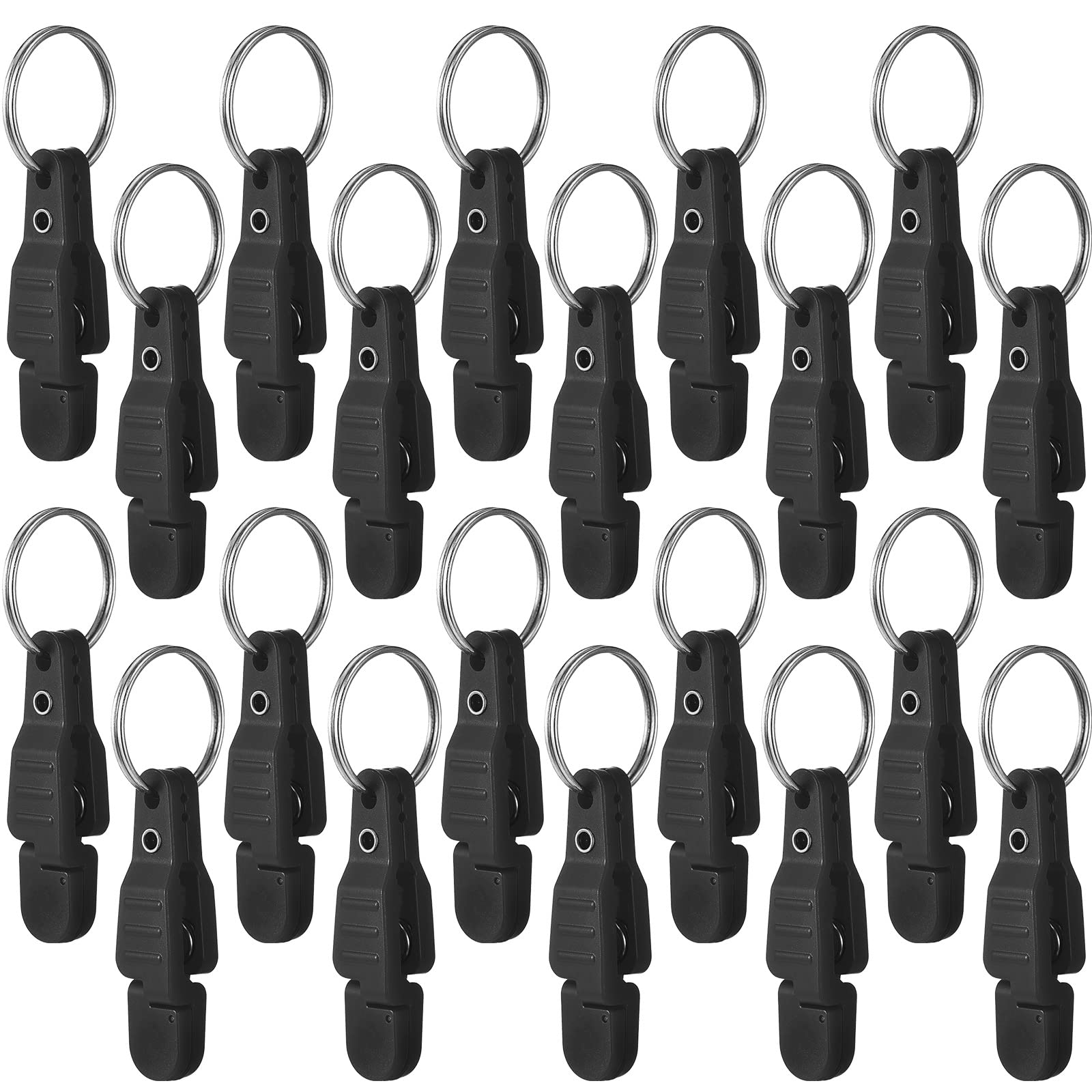
The Honoson 20-pack offers the highest clip-per-dollar ratio in this guide, aimed at anglers who need multiple releases for kayak spreads, planer boards, or snap-weight rigs without investing in premium hardware. Each clip measures 1.88 inches and is molded from ABS plastic with adjustable thread tension via a small thumbscrew on the side. The included O-shaped ring allows easy attachment to a keychain or carabiner for quick access, and the lightweight design is ideal for situations where you might lose a clip during a tangle or snag — at under a dollar per clip, replacements are trivial.
Performance-wise, these clips work well with monofilament lines in the 6-to-15-pound range, especially for freshwater applications like Kokanee fishing with snap weights. Customer feedback notes that the black version is harder to see against the water surface, so the yellow or red color options offer better visibility. The tension adjustment is coarse — turning the thumbscrew produces large jumps in clamping force — and the ABS plastic is not UV-stabilized, so extended sun exposure may cause brittleness over time. Several reviewers warn that the clips do not hold braided line reliably; the smooth plastic jaws lack the texture or pad material needed to prevent braid from slipping out under tension.
Where this kit shines is volume and peace of mind. You can pre-rig a dozen clips with different tension settings, stash extras in your tackle box, and not worry about losing one to a snag. The multi-pack also works well for introducing new anglers to downrigger fishing without committing to expensive gear. But for serious trolling where a missed strike means a lost opportunity, the lack of consistent tension and braid incompatibility make these a backup option rather than a primary choice. They are best understood as a budget-friendly entry point for light freshwater use, not as a replacement for purpose-built releases.
Why it’s great
- Extremely low per-unit cost — 20 clips for the price of one premium model
- Adjustable thread tension covers light to moderate clamping needs
- ABS plastic is corrosion-proof in any water type
- Compact size (1.88 inches) stows easily in any tackle compartment
Good to know
- Does not hold braided lines reliably — best with mono or fluorocarbon
- Black color is hard to see; yellow or red variants are more visible
- Coarse tension adjustment lacks precision for finesse bite detection
- ABS plastic may become brittle with prolonged sun exposure
FAQ
What tension setting should I use for salmon fishing?
Can I use a downrigger release with braided fishing line?
What is the difference between a stacker clip and a regular release?
How do magnetic releases compare to spring-loaded releases?
Will a downrigger release work for snap-weight trolling?
Final Thoughts: The Verdict
For most users, the best downrigger release winner is the J Deez Chamberlain Release because its magnetic tension system delivers the most reliable, repeatable strike detection available, and the included stacker clip adds versatility for multi-depth fishing. If you run braided lines primarily and need a clip that simply will not slip, grab the Black Marine RC95. And for the budget-conscious freshwater angler who needs multiple clips for snap-weight or planer-board rigs, nothing beats the value of the Honoson 20-pack.

Mo Maruf
I created WellFizz to bridge the gap between vague wellness advice and actionable solutions. My mission is simple: to decode the research and give you practical tools you can actually use.
Beyond the data, I am a passionate traveler. I believe that stepping away from the screen to explore new environments is essential for mental clarity and physical vitality.