Our readers keep the lights on and my smoothie glass nicely filled. As an Amazon Associate, I earn from qualifying purchases.
Downhill mountain biking demands a braking system that can manage sustained high-load descents without fading, while offering precise modulation to control your speed through loose rock gardens and steep chutes. The wrong set of stoppers leads to arm pump, overheated rotors, and the unsettling feeling of a lever pulling all the way to the bar.
I’m Mohammad Maruf — the founder and writer behind WellFizz. I’ve spent countless hours analyzing piston counts, lever ergonomics, fluid reservoir volumes, heat dissipation technologies, and real-world user feedback on dozens of downhill-specific brake setups.
This guide breaks down the best downhill mountain bike brakes for aggressive riding, comparing four-piston calipers, lever adjustability, and thermal management features across nine standout models.
How To Choose The Best Downhill Mountain Bike Brakes
Downhill braking is a thermal and mechanical stress test. Picking the right set means understanding how piston count, lever design, rotor size, and pad material interact on long, steep runs where feathering the lever is just as critical as full lock-up.
Piston Count and Caliper Design
Four-piston calipers are non-negotiable for real downhill riding. The extra pair of pistons distributes clamping force more evenly across a larger pad surface, which improves heat management and reduces the risk of pad taper. Two-piston brakes, while lighter, lack the thermal mass and pad area needed for extended high-speed descents.
Lever Modulation and Adjustability
A downhill brake lever must offer more than just power. Tool-free reach adjustment is standard, but bite-point adjustment — the point at which the pads first contact the rotor — is a game-changer. SwingLink or Servo Wave technologies alter the leverage curve to provide more progressive power as you squeeze, preventing sudden lock-up on loose terrain.
Heat Dissipation and Rotor Size
Brake fade is the enemy of downhill confidence. Larger rotors (180mm to 203mm) provide more surface area for heat to shed into the air, while calipers with heat shields, phenolic pistons, or ceramic pad backings keep fluid temperatures in check. Mineral oil systems have a higher boiling point than DOT fluid, making them a popular choice for gravity riders who cook their brakes on every run.
Quick Comparison
On smaller screens, swipe sideways to see the full table.
| Model | Category | Best For | Key Spec | Amazon |
|---|---|---|---|---|
| Magura MT7 HC3 | Premium | Ultimate modulation & power | 4-piston monoblock caliper | Amazon |
| SRAM Code RSC | Premium | Consistent feel on long descents | SwingLink lever curve | Amazon |
| Hope Tech 4 E4 | Premium | Adjustable bite point & style | Tool-free bite point adjust | Amazon |
| SHIMANO XT M8100 | Mid-Range | Reliable trail-to-DH performance | Servo Wave lever action | Amazon |
| SHIMANO SLX M7100 | Mid-Range | Budget-friendly 4-piston Shimano | 4-piston caliper | Amazon |
| Magura MT5 HC | Mid-Range | Carbotecture durability & power | Monoblock 4-piston caliper | Amazon |
| BUCKLOS IIIPRO | Entry-Level | Budget upgrade from mechanical | Ceramic heat dissipation pads | Amazon |
| Zoom HB876E 4-Piston | Entry-Level | E-bike power-off with 180mm rotors | 4-piston caliper, pre-bled | Amazon |
| Zoom HB875 Upgrade Kit | Entry-Level | E-bike motor cut-off integration | 160mm rotors, pre-bled | Amazon |
In‑Depth Reviews
1. Magura USA MT7 HC3 Disc Brake
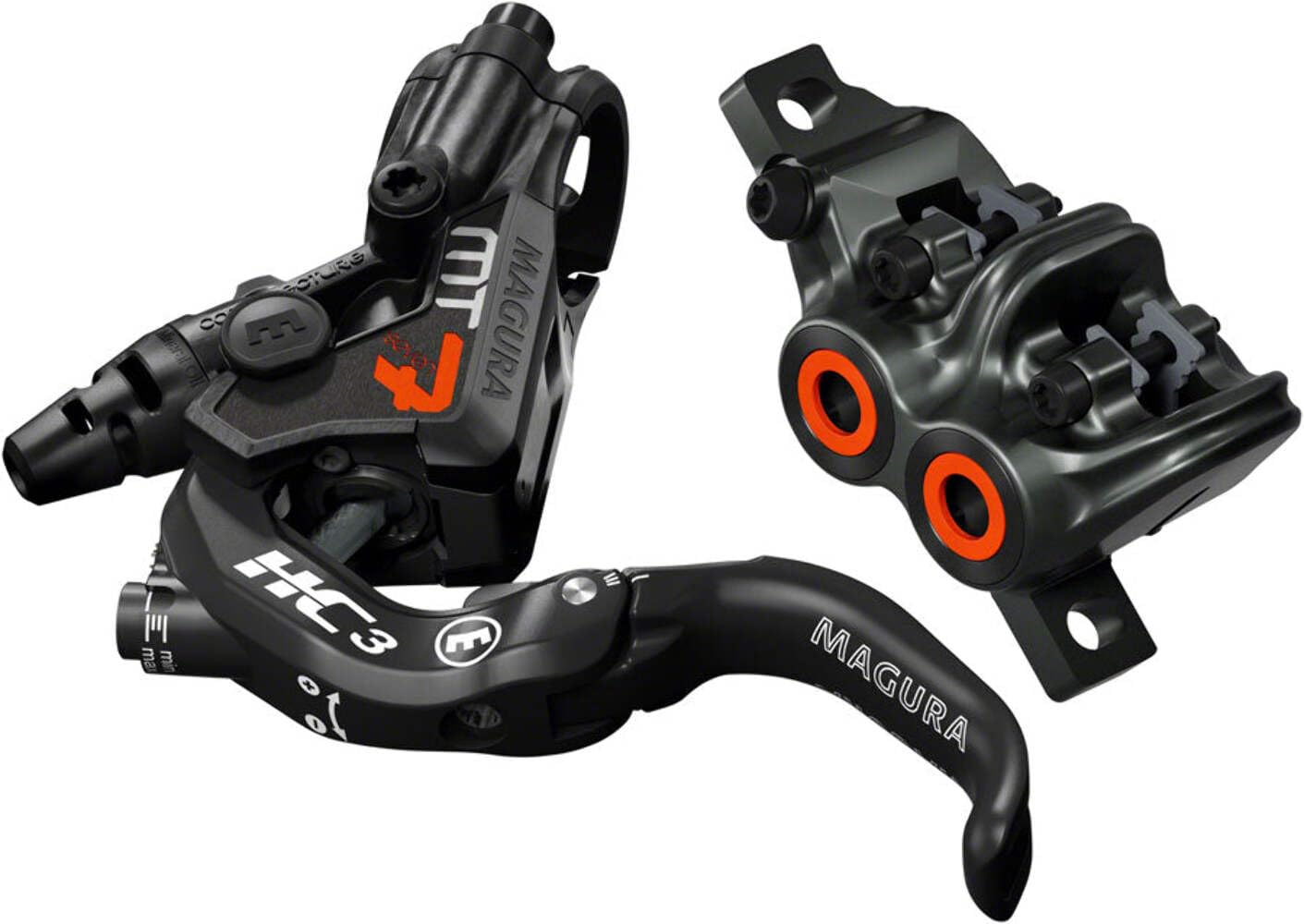
The Magura MT7 HC3 represents the pinnacle of downhill brake engineering, featuring a triple arch monoblock four-piston caliper forged from Carbotecture SL — a carbon composite that is both lighter and stronger than traditional aluminum. This design combats caliper flex under extreme braking loads, ensuring every lever input translates directly to pad contact. The HC3 lever blade, co-developed with Danny MacAskill, offers adjustable reach and leverage ratio, giving riders fine-grained control over bite-point feel and power progression.
Heat management is a standout feature here. The anti-heat, anti-drag, and anti-squeal technologies integrated into the caliper keep fluid temperatures stable during long park laps, while the phenolic pistons act as a thermal barrier between the pads and the caliper body. Riders report minimal fading even on extended descents with 240-plus-pound loads, and the Easy Bleed Technology port makes on-trail maintenance straightforward when pad wear shifts bite point.
The MT7 runs Magura’s Royal Blood mineral oil, which offers a higher thermal threshold than DOT fluid without the corrosive downsides. Setup requires careful pad-to-rotor alignment due to tight caliper clearances, but once dialed, these brakes deliver the best modulation-to-power ratio in this list — capable of one-finger stops without feeling grabby or on/off.
Why it’s great
- Exceptional modulation with strong one-finger stopping power
- Carbotecture SL construction is incredibly stiff and lightweight
- Adjustable reach and leverage ratio for personalized feel
- 5-year leakproof warranty on the brake system
Good to know
- Premium price point; entry-level riders may not need this level of performance
- Tight pad-to-rotor clearance can require extended setup time
- Some heavier e-MTB riders report softer feel compared to Shimano XT
2. SRAM Code RSC Disc Brake
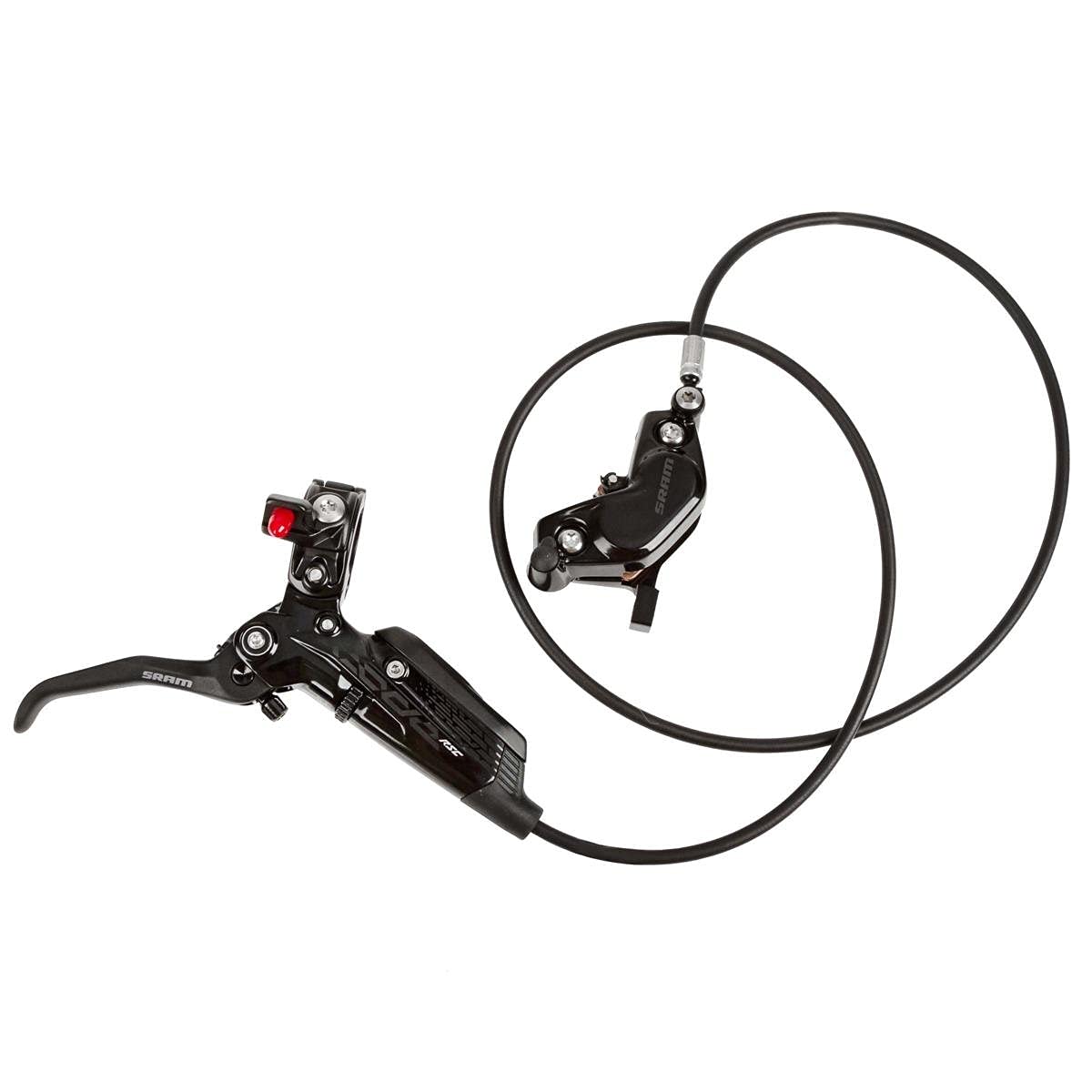
The SRAM Code RSC was purpose-built for downhill and enduro racing, anchoring the brand’s gravity lineup with a two-piece forged aluminum caliper housing four phenolic composite pistons. What separates the RSC from the base Code model is the SwingLink lever technology, which alters the leverage rate as you pull — providing a softer initial bite that ramps into full power, preventing accidental lock-ups on loose surfaces. Lever Pivot Bearings further reduce friction, giving the lever a glassy smooth feel even after hours of hard riding.
The large-volume reservoir and Bleeding Edge port make maintenance intuitive. Unlike some DOT fluid systems that require frequent bleeds to maintain firmness, the Code RSC holds its feel across multiple park days. The included sintered metallic pads and stainless steel heat shields are designed to survive the thermal load of 200mm rotors on sustained alpine descents, and users consistently report minimal fade compared to the Guide series brakes that many Code upgraders leave behind.
Heavier riders benefit from the Code’s predictable power band. The RSC provides enough force to lock a 205mm rotor with one finger, but the modulation remains progressive enough to feather through technical chutes. Riders swapping from Avid or older SRAM systems will appreciate the bearing-supported lever pivot, which eliminates the slop that develops in bushing-based levers over time.
Why it’s great
- SwingLink lever provides excellent modulation and fatigue-free feel
- Heat shields and phenolic pistons resist fade on long descents
- Large fluid reservoir maintains consistent lever feel
- Bleeding Edge system simplifies fluid replacement
Good to know
- Tends to be heavier than equivalent Shimano or Magura options
- DOT fluid is corrosive and requires more careful handling than mineral oil
- Some users report long-term lever pivot wear under extreme use
3. Hope Tech 4 E4 Disc Brake and Lever Set
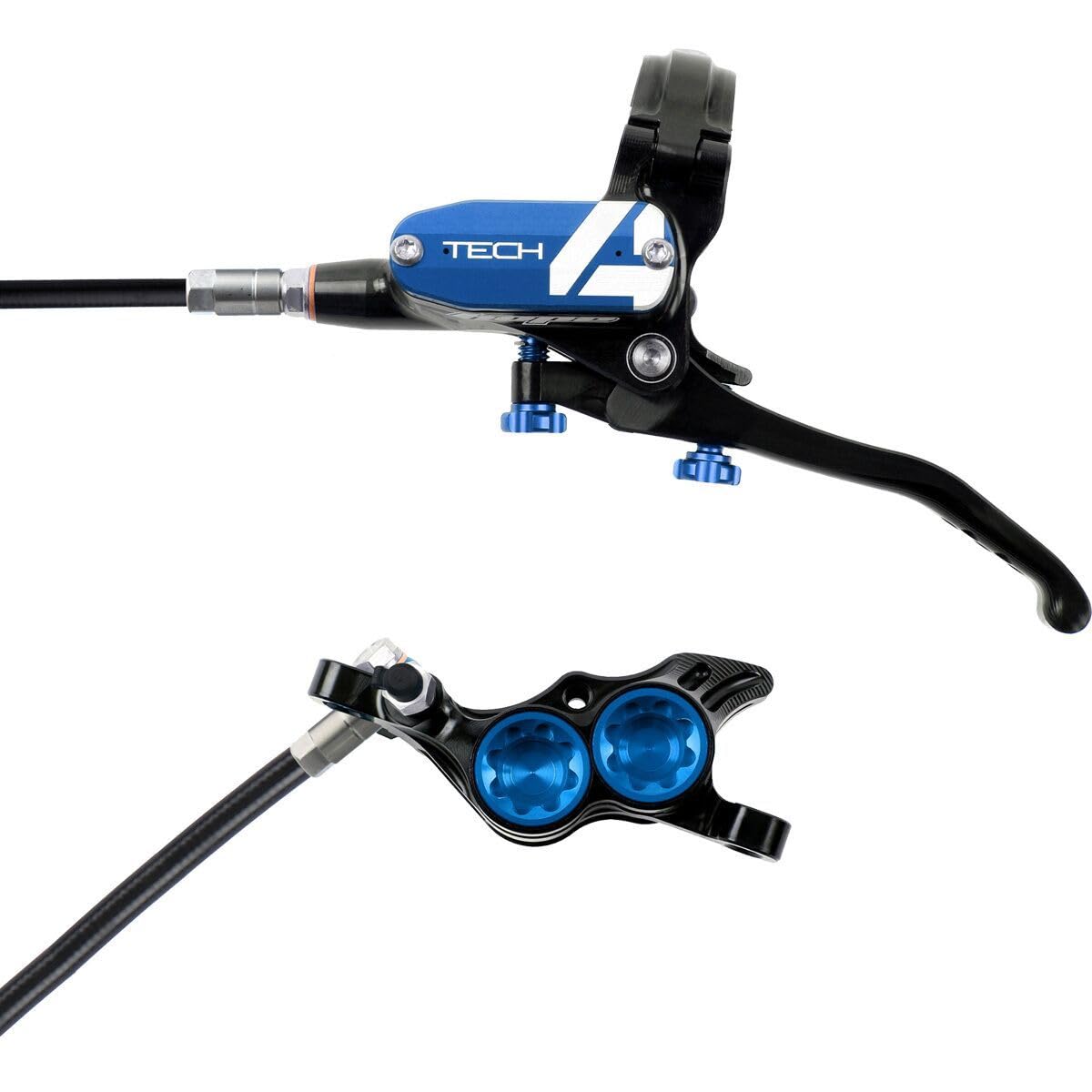
The Hope Tech 4 E4 brings British precision engineering to the downhill brake segment, offering tool-free reach and bite-point adjustments that few competitors match at this level. The four-piston E4 caliper features a phenolic insert between the pad and piston, acting as a thermal barrier that keeps caliper fluid cooler during sustained braking — a critical feature for alpine riding where brake temperatures can climb rapidly. The lever body is CNC machined from 2014 T6 aluminum, providing a stiff, premium feel that resists flex under heavy braking loads.
The adjustability on the Tech 4 E4 is its defining characteristic. The bite-point adjustment allows riders to fine-tune exactly where in the lever stroke the pads engage, which is particularly useful as pads wear or after rotor heat cycling changes the feel. The reach adjustment is similarly robust, accommodating different hand sizes and glove thicknesses. The included sintered pads offer strong initial bite, and an extra set of pads ships with the brake, doubling the lifespan before your first purchase.
Setup requires attention to lever orientation — the Tech 4 E4 is configured for right-rear/left-front mountain bike setups, not Surron or alternative handlebar configurations. Riders upgrading from previous Hope V3 models report noticeably improved stopping power and a firmer lever feel, though the brakes reward a proper bleed procedure to reach their full potential. The anodized blue finish adds a visual touch that stands out on any build.
Why it’s great
- Tool-free reach and bite-point adjustment for precise lever feel
- Phenolic insert reduces caliper heat transfer during long descents
- Includes both sintered pads and an extra set for extended wear
- CNC machined aluminum lever body feels incredibly solid
Good to know
- Bleed procedure requires technique to achieve optimal lever firmness
- Hand orientation is specific to mountain bike setups
- Higher price point than comparable Shimano SLX/XT options
4. Shimano DISC Brake Assembled Set/J-KIT, DEORE XT, M8100
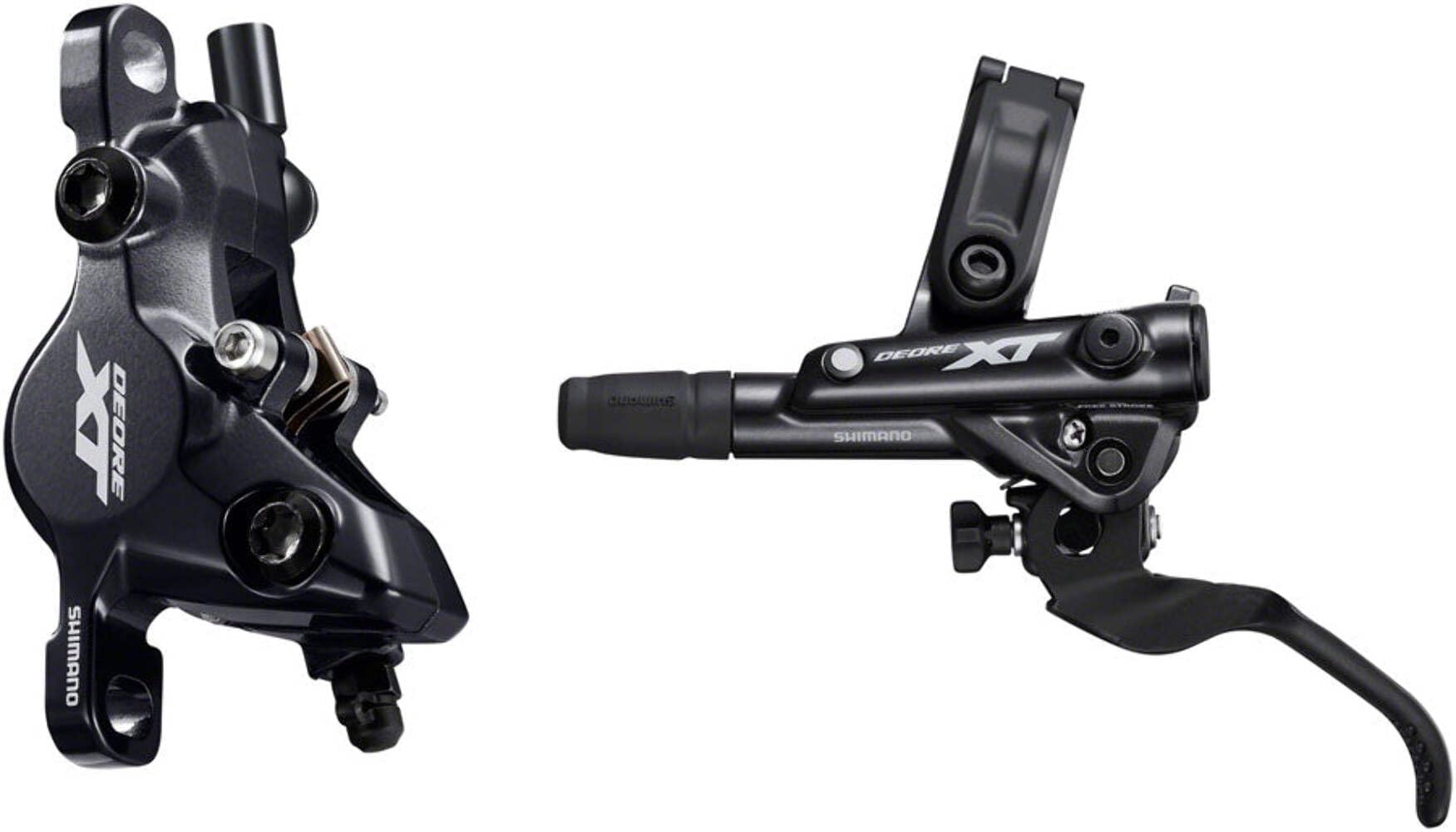
The Shimano XT M8100 J-KIT delivers the refinement of Shimano’s second-tier groupset at a price that undercuts boutique options while matching or exceeding their real-world performance. The two-piston caliper might raise eyebrows among riders convinced that four pistons are mandatory for downhill, but the Servo Wave lever action — which increases pad force as the lever approaches the bar — provides enough bite for aggressive trail and light downhill use. The caliper uses Shimano’s tried-and-true pad retraction system to minimize drag and reduce noise.
This J-KIT comes pre-bled with mineral oil and includes the hose, metal pads, banjo connection, and I-SPEC EV clamp band — everything needed for a direct bolt-on upgrade. The free-throw adjustment on the lever allows riders to set the engagement point independently of reach, a feature usually reserved for higher-end XTR brakes. Shimano’s mineral oil is non-corrosive and has a high boiling point, making it a safer choice for riders who perform their own maintenance.
Riders switching from SRAM Guide brakes consistently praise the XT’s firmer lever feel and simpler bleed process. The caliper mounts via a standard post-mount interface, and the pre-bled hose length (1000mm) suits most frames without custom cutting. While the two-piston design lacks the thermal capacity of a four-piston caliper for sustained downhill park use, it offers predictable modulation that 90 percent of trail riders will find more than adequate for aggressive riding.
Why it’s great
- Servo Wave lever provides progressive power without feeling grabby
- Pre-bled J-KIT simplifies installation and reduces setup time
- Non-corrosive mineral oil is easier to maintain than DOT fluid
- Tool-free free-throw adjustment for personalized bite point
Good to know
- Two-piston caliper may not suit park-level DH abuse
- Hose comes with olive pre-installed in lever, risking air ingress during setup
- Lower thermal mass than four-piston options
5. SHIMANO SLX Bl-M7100 Disc Brake
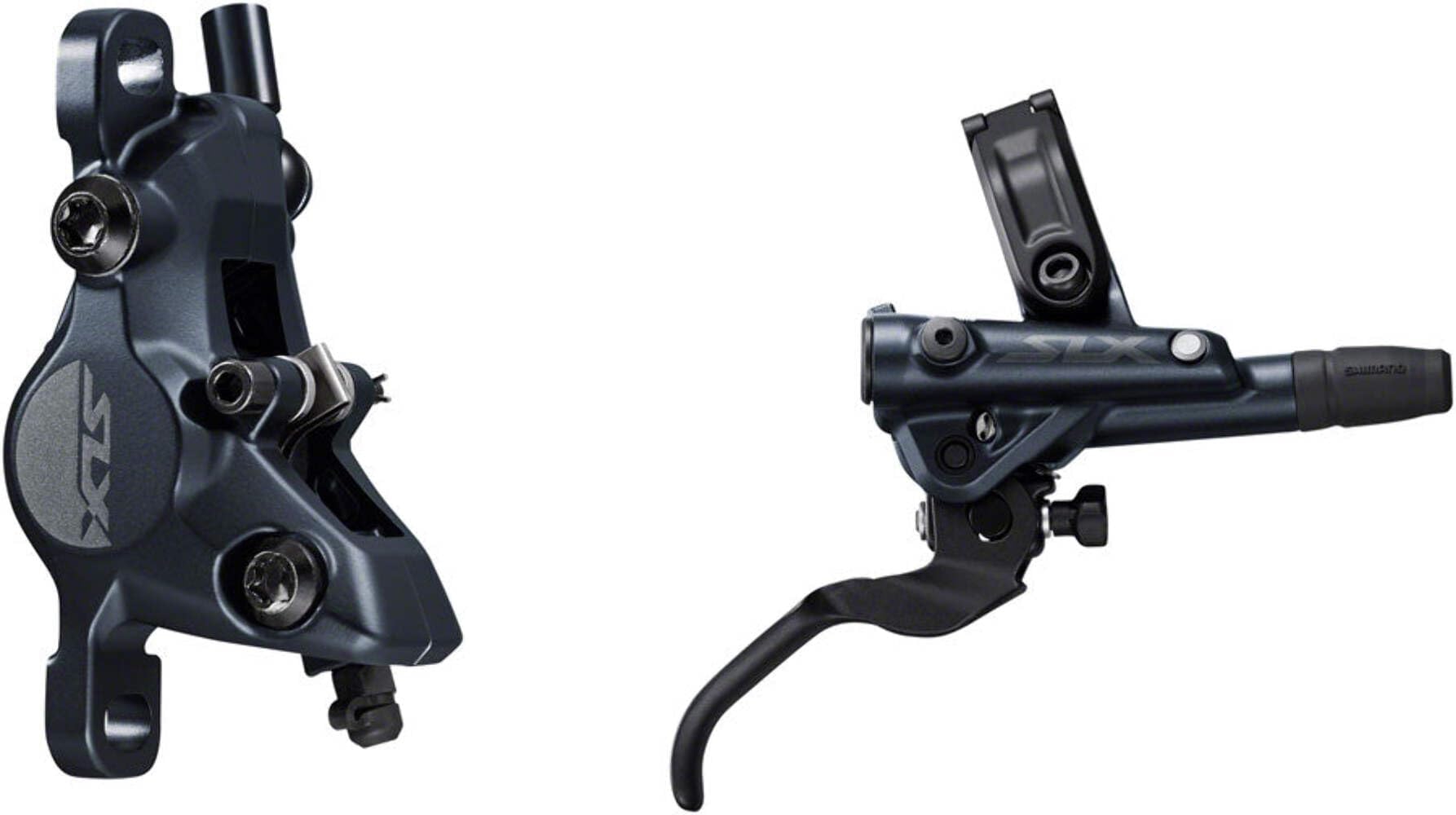
The Shimano SLX M7100 brings four-piston braking to a price point that makes serious stopping power accessible. The Servo Wave lever action on the SLX is identical in principle to the XT version, providing a ramp-up in force as you squeeze deeper into the stroke. The four-piston caliper offers a meaningful advantage over two-piston designs for heavier riders or e-bike conversions, where clamping force and pad wear balance are critical. The caliper uses ceramic pistons that resist heat transfer better than the steel pistons found on entry-level brakes.
Shimano’s mineral oil fluid and tool-free reach adjustment make this a user-friendly system for riders new to hydraulic brakes. The lever blade is aluminum and offers a clean, one-finger ergonomic profile. Riders on heavy e-bikes report that the SLX M7100 stops with authority, inspiring confidence on steep descents previously managed by mechanical brakes or failing budget hydraulics. The four-piston caliper also reduces the likelihood of pad taper, where the leading edge of the pad wears faster than the trailing edge — a common failure on smaller calipers under load.
One important caveat: the SLX brakes often ship with pre-cut hoses rather than a full-length line, which may require purchasing a new hose if your frame needs a custom route. The brakes are also quite grabby when new, requiring a proper bed-in procedure to avoid sudden lock-up. Once bedded, they offer Shimano’s characteristic predictable power curve that works well for both trail riding and lighter downhill applications.
Why it’s great
- Four-piston caliper provides strong stopping power for the price
- Servo Wave lever gives progressive, controllable modulation
- Ceramic pistons reduce heat transfer to brake fluid
- Tool-free reach adjustment fits different hand sizes
Good to know
- May ship with pre-cut hoses requiring custom length purchase
- Initial bite is very grabby until pads are fully bedded in
- Not as refined in lever feel as the XT or XTR versions
6. Magura MT5 HC Disc Brake and Lever

The Magura MT5 HC sits as the accessible entry point into Magura’s downhill-capable brake range, using the same four-piston monoblock caliper design as the flagship MT7 but with a simpler lever body. The monoblock construction — a single forged piece of Carbotecture composite — eliminates the flex found in two-piece calipers, ensuring consistent pad contact pressure. The HC lever blade is a one-finger aluminum unit with tool-free reach adjustment, and the caliper uses Magura’s proprietary Royal Blood mineral oil for corrosion-free operation.
The MT5’s main advantage is its thermal behavior. The monoblock caliper dissipates heat more effectively than clamped two-piece designs, and the included sintered pads resist fade under aggressive use. Riders on heavy e-bikes and downhill park rigs report that the MT5 provides authoritative stopping power with minimal lever effort, and the Easy Bleed Technology port makes fluid flushes a 10-minute job. The brake is also flip-flop compatible, meaning the same lever can be mounted on either side of the handlebar.
The primary trade-off is the lack of bite-point adjustment found on the MT7. The lever feel is fixed, though the reach adjustment provides some compensation. The neon red color rings on the caliper are more pinkish-orange in person than the product images suggest, which may bother aesthetic-sensitive builders. Overall, the MT5 HC delivers genuine downhill-grade power at a mid-range price point, particularly for riders who prioritize caliper rigidity and heat management.
Why it’s great
- Monoblock four-piston caliper eliminates flex for consistent power
- Excellent heat dissipation reduces fade on long descents
- EBT port simplifies bleeding and maintenance
- Flip-flop compatible for left or right front setup
Good to know
- No bite-point adjustment; lever feel is fixed
- Color rings are more pink than the advertised red
- Requires careful bed-in to avoid glazing pads
7. BUCKLOS IIIPRO MTB 4 Pistons Hydraulic Disc Brake Set
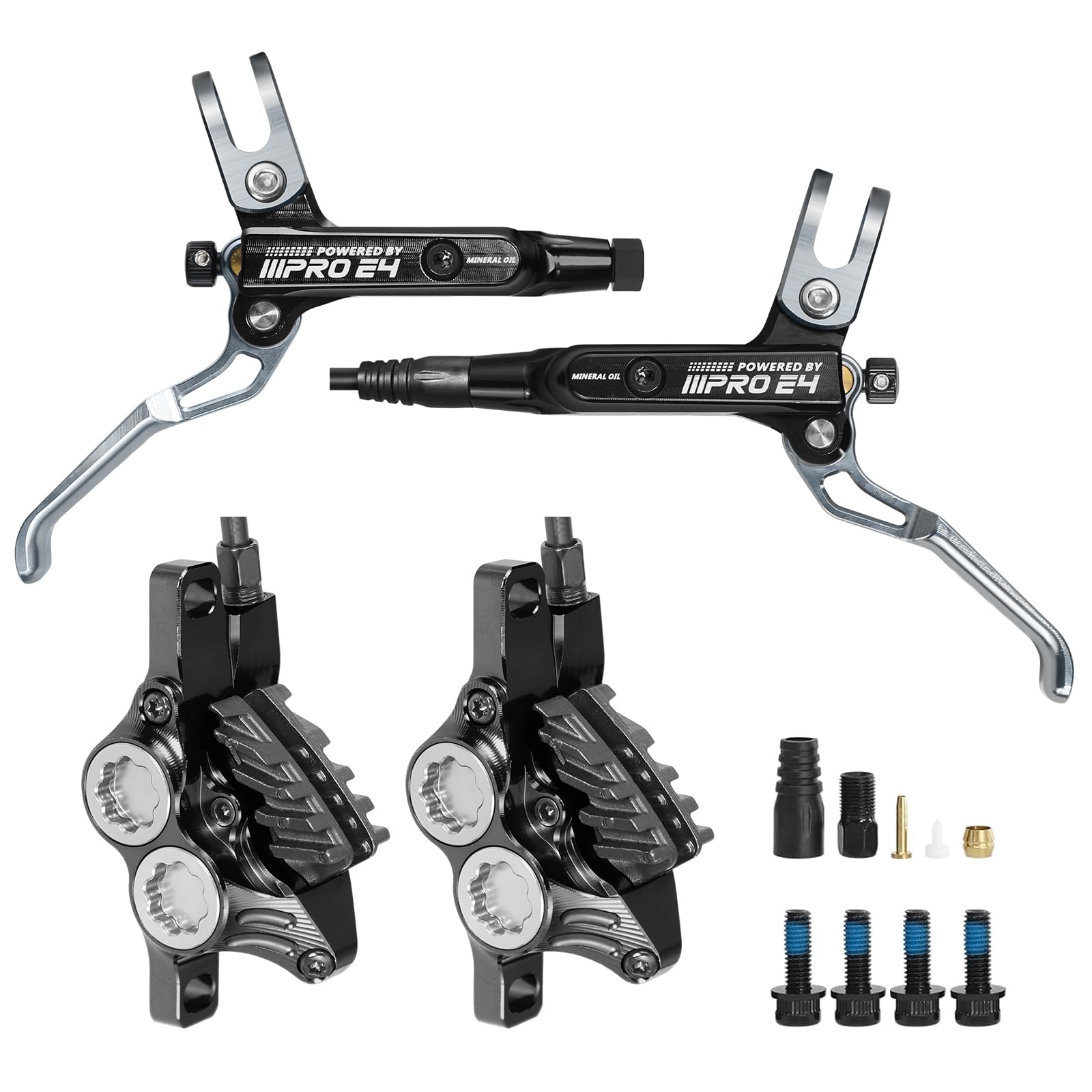
The BUCKLOS IIIPRO is a budget-oriented four-piston hydraulic brake set aimed at riders upgrading from mechanical disc brakes. The caliper houses four pistons for even pad wear, and the included ceramic-metal pads are designed for strong heat dissipation and quiet operation — a notable upgrade over the resin pads found on stock budget brakes. The pre-bled mineral oil system means installation is plug-and-play, requiring only mounting to the frame and handlebars.
The IIIPRO’s performance ceiling is suitable for trail riding, light downhill, and e-bike commuting where sustained high-speed braking is occasional rather than constant. The ceramic pads reduce squeal compared to sintered alternatives, and users report a noticeable improvement in stopping power versus mechanical calipers. The lever blade offers reach adjustment, though the feel is less refined than mid-range options from Shimano or Magura, with a somewhat longer free stroke before pad contact.
The known weak points are hardware consistency and documentation. Some users report that the handlebar clamp bolt is undersized, failing to secure the lever firmly on standard bars. The rear brake also occasionally ships unconnected at the lever, requiring the rider to connect and bleed the hose. These issues are manageable for experienced mechanics but could frustrate first-time upgraders. At this price, the IIIPRO is a functional entry point with four-piston benefits, provided you’re prepared for potential fitment adjustments.
Why it’s great
- Four-piston caliper offers even pad wear and strong clamping
- Ceramic-metal pads reduce noise and improve heat dissipation
- Pre-bled system simplifies installation for beginners
- Very affordable entry into hydraulic braking
Good to know
- Clamp bolt may be too small for standard handlebars
- Rear brake may ship disconnected, requiring bleeding
- Lever feel is less refined than Shimano or Magura options
8. Zoom HB876E 4-Pistons E-Bike Hydraulic Brake Set

The Zoom HB876E is a four-piston e-bike-specific brake set that includes a motor power-off sensor compatible with 2-pin or 3-pin connectors, making it a direct drop-in replacement for many budget e-bikes with mechanical brakes. The larger 180mm rotors provide greater thermal capacity and leverage than the 160mm version, and the four-piston caliper offers stronger clamping than the dual-piston brakes common on entry-level electric bikes. The pre-bled mineral oil lines simplify installation for riders comfortable with basic wrenching.
On the trail, the HB876E transforms the braking experience on heavy e-bikes. Riders report that one-finger braking is sufficient to modulate speed, and the 180mm rotors reduce fade significantly compared to stock 160mm mechanical units. The included semi-metallic pads strike a balance between noise and durability, though some users switch to sintered pads for longer life. The power-off sensor cuts motor engagement instantly when braking, a critical safety feature that prevents the motor from fighting the brakes during emergency stops.
Quality control is variable. Some units arrive with a defective rear caliper that loses pressure when connected to the hose, and replacement parts are difficult to source individually. The 3-pin connector may require rewiring depending on the e-bike’s power-off method. For the price, the HB876E offers an impressive jump in braking performance for e-bike riders, but reliability concerns push more demanding users toward established brands like Shimano or Tektro for long-term peace of mind.
Why it’s great
- Four-piston calipers and 180mm rotors for strong e-bike braking
- Power-off sensor cuts motor engagement during braking
- Pre-bled mineral oil simplifies installation
- Massive improvement over stock mechanical brakes
Good to know
- Quality control can be inconsistent; some units arrive defective
- Rear brake connector may require rewiring on some e-bikes
- Individual replacement parts are not available
9. Zoom eBike Hydraulic Brake Upgrade Kit (HB875)

The Zoom HB875 Upgrade Kit is the most accessible entry point for e-bike owners wanting to ditch mechanical disc brakes for hydraulics. It includes dual-piston calipers (not four-piston, unlike the HB876E), pre-bled hoses, 160mm rotors, and a motor power-off sensor in either a 2-PIN or 3-PIN configuration. The pre-installed semi-metallic pads offer quieter operation than full sintered while still providing the durability needed for daily commuting.
Installation is straightforward for anyone comfortable replacing brake cables — the kit bolts onto existing post-mount frames and the power-off sensor plugs directly into compatible e-bike motor connectors. Users report that the HB875 eliminates the cable stretch and friction that plague mechanical discs, providing smooth, consistent lever feel on every ride. The 160mm rotors are sufficient for city riding and light trail use, though heavier riders on steep terrain will benefit from the larger 180mm version.
The primary limitation is the dual-piston caliper, which lacks the clamping force and heat dissipation of four-piston designs. On heavy e-bikes exceeding 60 pounds, the HB875 can struggle during prolonged descents, leading to brake fade. The power-off sensor connector also requires verifying your bike’s pin configuration before purchase — getting the wrong version means rewiring or buying adapters. For light e-bikes or as a first hydraulic upgrade, the HB875 delivers excellent value; for heavy downhill e-bike use, step up to the four-piston Zoom or a Shimano option.
Why it’s great
- Simple plug-and-play upgrade from mechanical disc brakes
- Power-off sensor integration improves e-bike safety
- Pre-bled hoses and pre-installed pads reduce setup hassle
- Very affordable entry into hydraulic braking
Good to know
- Dual-piston calipers lack thermal capacity for heavy e-bike DH use
- Power-off connector must match your e-bike’s pin configuration
- 160mm rotors may fade on extended steep descents with heavy loads
FAQ
Do I need four-piston brakes for downhill mountain biking?
Can I use 160mm rotors for downhill riding?
How often should I bleed downhill brakes?
What is the difference between sintered and resin brake pads for downhill?
Final Thoughts: The Verdict
For most riders seeking the best downhill mountain bike brakes, the winner is the Magura MT7 HC3 because it delivers the most refined balance of modulation, thermal management, and one-finger stopping power in a lightweight package. If you want tool-free bite-point adjustability with proven downhill pedigree, grab the Hope Tech 4 E4. And for a budget-friendly four-piston option that punches above its price class, nothing beats the SHIMANO SLX M7100 for reliability and raw stopping force.

Mo Maruf
I created WellFizz to bridge the gap between vague wellness advice and actionable solutions. My mission is simple: to decode the research and give you practical tools you can actually use.
Beyond the data, I am a passionate traveler. I believe that stepping away from the screen to explore new environments is essential for mental clarity and physical vitality.