Our readers keep the lights on and my smoothie glass nicely filled. As an Amazon Associate, I earn from qualifying purchases.
A lightweight down jacket should be the simplest piece of gear you own: a nearly weightless layer that traps heat without turning you into a marshmallow. But the category is flooded with jackets that lose feathers, lose loft, or lose their ability to keep you warm the moment the wind picks up.
I’m Mohammad Maruf — the founder and writer behind WellFizz. I’ve spent countless hours cross-referencing fill-power ratings, shell-face fabrics, baffle construction, and real-world customer accounts to separate the genuinely warm, packable jackets from the ones that just look the part on a hanger.
Knowing which fill weight and shell fabric actually hold up in wet, windy, or sub-freezing conditions is what makes a true lightweight down jacket a smart investment for years of reliable use.
How To Choose The Best Lightweight Down Jacket
The best lightweight down jacket for you depends on whether you need a city commuter shell, a backpacking mid-layer, or a dedicated alpine insulation piece. Three specs separate a versatile travel companion from a jacket that quits the moment conditions change.
Fill Power vs. Fill Weight
Fill power — the number of cubic inches one ounce of down occupies — tells you the lofting ability of the down itself. A 700-fill jacket traps more air per ounce than a 600-fill jacket, meaning it can deliver the same warmth with less bulk. But a jacket’s actual warmth also depends on fill weight: the total ounces of down stuffed inside. A 3-ounce fill of 800-fill down is warmer than a 2-ounce fill of 900-fill down, despite the lower fill power number. Always check both numbers.
Shell Fabric and DWR Durability
Down loses almost all insulating value when wet. A lightweight down jacket’s shell fabric — measured in denier (D) — determines how well the jacket resists tearing and how much moisture it blocks before the down gets damp. A 20D or 30D ripstop nylon with a durable water repellent (DWR) finish is the sweet spot for everyday use. Ultralight 7D or 10D fabrics pack smaller but tear more easily and wet out faster in sustained rain.
Baffle Construction and Zoning
Box baffles — vertical or horizontal chambers that keep down from shifting — maintain even loft across the jacket. Sewn-through baffles, where the inner and outer shells are stitched directly together, are lighter and cheaper but create cold spots at every stitch line. Premium jackets use zoned insulation: higher-loft down in the torso and arms, with synthetic sheet insulation in areas prone to moisture like the collar, cuffs, and underarms.
Quick Comparison
On smaller screens, swipe sideways to see the full table.
| Model | Category | Best For | Key Spec | Amazon |
|---|---|---|---|---|
| Rab Electron Pro | Premium | Mountaineering & extreme cold | 800-fill down, 4.5 oz fill weight | Amazon |
| Rab Microlight Alpine | Premium | Hiking & alpine layering | 700-fill down, Pertex shell | Amazon |
| Marmot Zeus | Premium | City-to-trail all-rounder | 700-fill down, water-resistant shell | Amazon |
| North Face Aconcagua Hoodie | Mid-Range | Everyday cold-weather wear | 600-fill recycled down + synthetic | Amazon |
| Eddie Bauer Microlight | Mid-Range | Travel & light winter use | 650-fill down, RDS certified | Amazon |
| North Face Aconcagua Jacket | Mid-Range | Wind-resistant daily use | 600-fill recycled down, WindWall | Amazon |
| Columbia Powder Lite II Hooded | Mid-Range | Fall & mild winter warmth | Omni-Heat reflective lining | Amazon |
| Orolay Packable Down Coat | Budget | Travel & mild chilly temps | Duck down fill, stand collar | Amazon |
| Columbia Powder Lite II Jacket | Budget | Budget layering piece | Omni-Heat reflective, no hood | Amazon |
In‑Depth Reviews
1. Rab Men’s Electron Pro 800-Fill Down Hooded Jacket
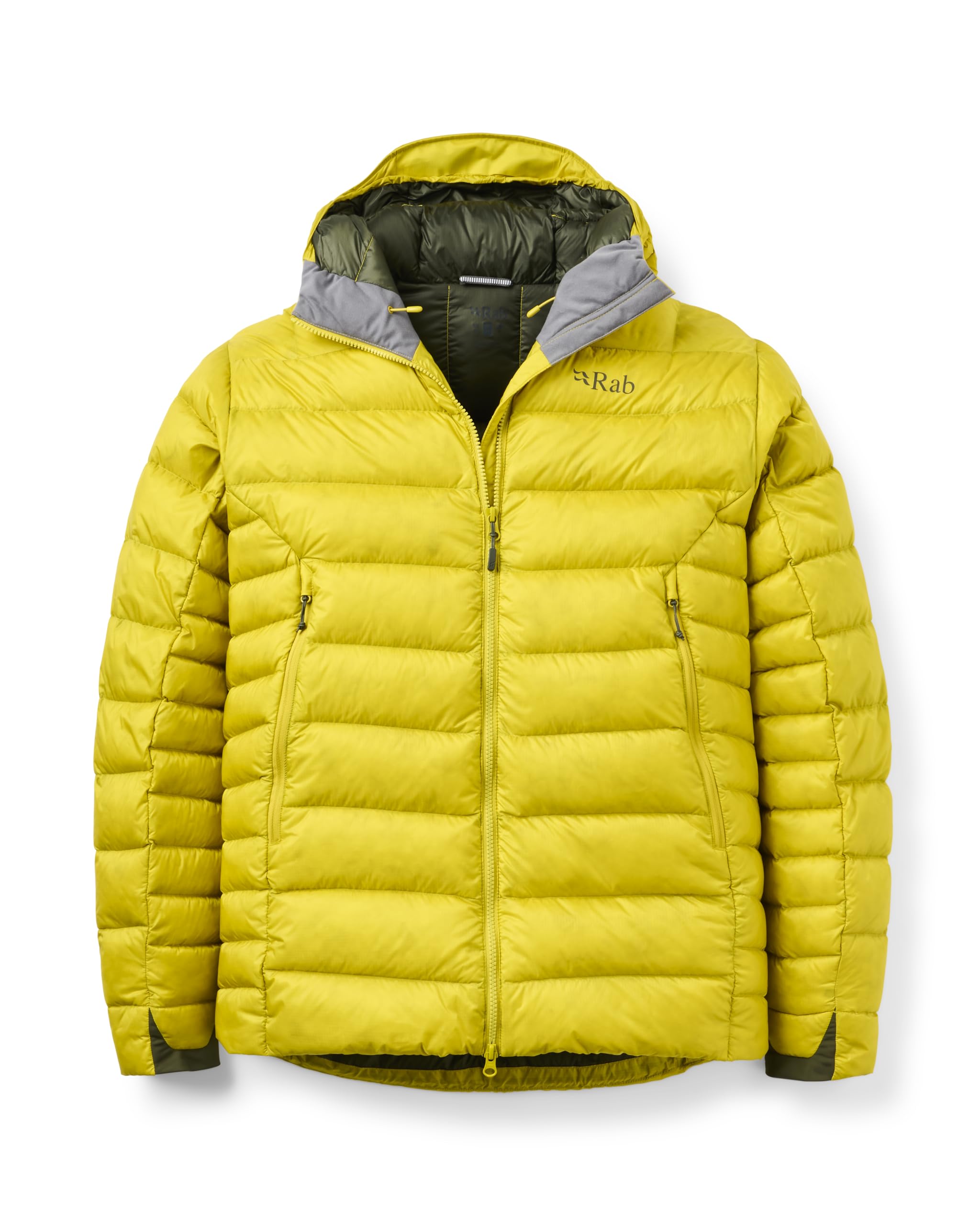
The Rab Electron Pro is engineered for actual mountain use, not casual strolls. Its 800-fill European goose down provides an exceptional warmth-to-weight ratio — testers report comfort down to 20°F with only a t-shirt underneath, and 0°F with a fleece layer and hat. The Pertex Quantum Pro shell uses a 20D ripstop nylon with a DWR finish that holds up surprisingly well against wind and light precipitation.
The slim athletic fit prioritizes layering under a hardshell, which means the jacket runs trimmer than typical lifestyle puffer jackets. Users between 6’1″ and 190 pounds found the Large fit precisely with good sleeve length, while the XL felt baggy. The elastic cuffs and understated logo keep the profile clean and technical, not bulky.
This is not a jacket for casual city wear if you want room for thick sweaters. Its design is ruthlessly efficient for climbers and mountaineers who need maximum warmth per ounce. The 800-fill down requires careful storage — keep it uncompressed in a dry place to maintain its loft over decades of use.
Why it’s great
- Superior 800-fill down delivers extreme warmth for its weight
- Durable 20D Pertex shell resists wind and light moisture
- Slim athletic fit layers cleanly under a hardshell
- Elastic cuffs and hood seal out drafts effectively
Good to know
- Runs small compared to standard sizing — size up if between sizes
- Too warm for high-output activities like hiking uphill
- Premium price reflects technical mountaineering specs, not casual fashion
2. Rab Men’s Microlight Alpine 700-Fill Down Hooded Puffer Jacket
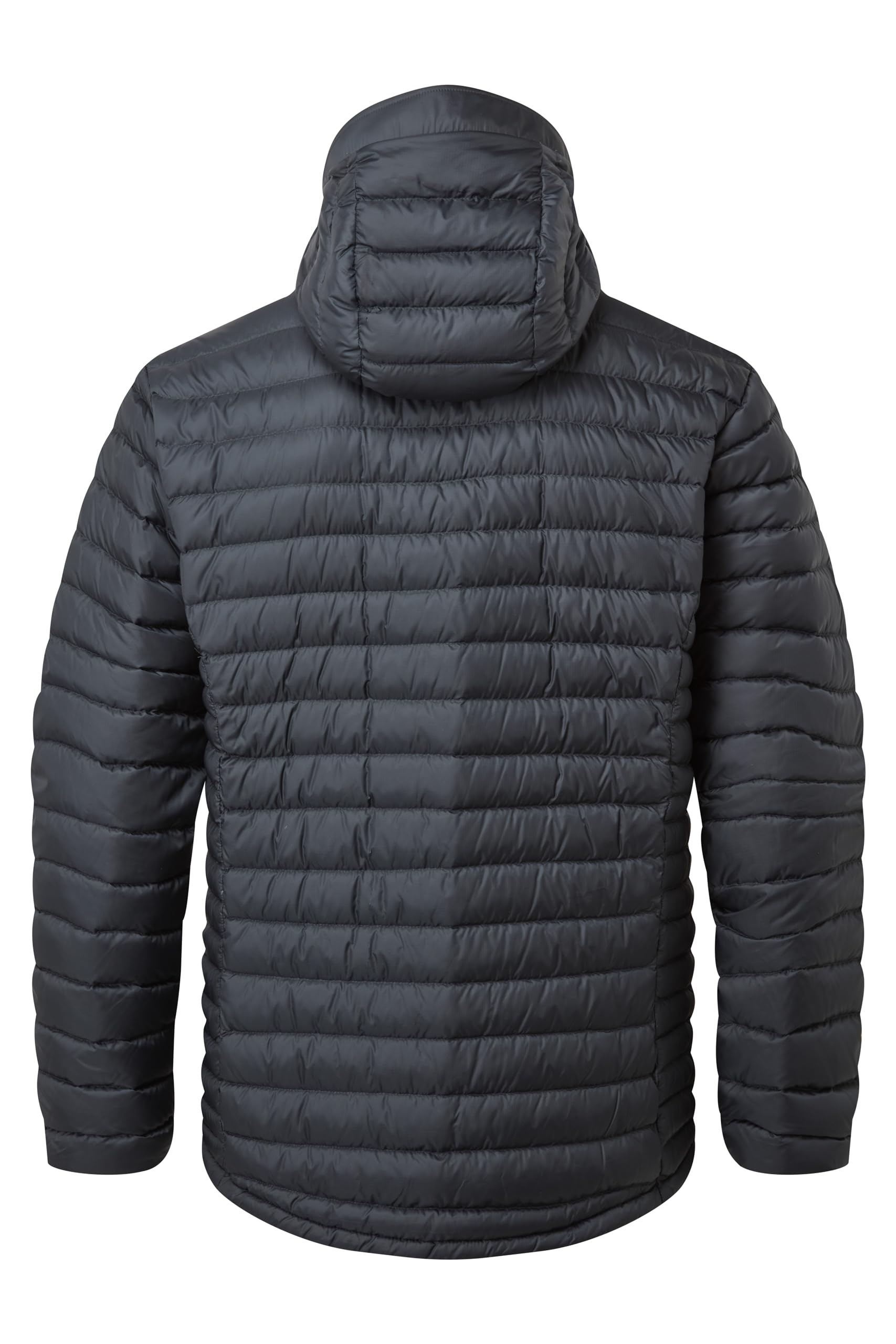
The Rab Microlight Alpine is one of those rare jackets that earns its reputation not through flashy specs but through balanced, no-surprises performance. The 700-fill down provides reliable warmth without the weight penalty of lower-fill jackets, and the Pertex Microlight shell balances breathability with enough wind resistance for exposed ridge lines. Testers who wore this on the W and O Circuits in Patagonia praised its excellent warmth-to-weight ratio and secure hood design.
The fit is athletic — a size Large fits a 5’10”, 190-pound frame with a 43-inch chest perfectly over a mid-weight sweater. Below 25°F, users noted the jacket starts feeling cold without a shell overlay. The 700-fill down is not as lofty as premium 800-fill options, but it also requires less careful handling and still packs down small enough for a daypack’s compression sack.
One recurring note in user feedback: the main zipper pull is on the left side, following European convention, which takes a few days to get used to for North American users. The hood fits securely over a climbing helmet, and the jacket layers well under a waterproof shell for wetter alpine conditions without sacrificing mobility.
Why it’s great
- Excellent warmth-to-weight ratio tested in alpine conditions
- Athletic fit allows comfortable layering without being restrictive
- Secure, helmet-compatible hood adds versatility for climbing
- Packable design compresses well for backpacking and travel
Good to know
- Zipper pull is on the left side (European design)
- Not warm enough for static use below 20°F without a shell
- Main zipper feels less robust than the rest of the jacket’s build
3. MARMOT Men’s Zeus Down Jacket
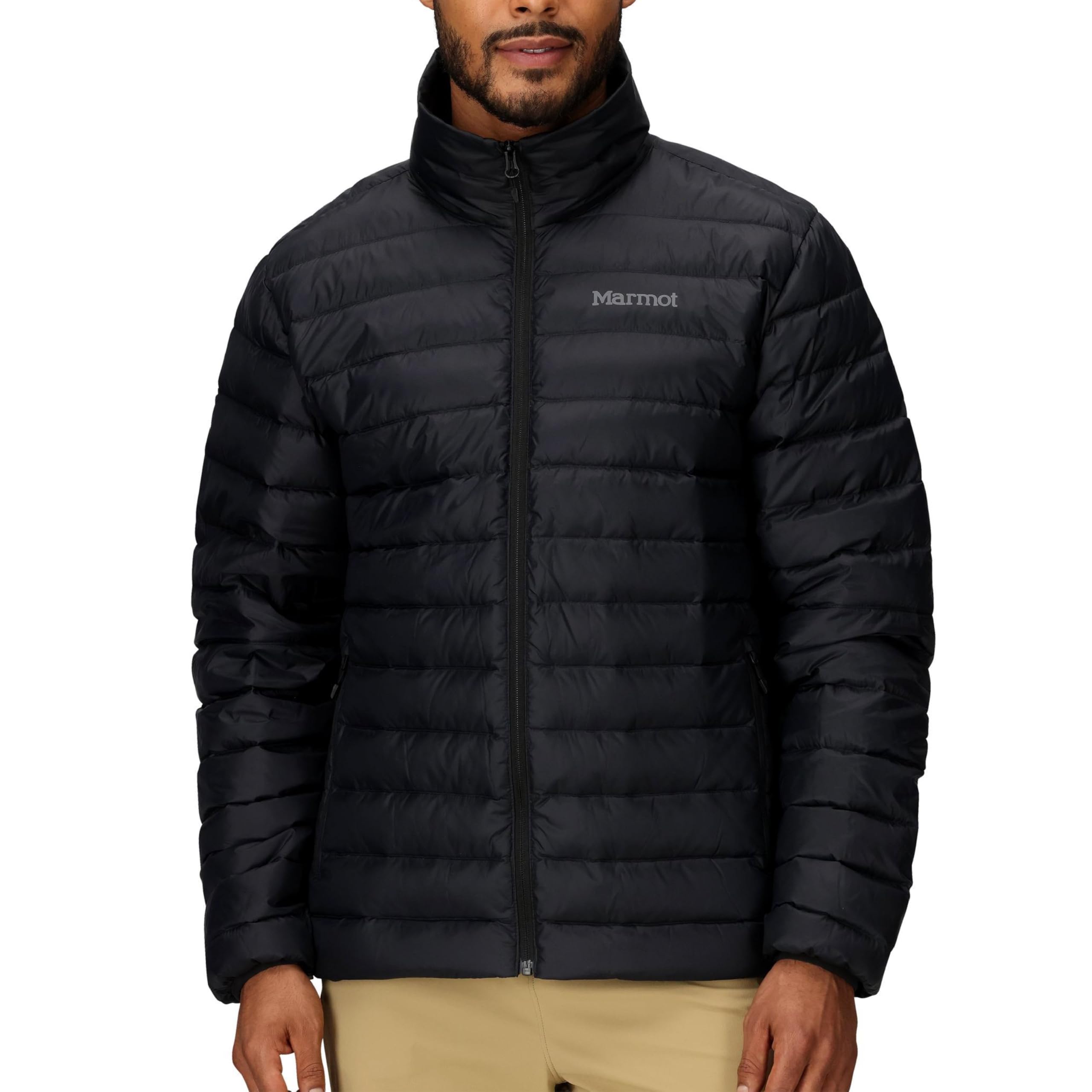
The Marmot Zeus Jacket fills a specific niche: a lightweight down jacket that looks good enough to wear in town while still delivering reliable performance on the trail. Its 700-fill down provides solid warmth for the weight, and the water-resistant shell fabric — while not fully waterproof — sheds light drizzle and snow flurries without the down immediately losing loft.
Users consistently describe the jacket as noticeably lighter than expected, which makes it an excellent travel companion. It packs down small enough to stuff into a carry-on bag without taking up meaningful space. The trim, athletic cut means it layers well under a rain shell or softshell for extra warmth in colder conditions.
The main complaint centers on pocket layout: only two large hand pockets, with no internal chest pocket or zip pocket for securing a phone or wallet. For casual urban use this is manageable, but hikers who rely on multiple secure storage options may find it limiting. The jacket performs well as a stand-alone layer in temperatures around 30-40°F and as a mid-layer in much colder conditions.
Why it’s great
- Featherlight construction packs down extremely small for travel
- 700-fill down delivers reliable warmth without bulk
- Water-resistant shell handles light precipitation effectively
- Clean, understated design works for both city and trail
Good to know
- Only two hand pockets — no chest or internal zip pockets
- Requires layering in cold weather, not a standalone winter coat
- Trim fit may feel restrictive for some users over thicker sweaters
4. The North Face Women’s Aconcagua Down Insulated Hoodie
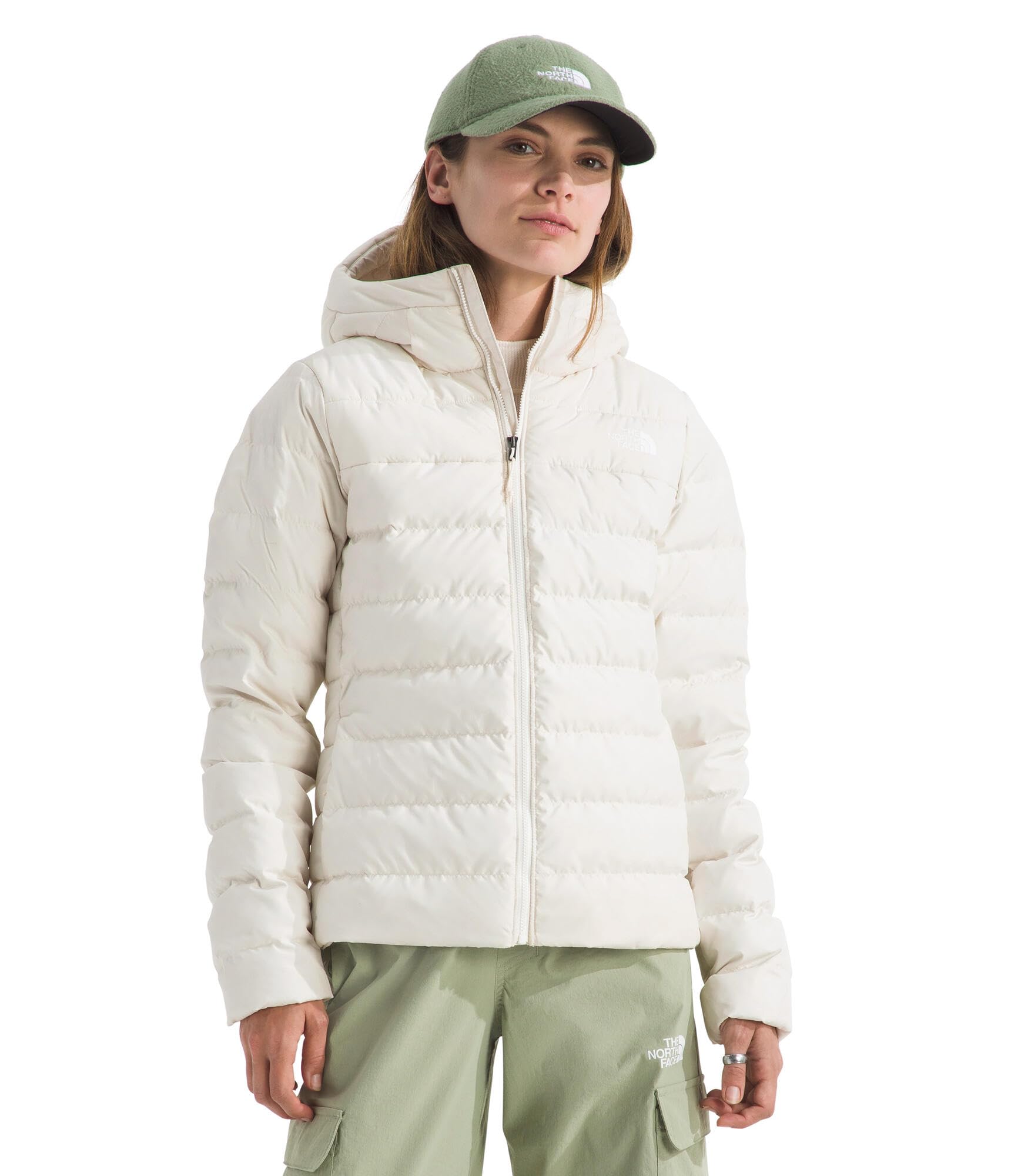
The North Face Aconcagua Down Insulated Hoodie earns the top spot by pairing proven outdoor performance with everyday comfort that most people can wear without feeling like they’re in technical gear. Its 50/50 blend of 600-fill recycled waterfowl down and recycled polyester insulation offers reliable warmth in the body, while zoned synthetic sheet insulation in the hood and sides maintains heat retention even when moisture is present.
The 100% recycled WindWall fabric blocks wind effectively without the stiff, crinkly feel of many windproof shells. The DWR finish sheds light snow and drizzle, though extended rain will eventually wet out the shell. Users praised the large interior pockets that fit an 8-inch tablet, gloves, and passport simultaneously — a rare feature in a jacket this slim and flattering.
Some customers reported 10-15 feathers poking through the shell after a few weeks of wear, giving the jacket a lightly molting appearance. While this didn’t affect warmth or structural integrity, it’s worth noting for those who prefer a pristine look. The jacket fits true to size with enough room for a medium-weight sweater, and the adjustable hood and elastic-bound cuffs seal warmth in without restricting motion.
Why it’s great
- Zoned synthetic insulation in hood and sides handles wet conditions better than pure down
- WindWall fabric block wind without adding stiffness
- Large interior pockets provide rare storage capacity
- True-to-size fit layers well without looking boxy
Good to know
- Some feathers may poke through the shell over time
- Not warm enough for sustained sub-20°F conditions without heavy layering
- Tailored fit may require sizing up for thick sweaters
5. Eddie Bauer Men’s Microlight Down Jacket
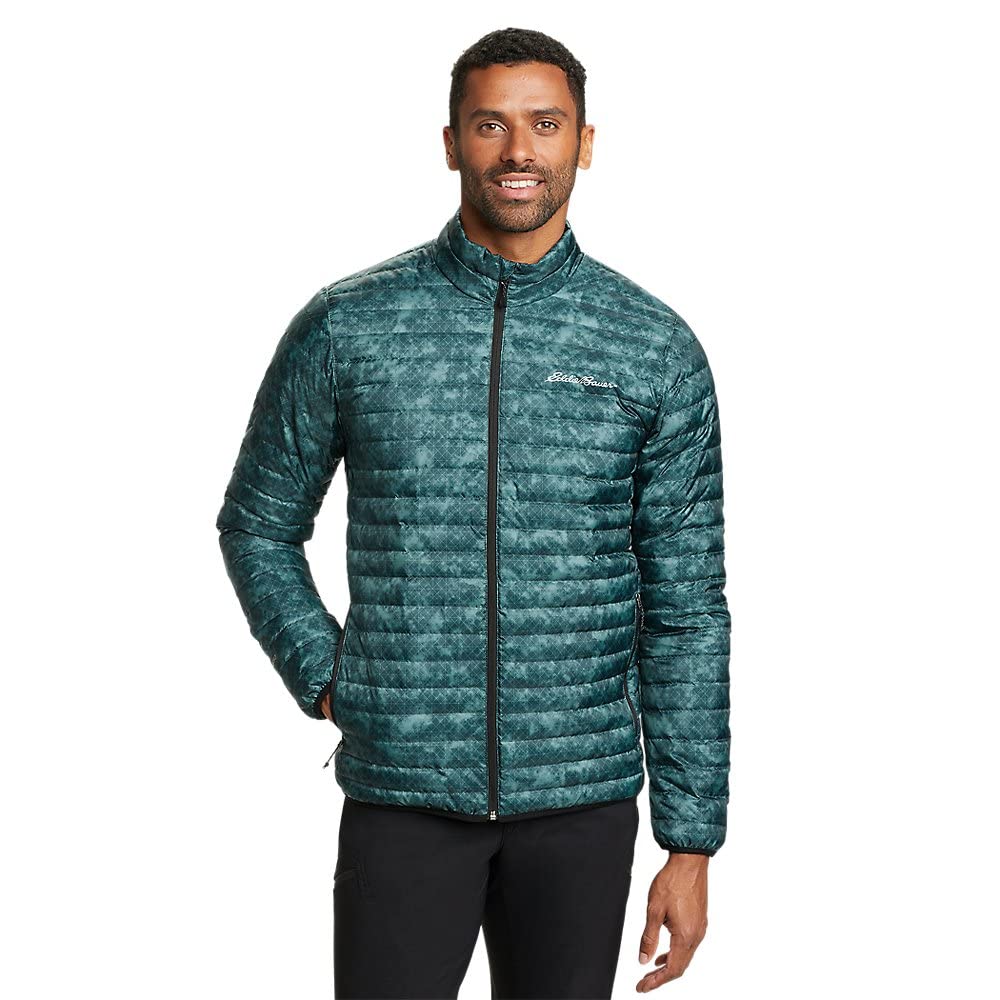
The Eddie Bauer Microlight Down Jacket consistently punches above its price tier. Its 650-fill RDS-certified down — 80% down and 20% feather fill — provides genuine warmth that testers confirmed down to 30°F, and the water-resistant shell handled light snow and wind during ski days at White Pass in the Cascades. The jacket compresses into a small package that fits easily into a backpack or carry-on, making it a strong travel companion.
The pocket layout is thoughtful: two zippered outer hand pockets plus two interior pockets, one of which is zippered. This level of storage is unusual at this price point. The XXL size fits generously in the midsection while maintaining good shoulder and arm length, accommodating broader body types without restricting motion.
The most common criticism involves the front zipper: several users reported the zipper track catching on the inner nylon pocket lining, causing stuck zippers that required careful manipulation to free. The jacket’s 650-fill down also runs slightly warm for active use in temperatures above 40°F. For the price, the Microlight delivers durability and warmth that easily rivals jackets costing twice as much.
Why it’s great
- Four pockets (two zippered) provide excellent storage for the price
- RDS-certified down ensures ethical sourcing and reliable loft
- Water-resistant shell handles light winter precipitation well
- Generous fit accommodates broader body types comfortably
Good to know
- Zipper can catch on pocket lining, causing frustrating jams
- 650-fill down runs warm for active use above 40°F
- Not as packable as higher-fill-power alternatives
6. The North Face Women’s Aconcagua 3 Jacket
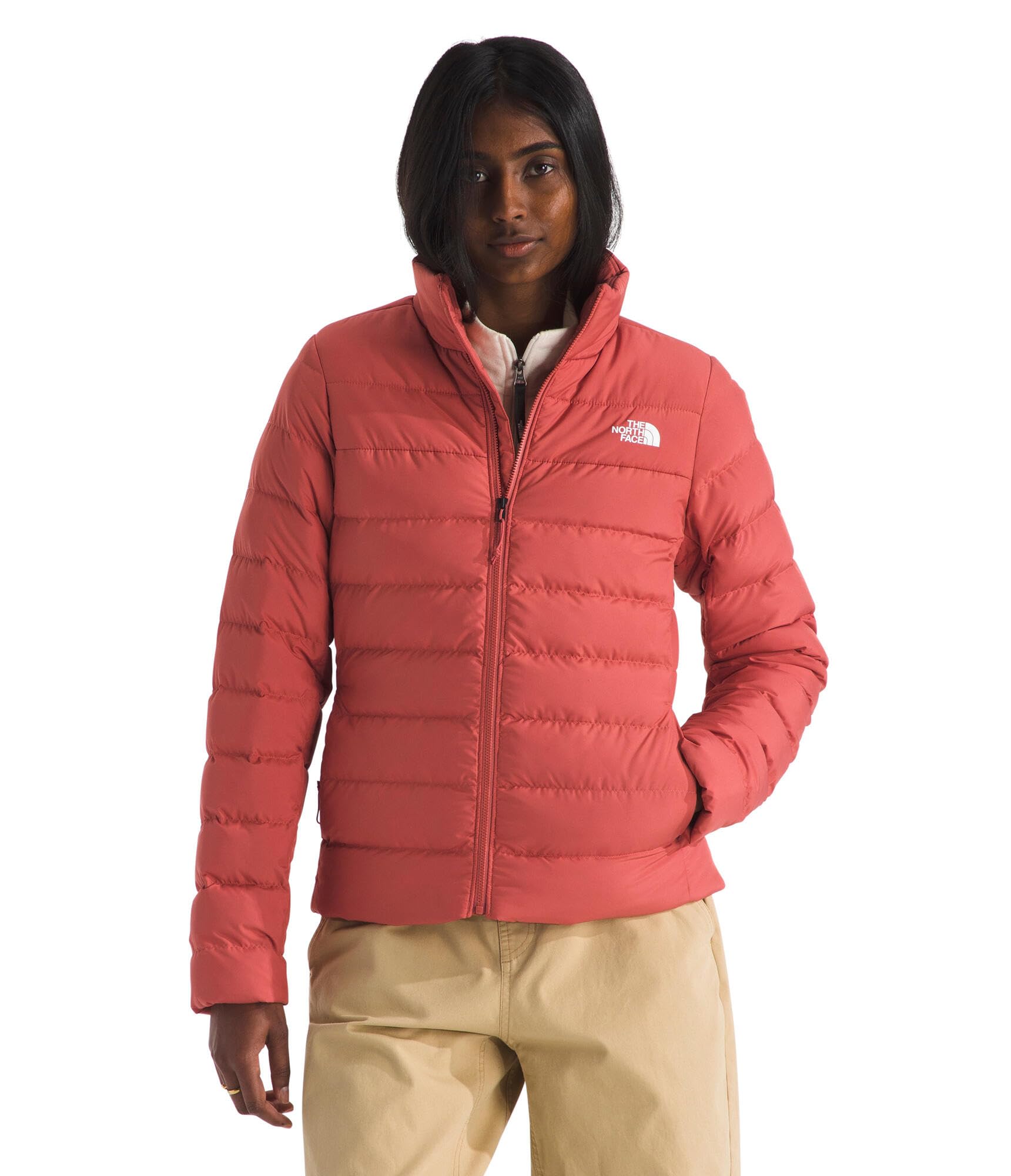
The non-hooded version of the Aconcagua line focuses on clean, streamlined warmth for everyday use where a hood isn’t needed. The 50/50 blend of 600-fill recycled down and recycled polyester insulation provides balanced warmth, while the WindWall fabric makes a tangible difference in windy conditions — users noted it blocks gusts effectively without the stifling feel of a fully waterproof shell.
The fit runs true to size with a slightly tailored shape that looks polished under a trench coat or peacoat. Sizing up one size gives enough room for a thick sweater without looking oversized. The DWR finish handles light rain and snow, but the jacket is not designed for sustained wet conditions — one user reported the down absorbing moisture during a snowstorm.
For mid-range temperatures between 30-50°F, this jacket hits a sweet spot: warm enough for walking the dog or waiting for the bus, but breathable enough to wear indoors without overheating. The zoned sheet insulation in the arms improves freedom of movement compared to traditional puffer designs, making it a practical choice for active urban commuters.
Why it’s great
- WindWall fabric provides genuine wind resistance without bulk
- Sleek silhouette layers well under outerwear for city use
- Recycled materials offer sustainability without sacrificing warmth
- Zoned arm insulation improves mobility over standard puffer designs
Good to know
- Not suitable for prolonged wet conditions — down can absorb moisture
- No hood limits versatility in windy or rainy weather
- Tailored fit may feel snug over heavy sweaters without sizing up
7. Columbia Men’s Powder Lite II Hooded Jacket
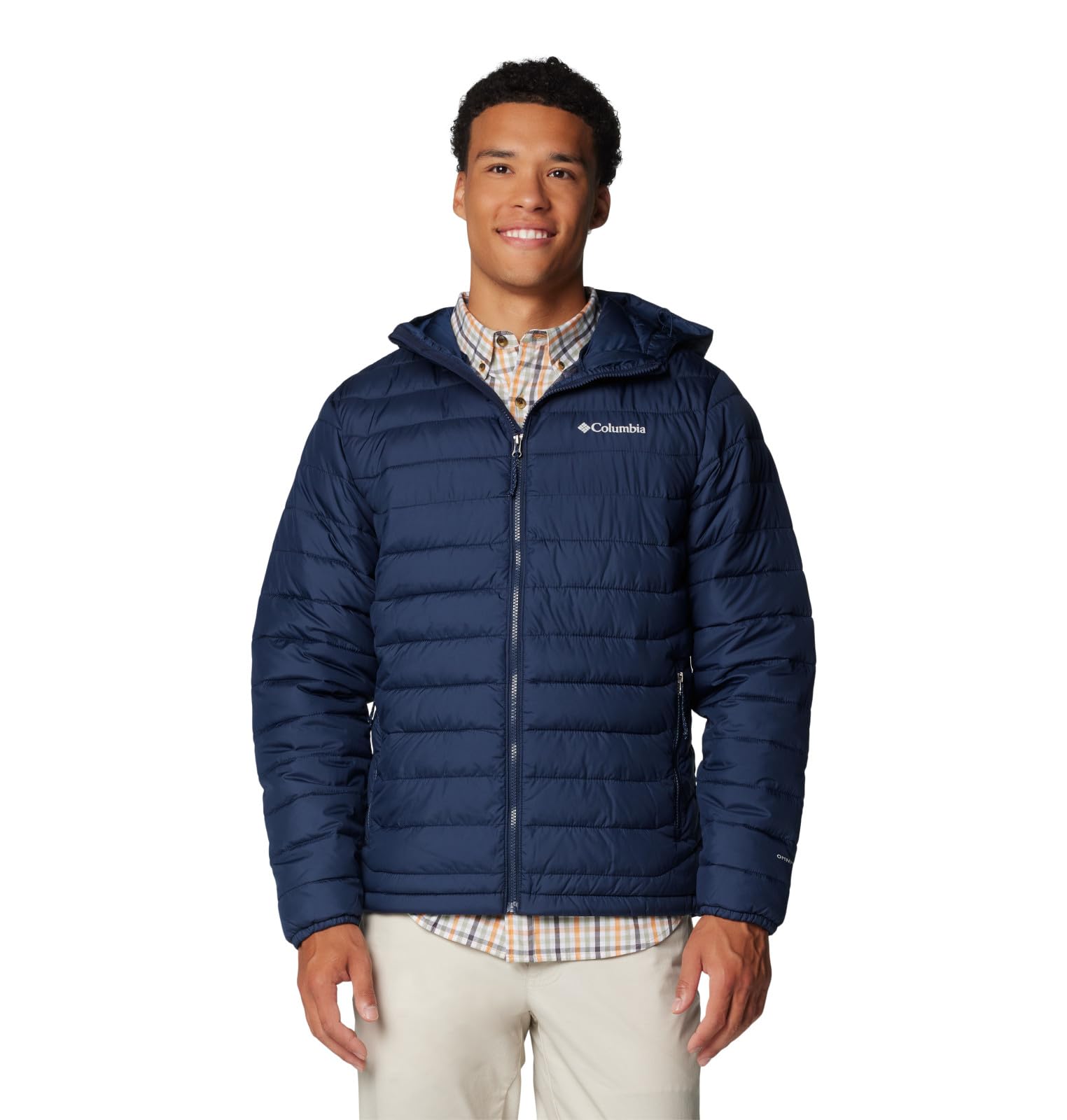
Columbia’s Powder Lite II Hooded Jacket uses a different insulation strategy than the down-focused competitors on this list. Instead of pure down, it relies on Columbia’s Omni-Heat reflective lining — a metallic internal surface that reflects body heat back toward the wearer — combined with Thermarator synthetic insulation. This approach means the jacket retains warmth even when damp, unlike standard down jackets that fail in wet conditions.
Users consistently describe the jacket as “very warm for its weight” and “light and thin but surprisingly warm.” The metallic Omni-Heat lining is effective in still-cold conditions, though it lacks the breathability of down in active use — you’ll notice more sweat buildup during brisk walks or hiking. The fit runs true to size, with a 5’7″, 140-pound frame fitting comfortably in a size Small.
The hood adds versatility that the non-hooded version lacks, and the jacket includes Columbia’s typical thoughtful details like a zippered hand pocket and adjustable hem. The jacket’s primary limitation is its performance ceiling: in sub-freezing windy conditions, the synthetic insulation and reflective lining can’t match the loft and dead-air trapping of a 700-fill down jacket. It’s best suited for fall and mild winter use in the 25-45°F range.
Why it’s great
- Omni-Heat reflective lining provides reliable warmth in damp conditions
- Very lightweight and thin for the warmth it delivers
- Hood adds versatility for windy or drizzly days
- Easy to machine wash and maintain without special care
Good to know
- Less breathable than down during high-output activities
- Not warm enough for sustained sub-20°F temperatures
- Some users find the metallic lining feels less luxurious than natural down
8. Orolay Women’s Lightweight Packable Down Jacket Quilted Puffer Coat

Orolay has built a reputation for delivering surprisingly high-quality down jackets at entry-level prices, and this packable coat continues that trend. The duck down fill provides legitimate warmth for temperatures from the low 40s to mid-60s Fahrenheit, and the lightweight quilted construction packs down small enough to fit in a handbag or small daypack. The stand collar adds a clean, modern look that dresses up well for urban settings.
Multiple users report this is their third Orolay purchase, praising the consistent quality, attractive design, and reliable fit. A 5’5″, 134-pound woman found size Small fits with enough room for a light sweater, while a 5’5″, 142-pound woman chose Large for a comfortable fit. The shell fabric handles light rain and sun exposure without showing wear, and the jacket machine-washes well without losing loft.
The jacket’s limitations map directly to its entry-level price: the duck down fill has lower fill power than goose down alternatives, meaning it needs more material to achieve the same warmth. The shell fabric lacks the tear resistance of higher-denier nylon and feels less substantial against the skin. For travelers who need a warm insurance layer that takes up almost no bag space, the Orolay delivers exceptional value without feeling cheap.
Why it’s great
- Packs down exceptionally small for travel and storage
- Stand collar adds a polished, modern look
- Consistent quality across multiple purchases according to repeat buyers
- Machine washable without losing loft or shape
Good to know
- Duck down fill has lower warmth-to-weight ratio than goose down
- Shell fabric is less durable than higher-end alternatives
- Best suited for mild chilly temps (40-60°F), not deep winter
9. Columbia Men’s Powder Lite II Jacket (No Hood)

The non-hooded Powder Lite II Jacket is Columbia’s most straightforward entry into warm layering. The Omni-Heat reflective lining works the same as in the hooded version — bouncing body heat back toward the wearer — while the Thermarator synthetic insulation provides reliable warmth without the risk of down losing loft in damp conditions. For users who already own a hooded shell or prefer layering under a separate hood, this slimmed-down version saves a few ounces and reduces bulk.
Tall users reported that this jacket is one of the few budget options that fits well. A 6’4″ reviewer found the XL offered long enough sleeves and a comfortable overall fit, which is uncommon in entry-level jackets. The jacket also compresses well and machine-washes easily without special handling. The metallic Omni-Heat lining subtly reflects heat back, creating a noticeable warmth boost in still conditions.
The lack of a hood and wind flap means wind can sneak through the collar and zipper line on gusty days. Users in windy Chicago conditions confirmed the jacket requires layering underneath for warmth, not just the lining alone. For the price, the jacket delivers exactly what it promises: a lightweight, washable, easy-to-pack layer for fall and mild winter use that won’t stress you out about care or durability.
Why it’s great
- Excellent fit for tall users with long arms
- Omni-Heat reflective lining retains warmth in damp conditions
- Easy to machine wash — no special down detergent needed
- Slim profile layers well under larger jackets or shells
Good to know
- No hood makes it vulnerable to wind chill on exposed days
- Reflective lining alone may not match down’s warmth in deep cold
- Large neck opening and no wind flap reduce draft protection
FAQ
How do I wash a lightweight down jacket without ruining the loft?
What’s the difference between duck down and goose down?
Can I wear a lightweight down jacket in rain?
Final Thoughts: The Verdict
For most users, the lightweight down jacket winner is the North Face Aconcagua Down Insulated Hoodie because it blends technical WindWall performance with everyday comfort and a warm, 600-fill recycled down blend that handles real cold without looking like mountaineering gear. If you need maximum warmth for alpine conditions, grab the Rab Electron Pro. And for a travel-friendly budget option that won’t let you down, nothing beats the Eddie Bauer Microlight Down Jacket.

Mo Maruf
I created WellFizz to bridge the gap between vague wellness advice and actionable solutions. My mission is simple: to decode the research and give you practical tools you can actually use.
Beyond the data, I am a passionate traveler. I believe that stepping away from the screen to explore new environments is essential for mental clarity and physical vitality.