Our readers keep the lights on and my smoothie glass nicely filled. As an Amazon Associate, I earn from qualifying purchases.
You pay for ceramic tint expecting infrared heat rejection north of 80%, but a roll that slides around, turns cloudy, or fails to cool your cabin burns your budget and your patience. The line between real nano-ceramic construction and a carbon sheet dressed up in marketing language is thin — and expensive to cross twice. This guide isolates the rolls that actually deliver on heat rejection, UV blocking, and installability so you stop guessing and start measuring.
I’m Mohammad Maruf — the founder and writer behind WellFizz. I’ve spent hundreds of hours analyzing window film specifications, cross-referencing customer installation reports, and comparing lab-claimed IR rejection rates against real-world performance data to separate genuine ceramic formulations from carbon-film impostors.
Every product here was evaluated for PET thickness, VLT accuracy, adhesive clarity, and user-reported heat reduction. This is the definitive breakdown of the best ceramic tint for cars and homes based on measurable specs, not marketing claims.
How To Choose The Best Ceramic Tint
Choosing a ceramic tint requires understanding the specific polymer layers and nanoparticle density that determine heat rejection, optical clarity, and long-term adhesive stability. Most buyers focus on darkness level and ignore the construction detail that actually makes ceramic tint effective.
Layer count and adhesive type
A true ceramic film uses at least two bonded PET layers with ceramic nanoparticles embedded in the adhesive or substrate. Single-ply carbon films cannot achieve IR rejection above 50% without metal additives. Look for “2PLY” or “dual-layer” explicitly stated in the specifications — this is the baseline for genuine ceramic performance.
IR rejection and TSER values
IR rejection measures how well the film blocks infrared heat. Numbers below 80% indicate carbon or dyed film, not ceramic. Total solar energy rejected (TSER) combines IR, UV, and visible-light heat blocking into a single figure. For automotive use, TSER above 50% makes a meaningful cabin temperature difference. Verify both values against independent customer tests, not just the manufacturer’s marketing copy.
VLT selection for visibility and legality
Visible light transmission determines how dark the film appears. A 5% VLT provides maximum privacy but reduces night vision. A 50% or 70% VLT preserves outward clarity while still blocking IR. Check your local tint laws before choosing — most jurisdictions restrict front-side window VLT to 50% or higher.
Installation method compatibility
Films that support both wet and dry heat shrink applications are easier to work with on curved automotive glass. A film that requires a professional-grade heat gun for shrinking creates more friction for DIY installers. Rolls with a removable adhesive liner and a generous soap-water slip window make the difference between a smooth application and a bubble-filled mess.
Quick Comparison
On smaller screens, swipe sideways to see the full table.
| Model | Category | Best For | Key Spec | Amazon |
|---|---|---|---|---|
| United 2PLY Ultra Nano Ceramic 70% | Premium | High heat rejection with clear visibility | IRR 80-90%, TSER 50-66% | Amazon |
| United 2PLY Nano Ceramic Pro 5% | Premium | Maximum privacy with IR-95 heat rejection | IR-95, TSER 50-60% | Amazon |
| United Nano Carbon Film 20% | Mid-Range | High-volume projects and learning | 333 sq ft per roll, carbon-adhesive | Amazon |
| MotoShield Pro 25% Nano Ceramic | Mid-Range | DIY automotive with good heat rejection | Up to 99% IRR, 2 mil thick | Amazon |
| Snapguard Solutions Residential Ceramic 70% | Mid-Range | Home window energy savings | 99% UV, 2 mil static cling | Amazon |
| BDF NSN70 Transparent Film | Budget-Friendly | Near-clear home window heat reduction | 99% UV, near-clear shade | Amazon |
| KORKIE Nano Ceramic 50% VLT | Budget-Friendly | Affordable automotive tint with ceramic claim | IR rejection >85%, 30″ x 15 ft | Amazon |
In‑Depth Reviews
1. United 2PLY Ultra Nano Ceramic Window Tint Film 70%
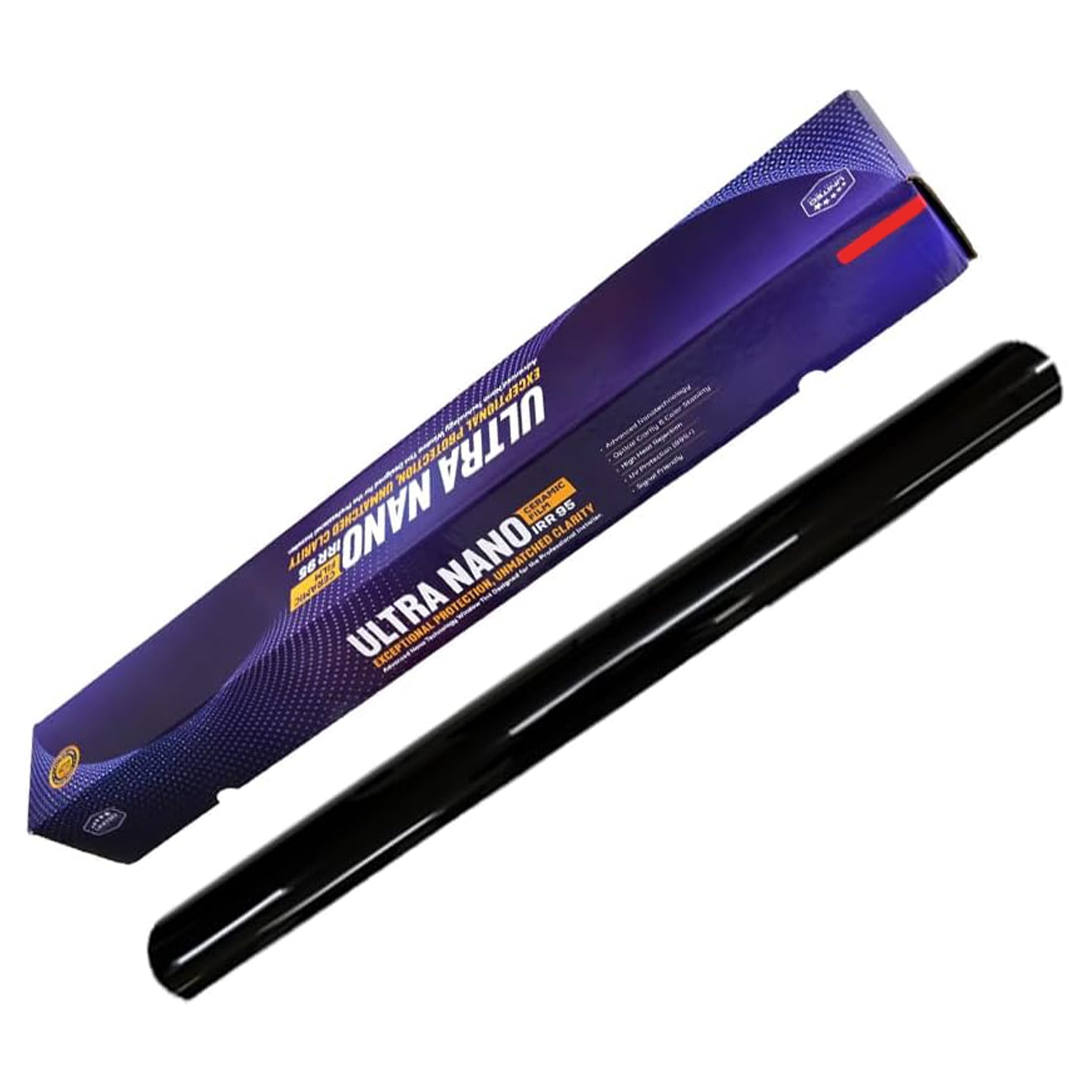
This 2PLY nano ceramic roll delivers infrared heat rejection in the 80-90% range with a total solar energy rejected figure of 50-66%, making it one of the few rolls in this tier that publishes TSER data transparently. The 70% VLT preserves outward visibility while still cutting cabin heat load, which makes it a strong candidate for front side windows where legal limits prevent darker films.
The optical-grade PET substrate and color-stable, non-dyed adhesive mean the film will not shift hue or turn purple over time. Users consistently report that it shrink-fits cleanly under a heat gun and bonds firmly to glass without the ghosting or milky haze that plagues cheaper carbon films. The wet and dry shrink compatibility gives both professionals and DIY installers flexibility.
The main tradeoff is that a 70% VLT does not provide the daytime privacy that darker shades offer. For buyers who need near-transparent heat rejection with verified IR performance, this is the most technically complete roll on the list. It represents the intersection of real ceramic construction, high IR rejection, and installation reliability.
Why it’s great
- Published TSER 50-66% is verifiable and competitive with professional-grade film
- 2PLY nano ceramic construction ensures color stability and no metal interference with signals
- Wet and dry heat shrink compatible for flexible installation
Good to know
- 70% VLT provides minimal privacy tinting
- Large 100-ft roll may exceed the needs of single-vehicle applications
2. United 2PLY Nano Ceramic Pro Window Tint Film 5%
This film pushes infrared heat rejection to the IR-95 level with a TSER rating of 50-60%, which places it at the top of the consumer-available ceramic performance stack. The 5% VLT is extremely dark, providing near-complete daytime privacy while maintaining the non-reflective, signal-friendly character that nano ceramic construction enables. You get the heat-blocking power of a premium ceramic film without blocking your phone or GPS.
The 2PLY construction uses advanced ceramic particles embedded in clear PET and the laminate adhesive layer, which prevents the adhesive failure and bubbling that cheaper films develop after a summer of direct sun. Users report that the film applies cleanly with a wet installation method and has a color-stable adhesive that does not take on a green or blue cast — a known problem with some earlier ceramic formulations.
The 5% VLT will significantly impair night vision in unlit areas and is illegal for front side windows in most states. This is a rear-window and rear-quarter-glass solution for drivers who prioritize heat rejection and privacy above all else. The 100-ft roll is generous enough to cover a full SUV or multiple vehicles.
Why it’s great
- IR-95 heat rejection is among the highest available in a DIY roll
- Non-metalized ceramic ensures zero signal interference
- Large roll length eliminates the need for multiple purchases
Good to know
- 5% VLT is illegal for front windows in many jurisdictions
- Some users report a slight greenish hue under certain lighting
3. United Window Tint Nano Carbon Film 20%
This is a carbon-based film rather than a true nano ceramic, but it deserves a spot here because its build quality and adhesive reliability outperform many budget ceramic films. The 40-inch width and 100-foot length produce 333 square feet of coverage, making this the most economical option for covering large home windows or multiple vehicles. It uses a charcoal adhesive that blocks UV and reduces glare without the metallic shimmer that interferes with electronics.
Users report that the film does not crease as easily as the low-cost Gila films and that bubbles squeeze out cleanly during installation. The 20% VLT provides strong daytime privacy while still allowing outward visibility. Multiple reviewers note that the film holds up well over time with no bubbles or peeling when applied to indoor windows.
The IR rejection is lower than the premium nano ceramic options on this list, and the carbon construction will not match the total heat rejection of a 2PLY ceramic film. For buyers covering large surface areas on a budget who still want a durable, easy-to-install film with reliable adhesive, this is the practical choice.
Why it’s great
- 333 sq ft per roll offers exceptional coverage per dollar
- Carbon adhesive is durable and resists creasing during DIY install
- Strong privacy with 20% VLT and good outward visibility
Good to know
- Carbon film has lower IR rejection than true nano ceramic
- Not suitable for extreme heat rejection applications
4. MotoShield Pro 25% VLT Nano Ceramic Window Tint
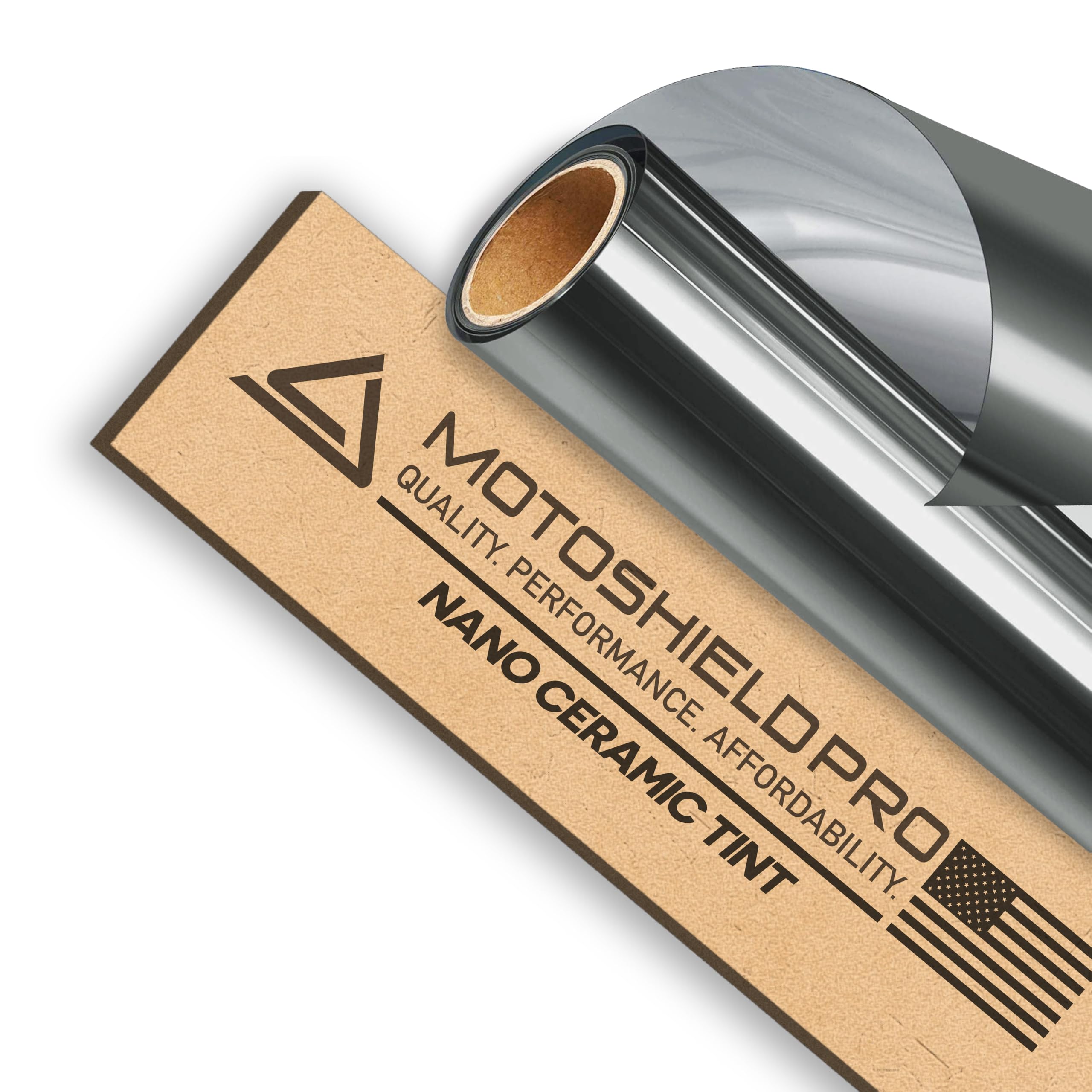
MotoShield Pro claims up to 99% infrared rejection and a maximum of 70% total solar energy rejected, which would place it in the premium performance tier on paper. The 2-mil thickness makes it relatively easy to handle compared to thicker professional films, and the product ships with a detailed installation manual and video. The 20-inch by 10-foot roll is sized for standard vehicle windows without leaving excessive waste.
User reports are mixed on the actual ceramic composition. Some buyers found that the 35% roll tested at only 42.4% IR rejection, suggesting batch inconsistency or a carbon-film hybrid formulation. Others reported excellent results with the 20% roll measuring 80.5% IR rejection, which is more consistent with true ceramic performance. This inconsistency means the roll’s performance depends heavily on which VLT version you select.
The film requires careful heat molding for curved glass, and some users report that it feels harder than premium brands, increasing the risk of creases during installation. For buyers who choose the 20% or 25% VLT and have experience with tint application, this can deliver strong heat rejection at a reasonable price. Novices should expect a steeper learning curve.
Why it’s great
- Claimed 99% IR rejection in darker VLT options is competitive
- 2-mil thickness is manageable for DIY installers
- Includes detailed installation guide and video
Good to know
- IR rejection varies significantly between VLT percentages
- Stiffer film increases crease risk on curved glass
5. Snapguard Solutions Residential Ceramic Window Tint 70%

This film is designed specifically for residential windows, not automotive glass, and uses a static-cling application rather than a permanent adhesive. The 70% VLT means it blocks minimal light while providing up to 99% UV rejection and 95-99% IR heat rejection. It is one of the few home-window films on the market that explicitly publishes IR rejection numbers in the 95%+ range, which is competitive with high-end automotive ceramic films.
The 2-mil thickness and static-cling design make installation significantly easier than adhesive films. Users report that the film goes on smoothly with a soap-water solution and a squeegee, and that it can be repositioned without losing adhesion. The clear, barely-tinted appearance means it does not alter the look of your windows or block your view.
The static-cling attachment is less permanent than adhesive films, which may concern buyers in high-traffic or high-vibration environments. Some users found the film thin and prone to durability concerns during installation. For homeowners who want heat and UV rejection without a visible tint change, this is the most effective option.
Why it’s great
- Published 95-99% IR rejection is exceptional for home window film
- Static-cling design allows easy repositioning during install
- Near-clear appearance preserves window aesthetics
Good to know
- Static cling may not be suitable for high-vibration door windows
- Thin film requires careful handling to avoid damage
6. BDF NSN70 Transparent Window Film

BDF’s NSN70 film is a near-clear polyester roll designed for homeowners who want heat reduction without changing the window’s appearance. It blocks 99% of UV rays and uses a strong, scratch-resistant adhesive protected by a release liner. The 36-inch by 7-foot size covers a standard single door or two smaller windows, and the product ships with free installation tools.
Users consistently report that the film reduces room temperature by noticeable margins — one reviewer recorded a drop from 74-76°F to 71°F in a pantry after application. The near-clear shade means no privacy benefit, but the heat rejection is effective enough that multiple reviewers commented on feeling a temperature difference within hours. The film requires an aggressive soap-water soak for proper positioning, and careful handling because the slightest fold can create a permanent wrinkle.
The roll size is relatively small compared to other options on this list, and the film is not marketed as nano ceramic, so the IR rejection specifications are less aggressive than true ceramic films. For homeowners who need a budget-friendly, barely visible heat-blocking layer for small windows or doors, this is a reliable choice.
Why it’s great
- Near-clear design preserves window appearance and view
- Measurable temperature reduction reported by multiple users
- Includes free installation tools for DIY application
Good to know
- Small roll size limits coverage for larger projects
- Requires careful handling to avoid permanent wrinkles
7. KORKIE Nano Ceramic Car Window Tint 50% VLT

KORKIE markets this film as nano ceramic with claims of 99% UV protection and greater than 85% IR rejection. The 50% VLT is a medium-shade option that balances privacy and outward visibility. The roll dimensions of 30 inches by 15 feet are sized to cover the side and rear windows of an SUV or crossover, and the film is constructed from PET with a nano ceramic layer and a peel-and-stick adhesive.
User experiences vary significantly with this product. Some buyers report excellent results — one installed the 20% version on a 2016 Tacoma and described it as comparable to a + professional tint job with outstanding clarity and heat rejection. Others, including a former professional installer, report that the film slides during application, refuses to align, and develops bubble creases that will not smooth out. One reviewer’s IR testing showed that the 35% roll measured only 42.4% IR rejection, suggesting that the ceramic formulation may not be consistent across all VLT options.
The inconsistency means this roll is a gamble. The 20% version appears to deliver genuine ceramic-level performance, but the lighter VLT options may be carbon film in disguise. For buyers on a tight budget who are willing to accept potential variance, the 20% option can deliver good results. Buyers seeking guaranteed ceramic performance should choose a product with more consistent testing data.
Why it’s great
- 20% VLT version reported to match professional shop quality
- 30-inch width covers SUV side and rear windows in one roll
- No signal interference from metal-free construction
Good to know
- IR rejection varies significantly between VLT percentages
- Some batches reported as difficult to apply with creasing issues
FAQ
How can I tell if a tint is real nano ceramic and not carbon?
What VLT percentage should I use for my car’s front windows?
Will ceramic tint interfere with GPS or cell phone signals?
Can I install ceramic tint myself, or do I need a professional?
How long does ceramic tint last before it needs replacement?
Final Thoughts: The Verdict
For most users, the best ceramic tint winner is the United 2PLY Ultra Nano Ceramic 70% because it publishes verifiable TSER and IR rejection numbers, uses a true dual-layer nano ceramic construction, and supports both wet and dry shrink installation. If you need maximum privacy with extreme heat rejection, grab the United 2PLY Nano Ceramic Pro 5%. And for large-area home or vehicle coverage on a budget, nothing beats the United Nano Carbon Film 20% for sheer square footage per dollar.

Mo Maruf
I created WellFizz to bridge the gap between vague wellness advice and actionable solutions. My mission is simple: to decode the research and give you practical tools you can actually use.
Beyond the data, I am a passionate traveler. I believe that stepping away from the screen to explore new environments is essential for mental clarity and physical vitality.