Our readers keep the lights on and my smoothie glass nicely filled. As an Amazon Associate, I earn from qualifying purchases.
Choosing a down sleeping bag for backpacking means obsessing over the trade-off between warmth and packed weight — a bag that feels cozy in the store can feel like a lead blanket six miles into a trail. The best options compress smaller than synthetic bags, loft faster when unpacked, and deliver a far better warmth-to-weight ratio for multi-day trips where every ounce in your pack matters.
I’m Mohammad Maruf — the founder and writer behind WellFizz. This guide is built from hundreds of hours comparing fill power ratings, temperature certifications, fabric denier, and baffle construction to find the bags that actually perform on the trail, not just on the spec sheet.
Whether you’re a three-season hiker or a cold-weather weekend warrior, finding the right down sleeping bag for backpacking depends on matching your trail conditions, sleeping style, and budget constraints to a bag with honest temperature ratings and durable materials.
How To Choose The Best Down Sleeping Bag For Backpacking
Backpacking down bags demand a balance that car-camping bags don’t: you need enough insulation for the coldest expected night, but any extra weight punishes you for every uphill mile. The three specs that separate a great backpacking bag from a mediocre one are fill power, temperature rating accuracy, and packed size.
Fill Power: The Compressibility Metric
Fill power measures how many cubic inches one ounce of down occupies when fully lofted. A 550-fill bag requires more down mass to achieve the same warmth as an 850-fill bag, making it heavier and less compressible. For backpacking, 650-fill is the practical entry point, while 800-fill and above is the sweet spot for ultralight trips where every ounce counts.
Temperature Ratings: Comfort vs. Limit vs. Extreme
ISO and EN standards provide three numbers: comfort (the temperature a typical woman sleeps warm), limit (the temperature a typical man sleeps warm), and extreme (survival only, not for sleep). A bag rated to 20°F with a comfort rating of 28°F means you’ll likely need a base layer and hat below 30°F to stay comfortable. Always look at the comfort rating — that’s the number that predicts real sleep quality.
Baffle Construction and Down Migration
Sewn-through baffles are lighter but create cold spots where the stitching compresses the insulation. Box baffles and continuous baffles keep down evenly distributed and eliminate thermal bridges. For cold-weather backpacking, box baffles or shingle construction are worth the small weight penalty. For summer bags, sewn-through construction keeps weight down without sacrificing much warmth.
Quick Comparison
On smaller screens, swipe sideways to see the full table.
| Model | Category | Best For | Key Spec | Amazon |
|---|---|---|---|---|
| NEMO Disco 15 | Premium Spoon | Side sleepers who want roomy comfort | 650 FP Hydrophobic Down | Amazon |
| Sea to Summit Spark | Ultralight | Warm-weather ultralight trips | 850+ FP Down | Amazon |
| Sea to Summit Trek | Relaxed Mummy | 2-season backpacking with extra room | 650+ FP Down | Amazon |
| Kelty Supernova 20 | Roomy Down | All body types, stomach sleepers | 550 FP Down | Amazon |
| Kelty Cosmic 20 | Value Down | Budget-conscious 3-season backpackers | 550 FP Down | Amazon |
| Naturehike Ultralight 40F | Hybrid Shape | Summer trips, stomach sleepers | 650 FP RDS Down | Amazon |
| TETON Sports Altos 20 | Entry-Level Down | First-time down bag buyers | Water-resistant Down | Amazon |
| Naturehike Snowbird 650 | Cold-Weather Value | Cold-weather backpacking on a budget | 650 FP RDS Down | Amazon |
| QEZER 600FP Down | Budget Roomy | Carry-in campers wanting down warmth | 600 FP Duck Down | Amazon |
In‑Depth Reviews
1. NEMO Disco 15 Endless Promise
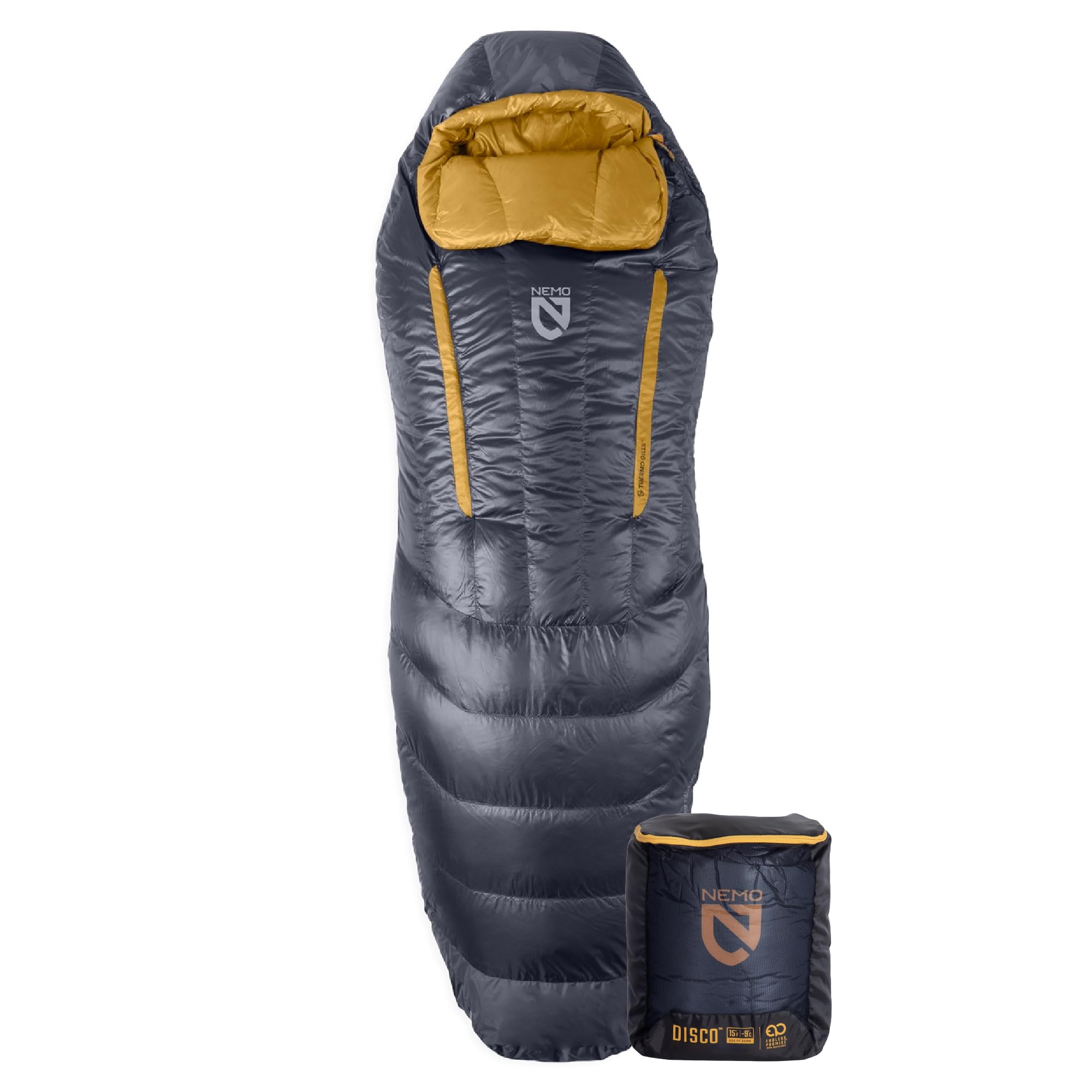
The NEMO Disco 15 is the gold standard for backpackers who refuse to sleep in a straightjacket. Its signature Spoon shape provides extra width at the elbows and knees — a game-changer for side sleepers and stomach sleepers who normally fight mummy bags all night. The 650-fill hydrophobic down holds loft admirably in damp conditions, and the Thermo Gill vents allow you to dump heat without unzipping the entire bag.
The updated Blanket Fold draft collar creates a plush barrier that seals in warmth around the neck without the suffocating feeling of traditional draft tubes. The Endless Promise construction means the entire bag is designed for 100% recyclability at end of life, which matters for buyers weighing sustainability against performance. At roughly 2 pounds 15 ounces for the regular, it’s not ultralight, but the comfort-per-ounce ratio is outstanding.
Some users report the vent zippers occasionally snag the inner fabric, requiring careful two-handed operation. The 15°F comfort rating is honest — expect solid sleep down to about 25°F with a base layer, and survival tolerance below that. For three-season backpackers who prioritize sleep quality over shaving every last gram, this bag delivers unmatched versatility.
Why it’s great
- Spoon shape allows natural sleeping positions without compromising warmth
- Thermo Gill vents provide fine-tuned temperature regulation in variable weather
- Hydrophobic, PFAS-free down with full RDS certification
Good to know
- Vent zippers can snag fabric if rushed
- Not the lightest option for hardcore ultralight trips
2. Sea to Summit Spark Ultralight
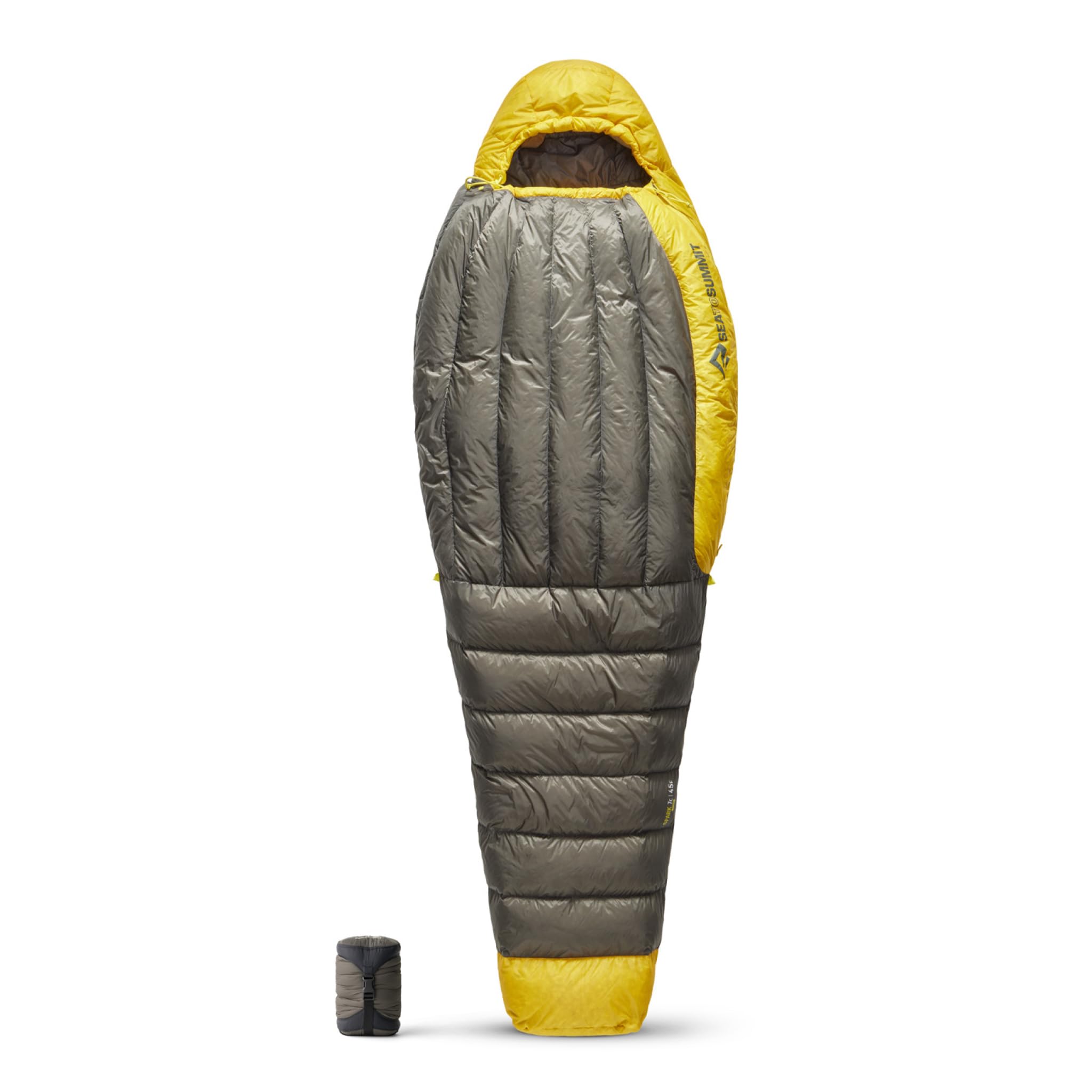
The Sea to Summit Spark is the bag you pull out when your pack weight target is under 20 pounds and you’re chasing summer alpine sunrises. Weighing just 0.91 pounds with a packed size smaller than a Nalgene bottle, this 850+ fill power down bag sets the standard for ultralight warmth. The Ultra-Dry down treatment repels moisture far better than untreated down, and the 10D nylon shell is surprisingly durable for its gossamer weight.
The contoured mummy shape is snug but not restrictive — adequate for side sleepers who don’t thrash. The YKK #5 zipper operates smoothly without snagging, a critical detail when you’re fumbling in the dark at 4 a.m. The sewn-through baffle construction keeps weight down but does create minor cold spots at extreme lows, so this bag is best reserved for temperatures above 40°F unless you’re layering up.
The 45°F temperature rating means this is strictly a warm-weather companion. Pair it with a lightweight liner for shoulder-season use, or accept it as the ideal summer bag for thru-hikers who count grams. The Sea to Summit lifetime warranty backs the craftsmanship, though the 10D fabric demands care around tent poles and sharp ground cloths.
Why it’s great
- Astoundingly light at under a pound — ideal for gram-counters
- 850+ fill down compresses to near nothing in a pack
- Ultra-Dry treatment improves moisture resistance for damp conditions
Good to know
- Sewn-through baffles create cold spots near freezing
- 10D shell is fragile and requires careful handling
3. Sea to Summit Trek Down
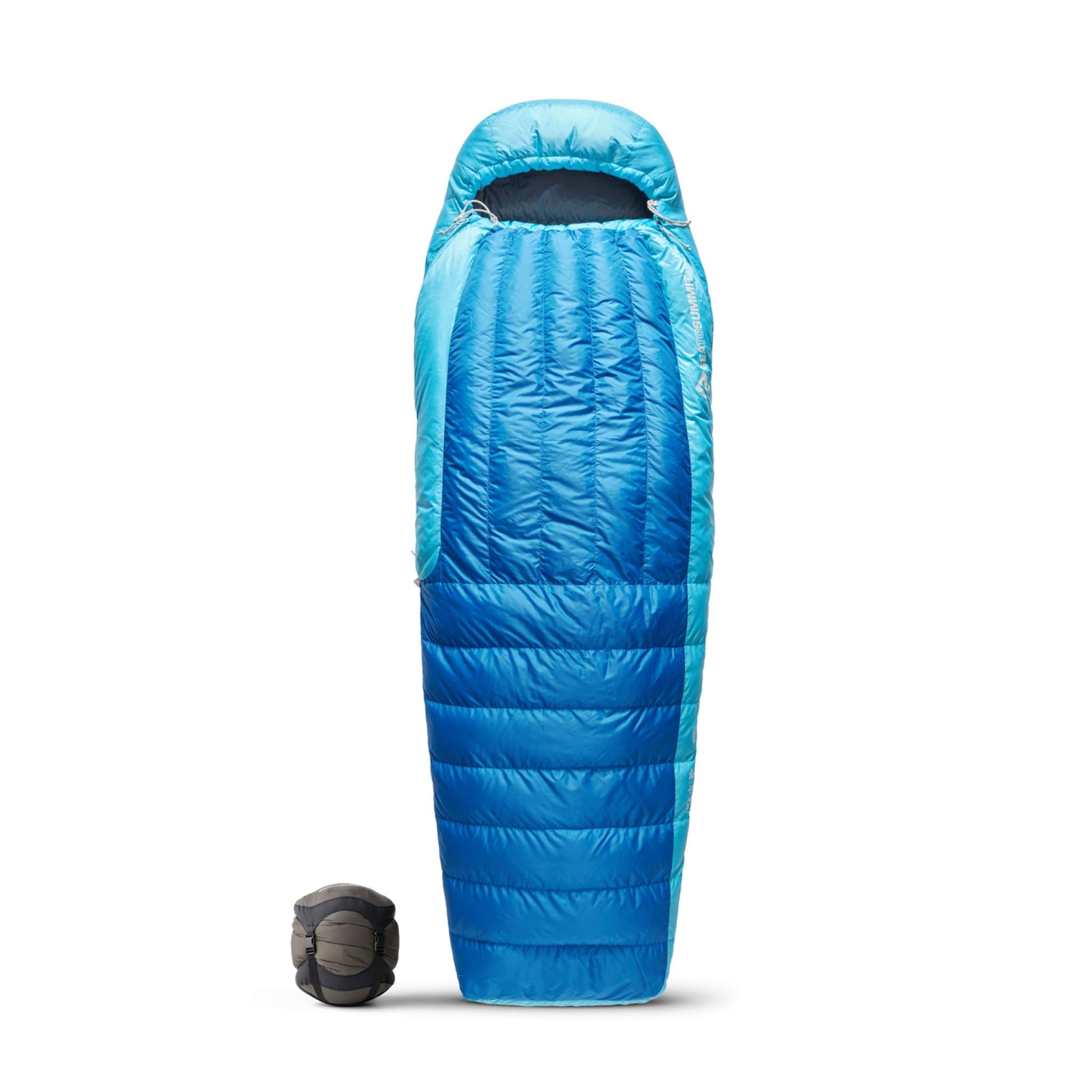
The Sea to Summit Trek Down solves the biggest complaint about mummy bags: claustrophobia. Its relaxed mummy cut provides generous width through the hips and knees without the weight penalty of a full rectangular bag. The 650-fill duck down with Ultra-Dry treatment offers solid moisture resistance, and the recycled 20D polyester shell shrugs off wind and light drizzle better than many bags at this price point.
The Free Flow Zip System is a standout feature — it allows multiple configuration options, including using the bag as a quilt on warmer nights. The 30°F comfort rating translates to genuine warmth down to about 35°F with a base layer, making it a legitimate 2-season bag with 3-season potential for warm sleepers. The Long size accommodates users up to 6’6″ without the cramped toe-box that plagues standard mummy bags.
Zipper snagging is the most frequent complaint among long-term users — several reviewers report the main zipper catching on the draft tube during rushed closures. The down distribution can feel uneven out of the box, requiring a full day of lofting before first use. For big-and-tall backpackers who want down insulation without feeling trapped, this bag offers an uncommon balance of space and packability at a mid-range price.
Why it’s great
- Relaxed cut provides genuine extra room without excessive bulk
- Free Flow Zip System allows quilt conversion for variable temps
- Long size fits tall users up to 6’6″
Good to know
- Main zipper can snag on draft tube during fast operation
- Down may arrive clumped and needs time to fully loft
4. Kelty Supernova 20

The Kelty Supernova 20 is designed from the ground up for backpackers who need more lateral space. The recycled shell and liner fabrics don’t sacrifice durability, and the PFAS-free DWR finish keeps light condensation off the shell without introducing toxic chemicals.
The ability to zip two Supernova bags together into a two-person haven is a thoughtful touch for couples who want to share warmth without buying separate double bags. The internal draft collar and full-length draft tube effectively block cold air intrusion along the zipper track. At 3 pounds packed weight, it’s not an ultralight option, but the extra space makes it a favorite for stomach sleepers who toss and turn.
The 550-fill down doesn’t compress as small as higher-fill options — expect a packed size around 14 x 8 inches, which demands more pack volume than premium bags. The zipper occasionally catches on the draft tube, requiring deliberate operation. For backpackers who prioritize sleeping position freedom and don’t mind the extra bulk, the Supernova is a spacious, well-built choice backed by Kelty’s reliable warranty.
Why it’s great
- Semi-rectangular shape allows unrestricted movement for all sleep positions
- Can zip two bags together for a roomy two-person setup
- Recycled shell materials with sustainable, PFAS-free DWR
Good to know
- 550-fill down packs larger than higher-fill alternatives
- Zipper can snag if not aligned carefully
5. Kelty Cosmic 20

The Kelty Cosmic 20 has been a staple of the backpacking world for years, and the latest version with recycled fabrics and traceable down proves why. The 550-fill down is ethically sourced via RDS certification, and the PFAS-free DWR finish keeps the shell water-resistant without environmental trade-offs. The ISO limit rating of 21°F means a typical male sleeper in base layers will stay comfortable through most three-season conditions.
The mummy cut is snug at the shoulders — intentional for heat retention but worth noting for broad-shouldered users who might prefer the Long size for extra room. The dual-direction zippers provide ventilation options, and the draft collar effectively seals warmth around the neck. At roughly 2 pounds 6 ounces for the regular, it’s competitive with bags costing twice as much, and the packed size of 13 x 7 inches fits easily into a 50-liter pack.
Long-term users report the shell fabric feels noticeably thinner than premium competitors, and some have patched small holes from contact with sharp splinters. The snug shoulder fit can make layering bulky fleeces uncomfortable. For budget-conscious backpackers who want genuine down insulation with ethical sourcing and reasonable pack weight, the Cosmic 20 remains the standard to beat.
Why it’s great
- Excellent warmth-to-weight ratio at a competitive price point
- RDS-certified down with traceable supply chain and recycled fabrics
- Packs down to 13 x 7 inches — fits most backpacking packs
Good to know
- Snug shoulder cut limits layering for broad-chested users
- Thin shell fabric is prone to punctures from sharp objects
6. Naturehike Ultralight Down 40F

The Naturehike Ultralight Down 40F solves a specific problem: you want the warmth and packability of a mummy hood but the unrestricted foot movement of a rectangular bag. Its hybrid design combines a mummy upper body with a spacious rectangular lower section, giving you both a snug hood for heat retention and the ability to wiggle your toes or vent your feet on warm nights. The 650-fill RDS-certified down is odorless and lofty, with no clumping out of the box.
At just 2 pounds, it’s genuinely ultralight for a down bag at this price point, and the compression sack reduces packed size to 13.8 x 7.1 inches. The YKK zipper operates smoothly with no snagging, and the 400T 20D ripstop nylon shell provides decent water resistance for a bag in this tier. The 40.4°F comfort rating makes it a dedicated warm-weather bag, ideal for summer treks and hut-to-hut trips where temperatures stay above 45°F.
The hybrid shape means the hood is less insulated than full mummy bags, and the rectangular foot section loses some heat compared to a tapered design. Side sleepers report the spacious lower body allows knee-bending without restriction. For hikers who run hot and prioritize ventilation options, this bag delivers a unique comfort profile at a very accessible price.
Why it’s great
- Hybrid mummy-envelope shape combines heat retention with foot freedom
- Weighs only 2 pounds with excellent compressibility for summer trips
- RDS-certified down with traceable supply chain at a budget-friendly price
Good to know
- 40°F comfort rating limits use to warm-weather conditions
- Hood is less insulated than traditional mummy designs
7. TETON Sports Altos 20
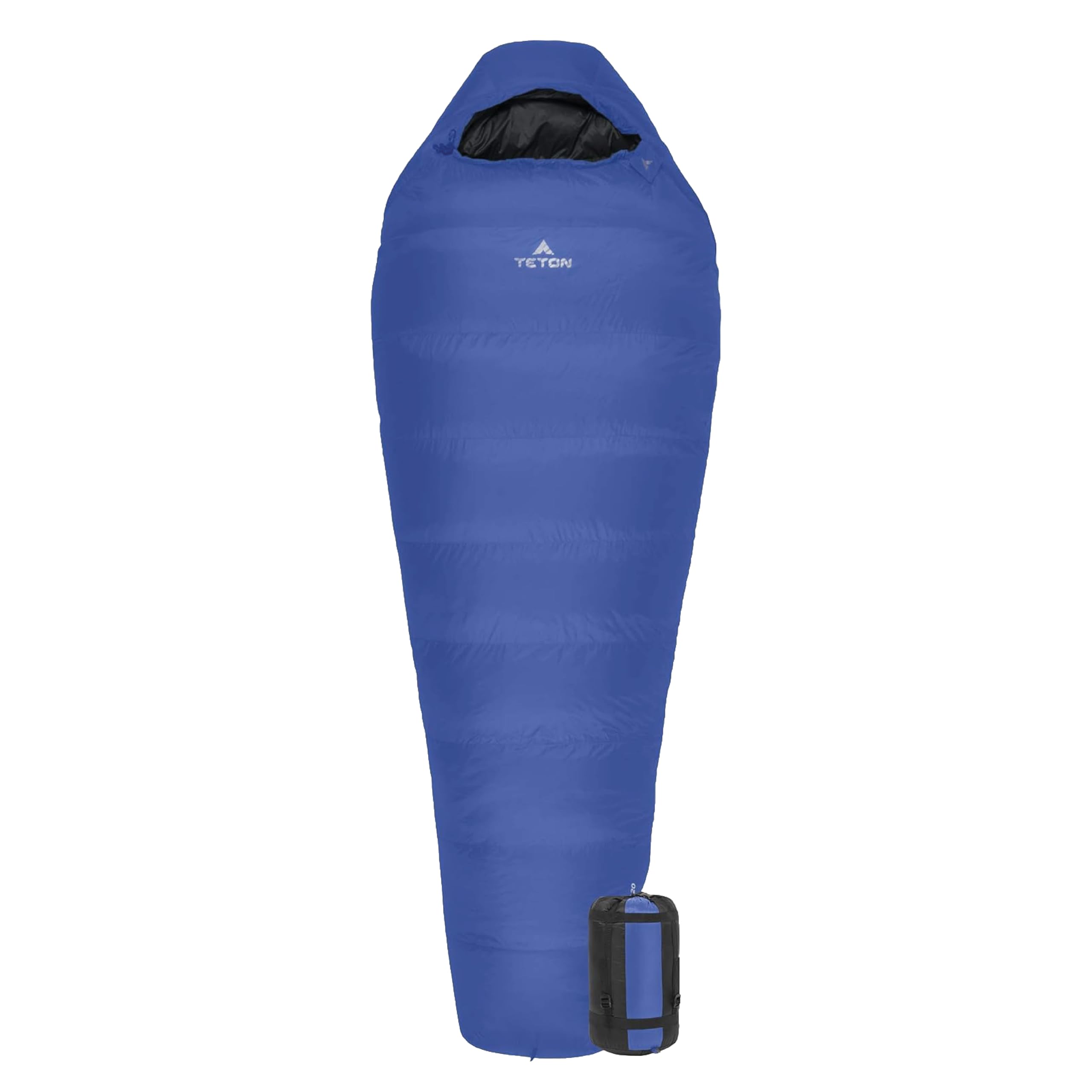
The TETON Sports Altos 20 is the bag for backpackers making their first jump from synthetic to down insulation. The water-resistant down treatment provides a safety margin against condensation that untreated down can’t match, and the built-out footbox offers genuine room for movement inside a mummy shape. At 2.5 pounds, it’s heavier than premium options but significantly lighter than any synthetic bag at this temperature rating.
The compression sack with heavy-duty straps makes packing simple — start at the bottom and stuff — and the 84-inch length accommodates users up to 7 feet tall. The draft flap and hood effectively seal warmth, though several users report cold spots at pressure points when temperatures drop below 25°F. The 20°F rating is best interpreted as a survival limit rather than a comfort rating; most sleepers find it comfortable to about 32°F with appropriate base layers.
The nylon shell is noticeably thin compared to TETON’s synthetic bags — a trade-off for the weight savings. Some users have reported holes from contact with tent poles and sharp rocks, so a ground cloth is recommended. For car campers transitioning to backpacking who want to test down without a premium investment, the Altos 20 provides a functional, warm introduction at a very accessible price.
Why it’s great
- Water-resistant down provides moisture safety margin for damp conditions
- Spacious footbox and 84-inch length fit tall users comfortably
- Significant weight savings over synthetic bags at this price
Good to know
- 20°F rating is optimistic — real comfort stops around 32°F
- Thin shell fabric requires careful site selection and ground protection
8. Naturehike Snowbird 650 (SP700)
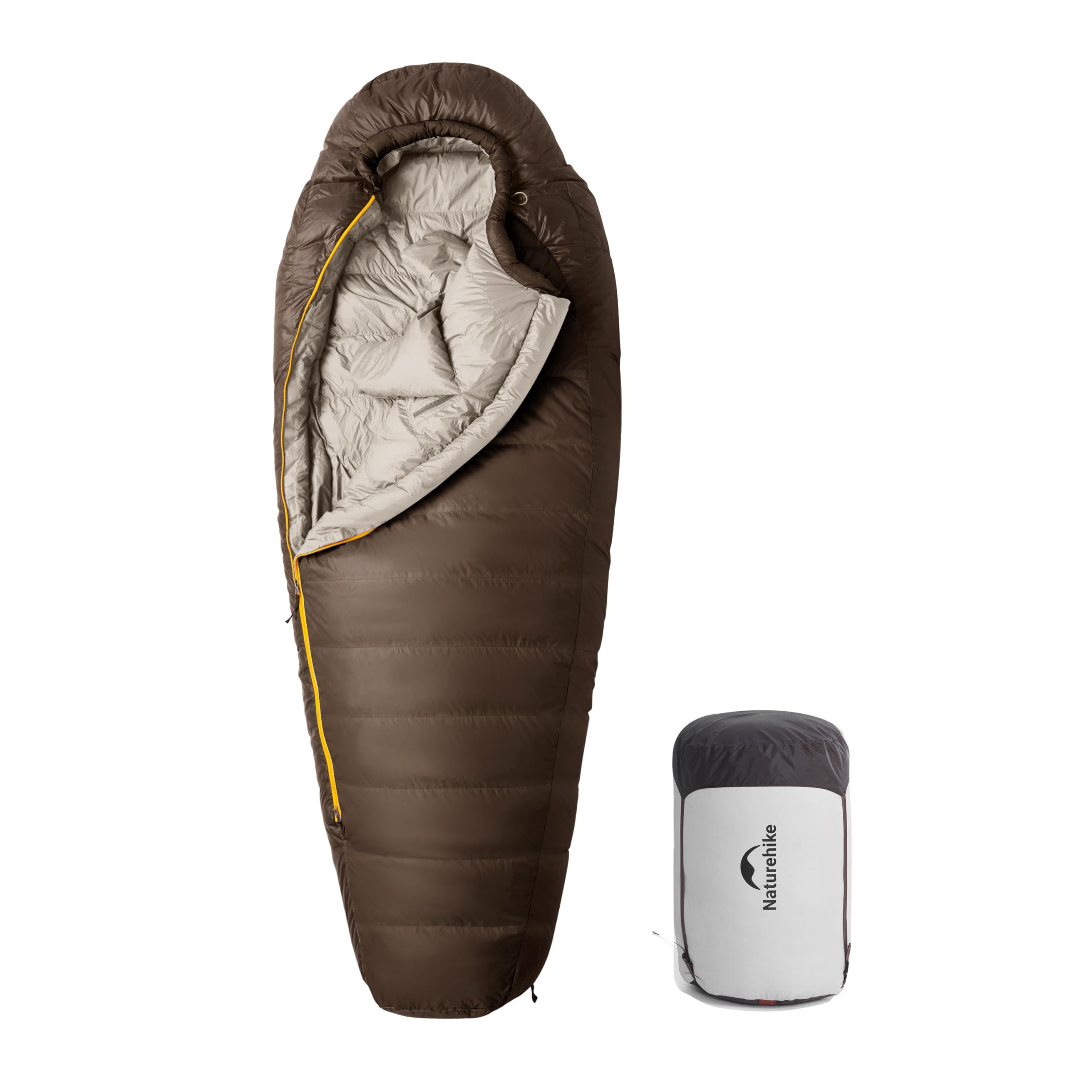
The Naturehike Snowbird 650 in the SP700 configuration punches far above its price class for cold-weather backpacking. The 650-fill RDS-certified down with IDS testing in the USA provides verified loft and fill quality, and the thick three-dimensional wind baffle effectively eliminates cold spots along the zipper track. The U-shaped neck collar and internal pocket for warming a phone or electronics are thoughtful details that matter when the mercury drops below freezing.
The C-shaped wrapped design distributes 60% of the down on top of the body — where you need it most — while the 3D footbox allows natural foot movement without compressing insulation. The YKK two-way zipper operates smoothly with anti-snag protection, and the 18.86°F comfort rating holds up in real-world testing, with multiple users reporting genuine comfort down to 25°F with base layers. The SP700 model hits a sweet spot between weight and warmth for shoulder-season backpacking.
The down requires a full day of lofting before first use — it arrives compressed and needs time to reach its full insulating volume. The SP400 model lacks the U-neck collar and wind-blocking strip found on the SP700, so verify you’re ordering the correct fill weight for your conditions. For backpackers on a budget who need reliable warmth into the low 20s, the Snowbird series offers verified construction and ethical down sourcing at a fraction of premium brand prices.
Why it’s great
- Verified RDS and IDS certification provides confidence in down quality and ethics
- 60/40 down distribution and 3D footbox maximize warmth where you need it
- U-neck collar and wind baffle effectively block drafts at sub-freezing temps
Good to know
- Down needs a full day to fully loft after unpacking
- SP400 model lacks important neck collar and wind baffle features
9. QEZER 600FP Down (800g Fill)

The QEZER 600FP Down bag is the wildcard of this list — a semi-rectangular down bag that prioritizes space and value over ultralight weight. With 1.7 pounds of 600-fill duck down and a roomy 30.71 x 86.61-inch profile, it offers the kind of internal volume usually reserved for synthetic car-camping bags, but with genuine down warmth. The 400T high-density nylon shell is noticeably thicker than ultralight competitors, offering better puncture resistance at the cost of added weight.
The double zipper design includes a foot zipper for ventilation, and the chest insulation strip adds extra warmth where core heat loss is most likely. The 28°F to 45°F comfort range means this bag is best suited for late spring through early fall backpacking — pushing it below 25°F would require heavy layering. The ability to zip two bags together into a double is a practical feature for couples sharing a tent.
At 3.24 pounds, this is the heaviest down bag in the roundup, and the stuff sack is notably thin — several users recommend replacing it with a more durable compression sack. The semi-rectangular shape means less efficient heat retention than a mummy cut, and the 600-fill down doesn’t compress as tightly as higher-fill options. For backpackers who prioritize room and durability over extreme weight savings, and who understand the weight penalty of a generous cut, this bag delivers genuine down comfort at a very low entry point.
Why it’s great
- Generous semi-rectangular cut provides far more room than standard mummy bags
- 400T nylon shell offers better puncture resistance than ultralight fabrics
- Can zip two together into a double bag for couple camping
Good to know
- At 3.24 pounds, it’s the heaviest down bag in this review — not for gram-counters
- Included stuff sack is thin and may need replacement for long-term use
FAQ
What fill power is best for backpacking in three-season conditions?
How do I properly store a down sleeping bag between trips?
Can I use a down bag in humid or rainy conditions?
How do I wash a down sleeping bag without ruining it?
Final Thoughts: The Verdict
For most backpackers seeking the best balance of comfort, warmth, and versatility, the winner is the NEMO Disco 15 because its Spoon shape accommodates side and stomach sleeping without the restrictive feel of traditional mummy bags, while the 650-fill hydrophobic down and Thermo Gill vents provide real temperature regulation across three-season conditions. If you want the absolute lightest option for gram-counting summer trips, grab the Sea to Summit Spark Ultralight — its 850+ fill down and sub-pound weight are unmatched for warm-weather ultralight adventures. And for cold-weather backpacking on a budget, nothing beats the Naturehike Snowbird 650 with its verified RDS certification, U-neck collar, and reliable warmth into the low 20s at a fraction of premium-brand pricing.

Mo Maruf
I created WellFizz to bridge the gap between vague wellness advice and actionable solutions. My mission is simple: to decode the research and give you practical tools you can actually use.
Beyond the data, I am a passionate traveler. I believe that stepping away from the screen to explore new environments is essential for mental clarity and physical vitality.