Our readers keep the lights on and my smoothie glass nicely filled. As an Amazon Associate, I earn from qualifying purchases.
A drone for home inspections isn’t just a fancy camera on rotors. It’s a tool that puts you eye-level with a cracked chimney crown or a sagging roofline without dragging a 40-foot extension ladder across your lawn. For property inspectors, contractors, and homeowners who want to know exactly what they’re dealing with before calling in a crew, the right quadcopter separates a clear diagnosis from a costly guess.
I’m Mohammad Maruf — the founder and writer behind WellFizz. I’ve spent countless hours poring over flight-time specs, gimbal stability tests, transmission ranges, and sensor configurations to isolate which drones genuinely serve the inspection workflow rather than just buzzing around for fun.
This guide delivers a rigorously curated selection of models that pair stable hovering with high-resolution imaging so you can document flashings, fascia boards, and foundation cracks with confidence. Finding the right drone for home inspections means matching camera sharpness, flight endurance, and obstacle awareness to the specific demands of your work site.
How To Choose The Best Drone For Home Inspections
Picking a drone for property inspection isn’t the same as picking one for travel vlogs or racing. You need stable hovering near vertical surfaces, a camera that resolves fine cracks and loose flashing, and a flight time long enough to cover a typical house without landing to swap batteries twice. Let’s break down the specs that actually matter on a job site.
Camera Stabilization Is Non-Negotiable
A 3-axis brushless gimbal keeps the lens level when the drone rocks in wind gusts near rooflines. Electronic image stabilization (EIS) alone can introduce warping artifacts around straight lines like gutters and window frames. For inspection work where you need truthful geometry, a mechanical gimbal is the baseline.
Flight Time and Battery Logistics
A single 25-minute flight can cover a modest ranch home. For two-story houses with complex rooflines, multi-pitch sections, and chimneys, plan for 30-40 minutes of cumulative airtime. Models that ship with three batteries and a parallel charging hub let you cycle through quickly without waiting for a single pack to refill.
Transmission Range and Signal Reliability
You don’t need 10 km of range to inspect a roof. But you do need a signal that doesn’t drop when you fly around a corner of the building. Digital transmission systems (rather than basic Wi-Fi) maintain a stable low-latency feed when the drone is behind a chimney or on the far side of the house. Look for systems rated for 3-6 km as an indication of robust link quality, even if you only fly 100 meters out.
Obstacle Sensing and Safety Features
Flying near walls, gutters, and satellite dishes demands spatial awareness that even a skilled pilot can lose in a split second. Forward, backward, and downward obstacle sensors prevent collisions during lateral moves along a roof edge. Combined with GPS-based return-to-home, these features protect both the drone and the structure you’re inspecting.
Quick Comparison
On smaller screens, swipe sideways to see the full table.
| Model | Category | Best For | Key Spec | Amazon |
|---|---|---|---|---|
| DJI Mini 5 Pro Fly More Combo Plus | Premium | Professional inspectors needing obstacle sensing | 1-inch CMOS, omnidirectional obstacle sensing | Amazon |
| Potensic ATOM 2 Fly More Combo | Premium | All-around performance with ND/CPL filters | 48MP photos, 10 km transmission | Amazon |
| Bwine F7MINI 4K(RC3) | Mid-Range | Inspectors who want a built-in controller screen | 5.5″ 1080P controller screen, 249g weight | Amazon |
| Holy Stone Sentinel HS600D | Mid-Range | Wind resistance and extended flight time | Level-6 wind resistance, 80-min flight | Amazon |
| Bwine F7GB2 Pro | Mid-Range | High-altitude property surveys | 2000m altitude rating, L6 wind resistance | Amazon |
| Holy Stone HS790 | Mid-Range | Night-time and low-light exterior checks | AI Night Shot, 30,000 ft transmission | Amazon |
| Ruko 4K UHD Camera Drone | Value | Budget-friendly entry into inspection flying | 48MP sensor, 96-min flight with 3 batteries | Amazon |
| Potensic ATOM 4K GPS Drone | Value | Compact, sub-249g starter for basic inspections | Under 249g, 3-axis gimbal, 4K/30fps | Amazon |
| DJI Neo 2 Fly More Combo | Value | Quick hands-free roof checks | 151g, palm takeoff, omnidirectional sensing | Amazon |
| FLIR TG165-X Thermal Camera | Specialty | Thermal leak detection on roofs and walls | 4800-pixel IR, Bullseye laser, MSX imaging | Amazon |
| Thermal Master Thor 002 | Specialty | Detailed thermal diagnostics on electrical/HVAC | 512×384 X³IR, 10.5-hour battery, 40mK sensitivity | Amazon |
In‑Depth Reviews
1. DJI Mini 5 Pro Fly More Combo Plus
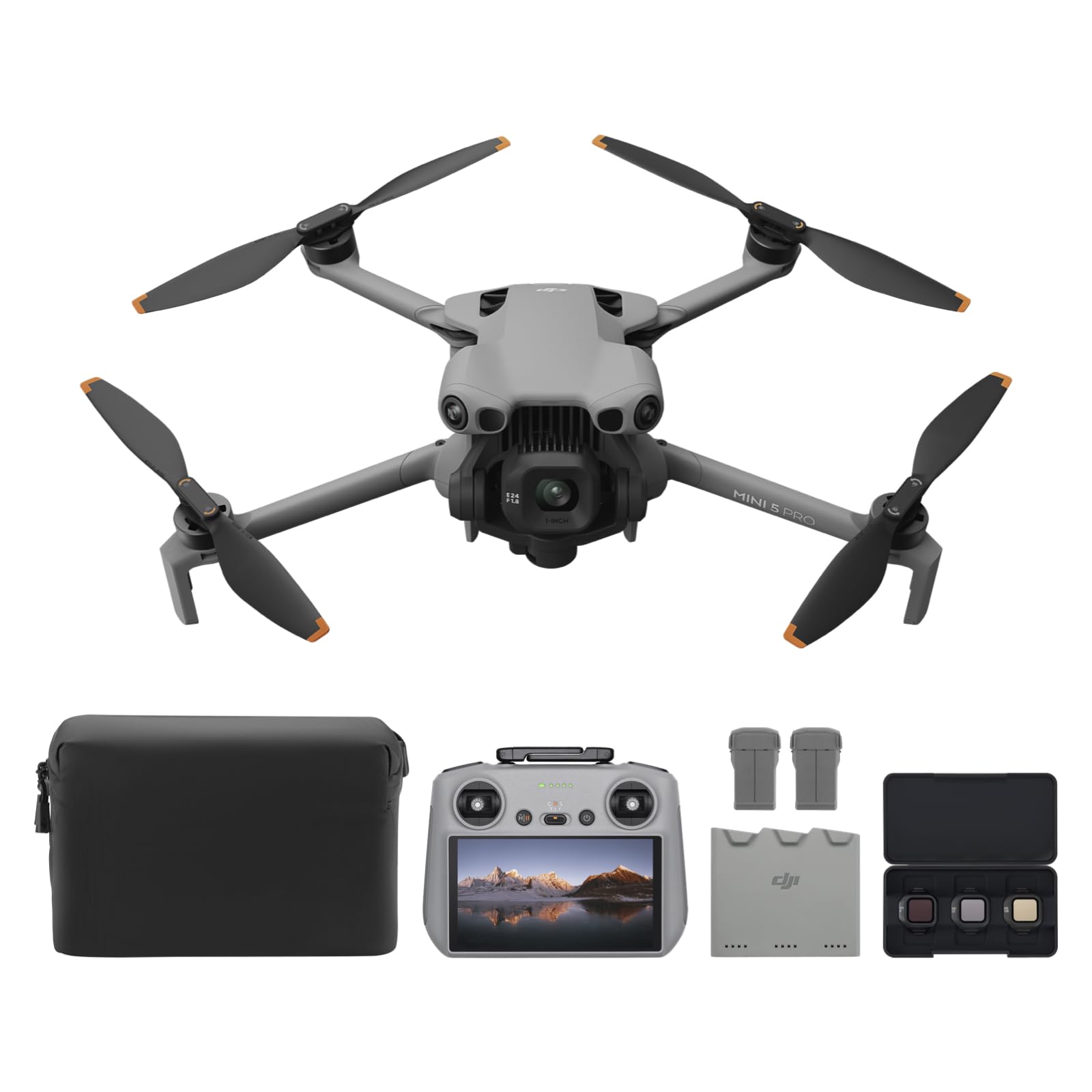
The DJI Mini 5 Pro sets a new baseline for inspection drones with its 1-inch CMOS sensor capturing 4K/60fps HDR video. The 225-degree gimbal rotation lets you tilt the camera vertically to inspect fascia boards and soffits without repositioning the aircraft. Omnidirectional obstacle sensing, including forward-facing LiDAR, provides critical protection when flying near walls, chimneys, and satellite dishes.
Flight time reaches up to 52 minutes with the Plus battery, enough to cover a large two-story home on a single charge. The three-battery Fly More Combo and two-way charging hub keep you in the air for extended inspection sessions. ActiveTrack 360° helps maintain focus on a specific roof section while you navigate manually, reducing the cognitive load of a complex flight path.
Weighing just under 250 grams, the drone avoids FAA registration when flown with the standard battery, though the Plus battery pushes it over the threshold. The RC 2 controller provides a bright built-in display, eliminating the need to tether a phone. This model is the clear choice for professionals who demand the highest sensor quality and obstacle protection in a portable airframe.
Why it’s great
- 1-inch CMOS sensor delivers crisp, true-to-life inspection imagery
- Omnidirectional obstacle sensing prevents collisions near building edges
- 225-degree gimbal rotation captures vertical surfaces without reorientation
Good to know
- Plus battery pushes weight over 250g, requiring FAA registration
- Premium price point may exceed hobbyist budgets
2. Potensic ATOM 2 Fly More Combo
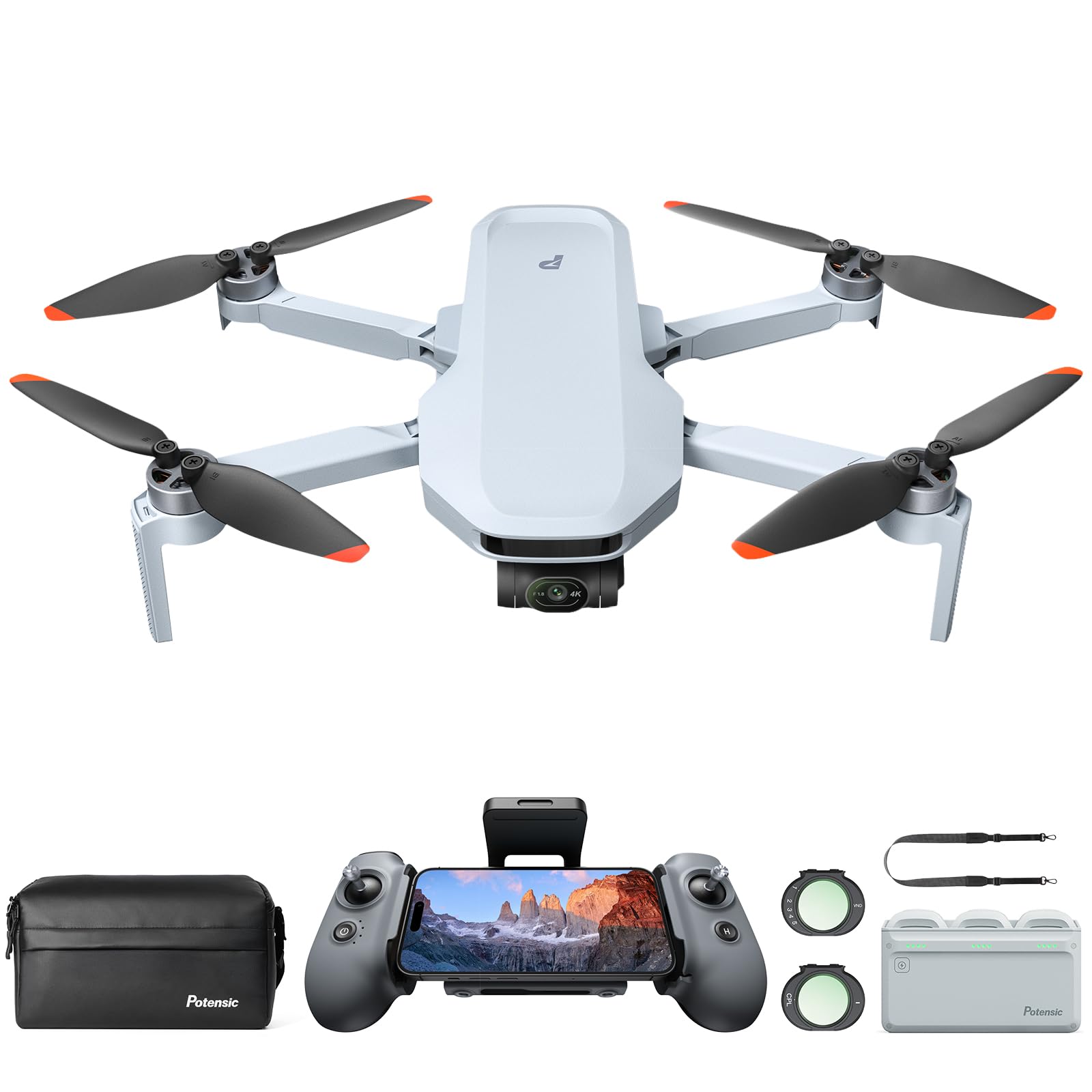
The Potensic ATOM 2 packs a Sony CMOS sensor capable of 48MP photos and 4K HDR video within a sub-249g frame. The included ND and CPL filters control glare and exposure, making it easier to capture clear readings of reflective roofing materials and window seals. The 3-axis gimbal keeps the horizon steady even in moderate wind, preserving straight lines for accurate damage assessment.
Flight time totals 96 minutes across three batteries, and the parallel charging hub replenishes all three packs in 1.3 hours. The PixSync 4.0 transmission system supports up to 10 km of control range with a 1080p/30fps live view, giving you a real-time inspection feed without lag. AI tracking modes, including Spotlight and Follow, help maintain focus on specific sections of a roof while you pilot.
Vertical shooting capability is a standout for inspecting gutters and downspouts from a natural top-down perspective. The drone also includes AI Night Shot for early-morning or dusk inspections when shadows hide cracks. Although it lacks full obstacle avoidance, the compact size and robust camera payload make it a top mid-range option for serious home inspectors.
Why it’s great
- Comes with ND/CPL filters for glare-free roof inspections
- Under 249g, no FAA registration required
- 96-minute total flight time with three batteries
Good to know
- No omnidirectional obstacle avoidance
- Quick-charge benefits from dedicated fast charger
3. Bwine F7MINI 4K(RC3)
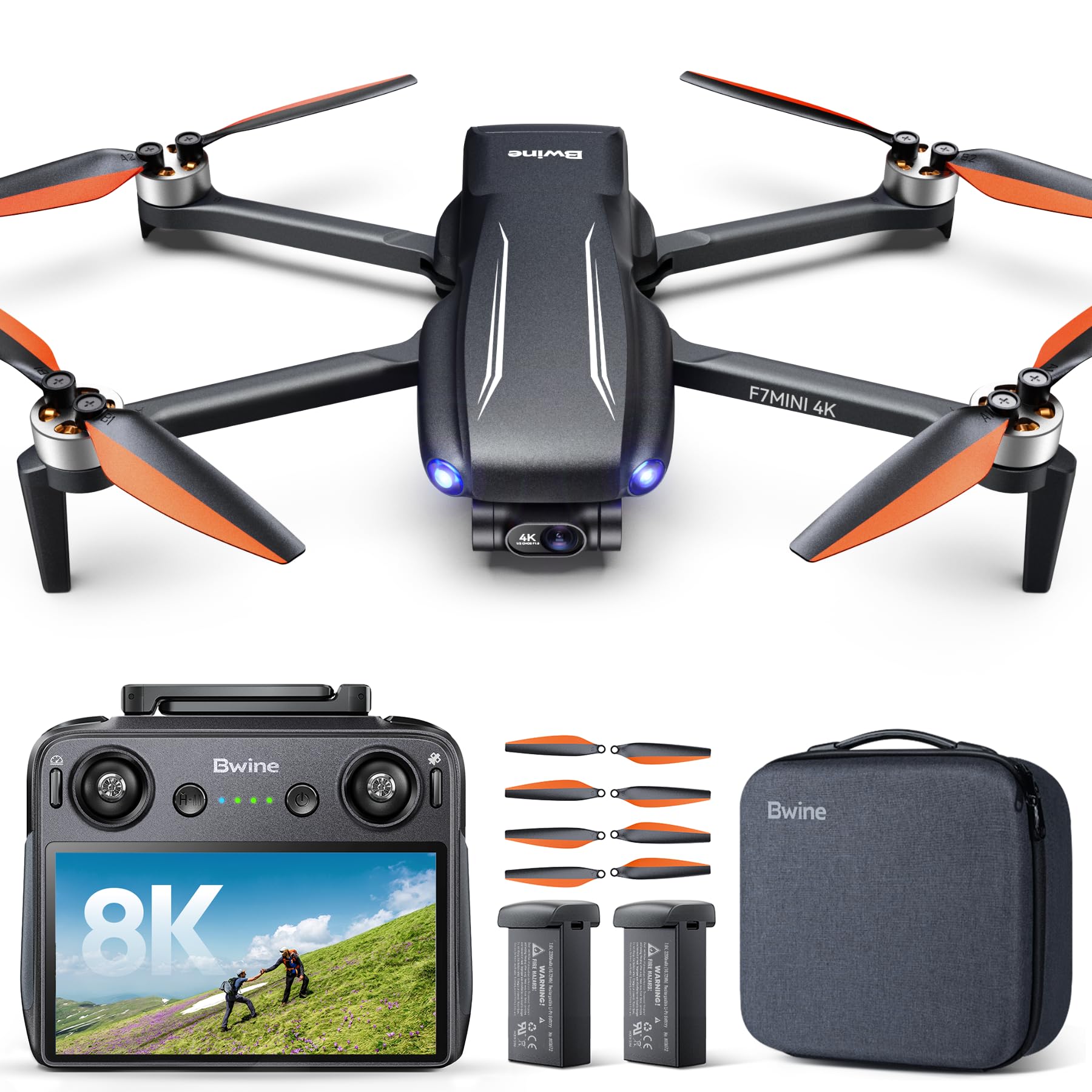
The Bwine F7MINI 4K (RC3) distinguishes itself with a 5.5-inch 1080P screen built directly into the controller, removing the need to connect a phone for live feed. For inspectors working outdoors in bright conditions, the 500-nit display remains readable, and the controller offers 3 hours of operation on a full charge. The drone captures 8K photos and 4K video through a 3-axis gimbal for shake-free documentation of shingle damage and flashing gaps.
Two included batteries provide 64 minutes of total flight time, and PD 3.0 fast charging keeps turnaround short between properties. The 20,000-foot real-time transmission range ensures a stable feed even when flying behind a large chimney or around the far side of the house. A 120dB buzzer on the drone helps locate it quickly if it goes down in tall grass or behind a fence.
Weighing under 249 grams, the F7MINI avoids FAA registration requirements, making it ideal for inspectors who move between multiple sites daily. GPS smart modes including Active Track, Cruise Control, and Waypoint Planning automate repetitive passes along a roofline. This is one of the most accessible screen-controller packages for professional home inspection workflows.
Why it’s great
- Built-in 5.5″ 1080P screen removes phone dependency
- Under 249g, no FAA registration needed
- 64 minutes flight time with two batteries
Good to know
- No obstacle avoidance sensors
- Charger must be purchased separately for PD fast charging
4. Holy Stone Sentinel HS600D

The Holy Stone Sentinel HS600D is engineered for stability in challenging outdoor conditions, with level-6 wind resistance that keeps the 3-axis gimbal steady when gusts buffet the airframe. The 603-gram reinforced frame and 1/2-inch Sony CMOS sensor deliver 8K/48MP photos and 4K HDR video that resolve fine cracks in tile and missing granules on asphalt shingles. EIS works alongside the mechanical gimbal to eliminate micro-jitters during crosswind passes.
Total flight time reaches 80 minutes across two 3500mAh batteries, making it one of the longest-lasting options for a single inspection session. The digital image transmission system uses a wired-relay connection rather than standard Wi-Fi, providing a low-latency, interference-resistant feed when the drone moves behind structural obstructions. GNSS plus TOF and optical flow positioning ensure stable hover at low altitudes near the roof plane.
Pro-level flight modes such as Follow Me, Smart Tracking, Time-Lapse, and Panorama give inspectors automated capture options for creating comprehensive property overviews. The dedicated relay remote enhances range reliability, but the drone’s weight means FAA registration is required. For inspectors who regularly work in windy coastal or open-plains environments, the HS600D is a robust workhorse.
Why it’s great
- Level-6 wind resistance for stable footage in gusts
- 80-minute total flight time with two batteries
- Wired-relay transmission avoids Wi-Fi interference
Good to know
- 603g weight requires FAA registration
- No RAW photo capture for post-processing flexibility
5. Bwine F7GB2 Pro

The Bwine F7GB2 Pro is built for high-altitude property surveys, rated to operate at 2,000 meters with level-6 wind resistance. This makes it a strong choice for mountain homes, hillside estates, and properties where thin air and gusty conditions compromise lesser drones. The 4K camera with a 120-degree FOV and larger CMOS sensor captures wide-angle roof coverage in fewer passes, while the 3-axis gimbal keeps footage silky smooth.
Three 2600mAh batteries provide 75 minutes of total flight time, and the UL 2054-certified packs meet safety standards for lithium-ion systems. The integrated GPS handles automated functions including Follow Me, Waypoint, and Orbit, which are useful for circling a structure to inspect all four elevations from a consistent distance. The FAA-compliant Remote ID is printed on the arm for straightforward regulatory compliance.
The remote control screen shows flight overlay data, though it can be hard to read in direct sunlight. The internal camera removes easily for storage, and the carrying case organizes everything neatly. For inspectors who regularly work at elevation or in open windy terrain, the F7GB2 Pro brings high-end durability at a mid-range investment.
Why it’s great
- 2,000-meter altitude operation for mountain properties
- Level-6 wind resistance for stable footage in open terrain
- UL 2054-certified batteries for safety compliance
Good to know
- Remote screen can be difficult to read in bright sunlight
- Camera shows some distortion during tight turns
6. Holy Stone HS790
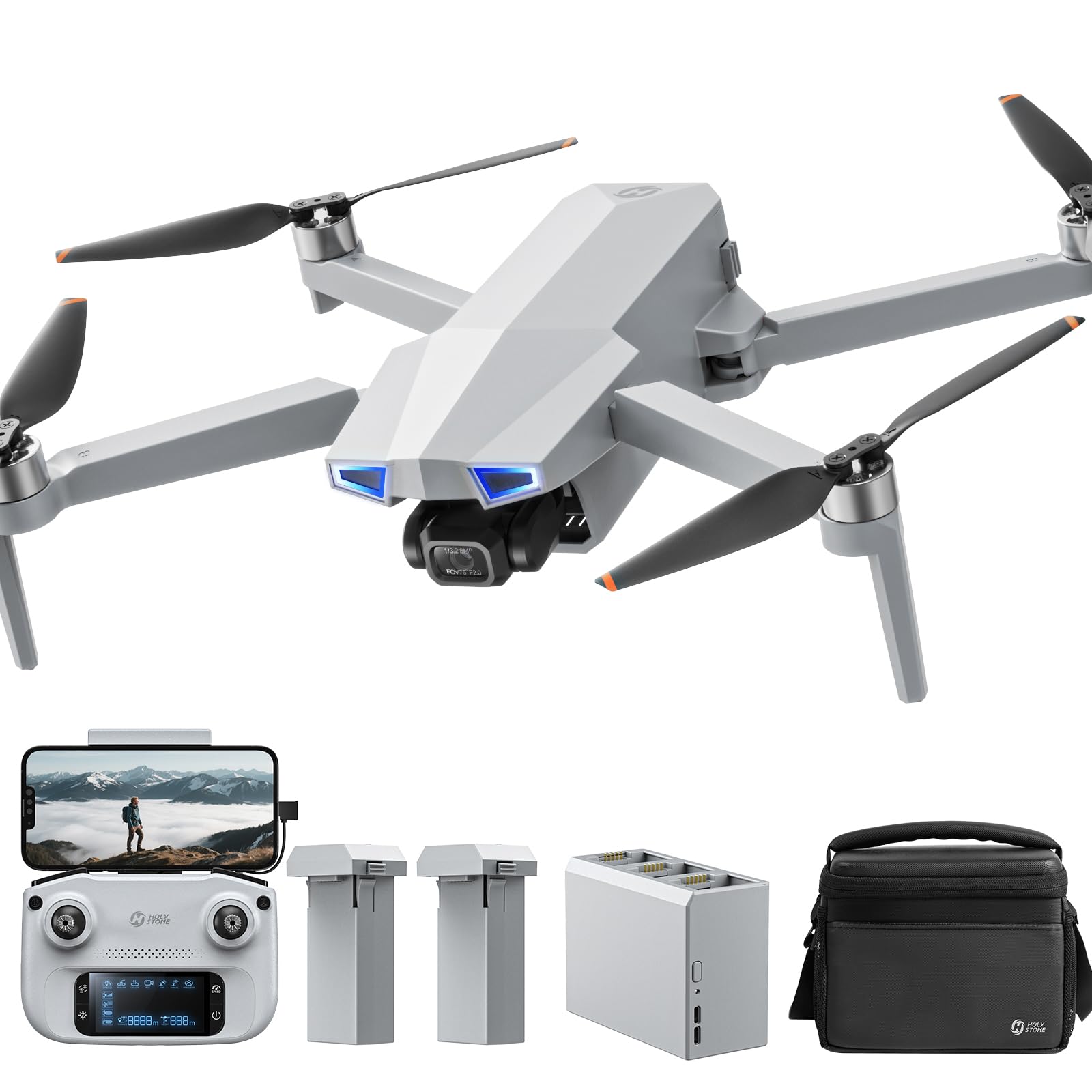
The Holy Stone HS790 brings AI Night Shot capabilities to the inspection market, enabling twilight and dawn surveys without sacrificing image clarity. The 3-axis brushless gimbal supports 4K/30fps video and 6K photos, while the advanced Wi-Fi repeater pushes transmission range to 30,000 feet for large rural properties. Two modular batteries provide 60 minutes of total flight time, and the Smart PD Charging Hub doubles as a power bank for mobile recharging.
Built-in Remote ID ensures FAA compliance without external modules, simplifying regulatory paperwork for professional inspectors. GPS smart modes including Follow Me, Waypoint Flight, and Auto Return provide automated coverage patterns for consistent inspection passes. The 1506 brushless motors keep noise levels low, reducing disturbance in residential neighborhoods.
The compact foldable design fits into the included carrying case for easy transport between job sites. Beginner Mode limits altitude and speed, making it a safe option for newer pilots learning inspection workflows. The camera’s gimbal can struggle during fast directional changes, so steady piloting is advised for best results in low light.
Why it’s great
- AI Night Shot enables low-light and dusk inspections
- 30,000-foot transmission range for large properties
- Built-in Remote ID for FAA compliance
Good to know
- Gimbal can lag during rapid direction changes
- App firmware updates required for optimal performance
7. Ruko Drone with 4K UHD Camera

The Ruko drone delivers an impressive 48MP sensor and 4K/30fps video through a 3-axis brushless gimbal at a budget-friendly price point. The sub-249g weight exempts it from FAA registration, removing a bureaucratic hurdle for independent contractors and homeowners. Three intelligent batteries provide 96 minutes of total flight time, giving you ample airtime to inspect a full property without rushing.
The R2 digital transmission system extends range up to 20,000 feet and avoids the interference typical of Wi-Fi-based links. Quadruple positioning (GPS, barometric altitude hold, TOF, and optical flow) ensures stable hover when you need to examine a specific flashing or vent up close. The built-in beeper helps locate the drone if it goes down in dense shrubbery or behind a structure.
Customer feedback highlights strong support responsiveness, with several users reporting replacement units sent promptly after issues. The controller’s joysticks are sensitive, requiring a light touch for smooth inspection passes. For inspectors on a tight budget who still need professional-grade stabilization and flight time, this Ruko model is a compelling entry point.
Why it’s great
- 48MP sensor and 4K video with 3-axis gimbal at an entry-level price
- Under 249g, no FAA registration required
- 96 minutes total flight time with three batteries
Good to know
- Joysticks are sensitive, requiring careful piloting
- No obstacle avoidance sensors
8. Potensic ATOM 4K GPS Drone

The original Potensic ATOM remains a strong contender for inspectors who need a lightweight, compliant platform that avoids FAA registration. Weighing under 249 grams, it fits in a small bag and can be deployed in seconds. The Sony CMOS sensor and 3-axis gimbal capture 4K/30fps video that resolves basic roof damage and flashing issues, even in level-5 wind conditions.
Three batteries in the Fly More Combo deliver 96 minutes of total flight time, and the 60W parallel charging hub refills all packs simultaneously in 1.3 hours. The SurgeFly PixSync 3.0 transmission provides up to 6 km of control range, though real-world usable range in semi-urban settings is closer to 1,500-2,600 feet according to user reports. Visual Tracking and QuickShots automate simple inspection passes.
The drone includes a non-GPS indoor mode using the ToF sensor, useful for inspecting attics or large interior spaces if conditions allow. Customer reports praise the flight stability and build durability, with several noting it survived crashes that would disable lesser drones. The included 64GB micro SD card gets you started immediately, and the soft case protects the kit during transport.
Why it’s great
- Under 249g, FAA registration exempt
- 96-minute total flight time with three batteries
- Durable build with good crash tolerance
Good to know
- Signal range in semi-urban areas is shorter than rated 6 km
- Gimbal can drift on specific firmware versions
9. DJI Neo 2 Fly More Combo
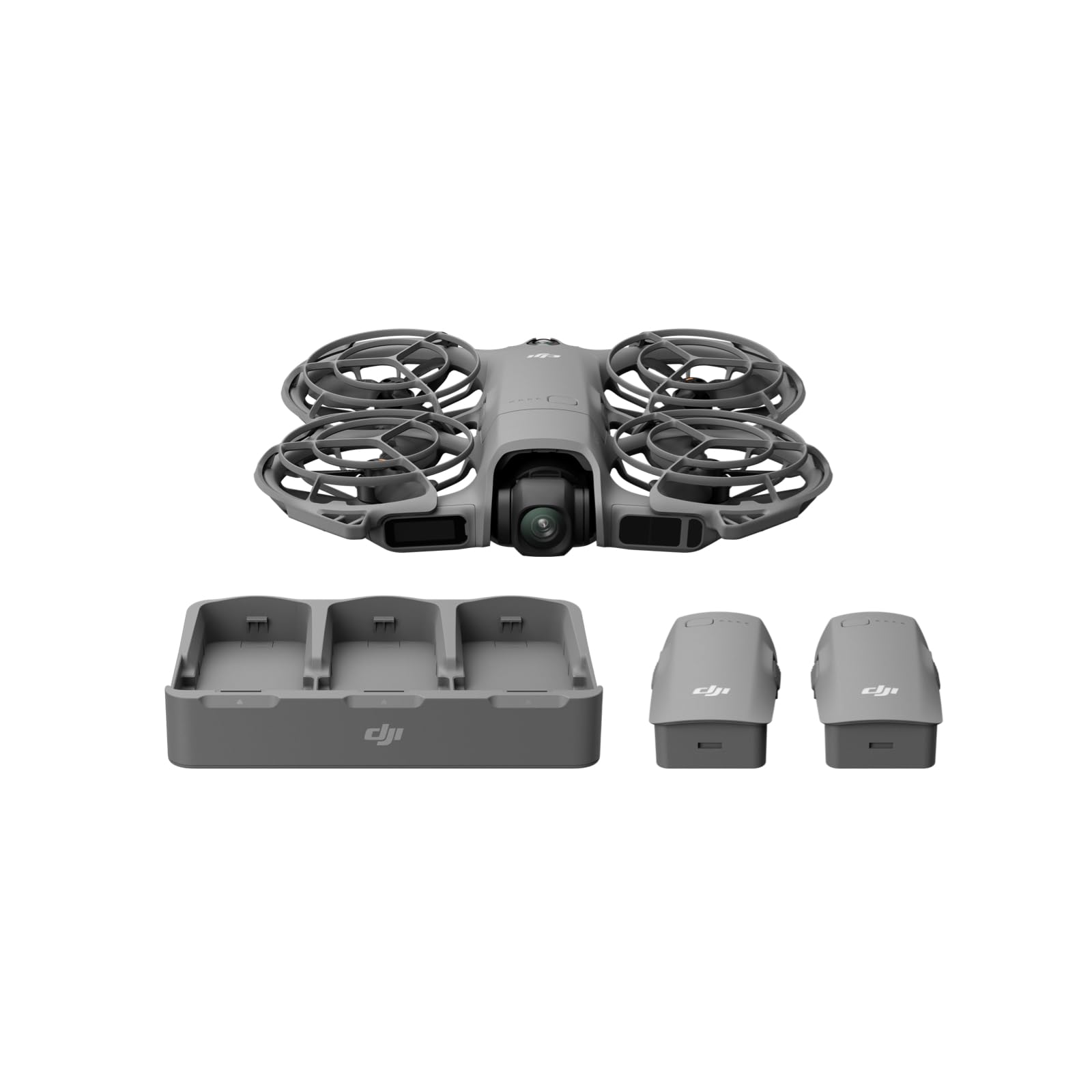
The DJI Neo 2 is the lightest drone on this list at 151 grams, qualifying for C0 certification and requiring no FAA registration. Palm takeoff and landing let you launch directly from your hand near a roof edge without finding clear ground, a practical advantage for inspectors working on uneven or cluttered job sites. The 4K camera records detailed inspection footage, and omnidirectional obstacle sensing protects the airframe during approaches to vertical surfaces.
Gesture control and ActiveTrack allow hands-free operation when you need to focus on taking notes or referencing blueprints. The Full-Coverage propeller guards provide additional safety when flying in tight spaces between structural elements. Three batteries give you multiple flights per session, and the compact design fits easily into a tool bag or glove compartment.
The Neo 2 does not ship with a remote controller, relying on smartphone app control and gesture commands. For inspectors who prefer tactile sticks, the optional remote must be purchased separately. The camera lacks a gimbal, relying instead on electronic stabilization, which may produce slight rolling shutter artifacts during fast lateral moves along a roofline. This drone is best for quick visual checks where portability trumps cinematic quality.
Why it’s great
- Ultra-light 151g design, no FAA registration required
- Palm takeoff and landing for tight job site access
- Omnidirectional obstacle sensing for safe proximity flying
Good to know
- No camera gimbal; relies on EIS for stabilization
- Remote controller not included in standard package
10. FLIR TG165-X Thermal Imaging Camera
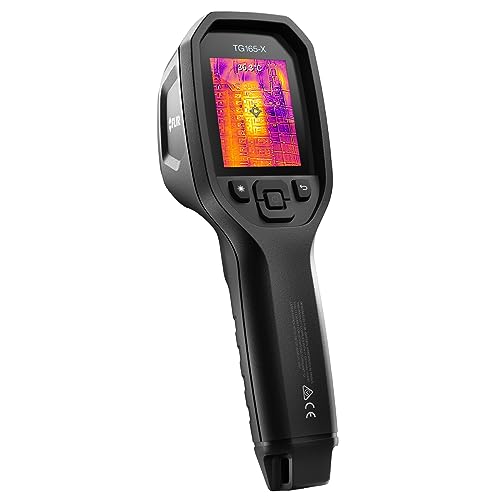
The FLIR TG165-X is a handheld thermal imager rather than a drone, but it earns a place in this guide as the ideal companion to an aerial inspection. After a drone survey identifies areas of concern — missing insulation, moisture intrusion, or thermal bridging — the TG165-X lets you confirm those findings hands-on from a ladder or scissor lift. The 4,800-pixel IR sensor measures temperatures from -13°F to 572°F with a Bullseye laser that marks the exact measurement area.
Patented MSX technology embosses visual details onto the thermal image, making it easier to distinguish a structural beam from a cold spot behind drywall. The IP54-rated housing withstands dust and moisture common on construction sites, and drop-tested construction protects the device if it slips off a roof pitch. The USB-C rechargeable battery provides ample runtime for a full inspection day.
FLIR backs the camera with a 2-year warranty on parts and labor plus 10 years on the detector. The user interface is straightforward, with a simple point-and-shoot workflow that doesn’t require calibration adjustments. While it won’t replace an aerial drone for roof coverage, the TG165-X fills the critical gap for ground-level thermal verification and interior wall scans.
Why it’s great
- FLIR MSX technology overlays visual detail on thermal images
- Bullseye laser pinpoints exact measurement area
- IP54 dust/water resistance and drop-rated build
Good to know
- Handheld device, not aerial — requires separate drone for roof access
- 4800-pixel resolution is lower than high-end thermal cameras
11. Thermal Master Thor 002
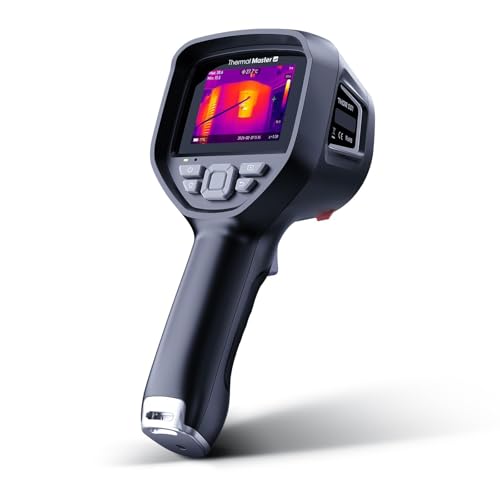
The Thermal Master Thor 002 offers a higher thermal resolution than the FLIR TG165-X, with X³ IR technology boosting the 256×192 native sensor to an effective 512×384. With 40mK thermal sensitivity and a measurement range of -4°F to 1022°F, this handheld unit captures subtle temperature differentials that indicate moisture pockets behind stucco, electrical hotspots in breaker panels, and insulation voids in attics. The 3.5-inch 640×480 IPS display provides a clear, detailed view even in bright conditions.
A 5000mAh battery delivers up to 10.5 hours of continuous operation, making it feasible to use all day across multiple inspection sites without recharging. The device supports 18W fast charging, WiFi pairing with smartphones and tablets, and USB-C connection to a PC for real-time thermal analysis. Onboard 32GB storage handles hours of video and thousands of still images, with voice notes and QR code file management for efficient post-inspection reporting.
The IP54 rating and 2-meter drop protection ensure survival on active job sites. Automatic high and low temperature alarms alert you to anomalies without requiring constant screen monitoring. The 4.3mm lens extends detection range by 34.4% compared to standard lenses, with 4X digital zoom for closer inspection of distant targets. For inspectors performing detailed thermal diagnostics alongside drone flight data, the Thor 002 is a powerful secondary instrument.
Why it’s great
- 512×384 effective thermal resolution with 40mK sensitivity
- 10.5-hour battery life covers full-day inspection schedules
- WiFi and USB-C connectivity for real-time PC analysis
Good to know
- Handheld device, not aerial — use alongside a drone
- Some users report occasional boot issues requiring button hold reset
FAQ
What is the minimum camera resolution needed for roof inspections?
Can I use a sub-250g drone for commercial home inspections?
How does obstacle avoidance help during roof inspections?
Do I need a thermal camera if I already have a drone with a visual camera?
What flight time should I budget for a typical single-family home inspection?
Final Thoughts: The Verdict
For most users, the drone for home inspections winner is the DJI Mini 5 Pro Fly More Combo Plus because its 1-inch sensor, omnidirectional obstacle sensing, and 225-degree gimbal rotation deliver professional-grade results in a portable airframe. If you want a built-in controller screen without the premium DJI price, grab the Bwine F7MINI 4K(RC3). And for budget-conscious inspectors who need FAA-exempt portability with solid stabilization, nothing beats the Ruko 4K UHD Camera Drone.

Mo Maruf
I created WellFizz to bridge the gap between vague wellness advice and actionable solutions. My mission is simple: to decode the research and give you practical tools you can actually use.
Beyond the data, I am a passionate traveler. I believe that stepping away from the screen to explore new environments is essential for mental clarity and physical vitality.