Our readers keep the lights on and my smoothie glass nicely filled. As an Amazon Associate, I earn from qualifying purchases.
A dog that can’t finish the trail doesn’t mean the adventure has to end. The right carrier turns a tired pup into a happy passenger, but the wrong one turns your shoulders into a battlefield and your dog into a restless, overheating burrito. This category lives at the intersection of canine ergonomics and human backpack design — a place where foam density, frame stiffness, and ventilation geometry decide whether a hike is memorable for the right reasons.
I’m Mohammad Maruf — the founder and writer behind WellFizz. I’ve spent hundreds of hours analyzing the load distribution systems, safety tether anchor points, and breathable panel construction that separate functional dog carriers from the ones that gather dust after one outing.
These seven picks represent the strongest contenders for a best dog hiking carrier in 2025, ranked by their ability to keep both you and your four-legged co-pilot comfortable on real terrain.
How To Choose The Best Dog Hiking Carrier
Choosing a carrier is not about how strong you are — it is about how well the frame transfers load from your dog’s weight to your hips. A carrier that relies entirely on your shoulders will cause fatigue long before your dog tires. The three decisions that matter most are sizing protocol, frame rigidity, and ventilation design.
Measure Your Dog Before You Measure the Bag
The single biggest reason carriers get returned is incorrect sizing. You need three numbers: back length (base of the neck to the base of the tail), chest girth (widest part of the ribcage), and neck circumference. A carrier that is too short forces your dog into a hunched position. Too long, and they slide around inside, creating instability that pulls on your shoulders. Most premium carriers publish sizing charts with breed examples — trust the measurements, not the breed name.
Internal Frame vs. Soft-Sided Carriers
Internal frames, usually metal plates or rigid plastic sheets, transfer weight to a padded hip belt so your legs carry the load. Soft-sided carriers without a frame concentrate weight on your shoulders and upper back. For hikes longer than two miles or dogs over 15 pounds, a framed carrier with a hip belt transforms the experience from painful to sustainable. Budget carriers often skip the frame — you pay for that omission with every step.
Ventilation and Temperature Management
A dog trapped inside a carrier with no airflow can overheat in minutes, especially on sunny trails. Look for mesh side panels, open-front layouts, and breathable back panel designs that allow heat to escape. Some carriers add patented arm holes or side vents that create cross-breeze channels. If you hike in warm climates, ventilation is not a luxury — it is a safety requirement.
Quick Comparison
On smaller screens, swipe sideways to see the full table.
| Model | Category | Best For | Key Spec | Amazon |
|---|---|---|---|---|
| K9 Sport Sack Knavigate | Premium | Extended, strenuous hikes | Metal back plate frame + padded hip belt | Amazon |
| Kurgo G-Train | Premium | Long day hikes with gear | Armorsole waterproof base + 3L storage | Amazon |
| Ruffwear Hitch Hiker | Mid-Range | Small dogs needing structured support | Integrated harness + EVA foam padding | Amazon |
| Little Chonk Maxine One | Mid-Range | Medium dogs, front-facing carry | Rigid construction + tail port | Amazon |
| Ruffwear Front Range Day Pack | Mid-Range | Dogs that wear their own gear | Foam-padded saddlebags + aluminum V-ring | Amazon |
| K9 Sport Sack Urban 3 | Mid-Range | City commutes + pack storage | Padded laptop sleeve + patented arm holes | Amazon |
| FoxFocus Medium Carrier | Budget | Budget-conscious medium dog owners | 900D Oxford fabric + 4-layer safety | Amazon |
In‑Depth Reviews
1. K9 Sport Sack Knavigate
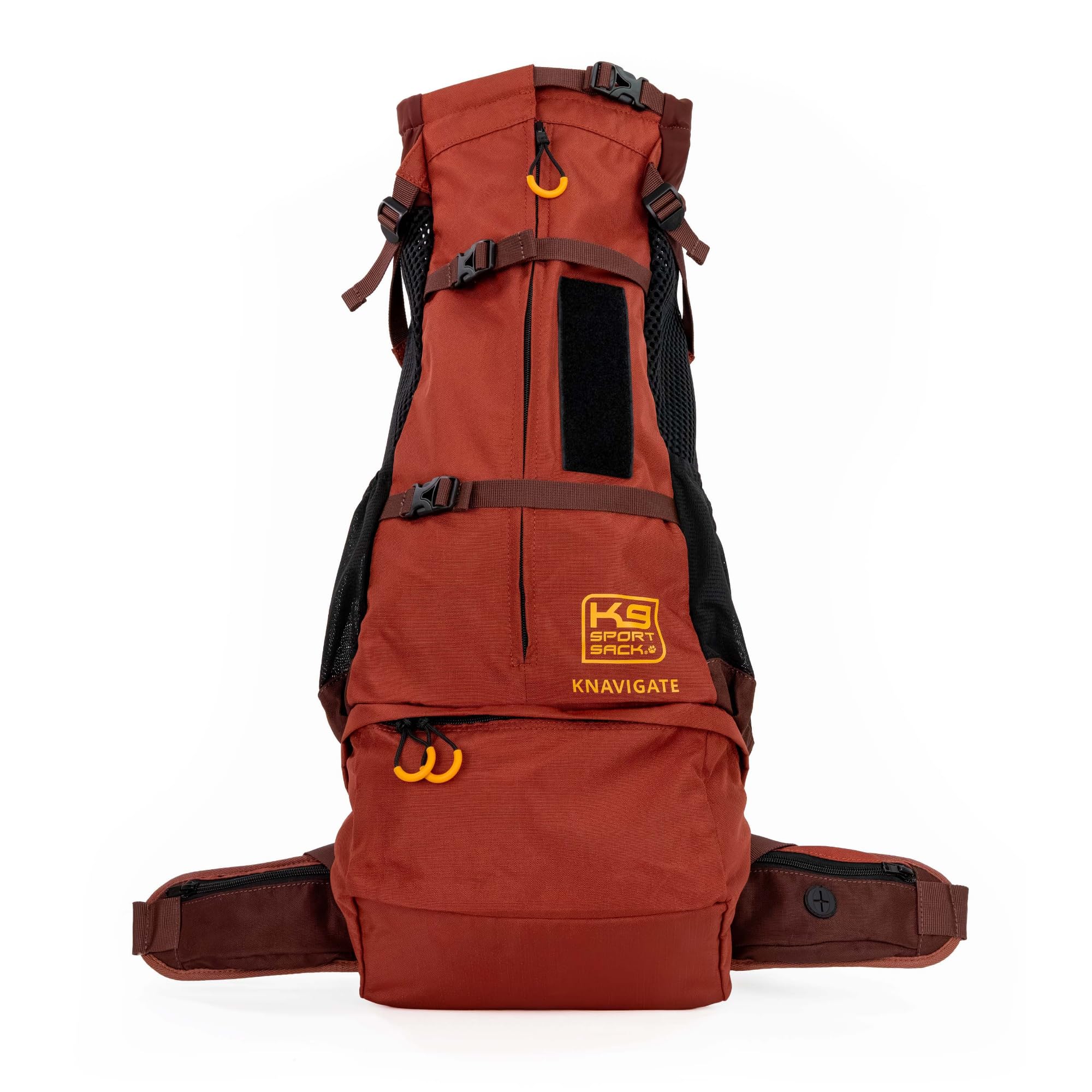
The Knavigate is the most advanced dog carrier K9 Sport Sack has built, and it shows in every load-bearing detail. A metal back plate frame runs through the entire back panel, transferring weight directly to a padded hip belt so your legs — not your shoulders — absorb the weight of a 30-pound dog. The Medium size fits dogs with a 17–19 inch back length, covering Beagles, Corgis, and French Bulldogs with room to spare.
Patented upper arm holes allow your dog’s front legs to move freely, while mesh side panels create a cooling cross-breeze that makes a real difference on warm trails. Two full-size water bottle holders on the sides and a zippered storage pocket handle the essentials without needing a separate pack. The carabiner safety clip secures directly to your dog’s harness, adding a redundancy that budget carriers skip entirely.
The trade-off is entry difficulty — getting your dog situated takes a few practice rounds, and the bottom padding feels firm, almost brick-like, before it breaks in. Some users report zipper pull breakage after extended use, though the fix is simple. For anyone planning serious mileage with a medium-sized dog, this is the carrier that removes the physical compromise from the equation.
Why it’s great
- Metal back plate frame with padded hip belt for proper load transfer
- Patented arm holes and mesh panels keep dog cool and comfortable
- Two water bottle holders and zippered storage pockets
Good to know
- Zipper pull can break after months of heavy use
- Bottom padding feels hard initially; needs break-in period
2. Kurgo G-Train Dog Carrier Backpack

Kurgo took the concept of a dog carrier and merged it with a real hiking backpack. The G-Train features a waterproof Armorsole base that sets down on wet ground without soaking through, roll-up mesh windows for adjustable ventilation, and a padded laptop compartment that doubles as a hydration bladder sleeve. This is the carrier for the hiker who needs to carry both a dog and their own gear in one system.
The internal support rods lock into place to create a rigid floor, preventing the bag from collapsing onto your dog. Supportive hip belts and a ventilated back panel keep you comfortable on long climbs, while the breathable mesh sides give your dog constant airflow. Roll-up windows let you decide how much of the outside world your pup sees — fully open for views, zipped for cool-down breaks.
The biggest limitation is size: this carrier works best for small dogs up to about 12-15 pounds. Heavier dogs require a booster blanket to fill the vertical space. The safety tether can be too long for very small dogs, allowing them to crawl upward and escape the top opening. Kurgo backs it with a lifetime warranty, which softens the premium price point for long-term owners.
Why it’s great
- Waterproof Armorsole base stands up to wet ground
- Roll-up mesh windows for adjustable ventilation
- Lifetime warranty from a brand with strong customer support
Good to know
- Best for dogs under 12-15 pounds; larger dogs need a booster
- Safety tether length can allow very small dogs to escape
3. Ruffwear Hitch Hiker Dog Backpack Carrier
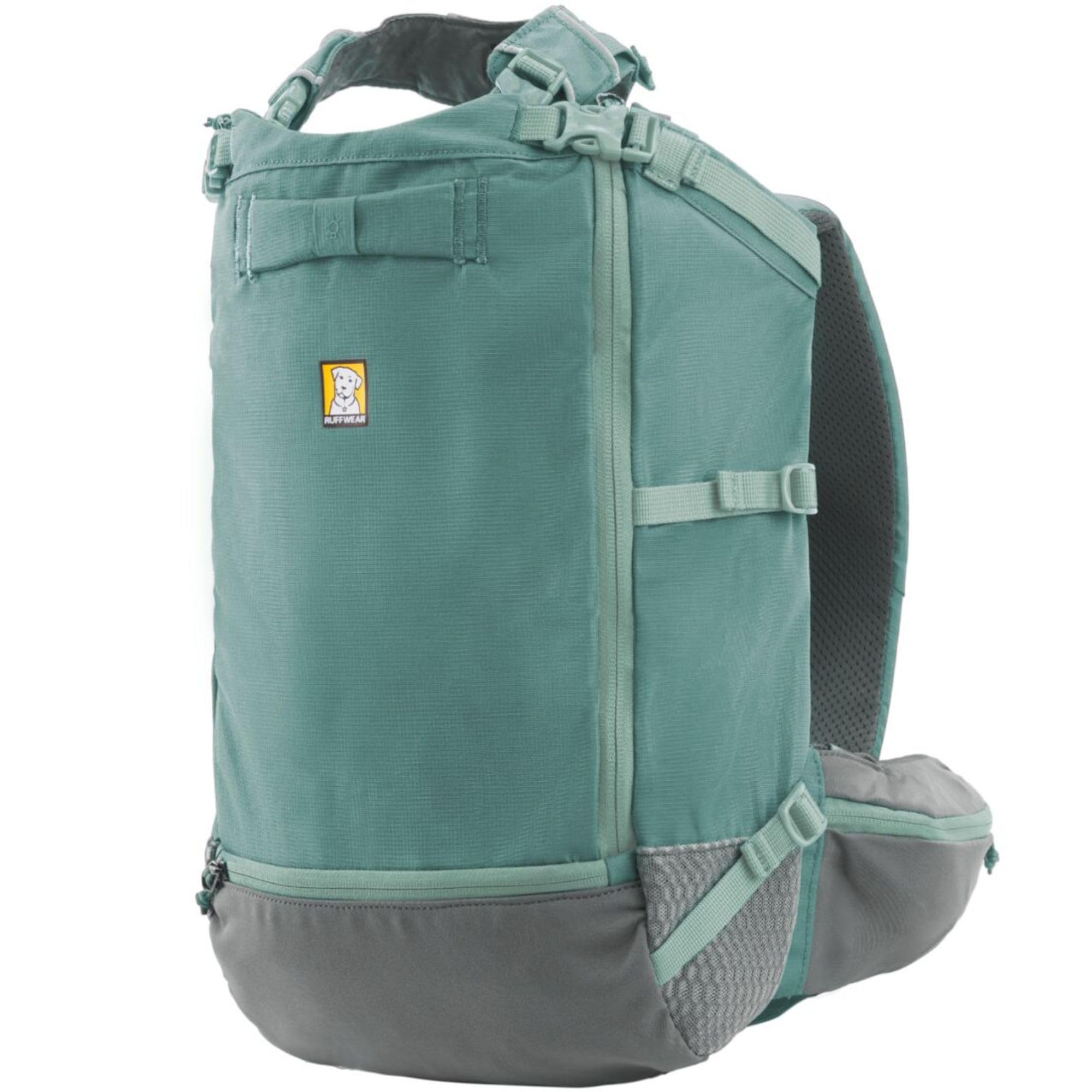
Ruffwear applies its signature attention to canine biomechanics with the Hitch Hiker. An integrated adjustable harness keeps your dog securely positioned inside, while 3mm EVA foam padding lines the interior for pressure relief on bony joints. The pack accommodates dogs up to 40 pounds, making it one of the few mid-range carriers that can handle a larger small dog without forcing you into premium pricing.
The human side is equally well-considered: padded shoulder straps, a breathable back panel, adjustable torso length, and a supportive hip belt distribute weight evenly across your body. Dual locking zippers open the pack wide so you can load a reluctant dog without wrestling. External pockets on the hip belt hold treats, a phone, and poop bags within reach.
Color accuracy is the weak point — the River Rock Green shown in product photos reads as a light blue in person, which frustrates buyers who selected based on the image. Some users also find the belly strap contact uncomfortable for their dog during the first few uses. For short to moderate hikes where your dog needs periodic carrying breaks, the Hitch Hiker balances comfort and cost effectively.
Why it’s great
- Integrated harness keeps dog secure and stable
- EVA foam padding provides joint pressure relief
- Human-side ergonomics with adjustable torso and hip belt
Good to know
- Color in photos does not match actual product
- Belly strap can feel intrusive for some dogs initially
4. Little Chonk Maxine One Medium
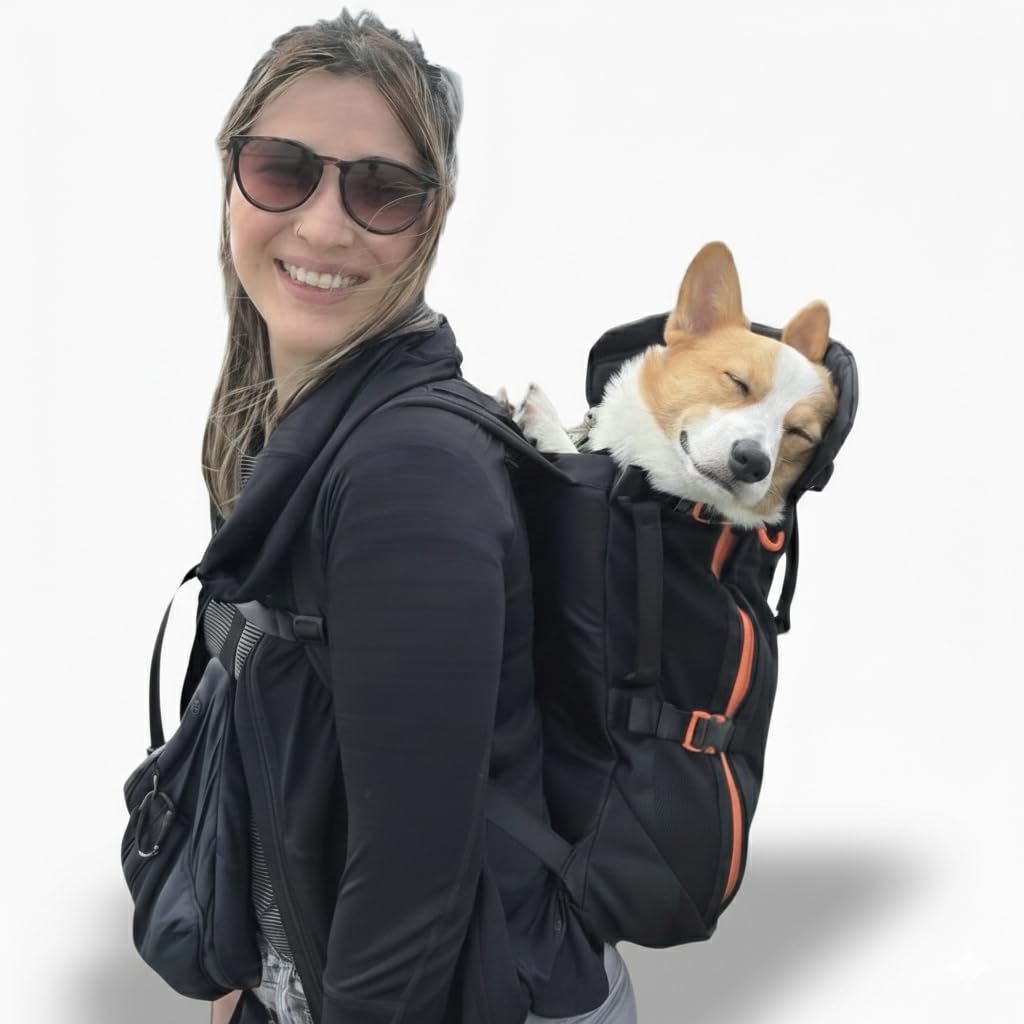
Little Chonk’s Maxine One is a front-facing carrier built with rigid construction that keeps both you and your dog’s spine straighter than fabric-only alternatives. The Medium fits dogs with a back length of 14–19 inches and chest girth up to 30 inches, accommodating Cocker Spaniels, Shiba Inus, and small Terriers. A soft reinforced neck collar attaches to your dog’s own collar via reflective elastane, allowing natural head movement without escape risk.
Four tubular grab handles on each side make loading and unloading simple, and the tail port lets your dog’s tail stick out — a small detail that reduces interior crowding and keeps your dog happier on longer rides. The internal harness hook adds a secondary layer of security beyond the collar tether. At 5 inches deep and 22.5 inches tall, the carrier offers a relatively narrow profile that doesn’t collide with your arms while walking.
The Maxine One has zero external pockets, which means you must carry a separate bag for water, snacks, and your phone. The chest strap placement is optimized for male anatomy but sits awkwardly on some women, creating pressure points during extended carry. Without side ventilation panels, this carrier is not suitable for hot summer hikes — the lack of airflow becomes apparent after 30 minutes of continuous use.
Why it’s great
- Rigid frame keeps both dog and human spine aligned
- Tail port reduces interior crowding
- Four grab handles make loading easy
Good to know
- Zero external pockets; must carry separate bag
- Poor ventilation limits use in warm weather
5. Ruffwear Front Range Day Pack

The Front Range Day Pack is a harness-based backpack that lets your dog carry their own gear — a different philosophy from human-worn carriers, but essential for active dogs who need a job on the trail. Five points of adjustment and a foam-padded chassis prevent the pack from shifting during runs or scrambles. The Large/X-Large fits dogs with chests up to 27.5 inches wide and handles breeds from 30-pound Heelers to 97-pound Newfoundlands.
Radial-cut saddlebags with internal compression straps keep water, food, and poop bags stable without bulging outward. An aluminum V-ring on the back, plus a chest loop and tow loop, give you three clipping points for leash control. The recycled ripstop and mesh exterior is lightweight — only 1.3 pounds — so the pack doesn’t burden your dog before they even load their own supplies.
The thick material that makes the Front Range durable also limits breathability. Owners of black-coated dogs report overheating on sunny trails, and the canvas-like fabric retains heat more than mesh alternatives. The pack is designed for dogs to carry their own load, not for you to carry them, so it does not replace a human-worn carrier if your dog needs a ride.
Why it’s great
- 5-point adjustment system prevents bounce and shift
- Lightweight at 1.3 pounds; dog carries own gear
- Triple leash attachment points for trail control
Good to know
- Thick material limits breathability; not for hot days
- Not a human-worn carrier; dog must be able to walk
6. K9 Sport Sack Urban 3
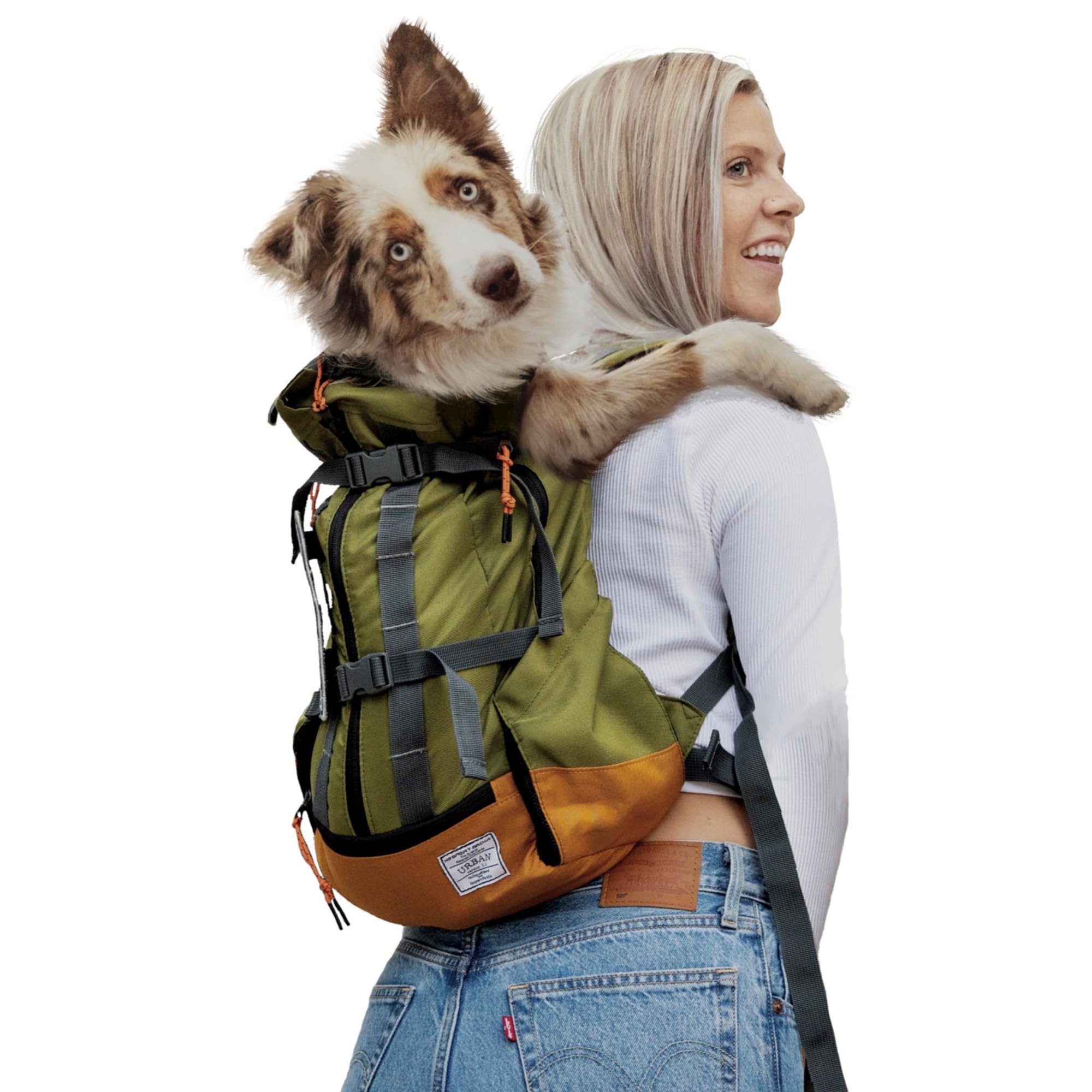
The Urban 3 solves a unique problem: how to carry your dog on a hike but also carry your laptop to work the next morning. In everyday mode, it folds over at the top and functions as a standard backpack with a padded laptop sleeve. In dog mode, patented arm holes give your pup front-leg freedom, and cinch straps secure them inside. The Large fits dogs with a 20–22 inch back length — Australian Shepherds, Border Collies, and small Labradoodles.
Ventilated mesh sides and an angled base promote airflow and keep your dog from sliding to the bottom. A built-in waist strap provides enough stability for bike commuting and semi-strenuous hikes. At 1.6 pounds, it is light enough that your dog’s weight — not the bag’s — is the only meaningful load on your back.
Sizing is the Urban 3’s most common complaint. The fit runs small, so you typically need to go one size larger than your dog’s measurements suggest. The canvas material is sturdy but not waterproof, so rain requires a cover. For the hiker who needs one bag for both trail and town, this dual-use design eliminates the need for two separate purchases.
Why it’s great
- Converts between dog carrier and laptop backpack
- Patented arm holes allow natural leg movement
- Lightweight build at 1.6 pounds
Good to know
- Runs small; order one size up
- Canvas material is not waterproof
7. FoxFocus Medium Dog Carrier Backpack
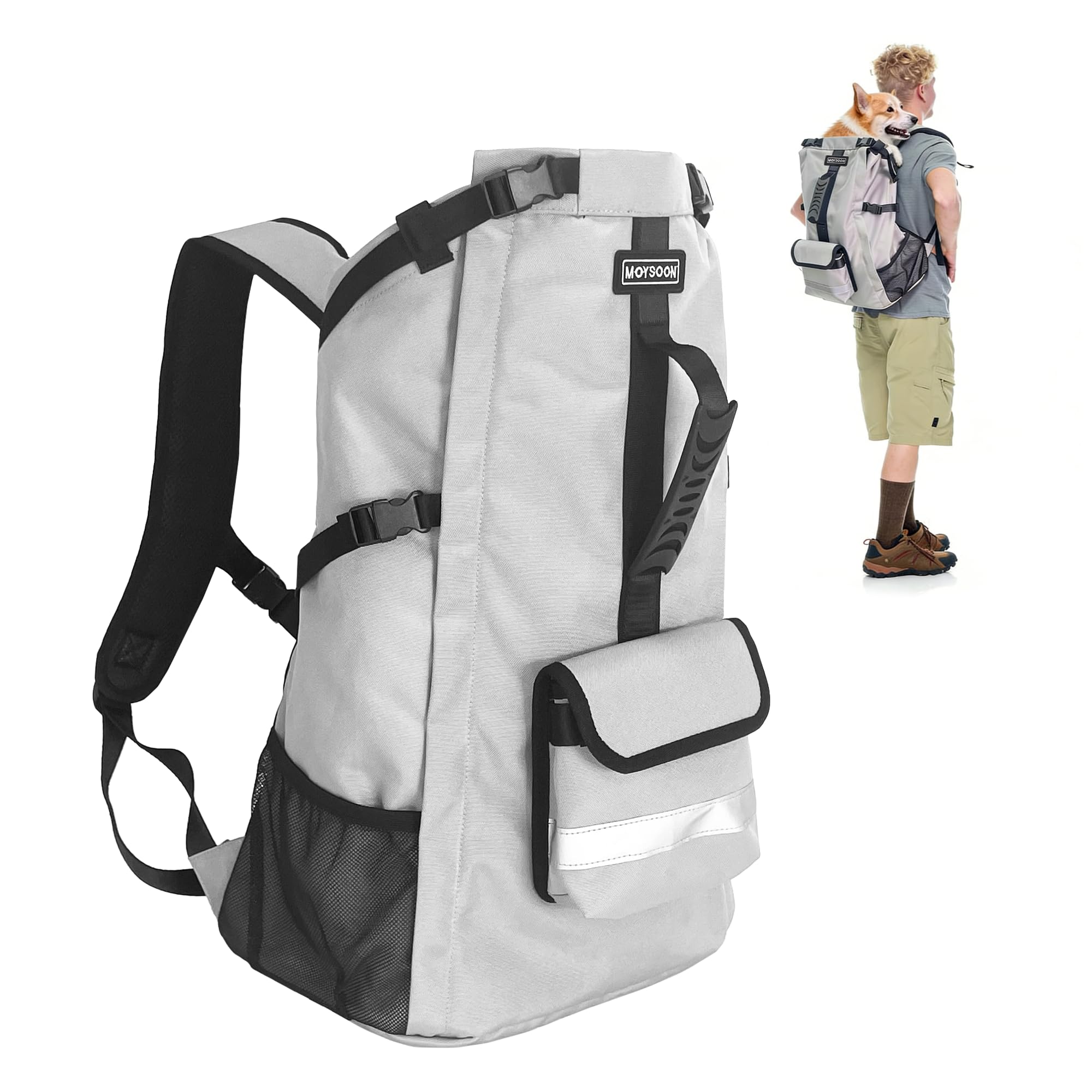
FoxFocus enters the market with a carrier built for medium dogs — Corgis, French Bulldogs, and Beagles with back lengths of 17.5–20 inches and chest girths up to 29 inches. The 900D Oxford fabric exterior is both scratch-resistant and coated for water resistance, and the 15mm high-density bottom pad provides a stable floor that does not sag under a 30-pound dog. Four layers of safety protection — an internal safety leash, adjustable belly buckle, double zipper closure, and protective side buckles — give you redundancy at a price point that usually skips such features.
The open-front layout leaves legroom for your dog’s front legs, and the 5mm pearl cotton filling adds cushioning without trapping heat. Reflective strips improve visibility in low-light conditions. At 0.92 kilograms, the carrier itself is light enough that it folds down for packing in a suitcase — a feature owners use for travel as much as daily hikes.
The lack of a load-bearing frame means your shoulders take the full weight. This is fine for short walks and travel but becomes uncomfortable on hikes over two miles. Several users report that their dogs needed 3–4 attempts before accepting the carrier, so patience during introduction is essential. For the price-conscious buyer who needs occasional carrying capacity for a medium-sized dog, the FoxFocus delivers solid construction without the premium price tag.
Why it’s great
- Durable 900D Oxford fabric with water-resistant coating
- 4-layer safety system provides redundant security
- Folds flat for packing inside luggage
Good to know
- No internal frame; weight rests entirely on shoulders
- Requires multiple sessions to acclimate most dogs
FAQ
How do I measure my dog for a hiking carrier?
Can I use a dog hiking carrier for a puppy?
What safety features should I look for in a dog carrier?
How do I prevent my dog from overheating inside the carrier?
Final Thoughts: The Verdict
For most users, the best dog hiking carrier winner is the K9 Sport Sack Knavigate because its metal back plate frame and padded hip belt turn a 30-pound dog into a manageable load on long, strenuous trails. If you want to carry your own gear and your dog in one system, grab the Kurgo G-Train. And for a budget-friendly option that handles medium dogs on short hikes and travel, nothing beats the FoxFocus Medium Carrier.

Mo Maruf
I created WellFizz to bridge the gap between vague wellness advice and actionable solutions. My mission is simple: to decode the research and give you practical tools you can actually use.
Beyond the data, I am a passionate traveler. I believe that stepping away from the screen to explore new environments is essential for mental clarity and physical vitality.