Our readers keep the lights on and my smoothie glass nicely filled. As an Amazon Associate, I earn from qualifying purchases.
Pushing a drone into a stiff coastal breeze or launching from a mountain ridge only to watch your video shake like a leaf is the fastest way to kill a shoot. The difference between a floating brick and a confident aerial platform comes down to three things: motor thrust-to-weight ratio, gimbal stability, and the firmware logic that tells the props how to fight the wind.
I’m Mohammad Maruf — the founder and writer behind WellFizz. I’ve spent hundreds of hours dissecting spec sheets, analyzing user flight logs, and cross-referencing brushless motor data to separate marketing claims from real wind performance.
This guide zeroes in on the airframes that earn their keep when the anemometer starts climbing. Whether you need sustained tracking in a gusty field or a compact unit for coastal mapping, these are the drones for high wind resistance that actually deliver stable footage and confident control.
How To Choose The Best Drones For High Wind Resistance
Wind resistance is not a single number on a box — it is a system of motor power, frame weight, sensor fusion, and gimbal mechanics. A drone that looks great on paper can become unflyable the moment a 20 mph gust hits it sideways. Here is what to check before you buy.
Motor size and propeller pitch
The motor’s stator diameter and height (e.g., 1806 or 2204) determine how much torque it can generate. Larger motors with aggressive propeller pitch produce more thrust, which lets the flight controller fight lateral drift. Drones advertised with Level 6 wind resistance typically use 1806 or larger brushless outrunner motors.
Gimbal stabilization axis count
A 2-axis gimbal handles tilt and roll but lets yaw drift through, creating that wobbly horizon in gusts. A 3-axis gimbal counteracts yaw as well, keeping the camera locked on the subject even when the airframe pitches to hold station. For windy conditions, a 3-axis mechanical gimbal is non-negotiable if you want smooth footage.
GPS and barometric altitude hold
Dual-frequency GPS or GNSS receivers combined with a barometer allow the drone to lock its position and altitude against wind displacement. Look for multi-constellation support (GPS + GLONASS + Galileo) because more satellites mean faster position fix and tighter hover accuracy in gusty air.
Weight and aerodynamic profile
Heavier drones naturally resist being pushed by wind, but they also require larger motors to stay agile. Sub-250g drones are convenient for regulations, but a 600g frame with the same motor class will hold its position in stronger gusts because its inertia is higher. Balance weight against your need for portability and registration freedom.
Quick Comparison
On smaller screens, swipe sideways to see the full table.
| Model | Category | Best For | Key Spec | Amazon |
|---|---|---|---|---|
| DJI Mini 5 Pro | Premium | Pro-level tracking in wind | 1-inch CMOS / 225° gimbal | Amazon |
| Autel EVO 2 Pro V3 | Premium | Heavy wind / no geofencing | 6K HDR / 7100mAh battery | Amazon |
| Potensic ATOM 3 | Premium | Long flights in gusty air | 120-min flight / 16KM range | Amazon |
| Holy Stone HS600D | Mid-Range+ | Level-6 wind / beginner pro | 603g frame / 3-axis + EIS | Amazon |
| Bwine F7MINI 4K(RC3) | Mid-Range+ | Built-in screen / no phone | 5.5″ 1080P RC screen | Amazon |
| Potensic ATOM 2 | Mid-Range | Compact travel / ND+CPL | 3-axis gimbal / 10KM range | Amazon |
| Bwine F7GB2 Pro | Mid-Range | High altitude / Level 6 wind | 2000m altitude / 1806 motor | Amazon |
| Holy Stone HS790 | Mid-Range | 30Kft transmission / night | 60-min flight / AI Night Shot | Amazon |
| Ruko 4K UHD | Budget-Friendly | Beginner / high wind test | 96-min flight / 20Kft range | Amazon |
| DJI Neo 2 | Budget-Friendly | Gesture control / palm launch | 151g / 4K / ActiveTrack | Amazon |
| HOVERAir X1 | Budget-Friendly | Ultra-portable / enclosed props | 125g / Level 4 wind max | Amazon |
In‑Depth Reviews
1. DJI Mini 5 Pro Fly More Combo Plus
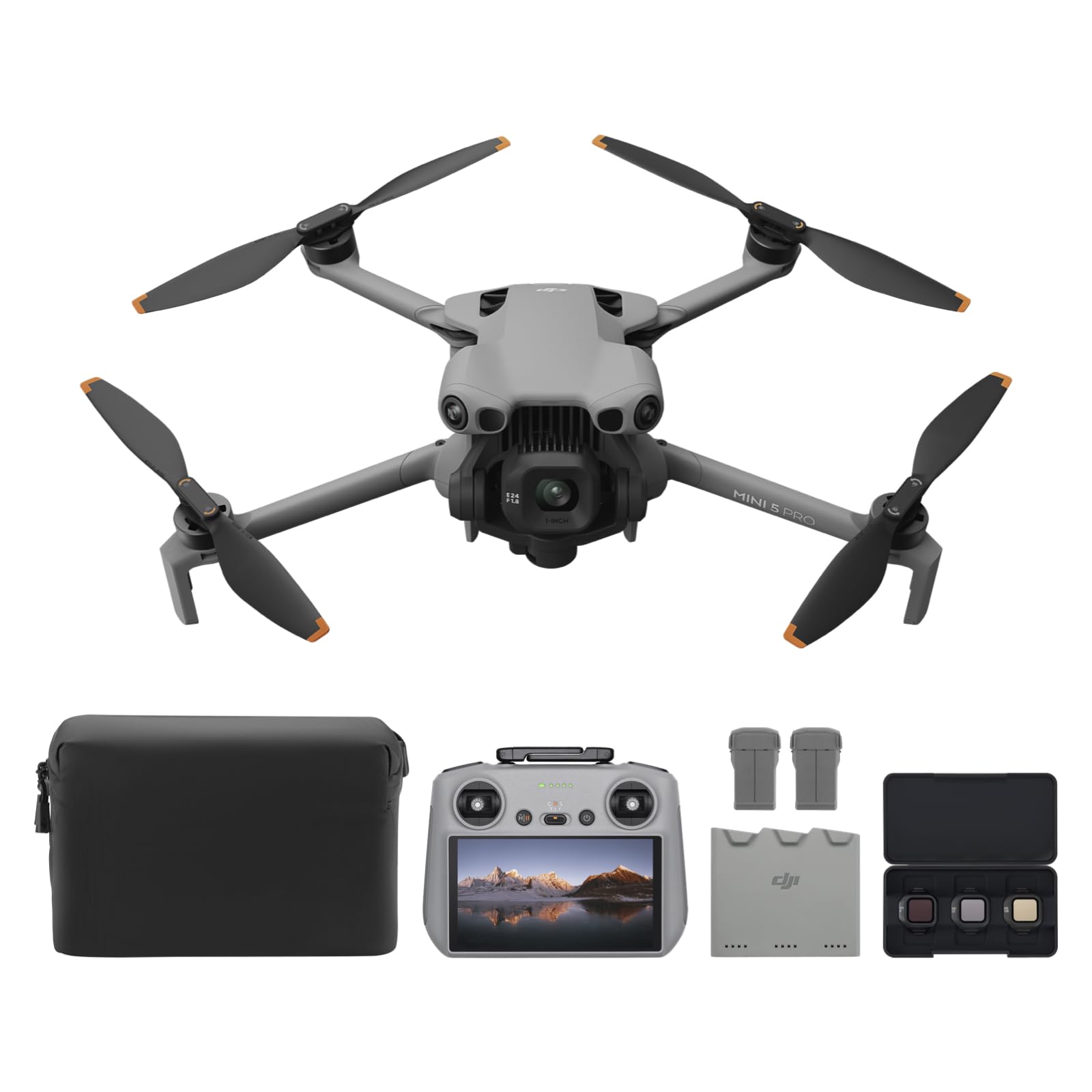
The Mini 5 Pro packs a 1-inch CMOS sensor into a sub-250g frame, but its wind performance comes from the 225-degree gimbal rotation and omnidirectional obstacle sensing. Forward-facing LiDAR helps the flight controller anticipate drift and correct pitch before the gust fully hits, keeping 4K/60fps HDR footage locked even in moderate coastal breezes.
ActiveTrack 360° uses custom tracking modes that maintain subject framing through sudden wind shifts. The Fly More Combo Plus includes three extended batteries rated up to 52 minutes each, which translates to roughly 35 minutes in real windy conditions. The ND filter set helps manage shutter speed when fighting bright, gusty skies.
One trade-off: adding the Plus batteries and landing gear pushes the total weight over 250g, triggering FAA registration in the US. The RC 2 controller with built-in screen eliminates phone tethering, but its weight makes a lanyard almost mandatory for long shoots. The lack of a US warranty is a known frustration for buyers expecting DJI’s standard service.
Why it’s great
- 1-inch sensor delivers pro-grade image quality even in low evening light
- 225° gimbal rotation enables creative vertical shots without cropping
- Omnidirectional obstacle sensing provides confidence during gusty gusts
Good to know
- Extending flight time with Plus batteries requires FAA registration
- No DJI Care Refresh warranty available in the United States
2. Autel Robotics EVO 2 Pro V3

At 1191 grams, the EVO 2 Pro V3 has the mass to shrug off gusts that would send lighter drones tumbling. The 1-inch Sony CMOS sensor captures 6K HDR video with an adjustable aperture from F2.8 to F11, giving you exposure control in bright, windy environments. Twelve vision sensors plus two sonar sensors create 360° obstacle avoidance that remains active during fast descents in turbulent air.
The 7100mAh battery provides 40 minutes of forward flight and roughly 30 minutes in heavy wind. Users report stable handling in sustained 40 mph gusts, with the gimbal keeping footage smooth through aggressive corrections. Autel’s Skylink 2.0 transmission reaches 15 kilometers on tri-band frequencies (2.4 / 5.8 / 900 MHz), so signal drop is rare even when fighting wind at distance.
The biggest advantage is the absence of geofencing — Autel leaves flight responsibility to the pilot. The Smart Controller SE with a 6.4-inch OLED screen (IP43 rated) works without a phone. On the downside, the 12-bit A-Log color profile requires post-production skill to grade properly. Replacement battery costs are noticeably higher than mainstream competitors.
Why it’s great
- 1191g frame provides natural inertia against strong wind displacement
- Adjustable aperture (F2.8-F11) handles bright coastal lighting mid-gust
- No geofencing — pilot has full control in permitted airspace
Good to know
- 12-bit A-Log requires color grading skill for best results
- Battery prices are premium; replacement packs cost significantly more
3. Potensic ATOM 3 Fly More Combo
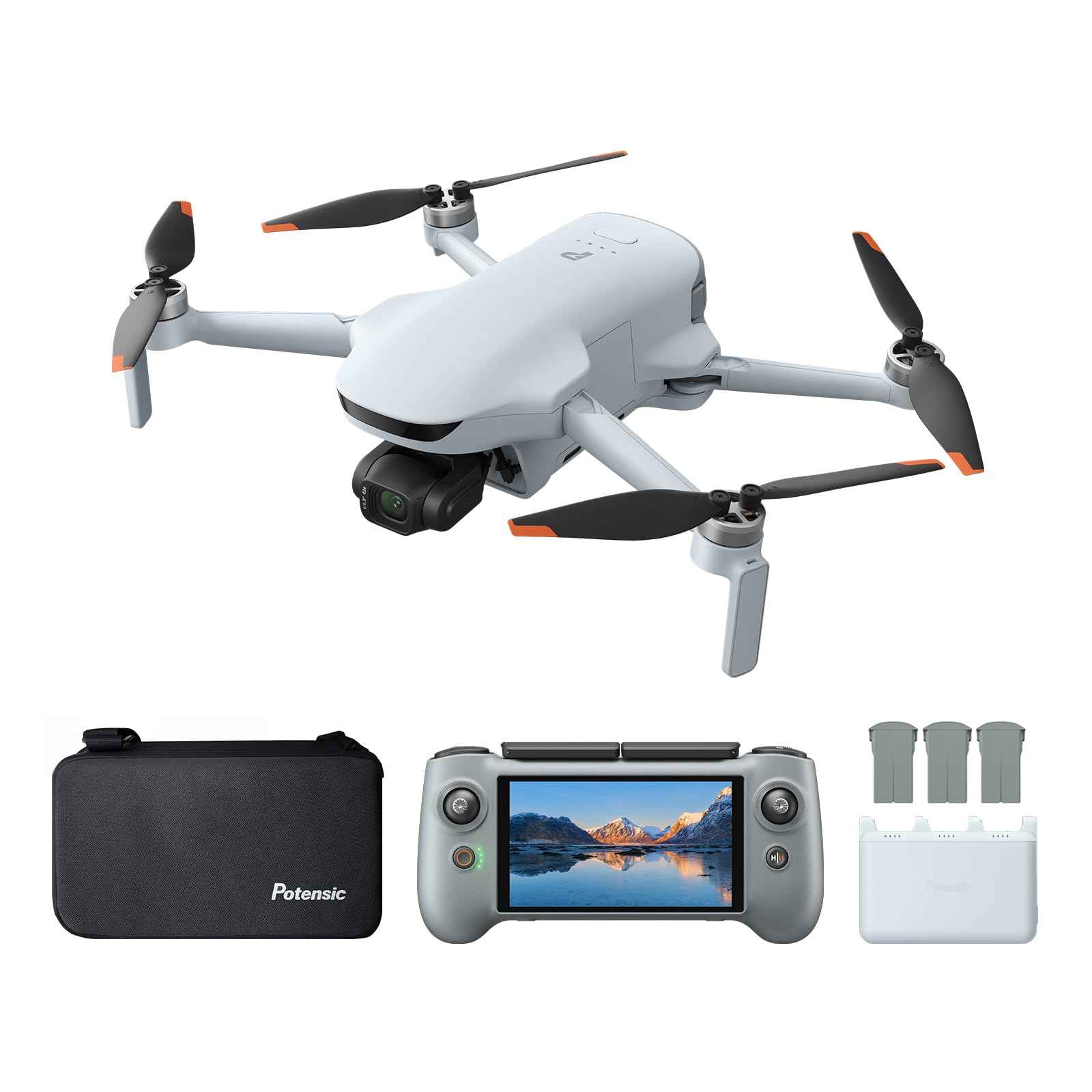
The ATOM 3 uses a 1/1.3-inch CMOS sensor to capture 4K 60fps HDR video with a 3-axis gimbal, but its wind resilience comes from PixSync 5.0 transmission and a 16-kilometer range. That strong signal link allows the flight controller to react to wind data from the IMU without latency. The sub-249g frame is remarkably stable for its weight class, thanks to large 4-blade props that generate high static thrust.
Three batteries with a parallel charging hub deliver up to 120 minutes total flight time — the 65W charger refills all three in about 90 minutes. AI Tracking 2.0 supports low-altitude tracking below 4 meters with optional propeller guards, making it usable for dynamic sports shoots in gusty fields. The PTD 2 remote with 5.5-inch 900-nit touchscreen stays readable in direct sunlight.
Users note that the camera occasionally reports sensor errors during rapid ascents, and one reviewer experienced an engine oversaturation crash. The lack of obstacle avoidance sensors (no forward LiDAR) means the pilot must stay vigilant in tight tree lines. But for open-sky wind fighting with two hours of battery, this combo is hard to beat at this price tier.
Why it’s great
- 120-minute total flight time across three fast-charging batteries
- Sub-249g weight avoids FAA registration while still holding steady in wind
- 900-nit remote screen remains fully readable under bright sun
Good to know
- No forward obstacle avoidance requires extra pilot caution
- Occasional camera sensor error reported during aggressive climbs
4. Holy Stone Sentinel HS600D

The HS600D’s 603-gram reinforced frame is purpose-built for Level 6 wind resistance — Holy Stone designed the mass distribution specifically to lower the center of gravity. A 1/2-inch Sony CMOS sensor with F1.8 aperture captures 8K photos and 4K HDR video, while the 3-axis gimbal combined with EIS keeps the horizon locked during gust corrections. Multi-sensor safety includes TOF, GPS, and optical flow for low-altitude stability.
The wired-relay remote transmits via direct tethering rather than Wi-Fi, which cuts interference in windy environments where signal reflection off terrain is common. Flight time with two 3500mAh batteries reaches about 80 minutes total (34 minutes per battery in real use). Beginner mode with automatic altitude limits gives new pilots a buffer while they learn to handle the drone’s greater inertia.
Users report the remote screen can be hard to read in direct sunlight, and the camera tends to overexpose bright scenes without manual ISO control. There is no RAW format support, limiting post-processing flexibility. That said, reviewers who flew this unit in 30-40 mph rain and wind report stable performance that exceeded expectations.
Why it’s great
- 603g reinforced frame provides high inertia against strong wind
- Wired-relay transmission eliminates Wi-Fi signal drop in gusty environments
- Level-6 wind rating verified by user reports in 30-40 mph conditions
Good to know
- No RAW photo support — JPEG only limits color grading range
- Remote screen visibility suffers in bright outdoor light
5. Bwine F7MINI 4K(RC3)
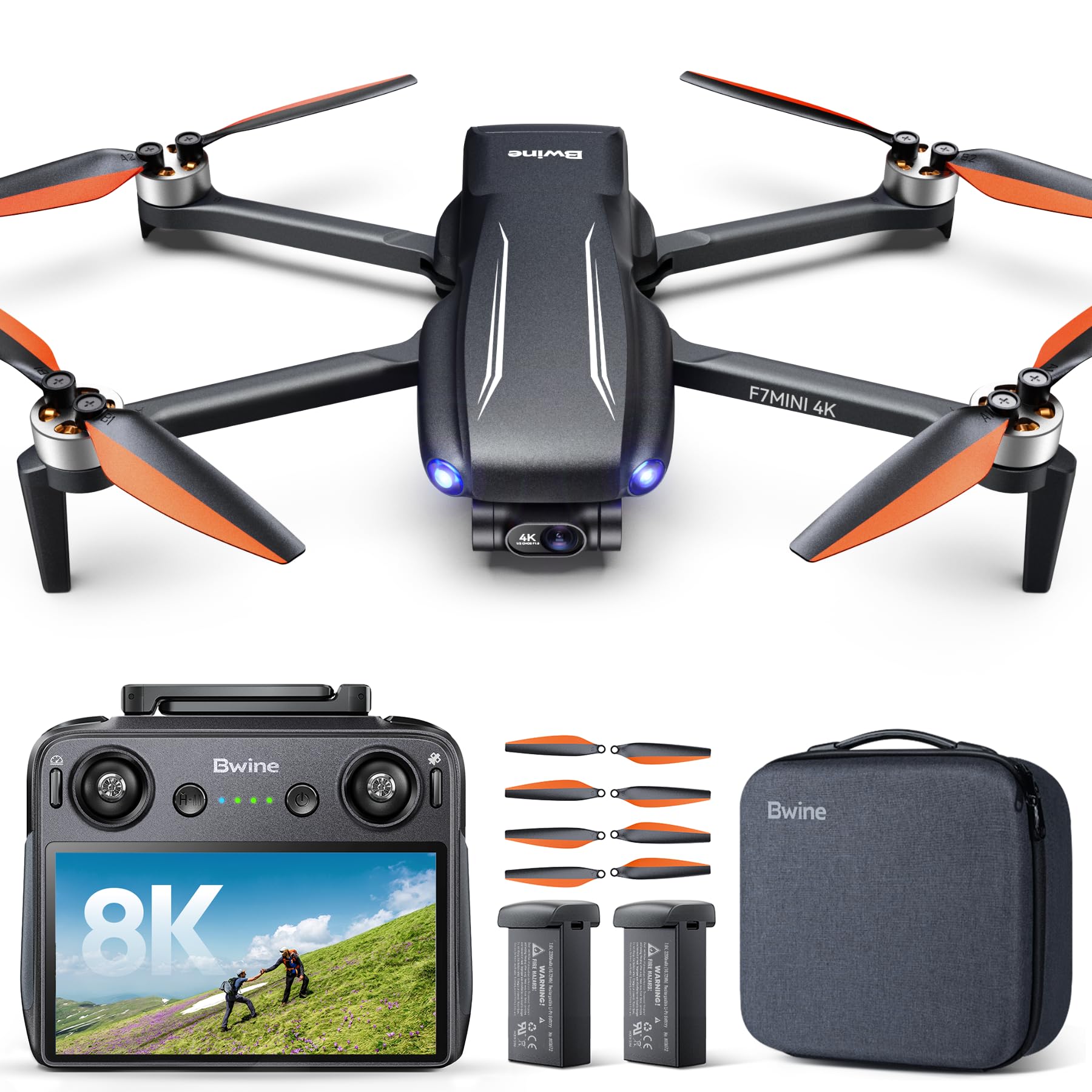
The F7MINI weighs just 249 grams, keeping it FAA-exempt, yet its 3-axis brushless gimbal and EIS deliver 4K video stable enough for ranch surveys in moderate wind. The headline feature is the 5.5-inch 1080P remote screen running at 60Hz with 500 nits of brightness — no phone required. GPS smart modes include Active Track with 0.5-meter accuracy, Cruise Control, Orbit, and Waypoint Planning. The 20,000-foot transmission range holds strong even at 4.5 kilometers in urban environments.
Two 2200mAh batteries deliver up to 64 minutes total flight time (32 minutes each). The 120dB buzzer helps locate the drone if a gust pushes it into tall grass. Users consistently praise the wind stability for a sub-250g drone, noting that the 3-axis gimbal keeps the horizon straight during routine 15-20 mph gusts. The controller’s 32GB internal storage allows instant review of footage on the remote.
One known issue is slow file transfer speed from the controller to a phone — reviewers recommend using a computer for bulk downloads. The remote’s 3-hour battery life is generous, but some beginners wish the instruction manual had more detail on the advanced GPS modes. For the price point, however, the built-in screen alone makes this a standout value.
Why it’s great
- 5.5-inch 1080P remote screen eliminates phone dependency mid-flight
- Sub-249g design avoids FAA registration while maintaining wind stability
- 120dB buzzer makes recovery easy if the drone lands off-target
Good to know
- File transfer from controller to phone is noticeably slow
- Manual could provide clearer guidance on advanced GPS flight modes
6. Potensic ATOM 2 Fly More Combo
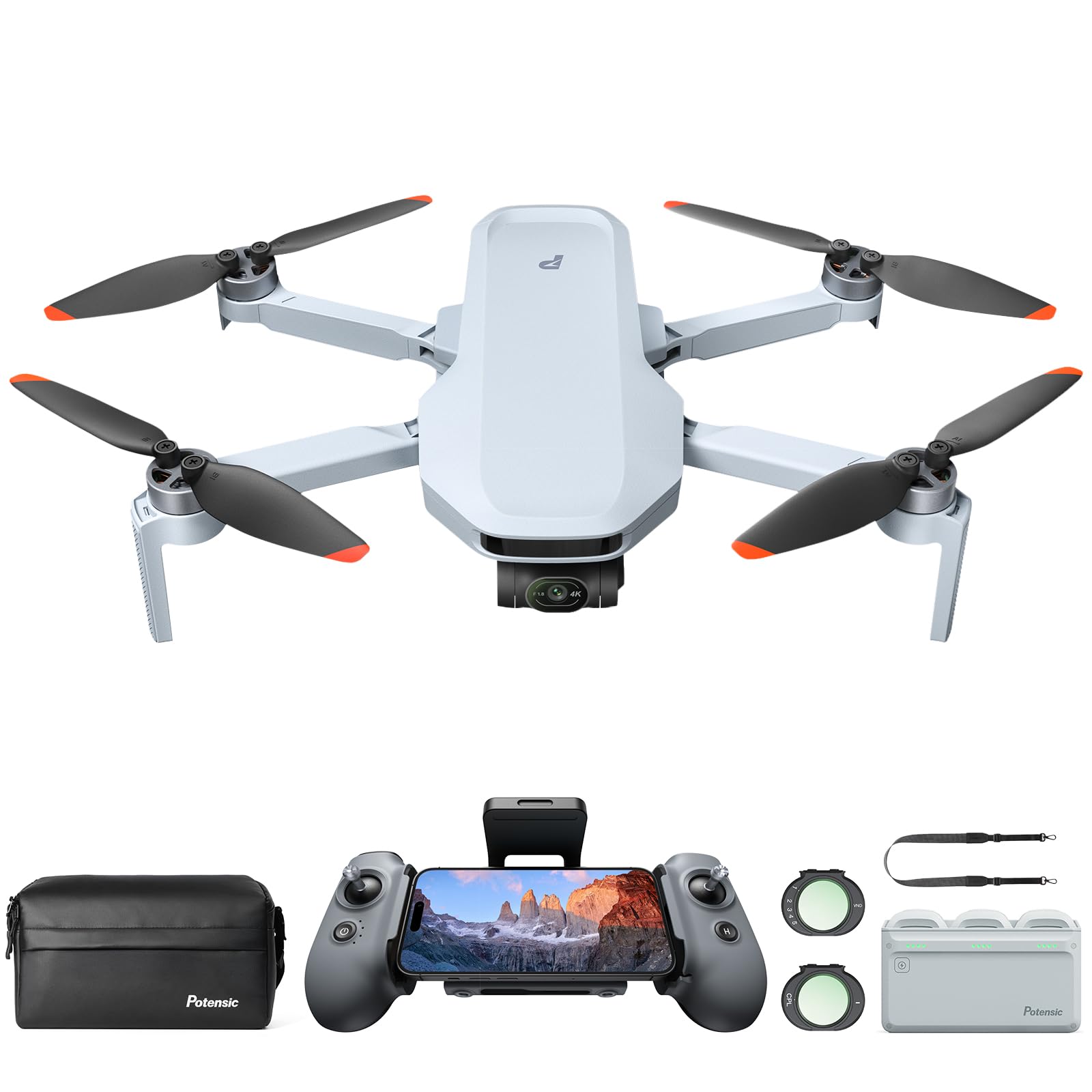
The ATOM 2 pairs a 1/2-inch Sony CMOS sensor with a 3-axis gimbal to capture 4K HDR video and 8K photos. PixSync 4.0 transmission reaches 10 kilometers with 1080p/30fps live view, giving you real-time situational awareness in changing wind conditions. The Fly More Combo includes ND and CPL filters — the ND filter reduces 1-5 stops of light, helping you maintain correct shutter speed when bright, gusty skies would otherwise force a wide-open aperture.
Three batteries with a parallel charging hub provide 96 minutes total flight time. The 1.3-hour full recharge across all three batteries keeps downtime minimal between sessions. AI tracking modes include Spotlight, Follow, and Parallel, and the AI Night Shot mode helps capture cleaner footage during twilight gusts. The sub-249g design means no FAA registration needed.
Some pilots note the lack of obstacle avoidance — you must rely entirely on your situational awareness. The remote controller does not have a built-in screen, so you need a smartphone for FPV. Also, one reviewer reported that the drone survived six months in a tree after a gust-induced crash with only a single propeller needing replacement, which speaks to the build quality. For the price, the filter kit is a rare inclusion that directly benefits wind-condition shooting.
Why it’s great
- ND and CPL filters included — directly improves shutter control in bright wind
- 96-minute total flight time across three fast-charging batteries
- Sub-249g design keeps you free from FAA registration
Good to know
- No obstacle avoidance sensors require constant pilot attention
- Remote controller lacks a built-in screen; smartphone needed
7. Bwine F7GB2 Pro

The F7GB2 Pro carries a Level 6 wind resistance test report and a 2000-meter altitude ceiling, making it a strong pick for mountain photographers who face thin air and sudden gusts. The 1806 brushless motor combined with compass, gyroscope, and barometer maintains hover stability at high elevations where other drones lose thrust. The one-click detachable 4K camera rides on a 3-axis gimbal with 5x digital zoom, keeping footage steady during altitude transitions.
Three 2600mAh UL-certified batteries deliver 75 minutes total flight time. The 65W fast charger option refills each battery in about 1.5 hours. GPS smart modes include Follow Me, Waypoint, and Orbit Fly. The 10,000-foot control range is conservative — user reports confirm stable control at 2,900 feet distance with automatic return-to-home engaging reliably when signal drops. The FAA Remote ID certification is pre-installed, so compliance is built-in.
Users note that the remote screen overlay is helpful but can be hard to see in direct sunlight. SD card compatibility can be picky — Samsung 128GB EVO cards work reliably, but others may cause recording failures. The drone survived a crash into a net with cheap replacement parts available on Amazon, which keeps long-term ownership costs low. Sport mode is surprisingly fast, but beginners should stay in Beginner mode until they feel the drone’s momentum.
Why it’s great
- Tested Level 6 wind resistance with 2000m altitude capability
- 1806 brushless motors provide strong thrust in thin mountain air
- UL-certified batteries and pre-installed FAA Remote ID for compliance
Good to know
- Screen overlay hard to read in bright sunlight
- SD card compatibility varies; use Samsung EVO for reliability
8. Holy Stone HS790
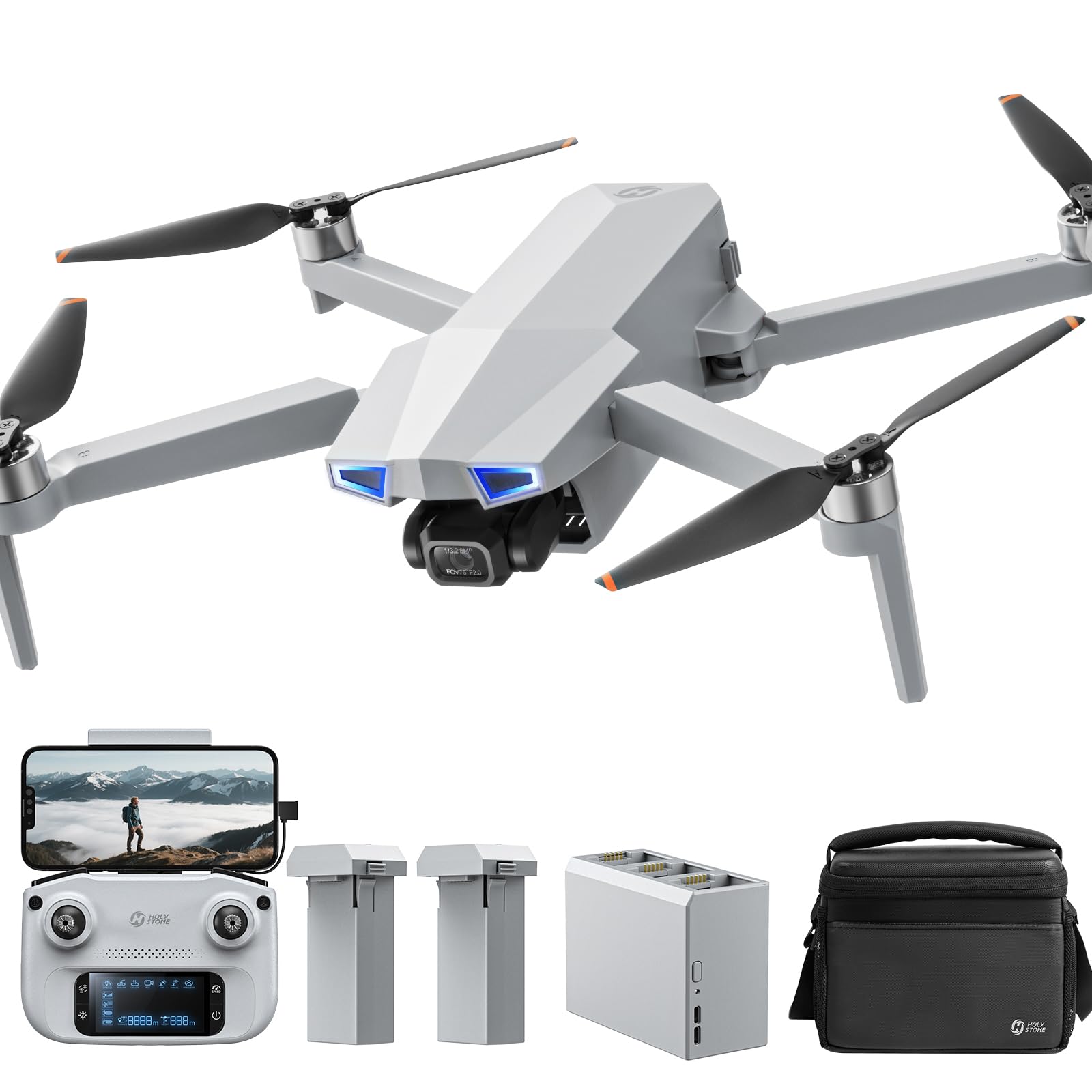
The HS790’s claim to fame is its 30,000-foot HD transmission range via the Holy Stone Wi-Fi Repeater, which maintains a low-latency feed even when the drone is fighting wind at distance. The 3-axis brushless gimbal captures 4K/30fps video and 6K photos, and the 1506 brushless motors provide efficient thrust with lower noise than equivalent brushed systems. The dedicated Night Mode improves visibility during twilight flights when wind often picks up near the coast.
Two modular batteries with the Smart PD Charging Hub provide 60 minutes total flight time, and the hub doubles as a power bank for field charging. Built-in Remote ID compliance keeps the drone legal in US airspace without external modules. Beginner mode limits altitude and speed, while advanced flyers can unlock full manual controls for cinematic shots. AI QuickShots automate complex moves like Dolly Zoom and Rocket.
Some users report the app can be buggy — downgrading to an older HT FLY version resolves most issues. The gimbal struggles during aggressive fast turns, introducing slight jello into the footage. The camera angle control is mapped to a side dial on the remote which is not clearly explained in the quick-start guide. For the 30Kft transmission range, however, this is a capable mid-range tool for long-distance exploration in moderate wind.
Why it’s great
- 30,000-foot HD transmission maintains signal in strong winds at distance
- Built-in Remote ID compliance for legal US operations
- Charging hub doubles as a power bank for field recharging
Good to know
- App can be buggy — older version may work better
- Gimbal introduces jello during rapid, tight turns
9. Ruko 4K UHD Drone

The Ruko 4K UHD weighs under 249 grams and features a 3-axis brushless gimbal with EIS for wind stability, supported by quadruple positioning (GPS, barometric altitude hold, TOF, and optical flow). The 1/2-inch 48MP CMOS sensor captures 8K photos and 4K/30fps video. Users report it handles 10-16 mph wind well, with the gimbal smoothing out the shake that comes from smaller airframes fighting gusts. The 20,000-foot digital transmission avoids Wi-Fi interference for a stable feed.
Three 2200mAh batteries provide a total of 96 minutes flight time. The AI Takeoff and Landing system paired with quad positioning makes low-altitude gust recovery more predictable. Auto-return functions (low battery, signal loss, one-key) plus a built-in beeper help retrieve the drone if the wind pushes it off course. Beginner-friendly one-button takeoff and landing make it accessible for first-time pilots who need to learn the feel of wind correction.
The controller is well-built, but the joysticks are sensitive — take time to adjust the rates before flying in breezy conditions. Some users received units with defective batteries, though Ruko’s customer service handled replacements promptly. The 8K photo resolution is interpolated, not native, so manage expectations for still-image sharpness. For the total flight time and gimbal quality at this price, it is a solid entry-level wind-capable drone.
Why it’s great
- 96-minute total flight time across three batteries for extended wind-testing sessions
- Quadruple positioning system improves hover accuracy in gusty conditions
- Sub-249g weight avoids FAA registration while maintaining 10-16 mph wind handling
Good to know
- 8K photo resolution is interpolated, not native 48MP
- Sensitive joysticks require rate adjustment before windy flights
10. DJI Neo 2 Fly More Combo
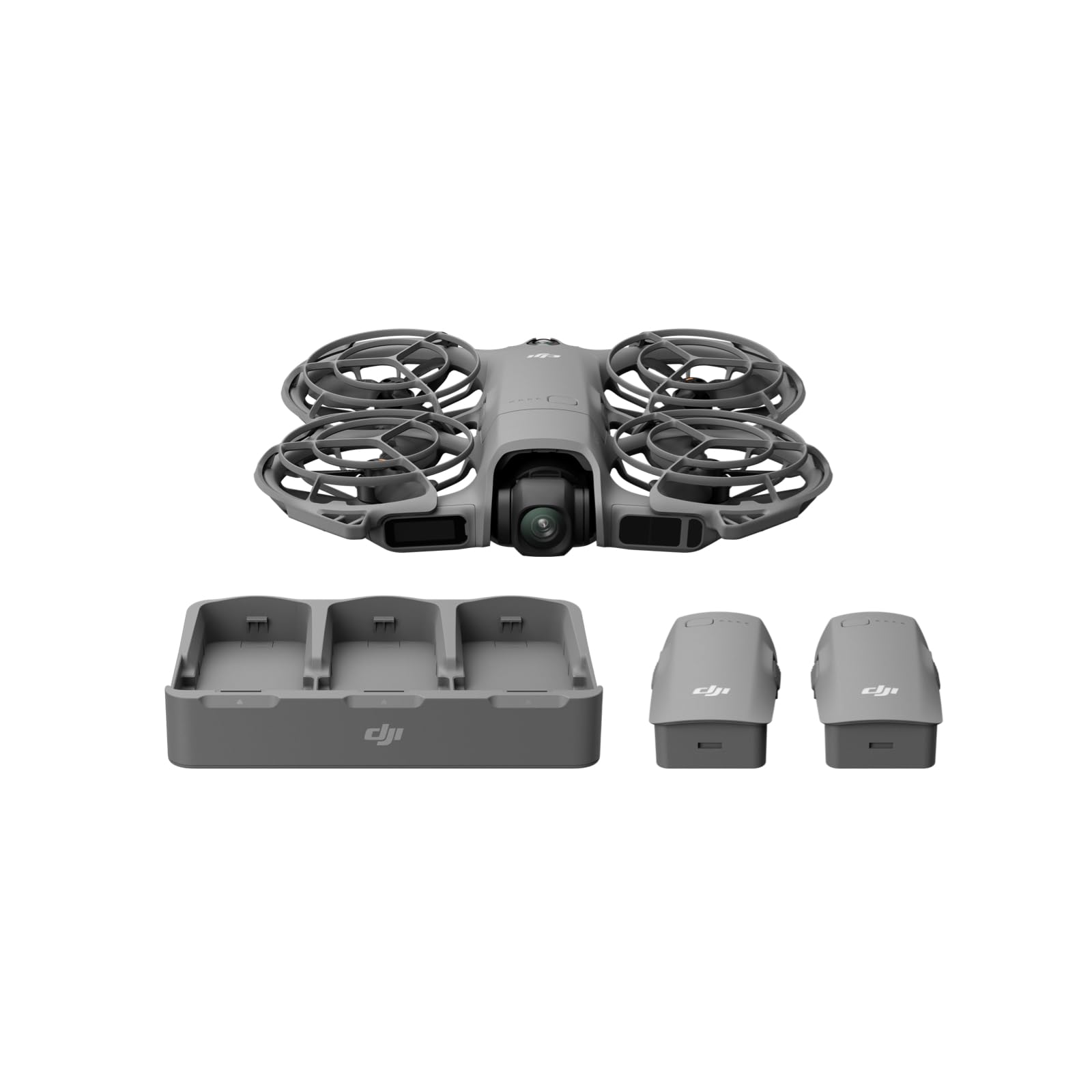
At just 151 grams, the DJI Neo 2 is the lightest drone in this lineup, but ActiveTrack and omnidirectional obstacle sensing help it hold its own in light wind. Full-coverage propeller guards add safety margin for users flying in tight spaces where gusts might push the drone sideways. The 4K camera with integrated stabilization captures usable footage for social media, and gesture controls allow complete hands-free operation — useful when you need to focus on keeping your footing on a gusty cliff edge.
The Fly More Combo includes three batteries, a charging hub, and propeller guards, extending total flight time to a practical level for day trips. App-only flying works well for beginners, and the drone is fully upgradable to FPV manual mode for experienced pilots. Apple Watch compatibility lets you view the live feed and adjust tracking with voice control, which is handy when both hands are occupied.
The Neo 2 is not designed for sustained high wind. Users confirm it handles light coastal breezes but will struggle above 15 mph. The lack of a remote controller in the base combo limits signal range compared to dedicated controller setups. DJI Fly app removal from Google Play is an inconvenience, requiring a direct download from DJI’s website. For social content creators who need a palm-launch drone for mild breezes, the Neo 2 is a fun tool, but it is not a wind specialist.
Why it’s great
- Gesture and palm launch make it the most user-friendly drone for beginners in light wind
- Omnidirectional obstacle sensing adds safety margin in gusty tight spaces
- Apple Watch voice control for tracking adjustments frees up both hands
Good to know
- Struggles above 15 mph wind — not for sustained gusty conditions
- DJI Fly app requires manual download — not available on Google Play
11. HOVERAir X1 (Combo Plus)

The HOVERAir X1 is a 125-gram self-flying camera, not a traditional drone. Its fully enclosed propellers and palm launch make it ideal for hands-free content capture in calm-to-light breeze conditions, but HOVERAir explicitly rates it for Level 4 wind tolerance (7.9 m/s or roughly 18 mph). The triple stabilization system produces smooth 2.7K video in moderate conditions, and the 32GB internal storage eliminates the need for SD cards.
Intelligent flight paths include Hover, Follow, Zoom Out, Orbit, Bird’s Eye, and Manual Control. The follow speed of up to 15 mph means it can track cyclists and skateboarders in low wind, but flight time of 11 minutes per battery (20 flight paths) is short — the combo includes a charging hub for quick swaps. No FAA registration is needed due to its sub-250g weight, and the safety guards provide peace of mind for close-range shooting.
The X1 does not work over water — user reports confirm it will crash if flown over a lake or ocean. It is not designed for high wind use, and HOVERAir strongly advises avoiding strong wind conditions. For vloggers who shoot in calm environments and want a hands-free camera assistant that fits in a pocket, the X1 is unique. But if wind resistance is your primary concern, this is not the tool for the job.
Why it’s great
- Fully enclosed propellers provide unmatched safety for close-quarters shooting
- Palm launch and hands-free flight paths require zero piloting skill
- 32GB internal storage eliminates the need for microSD cards
Good to know
- Rated for Level 4 wind max — not suitable for high-wind environments
- Will crash if flown over water; no obstacle avoidance underneath
FAQ
What wind speed is safe for my drone in Level 6 rating?
Does a heavier drone handle wind better than a lightweight one?
Can I fly in wind over 30 mph with a sub-250g drone?
Do propeller guards affect wind performance?
Does a 3-axis gimbal eliminate all shakes in strong wind?
Final Thoughts: The Verdict
For most users, the drones for high wind resistance winner is the DJI Mini 5 Pro because it combines a 1-inch sensor with a 225° gimbal and ActiveTrack 360° in a travel-friendly sub-250g frame that punches above its weight in moderate wind. If you want sustained Level 6 wind performance and no geofencing restrictions, grab the Autel EVO 2 Pro V3. And for budget-conscious pilots who need 96 minutes of flight time and solid 10-16 mph wind handling, nothing beats the Ruko 4K UHD.

Mo Maruf
I created WellFizz to bridge the gap between vague wellness advice and actionable solutions. My mission is simple: to decode the research and give you practical tools you can actually use.
Beyond the data, I am a passionate traveler. I believe that stepping away from the screen to explore new environments is essential for mental clarity and physical vitality.