Our readers keep the lights on and my smoothie glass nicely filled. As an Amazon Associate, I earn from qualifying purchases.
The difference between a digital drawing that feels alive and one that looks flat often comes down to the tablet under your hand. A laggy cursor, a jumpy line, or a pen that ignores light pressure can destroy any creative flow. Choosing the right tool means understanding how a tablet translates your physical strokes into the digital canvas, and for that, pressure sensitivity, active area, and driver stability matter far more than brand hype.
I’m Mohammad Maruf — the founder and writer behind WellFizz. I’ve spent hundreds of hours analyzing the technical specs, customer experiences, and real-world performance of drawing tablets to separate the tools that actually deliver from those that just look good on the box.
Whether you are a beginner looking for your first device or a professional demanding pixel-perfect accuracy, the ideal drawing tablet for pc offers the right balance of pressure sensitivity, screen size, and driver support for your workflow.
How To Choose The Best Drawing Tablet For PC
Selecting a drawing tablet for PC comes down to matching hardware specs to your specific creative needs. The most critical decision is whether you need a pen display, which lets you draw directly on a screen, or a screenless tablet, where you draw on a pad and watch a monitor. Each option trades off between drawing intuition and price.
Pressure Sensitivity & Pen Technology
The pen is your primary tool, so its responsiveness is paramount. Entry-level tablets offer 8192 levels of pressure sensitivity, which is sufficient for most sketching and illustration. Premium models now reach 16384 levels, providing finer control for delicate shading and line variation. A battery-free electromagnetic resonance (EMR) pen is ideal — it never needs charging and offers a consistent, predictable feel. Also check the initial activation force (IAF), ideally around 2-3 grams, to ensure the tablet registers the lightest touch.
Active Area & Form Factor
The active area determines how much room you have for sweeping strokes. A larger surface, around 10 by 6 inches, feels more natural and reduces the need for constant zooming. For pen displays, a 11.6 to 13.3-inch screen offers a good balance of portability and usable space. Consider also the screen’s color accuracy: look for somewhere around 99% sRGB coverage for reliable color work, and a laminated display to reduce parallax, making the cursor appear directly under the pen tip.
Driver Stability & Shortcut Customization
Even the best hardware is useless without stable drivers. User reviews frequently note that driver installation can be tricky, especially on older operating systems or Linux. Prioritize tablets from brands with consistent software support and easy-to-use mapping utilities. Programmable shortcut keys and scroll wheels can dramatically speed up your workflow, allowing you to assign common actions like undo, brush size, and canvas zoom, reducing reliance on the keyboard.
Quick Comparison
On smaller screens, swipe sideways to see the full table.
| Model | Category | Best For | Key Spec | Amazon |
|---|---|---|---|---|
| HUION Kamvas 13 (Gen 3) | Pen Display | Pro color work & detailed illustration | 16384 Pressure, 99% sRGB, Dual Dial | Amazon |
| XPPen Artist 13.3 Pro V2 | Pen Display | Beginner-friendly pen display with dial | 16384 Pressure, 125% sRGB, Red Dial | Amazon |
| XPPen Artist 12 3rd Gen | Pen Display | Portable, high-accuracy color display | 16K Pressure, AG Etched Glass, X-Dial | Amazon |
| GAOMON PD1161 | Pen Display | Budget entry to screen-based drawing | 8192 Pressure, 11.6″ Screen, 8 Keys | Amazon |
| HUION Inspiroy 2 Large | Screenless | Versatile workflow with scroll wheel | 8192 Pressure, 10×6″, 8 Custom Keys | Amazon |
| Wacom Intuos Small Bluetooth | Screenless | Portable note-taking & classroom use | 4096 Pressure, 6×3.7″, Bluetooth | Amazon |
| HUION HS610 | Screenless | Budget-friendly large surface drawing | 8192 Pressure, 10×6.25″, Tilt Support | Amazon |
In‑Depth Reviews
1. HUION Kamvas 13 (Gen 3)

The HUION Kamvas 13 (Gen 3) sets a new benchmark for mid-range pen displays, delivering 16384 levels of pressure sensitivity and PenTech 4.0 technology that virtually eliminates diagonal jitter. The 13.3-inch fully laminated screen with Anti-Sparkle Canvas Glass 2.0 cuts down on glare and keeps parallax to a minimum, making the cursor feel directly under the nib. Color accuracy is factory-calibrated to an average Delta E of less than 1.5 with 99% sRGB coverage, which is essential for any artist who needs reliable color matching in their work.
Workflow efficiency gets a serious upgrade from the dual dial wheels and five programmable shortcut keys. Users report that the dials make adjusting brush size and canvas zoom smooth and intuitive, reducing reliance on keyboard shortcuts. The included ST300 adjustable stand provides comfortable viewing angles, though the tablet is known to get slightly warm on the port side after extended sessions. The 3-in-1 cable connection is necessary unless you purchase a separate full-featured USB-C cable, which is a minor inconvenience for desk setups.
The pen itself, the PW600L, is battery-free and supports 60-degree tilt, giving you natural shading and stroke control. On Linux, the basic pen and tablet functions work, but the dials and keys have limited support, making it less ideal for users on that OS. For Windows and Mac users, however, this is a powerhouse display that rivals devices costing nearly twice as much, offering near-zero parallax, strong build quality, and excellent color fidelity out of the box.
Why it’s great
- Exceptional 16384 pressure sensitivity with smooth, jitter-free lines
- Factory-calibrated color with 99% sRGB and Delta E less than 1.5
- Dual dial wheels improve workflow efficiency significantly
Good to know
- Requires 3-in-1 cable or separate USB-C cable for connection
- Screen gets warm on the port side after a few hours of use
- Dial and key functions are limited on Linux systems
2. XPPen Artist 13.3 Pro V2
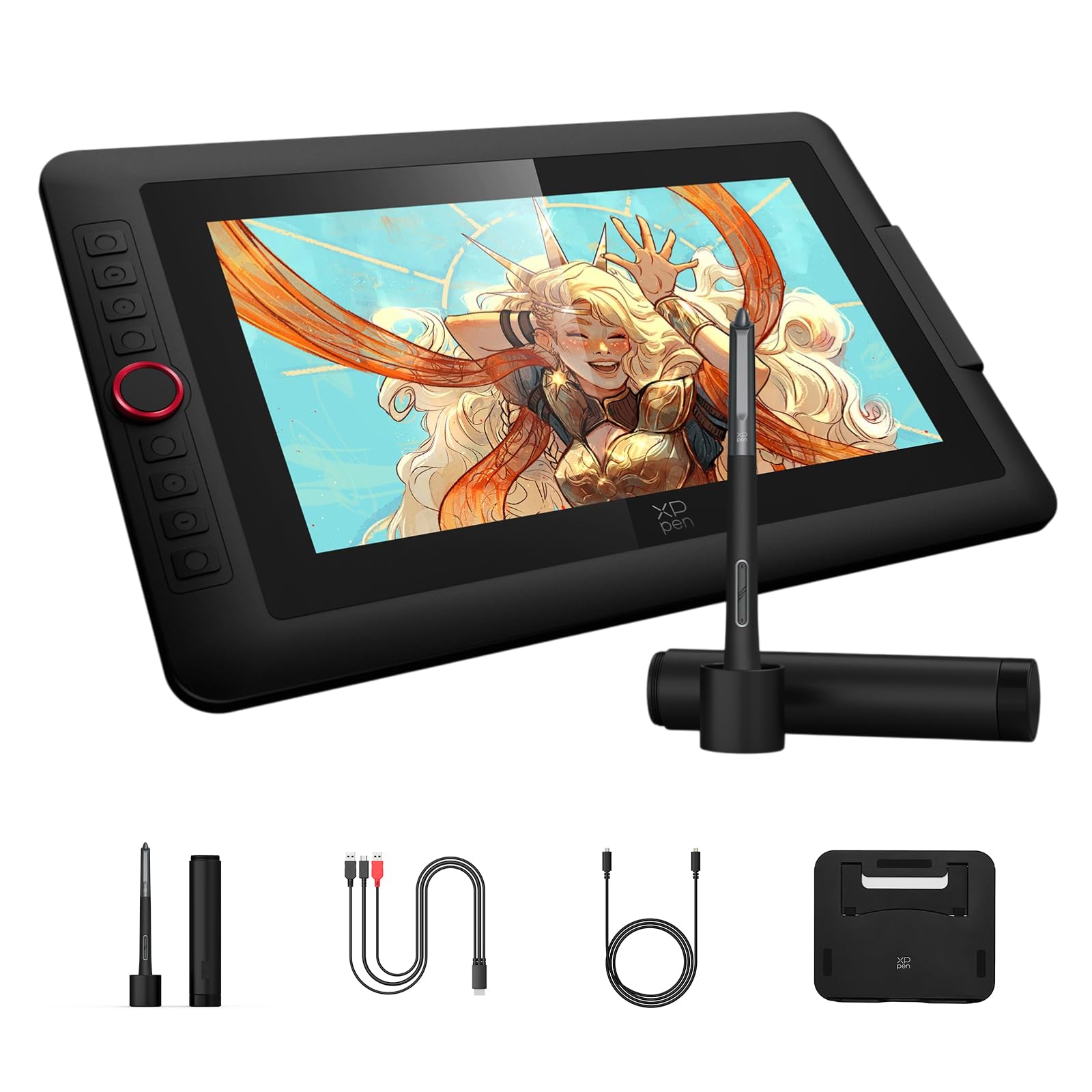
The XPPen Artist 13.3 Pro V2 is designed with newcomers in mind, combining a user-friendly setup with professional-grade specs. It features the world-first 16K pressure levels from the X3 Pro smart chip stylus, which delivers a 1.5x faster initial response rate and 20% better accuracy than previous generations. The 13.3-inch full-laminated screen with an anti-glare film provides a paper-like texture and wide 178-degree viewing angles, making long drawing sessions more comfortable on the eyes.
A standout feature is the Red Dial Quick Key, which simplifies essential controls like brush size and zoom for beginners who may not be comfortable with complex keyboard shortcuts. Eight customizable shortcut keys flank the screen, allowing you to map your most-used functions directly. The included S01 foldable stand supports angles up to 90 degrees, promoting better posture and heat dissipation. Color performance is impressive, covering 125% sRGB and 95% Display P3 gamut, which ensures vibrant and accurate colors for photography and illustration work.
Some users report a driver bug where pen alignment drifts if the primary display resolution differs from the tablet’s 1920×1080, but setting both to the same resolution solves the issue. The full-featured USB-C cable is included, keeping your desk clutter-free. While the X3 Pro stylus feels natural and responsive, a minor complaint is that the pen nib can scratch the screen over time, so a screen protector is a wise investment. For beginners and intermediate artists, this tablet offers a feature set that far exceeds its tier.
Why it’s great
- Industry-leading 16384 pressure sensitivity with fast response
- Red Dial makes critical controls easy for beginners
- Excellent color gamut coverage with 125% sRGB
Good to know
- Pen alignment can drift with mismatched display resolutions
- Pen nib may scratch the screen over time
- Driver updates needed for some applications
3. XPPen Artist 12 3rd Gen
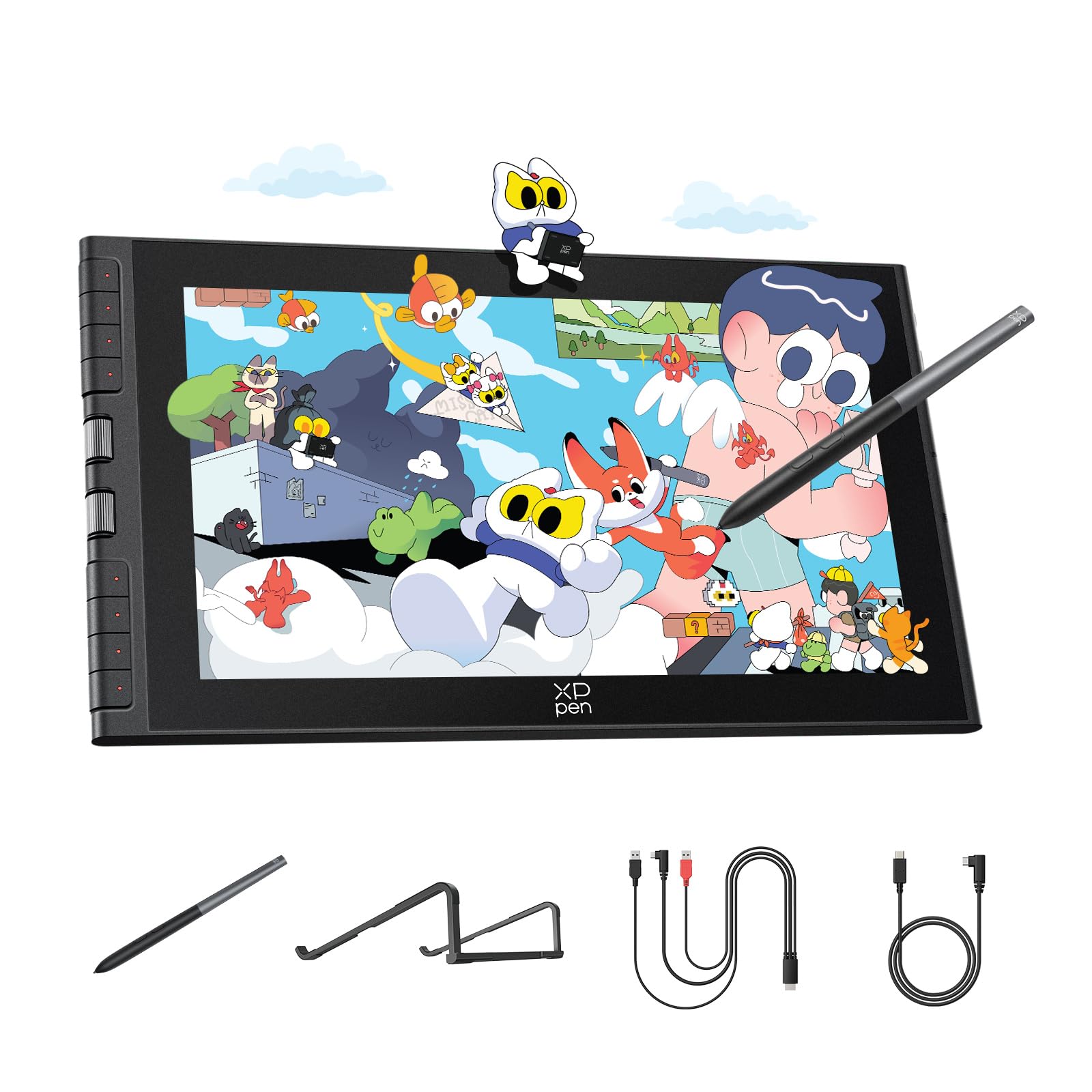
The XPPen Artist 12 3rd Gen is a lightweight, portable pen display that weighs only 1.58 pounds, making it ideal for artists who move between studio, classroom, and cafe. The 11.9-inch screen uses AG etched glass with full lamination, cutting glare by 85% and nearly eliminating parallax. The glass texture simulates drawing on paper, providing just enough resistance to feel natural without wearing down the nib quickly. The 1920×1080 resolution with 99% sRGB and factory calibration to a Delta E of less than 1.5 ensures that colors are accurate straight out of the box.
Creativity is boosted by dual X-Dial wheels, which allow you to adjust brush size and canvas zoom instantly without taking your hand off the pen. The 33% narrower bezels give you more drawing space in a compact package. The magnetic X4 pen supports 16384 pressure levels and 60-degree tilt, with a 2-gram initial activation force that captures the lightest feather strokes. Setup is straightforward with a single USB-C cable, though some users may need a firmware update via Windows or Mac for full button functionality on Chromebook or Android.
User feedback is overwhelmingly positive, with many praising the balance of portability and performance. The foldable stand included offers a comfortable 20-degree angle, reducing neck strain. One consideration is the small screen size; professionals doing detailed work may crave more real estate. Overall, this tablet is a excellent choice for students and freelancers who need a reliable, color-accurate display that can slip into a backpack without adding bulk.
Why it’s great
- Ultra-light and portable design for mobile artists
- AG etched glass with full lamination reduces glare and parallax
- Dual X-Dial wheels for efficient brush and zoom control
Good to know
- Smaller screen may not suit intricate, large-scale projects
- Firmware update required for full button support on Chromebook
- Magnetic pen attachment can be lost if not careful
4. GAOMON PD1161

The GAOMON PD1161 is a budget-friendly entry into the world of pen displays, offering a 11.6-inch full HD IPS screen with 72% NTSC color gamut and 16.7 million colors. The pre-installed matte film reduces glare and provides a paper-like texture that artists appreciate for long sketching sessions. The battery-free AP50 pen delivers 8192 levels of pressure sensitivity and 60-degree tilt, giving you solid control for illustration, photo editing, and note-taking without the need for charging.
The build quality is decent for the price point, with eight programmable shortcut keys on the side of the display. However, the button design is a notable drawback — the touch-sensitive keys are small and placed close together, leading to accidental presses. Left-handed users will find the top-right button placement especially inconvenient. The display also exhibits noticeable ghosting, which can be distracting when scrolling or moving objects quickly. Despite these issues, the screen responsiveness and pressure sensitivity are well-reviewed for the price.
Setting up the PD1161 requires a 3-in-1 cable (HDMI, USB, and power), and your computer must have an HDMI port. The tablet is not a standalone unit and must be connected to a PC or laptop. Color accuracy out of the box can be off, with colors appearing slightly warm, but this can be adjusted via your computer’s graphics settings. For absolute beginners wanting to try a screen-based drawing experience without a large investment, the GAOMON PD1161 is a functional stepping stone.
Why it’s great
- Lowest cost entry into pen display drawing
- Battery-free pen with 8192 pressure and tilt support
- Matte screen reduces glare and feels like paper
Good to know
- Touch buttons are small and prone to accidental presses
- Noticeable ghosting on the display
- Color accuracy requires manual adjustment out of the box
5. HUION Inspiroy 2 Large

The HUION Inspiroy 2 Large is a screenless tablet that punches well above its price tier, offering a generous 10.5 by 6.56-inch active area and PenTech 3.0 technology for minimal lag and wobble. The new PW110 stylus has a slimmer body with a soft silicone grip, which feels comfortable for extended use, and the 8192 pressure levels provide smooth, responsive line control. The tablet is also compatible with Android devices via an OTG adapter, adding versatility for mobile sketching.
The unique scroll wheel and three sets of eight customizable shortcut keys are game-changers for workflow. You can assign different shortcuts for different applications, switching profiles seamlessly. The USB-C connection makes setup fast and the cable is easy to manage. The tablet is lightweight and slim, fitting easily into a laptop bag. Users praise its performance with software like Krita and MediBang Paint, noting that after calibration, the pressure sensitivity feels natural and adjustable.
One limitation is that the HUION software for mapping the tablet buttons has been reported to have bugs on Linux, where the buttons may only map to the left third of the screen. The pen also lacks a shape guide, so the buttons can rotate in your hand during use. Additionally, the pressure sensitivity has a noticeable gap between 1 and 40 percent, but this can be compensated for in the software. Overall, the Inspiroy 2 Large is a excellent value for budget-conscious artists who want a large canvas and efficient controls.
Why it’s great
- Large 10.5×6.56 inch active area for sweeping strokes
- Programmable scroll wheel and 3-set shortcut keys
- Comfortable PW110 stylus with silicone grip
Good to know
- HUION software has bugs on Linux for button mapping
- Pen has no shape guide, buttons can rotate in hand
- Pressure sensitivity has a gap at the lowest end
6. Wacom Intuos Small Bluetooth
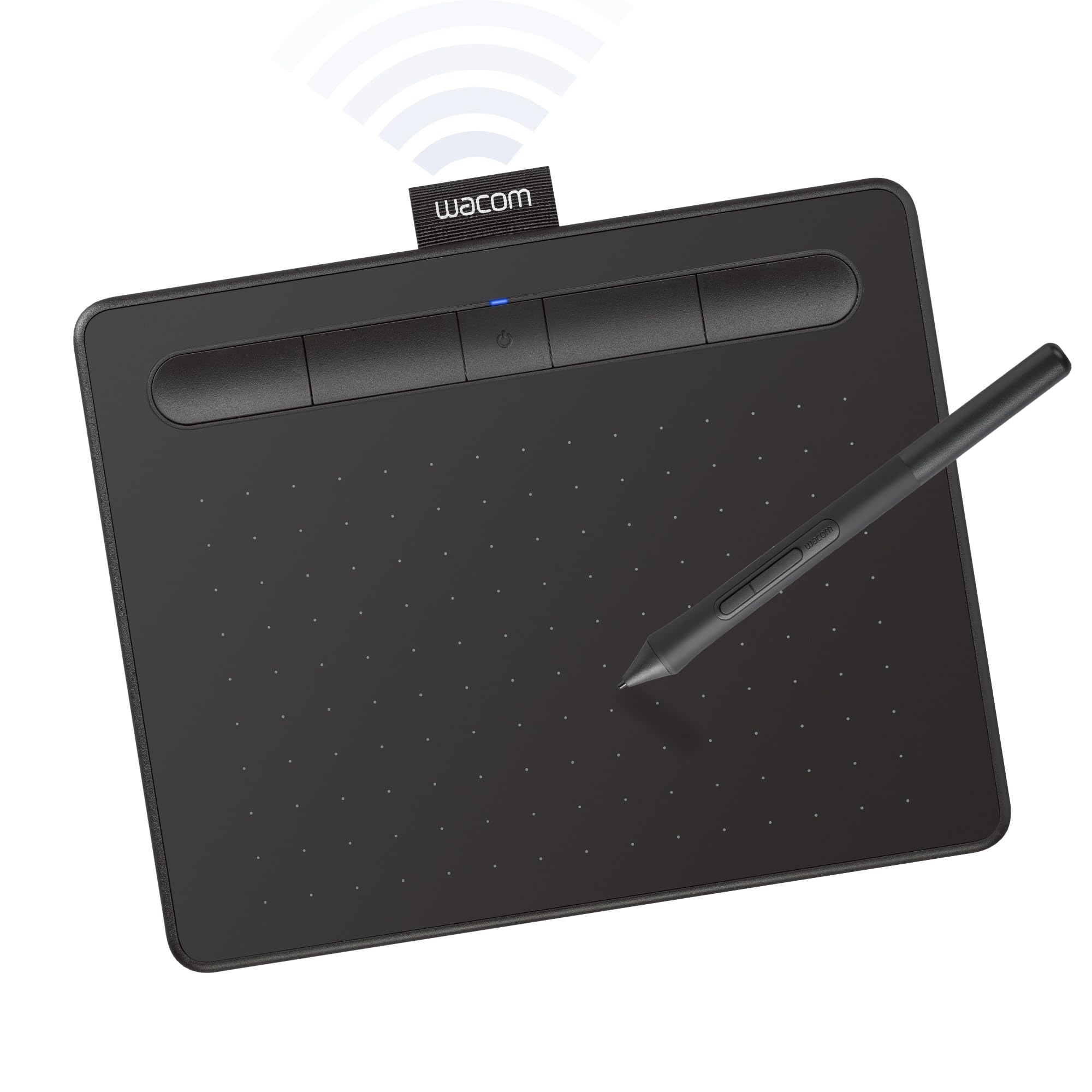
The Wacom Intuos Small Bluetooth is a compact screenless tablet designed for portability and ease of use. Its active area of 6 by 3.7 inches is small, but this makes it highly portable for students and professionals who need to take notes or annotate documents on the go. The pressure-sensitive, battery-free pen offers 4096 levels of pressure, which is less than many competitors, but the overall feel is smooth and responsive, especially for note-taking and basic sketching.
Connectivity is versatile, supporting both wired USB-A and Bluetooth wireless modes. Users note that Bluetooth can introduce lag and jagged lines, so for smooth drawing, the wired connection is recommended. The tablet includes four customizable ExpressKeys, which are useful for common shortcuts. Wacom also provides software bundles with purchase, including access to creative apps and online training, which adds value for beginners. The compact size means it fits easily next to a laptop in a bag or on a crowded desk.
The major trade-off is the small drawing surface and lower pressure sensitivity compared to budget rivals. The pen can become uncomfortable after several hours, and the side buttons are easy to press accidentally. For pure note-taking and classroom use, the Intuos Small is a reliable, trusted choice from the industry standard. However, artists looking for a primary drawing tablet will find the active area limiting and the resolution less capable for detailed work.
Why it’s great
- Highly portable and fits in any laptop bag
- Reliable Wacom brand with stable driver support
- Wireless Bluetooth connectivity option
Good to know
- Small active area is restrictive for drawing
- Bluetooth mode can introduce input lag
- Lower 4096 pressure sensitivity than competitors
7. HUION HS610

The HUION HS610 is a budget-friendly screenless tablet that offers a large 10 by 6.25-inch active area and a battery-free stylus with 8192 pressure levels and 60-degree tilt. The size gives you ample room for expressive strokes without constant zooming. The tablet features a multifunctional touch ring for zooming and scrolling, plus 12 programmable press keys that you can customize for various shortcuts. It also supports Android OS 6.0 or later via an OTG adapter, making it a versatile tool for phone-based sketching.
Build quality is decent for the price, with a slim profile of just 8mm thickness and a weight of 600 grams. Users report that the initial driver install can be tricky, especially on older Windows 7 systems, but once set up, the tablet works seamlessly with software like Photoshop, Krita, and ToonBoom. The stylus is comfortable and responsive, though the buttons can be pressed accidentally. Some units have been reported to arrive with minor cosmetic issues, like scrapes, indicating possible returns or display units.
The HS610 is often compared favorably to older Wacom Intuos models, with many users noting it is a significant upgrade in terms of pressure control and size. The 12 shortcut keys are a mixed blessing — they are very useful for mapping commands, but they can be overwhelming to memorize at first. Overall, for artists on a tight budget who need a large drawing surface and do not require a screen, the HUION HS610 delivers exceptional value.
Why it’s great
- Large 10×6.25 active area for the price
- 12 programmable shortcut keys and a touch ring
- Battery-free pen with tilt and 8192 pressure
Good to know
- Driver installation can be difficult on older systems
- Pen buttons are prone to accidental presses
- Some units may arrive with cosmetic imperfections
FAQ
Why does my drawing tablet have lag or jittery lines?
Can I use a drawing tablet without a screen?
What does tilt support do on a drawing pen?
Final Thoughts: The Verdict
For most users, the best drawing tablet for pc winner is the HUION Kamvas 13 (Gen 3) because it delivers a professional-grade drawing experience with its 16384 pressure levels, excellent color accuracy, and efficient dual dial system. If you want a beginner-friendly pen display with a simple setup, grab the XPPen Artist 13.3 Pro V2. And for the best value on a large, screenless tablet with versatile controls, nothing beats the HUION Inspiroy 2 Large.

Mo Maruf
I created WellFizz to bridge the gap between vague wellness advice and actionable solutions. My mission is simple: to decode the research and give you practical tools you can actually use.
Beyond the data, I am a passionate traveler. I believe that stepping away from the screen to explore new environments is essential for mental clarity and physical vitality.