Our readers keep the lights on and my smoothie glass nicely filled. As an Amazon Associate, I earn from qualifying purchases.
Finding a drone that’s both thrilling enough for a teenager and safe enough for your peace of mind is a delicate balance. You need something that won’t shatter on the first crash but can still capture decent aerial shots and offer enough flight modes to keep boredom at bay.
I’m Mohammad Maruf — the founder and writer behind WellFizz. I’ve spent countless hours poring over spec sheets, customer feedback, and real-world performance data to separate the flyers from the flops in this crowded category.
Whether your teen is a complete novice or ready for more advanced features, this guide breaks down the best options with a clear focus on value and usability. Here is my curated list of the best drones for teens this season.
How To Choose The Best Drones For Teens
Teen drones sit in a unique sweet spot between toy-grade fliers and expensive enthusiast models. The right choice depends on how much crash-resistance you need versus how many smart features you want. Here are the three factors that matter most.
Safety First – Guards, Sensors, and Auto-Return
Propeller guards are non-negotiable for indoor flying and younger teens. They prevent injury and protect furniture. For outdoor use, obstacle avoidance sensors add an extra layer of security, while a GPS module with auto-return-to-home is the ultimate safety net — it brings the drone back automatically if the signal drops or the battery runs low.
Flight Time and Battery Configuration
Most drones in this category advertise 20 to 48 minutes of total flight time, but that’s almost always split across two batteries. Real per-battery flight is typically 12 to 25 minutes. Look for models that come with two batteries and a charging system that lets you swap quickly — this keeps the fun going without long downtime.
Motor Type – Brushed vs. Brushless
Brushed motors are cheaper and found on entry-level models, but they wear out faster and produce more noise. Brushless motors are more efficient, quieter, and offer better wind resistance. For a teen who plans to fly regularly outdoors, a brushless drone is a smarter long-term investment that handles light gusts and extended flight sessions without overheating.
Quick Comparison
On smaller screens, swipe sideways to see the full table.
| Model | Category | Best For | Key Spec | Amazon |
|---|---|---|---|---|
| Oddire 4K GPS Drone | Premium | Long flights & GPS tracking | 48 min total (2x 1800mAh) | Amazon |
| Karuisrc GPS Drone w/ Screen | Premium | Screen controller & AI tracking | 4.5″ LCD controller screen | Amazon |
| REDRIE 4K Drone w/ Gimbal | Premium | Stabilized 4K footage | 2-axis gimbal + 4K photos | Amazon |
| Scrubuz GPS Drone 2K | Mid-Range | GPS features at low cost | GPS Follow Me & Circle Fly | Amazon |
| RELIDOL PK01 w/ Screen | Mid-Range | Screen control without phone | Built-in controller screen | Amazon |
| SYMA X100 Obstacle Avoidance | Entry-Level | Indoor safety for beginners | 4-way infrared obstacle sensors | Amazon |
| PLEGBLE PL516 4K | Budget | Affordable starter with extras | 28 min total (2 batteries) | Amazon |
In‑Depth Reviews
1. Oddire 4K GPS Drone

The Oddire HK11 packs the most total flight time in this roundup — two 1800mAh 7.7V batteries deliver up to 48 minutes of combined flying. That extra voltage compared to typical 3.7V packs means more consistent power output during maneuvers, which is a real advantage when a teen is learning to hold altitude in light wind.
Its 4K UHD camera (4096x3072P photos, 2048x1088P video) sits behind an F2.15 110° wide-angle lens, adjustable 90° via remote or app. The 5G Wi-Fi transmission module keeps the live feed stable up to 500 meters, and the GPS suite includes Follow Me, Waypoint, and Orbit modes — features usually reserved for pricier machines.
Weighing just 249g, it avoids FAA registration entirely. Customer feedback consistently praises its rock-solid hover and wind resistance, though a few note the app requires the “X DRONE” download for full functionality. The compass must be recalibrated each power-on, but that’s standard for this class.
Why it’s great
- Longest flight time in the group at 48 minutes total
- Full GPS smart modes for automated flight paths
- Strong Level 5 wind resistance for outdoor flying
Good to know
- Requires compass calibration before every flight
- Some users report the main app link is tricky to find
2. Karuisrc GPS Drone w/ 4.5″ LCD Screen
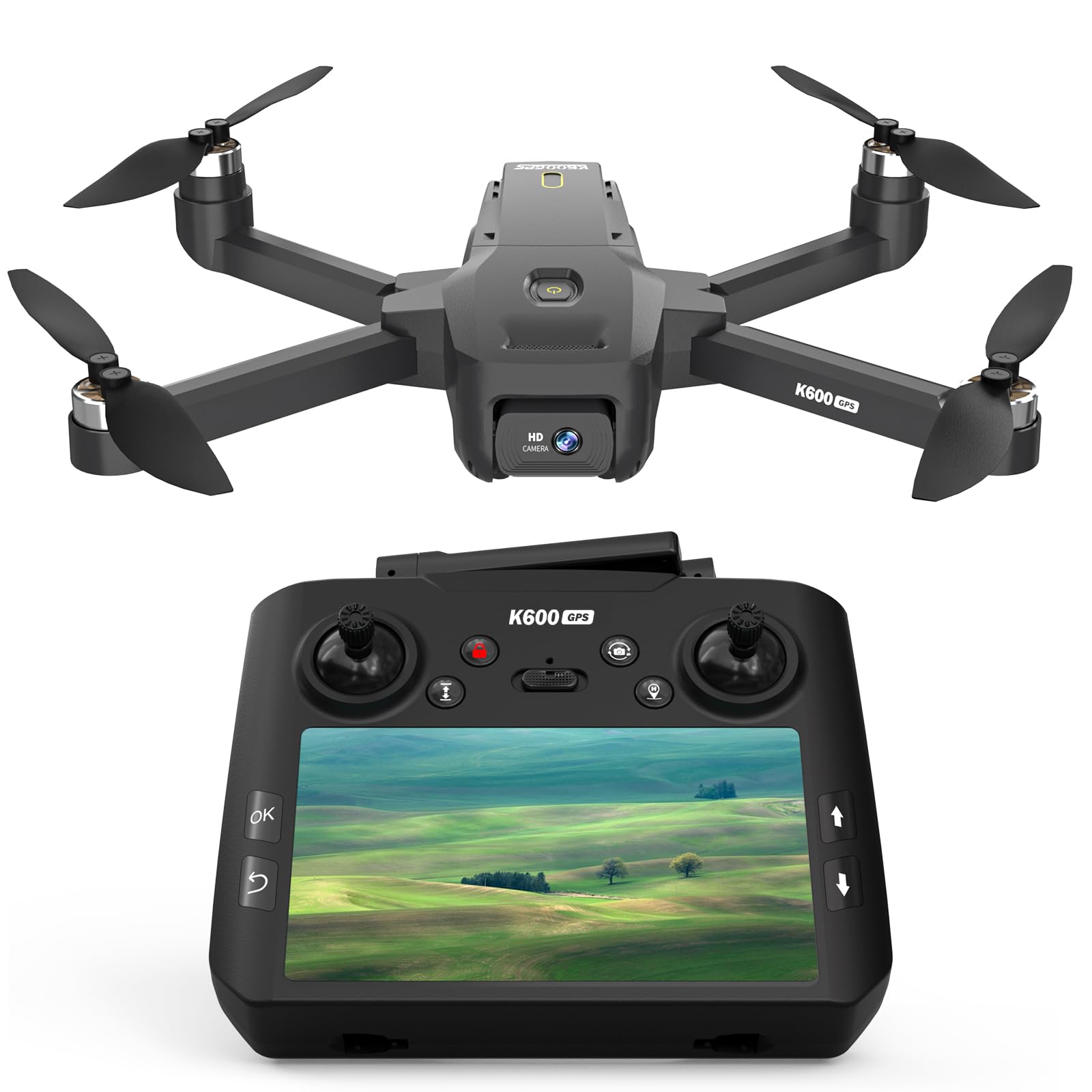
The Karuisrc stands out by putting a 4.5-inch HD display right on the controller — no phone required. For a teen who doesn’t want to fiddle with app connections or drain their phone battery, this is a massive convenience. The screen shows live FPV footage and flight stats instantly, and footage can be saved directly via a MicroSD card.
It uses Electronic Image Stabilization (EIS) on its camera to smooth out vibrations, and the GPS module enables reliable Auto Return, Follow Me, and Orbit modes. The brushless motors provide quiet, efficient thrust, and the 2200mAh battery delivers around 25 minutes of flight per charge. Total flight time with two included batteries is substantial.
Customer reviews highlight how intuitive the screen-based control is for beginners, and the 400-meter control range gives plenty of room to explore. The AI Track and Orbit modes work smoothly, though the camera quality is more suited for social media clips than professional-grade work. It’s a premium-feeling package that removes the biggest friction point for new pilots.
Why it’s great
- Built-in screen eliminates phone dependency
- GPS Auto Return and Follow Me work reliably
- Large 2200mAh battery per flight
Good to know
- Requires MicroSD card for photo/video storage
- EIS helps but won’t match a mechanical gimbal
3. REDRIE 4K Drone with 2-Axis Gimbal
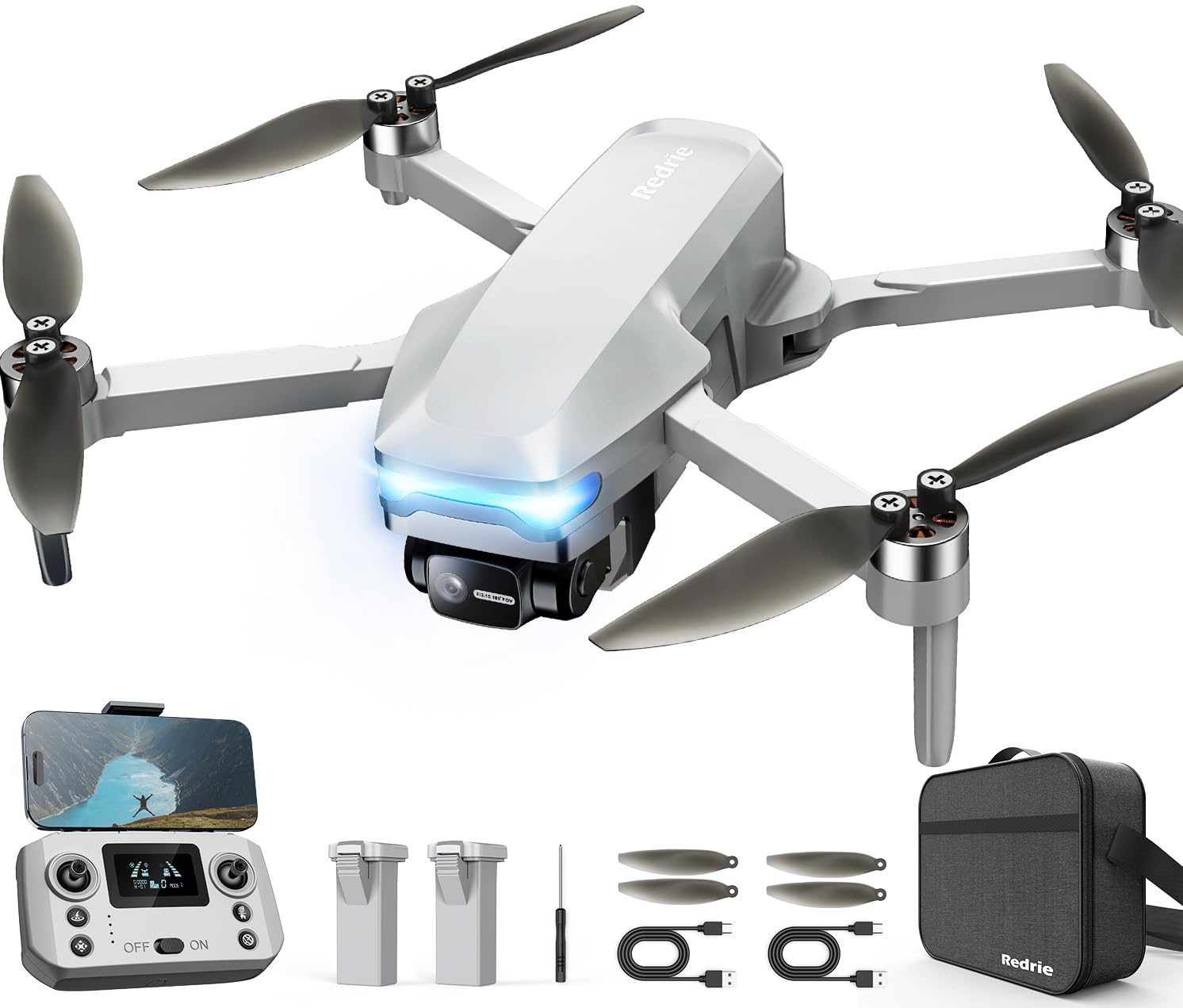
The REDRIE HK33 is the only drone in this lineup with a true 2-axis mechanical gimbal, which physically stabilizes the camera during flight. This makes a visible difference in video smoothness compared to EIS-only drones, especially when the teen is learning to fly in breezy conditions. The F2.15 aperture and 110° ultra-wide lens capture 4K photos and 2K video.
Brushless motors provide Level 5 wind resistance, and the 5G Wi-Fi system maintains a 985-foot stable video transmission range with a 1640-foot signal range using the repeater. The GPS module handles Auto Return, Follow Me, Route Planning, and Circle Fly. Two 1800mAh batteries give a combined flight time of 40 to 45 minutes.
Outdoor pilots report that the gimbal keeps footage usable even in moderate wind, and the included carrying case makes transport easy. The phone holder on the controller is a bit flimsy according to some users, and the video stabilization still has limits in heavy gusts, but for the price, the gimbal alone sets it apart from most sub- competitors.
Why it’s great
- Mechanical 2-axis gimbal for genuinely smoother video
- Strong brushless motors handle Level 5 wind
- Comes with carrying case and spare parts
Good to know
- Phone holder on controller feels less durable
- Gimbal helps but can’t eliminate all wind shake
4. Scrubuz HK66 GPS Drone 2K
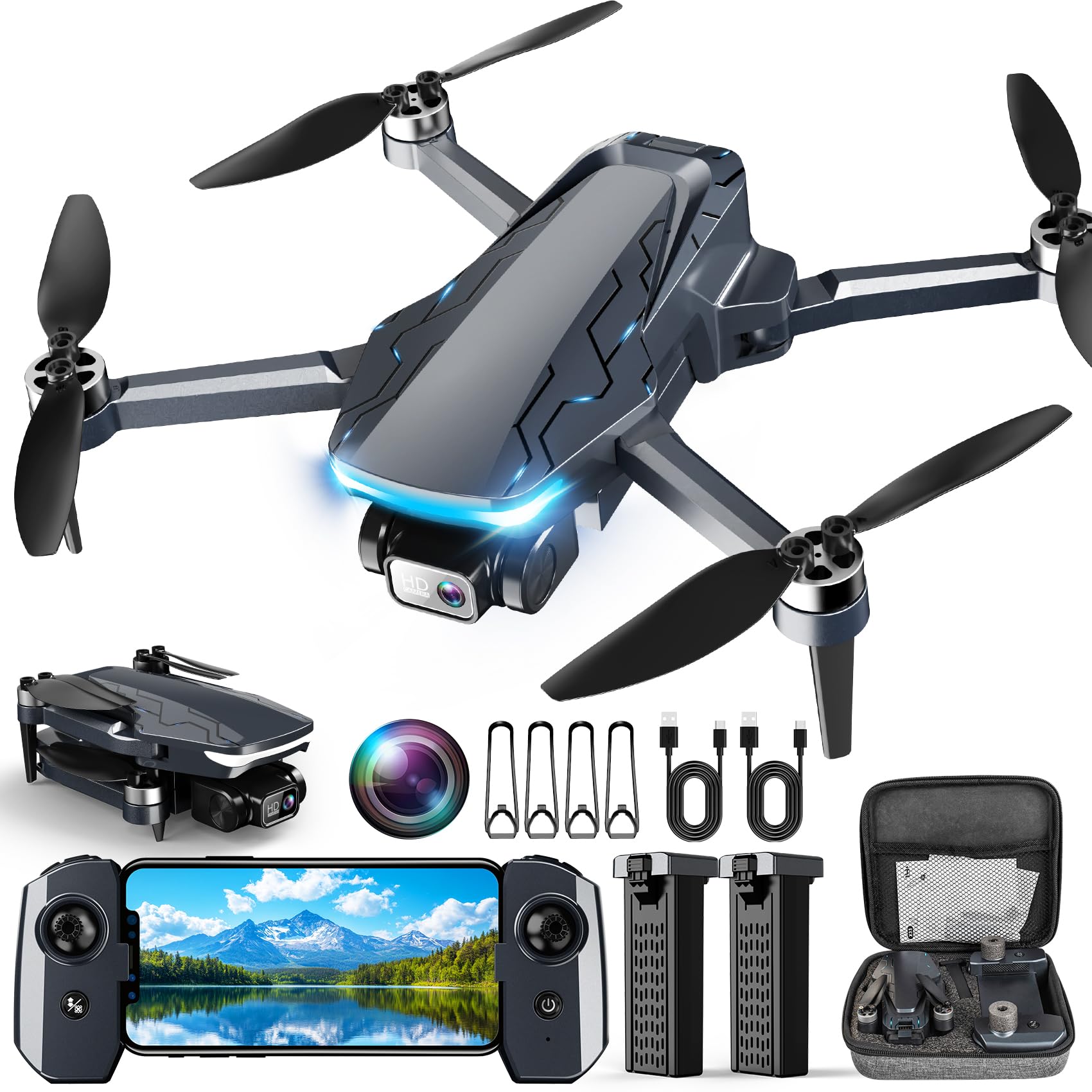
The Scrubuz HK66 brings GPS intelligence — Precision Auto Return, Follow Me, Circle Fly, and Waypoint navigation — at a price point that usually buys a non-GPS toy drone. That alone makes it a compelling option for a teen ready to move beyond basic line-of-sight flying. The 2K camera with a 90° adjustable 110° wide-angle lens records at 2048x1088P.
Brushless motors with a claimed 20,000-hour lifespan give it the endurance to survive a season of heavy use, and Level 5 wind resistance means it won’t get blown away on a breezy afternoon. The 5G Wi-Fi transmission provides a stable FPV link, and the foldable design under 249g keeps it FAA-exempt. Two batteries deliver about 40 minutes of total flight time.
Real-world reviews highlight the easy setup and responsive controls, though some customers received mismatched spare parts — customer service resolved those quickly. The compass must be calibrated every power-on, and the 2K resolution is a step down from 4K models, but for a teen’s first GPS drone, the feature-per-dollar ratio is hard to beat.
Why it’s great
- GPS smart modes at a near-entry-level price
- Durable brushless motors with long lifespan
- Includes carrying bag and spare propellers
Good to know
- 2K camera, not true 4K resolution
- Compass calibration needed before each flight
5. RELIDOL PK01 Drone with Screen on Controller
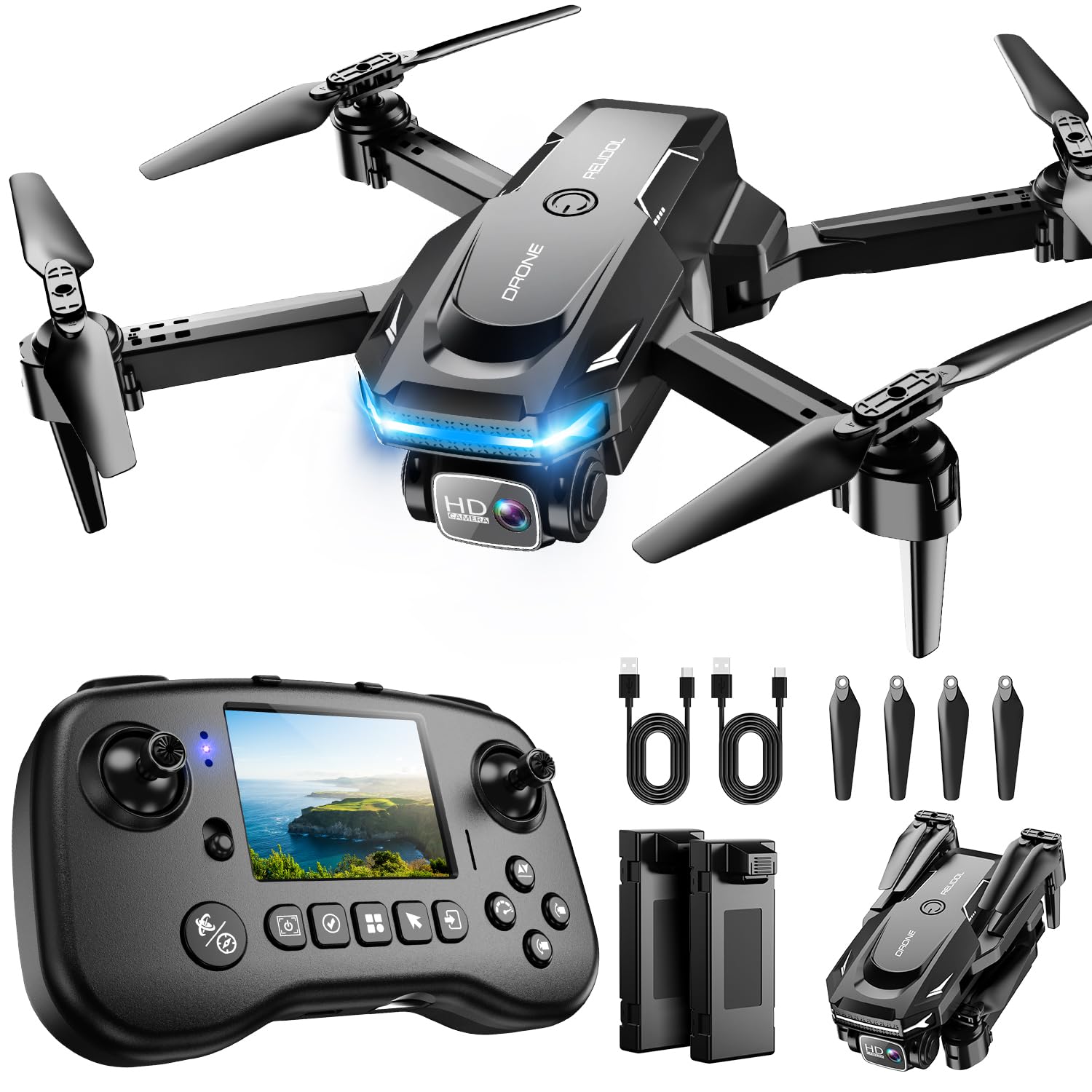
The RELIDOL PK01 bridges the gap between toy and feature drone by including a built-in screen on the controller, similar to the premium Karuisrc model but at a lower cost. Teens can view live HD footage and flight data without needing a phone, and the 1080P adjustable lens (80° range) captures decent stills for social sharing. A MicroSD card is required to save images and videos.
Brushless motors provide smooth, quiet power, and the drone supports one-key takeoff/landing, headless mode, 360° flips, gesture control, and voice commands like “take off.” The two enhanced batteries deliver about 25 minutes of total flight time, and the controller charges via USB-C — a modern convenience. The 30-meter maximum range keeps it suited for backyard or park flying rather than long-distance exploration.
Customer feedback is overwhelmingly positive for teens and pre-teens, especially for the easy setup and included carrying case. The camera quality is good for the price bracket, though the 1080P resolution won’t match higher-end models. The range is limited, but for a first drone that lets a teen fly without a phone tether, this is a solid choice.
Why it’s great
- Controller screen works without phone connection
- USB-C charging for batteries and remote
- Includes carry case and propeller guards
Good to know
- Limited 30-meter control range
- Requires MicroSD card for saving media
6. SYMA X100 Indoor Drone with Obstacle Avoidance

The SYMA X100 is the safest indoor drone in this guide, built specifically for first-time flyers in confined spaces. Its four-way infrared obstacle detection system senses objects within about 12 inches and automatically steers the drone away, drastically reducing crash frequency. The fully enclosed propeller guard eliminates the risk of blade contact with skin or furniture.
Weighing just 58 grams, it’s incredibly light and won’t cause damage during inevitable tumbles. One-key takeoff/landing, altitude hold, headless mode, and two speed modes make the learning curve very gentle. The 360° flip button adds a fun stunt element, and the tough ABS body survives repeated drops. Two 700mAh batteries provide up to 20 minutes of total flight time.
Parents consistently report that this drone survives crashes that would break lesser models. The obstacle avoidance works well on walls and furniture, though it can struggle outdoors with irregular obstacles like hedges. It’s not a camera drone — there’s no FPV or recording — but for a younger teen or a completely green pilot, it’s the safest place to start.
Why it’s great
- 4-way infrared obstacle avoidance prevents crashes
- Fully enclosed guards make it safe for indoor use
- Extremely durable ABS construction
Good to know
- No camera or FPV capability
- Obstacle avoidance may not work well outdoors
7. PLEGBLE PL516 4K Drone

The PLEGBLE PL516 is the most affordable option in this roundup, but it still includes a 130° wide-angle 4K lens, brushless motors, and a dual-battery setup for 28 minutes of total flight time. That’s an impressive spec sheet for the price. The 90° adjustable camera allows for flexible framing, and FPV transmission via Wi-Fi gives a real-time cockpit view on your phone.
Safety features include a child lock, propeller guards, an anti-loss alarm that activates after 10 minutes of inactivity, and low-battery alerts. It supports gesture photo capture, voice control, optical flow positioning for stable hover, and one-key takeoff/landing. Weighing under 250 grams, it requires no FAA registration.
Buyers should go in with realistic expectations: the “4K” refers to the still image resolution, while video is capped at 720p according to customer measurements. The drone is very wind-sensitive and performs best in calm conditions or indoors. It’s a forgiving learner drone that lets a teen experiment with aerial photography without a big financial commitment.
Why it’s great
- Very affordable entry point with brushless motors
- Includes two batteries for extended play
- Child lock and propeller guards for safety
Good to know
- Video resolution limited to 720p despite 4K stills
- Highly wind-sensitive; best indoors or calm days
FAQ
Do teens need an FAA license to fly a drone under 250 grams?
How important is a camera gimbal for a teen drone?
Can a teen fly a drone with obstacle avoidance indoors?
Final Thoughts: The Verdict
For most users, the best drones for teens winner is the Oddire 4K GPS Drone because it combines the longest flight time, full GPS autonomy, and a brushless motor system that handles outdoor conditions — all in a sub-249g airframe. If you want a controller screen that eliminates phone dependency, grab the Karuisrc GPS Drone. And for a teen who needs indoor safety above all, nothing beats the crash-proof design of the SYMA X100 with its obstacle avoidance and full propeller guards.

Mo Maruf
I created WellFizz to bridge the gap between vague wellness advice and actionable solutions. My mission is simple: to decode the research and give you practical tools you can actually use.
Beyond the data, I am a passionate traveler. I believe that stepping away from the screen to explore new environments is essential for mental clarity and physical vitality.