Our readers keep the lights on and my smoothie glass nicely filled. As an Amazon Associate, I earn from qualifying purchases.
Flying a drone indoors means navigating tight living rooms, dodging ceiling fans, and keeping a whisper-quiet prop wash from knocking over a vase. Unlike their outdoor cousins, indoor drones need precise hovering, low weight, and propeller guards that turn collisions into non-events rather than crash repairs. The right model makes your coffee table a launchpad and your hallway a flight corridor — without triggering the smoke detector.
I’m Mohammad Maruf — the founder and writer behind WellFizz. I’ve spent countless hours cross-referencing specs, analyzing customer flight logs, and comparing stability systems to separate the indoor-friendly designs from the open-air-only models that simply claim the label.
Whether you’re teaching a child the basics or capturing smooth aerial footage of a birthday party, the challenge is the same: find a drone that refuses to drift, drifts, or panic in a 10×12 room. This guide breaks down the best indoor drone options by what actually matters inside four walls.
How To Choose The Best Indoor Drone
Indoor flying is a different game from outdoor flight. The absence of GPS signal, the presence of walls and furniture, and the need for quiet operation all shift the priority list. Here are the three specs that separate a living-room companion from a paperweight.
Altitude Hold + Optical Flow Positioning
Altitude hold locks the drone at a set height so you don’t constantly feather the throttle. Optical flow positioning uses a downward-facing camera to track floor patterns and hold the drone in place horizontally. Together, these two features turn a twitchy quadcopter into a stable, hover-in-spite-of-drafts platform. Without them, an indoor drone drifts into furniture the moment you lift your thumb off the stick.
Propeller Guard Design
A fully enclosed guard is the gold standard for indoor use — it prevents spinning blades from gouging drywall, snagging curtains, or injuring fingers. Partial guards offer some protection but leave edges exposed. The best indoor drones use a full ducted or caged design that lets you bump into a wall and keep flying rather than cartwheel across the floor.
Weight and Size
Sub-250-gram drones are legally friendly and physically safer indoors. A heavier drone carries more kinetic energy — a crash into a bookshelf at speed can cause damage. Smaller drones also maneuver better in confined spaces. Look for foldable arms that shrink the drone’s footprint without sacrificing motor size or battery capacity.
Quick Comparison
On smaller screens, swipe sideways to see the full table.
| Model | Category | Best For | Key Spec | Amazon |
|---|---|---|---|---|
| DJI Flip | Premium | Pro-grade indoor video | 3-axis gimbal, 48MP stills | Amazon |
| SIMREX G29 | Premium | GPS-assisted indoor flying | Optical Flow + GPS, 40 min total | Amazon |
| karuisrc GPS Drone | Premium | Built-in screen controller | 4.5″ LCD, EIS camera | Amazon |
| Oddire HD Drone | Mid-Range | Beginner GPS features | 48 min flight, Level 5 wind | Amazon |
| REDRIE HK33 | Mid-Range | Budget 4K with brushless | 2-axis gimbal, Follow Me | Amazon |
| SYMA X100 | Value | Kids safety indoors | Full guard, obstacle avoid | Amazon |
| SIMREX X800 | Value | Entry-level budget | Optical Flow, 1080p cam | Amazon |
In-Depth Reviews
1. DJI Flip

The DJI Flip brings the kind of stabilization usually reserved for professional cinema drones into a sub-250-gram frame that fits in a jacket pocket. Its 1/1.3-inch CMOS sensor captures 4K/60fps HDR video with a 3-axis gimbal that completely eliminates the micro-jitters and wall-bounce wobbles that plague cheaper indoor drones. The full-coverage carbon fiber propeller guards are lightweight but rigid — they deflect corner impacts without adding noticeable drag.
Palm takeoff and landing mean you never need a flat surface to launch. The subject tracking locks onto a moving person in a room and follows smoothly, even when they walk behind furniture. The 31-minute flight time is generous for indoor sessions, though the single battery means you’ll want a spare for extended shoots. The RC-N3 controller provides a 13km video transmission link, giving you stable FPV even through multiple interior walls.
This is not a toy. The DJI Flip demands a premium investment, but it delivers indoor footage that rivals outdoor drone quality. Beginners should note that obstacle avoidance is front-only — rear and side collisions are still possible, and the price of a crash is high. For anyone serious about indoor aerial photography, this is the benchmark.
Why it’s great
- Professional-grade 3-axis gimbal eliminates indoor shake
- Full-coverage carbon fiber guards protect against wall impacts
- Subject tracking works reliably through interior obstacles
Good to know
- Single battery limits session length without spare
- Only forward obstacle avoidance — side collisions possible
- Higher price point than all other indoor-focused drones
2. SIMREX G29 GPS Drone

The SIMREX G29 bridges the gap between beginner-friendly indoor hover capabilities and GPS-assisted smart modes that unlock semi-outdoor use. Its optical flow positioning combined with altitude hold gives it a rock-solid hover in living-room conditions — the drone stays within a one-foot radius with no stick input. The 90° electrically adjustable 4K camera lets you frame shots from above or straight ahead without landing to tweak the lens.
Brushless motors keep the noise level noticeably lower than the brushed motors found on budget-friendly models. The total flight time of 40 minutes across two batteries is generous, and the foldable arms collapse the drone into a palm-sized footprint. The Follow Me and Waypoint modes work best outdoors where GPS locks are strong, but indoors the optical flow system provides the stability that matters most for close-quarters flying.
Some reviewers noted that the app interface is not the most polished, and the video transmission range quoted at 2296 feet is an outdoor unobstructed figure — indoors, expect a realistic 100-200 feet before signal degradation. Still, as a do-everything drone that works well inside and capably outside, it’s a compelling mid-range option.
Why it’s great
- Optical flow plus altitude hold for precise indoor hover
- Foldable design compresses to carry-on size
- 40 minutes total with two included batteries
Good to know
- GPS features require outdoor lock for full functionality
- App interface feels outdated compared to newer models
- Indoor video range drops significantly from quoted specs
3. karuisrc GPS Drone with EIS Camera
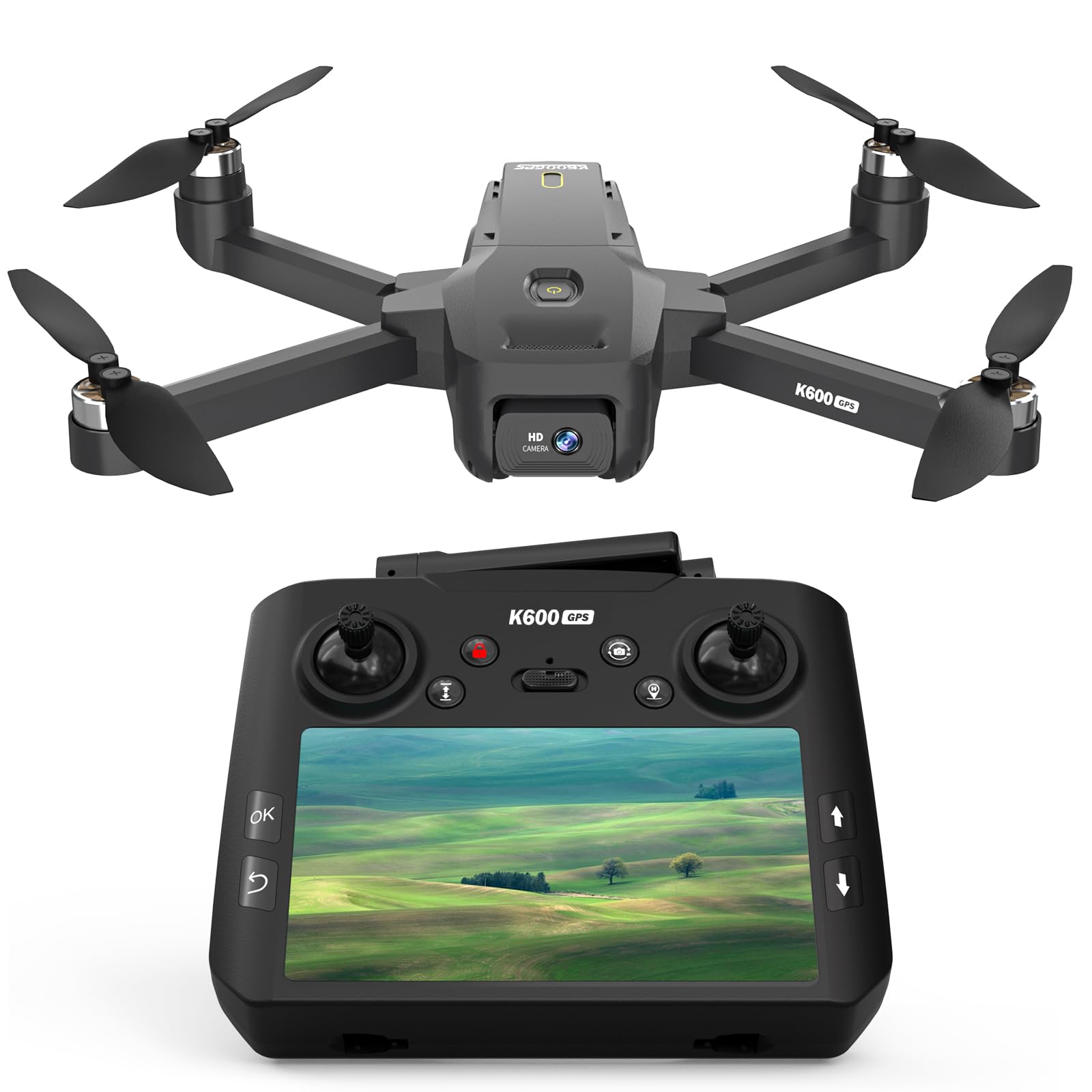
The karuisrc GPS Drone solves one of the most annoying aspects of indoor FPV flying: relying on a phone screen in bright room conditions. The 4.5-inch HD display built into the controller gives you a dedicated, glare-reduced view of the live feed without clamping your phone into a mount that wobbles during flight. The electronic image stabilization (EIS) smooths out minor jolts, though it cannot match a mechanical gimbal for aggressive movements.
GPS Auto Return, Follow Me, and Orbit Mode are all on board, and the brushless motors deliver quiet, consistent thrust. The 2200mAh battery provides a solid single-flight duration — roughly 20-22 minutes in real-world indoor conditions. The controller screen makes it much easier to see framing and focus during daylight flying, and the sub-250-gram weight keeps FAA registration off the table.
Some pilots noted that setting up the initial GPS calibration can be finicky indoors if you’re near a window rather than outside. The 400-meter control range is generous for outdoor use, but the EIS system adds a slight processing delay that makes fast-flying maneuvers feel slightly disconnected. For slow, composed indoor flights where you want to watch the feed on the controller without juggling a phone, this is a smart choice.
Why it’s great
- Built-in 4.5″ controller screen eliminates phone mount hassle
- EIS camera reduces indoor wobble for smoother footage
- Quiet brushless motors for less intrusive indoor flying
Good to know
- GPS calibration can be tricky without clear sky access
- EIS processing adds a slight lag to the live feed
- Small display can feel cramped compared to a phone screen
4. Oddire HD Drone

The Oddire HD Drone packs a 7.7-volt battery system that gives it a higher energy density than the standard 3.7-volt or 7.4-volt packs found on similarly priced competitors. That translates to a total flight time of up to 48 minutes across two batteries — enough for multiple indoor sessions without waiting for a recharge. The 4K camera uses an F2.15 110° wide-angle lens with a 90° remote-adjustable tilt, letting you frame overhead shots or straight-ahead video without landing.
GPS features include Auto Return, Waypoint Flight, Orbit, and Follow Me, and the sub-250-gram frame keeps registration requirements off the table. The brushless motors handle indoor drafts well, and the optical flow positioning system stabilizes the hover in rooms without strong GPS signals. The 5G WiFi transmission delivers a stable feed up to 500 meters outdoors — indoors, expect reliable video at 50-100 meters through a couple of walls.
Several reviewers mentioned that the drone requires a compass calibration every power-on, which adds a few seconds to setup. The SD card is not included, so factor that into the initial purchase cost. The plastic body feels sturdy but not indestructible — indoor crashes into walls are survivable, but hard impacts on corners may crack the shell.
Why it’s great
- 48-minute total flight time with two 7.7V batteries
- GPS Auto Return prevents loss in complex indoor spaces
- Remote-adjustable 90° camera tilt for flexible framing
Good to know
- Requires compass calibration before every flight
- No SD card included in the package
- Plastic body may crack on hard corner impacts
5. REDRIE HK33 Drone
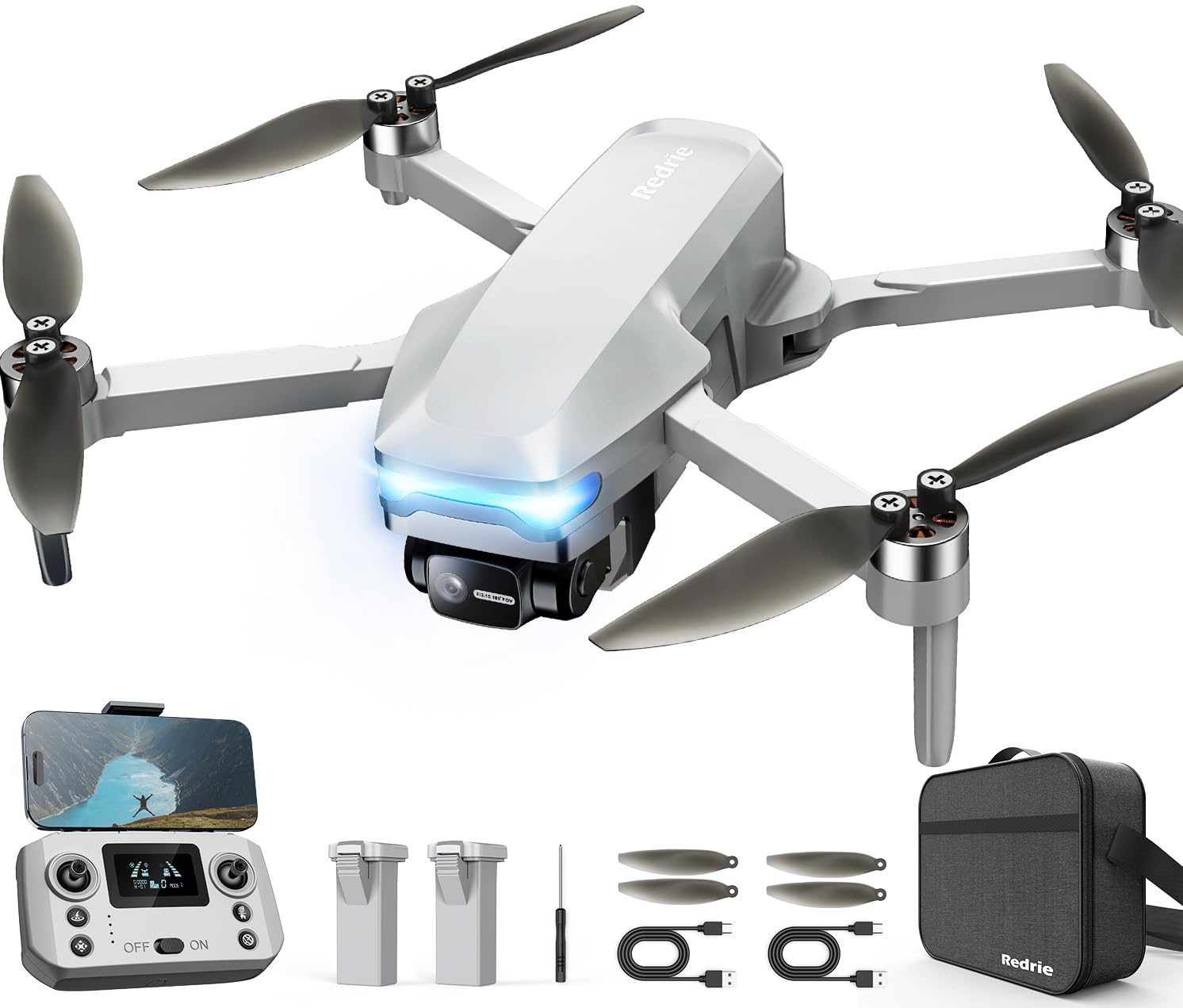
The REDRIE HK33 brings a real 2-axis gimbal to the mid-range price bracket — a feature usually reserved for drones costing twice as much. The mechanical stabilization eliminates the rolling shutter wobble that makes indoor video look amateurish. The 4K UHD camera shoots at 4096x3072P photos and 2048x1088P video, and the 110° ultra-wide lens captures more of the room in each frame, which helps with spatial awareness during indoor flight.
High-performance brushless motors provide thrust even in level 5 winds outdoors, but indoors they translate to smooth, consistent response without the high-pitched whine of brushed motors. The two 1800mAh batteries deliver a total of 40-45 minutes of flight, and the foldable design comes with a carrying case. GPS features include one-key return to home on signal loss, low battery, or range exceedance — an essential safety net for indoor flying near obstacles.
A few pilots noted that the video stabilization, while good, can struggle during aggressive yaw turns indoors. The phone holder on the controller is functional but not the most secure — a quality phone mount upgrade is a worthwhile investment. For the price point, the combination of a mechanical gimbal and brushless motors is hard to beat for indoor video quality.
Why it’s great
- 2-axis mechanical gimbal eliminates rolling shutter wobble
- Low-noise brushless motors ideal for quiet indoor spaces
- Included carrying case for storage and transport
Good to know
- Phone holder on controller feels flimsy
- Video stabilization struggles during fast yaw turns
- GPS lock requires clear sight to sky for Auto Return
6. SYMA X100 Drone for Kids

The SYMA X100 is designed from the ground up for indoor safety with a fully enclosed propeller guard that completely surrounds all four rotors. There are no exposed blades — the ducted design means a bump into a wall, sofa, or even a person won’t result in injury or damage. The 4-way infrared obstacle avoidance system detects objects within about 12 inches and automatically adjusts course, which is particularly useful when a child’s attention drifts from the controls.
The One-Key 360° Flip button lets kids perform stunts that feel impressive but are actually automated — the drone executes the flip and returns to stable hover. Two speed modes (slow and fast) mean beginners start in the docile mode that limits forward speed to a gentle walk, perfect for small rooms. The two 700mAh batteries provide about 20 minutes of total flight, which is respectable for the size and price category.
Some reviewers noted that the obstacle avoidance system can sometimes cause the drone to drift sideways when it detects an object from an unexpected angle, especially in tight corners. The video resolution is basic (no HD camera) — this is a fly-for-fun drone, not a photography tool. The ABS plastic body has proven durable in multiple crashes, making it a solid choice for households with younger pilots.
Why it’s great
- Full-coverage propeller guard eliminates blade exposure
- Infrared obstacle avoidance prevents wall collisions
- Two speed modes let beginners progress gradually
Good to know
- No HD camera — strictly a flight experience drone
- Obstacle avoidance can cause unexpected sideways drift
- Learning curve for novices requires initial patience
7. SIMREX X800 Mini Drone

The SIMREX X800 proves that stable indoor flying is possible at a budget-friendly price point. Its optical flow positioning system, usually reserved for more expensive drones, locks the hover to within one square foot indoors — an impressive feat for a 96-gram drone. The 1080p camera with a 90° manually adjustable lens captures usable video quality, though it’s closer to 480p in real-world low-light indoor conditions based on customer reports. The rainbow RGB lights make orientation easy in dim rooms.
Altitude hold means you can lift your thumb off the throttle and the drone stays put — the single most important feature for indoor beginners. The two 1000mAh batteries deliver a total of up to 30 minutes of flight, which is remarkably long for the sub- tier. One-key takeoff and landing remove the most stressful part of flying for new pilots, and headless mode ensures the drone always moves relative to the pilot’s orientation rather than the drone’s nose.
The 1080p video claim is generous — in practice, the camera performs closer to standard definition, and the phone controller mount is wobbly on the remote. The drone is highly susceptible to wind if taken outside, but that’s not its intended environment. For indoor-first use with beginners, children, or anyone wanting to learn without a large financial commitment, this delivers the core stability features that matter.
Why it’s great
- Optical flow positioning for drift-free indoor hover
- 30-minute total flight with two 1000mAh batteries
- One-key takeoff and landing remove beginner anxiety
Good to know
- 1080p camera performs closer to 480p in practice
- Phone holder on controller is prone to wobbling
- Highly wind-sensitive — strictly indoor or calm outdoor use
FAQ
Can I fly an indoor drone outside on a calm day?
How important are propeller guards for indoor use?
What makes a drone stable enough to hover indoors?
Do I need FAA registration for an indoor drone?
Final Thoughts: The Verdict
For most users, the best indoor drone winner is the DJI Flip because it delivers professional-grade stabilization, a true 3-axis gimbal, and reliable subject tracking in a sub-250-gram frame that’s safe for interior spaces. If you want a built-in controller screen for FPV flights, grab the karuisrc GPS Drone. And for a budget-friendly entry point that still offers optical flow stability, nothing beats the SIMREX X800.

Mo Maruf
I created WellFizz to bridge the gap between vague wellness advice and actionable solutions. My mission is simple: to decode the research and give you practical tools you can actually use.
Beyond the data, I am a passionate traveler. I believe that stepping away from the screen to explore new environments is essential for mental clarity and physical vitality.