Our readers keep the lights on and my smoothie glass nicely filled. As an Amazon Associate, I earn from qualifying purchases.
A drone is only as capable as the controller in your hands. Poor latency, a weak signal, or a gimbal that drifts can turn a promising flight into a frustrating battle against the controls. Whether you are racing FPV, capturing cinematic shots, or simply exploring the sky, the connection between thumb and aircraft defines the entire experience.
I’m Mohammad Maruf — the founder and writer behind WellFizz. I spend hours analyzing transmission protocols, gimbal mechanics, and firmware ecosystems to help pilots find the right match for their flying style.
This guide breaks down seven of the best controllers on the market, comparing range, gimbal quality, screen integration, and protocol support to reveal the best drone controller for every type of pilot from budget-minded beginners to high-end FPV enthusiasts.
How To Choose The Best Drone Controller
Choosing a drone controller is about matching your flying style to the right combination of gimbal feel, transmission range, and ecosystem compatibility. Beginners often over-index on channel count while ignoring the gimbal, while experienced pilots know that a hall-effect gimbal and a low-latency protocol matter more than any other spec.
Gimbal Type: The Core of Control Precision
The gimbal is the heart of every controller. Potentiometer-based gimbals, found on entry-level units, work adequately but develop stick drift over time as the resistive track wears. Hall-effect gimbals use a magnetic sensor, providing frictionless, non-contact operation that stays accurate for years. CNC aluminum hall gimbals, like the AG01 in the Radiomaster Boxer Crush, add stiffness and a premium mechanical feel that serious pilots demand for maneuvers requiring sub-millimeter stick inputs.
Transmission Protocol and Range
Your controller’s radio protocol determines how far you can fly and how reliably the signal holds. ExpressLRS (ELRS) has become the open-source gold standard for FPV, offering sub-5ms latency and ranges exceeding 10 kilometers with the right module. DJI’s O4 transmission pushes up to 20 kilometers with robust anti-interference and a 1080p video feed. Potensic’s PixSync 4.0 achieves 10 kilometers for its ecosystem. For casual line-of-sight flying, a standard 2.4GHz system like the Flysky FS-i6X’s multichannel hopping is sufficient within a kilometer. Always check that the protocol matches your drone’s receiver.
Built-In Screen vs. Phone Mount
Controllers with a built-in screen eliminate the need to connect a phone, reducing setup time and eliminating interruptions from calls or notifications. The DJI RC 2 and Potensic PTD 1 feature bright 700-nit 5.5-inch FHD displays that remain readable in direct sunlight. The trade-off is higher cost and ecosystem lock-in — these screens only work with specific drone models. Phone-mount controllers, like the DJI RC-N3, are more flexible across platforms and significantly cheaper, but require a wired connection to your mobile device and can suffer from dim screens on bright days.
Channel Count and Expandability
Channel count determines how many individual controls you can operate simultaneously. A 6-channel controller is sufficient for basic flight and gimbal tilt. For FPV flying with rate profiles, arming switches, flight modes, and auxiliary camera controls, 10 to 16 channels provide the headroom you need. Some controllers, like the Radiomaster Pocket and Boxer Crush, feature a nano external bay for adding modules like Crossfire or Tracer, future-proofing your investment as your flying evolves.
Quick Comparison
On smaller screens, swipe sideways to see the full table.
| Model | Category | Best For | Key Spec | Amazon |
|---|---|---|---|---|
| DJI RC 2 | Built-In Screen | Cinematic DJI Pilots | 20km O4 Transmission | Amazon |
| RadioMaster Boxer Crush | Premium FPV | FPV Racing & Freestyle | AG01 CNC Hall Gimbals | Amazon |
| Potensic PTD 1 | Built-In Screen | Potensic Atom 2 Owners | 700-nit 5.5″ FHD Screen | Amazon |
| DJI RC Motion 3 | Motion Control | Immersive FPV Beginners | Wrist-Motion Control | Amazon |
| RadioMaster Pocket | Portable ELRS | Travel & Tiny Whoop | Hall-Effect Gimbals | Amazon |
| DJI RC-N3 | Phone-Mount | DJI Ecosystem Pilots | 3.5-Hour Battery Life | Amazon |
| FLYSKY FS-i6X | Entry-Level | Budget RC Hobbyists | 10CH with FS-iA10B | Amazon |
In‑Depth Reviews
1. DJI RC 2

The DJI RC 2 represents the gold standard for pilots invested in the DJI ecosystem. Its next-gen 6nm, 8-core processor powers an incredibly responsive interface on the 5.5-inch FHD touchscreen, which delivers a crisp 700 nits of brightness — enough to remain readable in harsh midday glare. The O4 video transmission system pushes a stable feed up to 20 kilometers, using four antennas in a 2T4R configuration to fight interference that would cripple lesser controllers.
Weighing only 420 grams, the RC 2 is light enough to hold comfortably for multiple battery packs. The integrated screen means you never have to fumble with a phone mount or worry about an incoming call interrupting your flight. Setup is genuinely quick: power on, launch the app, and fly. Compatibility with the DJI Flip, Mini 4 Pro, Air 3, Air 3S, and Neo makes it a versatile hub for most of the company’s current lineup.
The battery life holds up for several hours of mixed use, and the included cover protects the screen and stick ends during transport. The only real consideration is ecosystem lock-in — this controller will not pair with non-DJI drones. But if you fly DJI and want the most seamless, high-performance control experience available, the RC 2 is the clear answer.
Why it’s great
- 20-kilometer O4 video transmission with excellent stability
- Bright 700-nit touchscreen eliminates phone dependence
- Fast 8-core processor ensures smooth in-app experience
Good to know
- Works only with DJI drones — no third-party compatibility
- Premium pricing reflects the integrated screen and processor
2. RadioMaster Boxer Crush

The Boxer Crush is RadioMaster’s answer to pilots who want pro-grade build quality without stepping up to a full touchscreen flagship. The headline feature is the CNC aluminum AG01 hall-effect gimbal — a component so precise and durable that its replacement cost alone approaches half the price of the entire radio. The mechanical stiffness of the CNC housing eliminates any gimbal wobble, delivering stick movements that feel locked-in and repeatable lap after lap.
The built-in ExpressLRS module supports a 1,000Hz refresh rate, which translates to sub-millisecond latency for racing and freestyle. The internal cooling fan, a rare inclusion in this form factor, prevents thermal throttle during long outdoor sessions. Physically, the Boxer Crush is noticeably larger than the Pocket radio, making it ideal for pilots with bigger hands who found compact controllers cramped. The SE latching switch and momentary SF switch are low-profile, reducing the chance of accidental toggles during aggressive flight.
The radio ships with EdgeTX preinstalled, giving you Lua scripting, customizable sound packs, and full telemetry screens. The battery tray accepts standard 18650 cells and charges via USB-C, though the cells are a tight fit and can be frustrating to remove. The included microSD card is cheap — replace it with a quality card and format it to FAT32 before loading models.
Why it’s great
- CNC AG01 hall gimbals provide unmatched precision and feel
- 1,000Hz ELRS refresh rate for ultra-low latency racing
- Larger form factor fits big hands comfortably
Good to know
- No built-in screen — requires phone or goggles for video feed
- 18650 battery fitment is tight; removal can be difficult
3. Potensic PTD 1
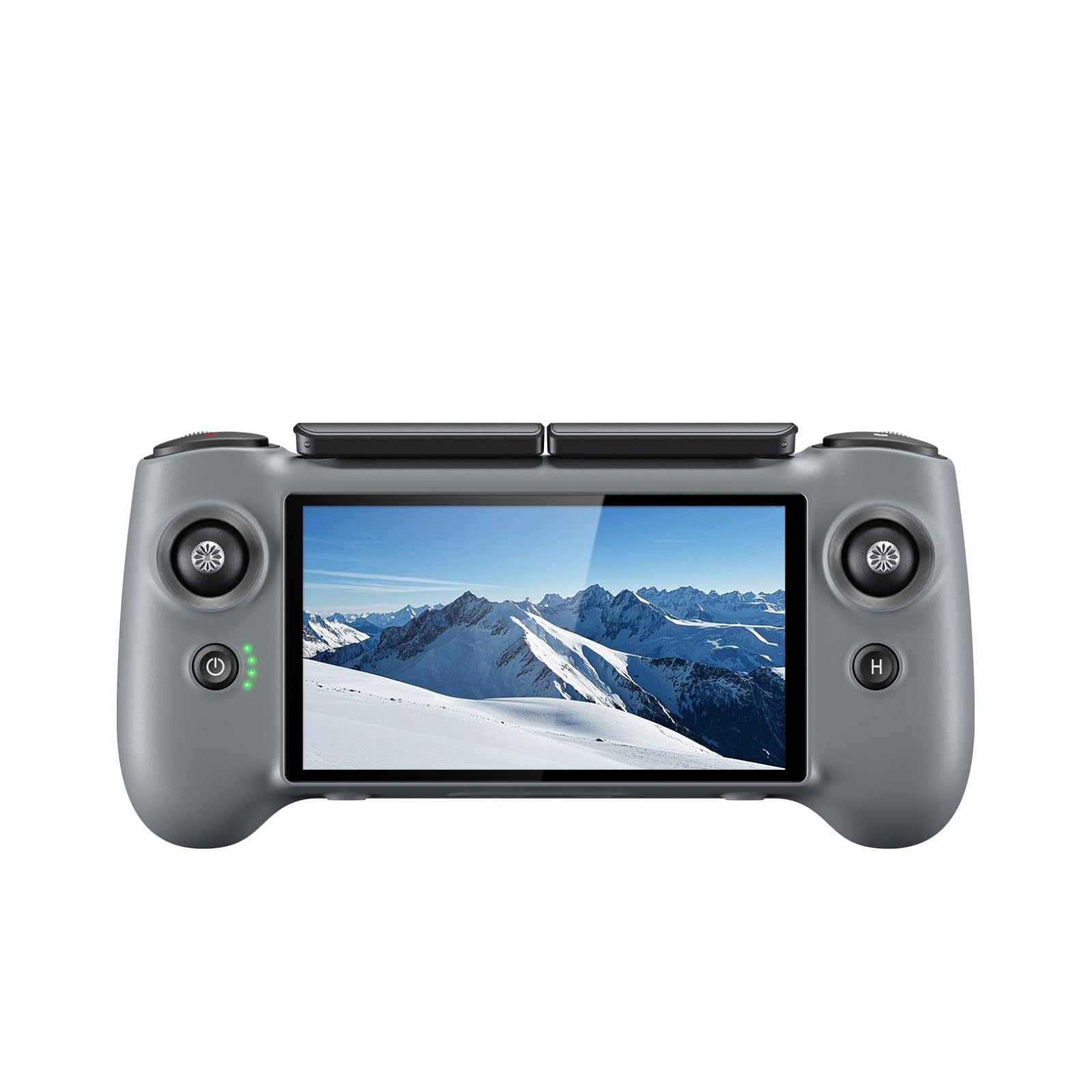
The Potensic PTD 1 fills a very specific but highly valuable slot: a built-in-screen controller for pilots who want the simplicity of an all-in-one device without paying DJI-level prices. The 5.5-inch 1080p FHD display hits a peak brightness of 700 nits, matching the DJI RC 2 in sun readability. The PixSync 4.0 transmission system delivers a stable feed up to 10 kilometers, which is more than adequate for the vast majority of recreational flights.
Dual 3,200mAh batteries (6,400mAh total) provide up to three hours of flight time, and 27W fast charging brings the controller to 90 percent in about 85 minutes. The built-in 32GB of storage plus a microSD card slot means you can save footage directly without tying up the drone’s internal memory. Setup is genuinely simple — turn on the controller, power up the Potensic Atom 2 drone, and you are airborne without any phone pairing.
The 700-nit glossy screen is bright but does suffer from glare at certain angles; a matte screen protector helps significantly. Firmware updates are required out of the box, a process that is straightforward but adds time to the initial setup. This controller is locked to the Atom 2 drone, so it only makes sense within that ecosystem — but for Atom 2 owners, the PTD 1 is a transformative upgrade over the standard phone-mount controller.
Why it’s great
- Built-in 700-nit screen eliminates phone mount hassle
- 3-hour battery life with 27W fast charging
- 32GB internal storage plus microSD expansion slot
Good to know
- Compatible only with Potensic Atom 2 drone
- Glossy screen may need a matte protector for glare reduction
4. DJI RC Motion 3

The DJI RC Motion 3 is not for traditional gimbal pilots — it is a dedicated FPV motion controller designed to work in tandem with the DJI Goggles 3. Instead of stick-based inputs, your wrist movements directly control the drone’s direction and attitude, creating a visceral, head-tracking flying experience that dramatically lowers the barrier to entry for immersive flight. The AR cursor lets you navigate goggle menus intuitively, adjusting camera settings or activating functions without hunting for buttons.
Build quality is typical DJI — compact, lightweight at 110 grams, and well-balanced in the hand. The one-click emergency brake button is a genuinely useful safety net for beginners who need an instant hover when the motion controls get overwhelming. The controller pairs with the DJI Neo, Avata 2, Mini 4 Pro, and Air 3 when combined with Goggles 3. It is worth emphasizing that the Motion 3 cannot operate alone; it requires the goggles for both video feed and flight control.
The learning curve is real but short — most pilots feel reasonably competent after two or three flights. The battery life is adequate for about three flight packs. While this controller will never replace a traditional radio for precision freestyle, it is the most approachable gateway into FPV flying available today.
Why it’s great
- Wrist-motion control makes FPV accessible for beginners
- One-click emergency brake provides safety reassurance
- AR cursor simplifies menu navigation in goggles
Good to know
- Requires DJI Goggles 3 — does not work as a standalone controller
- Not suitable for precise freestyle or racing stick control
5. RadioMaster Pocket ELRS
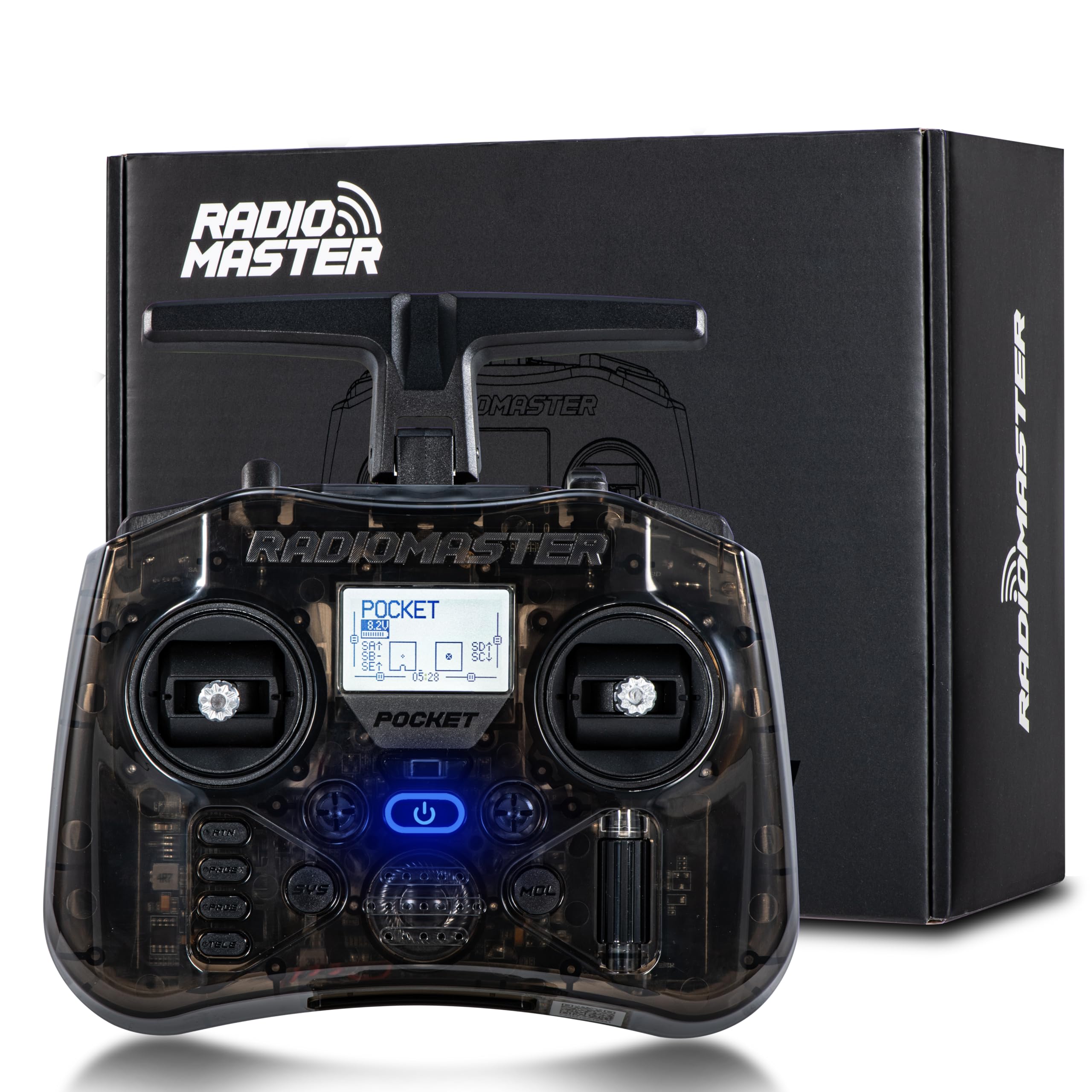
The RadioMaster Pocket ELRS packs surprising capability into a form factor that fits in a jacket pocket. Hall-effect gimbals, usually reserved for much more expensive radios, deliver drift-free performance that rivals the larger Boxer Crush. The ExpressLRS protocol ensures sub-5-millisecond latency and rock-solid long-range links, making this a legitimate contender for tiny whoop racing and park flying despite its compact size.
The radio comes preloaded with EdgeTX 2.10.5, giving you access to Lua scripts, custom sound packs, and full telemetry screens right out of the box. The built-in LED lights provide visual feedback on switch inputs — a small detail that helps during fast-paced flying. The foldable antenna and removable stick ends make it genuinely portable, and the ABS housing with non-slip grips feels robust without adding weight.
Batteries are not included, and the controller requires unprotected flat-top 18650 cells. A pair of original RadioMaster 18650 batteries delivers about six hours of runtime, and USB-C charging is supported directly on the radio. The nano external bay allows adding modules like Crossfire for extended range, future-proofing the pocket-sized platform. For pilots who want a go-anywhere ELRS radio without sacrificing gimbal quality, the Pocket is an easy recommendation.
Why it’s great
- Hall-effect gimbals in a sub- radio are exceptional value
- Extremely portable with foldable antenna and removable sticks
- EdgeTX firmware enables deep customization and scripting
Good to know
- 18650 batteries not included — flat-top cells required
- Small form factor may feel cramped for pilots with large hands
6. DJI RC-N3
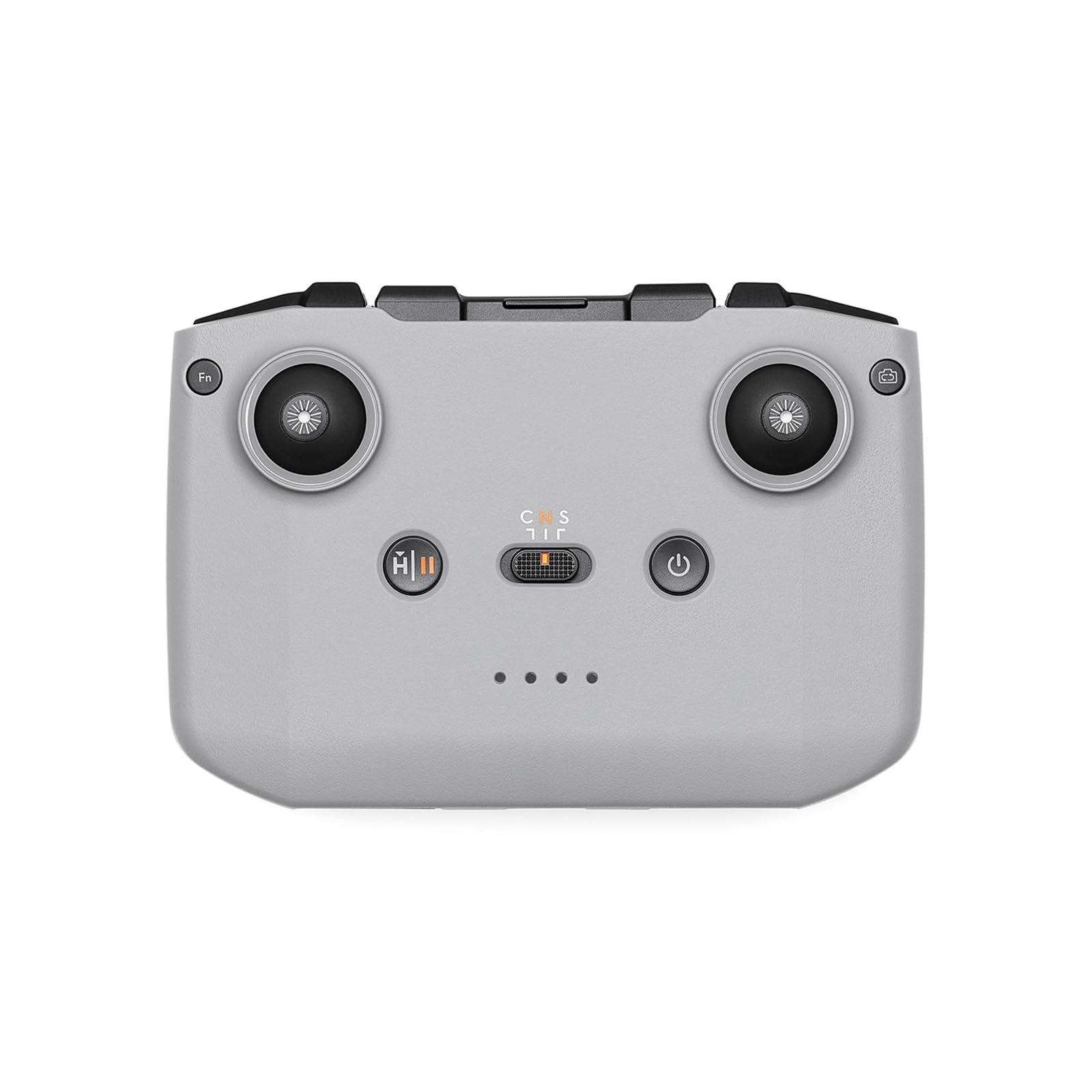
The DJI RC-N3 is the standard phone-mount controller for DJI’s latest drone lineup, including the Lito X1, Mini 5 Pro, Neo 2, Flip, Air 3S, and Mini 4 Pro. It forgoes a built-in screen entirely, instead relying on a secure phone holder that keeps your mobile device in view for real-time HD camera feed via the DJI Fly app. The trade-off is a significantly lower entry point for pilots who already own a smartphone with a good display.
Battery life is a strong point — the RC-N3 provides approximately 3.5 hours of continuous operation, which covers most flying sessions without worry. Full recharge takes about two hours via the USB-C port, minimizing downtime between outings. The controller comes with both USB-C and iOS connector cables, ensuring compatibility with modern Android and iPhone devices without requiring an adapter.
The build feels compact and durable, surviving a few drops according to user feedback. The 20-meter maximum range listed on the spec sheet refers to the Bluetooth range for mobile device connection, not the drone control range — the actual RC-N3 uses OcuSync for control up to multiple kilometers depending on the drone paired. The main downside is the reliance on a phone: notifications can interrupt the flight screen, and phone brightness may struggle in direct sun without a hood.
Why it’s great
- Affordable entry point for the latest DJI drone ecosystem
- 3.5-hour battery covers extended flying sessions
- Includes both USB-C and iOS cables for broad phone compatibility
Good to know
- Phone notifications can interrupt the flight display
- Screen visibility depends entirely on your phone’s brightness
7. FLYSKY FS-i6X

The FLYSKY FS-i6X has earned its reputation as the default recommendation for budget-conscious RC hobbyists. Out of the box it is a 6-channel system with the FS-iA6B receiver, but it unlocks 10 channels when paired with the FS-iA10B receiver. The multichannel frequency-hopping system spreads its signal across 135 channels within the 2.408GHz to 2.475GHz band, hopping between 16 of them per transmission cycle to minimize interference from other radios at the field.
Bidirectional communication is included — the transmitter can receive data from temperature, altitude, and other sensors, displaying telemetry on the LCD screen. The omni-directional high-gain antenna improves signal robustness and reduces power consumption, extending battery life to roughly a tenth of what a traditional FM system would draw. This efficiency is a genuine advantage for pilots who fly long sessions without carrying spare transmitter batteries.
The build quality is adequate for the price point but not exceptional — the plastic housing feels utilitarian, and the receiver is bulkier than modern alternatives. Programming requires a visit to YouTube, as the menu system is not the most intuitive.
Why it’s great
- Unbelievable price-to-feature ratio with 10CH expandability
- Bidirectional telemetry for sensor data feedback
- Low power consumption extends battery life significantly
Good to know
- Build quality is basic plastic — not as rugged as premium options
- Programming menu is not beginner-friendly; YouTube tutorials required
FAQ
Can I use an ELRS controller with a DJI drone that uses O4 transmission?
What is the practical difference between 6 channels and 16 channels?
Does a built-in screen controller work without an internet connection?
How often should I calibrate my gimbal sticks?
Final Thoughts: The Verdict
For most users, the best drone controller winner is the DJI RC 2 because it combines a bright 5.5-inch screen, 20-kilometer O4 transmission, and seamless integration with the entire modern DJI lineup into a lightweight, comfortable package. If you want CNC aluminum hall gimbals and ultra-low latency for FPV racing, grab the RadioMaster Boxer Crush. And for an all-in-one screen controller that delivers premium features at an entry-level price within the Potensic ecosystem, nothing beats the Potensic PTD 1.

Mo Maruf
I created WellFizz to bridge the gap between vague wellness advice and actionable solutions. My mission is simple: to decode the research and give you practical tools you can actually use.
Beyond the data, I am a passionate traveler. I believe that stepping away from the screen to explore new environments is essential for mental clarity and physical vitality.