Our readers keep the lights on and my smoothie glass nicely filled. As an Amazon Associate, I earn from qualifying purchases.
Choosing the right processor for your gaming rig is the single decision that defines your framerate, your load times, and the lifespan of your entire build. A CPU that bottlenecks your GPU means leaving performance on the table in every title you play.
I’m Mohammad Maruf — the founder and writer behind WellFizz. I’ve spent hundreds of hours analyzing core architectures, boost clocks, cache hierarchies, and real-world gaming benchmarks across the to performance spectrum to bring you this guide.
Here, after parsing thousands of verified buyer experiences and technical datasheets, I’ve curated the definitive list of the best central processing unit for gaming pc builders in 2025.
How To Choose The Best Central Processing Unit For Gaming PC
Selecting a gaming CPU isn’t just about picking the chip with the highest core count. Real-world gaming performance depends on a delicate balance of clock speed, cache architecture, thermal headroom, and platform compatibility. Focus on these three factors to avoid wasting money on cores your games will never use.
Single-Threaded Boost vs. Core Count
Most modern games still rely heavily on one to four cores. A processor with a high single-core boost clock (5.4 GHz or above) will often outperform a higher-core-count chip in actual framerates. Only invest in 12-core or 16-core CPUs if you also stream, render, or compile code — pure gaming workloads rarely scale beyond eight threads.
Cache Memory and Latency
L3 cache size directly affects how quickly the CPU can access frequently used game data. Larger caches (36 MB or more) reduce memory latency and improve minimum framerates, especially in open-world titles. AMD’s 3D V-Cache technology, where available, provides a measurable edge in simulation and strategy games.
Platform Longevity and Memory Support
Your CPU socket dictates your future upgrade path. AM5 from AMD supports multiple future generations, while Intel’s LGA1851 is a new platform for the Core Ultra series. Pair your choice with DDR5 memory running at 5600 MT/s or higher — older DDR4 platforms like AM4, while budget-friendly, cap your bandwidth and limit future-proofing.
Quick Comparison
On smaller screens, swipe sideways to see the full table.
| Model | Category | Best For | Key Spec | Amazon |
|---|---|---|---|---|
| AMD Ryzen 9 9900X | Mid-Range | High-FPS Gaming + Content Creation | 12 Cores, 5.6 GHz Boost, 76 MB Cache | Amazon |
| Intel Core Ultra 7 270K | Premium | VR Gaming & Multitasking | 8P+16E Cores, 5.5 GHz Boost, LGA1851 | Amazon |
| AMD Ryzen 9 5900XT | Mid-Range | Parallel Workloads & Server Tasks | 16 Cores, 4.8 GHz Boost, 72 MB Cache | Amazon |
| Intel Core Ultra 9 285K | Premium | Professional CAD & Rendering | 8P+16E Cores, 5.7 GHz Boost, 40 MB Cache | Amazon |
| Micro Center 265K + Z890 Bundle | Premium | All-In-One Platform Upgrade | Core Ultra 7 265K, Asus Z890, 20 Cores | Amazon |
| AMD Ryzen 7 5800XT | Mid-Range | Budget AM4 Upgrade | 8 Cores, 4.8 GHz Boost, 36 MB Cache | Amazon |
| AMD Ryzen 5 9600X | Mid-Range | Entry-Level AM5 Gaming | 6 Cores, 5.4 GHz Boost, 38 MB Cache | Amazon |
| Micro Center i9-14900K + Z790 Bundle | Premium | Maximum Single-Thread Speed (6.0 GHz) | 24 Cores, 6.0 GHz Boost, LGA1700 | Amazon |
| CyberPowerPC Ryzen 9 9900X Prebuilt | Premium | Out-of-the-Box Gaming Rig | 12 Cores, RTX 5070, 32GB DDR5 | Amazon |
In‑Depth Reviews
1. AMD Ryzen 9 9900X

The Ryzen 9 9900X delivers a remarkable 12 full Zen 5 cores that scale to 5.6 GHz at a 120W TDP, offering a rare combination of high-frequency gaming and multithreaded muscle. Real-world reports confirm 100+ FPS in popular titles while simultaneously handling streaming or encoding runs at under 10% CPU usage in audio production scenarios.
Thermal behavior is the main trade-off — the chip exhibits sharp temperature spikes under full load, hitting 95°C on water cooling in some builds. Buyers consistently report that undervolting or power-limiting to 75°C stabilizes performance without meaningful frame loss, making this a chip that rewards manual tuning.
Platform-wise, the AM5 socket with PCIe 5.0 support gives you a clear upgrade path to future Ryzen generations. The 76 MB of combined cache also helps maintain high minimum framerates in simulation-heavy games like Civilization VII or Factorio.
Why it’s great
- 12 full performance cores with no efficiency-core gimmicks
- 5.6 GHz boost delivers elite single-threaded gaming speed
- AM5 platform future-proofs your build against next-gen CPUs
Good to know
- Sharp thermal spikes to 95°C under heavy load without tuning
- No cooler included — budget for a dual-tower air or 240mm AIO
2. Intel Core Ultra 9 285K

The Core Ultra 9 285K is Intel’s new hybrid flagship, packing 8 P-cores and 16 E-cores with a max turbo of 5.7 GHz. In professional CAD and SolidWorks environments, users report stable all-core loads at 73-78°C with a 360mm AIO, pulling approximately 205W during Cinebench stress tests — a significant improvement in thermal stability over the 13th and 14th generations.
For gaming, the 285K competes directly with AMD’s best, matching the 9800X3D in VR benchmarks (87-90 FPS on a Pimax Crystal Super at 3560×3560 resolution). The integrated GPU is functional for troubleshooting but not for gaming, and the chip requires a new LGA1851 motherboard, which adds platform cost.
Where this CPU truly shines is mixed workloads: compiling code, rendering 3D scenes, or running multiple virtual machines while gaming. The 40 MB of L3 cache and PCIe 5.0 support ensure no bottleneck with the fastest NVMe drives and GPUs.
Why it’s great
- 24 cores handle heavy multitasking without stuttering
- Stable thermals under load — no voltage degradation issues like previous gen
- VR gaming performance matches dedicated 3D V-Cache chips
Good to know
- Requires a new LGA1851 motherboard and DDR5 RAM
- Needs a high-end 360mm AIO or dual-tower air cooler for sustained loads
3. Micro Center 265K + Z890 TUF Bundle

This combo bundles the Intel Core Ultra 7 265K (8 P-cores + 12 E-cores, up to 5.5 GHz) with the Asus TUF Gaming Z890-Plus WiFi motherboard, creating a turnkey LGA1851 platform. The 265K itself offers the same core architecture as the 285K at a lower price point, and buyers report it running at just 52°C under gaming loads with a Dark Rock Pro 5 cooler.
The Z890 motherboard is built for stability, featuring 16+1+2+1 80A DrMOS power stages, Thunderbolt 4 support, and Wi-Fi 7. The bundle simplifies the build process — no separate CPU and motherboard research needed — and ensures PCIe 5.0 compatibility for both GPU and M.2 storage.
User feedback highlights excellent out-of-the-box benchmark scores and straightforward BIOS navigation. The only real compromise is that the included motherboard lacks some extreme overclocking features found on more expensive flagships.
Why it’s great
- Cost-effective way to enter the LGA1851 platform
- Z890 motherboard offers Thunderbolt 4 and Wi-Fi 7
- Runs at low temperatures under gaming loads
Good to know
- Motherboard lacks premium overclocking voltage tuning
- Bundle price may be higher than buying separately on sale
4. AMD Ryzen 5 9600X

The Ryzen 5 9600X is the entry point to AMD’s Zen 5 architecture and the AM5 platform, offering 6 cores and 12 threads at a 5.4 GHz max boost. Users consistently report exceptionally low operating temperatures — generally staying below 50°C under load and never exceeding 65°C — making it one of the coolest-running chips in this selection.
Gaming performance is surprisingly strong for a 6-core part. Verified buyers are hitting smooth 100+ FPS at 1440p and even running 3840×1080 ultrawide at 120Hz without stuttering. The caveat is that this chip serves best as a high-value placeholder for a future upgrade to a 9900X or beyond.
The 38 MB of total cache and DDR5-5600 support ensure solid minimum framerates in most modern titles, though heavily threaded simulation games will eventually push the six-core ceiling. No cooler is included, so factor in a decent air cooler or a budget liquid cooler.
Why it’s great
- Runs remarkably cool — never exceeds 65°C even under gaming loads
- AM5 platform gives you a clear future upgrade path
- Smooth 120Hz gameplay at ultrawide resolutions
Good to know
- 6 cores will limit performance in heavily multithreaded games
- No cooler included — budget an additional purchase
5. Intel Core Ultra 7 270K
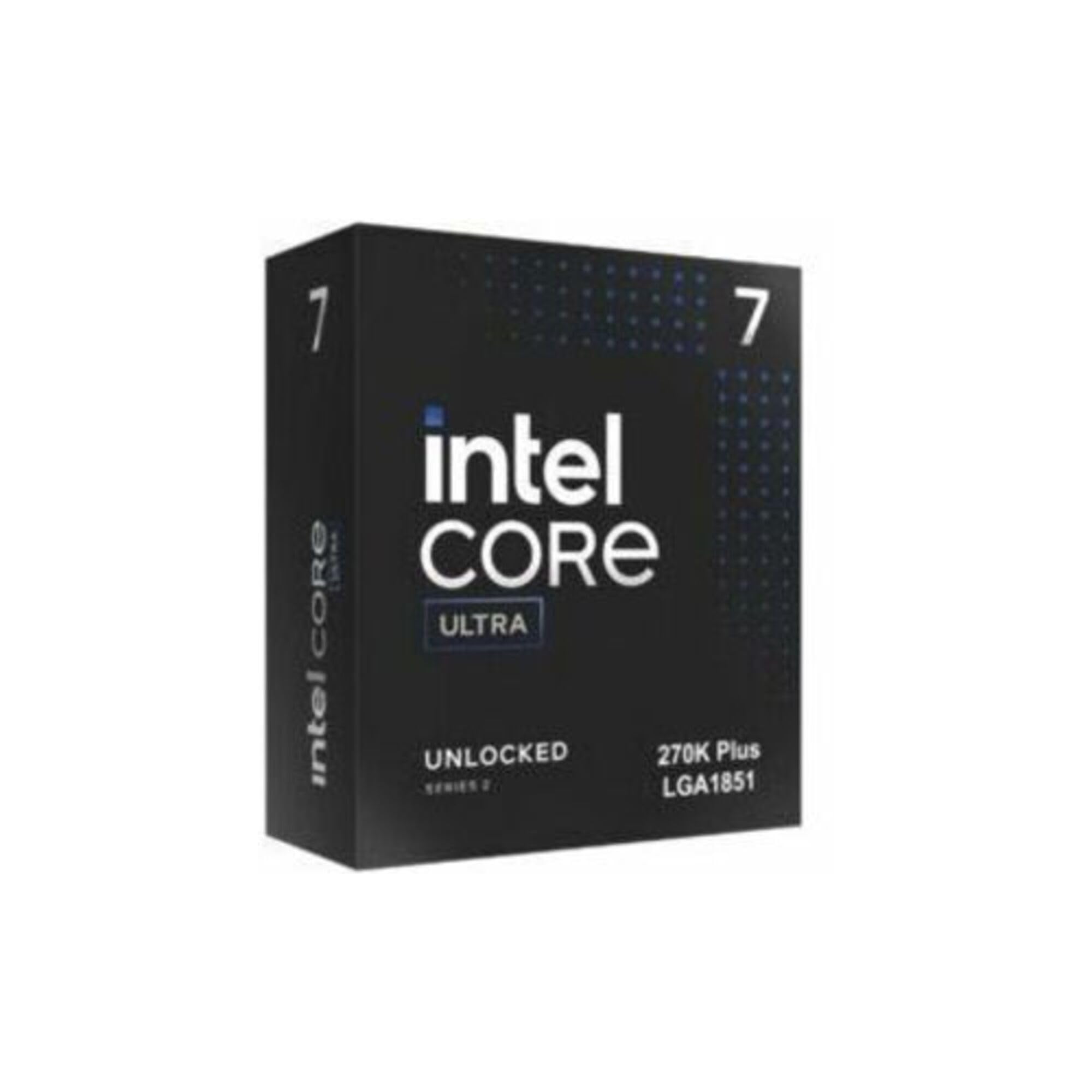
The Intel Core Ultra 7 270K features 24 cores (8 P-cores + 16 E-cores) with a turbo frequency of 5.5 GHz, essentially offering the same core configuration as the flagship 285K at a significantly lower price. Multiple verified buyers note it sometimes outperforms the 285K in specific benchmarks while running cooler, making it a savvy choice for budget-conscious enthusiasts.
VR performance is a standout — users report matching the 9800X3D in Pimax Crystal Super VR at full resolution, maintaining under 9ms CPU/GPU timings. The chip idles at 3.8 GHz and boosts to 5.5 GHz under load, with temperatures capped around 60°C with a quality AIO.
Like the 285K, the 270K requires an LGA1851 motherboard and DDR5 RAM, which raises the total platform cost. Memory compatibility is excellent, with support for high-speed CUDIMM RAM up to 7200 MT/s.
Why it’s great
- Matches or beats the 285K in many benchmarks at a lower price
- Excellent VR gaming performance rivaling 3D V-Cache chips
- Low idle temperatures and quiet operation
Good to know
- Requires a new LGA1851 motherboard platform
- Power draw can spike to 250W under turbo
6. Micro Center i9-14900K + Z790 Bundle

This bundle pairs the Core i9-14900K — Raptor Lake Refresh’s 24-core (8P+16E) flagship with a 6.0 GHz max turbo — with the Asus TUF Gaming Z790-Plus WiFi motherboard. The 14900K delivered the highest single-threaded boost clock of any chip on this list, which translates directly to peak framerates in CPU-bound games like Valorant and CS2.
The Z790 motherboard includes 16+1 DrMOS power stages, PCIe 5.0 support, and Thunderbolt 4 headers. However, buyer reports are mixed: some received units with bent pins, and others struggled with the Realtek network drivers on Linux installations. The previous-generation voltage degradation issues from 13th-gen have been addressed in microcode updates, but users should still apply the latest BIOS.
For raw single-threaded gaming speed, the 14900K remains a top contender, especially if you already have a good LGA1700 cooler. The bundle simplifies the purchase, but the platform reaches an upgrade dead-end with this generation.
Why it’s great
- Highest single-core turbo clock (6.0 GHz) in this guide
- TUF Z790 motherboard provides robust power delivery and PCIe 5.0
- Excellent for esports and single-thread-bound titles
Good to know
- LGA1700 platform is end-of-life — no future CPU upgrades
- Some quality control issues reported with bent pins and driver support
7. AMD Ryzen 7 5800XT

The Ryzen 7 5800XT is a Zen 3 refresh that breathes new life into the mature AM4 platform. With 8 cores and 16 threads at a 4.8 GHz boost, it handles 1440p gaming comfortably when paired with a mid-range GPU like the RTX 5060. The included Wraith Prism RGB cooler is functional but loud — most buyers switch to an aftermarket cooler within days.
User reviews highlight strong multitasking performance for its price tier: transcoding, virtualization, and compiling run smoothly. However, the chip runs hot with auto-overclock enabled, and the stock cooler struggles to keep temperatures in check during extended Cinebench runs (hitting 78°C with a Noctua NH-D14).
The main advantage is that it lets you upgrade a DDR4-based AM4 system without buying new RAM or a motherboard. For budget builders who don’t need PCIe 5.0 or DDR5 bandwidth, this is the most cost-effective path to an 8-core gaming CPU.
Why it’s great
- Drop-in upgrade for existing AM4 builds — no new motherboard needed
- 8 cores and 16 threads handle gaming and multitasking well
- Includes a functional RGB cooler out of the box
Good to know
- Runs hot — the stock cooler is inadequate for sustained loads
- Locked into DDR4 memory bandwidth and PCIe 4.0
8. AMD Ryzen 9 5900XT
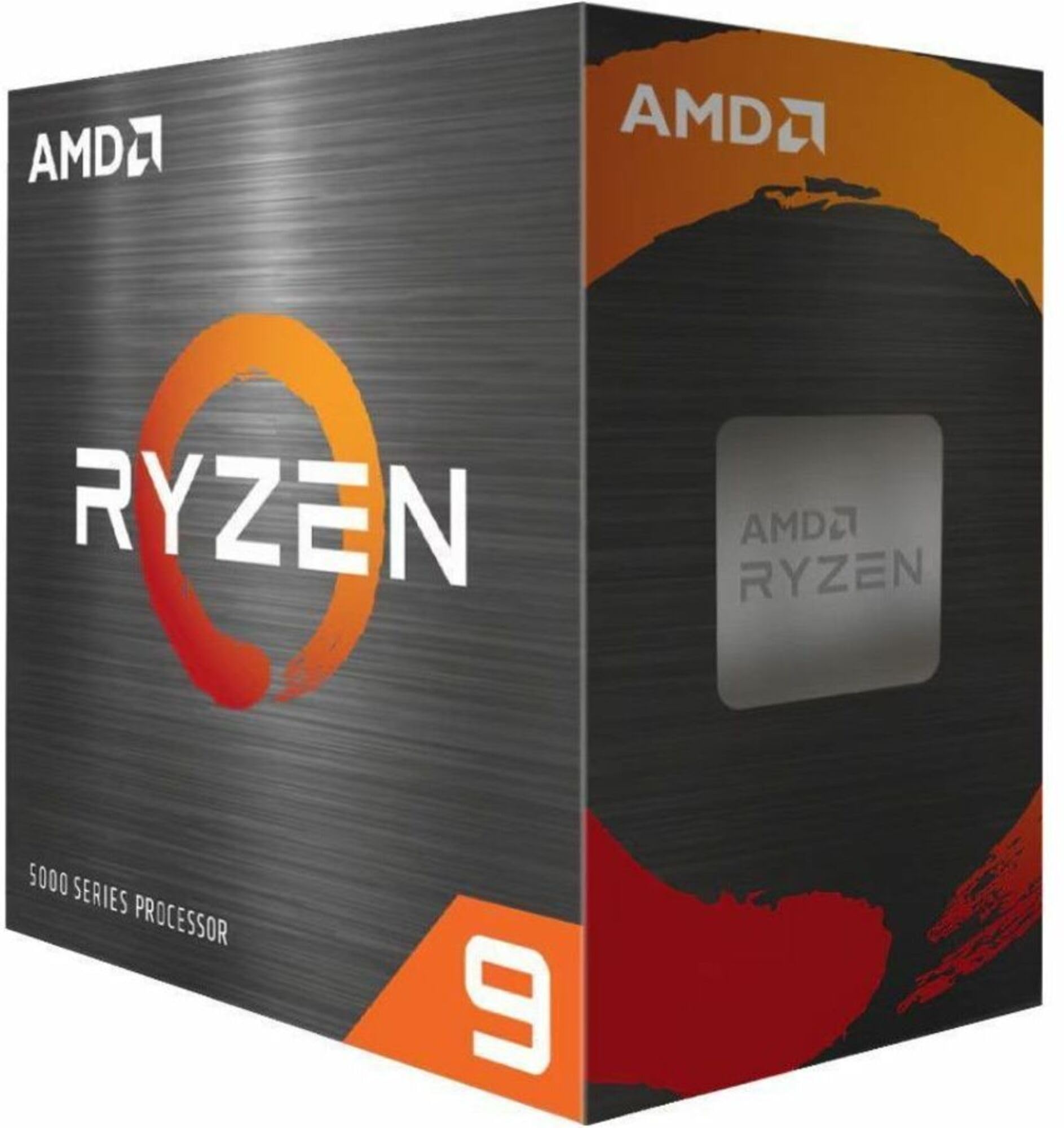
The Ryzen 9 5900XT packs 16 full Zen 3 cores and 32 threads with a 4.8 GHz max boost and a massive 72 MB of L3 cache. This is a compute monster designed for parallel workloads — buyers moving from a Ryzen 3 3100 report drastic improvements in computational modeling speed and heavy OBS streaming scenarios.
For pure gaming, this is not the optimal choice. The X3D variants provide superior frame rates, and the dual-CCD architecture introduces cross-CCD latency that can hurt performance in latency-sensitive games — some users disable the second CCD in BIOS for better gaming results. The chip also runs hot, requiring a dual-tower air cooler or a liquid cooler to avoid thermal throttling.
Where the 5900XT excels is value-per-core for productivity. It runs cooler than the 5950X, is only 100 MHz slower on single-thread, and extends the life of a perfectly good AM4 DDR4 system for users who need high-core-count processing on a budget.
Why it’s great
- 16 cores and 32 threads at a competitive price point
- Runs cooler than the 5950X with similar multithreaded performance
- Extends AM4 DDR4 system life for productivity users
Good to know
- Not ideal for pure gaming — X3D chips offer better frame rates
- Dual-CCD design can introduce latency in some workloads
9. CyberPowerPC Gamer Xtreme (Ryzen 9 9900X)
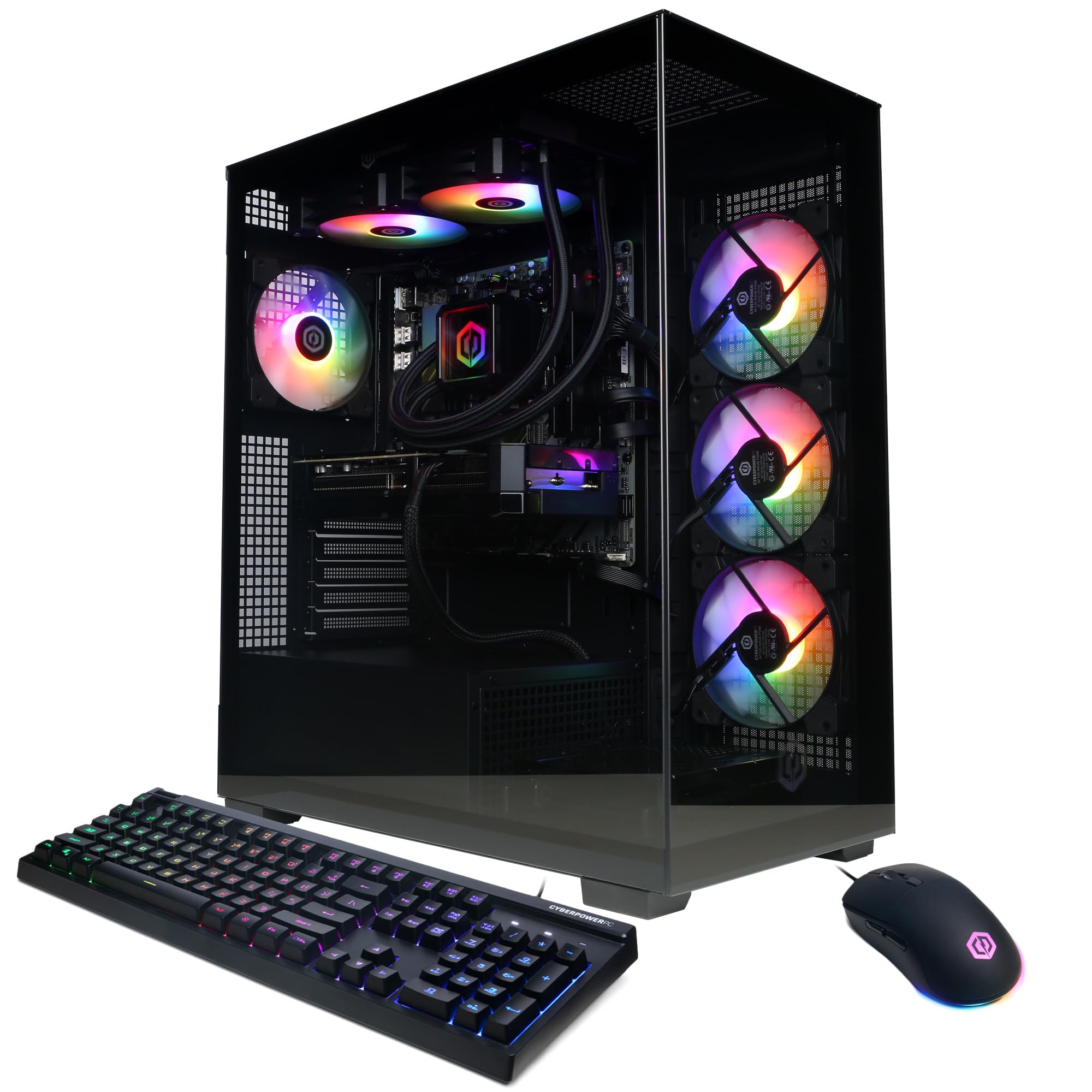
This prebuilt system from CyberPowerPC integrates the AMD Ryzen 9 9900X (12 cores, 4.4 GHz base) with an RTX 5070 12GB, 32GB of DDR5, and a 1TB PCIe 4.0 NVMe SSD. It’s a complete turnkey gaming solution — liquid-cooled CPU, tempered glass panel, and custom RGB lighting included out of the box.
User experience is mixed. Buyers who receive a properly assembled unit report excellent performance, running demanding titles on ultra settings with no lag and near-instant zone load times. However, quality control is inconsistent — some units arrive with defective video cards causing system instability, and CyberPower’s warranty process has frustrated some customers who encountered component failures.
For builders who don’t want to assemble components themselves, this saves time and includes a 1-year warranty and free lifetime tech support. But the value proposition weakens compared to selecting the same CPU and GPU separately, and you forfeit the ability to choose specific brands for the power supply and motherboard.
Why it’s great
- Fully assembled, tested, and ready to game out of the box
- Liquid cooling included for the CPU
- Strong 1440p and 4K gaming performance
Good to know
- Quality control issues with some units — component defects reported
- Warranty process can be slow and involve multiple parties
FAQ
Should I prioritize more cores or higher clock speed for gaming?
Is it worth buying an AM5 CPU now or waiting for the next generation?
Do I need PCIe 5.0 support on my gaming CPU right now?
Will the included cooler with a CPU work for gaming?
What is the difference between P-cores and E-cores in Intel CPUs?
Final Thoughts: The Verdict
For most users, the best central processing unit for gaming pc winner is the AMD Ryzen 9 9900X because it balances 12 full Zen 5 cores, a 5.6 GHz boost clock, and the future-proof AM5 platform at a competitive price point. If you want all-core rendering muscle on a budget, grab the AMD Ryzen 9 5900XT. And for pure single-threaded gaming speed with a 6.0 GHz boost, nothing beats the Intel i9-14900K bundle.

Mo Maruf
I created WellFizz to bridge the gap between vague wellness advice and actionable solutions. My mission is simple: to decode the research and give you practical tools you can actually use.
Beyond the data, I am a passionate traveler. I believe that stepping away from the screen to explore new environments is essential for mental clarity and physical vitality.