Our readers keep the lights on and my smoothie glass nicely filled. As an Amazon Associate, I earn from qualifying purchases.
Variegated foliage that shifts from green to pink, cream, and silver as the light changes is the defining trait of chameleon plants—but finding starter stock that actually arrives healthy and true to its color potential is where most online plant buys go wrong. Whether you are filling a pond margin or a hanging basket indoors, the difference between a plant that thrives and one that fades starts with root quality and adaptive hardiness.
I’m Mohammad Maruf — the founder and writer behind WellFizz. I’ve spent hundreds of hours analyzing grower specs, customer acclimation reports, and hardiness data to rank the best starter plants for buyers who want reliable variegation without the guesswork.
This guide breaks down five top-rated options so you can confidently pick the best chameleon plants for your light conditions and space, whether you are a first-time indoor grower or a pond enthusiast.
How To Choose The Best Chameleon Plants
Chameleon plants, whether you are shopping for terrestrial Tradescantia varieties or true aquatic Houttuynia cordata, all share one trait: dramatic multicolored foliage that depends on root health and light exposure. Choosing the wrong starter format or ignoring hardiness zone limits is the fastest way to lose that color.
Root Condition at Arrival
Bare-root plants with visible white root tips transplant faster than cuttings with undeveloped roots. Starter plants that are fully rooted can go straight into soil or water without a lengthy propagation phase, which reduces transplant shock and leaf browning.
Light Requirements for Color Retention
Variegation in chameleon foliage is light-dependent—low light causes pink and cream tones to fade toward solid green. Indoors, bright indirect light (east or west window) maintains the strongest color. For aquatic varieties, full sun to partial shade triggers the red and yellow leaf edges.
Hardiness and Growing Context
Aquatic chameleon plants (Houttuynia cordata) require USDA zones 5 and above and need consistently moist soil or shallow pond water. Terrestrial options like Tradescantia zebrina thrive indoors year-round and only need moderate watering. Match the plant type to your actual environment before buying.
Quick Comparison
On smaller screens, swipe sideways to see the full table.
| Model | Category | Best For | Key Spec | Amazon |
|---|---|---|---|---|
| Live Wandering Jew Plant (10‑Pack) | Terrestrial Starter | Indoor hanging baskets | 10 fully rooted starters | Amazon |
| Spider Plant Variety Pack (4‑Pack) | Terrestrial Variety Pack | Collector displays | 4 unique spider cultivars | Amazon |
| Chalily Chameleon Plant | Aquatic Marginal | Ponds and bog gardens | USDA zone 5 hardy | Amazon |
| Variegated Spider Plant ‘Airplane’ | Indoor Houseplant | Office desk / low-light spots | Potted in soil, 16-inch height | Amazon |
| 3 Pack Airplane Spider Plant | Bare Root Trio | Budget bulk planting | 3 bare-root, 16-inch potential | Amazon |
In‑Depth Reviews
1. Live Wandering Jew Plant – Tradescantia Zebrina (10‑Pack)
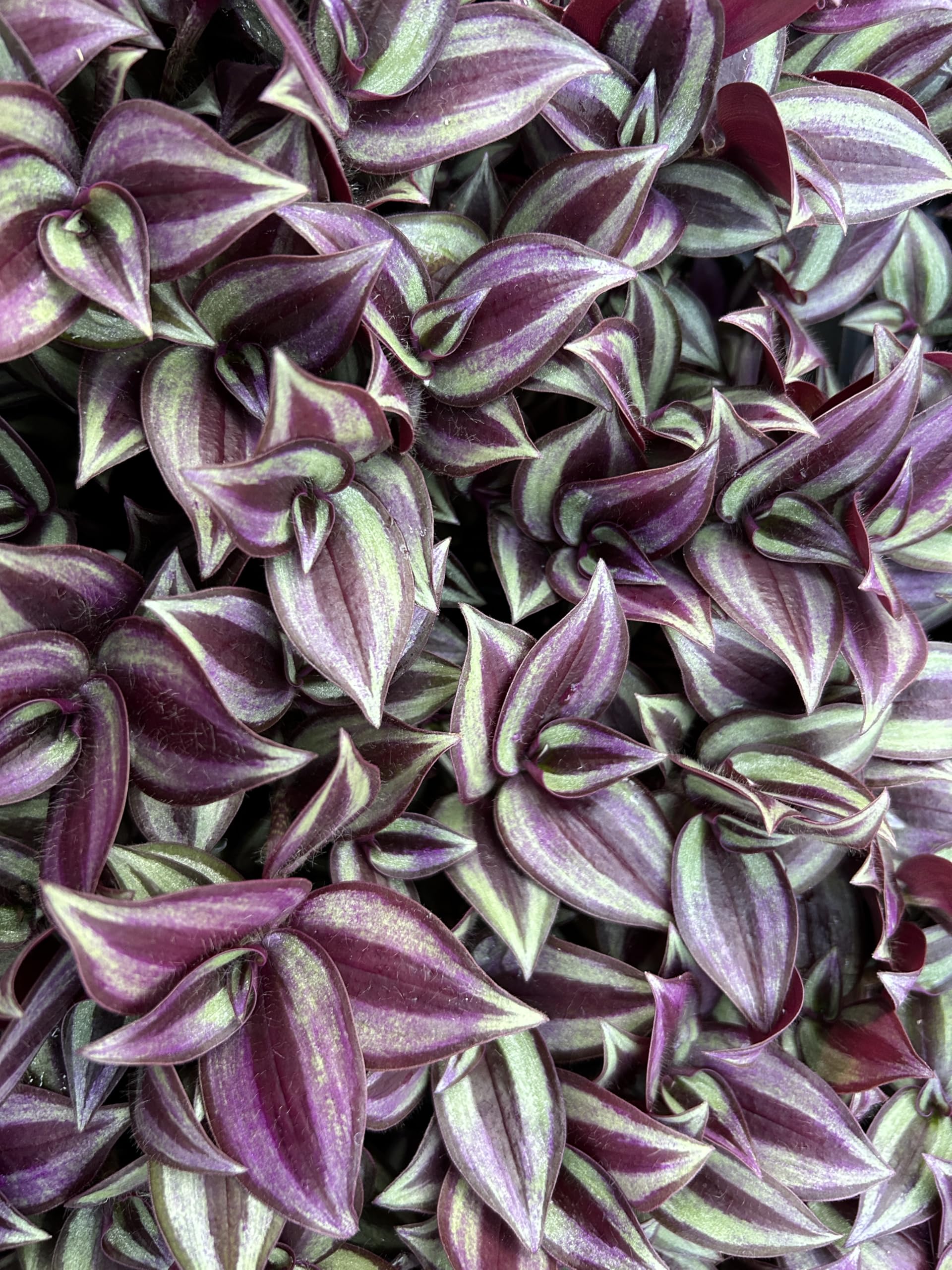
This 10-pack of Tradescantia zebrina delivers the strongest value for anyone wanting instant variegated color across multiple pots or a single large hanging basket. The purple and silver striping is vivid on every leaf, and the three-point inspection process from August Breeze Farm means you get pest-free starters with healthy root systems already established.
Customer reports confirm these starters survived shipping delays of up to five days and still doubled in size within two weeks after potting. The GMO-free material feature and drought tolerance make this an exceptionally forgiving option for beginners who worry about overwatering or irregular schedules.
The 18-inch trailing height potential works beautifully for shelf planters, but the real win is the propagation ease—each cutting roots in plain water within days, letting you expand your collection with zero extra cost.
Why it’s great
- 10 rooted plants for the price of one nursery pot
- Rapid growth with strong silver variegation indoors
- Survives shipping delays without root rot
Good to know
- Leaves can scorch in direct afternoon sun
- Needs regular watering to prevent leaf curl
2. Spider Plant Variety Pack (4‑Pack)
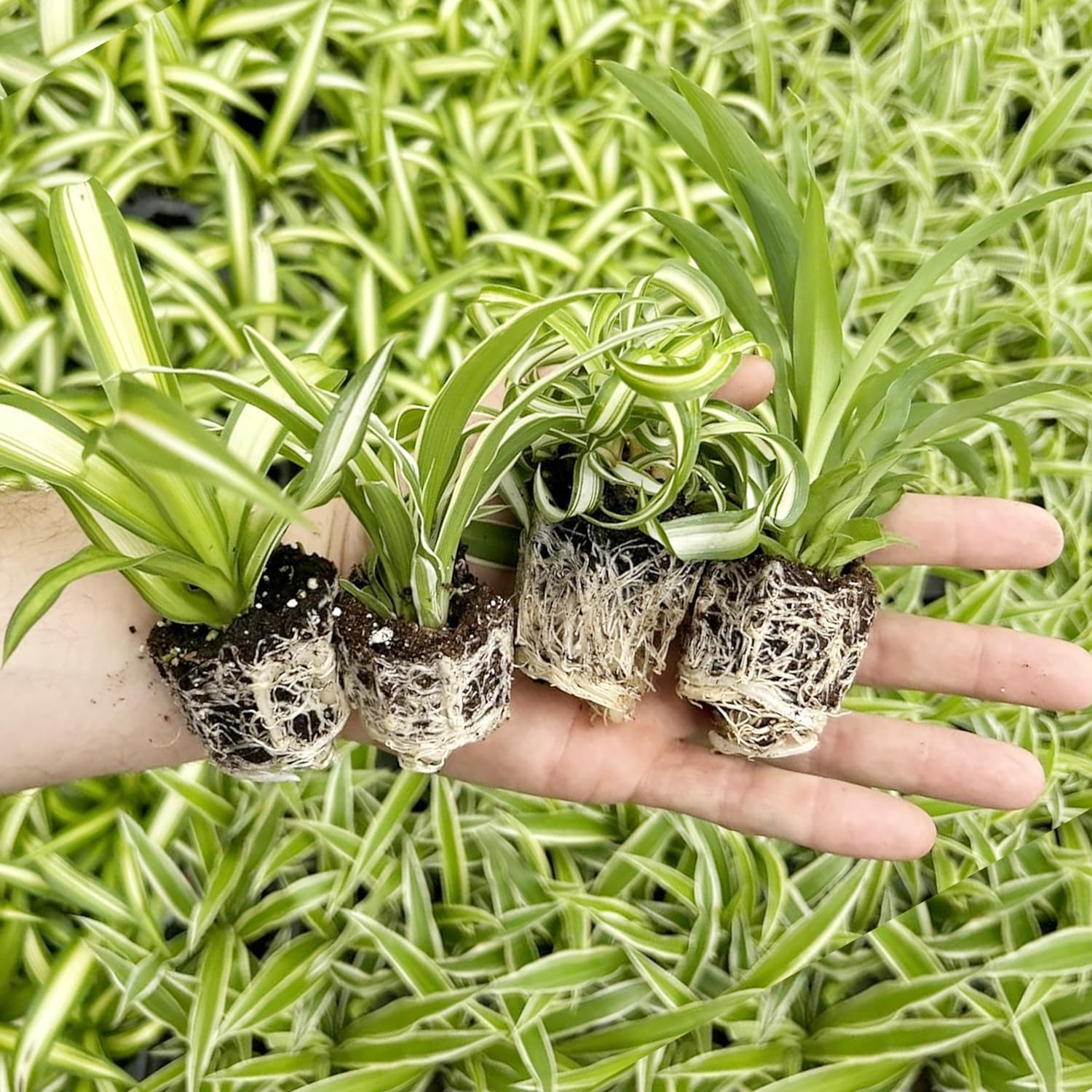
If you want to see the full spectrum of spider plant variegation in one order, this four-variety pack delivers Ocean, Hawaiian, Green, and Bonnie Curly cultivars—each with distinct leaf shape and stripe patterns. The Bonnie Curly variety alone is worth the buy for collectors, with its twisted green and white blades that hold curl even in lower humidity.
Customer feedback notes that the root systems on these bare-root starters are extensive enough to demand a 4-inch pot immediately, and the plants bounce back from warm shipping conditions within days of watering. The sun exposure requirement is full sun, so indoor placement near a south-facing window will keep the variegation crisp.
The drought tolerance claim holds up for the Ocean and Hawaiian varieties, but the Bonnie Curly is slightly more particular about consistent moisture—so group care routines should adjust for that one picky grower in the pack.
Why it’s great
- Four unique spider cultivars in one box
- Bonnie Curly variety offers rare twisted foliage
- Excellent root system for quick transplant success
Good to know
- Bonnie Curly needs more consistent moisture than the others
- Full sun required for strongest variegation
3. Chalily Chameleon Plant
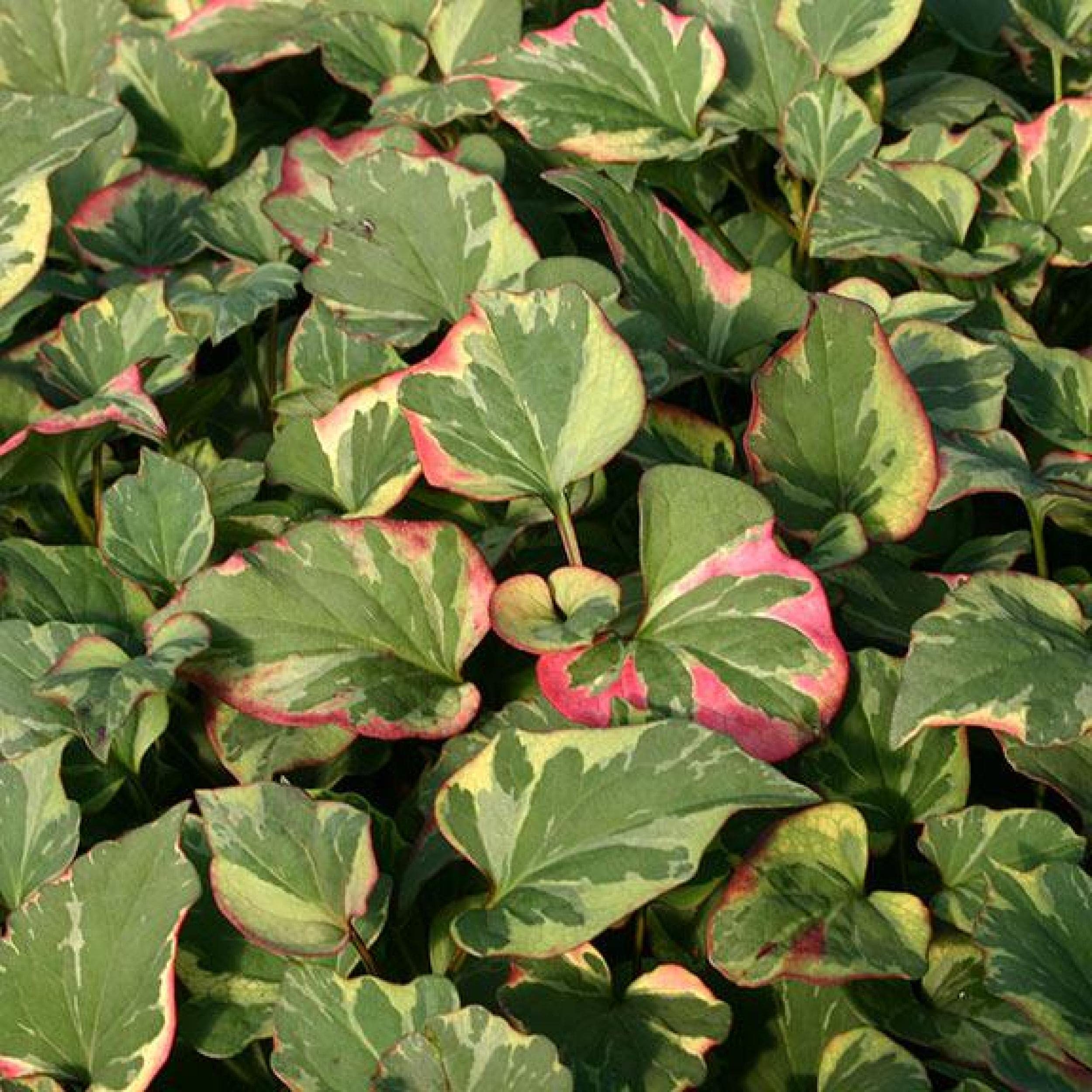
The true chameleon plant—Houttuynia cordata—is a marginal aquatic that brings red, pink, yellow, cream, and green heart-shaped leaves to pond edges and bog gardens. Chalily ships this as a single rooted plant with stems reaching 15 inches or more, and the root mass is robust enough to anchor in gravel or shallow water without floating away.
USDA zone 5 hardiness means it survives freezing winters and returns each spring, making it a one-time purchase for perennial color. The plant acts as a natural filter for koi and goldfish ponds, absorbing excess nutrients that cause algae blooms while providing shelter for fry.
Some customers reported yellowing on arrival and slow initial growth, but the common thread in positive reviews is that plants placed consistently in water (not allowed to dry out on the bank) explode with color within three weeks. Avoid exposing the roots to hot, dry air during transplant—keep them submerged or heavily mulched.
Why it’s great
- True multicolor variegation on heart-shaped leaves
- Hardy to zone 5 with perennial regrowth
- Natural pond filter that benefits fish health
Good to know
- Some arrivals show yellowing; needs immediate water placement
- Not suitable for indoor pots—requires consistent moisture
4. Variegated Spider Plant ‘Airplane’
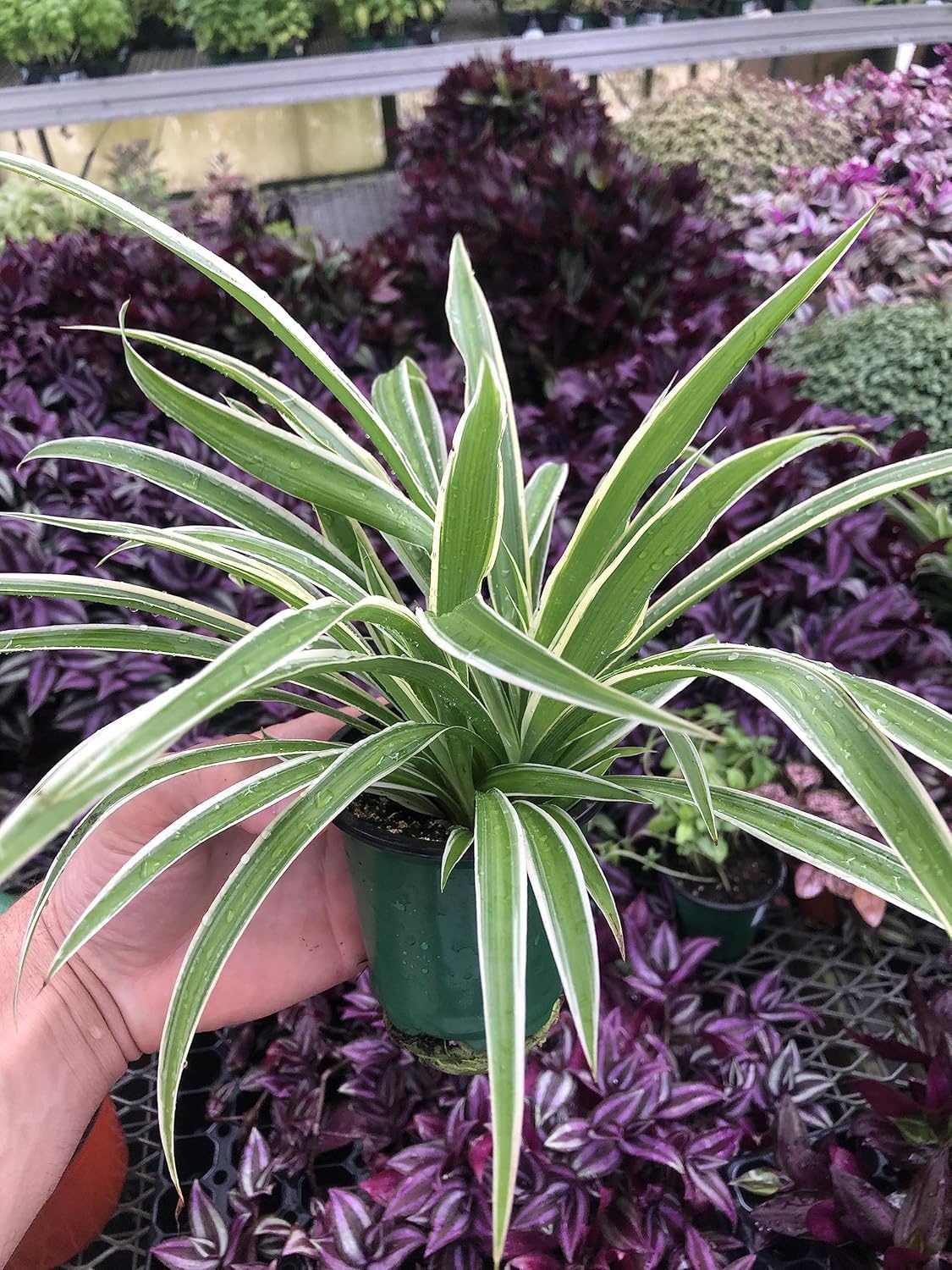
The Airplane variety of spider plant offers clean white and green striping that stays bright even in partial shade, making it the best indoor option for desks, shelves, or any spot that gets indirect light. It ships already potted in soil inside a nursery pot, which eliminates the guesswork of bare-root conditioning—just unwrap, place, and water when the top inch of soil feels dry.
Pet-friendly certification is a standout feature here. The Airplane spider plant is non-toxic to cats and dogs, which matters if your chameleon plant display sits near a curious pet. Customer reviews highlight zero fungus gnats on arrival and consistent new leaf production months after planting, with many buyers reporting the first baby spiderettes within eight weeks.
Air purification claims are backed by the plant’s known ability to filter formaldehyde and xylene—not just a marketing tag. The 16-inch mature height keeps it compact enough for small spaces while still producing the trailing offsets that make spider plants a favorite for propagation.
Why it’s great
- Potted in soil—no bare-root guesswork
- Pet-friendly and non-toxic
- Produces baby spiderettes quickly for free propagation
Good to know
- Some arrivals had red leaf spots that resolved with care
- Packed with paper shreds that can be messy
5. 3 Pack Airplane Spider Plant
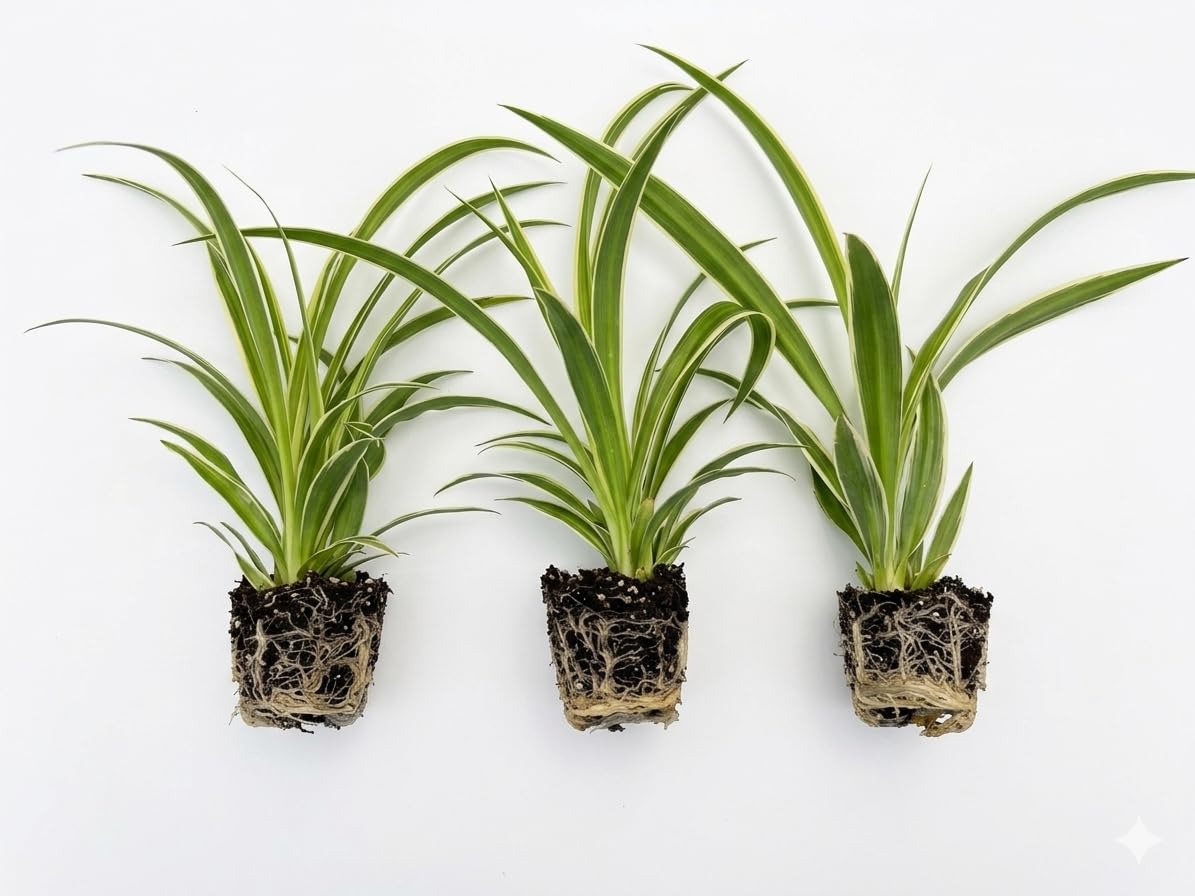
Three bare-root spider plants in one package at an entry-level price point makes this the most cost-efficient way to fill multiple 6-inch pots with variegated foliage. Each plant arrives with 6-inch leaves, healthy white roots, and no brown tips—a sign of good grower care during the pre-shipment phase.
Customer reports consistently note that these plants grew faster than expected after being placed in bright indirect light and watered with distilled water. The non-toxic nature (safe for pets despite potential mild digestive upset) and easy propagation from the baby plantlets mean you will likely end up with more spider plants than you started with within a few months.
The heirloom material feature indicates these are open-pollinated, non-hybridized plants, which matters if you plan to save seeds or propagate true-to-type clones. The moderate watering recommendation means you can water on a standard weekly schedule without worrying about root rot, as long as the pot has drainage holes.
Why it’s great
- Three healthy bare-root plants at a low entry price
- No brown tips or pest issues reported
- Heirloom variety allows true-to-type propagation
Good to know
- Bare root requires immediate potting in quality soil
- Leaves may scorch in direct full sun
FAQ
Can I grow the aquatic chameleon plant indoors in a regular pot?
Why did my Tradescantia zebrina lose its purple color after two weeks?
Final Thoughts: The Verdict
For most users, the chameleon plants winner is the 10-Pack Wandering Jew because it combines the highest count of fully rooted starters with proven pest-free shipping and rapid indoor growth. If you want a collector’s variety of spider plant cultivars, grab the 4-Variety Pack. And for pond owners who need a true marginal with perennial multicolor leaves, nothing beats the Chalily Chameleon Plant.

Mo Maruf
I created WellFizz to bridge the gap between vague wellness advice and actionable solutions. My mission is simple: to decode the research and give you practical tools you can actually use.
Beyond the data, I am a passionate traveler. I believe that stepping away from the screen to explore new environments is essential for mental clarity and physical vitality.