Our readers keep the lights on and my smoothie glass nicely filled. As an Amazon Associate, I earn from qualifying purchases.
Dead zones, weak hotel Wi-Fi, and the constant anxiety of an unsecured public connection are the real enemies of modern travel. A dedicated device solves all three by creating your own private, portable bubble of cellular internet — no more hunting for passwords or risking your data on an open network.
I’m Mohammad Maruf — the founder and writer behind WellFizz. This guide is built on dozens of hours comparing cellular hotspot specs, reading through verified buyer experiences, and cross-referencing carrier compatibility so you skip the return hassles and activation snags.
Whether you need a backup for remote work or the main link for an RV adventure, this review of the best cellular wi-fi hotspot options will help you match the right device to your actual travel and data needs.
How To Choose The Best Cellular Wi-Fi Hotspot
Picking the right hotspot means more than looking at the sticker. You have to match the device’s carrier band support with your provider, decide between a simple data pipe and a full security router, and consider how often you’re willing to recharge. Here are the three factors that separate a smooth experience from a frustrating one.
Carrier Compatibility Is Non-Negotiable
A hotspot is useless if it won’t register on your network. Carrier-locked units (like AT&T prepaid devices) only work on that specific network. Unlocked models with a physical SIM slot or eSIM support give you the freedom to switch between T-Mobile, Verizon, or AT&T. Always confirm the supported LTE/5G bands match your carrier’s primary frequencies before buying.
Battery Capacity vs. Continuous Use
Battery life claims vary wildly because they are tested under ideal conditions. A 3,000mAh battery might last 12 hours on standby but only 5-6 hours under active streaming and multiple device connections. If you need all-day connectivity without hunting for an outlet, look for a unit with at least 5,000mAh or one that supports pass-through charging and power bank features.
Security Beyond the Password
Basic hotspots create a Wi-Fi network, but they do not encrypt your traffic from the device to the internet. For hotel or public venue use, a travel router with built-in VPN client (WireGuard or OpenVPN) encrypts everything before it leaves the device. This is critical for remote workers handling sensitive data, as it protects against snooping on shared networks.
Quick Comparison
On smaller screens, swipe sideways to see the full table.
| Model | Category | Best For | Key Spec | Amazon |
|---|---|---|---|---|
| TP-Link Roam 7 BE3600 | Travel Router | Hotel / Public WiFi Security | 5 GHz: 2882 Mbps; 90 devices | Amazon |
| GL.iNet Beryl 7 (GL-MT3600BE) | Travel Router | VPN Power Users / OpenWrt | Dual 2.5G ports; 120 devices | Amazon |
| GL.iNet GL-E750V2 (MUDI) | 4G LTE Hotspot | Long Battery / Global SIM | 7000mAh battery; 8 hrs usage | Amazon |
| TravlFi JourneyGo LTE | eSIM Hotspot | U.S. RV / Camping Backup | 16-hr battery; 10 devices | Amazon |
| GlocalMe UPP 4G (72GB Bundle) | Global eSIM Hotspot | International Travel / No SIM | 72GB total data; 200+ countries | Amazon |
| GlocalMe UPP 4G (1GB Starter) | Global eSIM Hotspot | Light Travel / Pay-As-You-Go | 1.1GB preloaded data; 13 hrs | Amazon |
| Franklin A50 5G | Carrier 5G Hotspot | AT&T User / 5G Speeds | 5000mAh battery; Wi-Fi 6 | Amazon |
In‑Depth Reviews
1. TP-Link Roam 7 BE3600

The TP-Link Roam 7 is not just a hotspot — it is a full travel router that converts hotel, cruise, or airport public Wi-Fi into a private, encrypted network for up to 90 devices. Its dual-band Wi-Fi 7 delivers up to 2882 Mbps on the 5 GHz band, handling 4K streaming and large file transfers simultaneously without buffering.
Security is the headline feature here. Built-in OpenVPN and WireGuard support encrypt all traffic, and the captive portal authentication lets you log in once through the Tether App rather than re-entering credentials on every device. The 2.5 Gbps WAN port provides a wired backhaul option for faster upstream connections when available.
Power is delivered via USB-C, making it compatible with standard power banks for on-the-go use. It supports multiple modes including Router, Hotspot, and AP/RE/Client, covering virtually any connectivity scenario a traveler encounters. The absence of 6 GHz band support is a minor limitation for those seeking the absolute peak Wi-Fi 7 spec.
Why it’s great
- Encrypts public Wi-Fi for secure remote work
- Captive portal login saves major setup time
- Competitive performance with dual 2.5G ports
Good to know
- Does not support 6 GHz band
- Captive portal can be slightly slow on first login
- Setup requires some networking familiarity
2. GL.iNet Beryl 7 (GL-MT3600BE)
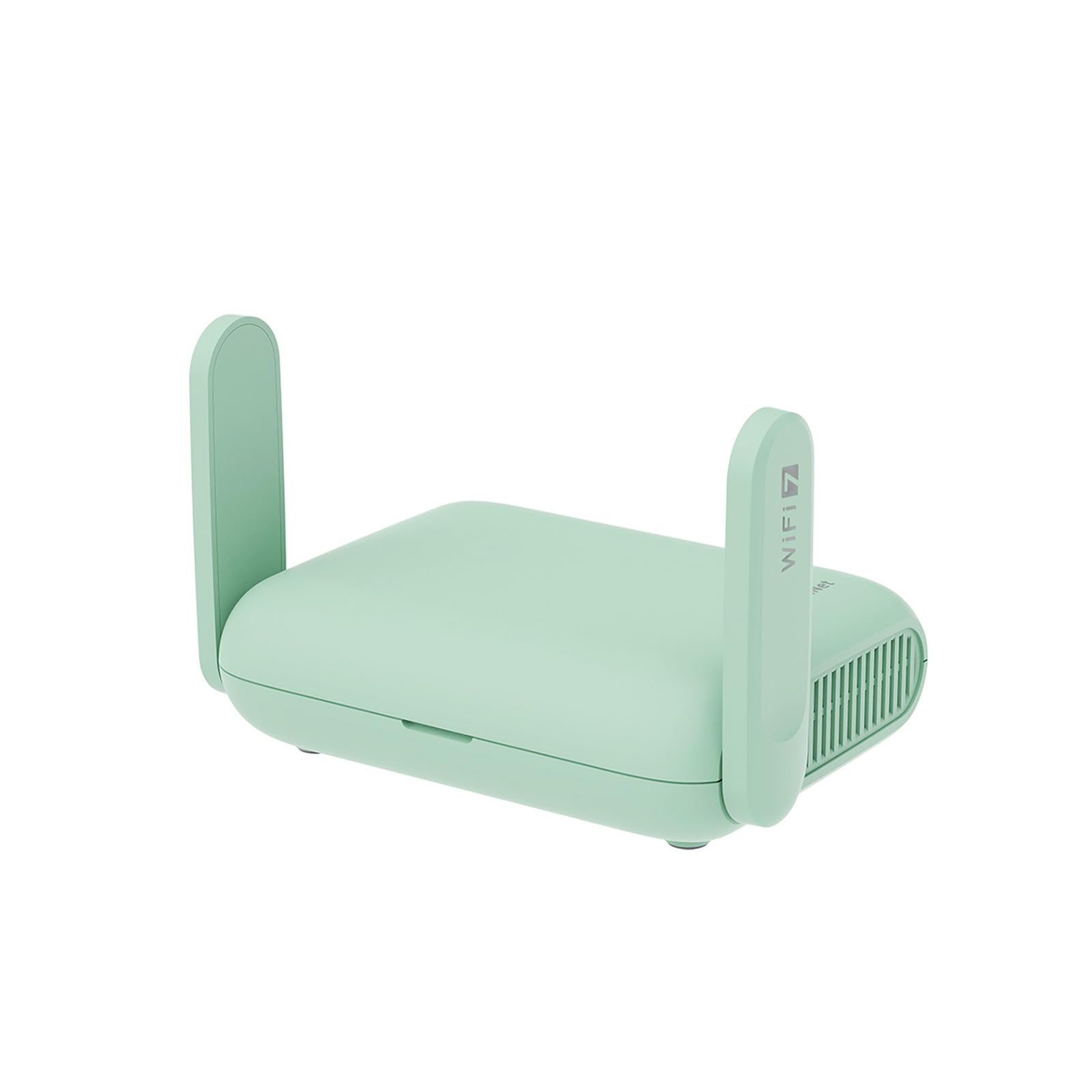
The Beryl 7 is a compact Wi-Fi 7 travel router built on OpenWrt, offering total customization for advanced users. It reaches 2882 Mbps on the 5 GHz band and supports up to 120 devices, making it one of the most capable portable routers on the market. Dual 2.5G Ethernet ports provide a fast wired bridge for gaming consoles or media servers.
VPN performance is outstanding: WireGuard speeds hit 1100 Mbps and OpenVPN-DCO reaches 1000 Mbps in the local network. A physical toggle switch lets you instantly enable or disable your VPN client or AdGuard Home filter, which is a rare convenience for travelers who want one-button security without digging through admin panels.
Retractable antennas improve signal flexibility, and power can come from any USB-C PD source including laptop ports. The OpenWrt firmware (Kernel 5.4.281) gives users complete control over advanced networking features. The unit does run slightly warm under load, and its single-band mesh capabilities are limited compared to home mesh systems.
Why it’s great
- Industry-leading VPN throughput for a travel router
- Physical toggle switch for instant VPN activation
- Full OpenWrt OS for deep customization
Good to know
- Signal strength can drop in crowded RF environments
- Setup learning curve for non-technical users
- Larger than a typical pocket hotspot
3. GL.iNet GL-E750V2 (MUDI)

The MUDI is a 4G LTE mobile hotspot wrapped in a travel router chassis with a massive 7000mAh battery. It delivers 300 Mbps on 2.4 GHz and 433 Mbps on 5 GHz, with a physical SIM slot that supports global cellular bands including T-Mobile, Verizon, AT&T, and Google Fi. The Cat6 module (EM060K) provides solid real-world download speeds of 50-60 Mbps on Metro by T-Mobile.
Built-in OpenVPN and WireGuard support ensures all data is encrypted from the moment it leaves the device, and the OpenWrt firmware allows for deep tuning like TTL editing and IMEI configuration. The USB-C port replicator and ethernet cable included in the box make it easy to connect legacy devices without adapters.
The 7000mAh battery offers a genuine 8 hours of continuous use, and the unit can double as a power bank for charging phones in a pinch. On the downside, the MUDI runs noticeably warm compared to other 4G hotspots, and its weight of around 285 grams makes it heavier than competing pocket-sized options.
Why it’s great
- Large battery for all-day connectivity
- OpenWrt with advanced customization options
- Works with global SIMs including Google Fi
Good to know
- Runs hot during extended use
- Heavier than competing hotspot-only devices
- App interface can be confusing for beginners
4. TravlFi JourneyGo LTE
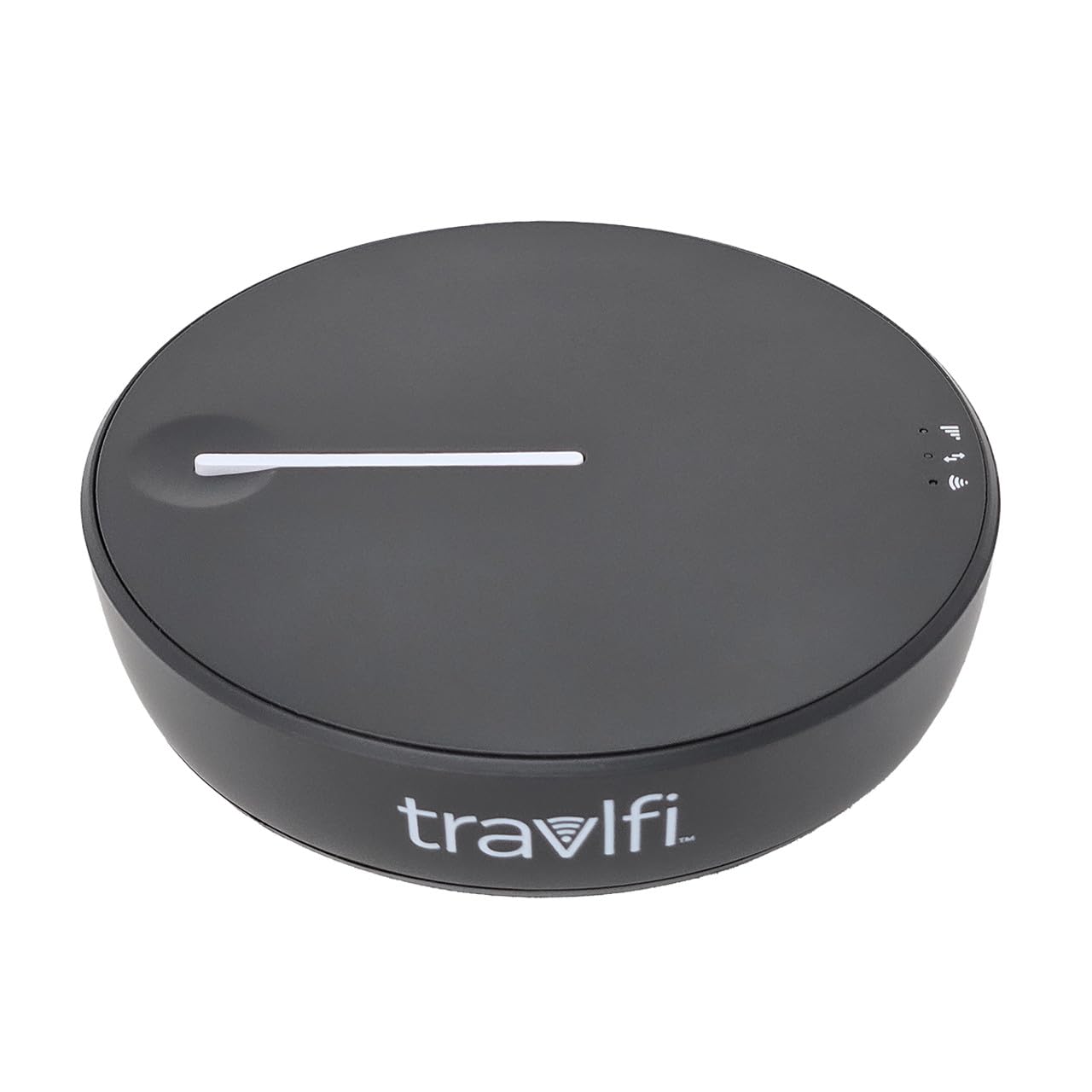
The TravlFi JourneyGo is an eSIM-based 4G LTE hotspot designed specifically for RV and camper users who need reliable coverage across the United States without carrier contracts. It supports up to 10 devices simultaneously and claims an excellent 16-hour battery life, which real-world users confirm holds up for a full day of streaming on two TVs plus multiple laptops and phones.
Setup is genuinely easy — no SIM card to insert, no carrier store visit. Data plans are prepaid and flexible, ranging from 2 GB up to unlimited, and you can pause service during months when you are not traveling. The device uses eSIM technology to connect to the strongest available cellular network, which gives it better reach in remote areas than a single-carrier hotspot.
Customer feedback highlights that the JourneyGo handles simultaneous heavy usage well, with strong signal even in remote camping spots. The main limitation is that data plan changes must be made by phone during business hours, which is inconvenient for weekend travelers. Some users also report the speed is not sufficient for heavy smart home automation or ultra-HD streaming if multiple devices are busy.
Why it’s great
- Very long battery life for extended trips
- No SIM or contract required
- Flexible data plans with pause options
Good to know
- Data plan changes require phone call during business hours
- Speeds may be insufficient for intensive smart home setups
- Coverage limited to United States
5. GlocalMe UPP 4G (72GB Bundle)
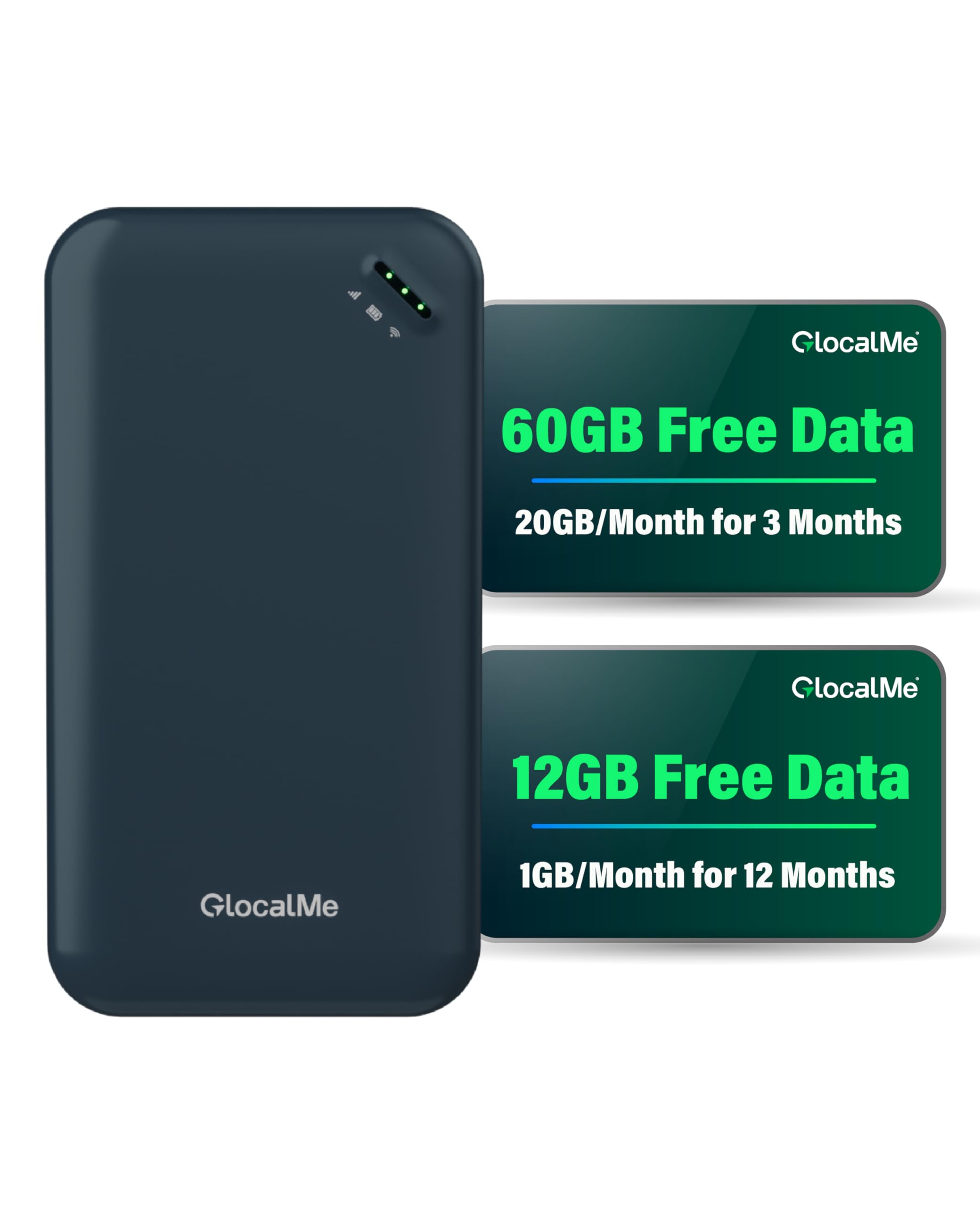
The GlocalMe UPP 4G is a pocket-friendly global hotspot that comes with a preloaded 72 GB data bundle — 20 GB US data monthly for the first 3 months plus 1 GB global data monthly for 12 months. It uses eSIM/cloud SIM technology to automatically connect to the strongest local carrier in over 200 countries, eliminating the need to source local SIMs or manage multiple service accounts.
Setup is genuinely instant: download the GlocalMe app, register, and the device is active within minutes. It supports up to 8 connected devices and claims over 13 hours of battery life from its 3000mAh cell. In practice, heavy streaming reduces that to around 6-7 hours, which is still respectable for a unit this small.
The UPP works fine with a physical SIM card as well, making it flexible for regional data plans. However, there are reports that the preloaded data can drain faster than expected during high-usage activities like video streaming. The companion app could also be clearer about remaining data balances across different plan tiers.
Why it’s great
- Preloaded data works out of the box with no SIM
- Automatic local carrier selection in 200+ countries
- Flexible dual eSIM + physical SIM support
Good to know
- Preloaded data can deplete quickly with heavy streaming
- Battery needs daily charging with active use
- App could provide clearer data usage tracking
6. GlocalMe UPP 4G (1GB Starter)
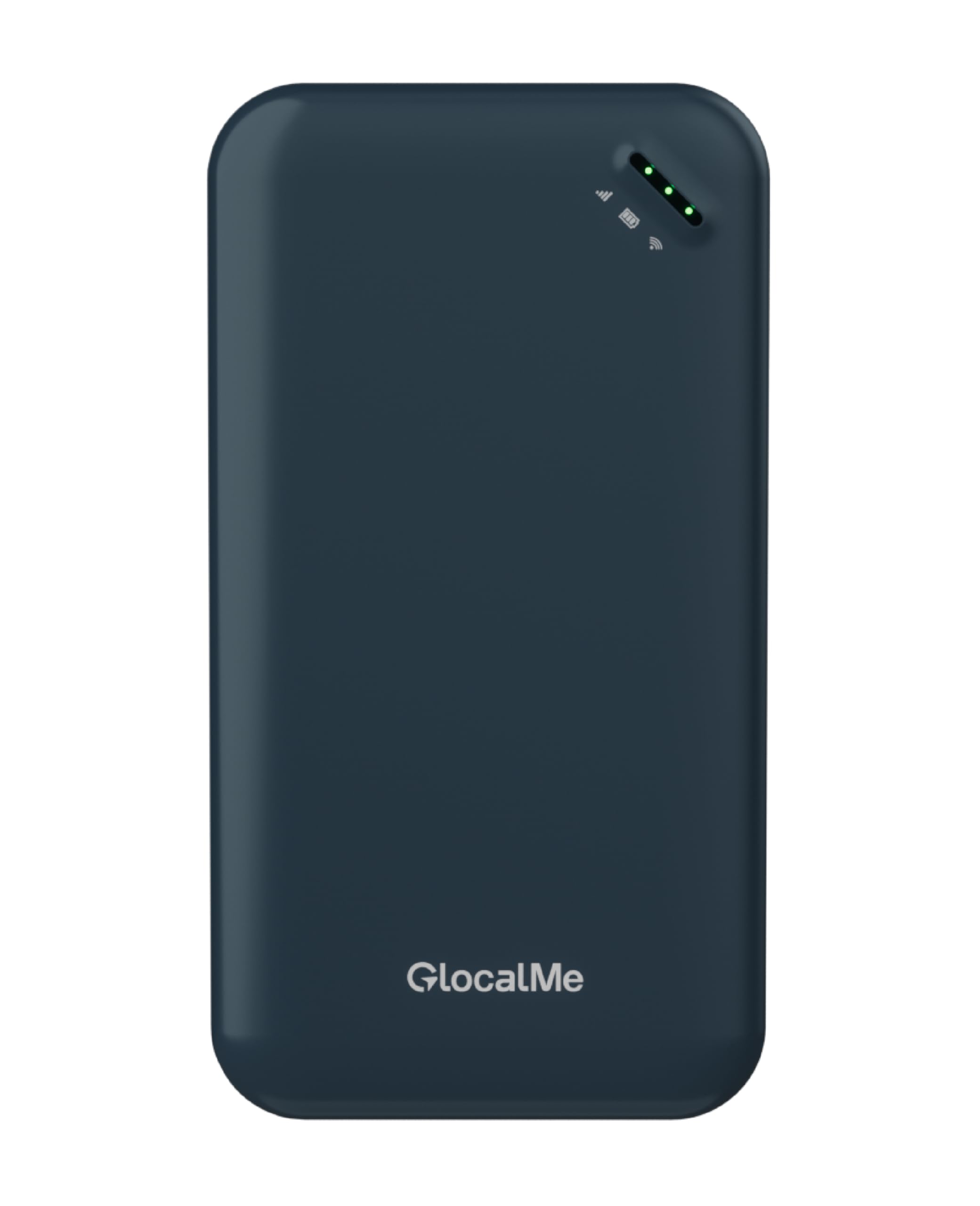
This is the entry-level version of the GlocalMe UPP, shipped with 1.1 GB of global data valid for 90 days. It is the same hardware as the 72 GB bundle but with a much smaller data allocation, making it ideal for short trips or as a backup connectivity device for emergencies where you just need a reliable link for emails and navigation.
The device shares the same 4G LTE hardware that covers 200+ countries with automatic carrier switching. It supports up to 8 connected devices and runs for up to 13 hours on a full charge. The user experience is identical to the larger bundle — no SIM, no contract, instant activation via the app. The pay-as-you-go model lets you purchase additional data by day, month, region, or GB as needed.
Battery performance is consistent across the UPP line, delivering roughly 12-13 hours of standby or 6-7 hours of active streaming. The main risk is that the 1.1 GB starter data is exhausted quickly if you stream video or make video calls, so factor in additional data purchases for any trip beyond light browsing. The single-band Wi-Fi also means speeds top out lower than dual-band competitors.
Why it’s great
- Low upfront cost for occasional travelers
- Global coverage with no carrier lock-in
- Flexible data top-ups by day or GB
Good to know
- Starter data runs out fast with streaming
- Single-band Wi-Fi limits peak throughput
- Battery life drops significantly under heavy load
7. Franklin A50 5G

The Franklin A50 is a 5G hotspot locked to the AT&T network, offering Wi-Fi 6 dual-band connectivity for up to 20 devices. Its removable 5000mAh battery delivers strong endurance, and the built-in power bank feature allows you to charge a smartphone directly from the hotspot — a handy trick for travelers who pack light.
With support for 5G bands n2, n5, n12, n14, n30, n66, and n77, the A50 provides solid coverage in areas where AT&T’s 5G network is available. The 2.4-inch touchscreen display provides basic status and management without needing the phone app. Enhanced security features include remote management and WPA3 encryption.
The biggest drawback is carrier lock-in. The device is designed for AT&T Prepaid use, and multiple customer reviews report activation failures with Error Code SSACT-501, indicating the IMEI is already linked to another account. Some users also experienced battery swelling after extended use. Ensure you verify IMEI availability before purchase if you plan to use a new line.
Why it’s great
- Removable 5000mAh battery with power bank function
- 5G speeds with Wi-Fi 6 for low latency
- 2.4-inch screen for on-device management
Good to know
- Locked to AT&T activation issues reported
- Battery swelling reported after extended use
- Buyer pays return shipping for defective units
FAQ
Can I use a cellular hotspot internationally?
How many devices can a portable hotspot handle?
What is the difference between a hotspot and a travel router?
Will a VPN slow down my hotspot connection?
Final Thoughts: The Verdict
For most users, the best cellular wi-fi hotspot winner is the TP-Link Roam 7 BE3600 because it combines Wi-Fi 7 speeds with robust VPN security for hotel and cruise use. If you want a dedicated 4G hotspot with all-day battery and deep OpenWrt customization, grab the GL.iNet MUDI. And for RV travelers who need a simple contract-free backup with excellent coverage across the US, nothing beats the TravlFi JourneyGo.

Mo Maruf
I created WellFizz to bridge the gap between vague wellness advice and actionable solutions. My mission is simple: to decode the research and give you practical tools you can actually use.
Beyond the data, I am a passionate traveler. I believe that stepping away from the screen to explore new environments is essential for mental clarity and physical vitality.