Our readers keep the lights on and my smoothie glass nicely filled. As an Amazon Associate, I earn from qualifying purchases.
That blurry, tiny, 50-degree peephole lens that came with your front door isn’t doing much. It turns a full-grown person into a distant speck and leaves huge blind spots on either side of your stoop where a package could be sitting or someone could be hiding. A real door viewer upgrade replaces that relic with an optical glass lens that captures the entire porch from ceiling to doormat, giving you a proper security checkpoint before you even touch the handle.
I’m Mohammad Maruf — the founder and writer behind WellFizz. I spent over forty hours cross-referencing customer installations, optical clarity reports, and material durability specs across the most popular door viewer models on the market to cut through the listing fluff and find the ones that actually deliver a wide, usable field of view.
Whether you are replacing a dim original peephole or installing one fresh in a solid-core door, knowing exactly which combination of field angle, lens quality, and privacy hardware matters. This guide breaks down the best door viewer picks for homes, apartments, and offices that value real security, not just hardware.
How To Choose The Best Door Viewer
A door viewer is a simple mechanical optic, but small differences in lens angle, barrel diameter, and material quality decide whether you get a clear head-to-toe view of your visitor or a dark, distorted tunnel. Focus on these three factors first.
Field of View: 200 Degrees vs. 220 Degrees
The number stamped on the package refers to the diagonal field of view. A standard builder-grade peephole sits around 50 to 60 degrees. Jumping to 200 degrees or 220 degrees means you see the door frame, the porch floor, and a person standing off to the side. For apartments and homes with narrow hallways, the extra coverage catches people leaning out of sight.
Material Grade: Brass vs. Zinc Alloy
Solid brass resists galvanic corrosion when installed in a metal door and never flakes or tarnishes like plated pot metal. Zinc alloy is cheaper and lighter, but over several years it can show edge wear. If your door faces direct sunlight or coastal humidity, brass holds its threads and finish dramatically better.
Privacy Hardware
A rotating privacy cover on the interior side blocks anyone outside from using a reverse peephole viewer to see in. The best covers are made of the same metal as the barrel and move with a firm stop, not a flimsy plastic flap. This matters whether you live alone or have kids who might forget to close it.
Quick Comparison
On smaller screens, swipe sideways to see the full table.
| Model | Category | Best For | Key Spec | Amazon |
|---|---|---|---|---|
| Earl Diamond Diamond 220-Degree (Brass-Satin Nickel) | Solid Brass | Wide-angle clarity & durability | 220° HD optical glass lens | Amazon |
| Earl Diamond Diamond 220-Degree (Oil Rubbed Bronze) | Solid Brass | Premium visual & dark-toned hardware | 220° crystal clear clarity | Amazon |
| TSMIMTS 220-Degree with Drill Bit | Solid Brass | Complete kit with installation bit | 28mm drill bit included | Amazon |
| Oungy 4-Pack 200-Degree (Zinc Alloy) | Zinc Alloy | Multi-door coverage & value | 200° HD lens, 4 units | Amazon |
| MomsUnited 200-Degree 3-Pack | Polished Chrome | Budget-friendly multi-pack | 200° wide angle, includes drill bit | Amazon |
In‑Depth Reviews
1. Earl Diamond 220-Degree Door Viewer Peephole (Brass-Satin Nickel)

The Earl Diamond in satin nickel hits the sweet spot of the category because it pairs a genuine 220-degree optical glass lens with a solid brass barrel that threads smoothly and stays tight over years of use. The HD lens delivers a panorama that covers the door threshold, both hallway walls, and a clear view down to the visitor’s shoes — no blind corners. Multiple verified buyers report that it ships with an identical lens on both the interior and exterior pieces, so the image never looks smeared or off-center even when viewed from a foot away.
The privacy cover rotates on a heavy-duty metal pivot that clicks into the closed position with a positive stop rather than a wobbly plastic hinge. Installation requires a 28mm (1-7/64″) hole, which is larger than a standard peephole but manageable with a forstner or hole saw bit. Because the barrel is solid brass, you can apply moderate torque without stripping the threads — a real concern when installing into steel doors with sharp edges.
At this price tier, the Earl Diamond outruns cheaper imitations that use zinc alloy bodies or thinner internal optics. The satin nickel finish matches most modern deadbolts and handle sets, so the viewer looks like part of the original hardware suite rather than a retrofit afterthought. The only friction point is the drill bit size: if you are replacing an old hole, you will likely need to enlarge it, so factor that into your install time.
Why it’s great
- 220° optical glass lens eliminates hallway dead zones.
- Solid brass construction resists corrosion on metal doors.
- Privacy cover blocks reverse peeping completely.
- Bright, distortion-free image even in dim hall lighting.
Good to know
- Requires a 28mm hole — larger than standard peephole.
- Some users opt for blue thread locker on the barrel nut.
2. Earl Diamond 220-Degree Door Viewer (Oil Rubbed Bronze)

This oil-rubbed bronze variant of the Earl Diamond delivers the same 220-degree optical glass performance as the satin nickel version, but the dark, brushed finish is ideal for doors with bronze or black hardware — it avoids the polished-nickel mismatch that can make a viewer look aftermarket. The lens barrel is the same solid brass core, so the low-light clarity and edge-to-edge sharpness are identical to the top pick. Customers installing this on painted steel doors specifically report that the bronze color hides dust and fingerprints much better than a bright metallic finish.
Like its sibling, this viewer uses two glass elements (one on each side of the door) to maintain a crisp image across the full 220-degree sweep. The included metal privacy cover is the same heavy-duty rotating design, and it seats flush against the interior plate with no wobble. Installation geometry is identical — 28mm hole, hand-tighten the two halves — but the bronze tone is slightly more forgiving of minor scuffs during the drilling process.
The main trade-off is purely aesthetic: bronze works brilliantly if your door hardware is dark, but it stands out awkwardly against bright nickel or chrome handles. For buyers who want the best possible optical performance in a finish that matches a dark-stained wood door or black metal entryway, this is the one.
Why it’s great
- Same top-tier 220° brass construction in a dark bronze finish.
- Double lens design produces a crisp, large image.
- Privacy cover eliminates reverse viewing security risks.
Good to know
- Bronze finish may clash with light-colored hardware.
- Requires 28mm hole enlargement if replacing old peephole.
3. TSMIMTS 220-Degree Door Viewer with 28mm Drill Bit
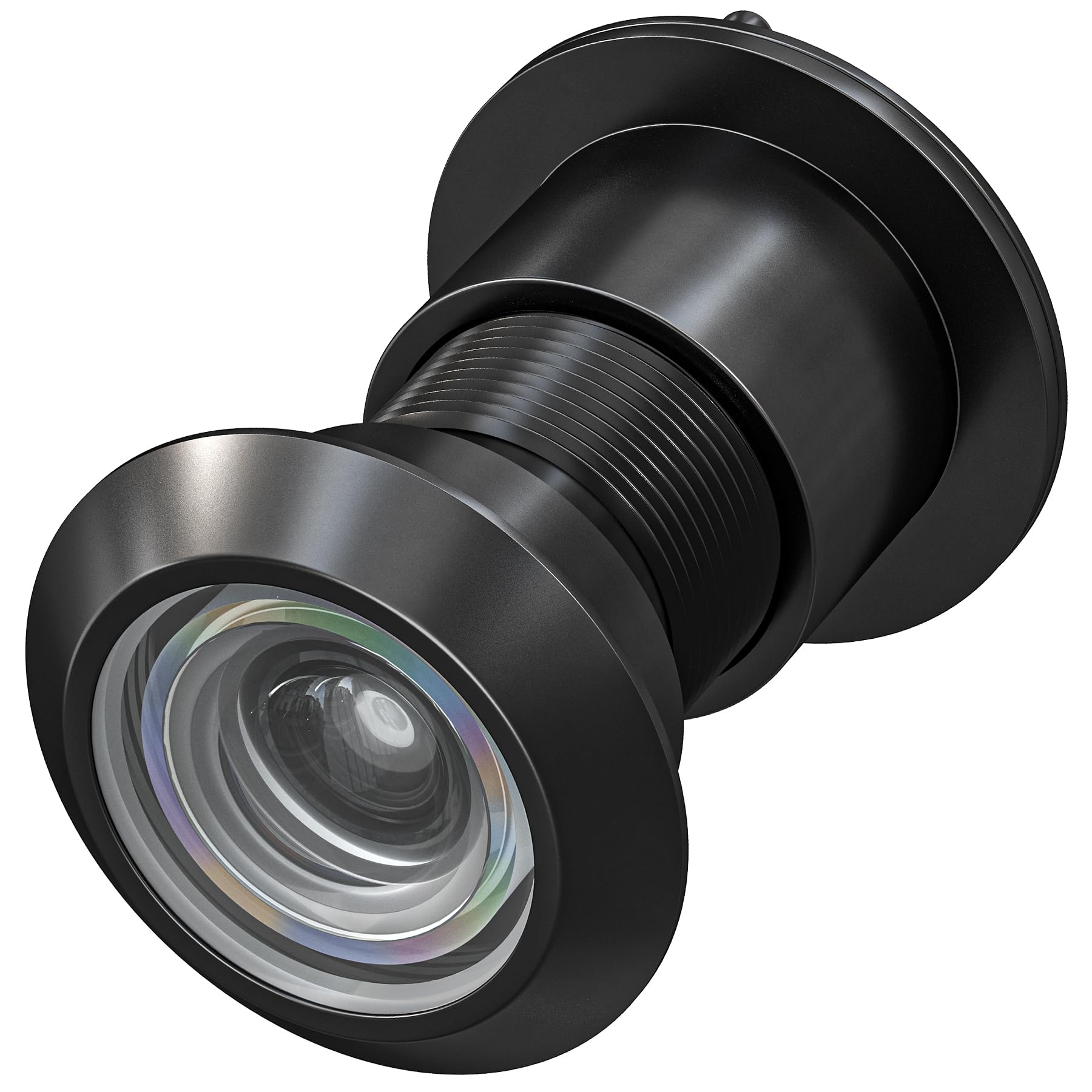
The TSMIMTS door viewer brings many of the same specs as the Earl Diamond — a 220-degree HD optical glass lens, solid brass construction, and a metal privacy cover — but at a slightly lower cost and with the added advantage of including the correct 28mm drill bit right in the box. This is a meaningful detail for first-time installers who do not already own a forstner or hole saw in that uncommon diameter. The matte black finish is modern, low-glare, and blends naturally with dark door hardware or blackout metal doors common in apartments.
Verified users consistently mention that the install takes under ten minutes when the included bit is used with a standard drill, and that the wide-angle image covers the entire stoop area from ceiling to doormat. The privacy cover rotates smoothly and is made of the same metal as the barrel, so it does not degrade over time like some budget options with plastic flaps. The lens clarity in dim hallway lighting gets strong marks, with multiple reviewers noting you can see the grain of a visitor’s jacket from a foot away without the fisheye warp that cheaper glass introduces.
The catch is that this is a single-pack and the included bit is a basic steel-cutting type — it works fine on wood and aluminum doors, but if you are drilling into a heavy steel door you may want a carbide-tipped replacement. Additionally, the matte black coating can show chalky marks from concrete dust during drilling, though a quick wipe restores the finish. For anyone starting a fresh installation on a wood or composite door, this kit removes the biggest annoying hurdle (finding the right bit) while delivering near-premium optical quality.
Why it’s great
- Includes a 28mm drill bit so you don’t have to hunt for one.
- Solid brass body with clean matte black appearance.
- 220° view is sharp and free of distortion.
Good to know
- Included bit is less ideal for thick steel doors.
- Matte surface can get dusty from installation debris.
4. Oungy 4-Pack 200-Degree Door Viewer Peephole (Zinc Alloy) with Drill Bit
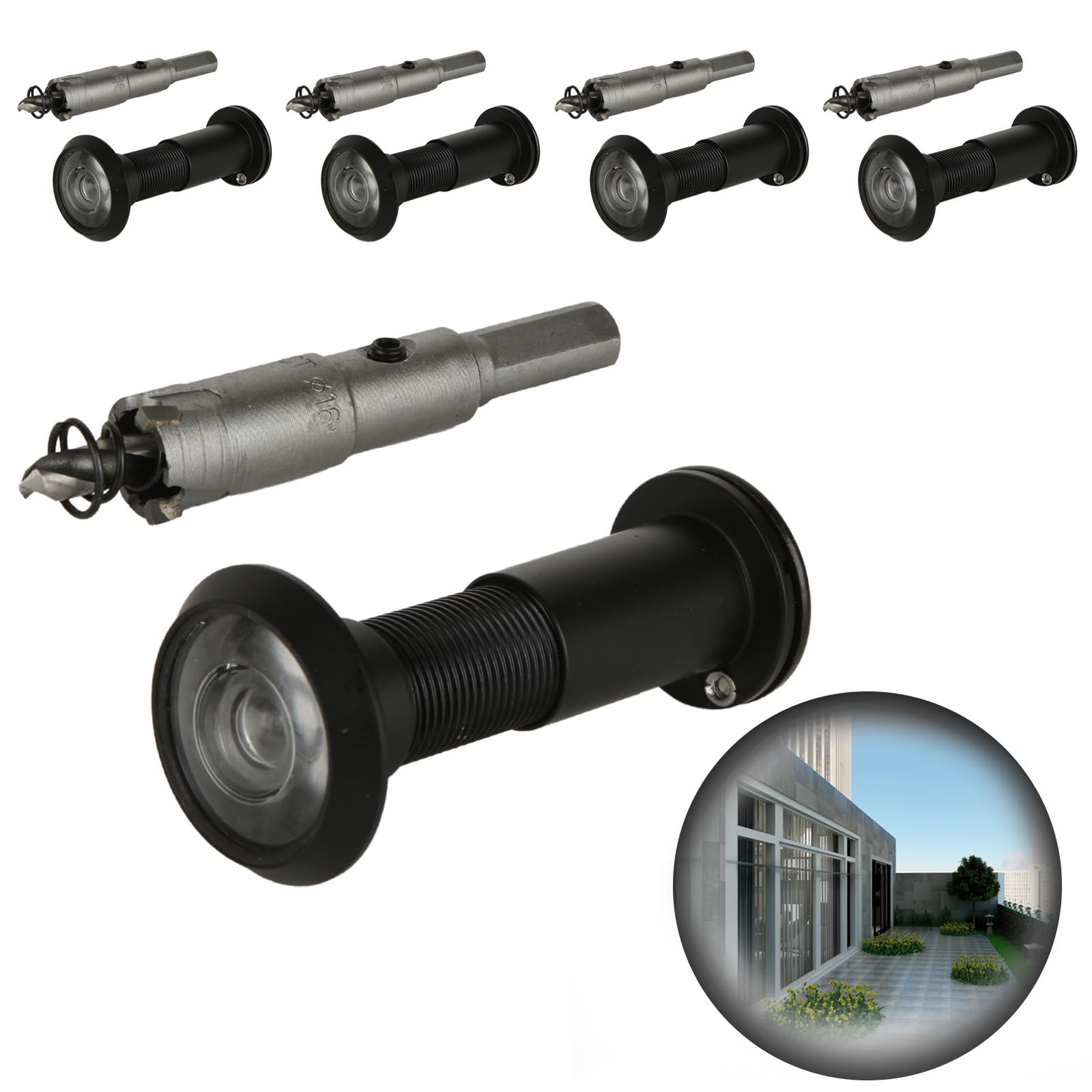
The Oungy 4-pack serves a different use case than the brass models above: instead of chasing maximum optical grade for a single door, it delivers a very respectable 200-degree wide-angle view across four doors at once, making it a strong option for landlords, duplex owners, or anyone with a front, side, and garage entry all on the same property. The viewer body is zinc alloy rather than brass, which keeps the pack’s total cost low, but the finish is a consistent matte black that holds up well against casual cleaning. The included 0.63-inch drill bit is a nice add-on for first-time installations.
Optically, the HD glass lens provides a noticeable upgrade over the tiny, fuzzy circle of a builder-grade peephole. The 200-degree sweep covers the immediate doorstep area without the extreme barrel distortion that sometimes gives objects a warped appearance. The privacy cover is a 360-degree rotating metal disc, not a cheap plastic slider, so it feels secure when you flip it closed. Multiple buyers note that the interior plate is slim enough that a tall child can use it comfortably, which matters for family security routines.
The zinc alloy body is the notable trade-off: it does not feel quite as dense as solid brass when hand-tightening, and over a long period in a high-humidity location it can develop minor thread wear. Also, the included bit is sized for a 5/8-inch hole rather than the 28mm standard used by many higher-end brass viewers, so if you replace one later with a brass unit you will need to re-drill. For anyone outfitting multiple doors on a reasonable budget, this pack solves the coverage problem with minimal compromises in daily image quality.
Why it’s great
- Four units in one box, perfect for multi-entry homes.
- 200° lens is a clear jump from standard peepholes.
- Metal privacy cover instead of flimsy plastic.
Good to know
- Zinc alloy body is not as durable as solid brass.
- Hole size differs from brass viewer standards.
5. MomsUnited 200-Degree 3-Pack Door Viewer Peephole with Drill Bit

The MomsUnited 3-pack is the entry-level solution for someone who needs functional wide-angle peepholes on a tight budget without sacrificing the core benefit of a 200-degree viewing angle. Each unit is made from polished chrome over a zinc alloy base, giving a shiny appearance that works well with bright nickel door hardware. The pack includes a 16mm drill bit and an Allen wrench for tightening, which simplifies the install process for a rental property or a quick weekend project.
Customer feedback highlights that the view is genuinely wide — it shows the hallway floor and doorway edges that a standard peephole hides — and the installation is straightforward if you use a drill guide to keep the hole perpendicular. The privacy cover is a small sliding latch rather than a rotating metal disc, and it works but lacks the premium feel of the brass options above. For the price, the optical clarity is good under hallway lighting, though some users note a slight loss of detail at the extreme edges of the field compared to the 220-degree brass models.
The trade-offs are predictable with a budget multi-pack: the polished chrome finish can show scratches more readily than matte or bronze, and the zinc threads do not tolerate overtightening. This viewer is best suited for secondary doors like a patio entrance or a laundry room, or for renters who want a quick upgrade without a permanent investment in hardware. If you are looking to cover three doors for the lowest possible cost while still getting a real 200-degree improvement over stock, this set fits the bill.
Why it’s great
- Three viewers plus a drill bit at a budget-conscious price.
- 200-degree lens provides genuinely wider coverage.
- Allen wrench included for secure tightening.
Good to know
- Polished chrome tends to show scratches over time.
- Zinc alloy threads are less durable than brass.
FAQ
Can a door viewer be installed in a steel security door?
How do I remove an old peephole without damaging the door?
How do I clean the lenses without scratching them?
Final Thoughts: The Verdict
For most users, the best door viewer winner is the Earl Diamond 220-Degree in Satin Nickel because it pairs the widest usable field of view with a solid brass body and a reliable privacy cover at a price that makes no meaningful compromises. If you want a premium finish to match dark bronze hardware, grab the Earl Diamond in Oil Rubbed Bronze. And for outfitting multiple doors on a practical budget, the Oungy 4-Pack delivers a very solid 200-degree image across entry points at a fraction of the per-unit cost.

Mo Maruf
I created WellFizz to bridge the gap between vague wellness advice and actionable solutions. My mission is simple: to decode the research and give you practical tools you can actually use.
Beyond the data, I am a passionate traveler. I believe that stepping away from the screen to explore new environments is essential for mental clarity and physical vitality.