Our readers keep the lights on and my smoothie glass nicely filled. As an Amazon Associate, I earn from qualifying purchases.
Switching from a mummy bag to a backpacking quilt is the single most effective weight-savings move a thru-hiker can make, shedding nearly a pound of fabric and zipper hardware while keeping the 850-fill down warmth exactly where you need it—on top. The trade-off is draft management and a new attachment system that demands a pad with loops and a snug cinch, because a quilt that slips off at 2 a.m. might as well be a picnic blanket.
I’m Mohammad Maruf — the founder and writer behind WellFizz. I have spent hundreds of hours analyzing fill-power tests, shell fabric denier specs, baffle construction diagrams, and real-world compression ratios to give backpackers a clear signal through the noise of marketing claims.
Whether you are shaving base weight for a summer section hike or building a four-season sleep system, choosing the right down quilt for backpacking comes down to understanding baffle design, pad attachment loops, and how hydrophobic treatment changes down performance in real campsite conditions.
How To Choose The Best Down Quilt For Backpacking
A backpacking quilt is fundamentally a sleeping bag with the back cut off, which means the shell fabric, baffle design, fill power, and pad attachment system determine whether you sleep warm or wrestle drafts all night. Every ounce saved by ditching the bottom fabric must be offset by a pad that stays put and a foot box that seals.
Baffle Design: Box vs. Sewn-Through
Sewn-through baffles stitch the inner and outer shell directly together, creating cold spots at each stitch line. This is lighter and cheaper, but the temperature limit is typically around 40°F. Box baffles create vertical fabric walls between the inner and outer shell, eliminating direct heat loss paths and allowing the down to loft fully. For any quilt you plan to use below 40°F, box baffle construction is non-negotiable.
Fill Power and Hydrophobic Treatment
Fill power—measured in cubic inches per ounce—tells you how much loft a given weight of down produces. 850-fill down is the standard for premium ultralight quilts because it delivers maximum warmth for minimum weight. Hydrophobic treatments like Nikwax and Ultra-Dry add a water-repellent coating to each down cluster, helping the quilt retain loft in high humidity and light condensation. Untreated down collapses when damp and takes hours to dry.
Pad Attachment System
A quilt that slides off your pad at 3 a.m. is not warm. Look for quilts with elastic strap loops that attach around the sleeping pad, ideally with adjustable tension and a silicone grip. Snap systems look clean but often pop loose on inflatable pads. The best systems have a cinch at the foot end that creates a pocket, and a single strap across the chest that holds the quilt edge against the pad surface.
Quick Comparison
On smaller screens, swipe sideways to see the full table.
| Model | Category | Best For | Key Spec | Amazon |
|---|---|---|---|---|
| Therm-a-Rest Hyperion 32F | Ultralight Mummy | Sub-1 lb backpacking | 18 ounces, 900-fill Nikwax down | Amazon |
| Sea to Summit Ember Ultralight | Premium Quilt | Warm-weather quilt purists | 1.3 lbs, 850-fill Ultra-Dry down | Amazon |
| Rab Men’s Ascent | Cold-Weather Mummy | Winter mountaineering | 650-fill, rated to -11°F limit | Amazon |
| WIND HARD Tiny PRO Series | Wearable Quilt | Weight-conscious thru-hikers | 800-fill, 780g total weight | Amazon |
| Kelty Cosmic 20 | Entry-Level Mummy | Budget-conscious cold sleepers | 550-fill, 2 lbs 6 oz total weight | Amazon |
| SENSORY4U Ultralight Top Quilt | Value Quilt | First-time quilt users | 850-fill, 30°F comfort rating | Amazon |
| Kelty Supernova Down | Roomier Mummy | Side sleepers, extra room | 550-fill, 33 in wide | Amazon |
| Naturehike 0 Degree Down Mummy | Value Mummy | Cold weather on a budget | 650-fill, 30°F limit rating | Amazon |
| OMVMO 0-20F Down Bag | Wearable Mummy | Versatility and value | 3.1 lbs, 3D baffle design | Amazon |
In‑Depth Reviews
1. Therm-a-Rest Hyperion 32F Ultralight Down Mummy
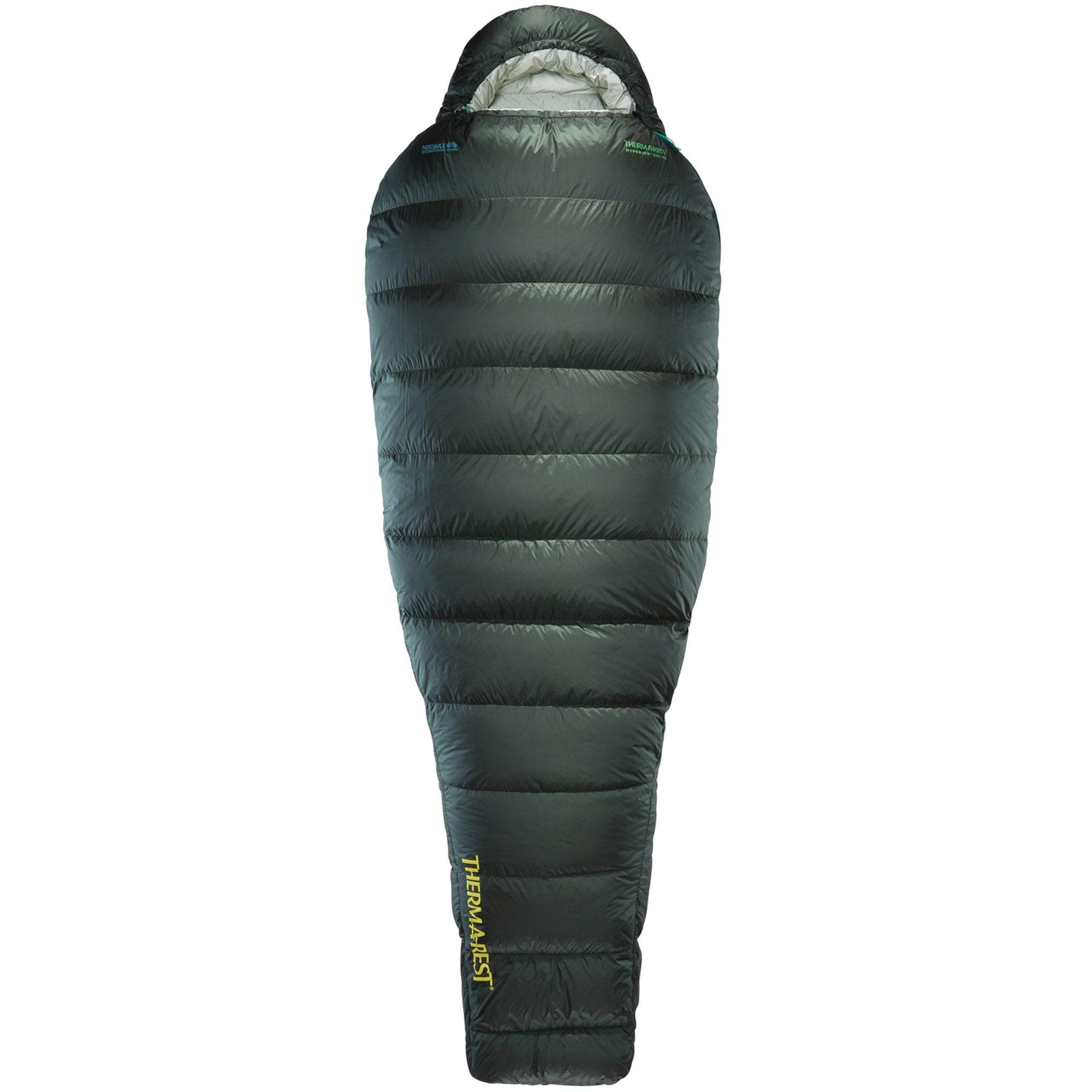
The Hyperion 32F uses 900-fill Nikwax Hydrophobic Down in a box-baffle construction, delivering an 18-ounce total weight that is nearly impossible to beat at this warmth level. The SynergyLink Connectors integrate the bag to a sleeping pad via elastic loops, keeping the mummy profile tight against the pad surface even when you shift onto your side. The ergonomic mummy cut with a longer zipper provides enough articulation for stomach sleepers without adding fabric weight.
In real-world use, the Hyperion is a true three-season bag with a comfort limit around 40°F, testing consistent at 38°F with a merino base layer. The 20-denier nylon ripstop shell is whisper-thin and requires careful handling near sharp tent stakes, but the payoff is a packed size of 5.5 x 6 inches that disappears into any pack. The hydrophobic down treatment causes the bag to loft quickly even after exposure to condensation inside a single-wall tent.
Some users report the material’s slipperiness causes the bag to slide away from the pad on inclined sleep surfaces, occasionally requiring mid-night adjustment. The SynergyLink straps work best with Therm-a-Rest pads that have compatible loops, though aftermarket strap kits can adapt it to other pads. Overall, the Hyperion is the gold standard for any backpacker who prioritizes base weight reduction above all else.
Why it’s great
- 18-ounce total weight is category-leading for a 32°F rating
- Box baffle and 900-fill down eliminate cold spots entirely
- Packs smaller than a 1-liter water bottle
Good to know
- Slippery shell material can shift off pad on sloped ground
- Comfort rating is optimistic below 38°F without extra insulation layers
- Thin 10D-style fabric is vulnerable to tears from tent poles or zipper contact
2. Sea to Summit Ember Ultralight Down Backpacking Quilt

The Ember is a true quilt with a 24-inch width, designed for warm-weather backpacking where every gram matters. The 850-fill Ultra-Dry Down is housed in a box baffle construction with a 10-denier nylon shell and a 7-denier nylon lining, resulting in a total weight of 1.3 pounds and a packed volume of 3.7 liters. The Snap-on attachment straps secure the quilt to a sleeping pad, and the drawcord cinches the base into a foot pocket that seals effectively.
Tested at 28°F by users, the Ember performs best as a 35°F+ quilt when used with a sleeping pad that has proper insulation and side rails. The Ultra-Dry treatment allows the down to retain loft in the 60-80% humidity range typical of summer mornings, a real advantage over untreated quilts that collapse at the first sign of dampness. The press-studs along the side allow two Embers to be zipped together into a double quilt, a feature rare at this weight.
The pad straps are notoriously difficult to adjust while lying inside the quilt, with snap heads that pop loose on thicker pads such as the NeoAir XTherm. The 7-denier lining is incredibly soft but demands delicate handling. Several users report replacing the stock straps with aftermarket elastic cord for better tension. This is a premium quilt for experienced gram-counters who already know their sleep system geometry.
Why it’s great
- 850-fill Ultra-Dry Down provides reliable loft in humid conditions
- Box baffle eliminates cold spots at a 1.3-lb total weight
- Two quilts can be joined for a double sleeping system
Good to know
- Pad attachment snaps are finicky and tend to pop loose on thick pads
- The 7-denier lining is very soft but lacks long-term abrasion resistance
- Snug width limits side-sleeping without draft gaps
3. Rab Men’s Ascent Down Sleeping Bag
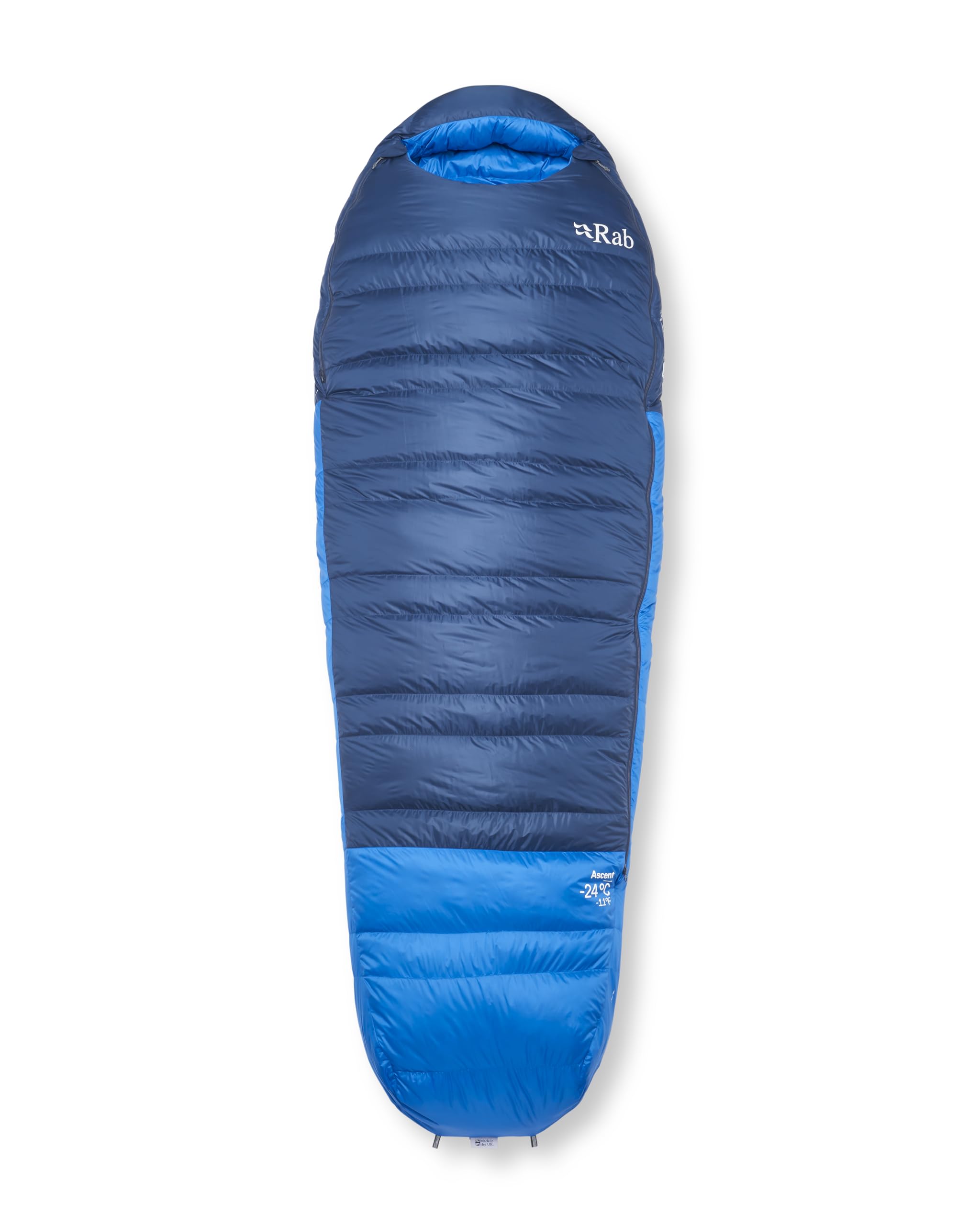
The Rab Ascent is a mummy bag built for winter backpacking and mountaineering, with a 650-fill European Duck Down treated with Grangers hydrophobic finish and a Pertex Quantum shell that blocks wind while remaining breathable. The L.O.F.T baffle design reduces down migration and maintains even distribution, and the anatomic hood with drawcord adjustment creates a sealed cavity that prevents heat loss from the head—critical when tent temps dip below 0°F.
Real-world user reports indicate the bag is comfortable at its 5°F comfort rating with a base layer and a quality sleeping pad, but there is a notable discrepancy in a small number of reviews suggesting the bag runs cold below 20°F. The ¾-length main zipper with a down-filled baffle seals the draft tube effectively. The 20-denier Pertex shell is significantly more durable than ultralight fabrics, handling contact with tent walls and zipper edges without tearing.
At 66.7 ounces for the regular size, this is not a bag for ultralight enthusiasts—it is a three-season-plus-winter bag for mountaineers who prioritize warmth and durability over base weight. The 8-inch packed diameter is manageable in a 50-60 liter pack. Some testers note the mummy cut is restrictive for broad-shouldered users. The left- and right-zippered options can zip together for a double bag, a feature useful for expedition partners.
Why it’s great
- Pertex Quantum shell handles wind and light precipitation without condensation buildup
- L.O.F.T baffle construction prevents down migration for consistent warmth
- Durable 20-denier fabric suitable for winter tent environments
Good to know
- Heavy at 4.2 lbs total, not suitable for sub-10 lb base weight packs
- Mummy cut is restrictive for side sleepers and broad shoulders
- A minority of users report the bag runs cold at its comfort rating
4. WIND HARD Tiny PRO Series 10D Wearable Down Quilt

The Tiny PRO is a wearable down quilt with an integrated hidden zipper that converts the bag into a warm top, eliminating the need for a separate puffy jacket during evening camp routine. The 800-fill high-quality ultra-dry down pro is housed in a 10-denier ultralight nylon shell with anti-drilling technology, keeping the fill inside even under compression cycles. The total system weight is 835 grams including the compression sack and mesh storage bag.
In practice, the Tiny PRO hits its EN Comfort rating of 28°F reliably, and users report comfort to 35-40°F with just a base layer. The sewn-through baffle construction limits performance below 20°F, but for three-season use the warmth-to-weight ratio is exceptional. The wearable functionality works as a shawl that covers the torso while leaving arms free for camp chores—a genuine advantage on cold mornings when every minute in the tent counts.
Some users describe the 10-denier shell fabric as having a distinct crinkle sound similar to a trash bag, which can be distracting in a quiet tent. The snap system for attaching to the pad is proprietary and some users swap it for aftermarket elastic straps. The foot box uses a drawstring cinch rather than a sewn chamber, meaning draft can enter if the cinch is not tight. Overall, this is a strong choice for weight-focused hikers on a three-season trail.
Why it’s great
- Wearable design doubles as camp insulation, saving a puffy from the pack
- 780g bag weight is competitive with quilts costing twice as much
- Hydrophobic down treatment maintains loft in damp coastal conditions
Good to know
- 10-denier shell is noisy and feels fragile against zipper contact
- Snap pad attachment system pops loose and requires aftermarket modification
- Drawstring foot box allows occasional draft entry on cold nights
5. Kelty Cosmic 20 Down Mummy

The Kelty Cosmic 20 is a classic entry-level down mummy bag with 550-fill RDS-certified down, recycled nylon and polyester shell and liner fabrics, and a PFAS-free DWR finish. The ISO limit rating of 21°F means the bag is comfortable for cold sleepers into the mid-20s, and the draft collar and hood with drawcord seal effectively create a snug thermal environment inside a tent. The total weight of 2 pounds 6 ounces for the regular size is reasonable for the price tier.
The 50-denier recycled taffeta shell is noticeably more durable than ultralight fabrics, handling ground contact and zipper edges without developing pin holes. The down is traceable via a QR code on the tag, a transparency feature rarely found at this budget level. The packed size of 13 x 7 inches is manageable in a 50-liter pack, though it is larger than premium quilts. The dual-direction zippers allow venting from the bottom on warmer nights.
Some users with broad shoulders find the mummy cut restrictive at the shoulder girth, and the bag is snug for side sleepers who prefer to pull knees toward their chest. The 550-fill down requires about 20% more volume to achieve the same warmth as 850-fill, making the packed size a compromise on multi-night carries. Overall, the Cosmic 20 is the best down bag for budget-conscious backpackers who want reliable warmth without spending into the premium tier.
Why it’s great
- RDS-certified down with traceable batch numbers for ethical sourcing
- Recycled shell fabrics and PFAS-free DWR for environmentally conscious buyers
- 21°F ISO limit rating is accurate and reliable at its price point
Good to know
- 550-fill down requires larger packed volume vs premium fill quilts
- Mummy cut is tight for broad-shouldered side sleepers
- Draft collar adds weight without matching performance of premium baffles
6. SENSORY4U Ultralight Sleeping Bag Top Quilt

The SENSORY4U top quilt uses 850-fill down in a sewn-through construction with a 30°F comfort rating and a 20°F survival rating, targeting thru-hikers who want premium fill power at an entry-level price point. The quilt includes a foot box, pad attachment straps, and a drawstring closure, providing the core features of a backpacking quilt without the premium baffle design. The 2-pound total weight is competitive given the 850-fill spec.
Real-world users have taken this quilt on 40-plus nights across motorcycle and canoe trips, reporting reliable warmth at 35-38°F with a sleeping pad and a liner. The down is responsive and lofts well after compression, though some early batches showed down migration toward the edges. The included stuff sack is thin and developed holes in the first few pack cycles, requiring a replacement. The sewn-through baffles are clearly visible as stitch lines on the quilt surface, creating distinct cold spots at 2-inch intervals.
Several users note that the quilt is comparable in warmth to models costing double, though the pad straps are basic webbing with no adjustment tensioning. The foot box is a drawstring cinch that requires precise tightening to eliminate drafts. For hikers on a strict budget who plan to use the quilt above 35°F, this is a functional choice. The lack of a hydrophobic treatment means the quilt loses loft quickly in damp conditions, so it is best reserved for dry western trails.
Why it’s great
- 850-fill power at a price that is typically half of premium quilt brands
- Functional foot box and pad straps provide quilt experience at entry price
- Lightweight at 2 lbs with good loft for 35°F+ conditions
Good to know
- Sewn-through baffles create cold spots at each stitch line
- Stuff sack is low quality and develops holes with use
- No hydrophobic down treatment—loft collapses in high humidity
7. Kelty Supernova Down Sleeping Bag

The Kelty Supernova is a semi-rectangular down bag with a 33-inch width, designed for side sleepers and stomach sleepers who feel restricted in standard mummy cuts. The 550-fill gray duck down is RDS-certified, and the recycled nylon and polyester shell and liner fabrics offer a PFAS-free DWR finish. At 2 pounds 1 ounce packed weight for the regular 40°F model, this is not an ultralight option, but the roomy cut provides genuine freedom of movement.
Users consistently report comfort at 30-35°F with a base layer, and the 40°F model has enough loft to handle most summer alpine conditions. The bag can be zipped together with a second Supernova to create a double-wide sleeping bag, a feature appreciated by couples who share a tent. The zipper includes a baffle to reduce draft, but some reviews note the zipper occasionally catches on the baffle material, requiring a slow zip.
At a packed size of 12 x 6 inches, the Supernova is more appropriate for 50-60 liter packs than lightweight frameless setups. The 550-fill down compresses reasonably well but does not match the packed volume of 800+ fill quilts. The roomy cut means more air volume to heat, so cold sleepers may need a thicker pad than with a mummy bag. Overall, this bag is best for hikers who prioritize sleeping position comfort over base weight minimalism.
Why it’s great
- 33-inch width accommodates side sleepers and full-body rolling
- Two bags zip together for a true double-width sleep system
- Recycled materials and PFAS-free DWR for lower environmental impact
Good to know
- Zipper occasionally catches on draft baffle material
- Roomier cut reduces thermal efficiency for cold sleepers
- Packed size is larger than equivalent-warmth mummy bags
8. Naturehike 0 Degree Down Mummy Sleeping Bag
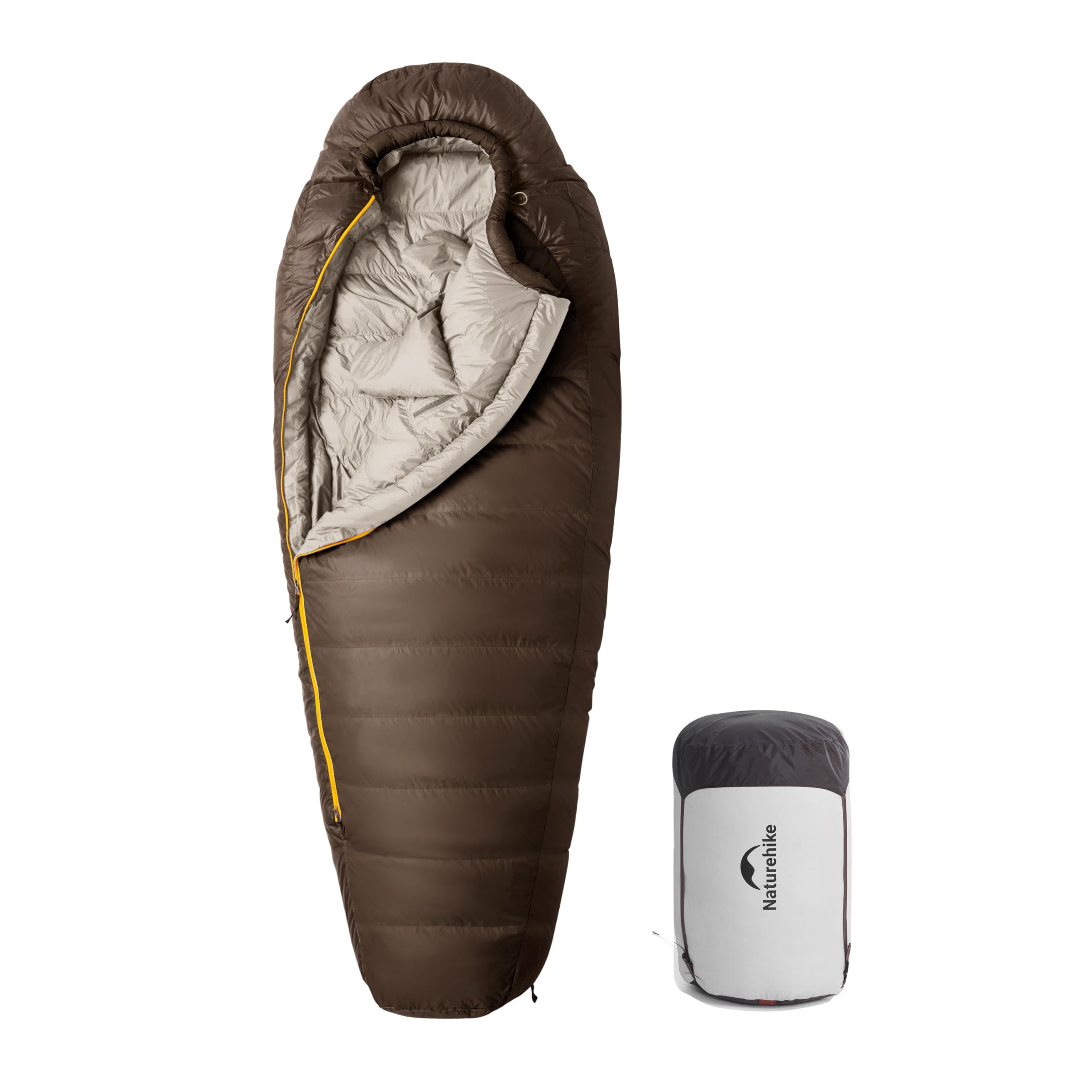
The Naturehike Snowbird series uses 650-fill duck down with RDS and IDS certification, the latter an independent American testing standard that verifies fill power and down content. The SP400 model tested here has a comfort rating of 39°F and a limit rating of 30°F, with a fill weight of 400 grams. The C-Shaped wrapped design uses a 6:4 ratio of top to bottom fabric, directing more down to the upper body where heat loss is highest.
Users report consistent warmth at 25°F with a fleece liner, and the U-neck collar and dual wind baffles at the shoulders effectively seal the bag’s opening. The YKK two-way zipper operates smoothly with anti-snag guards on the inside and outside. The 1.89-pound weight for the SP400 is competitive for a mummy bag at this price, and the packed size of 13.4 x 6.3 inches fits well inside a 50-liter pack.
Some users note that the temperature rating descriptions on the Amazon listing can be misleading, with different model numbers having different fill weights. The SP400 does not include the U-neck collar found on the premium SP1000 model, reducing warmth retention around the neck on cold nights. The mummy cut is standard and may feel snug for side sleepers. Overall, this is a solid mid-range mummy bag for backpackers who want a reliable 30°F bag without premium pricing.
Why it’s great
- RDS and IDS certified down provides verified fill power and ethical sourcing
- C-Shaped design concentrates down on top for better thermal efficiency
- Wind baffles and U-neck collar (on SP1000 model) seal effectively against drafts
Good to know
- SP400 model lacks the U-neck collar found on higher fill weight models
- Listing descriptions can be confusing regarding fill weights and temperature ratings
- Snug mummy cut is not suitable for sleepers who prefer wider bags
9. OMVMO 0-20F Down Sleeping Bag

The OMVMO sleeping bag uses a 3D stereoscopic cutting approach with over 80 individual rectangular 3D insulation lofts, each filled with natural white goose down fiber. The 20-denier 400T nylon shell has a DWR coating and anti-drill design to prevent down migration. The bag includes YKK zippers with anti-snag sliders, draft tubes at the shoulder and zipper, and a half-circle detachable drawstring hood that creates a sealed thermal cavity.
In real-world testing, users report the bag is comfortable at 25-30°F with a fleece liner, and the 3.1-pound weight is reasonable for a 0-20°F rated bag at this budget tier. The wearable functionality allows the bag to be worn as a cloak with shoulder buttons, a feature useful for camp chores on cold mornings. The included buckle straps attach the bag to a sleeping pad, though the connection is less secure than dedicated quilt systems.
Some users state the bag runs cold compared to its 0°F rating, performing closer to 20°F as a realistic comfort limit. The 3D lofts are effective at distributing down but the sheer number of baffles adds weight that does not directly translate to warmth. The rectangle shape is roomy but creates more air volume to heat than a mummy cut. Overall, this bag is best for car campers and base camp users who want a versatile down sleeping bag at entry-level pricing, rather than dedicated backpackers.
Why it’s great
- 3D stereoscopic baffle design with over 80 individual lofts minimizes cold spots
- Wearable cloak functionality provides camp insulation without extra weight
- Includes YKK zippers, draft tubes, and pad attachment straps for versatility
Good to know
- Temperature rating is optimistic—real comfort limit is closer to 20°F
- 3.1 lb weight is heavy for backpacking compared to dedicated quilts
- Rectangle shape reduces thermal efficiency for cold-weather camping
FAQ
Why would I choose a down quilt over a mummy sleeping bag for backpacking?
What is the minimum temperature rating I need for a three-season backpacking quilt?
How important is hydrophobic down treatment in a backpacking quilt?
Final Thoughts: The Verdict
For most backpackers, the down quilt for backpacking winner is the Therm-a-Rest Hyperion 32F because it combines a 900-fill Nikwax down, box baffle construction, and an 18-ounce total weight that is unmatched for three-season use. If you want a true quilt with an 850-fill and the ability to join two into a double bag, grab the Sea to Summit Ember Ultralight. And for budget-conscious hikers who need 850-fill power without the premium price tag, the SENSORY4U Ultralight Top Quilt delivers surprising warmth-to-dollar value for dry-trail conditions above 35°F.

Mo Maruf
I created WellFizz to bridge the gap between vague wellness advice and actionable solutions. My mission is simple: to decode the research and give you practical tools you can actually use.
Beyond the data, I am a passionate traveler. I believe that stepping away from the screen to explore new environments is essential for mental clarity and physical vitality.