Our readers keep the lights on and my smoothie glass nicely filled. As an Amazon Associate, I earn from qualifying purchases.
That shaky, unfocused video from your last outing—the one where your subject kept drifting out of frame—is exactly the problem a proper gimbal solves. A good stabilizer turns a phone into a reliable camera rig, eliminating the jitter and providing smooth, cinematic motion whether you are walking through a market or filming a fast-moving pet. But with specifications ranging from 3-axis stabilization algorithms to AI tracking distance and battery runtime, choosing the right unit requires understanding the trade-offs between motor torque, payload capacity, and software features.
I’m Mohammad Maruf — the founder and writer behind WellFizz. I’ve spent countless hours analyzing the mechanical engineering, anti-shake algorithms, and real-world user feedback behind today’s phone stabilizers to find which models actually deliver on their promises of smooth footage and reliable subject tracking.
This guide breaks down payload limits, battery life, tracking technology, and build quality so you can confidently pick the best cell phone gimbal for your specific shooting style and budget.
How To Choose The Best Cell Phone Gimbal
Phone gimbals are deceptively simple: three motors, a handle, and a battery. But mechanical design, software integration, and motor algorithm quality separate a pro-level rig from a frustrating toy. Focus on these four criteria to find the right match for your phone and shooting habits.
Payload Capacity and Motor Torque
Payload capacity is the maximum weight the gimbal motors can stabilize. A heavier phone, especially with a bulky case or add-on lens, demands higher motor torque. Exceeding the stated limit causes motors to overheat, struggle, or fail to hold the phone level. Mid-range gimbals support around 300 grams to 330 grams, while premium models handle up to 2 kilograms, allowing you to mount phones with heavy accessories or even compact mirrorless cameras.
Tracking Technology: App-Based vs. Built-In AI
Gimbals use either software-based tracking via a companion app or a dedicated hardware AI module. App tracking relies entirely on the phone’s camera and processing, which means it only works within the app, blocks native camera features, and introduces latency. Built-in AI tracking modules operate independently of the phone’s software, supporting gesture control and subject tracking without app dependency. For live streaming or using native camera apps, a built-in AI tracker is far more versatile.
Battery Life and Charging Features
Battery runtime ranges from about 10 hours to 14 hours on a full charge. Consider how long you typically shoot in a single session. A gimbal that can charge your phone while operating extends shooting time significantly, especially for live streaming or all-day events. Check whether the gimbal supports pass-through charging so you can use an external power bank without interrupting playback.
Form Factor and Portability
Gimbals fold down to different sizes. A highly compact unit fits easily in a jacket pocket or small bag, while a larger model may offer a longer extension rod or a more ergonomic grip. Built-in tripods, extension rods, and detachable remotes add versatility but increase the folded footprint. Prioritize a compact foldable design if you travel or shoot on the go, and choose a model with an integrated tripod if you frequently film hands-free.
Quick Comparison
On smaller screens, swipe sideways to see the full table.
| Model | Category | Best For | Key Spec | Amazon |
|---|---|---|---|---|
| Insta360 Flow 2 Pro Creator | Premium | All-day pro content creation | 10h battery, 360º pan, 300g payload | Amazon |
| DJI Osmo Mobile 8 Bundle | Premium | Apple DockKit native tracking | 10h battery, 360° pan, built-in tripod | Amazon |
| FeiyuTech SCORP Mini 3 | Premium | Heavy payload & pro features | 14h battery, 2KG payload, touchscreen | Amazon |
| hohem iSteady V3 | Mid-Range | AI tracking without app | 13h battery, magnetic AI tracker, 300g payload | Amazon |
| DJI Osmo Mobile 6 | Mid-Range | Best all-around beginner gimbal | 6h battery, ActiveTrack 6.0, 305g weight | Amazon |
| hohem iSteady X3 SE Plus | Mid-Range | Detachable remote control | 11h battery, 3-axis, 0.66 lbs payload | Amazon |
| Acer Gadget Auto Face Tracking Tripod | Budget | Hands-free tracking without app | 64″ height, 360° rotation, 0.8 KG weight | Amazon |
In‑Depth Reviews
1. Insta360 Flow 2 Pro Creator Bundle

This is the first foldable gimbal to integrate Apple DockKit, giving you native tracking in over 200 iOS apps without relying on a single proprietary app. The 360-degree infinite pan tracking means you can spin around freely and the gimbal keeps you centered, a huge advantage for dynamic solo shooting. Active Zoom Tracking locks onto fast-moving subjects even at 15x zoom, which is a unique capability for this category.
The Creator Bundle includes a magnetic phone mount, a clip-on spotlight, and a protective pouch, making it a complete kit straight out of the box. The built-in tripod and selfie stick eliminate the need for extra gear, and the battery lasts a full 10 hours. Free Tilt Mode gives you a wider vertical range of motion, ideal for capturing smooth continuous shots of moving subjects like athletes or performers.
Setup takes seconds: mount the phone via the magnetic clamp, unfold, and start filming. The magnetic mount is secure even with a case, and the included spotlight adds usable fill light for low-light scenarios. The learning curve is real, especially with the app’s many features, but the results—silky smooth footage with reliable subject tracking—justify the time investment.
Why it’s great
- Apple DockKit supports 200+ iOS apps natively
- 360° infinite pan tracking keeps you centered
- 10-hour battery with phone charging capability
Good to know
- Steep learning curve for full feature set
- Battery drains faster when charging phone simultaneously
- Premium investment relative to mid-range options
2. DJI Osmo Mobile 8 Bundle
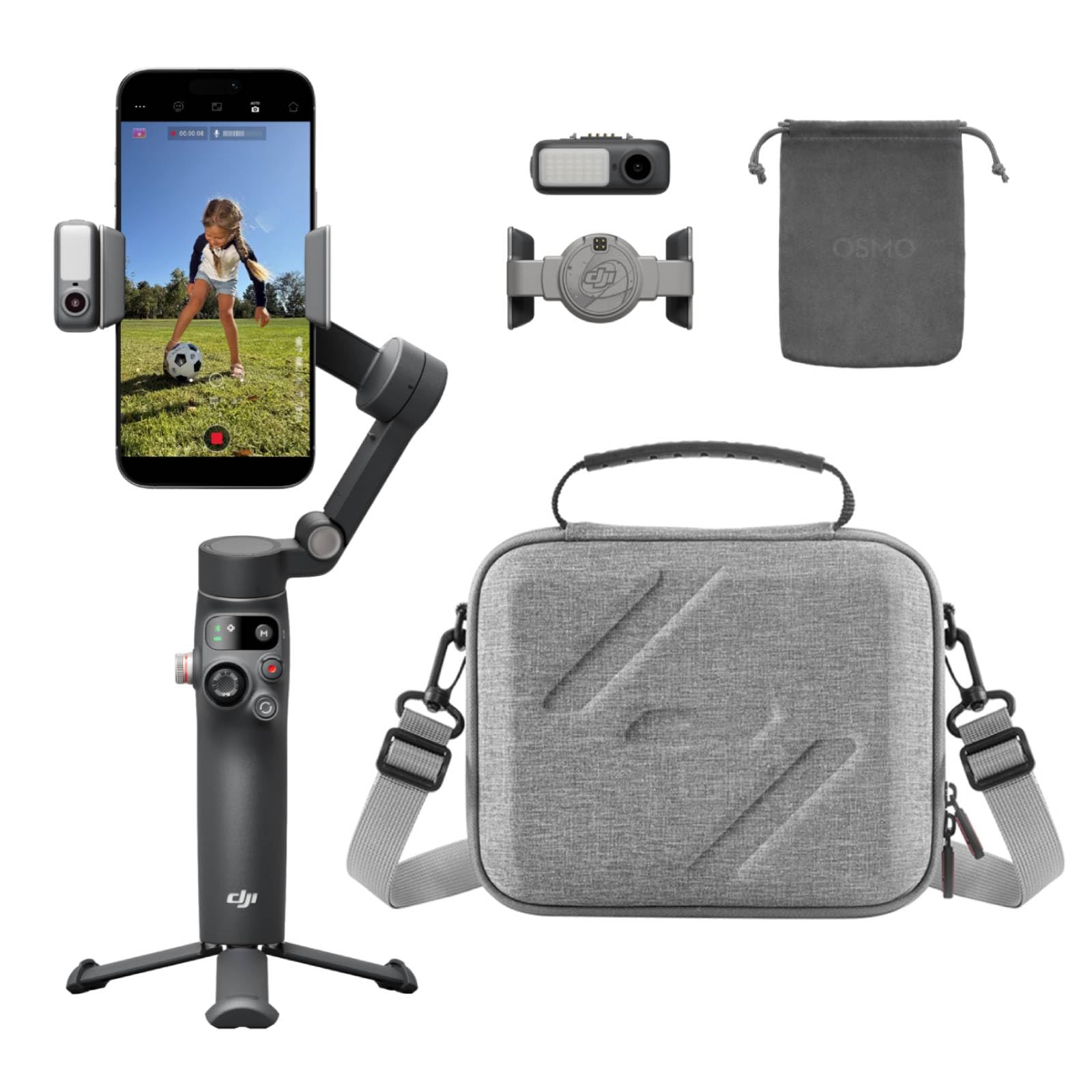
DJI’s latest iteration brings native tracking with Apple DockKit, allowing you to use the gimbal with any compatible iOS camera app for seamless subject locking. The 360-degree horizontal pan rotation is smooth and quiet, and the built-in extension rod and tripod mean you don’t need separate accessories for low-angle or hands-free shots. It also supports audio reception and lighting accessories, making it a complete mobile filmmaking platform.
The 10-hour battery handles a full day of shooting, and the unit can charge your phone while you film—critical for live streaming or long events. The bundle includes a high-quality nylon carrying case with a pressure-resistant shell and shock-absorbing lining, which protects the gimbal and accessories during transport. The ergonomic grip has a non-slip texture that feels secure even in warm conditions.
Setup is straightforward: unfold, attach your phone, and pair via the DJI Mimo app. ActiveTrack 6.0 locks onto subjects with impressive accuracy, and ShotGuides helps beginners frame their scenes. The main drawbacks are the dependency on the DJI app for advanced features and the lack of a full 360-degree rotation in all modes, but for reliability and build quality, DJI remains a top contender.
Why it’s great
- Native Apple DockKit tracking for iOS apps
- Included nylon carrying case protects gear
- 10-hour battery with phone charging pass-through
Good to know
- Advanced features require DJI Mimo app
- Some users report off-balance alerts with larger phones
3. FeiyuTech SCORP Mini 3
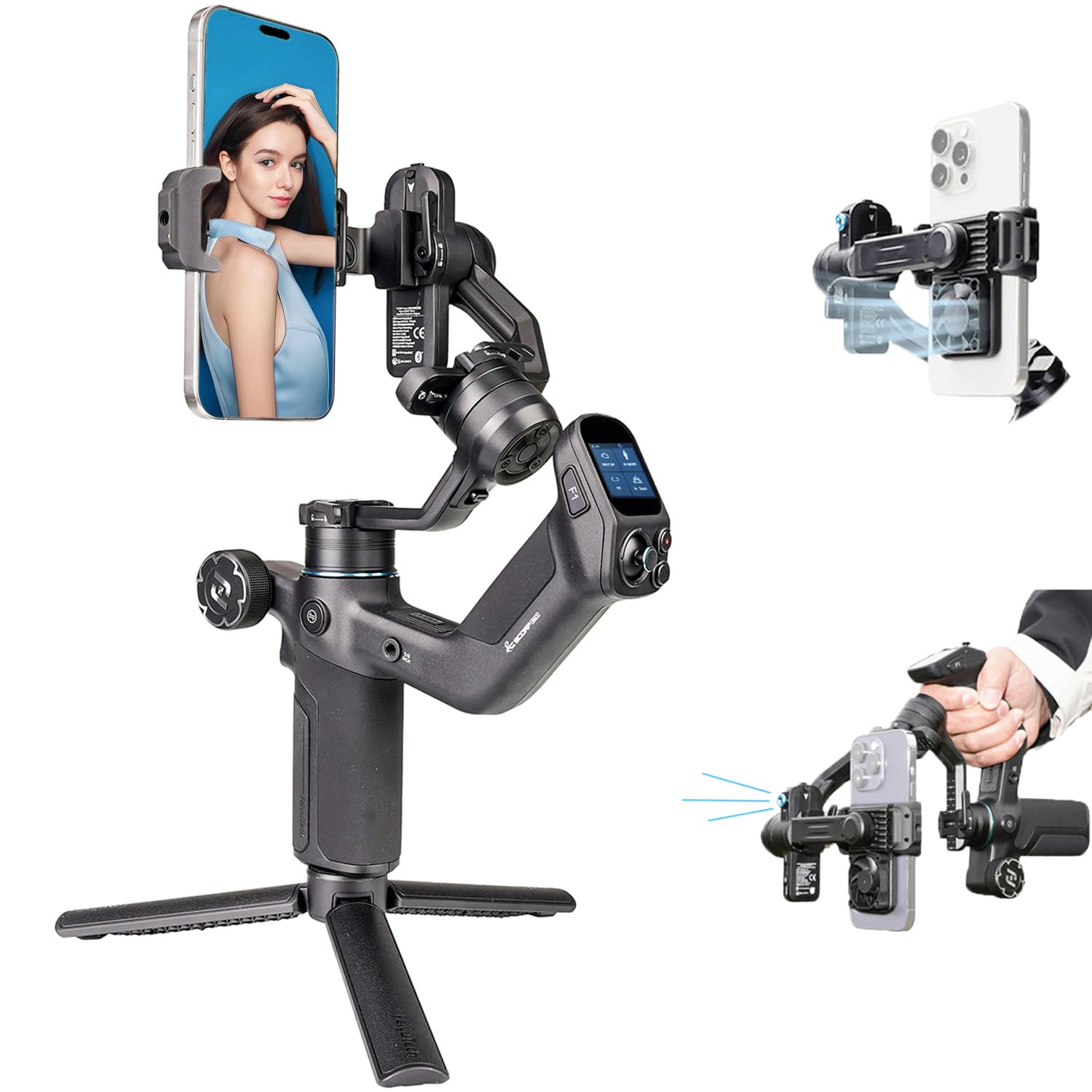
FeiyuTech’s SCORP Mini 3 sets a different standard with a 2-kilogram payload capacity, meaning it can handle a smartphone with a heavy cage, external microphone, and lens attachments without struggling. The built-in AI tracking module uses a dedicated sensor for subject recognition, achieving a response time of 0.003 seconds and a tracking distance of up to 18 meters. This makes it one of the fastest-reacting gimbals in this roundup.
The 1.3-inch high-definition touchscreen gives you direct access to mode switching, parameter adjustment, and function control without needing to pull out your phone. The 10th-generation stabilization algorithm combined with the 2025 Quaternion algorithm ensures shake-free footage even during active motion. The integrated cooling fan prevents overheating during extended 4K recording sessions, a feature absent from most consumer gimbals.
The ergonomic integrated grip design keeps the phone closer to the handle, reducing fatigue during long shoots. The 14-hour battery life is class-leading, and the multifunctional magic wheel allows precise control over zoom and all three axis rotations. Balancing a phone takes some practice due to the heavy-duty motor design, but once locked, the stability is exceptional. A premium tool for serious creators who want to push beyond simple phone stabilization.
Why it’s great
- 2KG payload supports phones with pro accessories
- 0.003-second AI tracking response time
- 14-hour battery with built-in cooling fan
Good to know
- Heavier and bulkier than consumer-focused gimbals
- Balancing process is more involved than entry-level units
4. hohem iSteady V3

The iSteady V3 stands out in the mid-range segment for its magnetic AI tracker module, which operates independently from the phone’s software. You can activate subject tracking with a gesture, and the tracker follows your face or body without needing an app. This is a huge time-saver for solo vloggers and content creators who want hands-free operation without extra steps. The magnetic attachment also includes a fill light with cold, warm, and natural color modes, adjustable from 4% to 100% brightness via a side wheel.
Hohem’s iSteady 8.0 anti-shake system handles walking and moderate motion well, delivering smooth footage that rivals more expensive models. The detachable remote controller clips onto the handle for quick access and can be removed for group photos or selfies up to 32 feet away. The 13-hour battery covers a full day of shooting, and the extended roll arm keeps the motor out of the wide-angle frame, a thoughtful design detail.
The folded size is compact enough for a daypack, and the built-in 8-inch extension rod enables low-angle pet shots or group selfies. The main compromises are the phone grip’s thickness tolerance (bulky cases may not fit) and the lack of a mini tripod in the box. For users who want AI tracking without app dependency, this is one of the best values available.
Why it’s great
- Magnetic AI tracker works without any app
- Detachable remote controller for hands-free shooting
- Adjustable fill light with 3 color modes
Good to know
- Phone grip may not fit thick or oversized cases
- No mini tripod included; magnetic light can detach easily
5. DJI Osmo Mobile 6
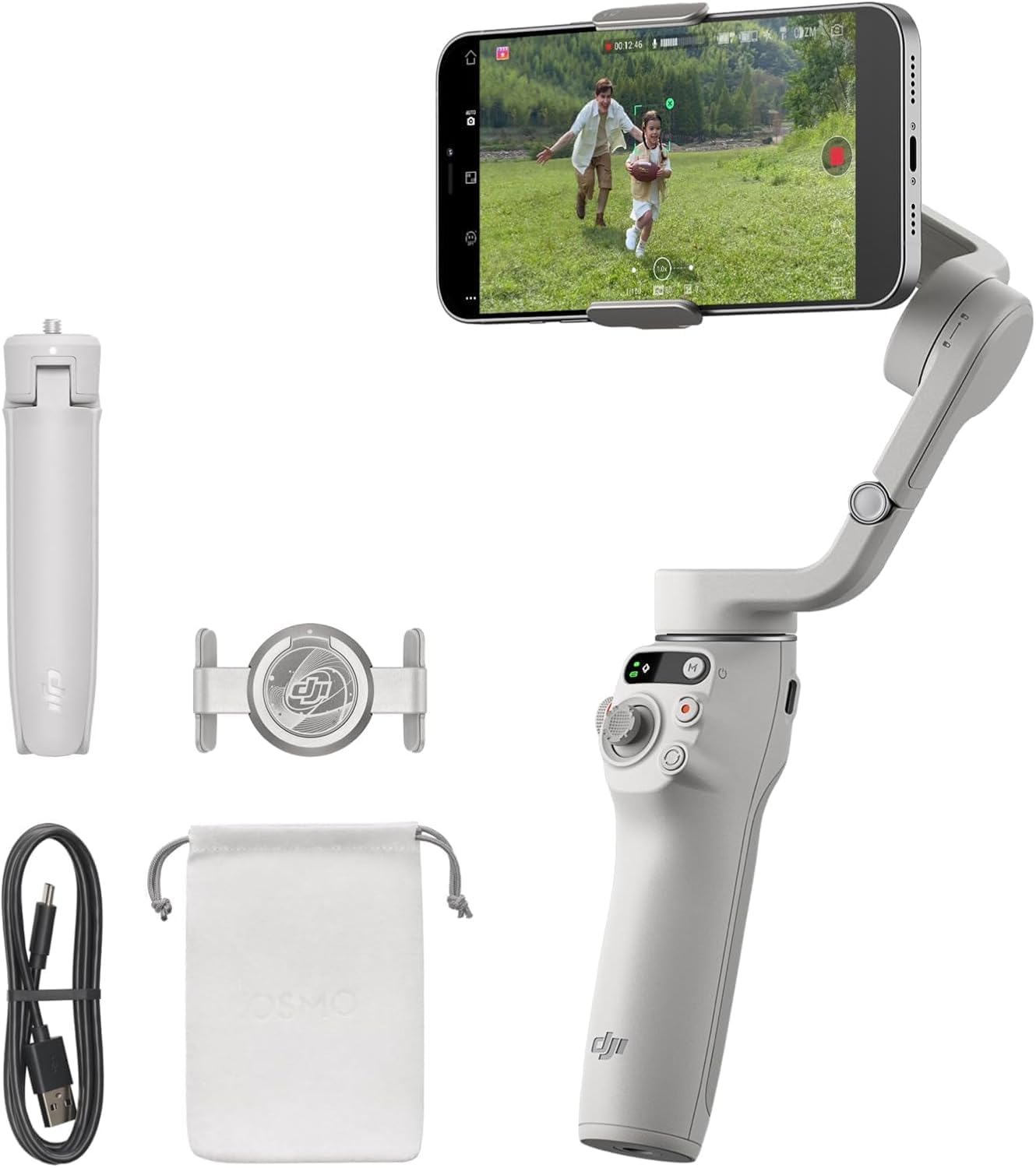
DJI’s Osmo Mobile 6 remains a benchmark for mid-range gimbals because of its polished user experience. The unit unfolds and powers on automatically, and the magnetic phone clamp snaps into place in seconds. ActiveTrack 6.0 is the most refined app-based tracking system here, reliably locking onto kids and pets even when they move quickly. ShotGuides analyzes your scene and suggests a sequence of shots, making it ideal for absolute beginners who want to produce cinematic results without trial and error.
The side wheel gives you manual control over focus and zoom, enabling cinematic effects like rack focus or a Hitchcock zoom. The built-in extension rod extends for selfies or low-angle shots, and the included mini tripod provides stable hands-free recording. At 305 grams, it is light enough to carry all day without fatigue, and the compact folded size fits easily in a small bag.
Battery life is rated around 6 hours, which is lower than newer models but still sufficient for a day of casual shooting. The gimbal can be charged via USB-C, and you can use an external power bank to extend runtime. The main limitation is that advanced tracking features require the DJI Mimo app, which may not integrate with your native camera or third-party apps. For a beginner-friendly gimbal with proven reliability, this remains a top pick.
Why it’s great
- Automatic unfold and power-on saves setup time
- ActiveTrack 6.0 tracks subjects reliably
- Lightweight 305g design for easy portability
Good to know
- Advanced features locked to DJI Mimo app
- 6-hour battery is lower than some competitors
6. hohem iSteady X3 SE Plus

The iSteady X3 SE Plus distinguishes itself with an innovative detachable remote controller that pairs automatically via Bluetooth and works up to 32 feet away. This is extremely useful for solo creators who need to start and stop recording without touching the gimbal. The iSteady 8.0 anti-shake system delivers stable footage during walking and moderate action, and the 3-axis stabilization keeps the horizon level even during panning.
The built-in 8-inch extension rod adds versatility for low-angle pet shots and group selfies, and the foldable design packs down to a compact size that fits in most bags. The 11-hour battery life is excellent for this price point, and the unit fully charges in about two hours. The payload capacity of 0.66 pounds handles most flagship smartphones, though thicker cases may cause the clamp to struggle.
The Hohem Joy app provides AI tracking and gesture control, but these features are app-dependent, which may be a dealbreaker for users who want native camera support. Some users note the tripod base feels flimsy, and the overall weight with a phone plus extension rod extended can cause fatigue during prolonged handheld use. For the price, the detachable remote and long battery life make it a strong mid-range contender.
Why it’s great
- Detachable remote control works up to 32 feet away
- 11-hour battery with fast 2-hour charge time
- Folds compact for easy portability
Good to know
- AI tracking and zoom require Hohem Joy app
- Weight with phone extended can cause arm fatigue
7. Acer Gadget Auto Face Tracking Tripod
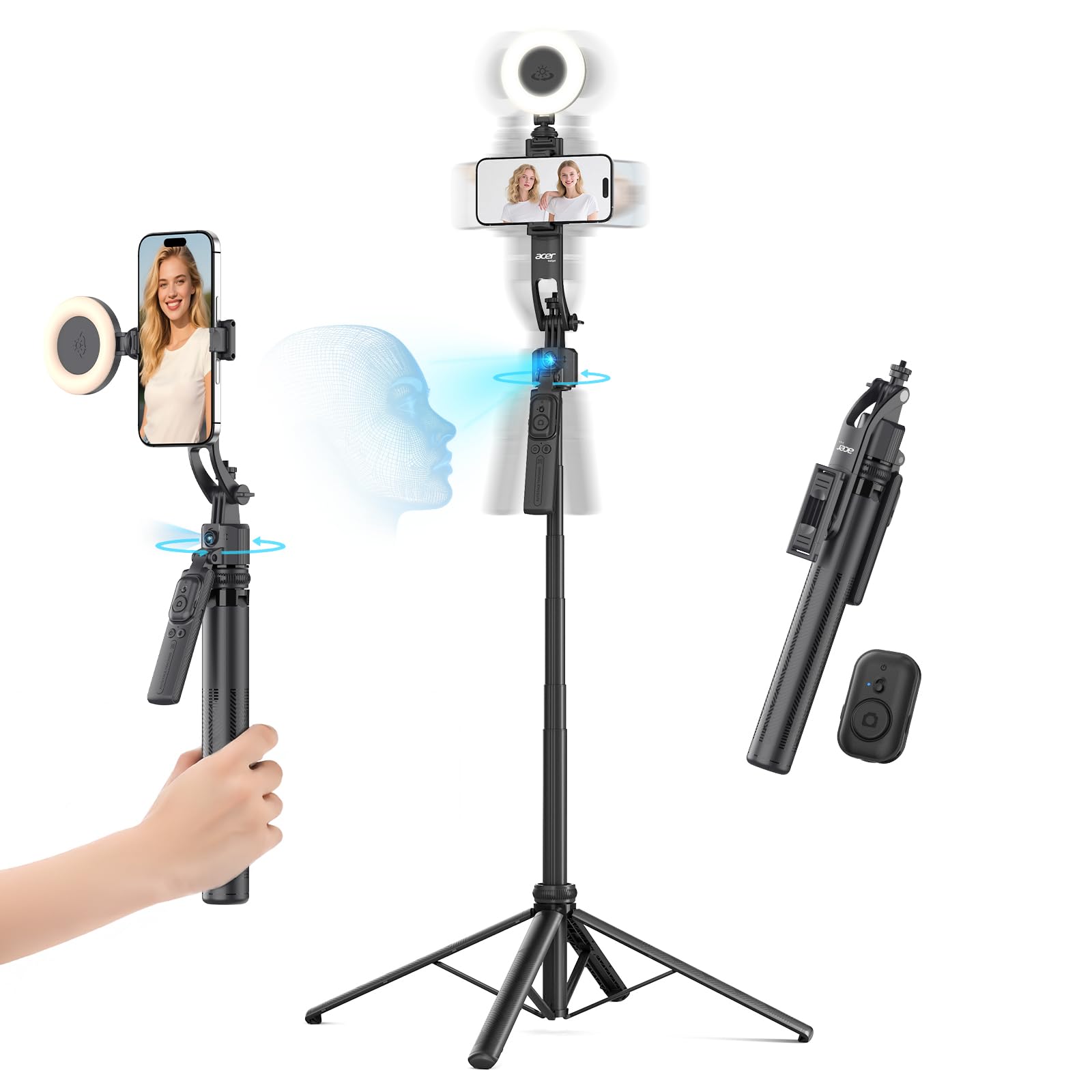
Acer’s offering blurs the line between a tripod and a gimbal with its 360-degree AI face tracking that requires no app. The unit uses a built-in sensor to follow your face or body, keeping you centered in the frame for live streaming, TikToks, and video calls. The 64-inch maximum height and quadpod base provide excellent stability when fully extended, reducing the risk of tipping over during use.
The detachable remote and gesture controls (OK sign to start, open palm to pause) offer genuine hands-free operation, and the included ring light with three color modes improves video quality in low light. The aluminum alloy construction feels sturdy, and the folded length of 13 inches makes it relatively portable. The gimbal stabilizer eliminates minor shakes, though its tracking and stabilization are less refined than dedicated 3-axis gimbals.
The main caveats are that the AI tracking function can introduce some noise and shakiness in the video, and the ring light lacks tilt support, limiting lighting angles. It also does not include a carry bag. For users who need a simple, no-app, automatic tracking solution for stationary filming—such as cooking demos or classroom recordings—this is a functional and affordable choice.
Why it’s great
- Face tracking works without any app installation
- 64-inch height and quadpod base for stability
- Includes ring light with 3 color modes
Good to know
- AI tracking can cause noise and shakiness in video
- Ring light lacks tilt adjustment
- No carry bag included
FAQ
Can I use any phone case with a gimbal?
Do I need a gimbal if my phone already has optical image stabilization?
How do I balance my phone on a gimbal correctly?
Final Thoughts: The Verdict
For most users, the best cell phone gimbal winner is the Insta360 Flow 2 Pro Creator Bundle because it offers native Apple DockKit tracking, 360-degree pan rotation, and a complete accessory kit in one portable package. If you want a higher payload capacity for mounting accessory-heavy phones, grab the FeiyuTech SCORP Mini 3. And for a proven, beginner-friendly option with fantastic software support, the DJI Osmo Mobile 6 delivers reliable performance without overwhelming complexity.

Mo Maruf
I created WellFizz to bridge the gap between vague wellness advice and actionable solutions. My mission is simple: to decode the research and give you practical tools you can actually use.
Beyond the data, I am a passionate traveler. I believe that stepping away from the screen to explore new environments is essential for mental clarity and physical vitality.