Our readers keep the lights on and my smoothie glass nicely filled. As an Amazon Associate, I earn from qualifying purchases.
Every sudden brake turns your 60-pound Labrador into a projectile. A dog car seat belt is the single most effective piece of gear to turn that kinetic hazard into a safe, calm ride for everyone in the cabin — driver included.
I’m Mohammad Maruf — the founder and writer behind WellFizz. I’ve spent countless hours researching pet restraint hardware, analyzing materials from nylon webbing to alloy steel carabiners, and sifting through real owner feedback to find which tethers actually hold up in daily use.
A proper best dog car seat belt combines a shock-absorbing bungee, a secure attachment method, and hardware that won’t fail on the first hard pull. This guide breaks down five options built for different vehicle types and dog temperaments.
How To Choose The Best Dog Car Seat Belt
A dog seat belt is not a one-size-fits-all accessory. The right choice depends on your vehicle’s anchor points, your dog’s size and behavior, and whether you prefer a standalone tether or an integrated harness system. Three factors deserve your attention before you buy.
Attachment Style: Latch Bar vs. Seatbelt Receptacle
Most cars have two viable anchor locations: the LATCH bar (metal loop between the seat back and cushion) and the standard seatbelt buckle. Some tethers come with only a buckle plug, which works in the rear seat but may not fit every vehicle. Others include a carabiner for the LATCH bar or headrest rod, offering more flexibility. If you move your dog between vehicles, a dual-attachment tether saves the hassle of buying separate belts for each car.
Hardware Quality and Swivel Design
The clips and clasps are the weakest link in any dog seat belt. Look for zinc-alloy or steel components rather than chrome-plated plastic. A 360-degree swivel prevents the tether from twisting into a tight knot, which can shorten the effective length and choke your dog’s movement. The carabiner gate should have a locking mechanism or a threaded collar — cheap snap-gates can open under side pressure during a turn.
Shock Absorption and Strap Length
A static nylon strap transmits every hard brake directly to your dog’s harness and neck. A built-in elastic bungee section absorbs that force gradually, reducing the risk of whiplash or muscle strain. The ideal static length is 20 to 26 inches, giving enough slack for your dog to lie down or sit upright without reaching the front seat. Adjustable straps let you dial in the exact range for your car’s interior size.
Quick Comparison
On smaller screens, swipe sideways to see the full table.
| Model | Category | Best For | Key Spec | Amazon |
|---|---|---|---|---|
| SlowTon Dog Seat Belt Harness | 2-in-1 Harness | All-in-one restraint + tether | Double lock carabiner & buckle | Amazon |
| Plutus Pet Headrest Belt | Headrest Tether | Cars without rear LATCH bars | Length adjustable 20-34 inches | Amazon |
| ARCA PET Seat Belt | Heavy-Duty Tether | Large breeds that pull hard | Alloy steel carabiner | Amazon |
| Plutus Pet Carabiner Belt | Budget Tether | Dual-vehicle households | Nylon strap, 25-32 inch range | Amazon |
| Tivray 2-Pack Belt | Multi-Pack Tether | Multiple dogs or vehicles | 2 belts with 360° swivel buckle | Amazon |
In‑Depth Reviews
1. SlowTon Dog Seat Belt Harness

The SlowTon combines a breathable mesh vest harness with a detachable seatbelt tether, making it the most complete restraint system in this lineup. The harness uses double-layer mesh fabric with flannelette-padded edges, which reduces chafing on long drives and keeps the dog cooler than solid nylon vests. Four adjustment points on the chest and belly let you fine-tune the fit for breeds from a 15-pound pug to a 70-pound retriever.
The tether side uses a lockable carabiner that hooks onto the LATCH bar or headrest rod, plus a standard seatbelt buckle plug for the rear seat receptacle. This dual-clip design means you won’t be stuck if your car’s buckle geometry doesn’t accept a universal plug. The built-in elastic bungee measures roughly 8 inches of stretch, effectively softening the jolt from a sudden stop without letting the dog reach the front headrests.
The vest is easier to put on than step-in designs — two quick-release buckles on the chest pop open, so you clip it around the dog’s torso rather than wrestling legs through loops. Over 18,000 ratings confirm the build quality, though some owners note the mesh runs warm on 90-degree days and sizing can be tricky if the dog falls between chest measurements.
Why it’s great
- Integrated harness eliminates the need for a separate chest strap
- Double-clip tether works with LATCH bar and seatbelt receptacle
- Four-point adjustment provides a custom fit across size ranges
Good to know
- Dual-layer mesh can trap heat in hot climates
- Measure chest girth carefully — the size chart is critical for proper fit
2. Plutus Pet Dog Seat Belt (Headrest Version)

This Plutus Pet model attaches to the vehicle’s headrest rod rather than the LATCH bar or seatbelt buckle, making it a smart option for older cars or front-seat riding where the seatbelt receptacle is awkwardly positioned. The strap wraps around the headrest post and secures with a metal adjustable buckle — no plastic slip-ring that could fail under load. The tether adjusts from 20 to 30 inches, plus the internal bungee stretches to 34 inches at full extension.
The zinc-alloy clasp rotates a full 360 degrees, which prevents the webbing from twisting into a tight spiral when your dog shifts positions. The reflective stitching runs the length of the strap, giving you visibility during evening walks when you use the headrest loop as a handle. Several owners report using this belt in Jeeps and convertibles where standard seatbelt geometry doesn’t allow a plug-style tether.
Build quality is consistent with the brand’s other products — nylon webbing resists fraying, and the metal buckles show no rust after months of use. The headrest loop is large enough to fit thick posts, but remove the headrest sleeve first if your car seat has a permanently attached cover that blocks access to the rod.
Why it’s great
- Works in vehicles without rear LATCH bars or awkward buckle placement
- 360° swivel prevents tangle from constant movement
- Reflective stitching doubles as a visibility aid for night walks
Good to know
- Headrest must be removable or have exposed posts for installation
- Metal buckle can be stiff to unclip one-handed in a hurry
3. ARCA PET Dog Seat Belt

The ARCA PET seat belt takes its design cues from rock climbing equipment, and the hardware reflects that philosophy. The carabiner is made of alloy steel — significantly thicker than the zinc-alloy clasps on most competitors — and the seatbelt-side buckle uses a metal hook latch in addition to the standard plug. That dual-buckle system lets you clip directly into the baby-seat anchor (LATCH bar) in most SUVs and sedans, bypassing the seatbelt receptacle entirely.
The reflective rope-style webbing is heavier than flat nylon straps, which reduces the chance of chewing damage for dogs that tend to mouth their gear. The static length sits at roughly 22 inches, and the carabiner rotates on a swivel to keep the rope aligned with the dog’s direction of pull. Owners of 80-plus-pound breeds specifically praise the gate strength — the carabiner doesn’t flex or pop open when a large dog lunges after a squirrel outside the window.
One trade-off is the carabiner’s locking mechanism. The threaded collar can loosen under vibration, requiring occasional retightening. The seatbelt clip’s release button lacks a protective cover, so a determined dog could theoretically step on it and release the belt. For most uses, the robust hardware outweighs these minor complaints.
Why it’s great
- Thick alloy steel carabiner handles high-impact pulls from large dogs
- Dual-buckle system works with LATCH anchor and standard receptacle
- Chew-resistant rope webbing outlasts flat nylon straps
Good to know
- Threaded carabiner collar may loosen on rough roads
- Seatbelt release button has no accidental-deployment guard
4. Plutus Pet Dog Seat Belt (Carabiner Clip)

The standard Plutus Pet tether uses a straightforward design — a nylon strap with a sturdy carabiner on the harness end and a universal seatbelt buckle on the vehicle end. The adjustable slider lets you set the length anywhere between 25 and 32 inches, and the internal bungee cord absorbs hard stops without turning your dog into a pendulum. Owners of small to medium dogs appreciate the red color variant because the bright tone makes it easy to confirm the belt is still buckled without reaching back.
The carabiner clip is the same zinc-alloy style found on mid-range climbing gear — it’s not as burly as the ARCA PET steel unit, but it holds up well for dogs under 60 pounds. The reflective strips run along both sides of the webbing, which adds a safety margin during emergency roadside stops at dusk. Several reviews mention using this belt in golf carts and utility vehicles where the standard buckle plug fits the narrow receptacle without issue.
At this tier, the material quality is solid but not premium. The nylon webbing shows minor fraying after a year of daily use, and the elastic bungee loses some rebound tension over time. For occasional riders or a spare belt for a second vehicle, the trade-off in longevity is acceptable given the cost savings.
Why it’s great
- Simple, reliable design installs in seconds with universal buckle
- Bungee section dampens impact without excessive slack
- Available in bright colors for easy visual confirmation
Good to know
- Carabiner not rated for large breeds over 70 pounds
- Nylon webbing shows wear faster than premium options
5. Tivray 2-Pack Dog Seat Belt
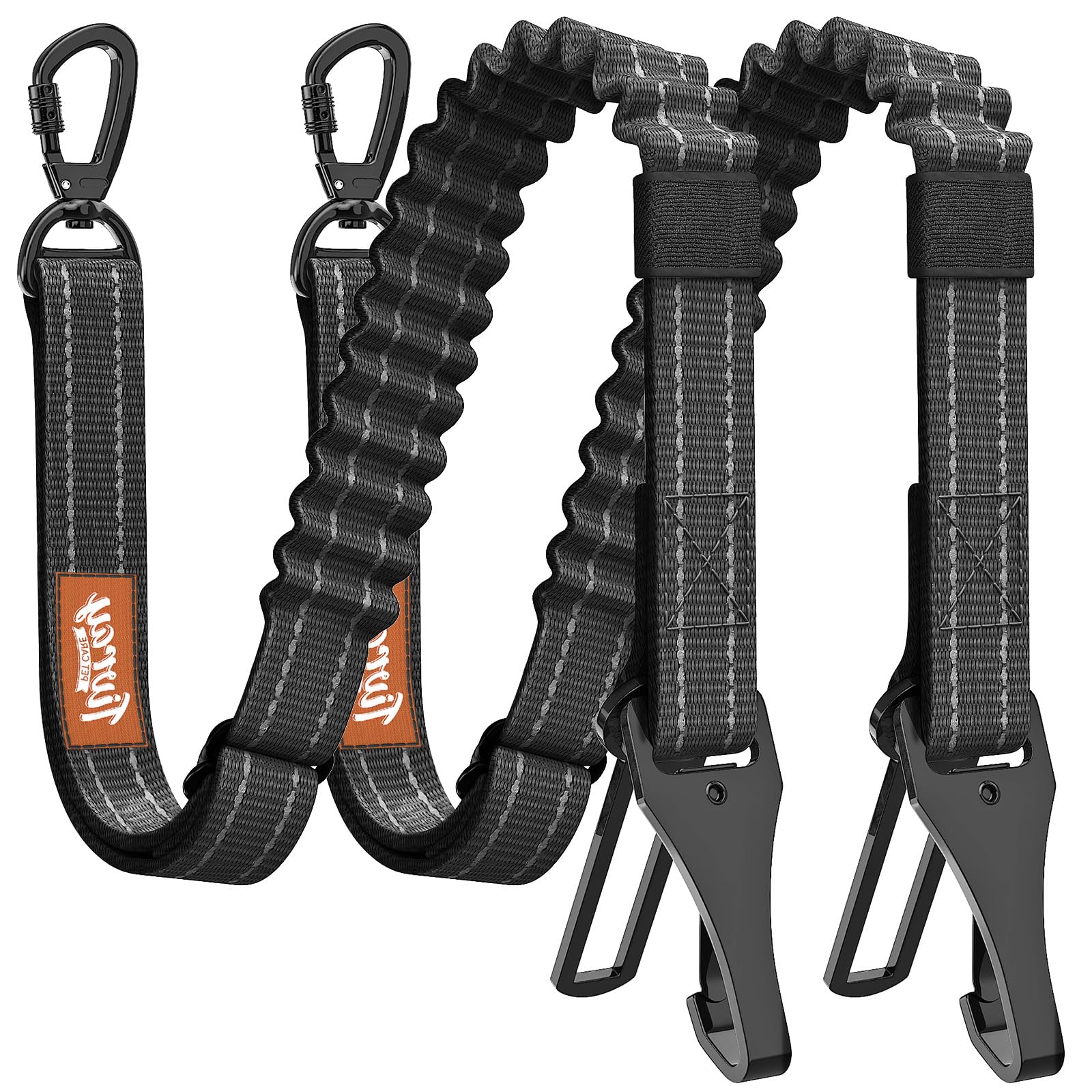
The Tivray two-pack addresses the most common complaint about single-belt purchases: you often need a second one. Each belt includes both a standard seatbelt buckle plug and a latch-bar hook, and the 360-degree swivel prevents the webbing from tangling when two dogs shift in opposite directions. The adjustable range runs from 26.7 to 32.2 inches, which covers most compact and mid-size rear seats without forcing the dogs into a fixed crouch.
The locking buckle mechanism is the key safety feature here — the clip won’t accidentally open if the dog rolls over or steps on the release. Elastic cord construction absorbs shock similarly to the bungee-style belts, and the reflective stitching is present on both straps. Owners of a 120-pound Rottweiler reported the belt held up to repeated hard pulls without hardware deformation, which is an impressive test for a multi-pack product at this tier.
The seatbelt clip design has one recurring flaw: the metal tang can bend slightly under sustained tension from a heavy dog leaning out the window. This doesn’t cause a sudden failure, but over months of use the plug may become loose in the receptacle. The included 1-year warranty covers hardware defects, and the ability to combine both belts into one longer tether is a clever workaround for SUV-sized interiors.
Why it’s great
- Two belts for the cost of one, ideal for multi-dog households
- 360° swivel clasp keeps straps from tangling during movement
- Locking buckle prevents accidental release from rolling or stepping
Good to know
- Seatbelt clip tang may bend with sustained heavy-dog tension
- Elastic cord loses some stretch after extended sun exposure
FAQ
Can I clip a dog seat belt to a collar instead of a harness?
What length should I choose for a large breed dog in an SUV?
Final Thoughts: The Verdict
For most users, the best dog car seat belt winner is the SlowTon Dog Seat Belt Harness because it combines a well-ventilated, adjustable harness with a dual-clip tether that works in almost any vehicle configuration. If you want a headrest-anchored tether for vehicles without LATCH bars, grab the Plutus Pet Headrest Belt. And for heavy-duty use with large, strong breeds, nothing beats the ARCA PET Seat Belt.

Mo Maruf
I created WellFizz to bridge the gap between vague wellness advice and actionable solutions. My mission is simple: to decode the research and give you practical tools you can actually use.
Beyond the data, I am a passionate traveler. I believe that stepping away from the screen to explore new environments is essential for mental clarity and physical vitality.