Our readers keep the lights on and my smoothie glass nicely filled. As an Amazon Associate, I earn from qualifying purchases.
Nothing is more frustrating than a favorite ceramic mug, a sentimental vase, or a perfectly good tile developing a hairline crack. The right adhesive needs to bridge the gap between a brittle, porous surface and the stress of daily use, temperature shifts, and moisture. A weak bond on ceramic doesn’t just fail—it crumbles.
I’m Mohammad Maruf — the founder and writer behind WellFizz. I spend my time examining adhesive chemistry, heat ratings, and real-world user data to separate the products that truly lock into ceramic pores from those that simply sit on the surface.
This guide focuses on the working properties that actually matter—setting time, temperature tolerance, and bond strength—so you can confidently choose the best ceramic glue for repairs for your specific project, whether it’s a broken handle or a high-heat stove fix.
How To Choose The Best Ceramic Glue For Repairs
Choosing the wrong adhesive for ceramic repair often means the bond fails under heat or moisture, leaving you with a bigger mess. The key is matching the adhesive’s chemical profile to the physical demands of the repair site — a fireplace log needs different chemistry than a bathroom tile chip.
Temperature Tolerance
Ceramic near a stove, furnace, or fireplace encounters extreme thermal cycling. Standard epoxy softens or burns above 200°F. For hot environments, look for refractory cements rated to 1090°C (2000°F) or sodium silicate solutions that vitrify into a glass-like bond. For room-temperature repairs like vases or dishes, standard epoxy putty is sufficient.
Adhesive Form and Application
Paste and putty epoxies work well for filling gaps, cracks, and modeling missing pieces. Liquid adhesives like sodium silicate penetrate deep into porous ceramic edges for maximum grip. Aerosol gels are niche and best for appliance-specific bonding. Choose your form based on whether you need to fill a chip or glue two clean faces together.
Set Time and Workability
Some repairs require time to align broken pieces perfectly. Fast-setting putties (10–30 minutes) demand quick work, while liquid glass and specialty cements may take longer to set but allow precise positioning. Full cure can range from 24 hours to 30 days for high-temperature cements that require a heat-curing process.
Quick Comparison
On smaller screens, swipe sideways to see the full table.
| Model | Category | Best For | Key Spec | Amazon |
|---|---|---|---|---|
| Lynn Manufacturing Sodium Silicate | Liquid Glass | High-heat ceramic & firebrick | 2000°F / 40% Solution | Amazon |
| Ankita Tile Repair Kit | Color Match Paste | Tiles, tubs, & porcelain chips | 7 Pigments for Color Match | Amazon |
| Endhokn Epoxy Putty | 2-Part Putty | General ceramic crack filling | 300g / 30-Min Mold Time | Amazon |
| Rutland Furnace Cement | Refractory Cement | Stove, boiler, & ceramic log repair | 2000°F / 16 oz Pre-Mixed | Amazon |
| Whirlpool High Temp Adhesive | Aerosol Gel | Appliance drum & bearing | 1.6 oz / Aerosol Can | Amazon |
In‑Depth Reviews
1. Lynn Manufacturing Sodium Silicate (Water Glass)
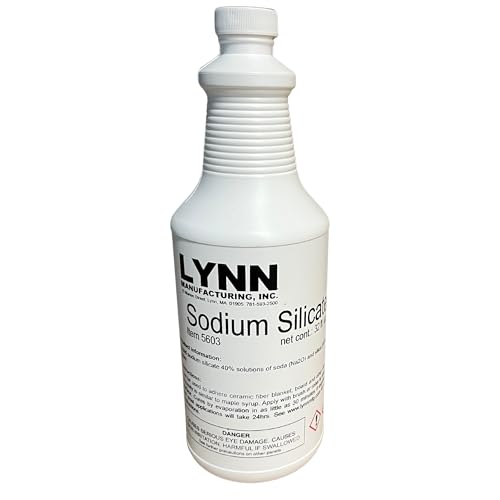
This sodium silicate solution, also known as water glass, dries into a clear, glass-hard solid that withstands extreme temperatures up to 2000°F. Its 40% concentration and syrup-like viscosity allow it to seep into the porous edges of broken ceramic, creating a bond that is often stronger than the original material after a 24-hour cure. Users restoring ceramic flame guards and firebrick report the adhesive holds up to direct blue flame without flaking or softening.
The bottle yields a large volume — a small amount goes a very long way. Apply it with a thin brush to clean, tight-fitting breaks, join the pieces, then brush a bead over the crack on both sides for maximum reinforcement. Unlike epoxy putties, this liquid glass penetrates rather than sits on the surface, making it ideal for structural repairs where the bond line must bear mechanical load.
Sodium silicate is caustic in liquid form, so gloves are necessary during application. It also dissolves in water before curing, meaning the area must be dry during the repair. Once set, the bond is impervious to moisture and thermal shock, making this the go-to choice for high-performance ceramic repairs near fire, ovens, or hot water systems.
Why it’s great
- Withstands 2000°F without degradation
- Penetrates porous ceramic for deep bond strength
- Clear finish files and sands smooth
- Very high volume-to-cost ratio
Good to know
- Liquid form can drip if applied too heavily
- Requires 24-hour cure for full hardness
- Caustic before curing — handle with gloves
2. Ankita Tile Repair Kit
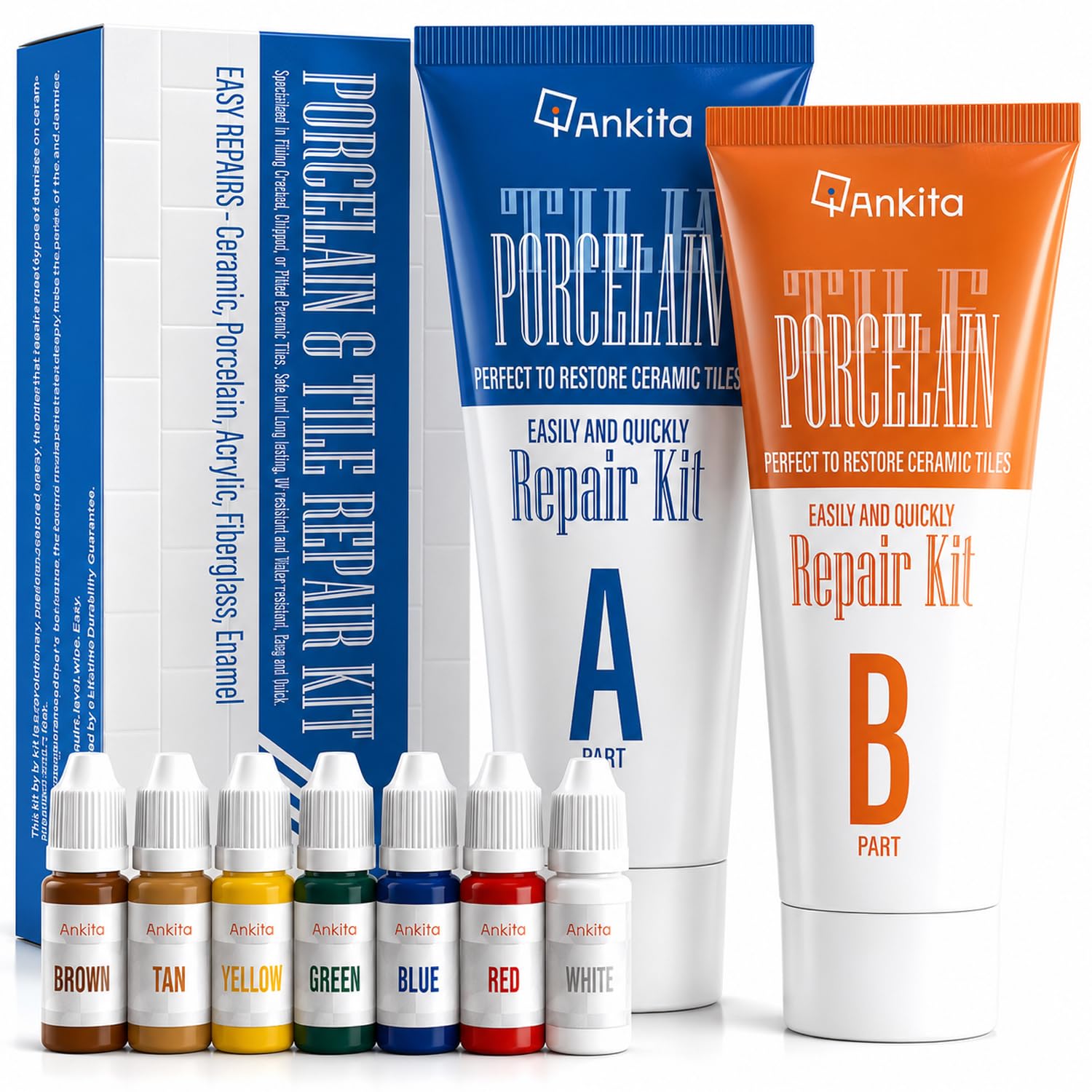
This two-part paste system comes with seven pigments that allow you to blend a specific color match for white, beige, gray, almond, blue, black, and common tile tones. The adhesive cures into a durable, waterproof finish designed for wet-area repairs on ceramic, porcelain, and acrylic surfaces — including bathtubs, showers, sinks, and floor tiles. The color-matching ability makes it the top option when the visual seamlessness of the repair matters as much as the bond strength.
Application is straightforward for beginners: mix the part A and B paste, add pigment drops until the color matches, then fill the chip or crack with a spatula. The compound hardens over several hours and can be lightly sanded to smooth the surface. Reports from users fixing chipped tubs and scratched sinks confirm the adhesive holds up to moisture and daily scrubbing without softening or discoloring.
The kit is best suited for small surface repairs — chips, cracks, scratches, and holes — rather than structural joins where a broken handle or leg needs to bear weight. Some users note that achieving a perfectly flush texture requires patience during sanding, and the color may shift slightly over time as the resin cures fully. For a fast, cosmetically strong fix on visible ceramic surfaces, this kit delivers a premium finish.
Why it’s great
- Custom color blending for near-invisible repairs
- Waterproof and heat-resistant after cure
- Easy for DIY users with no professional tools
- Works on ceramic, porcelain, acrylic, and granite
Good to know
- Only suitable for small chips and cracks
- Requires patience with sanding for smooth finish
- Color may shift slightly over long-term cure
3. Endhokn Epoxy Putty

The Endhokn putty comes as a 300-gram two-part stick that you knead together to activate. It offers a 30-minute working window before it begins to harden, giving you enough time to shape, mold, and sculpt the repair into the exact form you need — whether that is filling a hole in a ceramic vase, rebuilding a chipped edge, or reinforcing a crack on a statue. The cured putty can be drilled, sanded, and painted, which opens up a wide range of finishing possibilities.
One common use case is repairing sentimental ceramic salt and pepper shakers where the legs were broken or cracks had formed. Users report that the putty adheres tenaciously to the ceramic body and can be shaped to match the original contours. It also works on metal, plastic, wood, tile, and concrete, making it a versatile tool for a household toolbox — not just ceramic repairs but general crack and hole filling across multiple materials.
The putty is waterproof and resists temperatures from -50°C to 130°C, which covers most indoor and outdoor use cases that do not involve direct flame. It requires a full 24 hours to reach maximum hardness. Users note that the material is very tacky during mixing; applying a bit of petroleum jelly to fingers or tools helps smooth the surface without affecting the cure. The large quantity means you will have material left over for future projects.
Why it’s great
- Large 300g capacity for multiple repairs
- Moldable and sculptable during 30-minute working time
- Drills, sands, and paints after full cure
- Waterproof with broad material compatibility
Good to know
- Not rated for high-heat or flame exposure
- Requires 24-hour cure for full strength
- Very tacky — use gloves or release agent
4. Rutland Furnace Cement

This pre-mixed refractory cement is specifically formulated for high-temperature environments — wood stoves, boilers, gas ceramic logs, and fireplace components. It bonds metal to metal and metal to masonry with a smooth, paste-like consistency, and it is rated to withstand temperatures up to 2000°F (1090°C) after a proper heat cure. Users repairing cracked stove collars or resetting firebrick report the cement holds tight even after the fire burns for hours.
A unique characteristic of furnace cement is that it requires a heat cure to reach its full structural integrity. Without the heat cure, the application tends to dry out and discolor over time. Once properly cured, the bond becomes very durable and resistant to the constant expansion and contraction that occurs in stove and fireplace environments. Several users have also applied it to ceramic fireplace logs to glue broken pieces back together when replacement parts were unavailable.
The cement comes ready to use in a 16-ounce tub and is very sticky — wearing gloves is mandatory. It dries relatively fast, so small cracks and panel joints can be sealed in a single session. The 30-day full cure timeline is the longest of any adhesive in this guide, but that is the nature of refractory materials designed for extreme conditions. For any ceramic repair near a heat source, this is the correct tool for the job.
Why it’s great
- Rated to 2000°F for stove and fireplace use
- Pre-mixed and ready to apply from the tub
- Creates an airtight seal for panel joints and cracks
- Works on ceramic logs, firebrick, and metal
Good to know
- Requires heat cure for maximum durability
- Full cure takes up to 30 days
- Very sticky consistency requires gloves
5. Whirlpool High Temperature Adhesive

Whirlpool’s Y055980 is an aerosol-style high-temperature adhesive that works best in specific appliance repair scenarios — particularly securing rear ball bearings in dryers and bonding rubber components inside washing machines. Its gel form allows targeted application on small, hard-to-reach parts where a paste or putty would be difficult to work with. Users fixing 25-year-old washing machines report the adhesive stops the shaking and vibration associated with worn snubber rings.
The adhesive cures in 24 hours to a clear, flexible bond that holds up in the hot interior of a clothes dryer. The aerosol can makes it easy to apply a thin, even layer on bearing surfaces, and the gel stays in place rather than running off during the vertical installation. It is explicitly designed as a replacement part for Whirlpool, Kenmore, and compatible brand appliances, so it fits within a defined use case.
This is the most niche product in the lineup — it is not a general ceramic repair adhesive. Its primary function is bonding rubber and metal components in appliances. For ceramic-specific tasks, the other picks on this list are better matched. However, if you are repairing a dryer bearing or a washing machine snubber that interfaces with ceramic or porcelain-coated parts, this gel is the correct factory-spec option.
Why it’s great
- Factory-spec replacement for Whirlpool appliances
- Aerosol gel applies cleanly without dripping
- Holds up in high-heat dryer environments
- Simple 24-hour cure
Good to know
- Not a general-purpose ceramic repair adhesive
- Small 1.6-ounce can for one-off repairs
- High cost relative to fill volume
FAQ
Can I use epoxy putty to repair a ceramic stove handle?
How do I get a seamless color match on white ceramic tile?
What is the difference between sodium silicate and epoxy for ceramic?
Final Thoughts: The Verdict
For most users, the best ceramic glue for repairs winner is the Lynn Manufacturing Sodium Silicate because it combines extreme 2000°F heat tolerance with a penetrating bond that actually fuses with the ceramic structure. If you need a color-matched, cosmetically invisible fix on visible tile or tub surfaces, grab the Ankita Tile Repair Kit. And for general household crack filling and sculpting where heat is not a factor, nothing beats the value and moldability of the Endhokn Epoxy Putty.

Mo Maruf
I created WellFizz to bridge the gap between vague wellness advice and actionable solutions. My mission is simple: to decode the research and give you practical tools you can actually use.
Beyond the data, I am a passionate traveler. I believe that stepping away from the screen to explore new environments is essential for mental clarity and physical vitality.