Our readers keep the lights on and my smoothie glass nicely filled. As an Amazon Associate, I earn from qualifying purchases.
The best drone that follows you turns your solo adventures into dynamic, cinematic productions without needing a second person behind the lens. Whether you’re mountain biking a rocky trail, kayaking across a glassy lake, or simply vlogging a walk through a new city, a capable follow-me drone locks onto your movement and keeps you perfectly framed — freeing you to focus entirely on the experience itself. This guide cuts through the buzzwords to find the models that actually track reliably, shoot sharp 4K footage, and fit your specific activity profile.
I’m Mohammad Maruf — the founder and writer behind WellFizz. I combine deep market research with layered specification analysis to identify which hardware and software combinations deliver real-world follow-me performance, not just marketing claims.
After evaluating dozens of models based on tracking algorithms, gimbal stabilization, flight time, and portability, I’ve narrowed the field to the 11 most capable performers. This is your definitive guide to the absolute best drone that follows you for every budget and activity level.
How To Choose The Best Drone That Follows You
Choosing a follow-me drone isn’t just about picking the most expensive one on the shelf. The real question is whether the tracking system, camera quality, and flight time align with how you actually move. A cyclist needs different follow performance than a hiker or a skier.
Tracking Technology: GPS vs. Vision-Based
GPS-only follow-me drones rely on satellite positioning to maintain a relative distance and direction. This works well in open sky with slow, predictable movement, but it struggles with sudden direction changes, tight corners, or when the subject passes under trees or bridges. Vision-based tracking — which uses the camera feed and onboard AI to identify and lock onto a subject — provides smoother, more responsive following, especially in cluttered environments. The best models combine both systems for redundancy and accuracy.
Gimbal Axes and Stabilization Quality
A 2-axis gimbal compensates for tilt and roll, keeping the horizon mostly level during gentle flying. A 3-axis gimbal adds pan control, eliminating yaw-induced wobble during sharp turns or wind gusts. For action sports or any footage you intend to share seriously, a 3-axis gimbal is the clear starting point. Electronic image stabilization (EIS) can help, but it often crops the frame slightly and can introduce a warping effect called jello in fast motion.
Flight Time vs. Real Battery Life
Manufacturers often advertise hover-time under ideal laboratory conditions. Real-world flight in follow-me mode, with active tracking and video transmission running, typically cuts that figure by 20 to 30 percent. Look for bundles that include multiple batteries. A drone claiming 30 minutes per flight might yield 20 usable minutes in practice, so a three-battery combo that totals 90 advertised minutes becomes essential for a full day of shooting.
Weight Class and Portability
Drones under 249 grams are exempt from FAA registration and Remote ID requirements in the United States, making them the most hassle-free option for casual flyers. However, lighter drones are more affected by wind, which can destabilize follow-me tracking on breezy days. If you frequently shoot in coastal or mountainous areas with gusts, a slightly heavier model with more powerful motors and Level 6 wind resistance may be worth the extra paperwork.
Quick Comparison
On smaller screens, swipe sideways to see the full table.
| Model | Category | Best For | Key Spec | Amazon |
|---|---|---|---|---|
| Potensic ATOM 2 Fly More | Premium | AI tracking with screen controller | 10km transmission, 3-axis gimbal | Amazon |
| DJI Flip Fly More Combo | Premium | Total ease and safety | 1/1.3″ CMOS, full-coverage guards | Amazon |
| HOVERAir X1 PRO | Premium | High-speed action sports | 42 km/h follow, OmniTerrain | Amazon |
| Bwine F7MINI | Mid-Range | FAA-exempt pro footage | 3-axis gimbal, 6km transmission | Amazon |
| Ruko F13 | Mid-Range | 8K photo quality | 48MP sensor, 96-min flight | Amazon |
| Bwine F7GB2 Pro | Mid-Range | High altitude flying | 2000m altitude, 3-axis gimbal | Amazon |
| Holy Stone HS600 | Mid-Range | Integrated Remote ID compliance | 2-axis gimbal, 20000ft range | Amazon |
| HOVERAir X1 | Mid-Range | Palm-launch simplicity | 125g, fully enclosed guards | Amazon |
| DJI Neo 2 Fly More | Mid-Range | Gesture-controlled selfies | Omnidirectional obstacle sensing | Amazon |
| Potensic ATOM SE | Budget | Learning follow-me basics | 4K EIS, Sony sensor, 93-min flight | Amazon |
| PLEGBLE 5″ Screen | Budget | Entry-level all-in-one value | 5″ built-in screen, 70-min flight | Amazon |
In‑Depth Reviews
1. Potensic ATOM 2 Fly More Combo
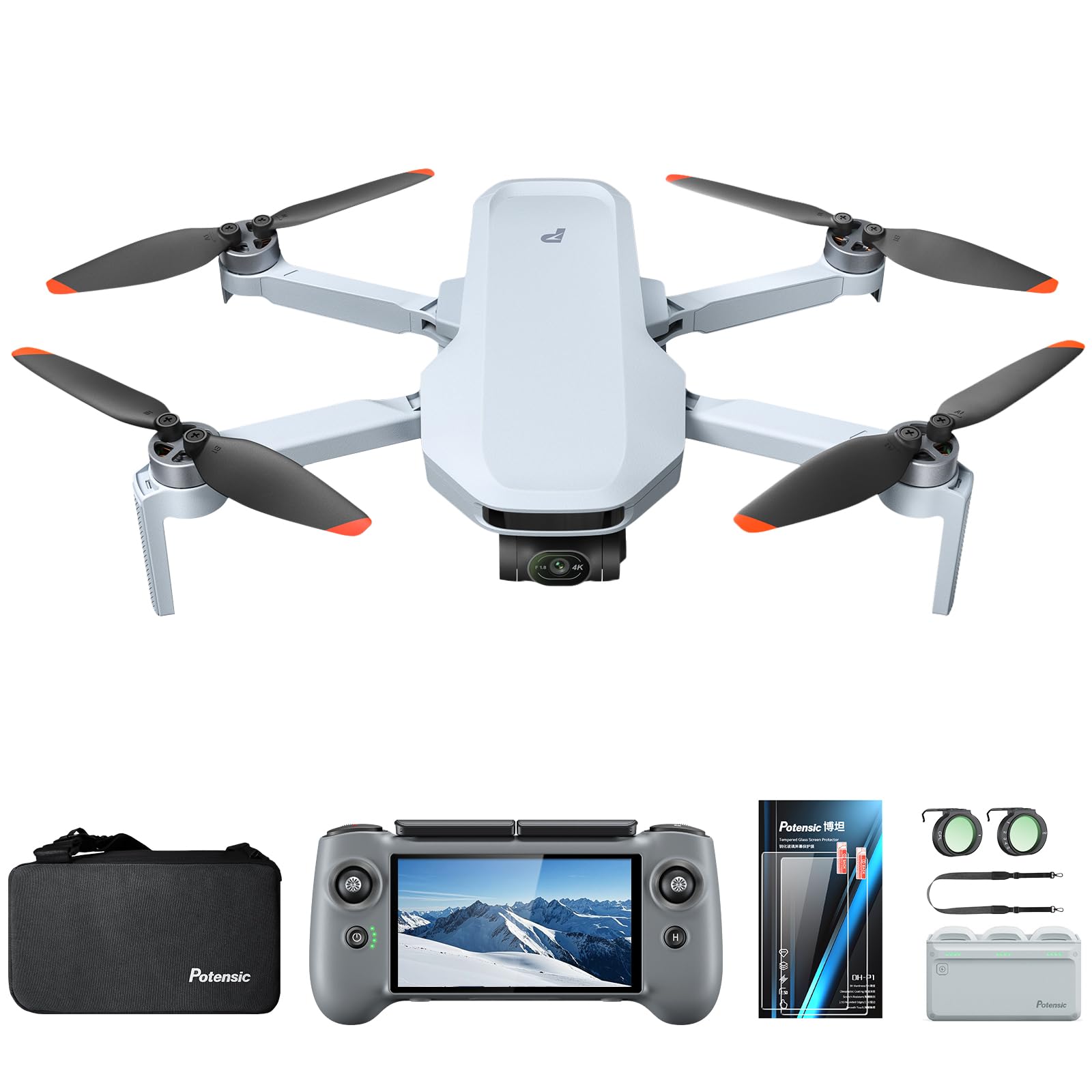
The Potensic ATOM 2 is the current benchmark for a drone that follows you in this class, combining a proper 3-axis mechanical gimbal with an AI-based tracking engine that locks onto subjects with impressive tenacity. The 1/2-inch Sony CMOS sensor captures 48-megapixel stills and 4K HDR video at 30 fps, while the F1.8 aperture pulls in enough light to keep footage clean in early morning and late evening conditions. The PixSync 4.0 transmission system pushes a crisp 1080p/30fps live feed up to 10 kilometers, giving you real confidence on long distance shoots.
The bundled PTD 1 remote controller is a standout feature — its 5.5-inch 1920×1080 FHD touchscreen hits 700 nits of brightness, making it usable even under direct sunlight without needing to squint at a phone screen. The three-battery kit delivers 96 minutes of total flight time, and the parallel charging hub refills all three packs in about 1.3 hours using 27W fast charging. The drone itself weighs under 249 grams, keeping it FAA-exempt and travel-friendly.
Advanced features include Spotlight, Follow, and Parallel tracking modes, plus vertical shooting at 2.7K for social media-friendly framing. The inclusion of both ND and CPL filters in the Fly More Combo means you can manage exposure and cut reflections straight out of the box. The AI-driven night mode is genuinely usable, though it still benefits from well-lit urban environments rather than pure darkness.
Why it’s great
- True 3-axis gimbal for butter-smooth 4K footage during follow-mode runs
- PTD 1 controller with bright 5.5-inch screen eliminates phone dependency
- AI tracking with three distinct modes handles dynamic movement reliably
Good to know
- Premium Fly More Combo price may exceed casual hobbyist budgets
- Glossy controller screen can show glare at extreme viewing angles
2. DJI Flip Fly More Combo With RC 2 Screen Remote Controller
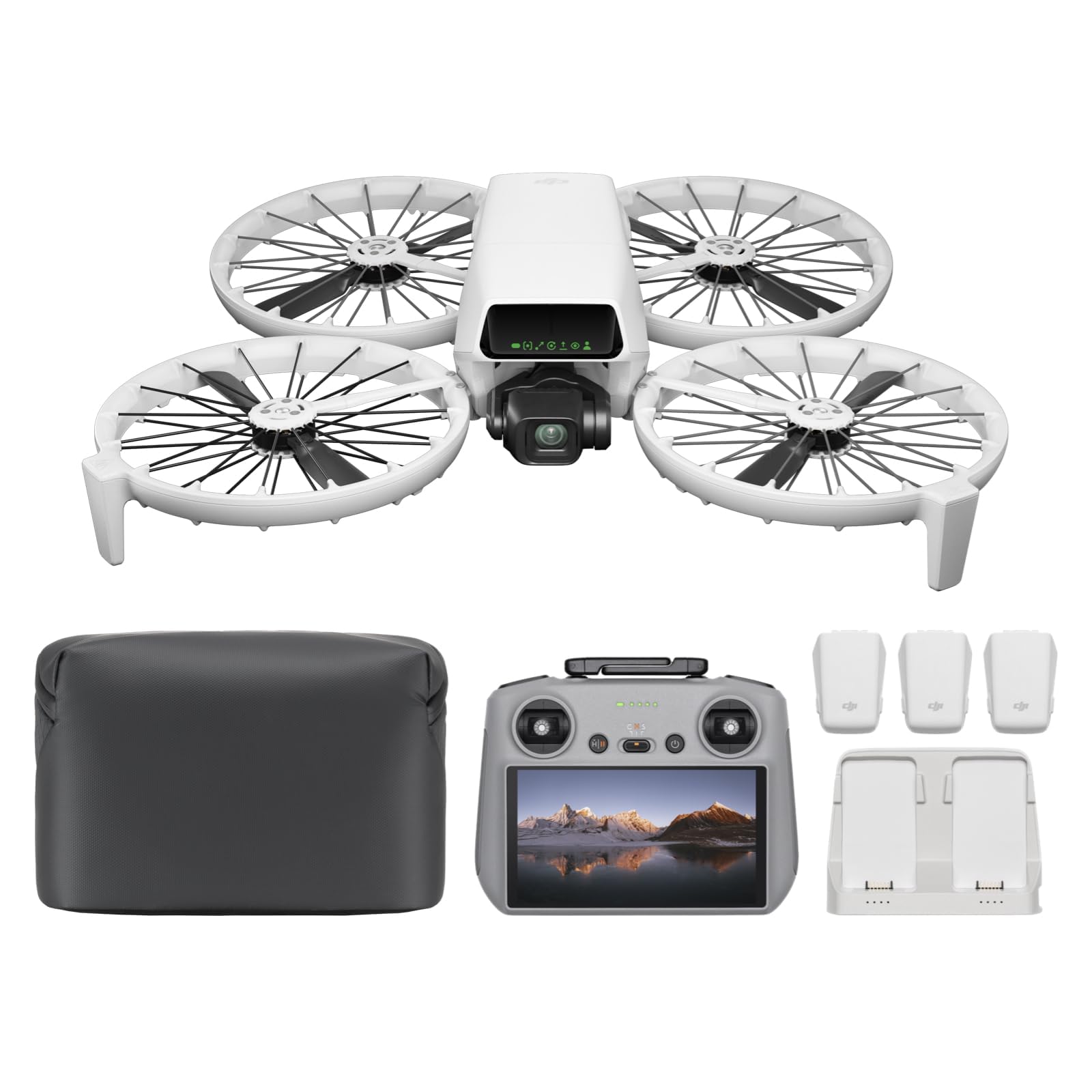
The DJI Flip redefines safe proximity flying with its unique folding design that integrates full-coverage propeller guards made from lightweight carbon fiber, letting you capture follow-me shots at close range without panicking about blade strikes. Its 1/1.3-inch CMOS sensor is physically larger than most sub-249 gram competitors, soaking up more light to deliver 4K/60fps HDR video with noticeably better dynamic range and low-light performance. ActiveTrack keeps subjects consistently centered, even during quick directional changes.
The RC 2 remote controller features a dedicated high-bright screen that renders a clean live feed without requiring a phone connection, and the three-battery Fly More bundle nets you a total of roughly 93 minutes of flight time — though real-world follow-mode flying shaves that closer to 75 minutes. The automatic return function is precise and reliable, instilling confidence even on first flights. Setup time from unboxing to first airborne shot is under five minutes.
Wind performance is surprisingly capable for a sub-249g frame, though sustained gusts above 20 mph will push it around more noticeably than heavier models. The carbon fiber guards are tough enough to survive bumps into tree branches and walls, making it the safest pick for flying around children or pets. The Dlog M color profile is available for those who want to grade footage later.
Why it’s great
- Full-coverage carbon fiber guards enable worry-free proximity tracking near people
- Large 1/1.3-inch sensor delivers superior dynamic range and 4K/60fps HDR video
- Ultra-fast unbox-to-air workflow with palm launch option
Good to know
- Sub-249g frame struggles in strong coastal or mountain gusts
- Fly More Combo requires purchasing a 100W charger separately for fast refueling
3. HOVERAir X1 PRO 4K Drone

The HOVERAir X1 PRO is purpose-built for the action crowd, with an upgraded aerodynamic frame that pushes follow speed to 42 km/h and burst speed to 60 km/h — enough to keep pace with cyclists, skiers, and runners without dropping the tracking lock. The SmoothCapture 2.0 system pairs a 2-axis gimbal with electronic image stabilization and horizon leveling, producing stable footage even during hard acceleration and cornering. The 104-degree field of view captures the surrounding environment without feeling tunneled.
OmniTerrain capability means it can operate over water, snow, and uneven ground, interpreting the surface below and adjusting altitude automatically during active tracking. This is a rare feature at this weight class (192 grams) and eliminates a major source of anxiety when flying near reflective or unpredictable surfaces. Rear ToF obstacle detection provides braking before collisions up to 1.5 m/s, adding a layer of safety for tight trails.
Hands-free operation is the core philosophy — palm takeoff, voice commands, and over 15 fully automated flight modes mean you never touch a controller during a session. The 32GB of internal storage is supplemented by a microSD slot that supports cards up to 1TB. Battery life per charge is approximately 16-18 minutes in real-world follow-me use, so the single-battery standard pack requires planning shorter shooting windows.
Why it’s great
- Industry-leading 42 km/h follow speed for tracking fast-moving athletes
- OmniTerrain altitude control works reliably over water and snow
- Completely controller-free operation via voice and palm gestures
Good to know
- Single battery limits continuous shooting time without additional purchases
- 2-axis gimbal shows slight horizon wobble during aggressive yaw moves
4. Bwine F7MINI 4K Video 8K Photo Drone
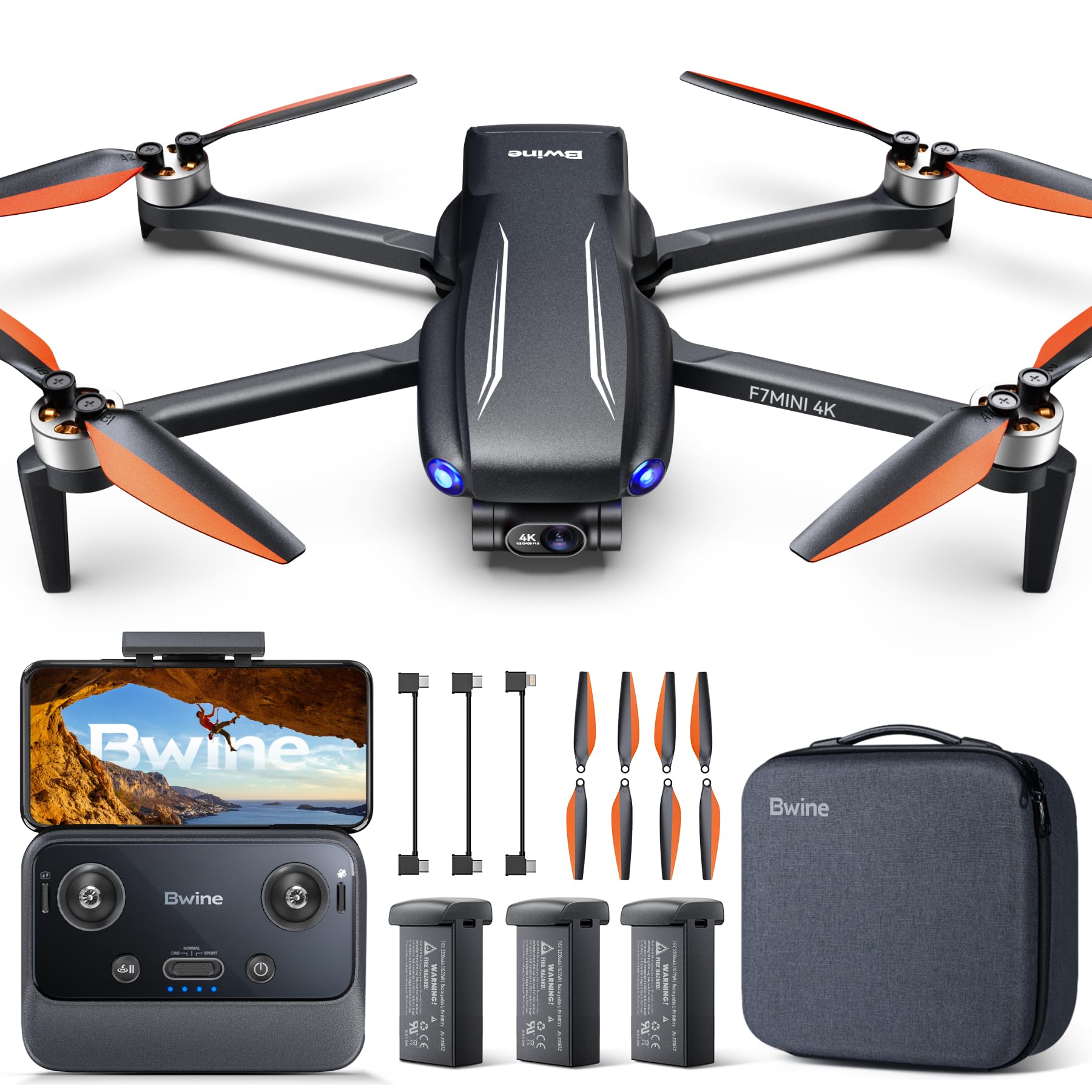
The Bwine F7MINI packs a true 3-axis stabilized gimbal into a sub-249g form factor, delivering the kind of smooth 4K/30fps footage typically reserved for heavier, more expensive rigs. The 1/2-inch 48MP CMOS sensor with an F1.8 aperture pulls in excellent detail, and the integrated EIS works as a secondary layer to clean up residual micro-vibrations during windy follow-me flights. The wired digital transmission system reaches 20,000 feet with noticeably lower latency than Wi-Fi-based competitors.
The remote controller features a bright 5.5-inch built-in touchscreen, removing the need to clamp a phone onto the sticks. The 96-minute total flight time across three high-density batteries is genuinely useful for extended property inspections, long hiking trails, or covering multiple takes at a shoot location. The 120dB locator buzzer is a welcome safety net for recovery in tall grass or dense brush after an unexpected landing.
GPS-based follow-me performance is accurate to about 0.5 meters, making it suitable for walking, hiking, and slow jogging applications. Dynamic home point updates as you move, so the return function stays relevant even after you’ve walked a mile from the original launch spot. Optical flow positioning keeps the drone stable indoors when GPS signals are weak, expanding its usability beyond open field flying.
Why it’s great
- Full 3-axis gimbal and EIS in a sub-249g, FAA-exempt frame
- Built-in 5.5-inch controller screen with zero phone setup required
- 120dB buzzer and dynamic home point add real recovery confidence
Good to know
- GPS follow-me accuracy degrades in heavy tree canopy or urban canyon environments
- Photo download from controller to phone is slower than direct computer transfer
5. Ruko Drone with 4K UHD Camera for Adults

The Ruko F13 prioritizes photographic resolution without sacrificing follow-me functionality, using a 1/2-inch 48MP CMOS sensor that interpolates to 8K stills. The 4K/30fps video pipeline runs through a 3-axis brushless gimbal backed by EIS, producing locked-in horizon lines even in moderate wind. The AI-driven takeoff and landing system uses a quadruple positioning stack — GPS, barometric altitude hold, TOF, and optical flow — for precise transitions between flight modes.
Three intelligent batteries deliver a combined 96 minutes of advertised flight time, and real-world follow-mode usage yields roughly 65-70 minutes, which is still excellent for a full day of content gathering. The R2 digital transmission system operates in the 20,000-foot range without the interference typical of Wi-Fi-based drones, maintaining a steady live feed even over water or reflective terrain. The carrying case is sturdy and well-organized, keeping the drone and accessories protected during transport.
Beginner-friendly features include one-button takeoff and landing, three auto-return triggers (one-key, low battery, and signal loss), and a built-in beeper for locating the drone after landing. The joysticks are factory-calibrated with moderate sensitivity, which helps new pilots avoid overcorrection. The 12.6-inch folded size slides into a backpack side pocket with room to spare.
Why it’s great
- Interpolated 8K photo resolution captures impressive detail for post-crop flexibility
- Quadruple positioning system delivers confident takeoff and landing even in less-than-ideal conditions
- Excellent 96-minute total flight time supports extended shooting sessions
Good to know
- Interpolated 8K is not native resolution per pixel group
- Some users report joysticks feeling overly sensitive for precise slow maneuvers
6. Bwine F7GB2 Pro Drones with Camera for Adults

The Bwine F7GB2 Pro is engineered for high-elevation environments, with 1806 brushless motors, a barometer, and a Level 6 wind resistance rating that keeps the camera steady at altitudes up to 2000 meters — a critical spec for mountain filmmakers and alpine explorers. The 3-axis gimbal carries a detachable 4K camera with a 120-degree FOV lens and 5x digital zoom, providing flexibility for both sweeping landscape shots and close-up follow-me tracking. FAA Remote ID certification is integrated directly onto the drone arm, making it fully compliant without an external module.
Three 2600mAh intelligent batteries push total flight time to 75 minutes, though real-world follow-mode use at high altitude reduces that to about 55 minutes due to thinner air requiring more motor thrust. The controller provides an overlay interface with telemetry data, though the non-touch display is hard to read in direct sunlight without shading it with your hand. The carrying shell case protects the drone snugly and includes cutouts for all accessories.
GPS-based follow-me, waypoint navigation, and orbit modes are all present and perform reliably in open areas. The auto-return function is conservative, initiating the home sequence with more battery reserve than some competing models, which provides a safety buffer for those flying at the edge of transmission range. Customer support responsiveness is a frequently mentioned positive across user reports.
Why it’s great
- Certified to operate at 2000m altitude with Level 6 wind resistance
- Integrated FAA Remote ID eliminates the need for a separate module
- Conservative auto-return protocol provides generous battery reserve
Good to know
- Controller screen is difficult to read in bright direct sunlight
- Camera exhibits noticeable distortion during aggressive turning maneuvers
7. Holy Stone HS600 2-Axis Gimbal Drone

The Holy Stone HS600 simplifies federal compliance by integrating Remote ID directly into the drone, so there is no extra module to buy or attach. The Sony sensor-based camera captures 4K/30fps video and 8.3-megapixel stills through a 2-axis gimbal with EIS stabilization, delivering clean footage for recreational and semi-professional work. The WiFi repeater built into the remote controller extends the control and video transmission range to 20,000 feet, though real-world performance is closer to 10,000 feet in suburban environments with interference.
Level 6 wind resistance, paired with brushless motors, keeps the 541-gram frame stable in breezes that would push sub-249g models off course. The single 2500mAh battery provides up to 28 minutes of advertised flight time, and the included carrying case makes transport straightforward. The controller connects to a smartphone via a single data cable for live view, bypassing WiFi for reduced latency during critical framing.
Follow-me and waypoint modes function consistently in open-sky scenarios, making the HS600 a solid choice for recreational flyers who want reliable tracking without the complexity of an app-based setup. Beginner-friendly features like one-key takeoff, GPS hover, and multiple auto-return triggers help new pilots build confidence. The camera control app provides basic exposure adjustments but lacks advanced tools like manual ISO or RAW capture.
Why it’s great
- Integrated Remote ID means no extra modules or registration steps
- Brushess motors with Level 6 wind resistance handle gusty days well
- Data cable controller connection reduces video lag compared to WiFi-only systems
Good to know
- 2-axis gimbal shows slight horizon tilt during fast lateral movement
- Limited camera controls with no manual ISO or RAW photo support
8. HOVERAir X1 Drone with Camera
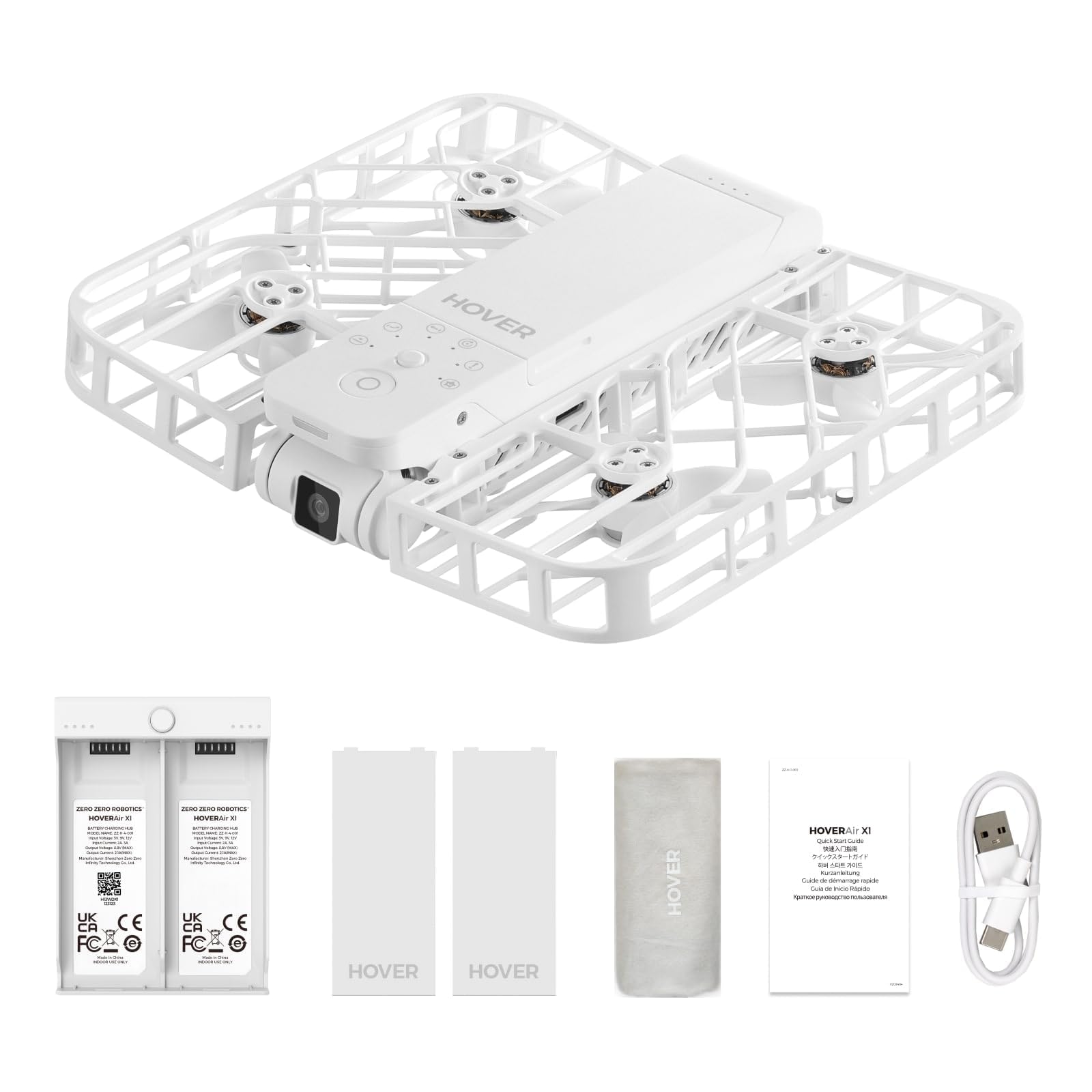
The HOVERAir X1 is the lightest dedicated follow-me drone in this lineup at 125 grams, making it exempt from FAA registration and genuinely pocketable. Its fully enclosed design with integrated propeller guards allows safe launching from and landing into the palm of your hand — no controller required. The 2.7K/30fps camera with triple stabilization (2-axis gimbal, EIS, and horizon leveling) produces social-media-ready footage that looks smooth as long as the movement isn’t too aggressive.
Pre-programmed flight modes — Hover, Follow, Zoom Out, Orbit, and Bird’s Eye — are selected via a button on the drone itself, and the companion app provides live monitoring and manual control overrides. The charging hub refuels multiple batteries in parallel, and each battery supports approximately 20 flight paths or 11 minutes of recording. The 32GB of internal storage eliminates the need for microSD cards, though the data transfer speed when offloading via the app is noticeably slower than a direct USB connection to a computer.
This drone is optimized for walkers, hikers, and casual skaters rather than speed athletes, as the 15 mph maximum follow speed will lose a fast downhill mountain biker. It does not work well over water due to the optical flow sensor struggling to read the surface, and there is no obstacle avoidance — collisions are absorbed by the durable Enclosed frame but can still cause a tumble. The trade-off for this simplicity is capped camera resolution and no remote controller in the box.
Why it’s great
- Ultra-light 125g design fits in a jacket pocket and requires no FAA registration
- Fully enclosed guards enable safe hand launch and catch without shutdown
- Simplified one-button mode selection is accessible for absolute beginners
Good to know
- 2.7K max resolution is lower than most competing 4K models
- No obstacle avoidance and unreliable optical flow over water surfaces
9. DJI Neo 2 Fly More Combo
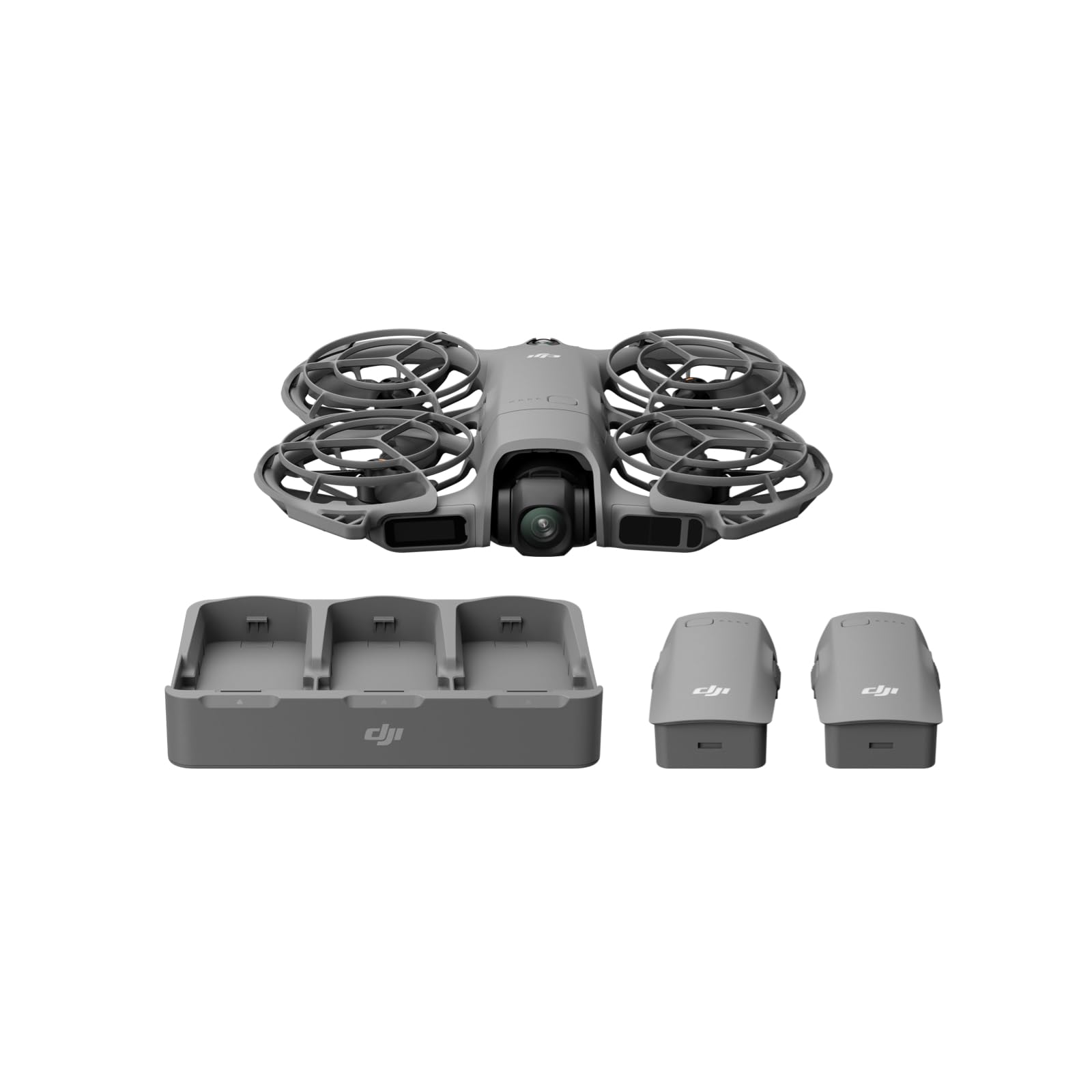
The DJI Neo 2 is built around effortless operation, with palm takeoff and landing triggered by simple hand gestures and ActiveTrack that locks onto you before you even reach for a controller. The 1/2-inch 12MP sensor captures 4K video with the characteristic DJI color science — punchy but natural, with good dynamic range in mixed lighting. Omnidirectional obstacle sensing provides 360-degree awareness during tracking, significantly reducing the risk of a collision when flying through uneven terrain or near trees.
The Fly More Combo includes three batteries, a charging hub, and full-coverage propeller guards, extending usable flight time to roughly 40-45 minutes of real-world follow-me recording. The drone is C0 certified and weighs just 151 grams, keeping it under the FAA registration threshold. The quickshot modes — Dronie, Rocket, Circle, and Helix — are pre-programmed cinematic moves that can be triggered with a single tap on the app or via Apple Watch voice control.
ActiveTrack reliability is excellent for walking, jogging, and moderate cycling speeds, maintaining subject lock even when the drone is flying sideways or backwards. The lack of a dedicated remote controller in the standard box means you are reliant on the phone app for manual override, which can be a limitation in areas with high radio interference. The DJI Fly app is not available on Google Play, requiring a direct download from the DJI website — an extra step that frustrates some Android users.
Why it’s great
- Gesture and voice control make it the most beginner-friendly drone to operate hands-free
- Omnidirectional obstacle sensing provides comprehensive collision protection during tracking
- DJI’s ActiveTrack locks on reliably even during sideways and backward flight paths
Good to know
- No remote controller included in standard packaging; app-only manual control
- DJI Fly app requires side-loading on Android devices
10. Potensic ATOM SE GPS Drone

The Potensic ATOM SE is the most accessible entry point into sub-249g follow-me drones that still deliver genuine 4K video from a Sony CMOS sensor. The ShakeVanish EIS technology stabilizes footage from the fixed-mount camera, producing smooth results during gentle, straight-line movement — though hard turns or wind gusts can introduce the rolling-shutter wobble that gimbal drones eliminate. The PixSync 2.0 transmission system reaches 4 kilometers, providing enough range for open-field exploration.
The three-battery Fly More kit delivers 93 minutes of total flight time, and the 60W parallel charging hub refuels all three packs simultaneously in about 1.5 hours — a practical advantage for day trips where downtime needs to be minimized. The SurgeFly flight control system includes Beginner, Video, Normal, and Sport modes, with Sport mode hitting 16 m/s acceleration in 2.8 seconds. GPS-based follow-me, waypoint, and circle flight modes are all functional and work best over open ground with clear sky access.
Build quality feels solid for the price segment, and the fold-up design packs small enough for a jacket pocket. The app interface is clean and responsive for live view and mode switching, though the solid camera mount means you are fully dependent on EIS for stabilization. Customer responsiveness is frequently praised in user reviews, with quick resolution of firmware and hardware queries.
Why it’s great
- True 4K from a Sony 1/3-inch CMOS sensor at a budget-friendly entry price
- Three-battery kit with 60W fast parallel charging maximizes field time
- Four flight modes, including Sport, allow skill progression without changing hardware
Good to know
- Fixed camera mount lacks gimbal mechanics, leading to wobble during sharp turns
- GPS follow-me accuracy drops in tree cover or near large metal structures
11. PLEGBLE Drone with EIS 4K Camera
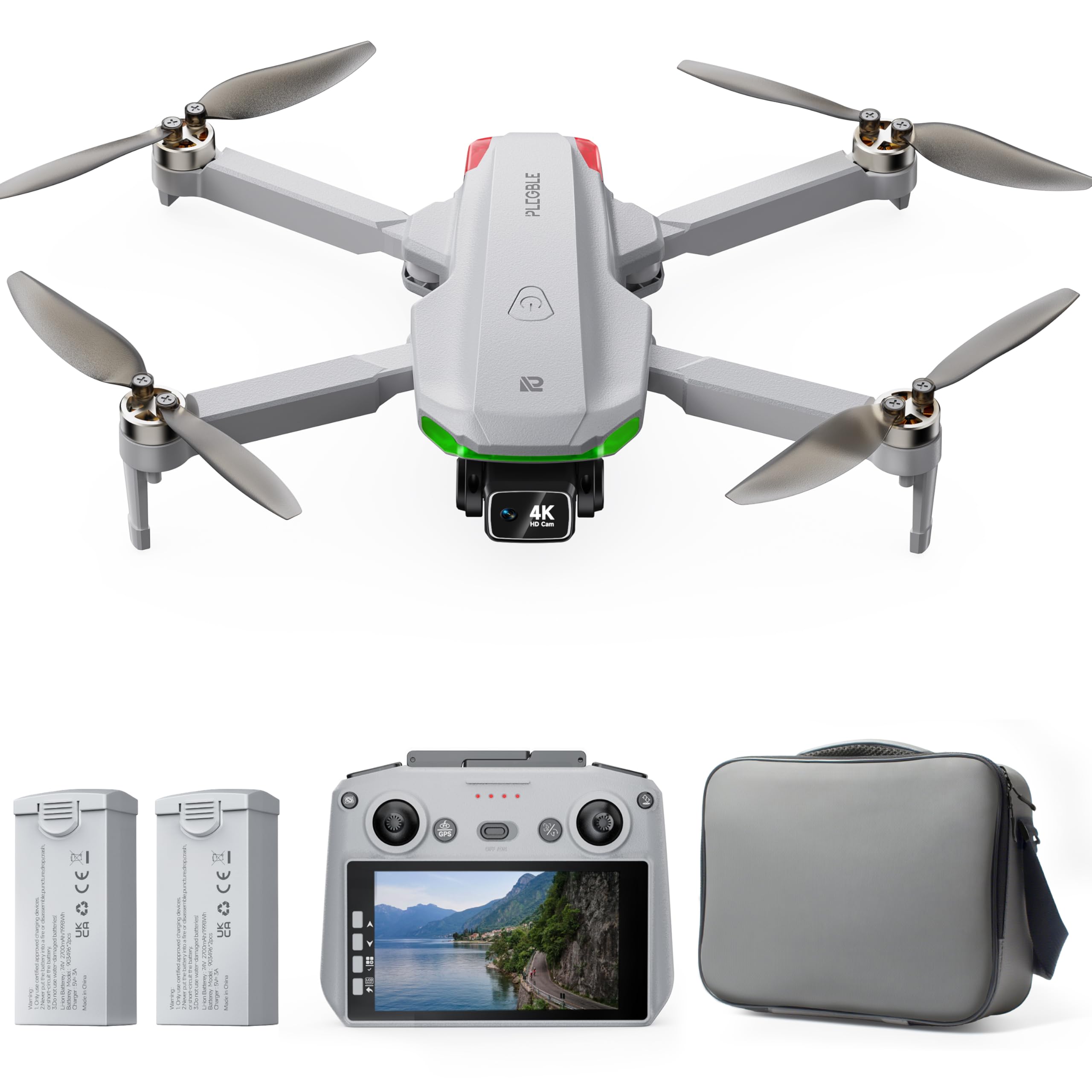
The PLEGBLE drone stands out in the entry-level bracket by including a 5.0-inch HD screen built directly into the controller, eliminating the need to mount a phone for live FPV transmission. The 4K/30fps camera uses EIS and optical flow positioning to stabilize footage, and the 130-degree wide-angle lens with 90-degree adjustable tilt gives you framing flexibility during follow-me flights. GPS features — including Smart Return, Low Battery Return, Signal Loss Return, and Position Lock — provide a safety net that is rare at this price threshold.
Two modular 7.6V 2700mAh batteries deliver 70 minutes of total flight time, and USB-C fast charging with overcharge protection keeps the turnaround convenient. The sub-249g weight keeps it FAA and Remote ID exempt, and the foldable frame with Level 5 wind resistance handles mild breeze conditions without drama. Follow Me, Waypoint Fly, and Circle Flight modes are all accessible through the controller interface.
The brushed feel of the controls and the slightly slower maximum speed make it clear this is not a performance drone — it is built for relaxed, scenic tracking with an emphasis on ease of use rather than agility. The 600-meter practical range limits its usefulness for long-distance exploration. Video quality is acceptable for social media sharing in good light but shows noise and softness in low-light conditions.
Why it’s great
- Built-in 5-inch controller screen removes phone setup friction entirely
- Dual batteries and USB-C fast charging maximize convenience for casual flyers
- Full GPS safety suite provides confidence for first-time drone operators
Good to know
- 600-meter practical range limits long-distance exploration
- Low-light video quality drops significantly compared to mid-range competitors
FAQ
How closely does a follow-me drone actually track the subject?
Can a follow-me drone work indoors or in dense forests?
What wind speed can a sub-249g follow-me drone handle?
How long does a battery last in real follow-me mode?
Final Thoughts: The Verdict
For most users, the absolute best drone that follows you is the Potensic ATOM 2 Fly More Combo because it combines a 3-axis mechanical gimbal with AI-driven tracking, a bright built-in controller screen, and nearly 100 minutes of total flight time in a sub-249g, FAA-exempt package. If your priority is maximum safety and family-friendly operation with zero controller fiddling, grab the DJI Flip Fly More Combo with its full-coverage guards and superior image sensor. And for high-adrenaline action sports like cycling or skiing where follow speed and OmniTerrain capability matter most, nothing beats the HOVERAir X1 PRO.

Mo Maruf
I created WellFizz to bridge the gap between vague wellness advice and actionable solutions. My mission is simple: to decode the research and give you practical tools you can actually use.
Beyond the data, I am a passionate traveler. I believe that stepping away from the screen to explore new environments is essential for mental clarity and physical vitality.