Our readers keep the lights on and my smoothie glass nicely filled. As an Amazon Associate, I earn from qualifying purchases.
Lower back pain doesn’t care how productive you need to be. A poorly designed seat can turn an eight-hour workday into a grinding test of endurance, forcing your spine into a C-curve that compresses discs and tightens lumbar muscles until you’re standing up every fifteen minutes just to feel normal. The right chair reverses that pressure, holding your pelvis in a neutral tilt and supporting the natural S-curve of your lower spine so you can sit through a meeting or finish a deadline without counting the minutes until you can lie flat again.
I’m Mohammad Maruf — the founder and writer behind WellFizz. I’ve pored over lumbar mechanism patents, cross-referenced seating ergonomics studies, and broken down the adjustment range of each chair to identify which models deliver measurable spinal support rather than just marketing claims.
This guide ranks nine models by how well they stabilize the lumbar region, support healthy posture, and reduce pressure on the lower back. If you’re searching for the best chair for lower back pain, these are the picks that actually change how your spine feels at the end of the day.
How To Choose The Best Chair For Lower Back Pain
A chair that claims to support your lower back is common. A chair that actually positions your pelvis and lumbar spine in a neutral, pressure-free alignment is rare. The difference comes down to a few specific design features that serious buyers need to evaluate before clicking add to cart.
Active vs Passive Lumbar Support
Passive lumbar support is a fixed curve built into the backrest — it presses against one spot regardless of your spine length or the task you’re doing. Active lumbar support lets you adjust the height and, crucially, the depth of the pad so it fills the gap between your lower back and the chair. For chronic lower back pain, depth adjustment is non-negotiable because it directly determines whether the support pushes your spine into a healthy lordotic curve or leaves it hanging.
Seat Depth and Waterfall Edge
When your seat pan is too long, the front edge presses against the back of your thighs and tilts your pelvis backward, flattening the lumbar curve and increasing disc pressure. A proper seat depth leaves two to three finger-widths of space between the back of your knee and the seat edge. A waterfall front edge — where the cushion slopes downward — reduces pressure on the hamstrings and helps maintain a neutral pelvic position that keeps your lower back supported.
Backrest Height and Recline Range
A high-back chair supports the entire thoracic spine and prevents slouching, but only if the lumbar mechanism is independent of the headrest. Recline range matters because changing your sitting angle shifts pressure between spinal discs — a lockable recline between 90 and 135 degrees lets you offload the lumbar region without losing support. Models with synchronized recline that keeps the seat and backrest moving together maintain lumbar contact better than chairs where only the backrest tilts.
Adjustable Armrests and Pelvic Stability
Armrests that are too high or too wide force you to shrug your shoulders and round your lower back. Four-dimensional armrests — height, width, depth, and pivot — let you position your elbows at a 90-degree angle directly under your shoulders, which stabilizes your pelvis and prevents the upper body from pulling the lumbar spine out of alignment. Chairs with fixed armrests can actually worsen lower back pain by creating a cascade of tension from the shoulders down to the sacrum.
Quick Comparison
On smaller screens, swipe sideways to see the full table.
| Model | Category | Best For | Key Spec | Amazon |
|---|---|---|---|---|
| Herman Miller Aeron (Size C) | Premium Ergonomic | Tailbone pressure & pelvic tilt correction | PostureFit SL adjustable sacral support | Amazon |
| Steelcase Leap | Premium Task Chair | Custom lumbar firmness dial | 3D LiveBack spine-mimicking backrest | Amazon |
| Hbada X7 Smart | High-Tech Ergonomic | Auto-adjusting lumbar tracking & massage | Gravity-sensing 3D auto lumbar + 8D rollers | Amazon |
| AutoFull M6 Gaming | Mid-Range Active Support | 3rd-gen lumbar that follows your movement | 6 cm fore-aft / 5 cm height active lumbar | Amazon |
| Branch Ergonomic Chair Pro | Mid-Range Adjustable | 14-point customization for spinal alignment | 2-way vertical lumbar cushion adjustment | Amazon |
| GABRYLLY Big & Tall Mesh | Mid-Range Heavy Duty | 400 lbs capacity with 2D lumbar system | 2-inch up/down & 1.6-inch front/back lumbar | Amazon |
| ELABEST Ergonomic Mesh | Mid-Range BIFMA Certified | Bionic-curve back & synchro-tilt mechanism | 3-position lockable synchro-tilt with tension | Amazon |
| MOLENTS Ergonomic Mesh | Mid-Range Breathable | Full mesh seat with 4-way lumbar | Up/down & forward/back lumbar adjustment | Amazon |
| TRALT Ergonomic Office Chair | Mid-Range Comfort Focus | 3.5-inch high-density sponge lumbar relief | 20-inch wide seat with adjustable lumbar | Amazon |
In‑Depth Reviews
1. Herman Miller Aeron Ergonomic Chair – Size C

The Aeron remains the reference point for lower back support because of its PostureFit SL system, which uses two independent pads that press against the sacrum and lumbar regions separately. Unlike a single lumbar pad that pushes into one spot, the split-pad design encourages your pelvis to tilt forward naturally, reducing the posterior pelvic tilt that compresses the lower discs. Size C accommodates larger frames up to about 250 pounds and offers a seat height range of 16 to 20.5 inches, making it viable for taller users who need the seat pan to stay short enough to avoid thigh pressure.
The Pellicle mesh seat eliminates pressure points by distributing weight across a tensioned suspension rather than compressing foam, which means the support remains consistent across a full workday. The fully adjustable arms pivot 15 degrees outward and 17.5 degrees inward, and the tilt limiter locks into three recline positions plus an engaged seat-angle setting. Users with anterior pelvic tilt or chronic lower back tension report that the PostureFit pads correct their sitting posture within the first week, though the firm mesh surface requires a short adjustment period if you’re coming from a plush cushion.
The main drawback is the price, which places it firmly in the premium investment tier alongside the risk of counterfeit units if purchased from unverified sellers. Some buyers report that the size C seat width feels constricting if you carry weight in your hips, and the lack of an adjustable headrest out of the box means neck support requires the separate Atlas aftermarket attachment. The twelve-year warranty and no-assembly delivery soften the cost, but the Aeron demands that you size yourself correctly — sitting in one in person before buying is strongly recommended.
Why it’s great
- PostureFit SL targets sacrum and lumbar independently for disc pressure relief
- Tensioned Pellicle mesh eliminates foam compression and heat buildup
- Twelve-year warranty and fully assembled out of the box
Good to know
- No headrest included — requires third-party Atlas attachment
- Firm mesh feels uncomfortable during the first few days
- Sizing must be precise or the chair will not support properly
2. Steelcase Leap Office Chair – Black Frame Onyx

The Steelcase Leap brings a lower back firmness dial that lets you dial in the exact amount of lumbar pressure you need, which is rare even among premium chairs. The 3D LiveBack technology uses a flexible backrest that separates into zones, allowing the chair to mimic the natural curvature of your spine as you shift between upright and reclined positions. The Natural Glide System moves the seat forward as you recline, keeping your posture in check and maintaining consistent lumbar contact rather than letting your pelvis slide out of alignment.
The seat depth adjusts by moving the entire seat pan forward and backward, so you can set the clearance behind your knees precisely. The 4D adjustable arms cover height, width, depth, and pivot, which helps keep your upper body stable and prevents the shoulder-rounding that pulls on the lower back. Users who need to sit for eight-plus hours and suffer from lower back tightness report that the firmness dial makes a real difference — one click changes the support from gentle to assertive without changing the recline angle.
The Leap runs narrower than many competitors, so it suits users with average to slim builds best — larger frames may feel the plastic edges of the seat frame. Some refurbished units sold on Amazon show wear on the tension knob and fabric after years of use, and the fabric is scratchy compared to premium mesh. The chair arrives fully assembled, which is convenient, but the lack of a headrest means neck support must come from a separate purchase if needed.
Why it’s great
- Lower back firmness dial provides precise lumbar pressure control
- 3D LiveBack flex zones mimic natural spine curvature
- Natural Glide System maintains spinal alignment during recline
Good to know
- Narrow seat frame may feel restrictive for wide hips
- Refurbished units can show wear on tension and fabric
- No headrest included and scratchy upholstery
3. Hbada X7 Smart Ergonomic Chair
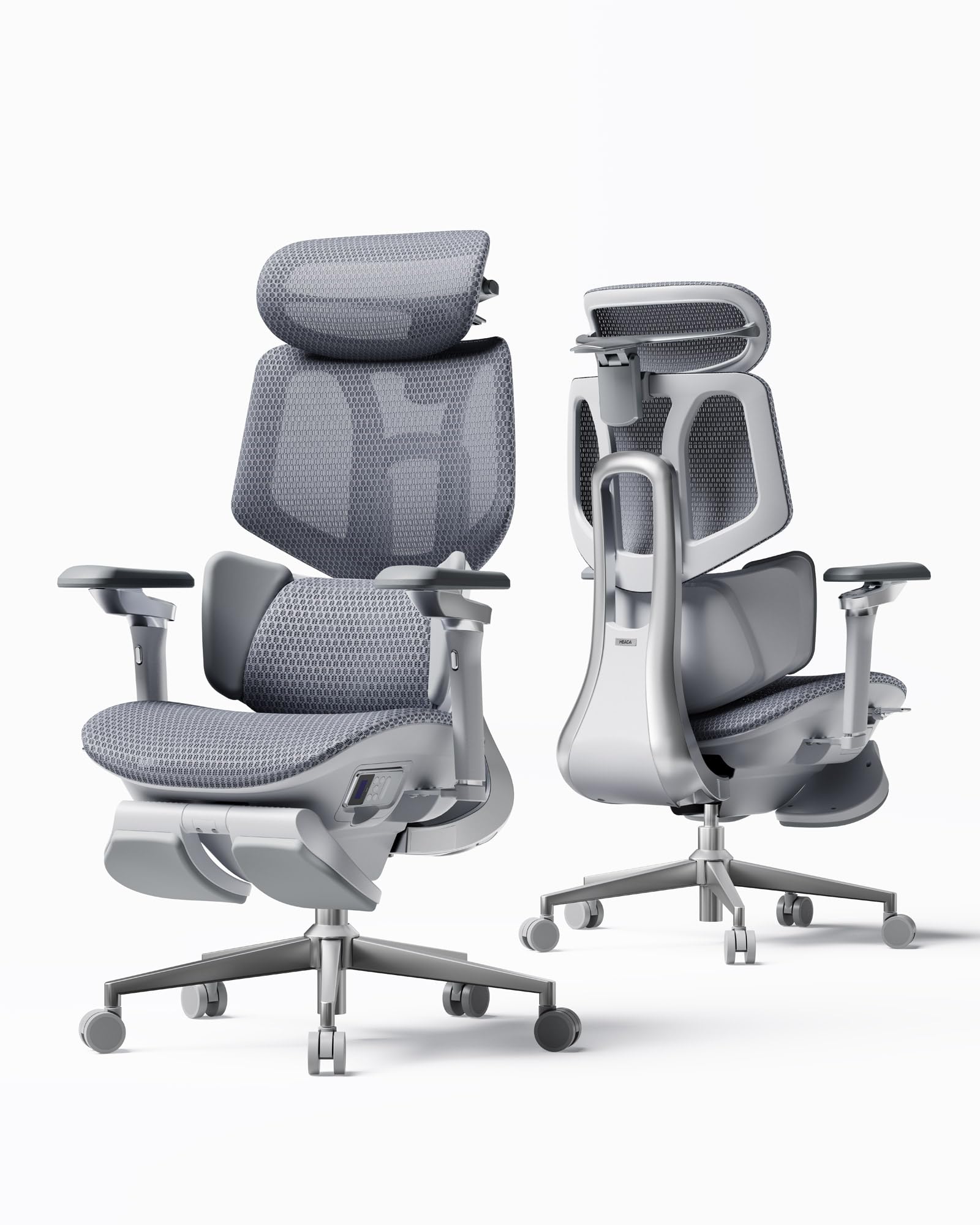
The Hbada X7 uses a gravity-sensing base that automatically adjusts lumbar support intensity as you shift weight, combined with a 6D adjustable waist pillow that conforms to the spine’s curve. This is an active lumbar system that responds to your movement rather than holding a static position, which is valuable for people whose lower back pain flares up when they change sitting angles frequently. The 8D massage rollers with three-level heating (40 to 50 degrees Celsius) add muscle relief that targets the lumbar region directly, though the rollers are best used during breaks rather than continuous typing.
The ventilated seat cushion uses dual fans with three speeds — silent, balanced, and turbo — to prevent the heat buildup that often accompanies foam seats and makes lower back muscles tighten in warm environments. The 4D headrest offers 70 degrees of rotation, 55 millimeters of sliding, and 45 millimeters of height adjustment, which supports the cervical spine and prevents the forward-head posture that cascades tension into the lower back. The 720-degree omnidirectional armrests rotate and extend 110 millimeters, syncing with the 140-degree recline so your arms stay supported when leaning back.
The aluminum frame and five-star nylon base support a 150-kilogram capacity, but users taller than six feet report that the included gas cylinder limits the seat height range. The automated lumbar tracking is impressive on paper but some users find it slightly gimmicky compared to manual depth adjustment, and the massage rollers can feel aggressive on bony spines. Pre-assembled delivery simplifies setup, but the price lands at the high end of the range.
Why it’s great
- Gravity-sensing lumbar auto-adjusts support intensity in real time
- Dual-fan ventilated seat prevents heat-related muscle tightness
- Massage rollers with three-level heating relieve lumbar fatigue
Good to know
- Seat height range limited for users above six feet
- Automated lumbar tracking can feel gimmicky to some users
- Massage rollers may feel too firm for bony spines
4. AutoFull M6 Gaming Chair – Black
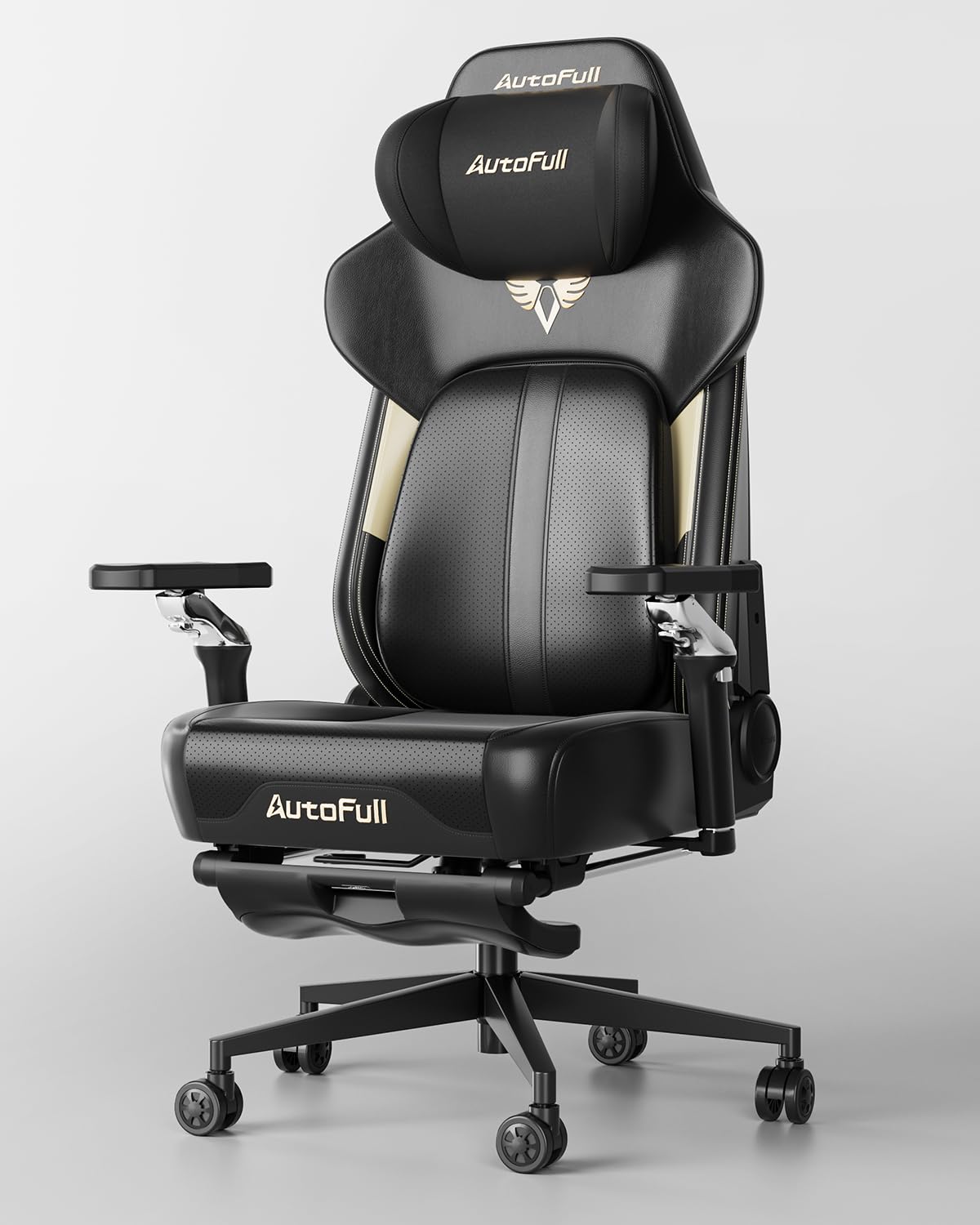
The AutoFull M6’s third-generation active lumbar support provides six centimeters of fore-aft and five centimeters of height adjustment combined with a five-degree auto-swivel technology that tilts the pad to follow your posture changes. Unlike static lumbar pads that press the same spot regardless of your recline angle, the swivel mechanism keeps the pad surface flush against your lower back whether you are leaning forward over a keyboard or reclining during a break. The ventilated and heated seat uses two high-performance fans plus graphite heating up to 104 degrees Fahrenheit, which helps loosen tight lumbar muscles during cold sessions.
The 360-degree mechanical armrests offer five adjustment dimensions including twenty-stage pad rotation, so you can dial your elbow position to the millimeter. The lumbar and leg massage system uses vibration motors embedded in the seat and backrest, useful for post-gaming recovery but not as targeted as a dedicated lumbar roller mechanism. The three-gear tilt mechanism locks at 90, 120, and 135 degrees, giving you distinct presets for focused typing, casual browsing, and napping without losing lumbar contact.
The racing-style seat shape with high side bolsters can feel restrictive if you prefer to sit cross-legged or need to shift weight frequently. Some users report that the instruction manual is nearly unusable due to dark-on-dark photos and missing part numbers, leading to a two-day assembly process. The 75-pound weight makes repositioning a chore, and the mesh is absent — the backrest uses a padded fabric cover that traps more heat than a full mesh design.
Why it’s great
- Active lumbar auto-swivel keeps pad flush during recline changes
- Heated seat with dual fans provides temperature-controlled comfort
- 360-degree armrests with 20-stage pad rotation for precise elbow support
Good to know
- Racing bolsters restrict cross-legged and side-sitting positions
- Assembly instructions are nearly illegible dark-on-dark photos
- Padded backrest traps more heat than full mesh designs
5. Branch Ergonomic Chair Pro – Ivory Boucle
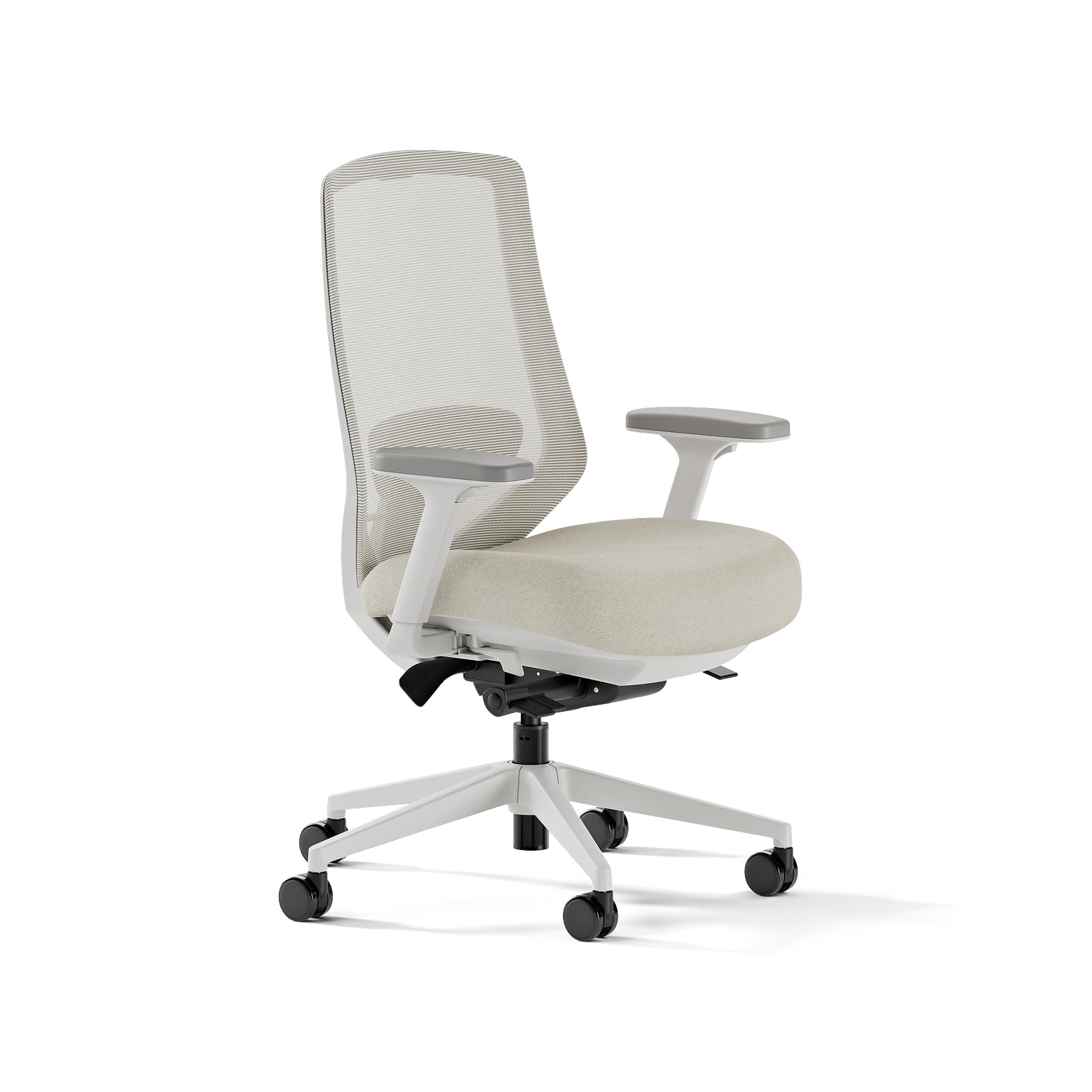
The Branch Ergonomic Chair Pro delivers fourteen points of adjustment including a two-way lumbar cushion that adjusts vertically to align with your specific lumbar curve. The padded lumbar cushion sits separately from the backrest frame, which means the support contour stays consistent rather than flexing unevenly when you lean. The forward tilt seat feature engages the core and tilts the pelvis forward slightly, which can reduce lower back strain during active typing sessions by keeping the natural lordotic curve engaged.
The five-dimensional armrests cover height, width, depth, pivot, and pad rotation, giving you enough range to avoid the shoulder shrug that pulls tension into the lower back. The molded high-density foam seat distributes weight evenly and the waterfall front edge reduces pressure behind the knees, both of which support a neutral pelvis. Users with sciatica or disc-related lower back pain report that the fourteen adjustments let them find a posture that eliminates pain during full workdays, especially when paired with the matching headrest add-on.
The 275-pound maximum weight recommendation limits the chair for larger users, and some buyers report that the seat cushion feels like it bottoms out after a few months of continuous use, especially for heavier individuals. The aluminum frame and boucle fabric look premium but the casters are average and the armrest padding feels firm when you lean on them during breaks. The price sits at the lower end of the premium tier, making it a strong value for the adjustment range it offers.
Why it’s great
- Fourteen adjustment points including independent lumbar cushion height
- Forward tilt seat engages pelvic alignment during active sitting
- Waterfall seat edge reduces hamstring pressure for neutral pelvis
Good to know
- 275-pound capacity may not suit larger users
- Seat cushion can feel bottomed out after extended use
- Armrest padding is firm and casters are average quality
6. GABRYLLY Ergonomic Office Chair – Black

The GABRYLLY targets larger users with a 400-pound capacity and a 2D adjustable lumbar system that moves two inches up and down and 1.6 inches forward and backward, giving you fine control over where the support hits the lumbar curve. The high-back design cradles the entire spine from the sacrum to the upper thoracic region, reducing the chance of slouching that flattens the lower back. The five-inch thick high-density foam seat with built-in springs mimics a sofa bounce without the sagging that usually accelerates lower back fatigue in big and tall chairs.
The breathable mesh backrest uses banded cloud mesh that maintains airflow and keeps the back 15 degrees cooler than leather alternatives, preventing the heat-related stiffness that can aggravate existing lower back pain. The flip-up five-dimensional armrests save space when sliding under the desk and provide height, slide, rotation, and lift functions. Users between 5’6″ and 6’3″ report that the adjustable 3D headrest plus the 135-degree three-gear recline make the chair viable for both focused work and recovery breaks.
The armrests shift easily under pressure, making a clicking sound when you lean on them during typing breaks, which undermines the premium feel of an otherwise well-built chair. The mesh seat feels taut and may create pressure points for users with very low body weight, and the lumbar mechanism requires some force to adjust that can be difficult during seated fine-tuning. The assembly is straightforward with clear instructions, but the chair requires about 30 minutes of build time.
Why it’s great
- 2D lumbar with 1.6-inch depth adjustment fills the lower back gap
- 400-pound capacity with steel frame supports larger body types
- Banded cloud mesh keeps the back 15 degrees cooler than leather
Good to know
- Armrests shift and click under pressure during typing
- Taut mesh can feel uncomfortable for lightweight users
- Lumbar mechanism takes force to adjust while seated
7. ELABEST Ergonomic Mesh Office Chair – Black

The ELABEST uses a bionic-curve backrest that mirrors the natural shape of the spine and an adjustable lumbar pad that targets the lower back independently from the rest of the backrest. Unlike single-layer mesh that loses tension over time, the dual-layer mesh construction maintains consistent resistance against your lumbar region even after the break-in period. The synchro-tilt mechanism with three lockable positions and adjustable tension keeps the seat and backrest moving together, which prevents the shirt-riding effect that separates your lower back from the lumbar support.
The three-dimensional adjustable armrests provide height, width, and angle customization for elbow positioning, which reduces the shoulder tension that pulls on the lower back during long typing sessions. The waterfall mesh seat edge promotes blood flow to the legs and reduces pressure on the hamstrings, keeping the pelvis tilted forward naturally. Users with chronic lower back strain report that the firm lumbar support combined with the bionic-curve backrest reduces fatigue after full workdays without needing to adjust the chair repeatedly.
The chair is designed for users between 5’5″ and 5’10” and under 200 pounds — taller or heavier users may find the backrest too short and the lumbar pad too high even at the lowest setting. The armrests feel wide for smaller frames and cannot be adjusted inward beyond a certain point, which forces some users to sit with their elbows splayed outward. The customer support team responds quickly to requests for replacement gas cylinders or armrest adjustments, which helps offset the sizing limitations.
Why it’s great
- Bionic-curve backrest mirrors natural spine alignment
- Synchro-tilt with three lockable positions keeps lumbar contact consistent
- Waterfall mesh edge supports neutral pelvic tilt and leg circulation
Good to know
- Best for users 5’5″ to 5’10” and under 200 pounds
- Armrests feel wide and cannot be brought inward enough
- Lumbar pad may sit too high for very short users
8. MOLENTS Ergonomic Mesh Desk Chair – Black

The MOLENTS chair offers four-way lumbar adjustment — up, down, forward, and backward — so you can dial both the height and the depth of the support against your lower back. The full mesh seat eliminates the heat buildup common with foam cushions and prevents the sagging that creates uneven pressure under the pelvis. The three-position recline locks at 90, 105, and 120 degrees, giving you task, conversational, and relaxed modes without losing the lumbar curve alignment.
The three-dimensional adjustable armrests slide forward and backward and rotate left and right, which supports the elbows in typing position and reduces the upper body tension that tightens the lower back. The high elastic mesh material provides consistent tension across the backrest surface, and users between 5’4″ and 6’0″ report that the lumbar adjustment range covers their spinal curvature effectively. The assembly takes about 15 minutes with labeled parts and the customer service team proactively follows up to confirm satisfaction.
The armrest panels slide more easily than some users expect, shifting position unintentionally when you lean on them during breaks. The wheels are designed for hard floors but can feel stiff on thick carpet, requiring a separate floor mat for smooth rolling. The frame feels sturdy at 200-plus pounds but the backrest width of 19.7 inches may feel narrow for users with broader shoulders or those who prefer a wider sitting posture.
Why it’s great
- Four-way lumbar adjustment covers height and depth precisely
- Full mesh seat prevents heat buildup and foam sagging
- Quick 15-minute assembly with labeled parts
Good to know
- Armrest panels slide unintentionally under pressure
- Wheels feel stiff on thick carpet without a floor mat
- Backrest width may feel narrow for broad shoulders
9. TRALT Ergonomic Office Chair – Black
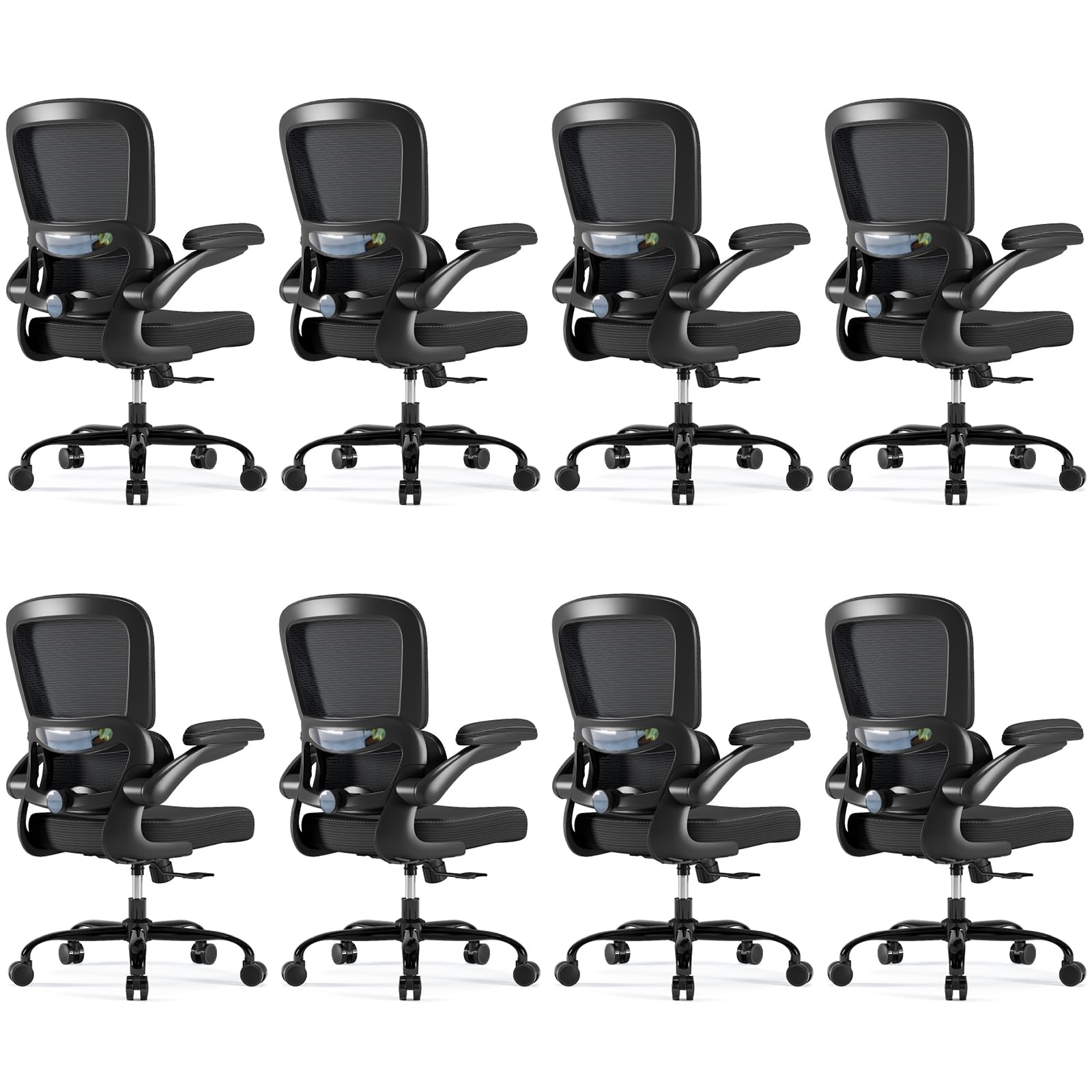
The TRALT chair uses a 3.5-inch high-density sponge cushion that balances softness and support without sagging, combined with an adjustable lumbar pad that targets the lower back independently. The leather seat cover feels skin-friendly and wipes clean easily, and the 20-inch wide seat distributes weight evenly across the thighs to reduce pressure on the lower back. The adjustable lumbar support promotes natural posture and the flip-up armrests save space for small desks while reducing the elbow width that can pull on the lumbar region.
The breathable mesh backrest accelerates air circulation and prevents the stuffy back feeling that often accompanies foam-padded chairs during long sessions. The Class-3 gas lift supports up to 330 pounds and the smooth, quiet casters glide without scratching hardwood or tile floors. Users between 5’5″ and 6’2″ report that the lumbar pad sits at the right height for their lower back curve, and the 360-degree swivel makes accessing multiple monitors effortless.
The sponge cushion, while supportive, retains more heat than a full mesh seat, so users in warm environments may find their lower back becoming sweaty after several hours. The armrests are non-adjustable beyond the flip-up function, which means you cannot fine-tune elbow height or width to relieve shoulder strain that contributes to lower back rounding. Some users note that the chair looks sleek and modern but the lumbar adjustment can feel stiff when you try to reposition it while seated.
Why it’s great
- 3.5-inch high-density cushion maintains shape without bottoming out
- 20-inch wide seat distributes weight evenly across the thighs
- Flip-up armrests save desk space while supporting elbow positioning
Good to know
- Sponge cushion retains heat more than full-mesh seats
- Armrests lack height and width adjustment
- Lumbar adjustment feels stiff when seated
FAQ
What is the difference between active and passive lumbar support for lower back pain?
Can a mesh seat help with lower back pain better than foam?
Final Thoughts: The Verdict
For most users, the best chair for lower back pain is the Herman Miller Aeron (Size C) because the PostureFit SL system stabilizes the pelvis and sacrum independently, which is the root cause of lower back disc compression during prolonged sitting. If you want active lumbar tracking that follows your movement, grab the AutoFull M6. And for a budget-friendly build that supports heavy weight with real lumbar depth control, nothing beats the GABRYLLY Big & Tall Mesh Chair.

Mo Maruf
I created WellFizz to bridge the gap between vague wellness advice and actionable solutions. My mission is simple: to decode the research and give you practical tools you can actually use.
Beyond the data, I am a passionate traveler. I believe that stepping away from the screen to explore new environments is essential for mental clarity and physical vitality.