Our readers keep the lights on and my smoothie glass nicely filled. As an Amazon Associate, I earn from qualifying purchases.
Drag radials are the single most important upgrade you can make to a performance car, truck, or motorcycle built for straight-line acceleration. The difference between a tire that bites and one that spins is the difference between a winning time slip and an embarrassing loss. The wrong compound, the wrong sidewall construction, or the wrong aspect ratio can turn a high-horsepower build into a smoke show that goes nowhere.
I’m Mohammad Maruf — the founder and writer behind WellFizz. I’ve spent hundreds of hours analyzing street-legal drag radial data across the performance tire market, comparing compound technology, tread void distribution, load ratings, and customer feedback patterns to separate real performers from hype.
Whether you are building a street/strip muscle car, a turbocharged import, or a high-horsepower daily driver, finding the best drag radial means matching the right spec to your specific power level and usage pattern — and this guide breaks down exactly how to do that.
How To Choose The Best Drag Radial
Buying a drag radial is not like buying an all-season tire. Every spec is a compromise between grip and longevity. Understanding these three factors will prevent you from wasting money on a tire that doesn’t match your driving style.
Compound Softness and Heat Cycling
The sticky feel of a drag radial comes from a soft rubber compound designed to liquefy under heat. R2 compounds — found on premium Mickey Thompson and Nitto models — offer maximum traction at the strip with minimal burnout needed. The tradeoff is accelerated wear on the street. Harder silica-based compounds last thousands more miles but require more heat to hook on a prepared surface.
Sidewall Construction: Radial vs. Bias-Ply
A radial-ply drag tire uses flexible sidewalls that absorb shock and track straight at highway speeds, making it ideal for street use. Bias-ply construction has stiffer sidewalls that transfer power directly to the contact patch — better for the track but skittish on the road. Most DOT-approved drag radials are radials for a reason: they handle the daily commute without wandering.
Section Width and Contact Patch
Wider is not always better. A tire that is too wide for your rim will bulge the sidewall and reduce the effective contact patch. The ideal section width matches the rim width so the tread lays flat under load. For 17-inch rims, a 275 to 305 section width is the sweet spot for most high-horsepower street cars.
Quick Comparison
On smaller screens, swipe sideways to see the full table.
| Model | Category | Best For | Key Spec | Amazon |
|---|---|---|---|---|
| Nitto NT555RII | Premium Street/Strip | High-torque street cars with daily driving needs | 102W speed rating with R2 compound | Amazon |
| Mickey Thompson ET Street S/S P305 | Premium Street/Strip | IRS-equipped Cobras and high-horsepower Mustangs | R2 compound, 44 PSI max pressure | Amazon |
| Mickey Thompson ET Street S/S P275 | Mid-Range Street/Strip | Budget-conscious street/strip builds | 6/32nds tread depth, R2 compound | Amazon |
| Nitto NT555 G2 | Premium Summer | High-speed cornering and daily street use | 103W speed rating, 11/32nds tread depth | Amazon |
| Shinko Hook-Up Drag Rear | Motorcycle Drag | Hayabusa and stretched sport bikes | Softest Shinko compound, 4-ply | Amazon |
| Cooper Cobra Radial G/T | Budget All-Season | Classic muscle cars with daily driving needs | 40,000-mile treadwear warranty | Amazon |
In‑Depth Reviews
1. Nitto NT555RII P305/45R17

The Nitto NT555RII is the benchmark for streetable drag radials that don’t sacrifice daily manners. Its R2 compound delivers immediate traction on the street with minimal warm-up, and the modified sidewall construction improves launch characteristics over the previous generation. Hellcat owners report consistent 1.7-second 60-foot times on unprepped asphalt with no burnout required.
Unlike many drag radials that become dangerous in rain, the NT555RII retains surprising wet-weather capability thanks to its large twin center ribs that channel water away from the contact patch. Customers also note that the tire runs quieter and rides smoother than the Mickey Thompson ET Street S/S, making it a better choice for the daily driver who hits the track on weekends.
The tradeoff is that the tread life is shorter than a pure summer tire like the Nitto NT555 G2, though many users report 10,000 to 15,000 miles of hard use before the compound starts to fall off. For a 700-horsepower stick-shift Supra or a 650-wheel-horsepower Hellcat, this tire hooks harder out of the box than anything in its class.
Why it’s great
- Exceptional dry traction from the R2 compound with minimal burnout needed
- Surprisingly good wet-weather performance compared to competitor drag radials
- Quieter and more comfortable ride than most sticky street/strip tires
Good to know
- Tread life is moderate — expect 10-15k miles under hard use
- May run large on some applications; verify clearance before mounting
2. Mickey Thompson ET Street S/S P305/35R18

Mickey Thompson’s ET Street S/S in the 305/35R18 size is the go-to choice for independent rear suspension (IRS) cars like the Terminator Cobra. The R2 compound hooks hard at the strip with little to no burnout, and the redistributed tread void puts more rubber on the pavement than earlier designs. Owners of 700-wheel-horsepower Mustangs confirm that this tire transforms a car that previously spun through third gear.
The 44 PSI maximum pressure rating allows for aggressive air-down strategies at the track, letting you spread the contact patch for maximum grip. The tubeless construction seals reliably without the hassle of tubes, and the DOT certification means you can drive to the track, run 10-second passes, and drive home — as long as you are comfortable with the tread life tradeoff.
Be aware that the H speed rating (130 mph) is lower than competitors like the Nitto NT555RII, which is Y-rated. If your car regularly exceeds 130 mph at the top of the quarter-mile, you need to verify that this tire’s rating matches your trap speed. Some owners also report that the tire wears quickly — around 5,000 to 8,000 miles — especially on aggressive street launches.
Why it’s great
- R2 compound hooks hard on the strip with minimal burnout required
- Redistributed tread void improves contact patch for dry traction
- Tubeless construction seals reliably without tubes
Good to know
- H speed rating may be insufficient for cars trapping over 130 mph
- Tread life is short — typically 5,000 to 8,000 miles under hard use
3. Mickey Thompson ET Street S/S P275/40R17
The P275/40R17 version of the ET Street S/S brings Mickey Thompson’s proven R2 compound to a more affordable price point without sacrificing the compound quality. This size fits a massive range of late-model Mustangs, Camaros, and other performance cars that run 17-inch wheels. The redistributed tread void and R2 compound work together to deliver excellent dry traction for cars in the 450 to 600 wheel-horsepower range.
Users consistently report that these tires hook incredibly well on the street after a short warm-up period, and several owners note that they outperform more expensive options in wet conditions — a rarity for a sticky drag radial. The 6/32nds of tread depth is shallow by design to reduce tread squirm under hard acceleration, which directly translates to better 60-foot times.
The biggest complaint from owners is that the 6/32nds tread depth means the tire wears quickly on the street, with some users reporting bald spots after 4,000 miles of aggressive driving. A small number of units have arrived with tread dips that cause vibration, so inspect the tire carefully upon delivery and have it road-forced balanced.
Why it’s great
- R2 compound delivers track-level traction at a lower entry cost
- Works well on the street with only a short warm-up required
- Solid wet traction compared to other drag radials in the same price tier
Good to know
- Shallow 6/32nds tread depth leads to fast street wear
- Some units arrive with tread dips causing vibration
4. Nitto NT555 G2 305/30ZR20

The Nitto NT555 G2 is a high-performance summer tire first and a drag radial second, making it the choice for drivers who want a single tire that handles corners at triple-digit speeds and still hooks reasonably well on the drag strip. The silica-based compound provides high stiffness for dry and wet cornering, while the circumferential grooves evacuate water effectively to prevent hydroplaning at highway speeds.
Owners of 2007-2014 Shelby GT500s and Polaris Slingshots report excellent tread life — some logging over 38,000 miles including track days — which is unheard of for a traditional drag radial. The 103W speed rating means the tire is safe at speeds above 168 mph, making it one of the fastest-rated options on this list. The 11/32nds of tread depth also keeps road noise surprisingly low for a 305-section-width tire.
The tradeoff is that the NT555 G2 does not match the outright straight-line traction of an R2-compound drag radial on a prepped surface. Drivers of turbocharged cars with 700+ horsepower may find that the tire spins through first and second gear on the street unless fully warmed up. If consistent drag-strip performance is your primary goal, stick with a dedicated drag radial.
Why it’s great
- Exceptional tread life — up to 38,000 miles with mixed driving
- 103W speed rating for high-speed stability and safety
- Excellent wet-weather grip and highway noise suppression
Good to know
- Straight-line traction is lower than dedicated R2-compound drag radials
- Needs full warm-up to hook on high-horsepower street cars
5. Shinko Hook-Up Drag Rear Tire 200/50ZR17
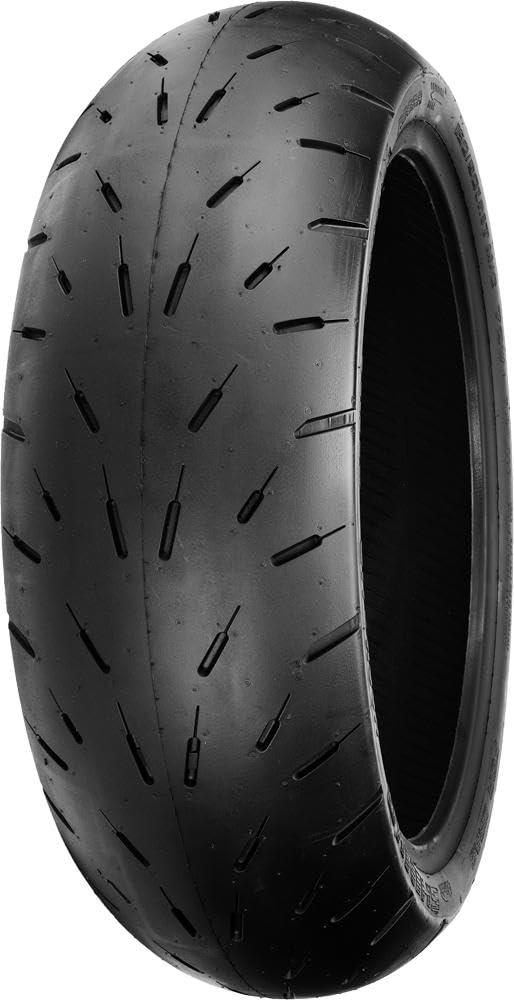
The Shinko Hook-Up is purpose-built for sport bikes with stretched swingarms, most commonly found on turbocharged Hayabusa and ZX-14R drag builds. The 200/50ZR17 profile provides a massive contact patch, and Shinko’s softest compound is so sticky that owners of 69-inch wheelbase bikes report that the tire simply will not spin — it grabs and goes regardless of how hard you launch.
The aramid belting keeps the tire stable at high speed, and the DOT approval means it is technically street-legal, though the ultra-soft compound wears quickly on the street. The 17-inch diameter fits most modern sport bikes, and the lightweight construction reduces unsprung mass compared to bias-ply alternatives, helping the suspension react faster at the starting line.
The primary downside is longevity. This tire is designed for the quarter-mile, not the commute. Owners typically see 2,000 to 4,000 miles before the compound degrades significantly. For a street rider who launches hard at every stoplight, that is the price of admission. Pair it with a Shinko 003 Stealth front tire for a matching tread pattern.
Why it’s great
- Softest compound available from Shinko — virtually impossible to spin on street
- Lightweight aramid-belted construction reduces unsprung mass
- DOT approved for street use with proper fitment
Good to know
- Very short tread life — 2,000 to 4,000 miles under hard use
- Not recommended for front use; must pair with a matching front tire
6. Cooper Cobra Radial G/T P295/50R15

The Cooper Cobra Radial G/T is a legacy all-season tire with raised white lettering designed for classic muscle cars that see street duty, not track time. It is not a drag radial in the modern sense — it lacks the soft compound and aggressive tread void of purpose-built options — but for a weekend cruiser that needs to handle rain, highway miles, and occasional spirited acceleration, it provides a balanced compromise.
The 40,000-mile treadwear warranty is unheard of among true drag radials, and the even-wearing design means the tire maintains its balance and noise profile over its lifespan. Owners of Chevelle, Nova, and Mustang restomods consistently praise the low noise level and smooth ride quality. The 105 load index supports up to 2,061 pounds per tire, adequate for heavy B-body and truck applications.
If you are building a car that will see regular strip time and needs to launch on a prepped surface, look elsewhere — this tire will spin under any real power. But for the enthusiast who wants the classic muscle car look with modern all-season performance, the Cobra Radial G/T delivers exactly what the spec sheet promises.
Why it’s great
- 40,000-mile treadwear warranty — unmatched longevity in this category
- Raised white lettering with protective coating for classic car aesthetics
- Very quiet and smooth ride quality on the highway
Good to know
- Not a true drag radial — limited traction under hard acceleration
- Speed rating T (118 mph) limits top-end capability
FAQ
What is the difference between a drag radial and a regular radial tire?
Can I drive a drag radial in the rain?
How long should a drag radial last on the street?
Do I need a different tire for the front axle?
What happens if I run a drag radial that is too wide for my rim?
Final Thoughts: The Verdict
For most users, the best drag radial winner is the Nitto NT555RII because it offers the best balance of R2-compound traction, wet-weather capability, and daily-driver noise comfort. If you want maximum strip-focused bite and have an IRS car, grab the Mickey Thompson ET Street S/S P305/35R18. And for a sport bike that needs to hook on the street without spinning, nothing beats the Shinko Hook-Up Drag Rear.

Mo Maruf
I created WellFizz to bridge the gap between vague wellness advice and actionable solutions. My mission is simple: to decode the research and give you practical tools you can actually use.
Beyond the data, I am a passionate traveler. I believe that stepping away from the screen to explore new environments is essential for mental clarity and physical vitality.