Our readers keep the lights on and my smoothie glass nicely filled. As an Amazon Associate, I earn from qualifying purchases.
The wrong down jacket turns a bluebird ski day into a shivering, damp mess. You need insulation that traps heat even when the chairlift drops you into a 20 mph wind, plus a shell that sheds snow without sealing in sweat. A dedicated ski jacket must balance fill power, water repellency, and motion-friendly articulation — not just keep you warm standing still.
I’m Mohammad Maruf — the founder and writer behind WellFizz. My research into the best down jacket for skiing involved analyzing fill power ratings, DWR coatings, seam construction, and real customer feedback across dozens of models to separate resort-ready puffers from casual commuter gear.
This guide breaks down the top nine down ski jackets by insulation type, weather protection, and fit so you can pick the one that matches your terrain and temperature range.
How To Choose The Best Down Jacket For Skiing
A ski-specific down jacket differs from an everyday puffer in three critical ways: water resistance, motion range, and ventilation. General-purpose down jackets lack the protective shell and tailored articulation needed for dynamic alpine movement.
Fill Power and Insulation Blend
Fill power measures the loft per ounce — 600-fill down is denser and heavier, while 700 to 800-fill down traps more warmth per gram. For skiing, a hybrid approach often works best: a down layer for core warmth paired with synthetic insulation in the arms or underarm gussets, where moisture from sweat can compromise down’s loft. Pure down jackets without synthetic zones risk collapsing when you perspire during high-exertion runs.
Weatherproofing: DWR, Membranes, and Seams
A durable water-repellent (DWR) finish helps snow slide off rather than soaking in, but sustained wet snow or sitting on a damp chairlift can overwhelm a basic DWR treatment. Jackets with a waterproof membrane (like a fully sealed Gore-Tex or proprietary laminate) offer true snow protection, while critically taped seams prevent moisture entry through stitch holes. For resort skiing, a DWR-coated shell is usually sufficient; for backcountry or storm days, opt for a taped membrane.
Fit and Ski-Specific Features
A ski jacket needs enough room for a base and mid layer without restricting arm reach when planting poles. Look for a drop hem at the back to prevent snow from riding up, a powder skirt, and adjustable cuffs that seal over gloves. The hood should fit over a ski helmet without blocking peripheral vision. A dedicated lift-pass pocket, internal goggle wipe, and zippered vents (pit zips) let you dump heat without unzipping fully.
Quick Comparison
On smaller screens, swipe sideways to see the full table.
| Model | Category | Best For | Key Spec | Amazon |
|---|---|---|---|---|
| Helly Hansen LIFALOFT Insulated | Premium | Resort all-day warmth | LIFALOFT synthetic insulation, helmet-compatible hood | Amazon |
| Fjällräven Expedition Down Lite | Premium | Extreme cold weather | 700-fill down, G-1000 fabric panels | Amazon |
| The North Face McMurdo Bomber | Premium | Storm-proof resort use | Waterproof, 600-fill waterfowl down, removable hood ruff | Amazon |
| Oakley Thermonuclear Protection | Mid-Range | Snowboarding and park laps | Low back drop, helmet hood, vent zips | Amazon |
| Rab Microlight Alpine | Mid-Range | Lightweight layering under a shell | 700-fill down, 1.03 lb weight, packable | Amazon |
| Obermeyer Ski Jacket | Mid-Range | Women-specific resort fit | Detachable hood/fur, arm pass pocket | Amazon |
| Spyder Bromont Insulated Puff | Mid-Range | Warmth-focused value buy | Insulated puff construction, multiple pockets | Amazon |
| Columbia Slope Style | Value | Budget-friendly warm option | Insulated, tailored fit, ski-pass pocket | Amazon |
| The North Face Aconcagua 3 | Value | Lightweight casual winter wear | 600-fill recycled down/synthetic blend, WindWall fabric | Amazon |
In‑Depth Reviews
1. Helly Hansen LIFALOFT Insulated Ski Jacket

The LIFALOFT insulation is Helly Hansen’s proprietary air-permeable synthetic that mimics down’s warmth-to-weight ratio without the moisture vulnerability. Testers consistently report staying warm in the 10°F to 32°F range with only a merino base layer underneath, which speaks to the insulation’s effectiveness during active resort skiing.
Pocket layout is purpose-built for the mountain: an RFID pass holder on the sleeve, an internal goggle wipe, and a battery-saver pocket for your phone. The hood fits comfortably over a helmet and doesn’t restrict head rotation when checking for traffic. Pit zips provide crucial ventilation on warmer spring days or during high-exertion runs.
Some users note that the sleeves and shoulders can saturate in wet snow after extended exposure, indicating the DWR finish has limits during full-on storm days. The slim fit runs slightly narrow, so sizing up is wise if you plan to wear a thick mid-layer underneath.
Why it’s great
- Lighter and less bulky than traditional down-insulated ski jackets
- Excellent thermal retention for its weight class
- Well-placed ski-specific pockets and helmet-compatible hood
Good to know
- Slim fit may require sizing up for thick layers
- DWR can be overwhelmed in prolonged wet snow
2. Fjällräven Expedition Down Lite Jacket
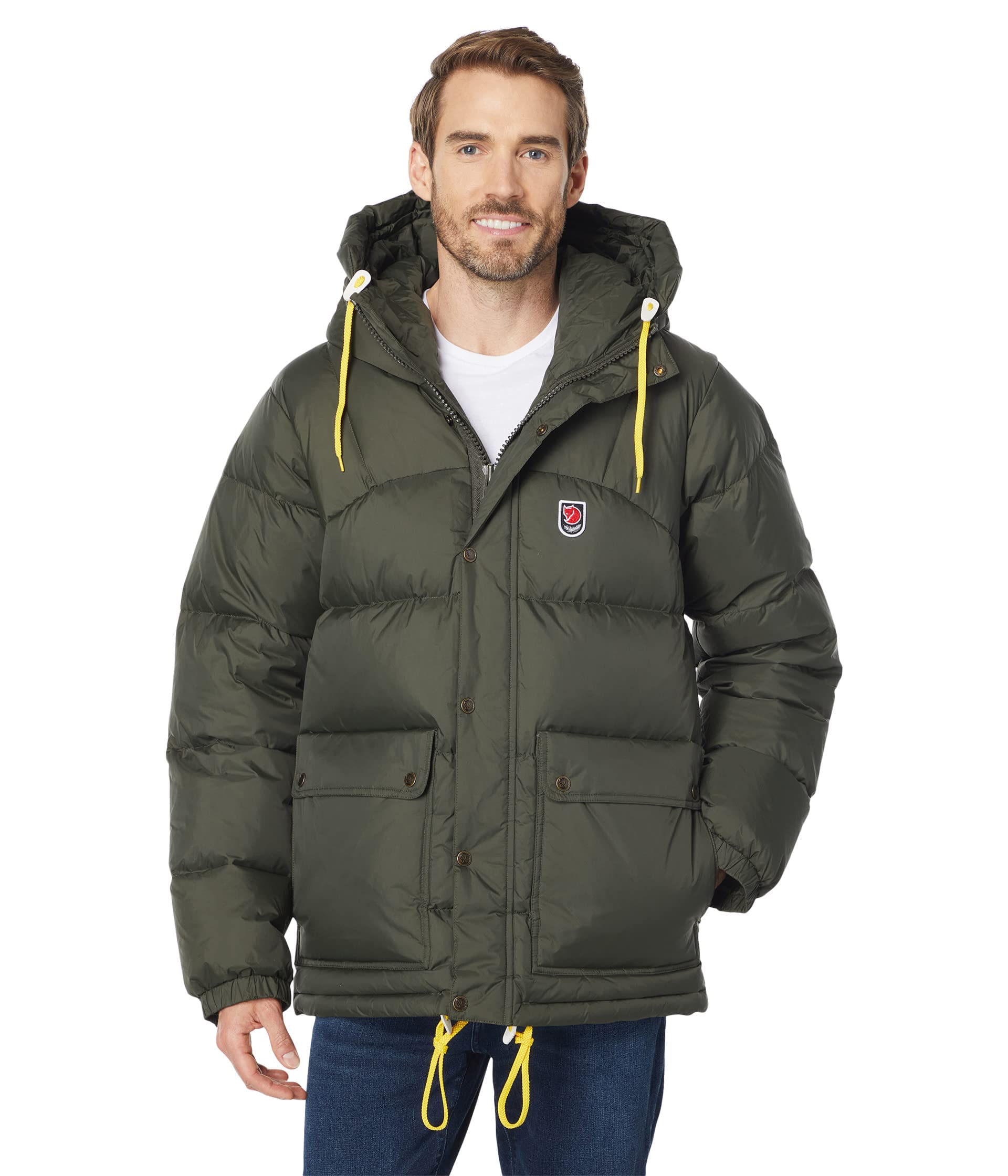
The Expedition Down Lite uses 700-fill down in a generously baffled construction that delivers sleeping-bag-level warmth. Reinforced G-1000 fabric panels on the shoulders and elbows add abrasion resistance where ski edges and backpack straps cause the most wear, making this jacket unusually durable for a down piece.
Customer feedback highlights the hood’s effectiveness at blocking wind and locking in heat — it cinches down so well that one reviewer compared it to a cozy sleeping bag on cold walks. The length extends past the waist, providing extra coverage when bending into a tuck or sitting on a chairlift.
The jacket is not fully waterproof; the G-1000 fabric requires waxing for maximum weather resistance. A handful of users found that strong wind could penetrate the shell, which makes this parka better suited for dry-cold climates or as a stationary belay layer rather than a high-exertion resort jacket.
Why it’s great
- Exceptional warmth for sub-zero conditions
- Reinforced panels increase lifespan against abrasion
- Hood seals out wind and retains heat effectively
Good to know
- Not fully waterproof; needs waxing for wet snow
- Wind may cut through shell in exposed ridgeline conditions
3. The North Face Men’s McMurdo Bomber Jacket
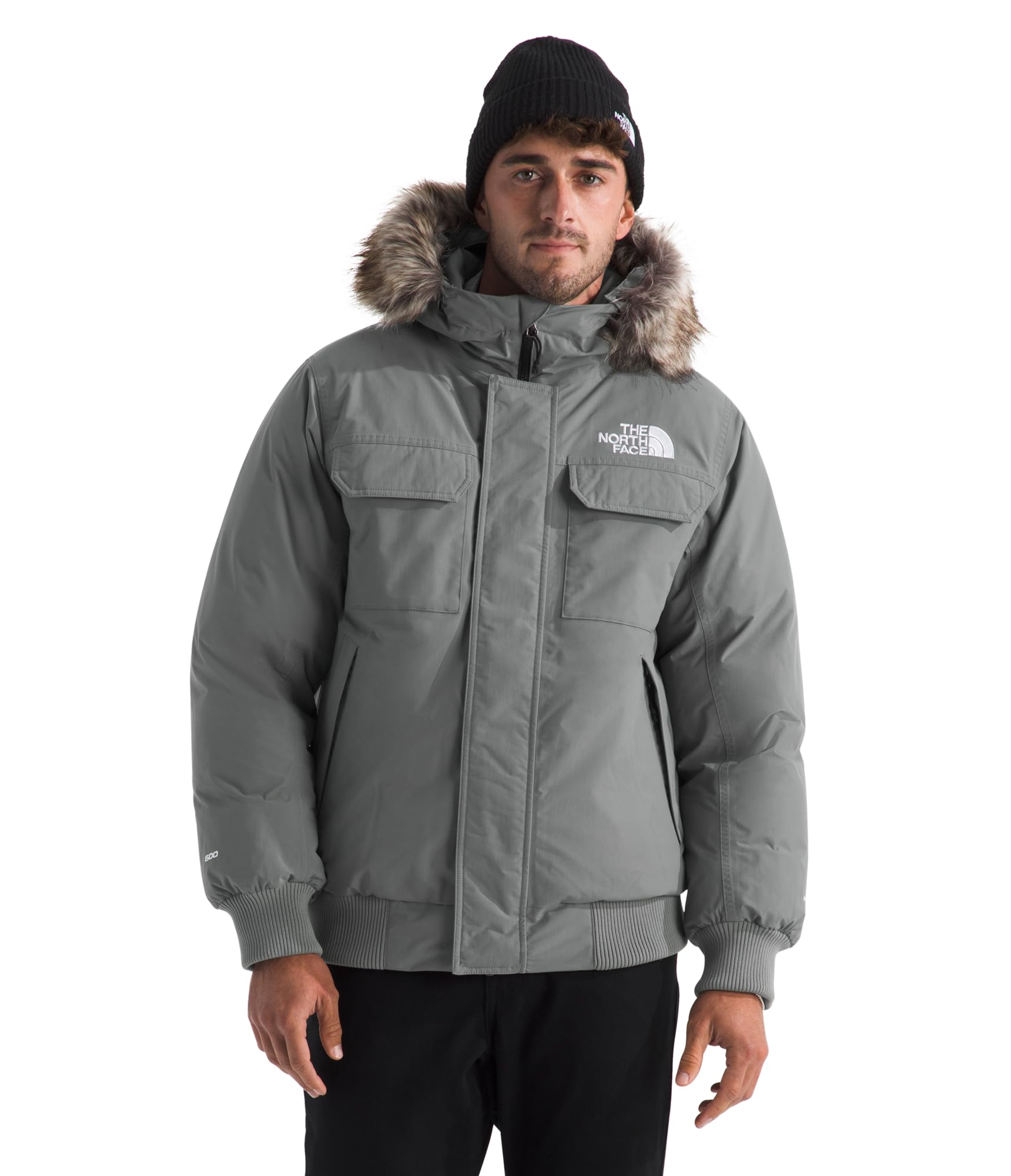
The McMurdo pairs a fully waterproof membrane with 600-fill waterfowl down insulation, creating a bomber that sheds snow and rain while retaining serious heat. Unlike many down shells that require a separate waterproof layer, this jacket handles wet chairlift rides and snow squalls on its own.
The aviator cut provides a roomy chest and shoulders for layering, and the detachable faux-fur ruff adds a windbreak around the face. Inner cuffs with thumbholes and multiple zippered pockets (including a media-compatible phone slot) make it practical for long resort days.
Several users note the jacket runs large — the bomber silhouette is intentionally generous. It also lacks a powder skirt, which means deep-powder skiers may want a jacket with a dedicated snow lock. The bulk makes it less packable than a standard puffer, so it is best worn as an outer shell rather than stashed in a backpack.
Why it’s great
- Integrated waterproof membrane eliminates need for a separate shell
- Thick down fill handles deep-cold days confidently
- Detachable hood ruff adds wind protection on exposed lifts
Good to know
- No powder skirt for deep snow conditions
- Bomber cut can feel bulky and is not packable
4. Oakley Men’s Thermonuclear Protection Tbt Insulated Jacket
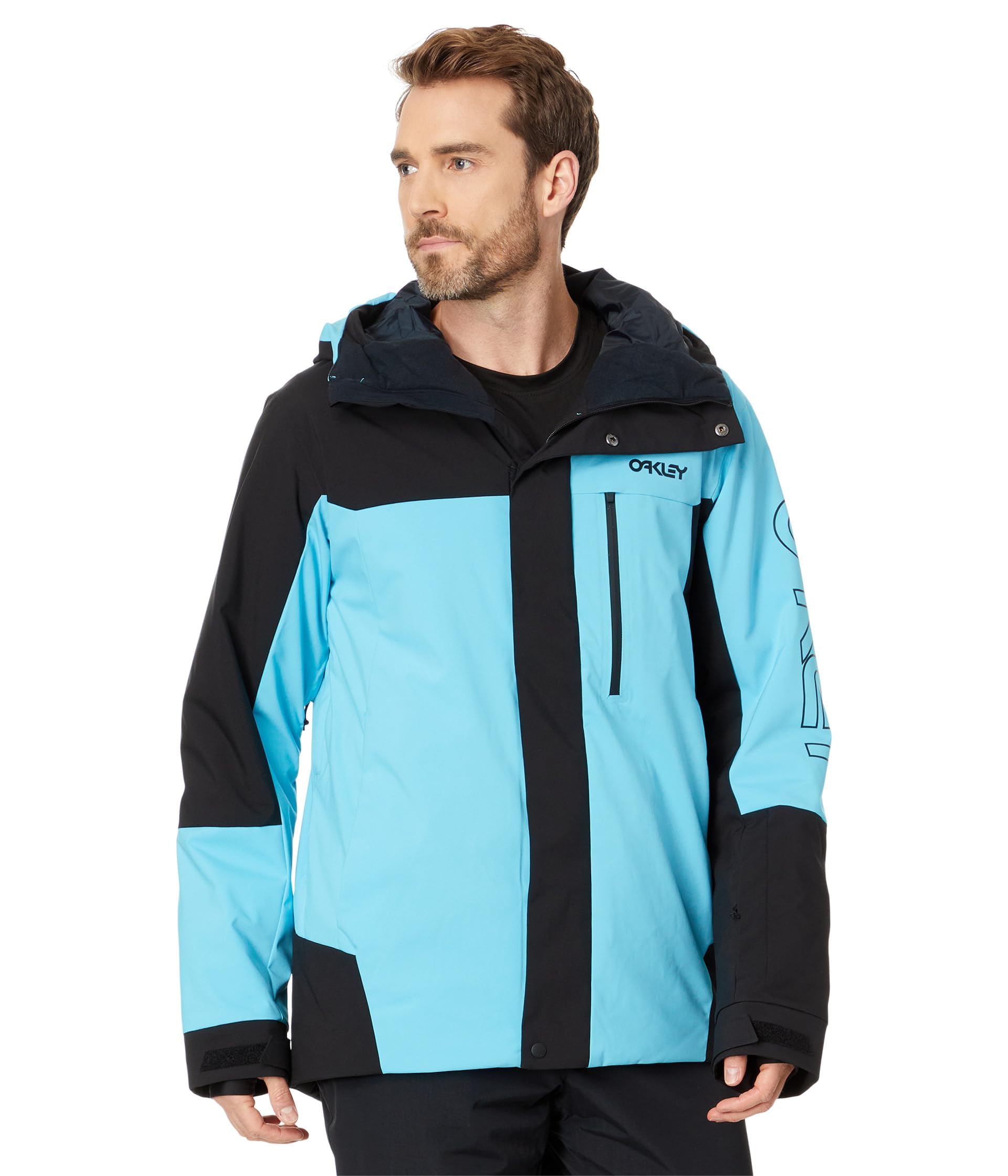
The Oakley Thermonuclear Protection jacket is designed with snowboarders and park skiers in mind. The low back drop prevents snow from creeping up when you sit or fall, and the oversized hand-warmer pockets are positioned high enough to stay clear of a backpack hip belt. The hood is large enough to fit over a helmet without pulling the collar tight.
Temperature regulation is handled by pit zips and a breathable outer fabric that vents heat during active runs. Several buyers tested it in wet snow and found the waterproofing held up well for a full day on the mountain. The sleeve length is notably generous, which works for tall riders but may require velcro cuff adjustment for shorter arms.
The jacket runs slightly large in both chest and sleeve length. Buyers report that sizing down from their usual fit gives a more tailored look without sacrificing layering room. The bold color options — including a vivid orange — are a plus for visibility on crowded slopes.
Why it’s great
- Extended back drop prevents snow creep during falls and sits
- Helmet-compatible hood with good range of motion
- Effective vent zips for active temperature management
Good to know
- Sleeves run long; velcro adjustment is required for shorter arms
- Runs large enough that sizing down may improve fit
5. Rab Men’s Microlight Alpine 700-Fill Down Hooded Puffer Jacket
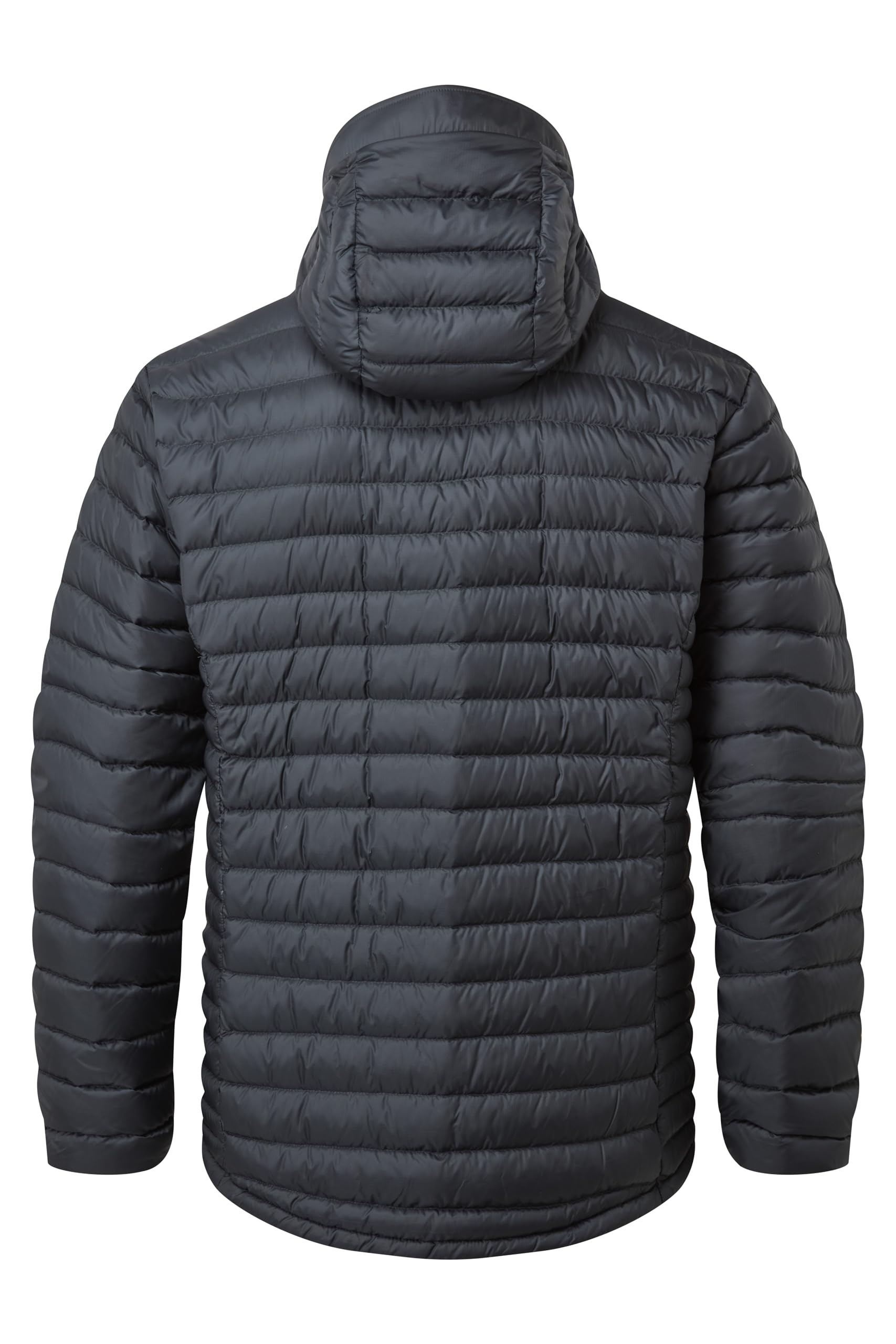
The Microlight Alpine is a 700-fill down mid-layer designed to be worn under a waterproof shell. Weighing just over a pound, it packs down small enough to stow in a hydration pack or ski backpack, making it ideal for backcountry skiers who need adjustable insulation on long tours. The Pertex Quantum outer fabric resists down leakage and provides a light wind barrier.
The helmet-compatible hood rolls up neatly with a single cord lock, and the jacket’s athletic cut layers cleanly under a shell without bunching. Testers who wore it on multi-day treks in Patagonia praised the warmth-to-weight ratio and breathability during high-exertion climbs.
The Microlight Alpine is not a standalone ski jacket — it lacks a waterproof membrane, powder skirt, and ski-specific pockets. Some users also report that the zipper feels less robust compared to heavier resort shells. The left-side zipper pull (European orientation) may take adjustment for some wearers.
Why it’s great
- Exceptionally lightweight and packable for its warmth level
- 700-fill down provides great loft without bulk
- Tailored fit layers smoothly under a hard shell
Good to know
- Not weatherproof; requires a shell for wet snow
- Zipper feels lighter than resort-oriented jackets
6. Obermeyer Women’s Ski Jacket
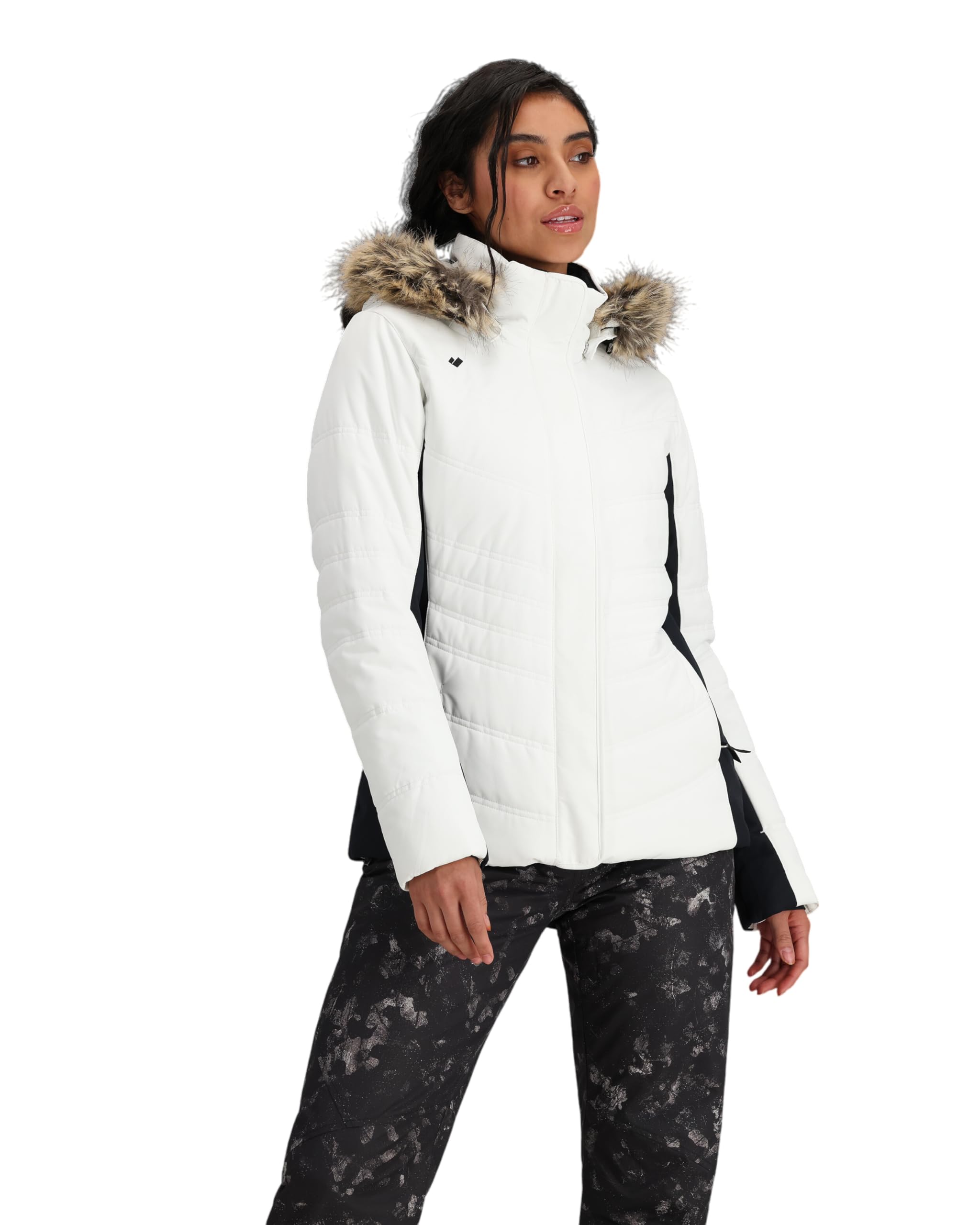
Obermeyer’s ski jacket is built specifically for women with a tailored cut that avoids the boxy proportions of unisex models. The detachable hood and fur ruff offer style flexibility, while the integrated fleece-lined collar and chin guard prevent cold drafts on the lift. An arm pocket for a ski pass and a chest pocket for valuables keep essentials accessible without unzipping the main compartment.
Buyers consistently note that the jacket feels warm without being bulky — the down-alternative insulation traps heat while allowing enough range of motion for pole planting and upper-body rotation. The wrist gaiters and internal powder skirt seal effectively against snow entry.
Some long-term owners report that the velcro closure on the wrist cuffs wears out over time, and the color selection can be limited through certain seasons. The fit runs true to size for a winter layer, but users who prefer an oversized look may want to size up.
Why it’s great
- Women-specific cut with good mobility for skiing
- Detachable hood and fur for customizable styling
- Smooth zippers and warm fleece-lined collar
Good to know
- Velcro cuffs may wear out after extended use
- Limited color and size availability through the season
7. Spyder Men’s Bromont Insulated Puff Ski Jacket
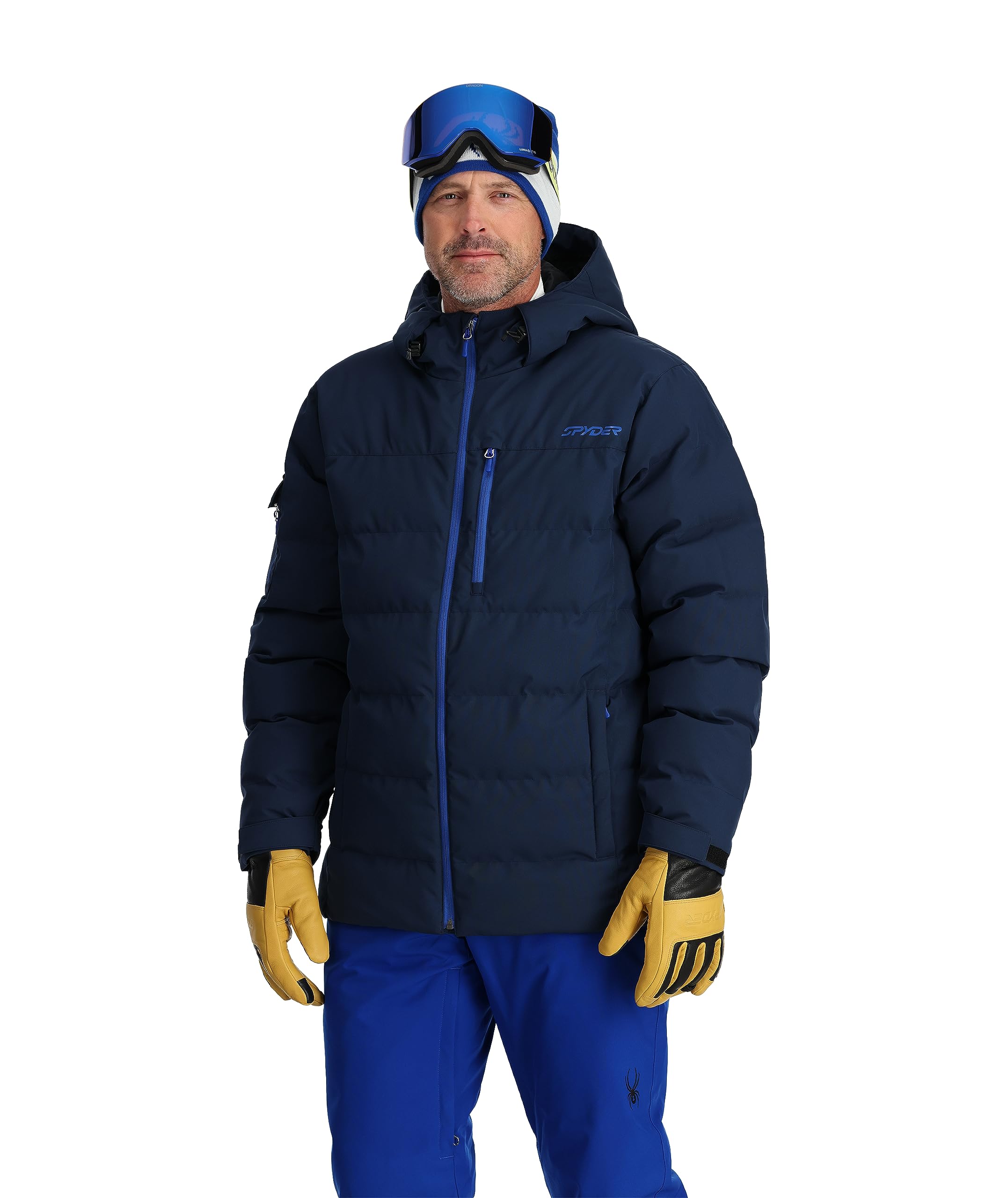
The Bromont is a traditional insulated puffer from Spyder, a brand with strong equity in ski apparel. Its fully insulated body provides predictable warmth that multiple reviewers confirm is among the warmest jackets they own — even those who own several other ski jackets. The exterior shell uses a durable nylon face fabric that resists light snow and wind.
Pocket layout includes secure zippered hand pockets and interior storage, though the jacket lacks a dedicated ski-pass arm pocket. The fit is true to size for a mid-weight layer, and the stand collar blocks wind without needing a hood for moderate conditions.
The Bromont does not include a powder skirt or helmet-compatible hood, which limits its utility in deep powder or storm days. The puff construction is also less packable than down-filled alternatives, so it is best worn as a primary outer layer rather than stashed in a pack for backcountry use.
Why it’s great
- Users consistently rate it as their warmest ski jacket
- Durable outer fabric resists abrasion and light moisture
- Classic Spyder look with reliable build quality
Good to know
- No powder skirt or helmet-compatible hood
- Bulky construction limits packability
8. Columbia Slope Style Jacket
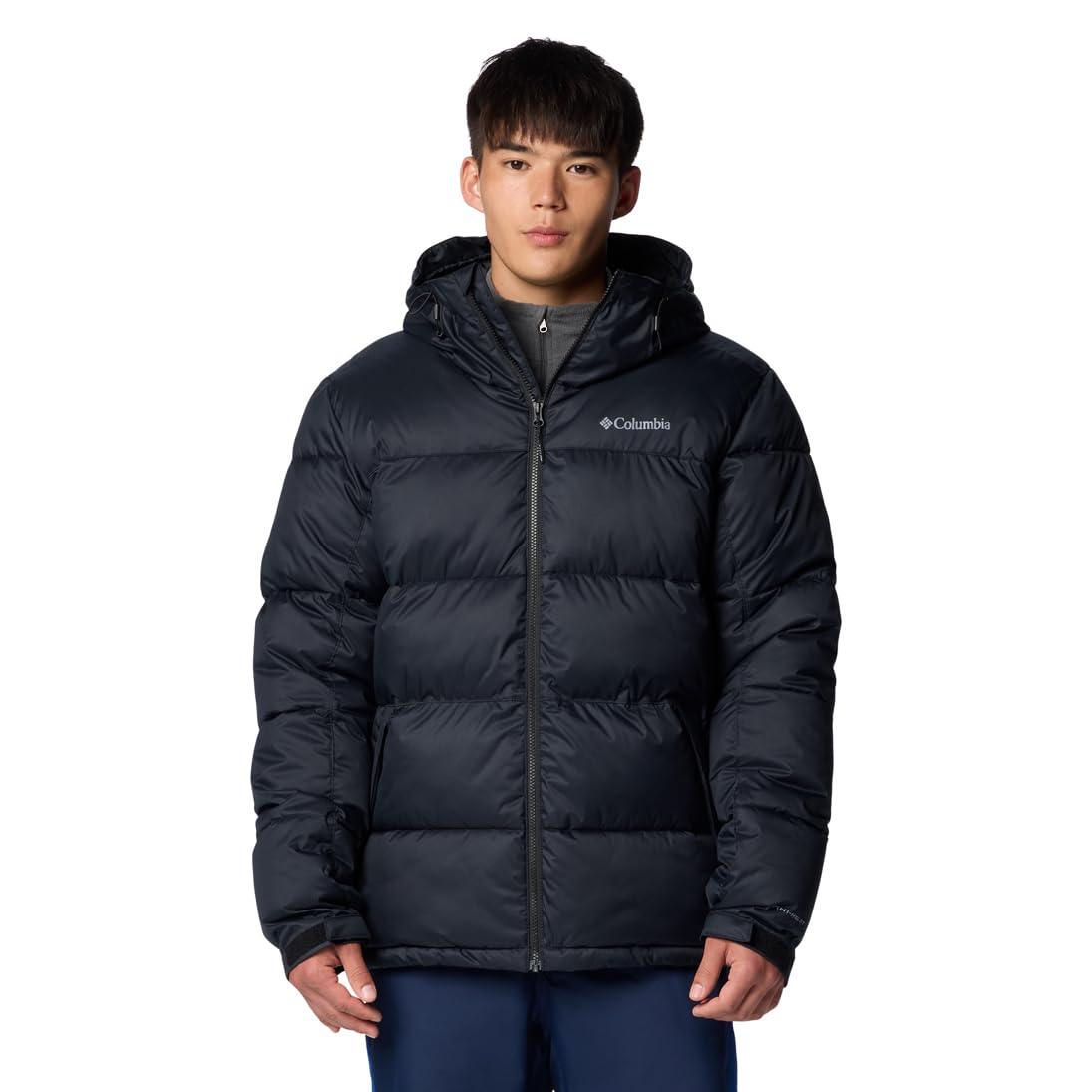
Columbia’s Slope Style delivers proven warmth at a price point that undercuts most dedicated ski-specific jackets. The quilted insulation holds up in sub-zero temperatures, and the tailored athletic fit avoids the puffiness common in budget puffer coats. A dedicated ski-pass pocket on the sleeve and lined outer pockets add mountain utility.
Multiple users report wearing this jacket for years as a replacement for a prior Columbia model, and they find the warmth retention and wind resistance consistent across generations. The jacket is effective down to about 20°F with a light base layer, making it suitable for most resort days in the lower 48.
The Slope Style lacks a powder skirt and helmet-compatible hood, and some users note it is slightly bulky compared to similarly insulated jackets. The back of the jacket does not feature a drop hem, which means snow can ride up during deep-powder conditions or if you take a hard fall.
Why it’s great
- Strong insulation performance for the price tier
- Tailored fit avoids excess bulk across the chest
- Included ski-pass pocket and lined exterior pockets
Good to know
- No powder skirt or helmet hood
- Slightly bulky feel in the arms and shoulders
9. The North Face Women’s Aconcagua 3 Jacket

The Aconcagua 3 combines 600-fill recycled waterfowl down with recycled polyester insulation in a hybrid blend that maintains loft in damp conditions better than pure down. The WindWall fabric resists wind effectively, and the non-PFC DWR finish sheds light snow. It is a lightweight, non-bulky jacket that fits neatly under a shell for resort days or standalone wear for mild conditions.
User feedback highlights the balance between warmth and breathability — the jacket keeps you comfortable on cold chairlifts without overheating during active runs. The standard fit allows a light sweater underneath without restricting arm movement.
The Aconcagua 3 is not a true ski jacket: it lacks a powder skirt, helmet-compatible hood, and robust waterproofing. A reviewer noted that the jacket got wet during snowfall, confirming that it is unsuitable as a primary resort shell. It works well as an insulated mid-layer or a standalone jacket for sunny spring skiing.
Why it’s great
- Down-synthetic blend resists loft collapse in light moisture
- WindWall fabric blocks wind effectively for the weight
- Lightweight and non-bulky for layering or standalone wear
Good to know
- Not waterproof; snow soaks through in sustained precipitation
- No ski-specific features like powder skirt or helmet hood
FAQ
Can I wear a down jacket alone for skiing or do I need a shell?
What fill power is best for resort skiing?
How do I know if a ski jacket will fit over my helmet?
Final Thoughts: The Verdict
For most resort skiers, the best down jacket for skiing winner is the Helly Hansen LIFALOFT Insulated Ski Jacket because it combines lightweight synthetic insulation with ski-specific features like a helmet-compatible hood, pit zips, and an RFID pass pocket — all without the moisture anxiety of pure down. If you want standalone waterproof warmth for storm days, grab the The North Face McMurdo Bomber. And for backcountry skiers who need a packable insulating layer under a shell, nothing beats the Rab Microlight Alpine in warmth-to-weight ratio.

Mo Maruf
I created WellFizz to bridge the gap between vague wellness advice and actionable solutions. My mission is simple: to decode the research and give you practical tools you can actually use.
Beyond the data, I am a passionate traveler. I believe that stepping away from the screen to explore new environments is essential for mental clarity and physical vitality.