Our readers keep the lights on and my smoothie glass nicely filled. As an Amazon Associate, I earn from qualifying purchases.
The relentless cycle of scratching, licking, and raw skin can turn a happy home into a frustrating daily battle for both you and your dog. Cracking the code on the right treatment formula means looking past generic moisturizers and targeting the root cause—whether it is bacterial overgrowth, yeast, seborrhea, or contact allergies. The Dog Medicated Shampoo market is packed with buzzwords, but the real difference comes down to active ingredients, pH balance, and formulation purity.
I’m Mohammad Maruf — the founder and writer behind WellFizz. I’ve spent hundreds of hours dissecting veterinary dermatology protocols, cross-referencing ingredient safety data, and analyzing lab-tested formulations to separate genuine medical-grade washes from glorified scented soaps.
From benzoyl peroxide follicle flushers to Ophytrium-infused sebum regulators, the right choice depends on your dog’s specific skin condition. This guide breaks down the top performers so you can confidently select a dog medicated shampoo that actually delivers real therapeutic results without stripping the coat.
How To Choose The Best Dog Medicated Shampoo
Selecting the right medicated shampoo starts with identifying whether your dog’s issue stems from bacteria, yeast, allergies, or a sebaceous gland disorder like seborrhea. A shampoo that works wonders for a dog with bacterial pyoderma will do absolutely nothing for a dog with fungal overgrowth. Reading the active ingredient panel—not the marketing label—is the only reliable path to a solution.
Match the Active Ingredient to the Condition
Benzoyl peroxide (2.5–3%) is the gold standard for opening and flushing clogged hair follicles, making it ideal for pyoderma, folliculitis, and greasy coats. Chlorhexidine combined with ketoconazole or miconazole provides a broad-spectrum antibacterial and antifungal punch for dogs with mixed infections or environmental allergies. Tea tree oil and oatmeal work well for mild hot spots and surface itch but lack the strength for deep-seated infections. Always confirm the concentration percentage on the label because stronger is not always better—overdoing benzoyl peroxide can dry out healthy skin.
Evaluate the Carrier Base and Contact Time Requirement
Medicated shampoos rely on a minimum skin-contact time—usually five to ten minutes—for the active ingredients to penetrate the epidermis. A shampoo that rinses off too quickly leaves the active compounds behind. Look for formulations that include colloidal oatmeal, aloe vera, or Ophytrium as secondary moisturizers to offset the drying effect of strong actives. Soap-free, sulfate-free, and paraben-free bases reduce irritation risk for dogs that need frequent bathing every week or two.
Match pH Balance to Species
Canine skin has a neutral to slightly acidic pH around 5.5 to 7.5, which is different from human skin. A shampoo formulated for humans disrupts a dog’s acid mantle, leaving the skin vulnerable to secondary infections. Every product on this list is pH-balanced specifically for dogs and cats, but it is worth double-checking that the label explicitly states the pH range. A shampoo that is too alkaline strips the protective barrier; one that is too acidic stings raw or broken skin.
Quick Comparison
On smaller screens, swipe sideways to see the full table.
| Model | Category | Best For | Key Spec | Amazon |
|---|---|---|---|---|
| Vetoquinol BPO-3 | Premium | Follicle flushing & degreasing | 3% Benzoyl Peroxide | Amazon |
| Douxo S3 SEB | Premium | Seborrhea & dandruff control | 0.5% Ophytrium | Amazon |
| Veterinary Formula Clinical Care | Mid-Range | Antiseptic & antifungal care | Chlorhexidine + Ketoconazole | Amazon |
| earthbath Hot Spot Relief | Mid-Range | Hot spots & mild dermatitis | Tea Tree Oil + Aloe Vera | Amazon |
| TropiClean OxyMed Hypoallergenic | Value | Sensitive skin & frequent baths | Coconut Cleanser Base | Amazon |
In‑Depth Reviews
1. Vetoquinol BPO-3 Shampoo (3% Benzoyl Peroxide)
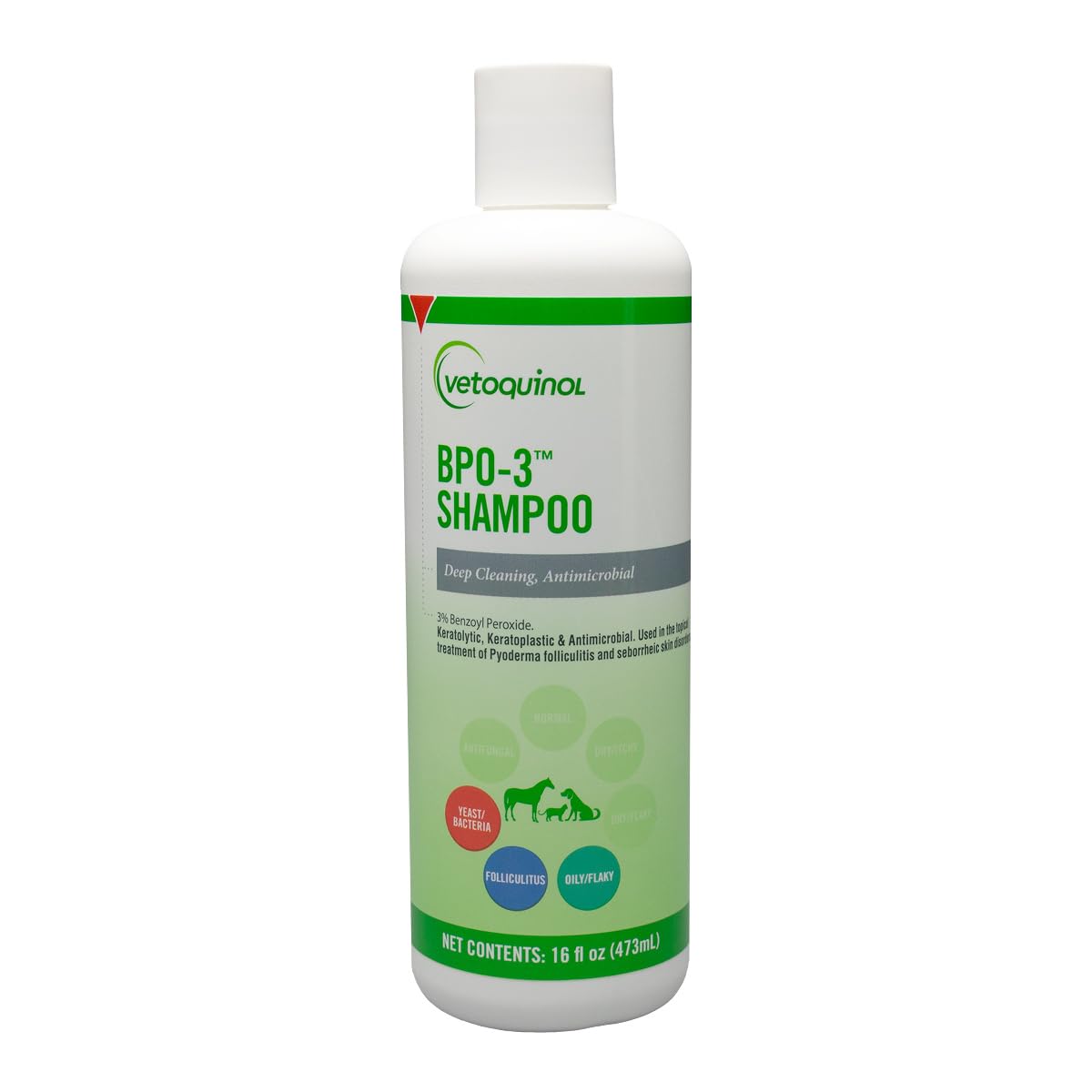
This veterinary-strength formulation uses 3% benzoyl peroxide to mechanically open and flush hair follicles, making it the go-to choice for dogs diagnosed with pyoderma, folliculitis, or deep-seated bacterial infections. The degreasing action cuts through heavy sebum buildup on oily coats, leaving the skin clean without the waxy residue that generic shampoos leave behind. Clinical reviews confirm its effectiveness when paired with oral antibiotics for staph-related flare-ups, with visible improvement in redness and flaking within two to three baths.
The formula includes natural soothing agents and moisturizers to counterbalance the drying effect of the peroxide, but it still requires careful adherence to the five-minute contact window. It lathers less than standard shampoos—a common trait among peroxide-based washes—so plan to use roughly half the bottle per bath for a medium-sized dog. Owners report that recurring seborrhea symptoms, such as smelly, greasy patches near the tail and neck, resolve faster with this shampoo than with over-the-counter alternatives.
The unscented profile is a bonus for dogs with environmental allergies triggered by fragrances. Users with dogs suffering from body mites or stubborn dandruff that resisted other treatments saw full resolution after several weekly baths. The biggest limitation is its strength—dogs with mild itch or simple dry skin will find the peroxide too aggressive. Reserve this for confirmed follicle issues or veterinarian-recommended protocols.
Why it’s great
- Clinically effective for pyoderma and folliculitis
- Flushes blocked hair follicles deeper than chlorhexidine alone
- Fragrance-free formulation avoids allergy triggers
Good to know
- Strong degreasing action may dry out normal skin with overuse
- Poor lather requires more product per bath
- Not suitable for mild, everyday itching without a vet diagnosis
2. Douxo S3 SEB Dog Shampoo
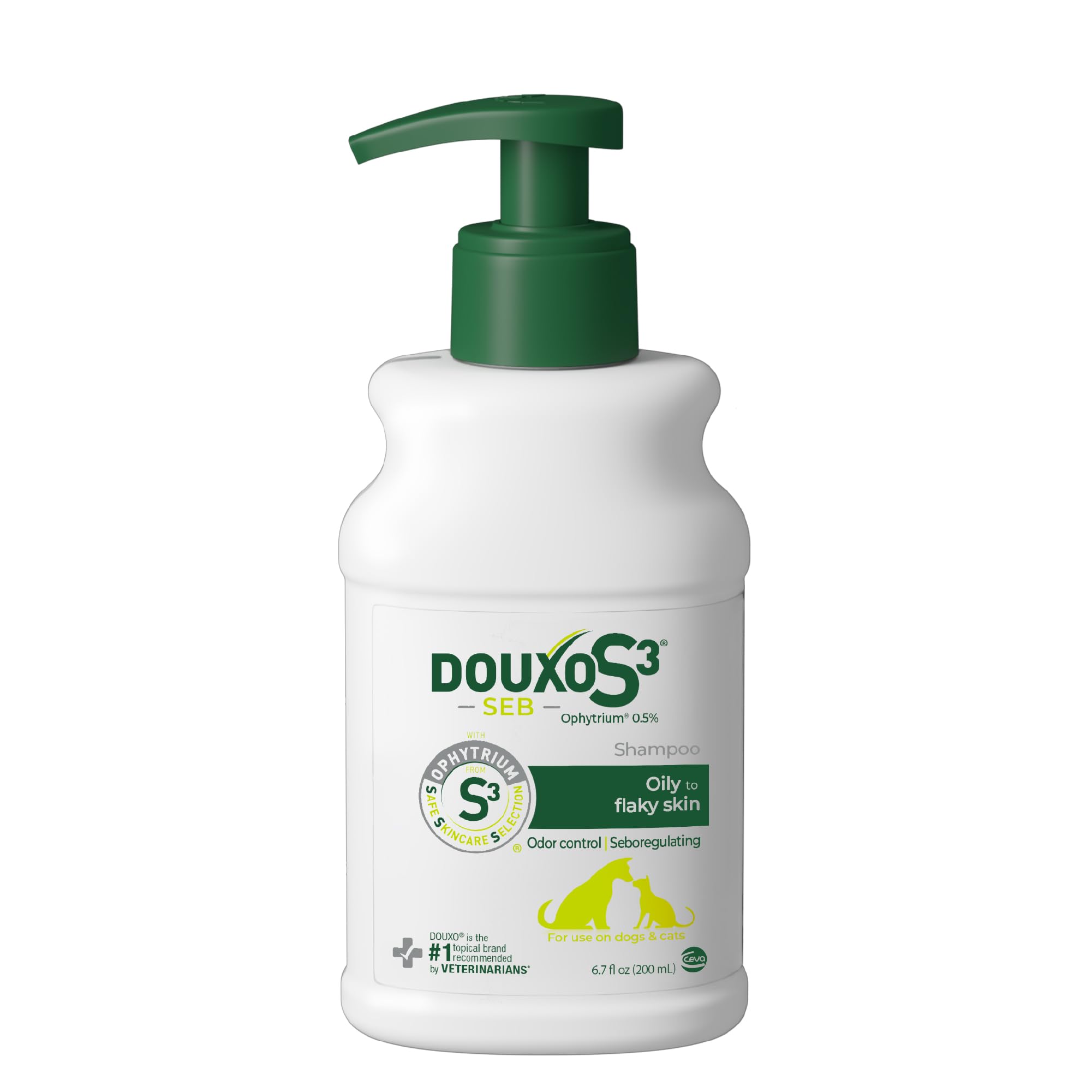
The Douxo S3 SEB stands apart as a sebum-normalizing shampoo that targets the underlying oil production disorder rather than just wiping away surface grease. Its key active, Ophytrium at 0.5%, is a purified natural extract that calms irritated skin and restores hydration while gently regulating sebaceous gland output. Clinical data shows visible results within seven days, making it one of the fastest-acting seborrhea treatments available without a prescription. Users with flaky, dandruff-prone dogs report complete dander disappearance after just one wash when paired with the matching mousse.
This shampoo is entirely free from soap, sulfates, parabens, colorants, and phthalates, so it won’t strip the coat or trigger contact sensitivity even in dogs requiring twice-weekly bathing. The 6.7-ounce bottle is smaller than most competitors, but the concentrated formula means you need less volume per bath—a dollop about the size of a quarter covers a medium-sized dog. Owners of short-haired breeds with slick, greasy coats see the most dramatic transformation: less itch, less dander, and baths can be spaced out from every two weeks to once a month.
Where this shampoo falls short is on very fine-haired or senior cats with grooming issues—some users noted a greasy residue that did not rinse clean. For dogs, the light fresh scent is pleasant and non-medicated, which helps owners who are sensitive to strong sulfur or tar smells. The price per ounce is higher than mid-range options, but the reduction in bath frequency and the need for fewer follow-up treatments offsets the upfront cost for chronic seborrhea patients.
Why it’s great
- Clinically proven to normalize sebum production in seven days
- Ophytrium soothes and hydrates without leaving greasy residue on short coats
- Free from all major irritants soaps, sulfates, parabens, colorants
Good to know
- Smaller bottle size at 6.7 ounces
- May leave residue on very fine or matted fur
- Premium pricing compared to mid-range alternatives
3. Veterinary Formula Clinical Care Antiseptic & Antifungal Shampoo
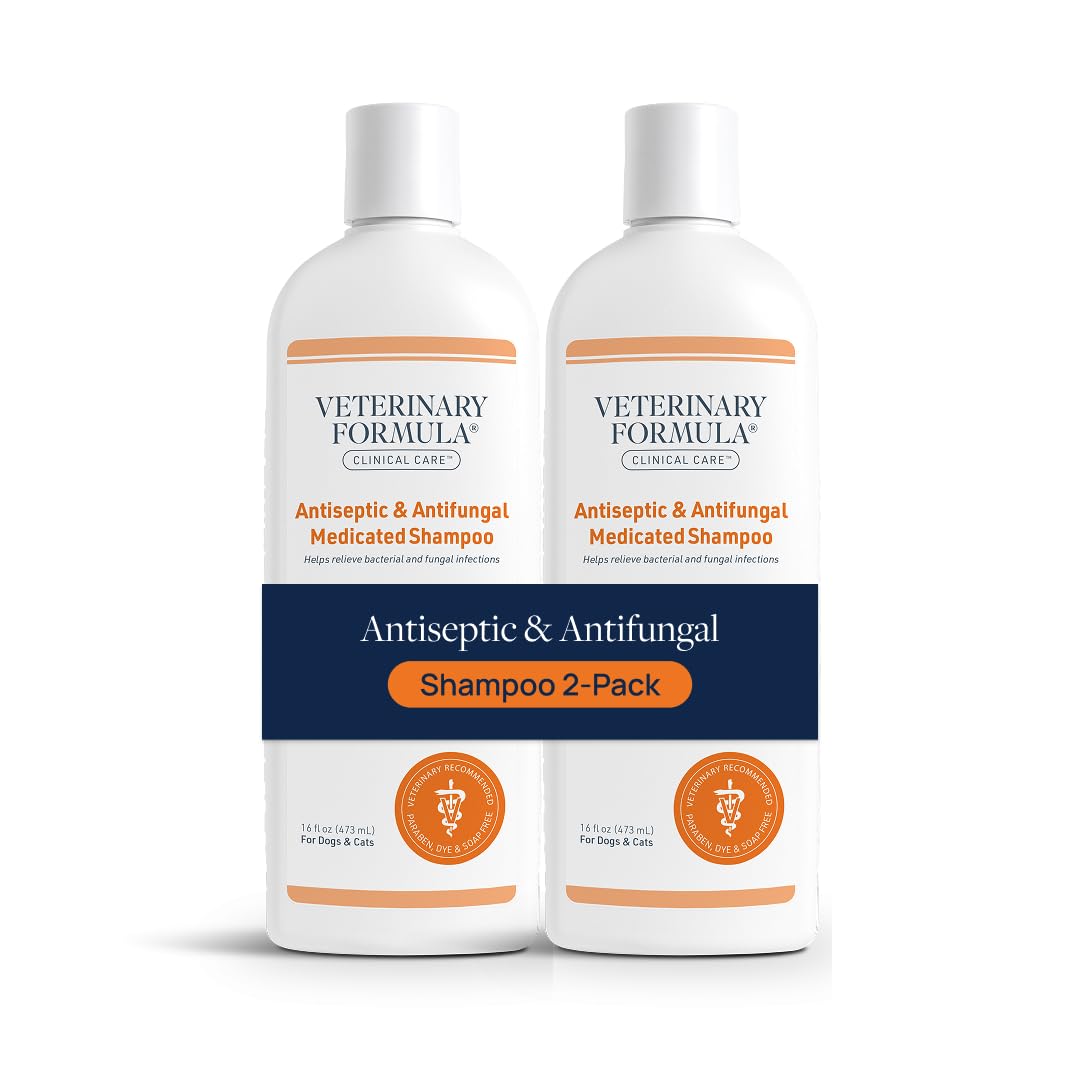
The two-pack format of this shampoo delivers 32 total ounces of a chlorhexidine and ketoconazole blend, giving it the broadest coverage against bacterial and fungal pathogens in this lineup. Chlorhexidine provides a powerful antibacterial effect that is effective against staph and pseudomonas, while ketoconazole knocks down Malassezia yeast that often drives greasy, smelly skin in dogs with chronic allergies. The five-to-ten-minute contact time is standard for medicated washes, but the lather quality is notably richer than the benzoyl peroxide competitor, making it easier to distribute across long or thick coats.
Users with Jack Russells, huskies, and border collie mixes report that this shampoo resolved consistent paw licking, belly redness, and overall itchiness within two to three weekly baths. The pH-balanced formula is soap-free, paraben-free, and dye-free, which reduces the risk of burning already-inflamed skin. Owners appreciate that the scent, while present, is not overwhelmingly medicinal—a common complaint with antifungal shampoos that use sulfur or coal tar bases.
The main drawback is the strength of the fragrance relative to unscented options; some users with sensitive noses found it slightly strong when applied. Additionally, dogs with very dry, flaky skin may need a follow-up conditioner because the antifungal agents can be mildly drying with repeated use. For general maintenance of a dog with known environmental allergies or recurrent yeast infections, this two-pack offers the best cost per wash in the mid-range tier.
Why it’s great
- Dual-action chlorhexidine + ketoconazole covers bacteria and yeast
- Large 32-ounce two-pack provides excellent value
- Rich lather spreads easily and rinses clean on thick coats
Good to know
- Mildly drying for dogs with pre-existing dry skin
- Fragrance is stronger than unscented clinical alternatives
- Requires full ten-minute contact for maximum antifungal effect
4. earthbath Hot Spot Relief Pet Shampoo (Tea Tree & Aloe)
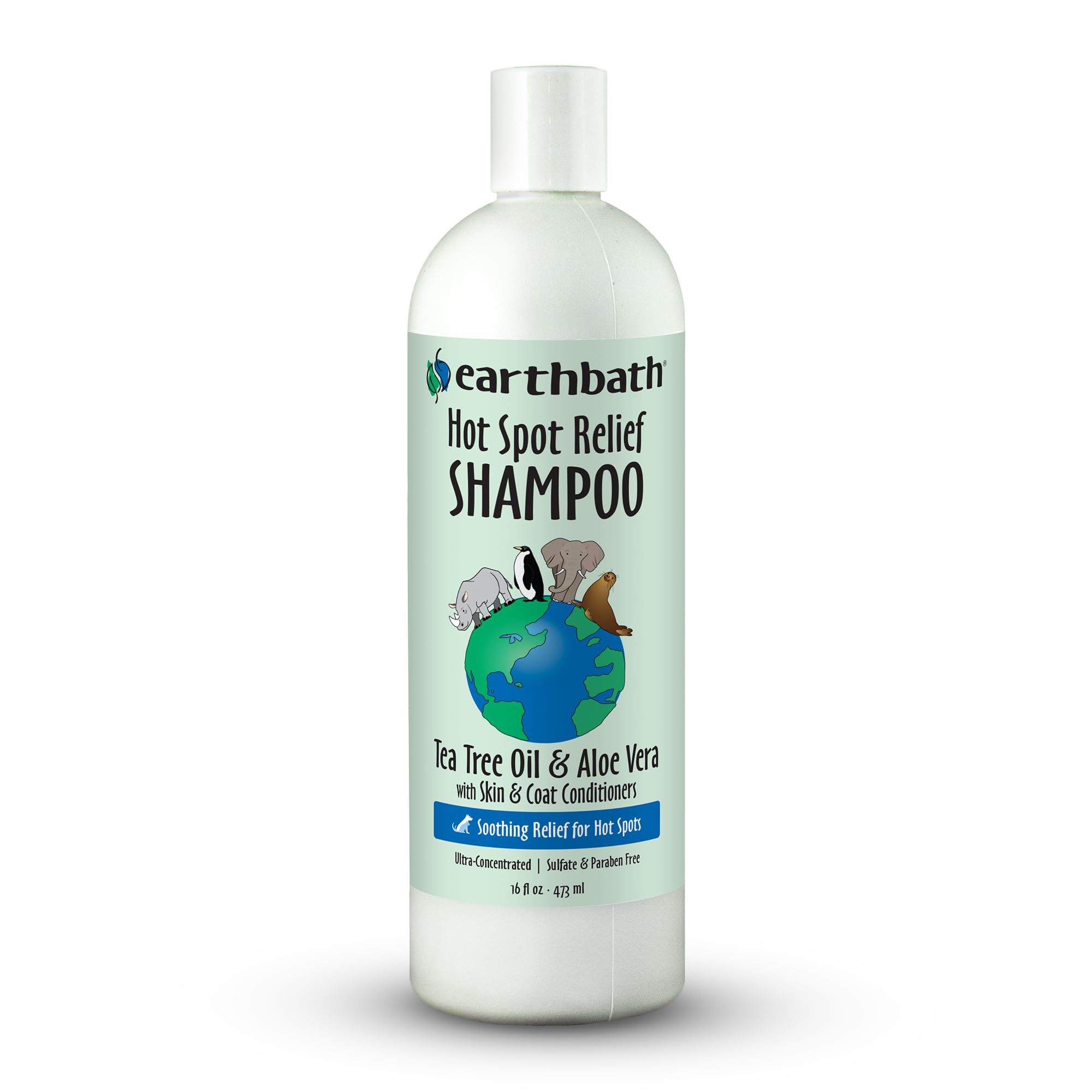
Earthbath combines tea tree oil and organic aloe vera into a soothing formula specifically designed for hot spots, chafed skin, and mild dermatitis rather than deep follicular infections. Tea tree oil provides a natural antifungal and antibacterial action that is gentler than chlorhexidine or benzoyl peroxide, making this a strong first-line treatment for dogs with localized irritation from flea bites, contact allergies, or environmental triggers. The aloe vera base cools the inflamed area on contact, which reduces the urge to scratch immediately after the bath.
Real-world cases show dramatic results for chronic conditions: one Chihuahua with flea-induced bald spots and blackened skin regrew a full coat after three weeks of weekly baths, while an Australian cattle dog with fungal dermatitis stopped obsessive scratching after two washes. The lather is moderate and rinses easily without leaving a sticky film, and the coconut-based scent is pleasant without being cloying. Earthbath has been manufacturing in the USA since 1995 and backs the product with a satisfaction guarantee, which is rare for mid-priced pet shampoos.
The trade-off is that tea tree oil is not potent enough for deep bacterial infections or severe seborrhea. Dogs with pyoderma or generalized yeast overgrowth will need a stronger clinical formula like the Douxo or Veterinary Formula options. Also, tea tree oil can be toxic to cats if ingested or applied in high concentrations—this product is safe for dogs over six weeks but should be kept away from feline housemates. For hot spots and mild dermatitis, this is the most effective plant-based medicated shampoo available.
Why it’s great
- Tea tree oil treats hot spots without harsh chemical actives
- Organic aloe vera cools and soothes immediately
- Make satisfaction guarantee builds buyer confidence
Good to know
- Not effective for deep bacterial or yeast infections
- Tea tree oil concentration is not safe for cats
- Mild on its own may not resolve severe, widespread dermatitis
5. TropiClean OxyMed Hypoallergenic Dog Shampoo

The TropiClean OxyMed takes a different approach from the clinical heavyweights above—it uses a mild coconut cleanser base instead of chemical actives, making it the safest option for dogs with extreme contact sensitivities that react to chlorhexidine or benzoyl peroxide. The formula is completely soap-free, paraben-free, dye-free, and SLS-free, which eliminates the detergent-driven irritation that some dogs experience even with medicated washes. This is not a treatment for active infections but rather a maintenance shampoo for dogs that need frequent baths due to environmental allergies without stripping the coat.
Users with English bulldogs suffering from belly and arm irritation report that the itch stopped immediately after the bath and stayed under control for seven days before needing another wash. The tearless formula is cat-safe as well, so multi-pet households can use a single bottle for both species. The coconut scent is mild and pleasant, and the shampoo leaves the coat soft and shiny without requiring a separate conditioner. For elderly dogs with fragile, thinning skin, the gentle lather does not cause further chafing or flaking.
The main criticism is the poor lather—users consistently note that the thick gel requires more product than expected to work up a good foam, especially on double-coated breeds. The price per ounce is higher than the mid-range options when considering the volume needed per bath. If your dog has an active bacterial or fungal infection, skip this product and go straight to the Vetoquinol or Veterinary Formula. But for hypersensitive skin that cannot tolerate medicated detergents, this is the kindest option available.
Why it’s great
- Ultra-gentle coconut cleanser safe for extreme sensitivities
- Tearless and cat-safe for multi-pet households
- Soap-free, paraben-free, dye-free, and SLS-free
Good to know
- Thick consistency makes lathering difficult requires more product
- Not medicated enough for active bacterial or fungal infections
- Cost per wash is higher due to low-lather volume usage
FAQ
How often should I bathe my dog with medicated shampoo?
Can I use human dandruff shampoo on my dog?
Do medicated shampoos expire or lose potency?
Should I follow up with a conditioner after medicated shampoo?
Final Thoughts: The Verdict
For most users, the dog medicated shampoo winner is the Vetoquinol BPO-3 because its 3% benzoyl peroxide formula delivers the deepest follicle-cleaning action for pyoderma, folliculitis, and greasy coat conditions. If you want a seborrhea-specific solution that normalizes oil production without stripping the coat, grab the Douxo S3 SEB. And for a broad-spectrum antibacterial and antifungal wash that covers both bacteria and yeast at the best value, nothing beats the Veterinary Formula Clinical Care two-pack.

Mo Maruf
I created WellFizz to bridge the gap between vague wellness advice and actionable solutions. My mission is simple: to decode the research and give you practical tools you can actually use.
Beyond the data, I am a passionate traveler. I believe that stepping away from the screen to explore new environments is essential for mental clarity and physical vitality.