Our readers keep the lights on and my smoothie glass nicely filled. As an Amazon Associate, I earn from qualifying purchases.
Managing diabetes effectively demands real-time data, not guesswork. A continuous glucose monitor provides a stream of readings that reveal how your body responds to food, exercise, and sleep, replacing the guesswork of finger-pricking with a clear, minute-by-minute trend line. This guide breaks down the top performers on the market, focusing on accuracy, sensor lifespan, and data usability.
I’m Mohammad Maruf — the founder and writer behind WellFizz. I’ve spent countless hours analyzing sensor datasheets, comparing MARD accuracy scores, and studying app ecosystems to find the best monitors for every type of diabetic user.
Whether you need a prescription-free option, a system with lab-grade accuracy, or a budget-friendly kit to track trends, this guide to the best cgm for diabetics will help you find the right device for your daily management routine.
How To Choose The Best CGM For Diabetics
Selecting a continuous glucose monitor involves more than just looking at the upfront cost. The sensor technology, data sharing capabilities, and clinical accuracy all determine how useful the device will be for your daily life. Focus on these key factors to find a system that keeps you informed without creating extra hassle.
Sensor Accuracy: Understanding MARD
The Mean Absolute Relative Difference (MARD) percentage is the gold standard for comparing sensor accuracy. A lower MARD value means the sensor’s readings are closer to lab reference values. For intensive insulin management, look for a system with a MARD of 10% or lower. For general trend monitoring, slightly higher values can still provide valuable data.
Sensor Lifespan and Warm-Up Time
Sensors typically last between 10 and 15 days before needing replacement. A longer wear time means fewer insertion events and lower monthly cost. Additionally, check the warm-up period — some sensors take up to an hour to start providing readings after insertion, while others begin reporting data within minutes.
App Ecosystem and Data Sharing
Modern systems rely on smartphone apps to display trends and alerts. Evaluate whether the app offers real-time blood glucose readings, customizable high/low alarms, and the ability to share data with a caregiver or clinician via a cloud dashboard. Many apps also integrate with insulin pumps and fitness trackers.
Regulatory Clearance and Prescription Requirements
While many CGMs require a prescription, some models are now available over the counter for non-insulin-dependent users. Verify FDA clearance for therapeutic use if you plan to dose insulin based on the readings. For general wellness and diet tracking, non-prescription models are a valid and simpler option.
Quick Comparison
On smaller screens, swipe sideways to see the full table.
| Model | Category | Best For | Key Spec | Amazon |
|---|---|---|---|---|
| Accu-Chek FastClix Kit | Starter Kit | Value & Bluetooth Logging | 720-test memory | Amazon |
| Accu-Chek Softclix Kit | Starter Kit | Comfort & One-Handed Use | 110 lancets included | Amazon |
| Lingo CGM Pack | Continuous Monitor | Prescription-Free Tracking | 14-day sensor life | Amazon |
| Stelo 2 Pack | Continuous Monitor | No-Prescription Monthly Supply | 15-day sensor life | Amazon |
| McKesson True METRIX Strips | Test Strips | High-Volume Bulk Supply | 600 strips total | Amazon |
| A1CNow SelfCheck | A1C Tester | Lab-Free A1C Monitoring | 5-minute A1C result | Amazon |
In‑Depth Reviews
1. Accu-Chek FastClix Glucose Monitor Kit

The Accu-Chek FastClix kit combines a Bluetooth-enabled Guide Me meter with a revolutionary lancet drum system. The drum holds six pre-loaded lancets, eliminating the need to handle individual needles between tests. Users simply advance the drum to the next lancet, which is a major upgrade in convenience and safety for anyone testing multiple times a day.
The Guide Me meter features a large LCD display and stores up to 720 test results with 30 control records. It syncs automatically with the mySugr app, which provides detailed trend charts, meal tagging, and the ability to share PDF reports with a healthcare provider. The required blood sample is extremely small, and the easy-fill dosing area on the test strip reduces wasted strips from under-filled samples.
Precision-guided technology on the FastClix lancing device offers 11 depth settings, so even users with calloused fingers can find a comfortable, nearly painless setting. The kit includes 100 Guide test strips, control solution, and a durable carrying case. For a mid-range starter system that covers all the fundamentals, this is a well-rounded package.
Why it’s great
- Drum-based lancet system eliminates handling individual needles.
- Bluetooth sync with mySugr app for automatic data logging.
- 720-test memory capacity ideal for frequent testers.
- Large, high-contrast display is easy to read in low light.
Good to know
- Drum mechanism requires firm initial push to advance the first lancet.
- Carrying case is sturdy but can be difficult to open.
- Test strips are proprietary and must be purchased separately.
2. Accu-Chek Softclix Glucose Monitor Kit

The Softclix version of the Accu-Chek starter kit offers the same Bluetooth-enabled Guide Me meter and mySugr app integration but pairs it with the Softclix lancing device. This lancing device uses a traditional single-lancet design but compensates with precision-guided technology and 11 depth settings that make even high-numbered settings feel gentle on the skin.
This kit ships with 110 Softclix lancets, which is a generous supply that gives new users months of testing before needing a refill. The meter itself is identical to the FastClix version, offering the same 720-test memory, large LCD display, and child-resistant battery door. The Bluetooth pairing process is straightforward, and the mySugr app provides free access to basic tracking features, with a premium tier for advanced analytics.
The Softclix device works well for one-handed use, though users must handle each lancet individually during insertion and disposal. The kit also includes 100 Guide test strips and control solution. For someone who prefers the proven single-lancet approach and wants the most lancets out of the box, this is the stronger value play within the Accu-Chek family.
Why it’s great
- Includes 110 lancets for long-term use without early refills.
- Comfortable lancing with 11 depth adjustment levels.
- Bluetooth logging eliminates manual logbooks.
- Large display with auto-on when a strip is inserted.
Good to know
- Individual lancet handling is less convenient than drum-based systems.
- Carrying case has no dedicated lancet storage compartment.
- Test strips are proprietary and need separate purchasing.
3. Lingo Continuous Glucose Monitor Pack of 2
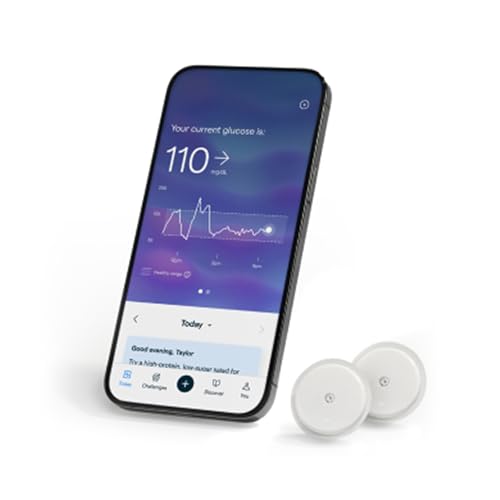
The Lingo CGM, manufactured by Abbott, is designed for users who want continuous glucose data without a prescription. Each biosensor lasts up to 14 days and attaches painlessly to the back of the arm. The accompanying Lingo app focuses on nutrition optimization, showing you how specific foods, exercise, and sleep affect your glucose in real time.
One of the stand-out features is the free replacement guarantee: if a biosensor fails within the 14-day wear period, Lingo replaces it at no cost. The system is water-resistant and syncs with Apple Health and Health Connect on Android, making it easy to correlate glucose trends with other health metrics. The app provides a healthy glucose range target of 70–140 mg/dL and alerts you when you drift outside that zone.
Some users have reported occasional pairing difficulties with the app, and the sensor reading can differ from finger-stick values by roughly 20 points. Despite this, the system is excellent for identifying dietary patterns, such as morning blood sugar spikes and post-meal responses. For non-insulin-dependent users looking to understand their metabolic health, the Lingo offers a compelling no-prescription entry into CGM technology.
Why it’s great
- No prescription needed for purchase or use.
- 14-day wear time per sensor reduces insertion frequency.
- Free replacement for any sensor that fails before 14 days.
- Syncs with Apple Health and Health Connect for data integration.
Good to know
- App pairing issues reported by some users on initial setup.
- Readings can be ~20 mg/dL off compared to capillary blood tests.
- App must be open frequently to maintain consistent data sync.
4. Stelo 2 Pack
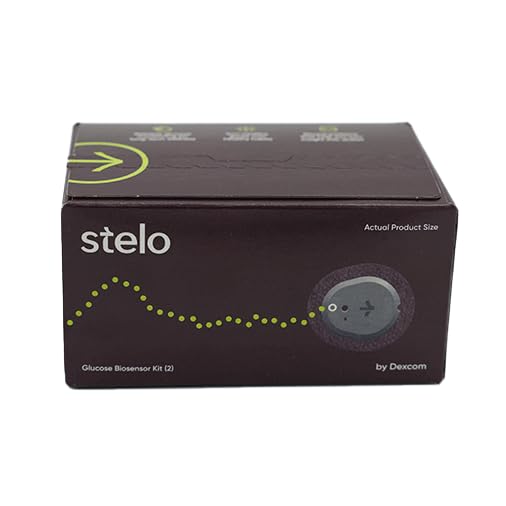
The Stelo system comes as a two-pack, providing roughly a one-month continuous monitoring supply. Each sensor boasts a 15-day wear life, which is slightly longer than the industry standard of 14 days. This small extension translates to fewer sensor changes per year and less waste, which is a practical benefit for long-term users.
Setup is straightforward: the sensor applies to the upper arm with a simple applicator, and the companion app walks you through the pairing process. The system is available over the counter, making it accessible to diabetics who do not take insulin and whose doctors would not prescribe a traditional CGM. Users report that the glucose readings are reliable and informative for daily trend awareness.
One limitation is that the app requires active foreground use to continuously log data, meaning the phone must remain unlocked or in close proximity during the night for overnight tracking. A few units have also reported not reaching the full 15-day wear cycle before terminating the session. For those who pass on finger pricking, Stelo provides a painless and prescription-free alternative.
Why it’s great
- 15-day sensor lifespan reduces replacement frequency.
- No prescription requirement for purchase.
- Simple application with easy-to-follow instructions.
- Two-pack delivers a full month of coverage.
Good to know
- App must be kept open for continuous data capture.
- Some units may not last the full 15-day duration.
- Requires phone proximity during sleep for overnight readings.
5. McKesson True METRIX Blood Glucose Test Strips

While not a CGM itself, the McKesson True METRIX test strips are designed for the McKesson TRUE METRIX self-monitoring system, making them a critical accessory for users who prefer traditional blood glucose monitoring. This bulk pack contains 600 strips, organized into 12 vials of 50, providing a significant supply for high-frequency testers.
Each strip is precision-engineered and latex-free, reducing the risk of allergic reactions during use. The strips require only a tiny blood sample and feature an easy-fill dosing area that minimizes errors. Compatibility is confirmed with the #06-RE4051-43 McKesson TRUE METRIX system as well as several control solutions from the same family.
Customer feedback highlights that the strips are reliable, with only an occasional faulty unit. The packaging is robust enough for storage and portability. For individuals who test their blood sugar multiple times daily and want to avoid frequent reordering, this bulk option offers the lowest per-strip cost among comparable brands.
Why it’s great
- 600 strips in one order for long-term supply.
- Latex-free construction for sensitive skin.
- Small blood sample requirement reduces wasted strips.
- Trusted McKesson brand quality for consistent results.
Good to know
- Compatible only with McKesson TRUE METRIX meters.
- Occasional faulty strip may waste a sample.
- Not a substitute for CGM trend data.
6. A1CNow SelfCheck Home Test
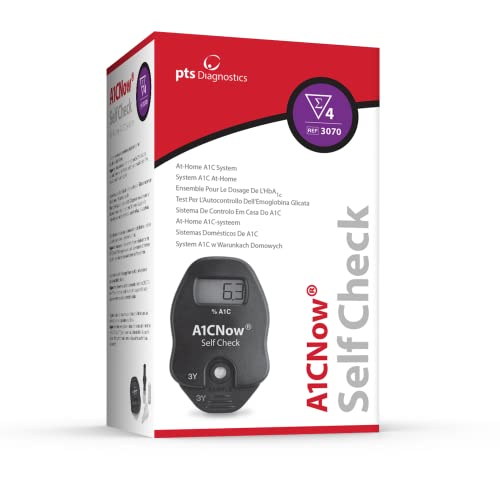
The A1CNow SelfCheck system provides a way to measure your hemoglobin A1C level at home, delivering results in just five minutes. Unlike daily glucose monitors that show real-time blood sugar, this device measures long-term glycemic control over the past two to three months, offering a different but equally important data point for diabetes management.
Each kit includes one analyzer, four test cartridges, four safety lancets, and four blood collectors with shakers. The system is battery-powered, requires no calibration or charging, and is FSA/HSA eligible. The American Diabetes Association recommends A1C testing at least twice a year, making this a practical tool for in-between lab visits.
Accuracy is generally solid, with many users reporting results within 0.1 to 0.5 points of commercial lab results — if the directions are followed precisely. The most common user error is insufficient shaking of the blood collector after the sample is added. A few users have experienced test failures or inconsistent results, so repeat testing is advisable. For fast, at-home A1C checks, this system fills a gap that daily glucose monitors cannot cover.
Why it’s great
- Provides A1C results in 5 minutes without a lab visit.
- Battery-powered analyzer with no calibration needed.
- FSA/HSA eligible for cost savings.
- Compact and portable for travel or clinic backup.
Good to know
- Results can be 0.3–0.5 lower than laboratory A1C tests.
- Some test cartridges may fail without warning.
- Requires careful shaking of the blood collector for accuracy.
FAQ
What is the difference between a CGM and a standard blood glucose meter?
Do I need a prescription to buy a CGM for diabetes?
How often do I need to replace the sensor on a CGM system?
Final Thoughts: The Verdict
For most users, the best cgm for diabetics winner is the Accu-Chek FastClix Starter Kit because it combines Bluetooth data logging with a painless drum-lancet system at a mid-range price point that works for both type 1 and type 2 diabetics. If you want prescription-free continuous monitoring, grab the Lingo CGM for its 14-day sensors and seamless app integration. And for a budget-friendly bulk testing option, nothing beats the McKesson True METRIX Strips for high-volume daily use.

Mo Maruf
I created WellFizz to bridge the gap between vague wellness advice and actionable solutions. My mission is simple: to decode the research and give you practical tools you can actually use.
Beyond the data, I am a passionate traveler. I believe that stepping away from the screen to explore new environments is essential for mental clarity and physical vitality.