Our readers keep the lights on and my smoothie glass nicely filled. As an Amazon Associate, I earn from qualifying purchases.
Fixing a chipped sink, a cracked tile, or a broken mug feels impossible until you match the right adhesive to the specific damage. Most diy repairs fail not because the piece is beyond saving, but because the glue lacks the heat resistance, waterproof seal, or sandability that ceramic repairs demand.
I’m Mohammad Maruf — the founder and writer behind WellFizz. I’ve spent countless hours analyzing ceramic adhesive chemistries, reading through hundreds of verified customer reports, and cross-referencing curing conditions so you don’t waste time on products that will let go after a single hot wash.
Whether you need to patch a hairline crack in a shower tile, rebond a broken handle on a serving dish, or seal a kiln-fired joint that must survive extreme temperatures, the best ceramic glue for your job depends on surface porosity, thermal exposure, and how invisible the final line needs to be.
How To Choose The Best Ceramic Glue
Ceramics are porous, brittle, and often exposed to moisture or sudden heat swings. A glue that works beautifully on a glazed vase may fail within days on a bathroom tile. Matching the adhesive’s chemistry to the repair environment is non-negotiable.
Thermal and moisture exposure
Sodium silicate adhesives form a glass-like bond that withstands temperatures above 2000°F, making them the only real option for kiln shelves, firebox bricks, or stove elements. For standard household cracks, a two-part epoxy delivers the waterproof seal needed around sinks, tubs, and outdoor planters.
Color matching and sandability
A repair that sticks but stands out defeats the purpose. Premium kits include several pigments and often a sandable filler that can be shaped flush with the surrounding surface. White-only pastes work for hidden cracks, but color-adjusted systems let you blend off-white, beige, gray, and stone tones for seamless results.
Working time and viscosity
Thin liquids wick into hairline cracks but run off vertical surfaces. Pastes hold their shape on edges but need careful smoothing. Fast-setting epoxies cure in under five minutes — ideal for small touch-ups — while slower systems give you ten to fifteen minutes to position broken pieces before the bond locks hard.
Quick Comparison
On smaller screens, swipe sideways to see the full table.
| Model | Category | Best For | Key Spec | Amazon |
|---|---|---|---|---|
| Lynn Manufacturing 5602 | Sodium Silicate | High-heat kiln and firebox repairs | 2000°F rating, clear glass bond | Amazon |
| Globalcom G009 | Two-Part Epoxy | General tub, sink, and tile chip filling | White, 7 oz, fiberglass compatible | Amazon |
| MendMight MG-CZXFJ-001 | Color-Matched Epoxy | Cosmetic repairs needing invisible seams | 6 pigments, 5.6 oz, sandable finish | Amazon |
| Ankita PT-06 | Waterproof Paste | Wet-area chip and crack restoration | 7 pigments, color-match paste | Amazon |
| 3M DP100 Plus | Professional Epoxy | Structural bonding with thermal cycling | 48.5 mL, UL 94 HB, clear cure | Amazon |
In‑Depth Reviews
1. Lynn Manufacturing 5602

This 40% sodium silicate solution cures into a true glass bond that can handle sustained temperatures up to 2000°F. Unlike organic epoxies that char or soften above 500°F, Lynn Manufacturing’s liquid glass actually hardens further when heated, making it the go-to adhesive for ceramic fiber blankets, firebrick joints, and kiln furniture repairs. The syrup-like viscosity soaks into porous ceramic edges and dries clear, preserving the visible surface.
Users report strong results on broken heater components and flame guards, noting that a thin brush application on both surfaces followed by a bead along the crack line delivers maximum grip. The bond sets firm within thirty minutes and reaches full hardness after a twenty-four-hour room-temperature cure. Because sodium silicate remains water-soluble until fully dried, the repair area must be kept dry during the curing window.
This adhesive is not meant for cosmetic sink or tile jobs where color blending matters. It excels exclusively in high-temperature environments where standard epoxies fail outright. The 4-ounce bottle provides enough material for several small-to-medium kiln repairs or one substantial stove patch.
Why it’s great
- Withstands continuous 2000°F without breakdown
- Dries transparent and files smooth after curing
- Made in the USA by a specialty manufacturer
Good to know
- Liquid solution, not a paste — may run on vertical surfaces
- Requires thorough drying before exposure to moisture
- No built-in color pigments for cosmetic matching
2. Globalcom G009 Tub Repair Kit

Globalcom’s repair kit uses a straightforward 1:1 mix ratio that cures into a waterproof, sandable solid within twelve hours. The white paste applies like thick frosting, filling chips and gouges in ceramic tubs, porcelain sinks, enamel surfaces, and fiberglass showers without shrinking. Multiple verified buyers note that a single tube left plenty of material left over after repairing a small tile chip or a cast-iron sink crack.
The epoxy bonds aggressively to glossy glazes and porous ceramic alike, and sanding the excess flush produces a flat, marble-smooth finish that blends into the surrounding area. Users who filled a living-room floor tile gouge report that careful layering and sanding yielded invisible results. The kit does not include color-mixing pigments, so it works best on white or near-white fixtures.
Environmental safety is a clear priority — the formula emits no strong odor during application, which matters when working inside a bathroom or kitchen. The 60-day money-back guarantee provides a safety net for first-time diy users uncertain about their mixing technique. For anyone tackling standard household ceramic damage, this is the most reliable entry point in the category.
Why it’s great
- Easy 1:1 mix with no measuring guesswork
- Non-toxic and nearly odorless during cure
- Large 7-ounce quantity covers multiple repairs
Good to know
- Single white color only — not for beige or gray fixtures
- Full cure takes twelve hours
- Best suited for chips, not fine hairline cracks
3. MendMight MG-CZXFJ-001
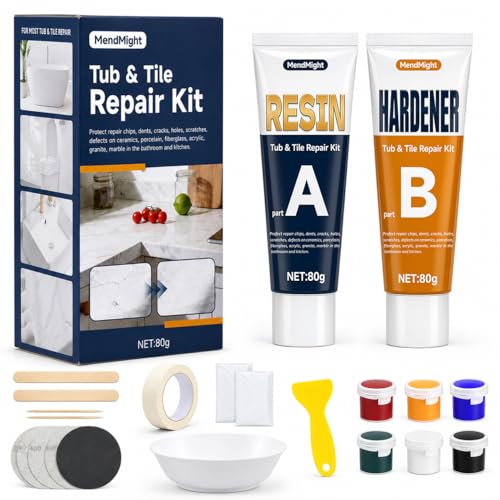
MendMight addresses the single biggest frustration in ceramic repair — the visible seam — by including six water-resistant color pigments that blend directly into the epoxy paste. White, red, black, blue, yellow, and green let you create off-white, beige, gray, stone, and marble-like tones. Users successfully matched engineered countertop patterns by dragging a small amount of gray tint across white filler, hiding the repair in plain sight.
The epoxy cures into a hard surface that resists yellowing and accepts sanding with the included multi-grit paper. For hairline cracks in floor tiles, the compound wicks into the fissure and levels flush after sanding. One user who repaired a long hairline crack in a white kitchen tile reported that the damage became impossible to find after the cure. The kit also includes a mixing bowl, scraper, wooden sticks, and masking tape, so no separate tools are required.
Color matching is not instantaneous — it requires patience and test dabs to nail the precise shade, especially for beige tones. The product works best on small cosmetic damage rather than deep structural gaps, and the paste’s viscosity is better suited for horizontal or slightly angled surfaces. For renters trying to restore a security deposit or homeowners prepping for guests, the MendMight kit delivers the most flexible color-matching system at this price level.
Why it’s great
- Six pigments enable near-invisible color matching
- All tools included — no extra purchases needed
- Water-resistant and resists yellowing over time
Good to know
- Color matching takes trial and error for non-white surfaces
- Paste works best on shallow chips and cracks
- Small 5.6-ounce container for targeted touch-ups
4. Ankita PT-06 Tile Repair Kit
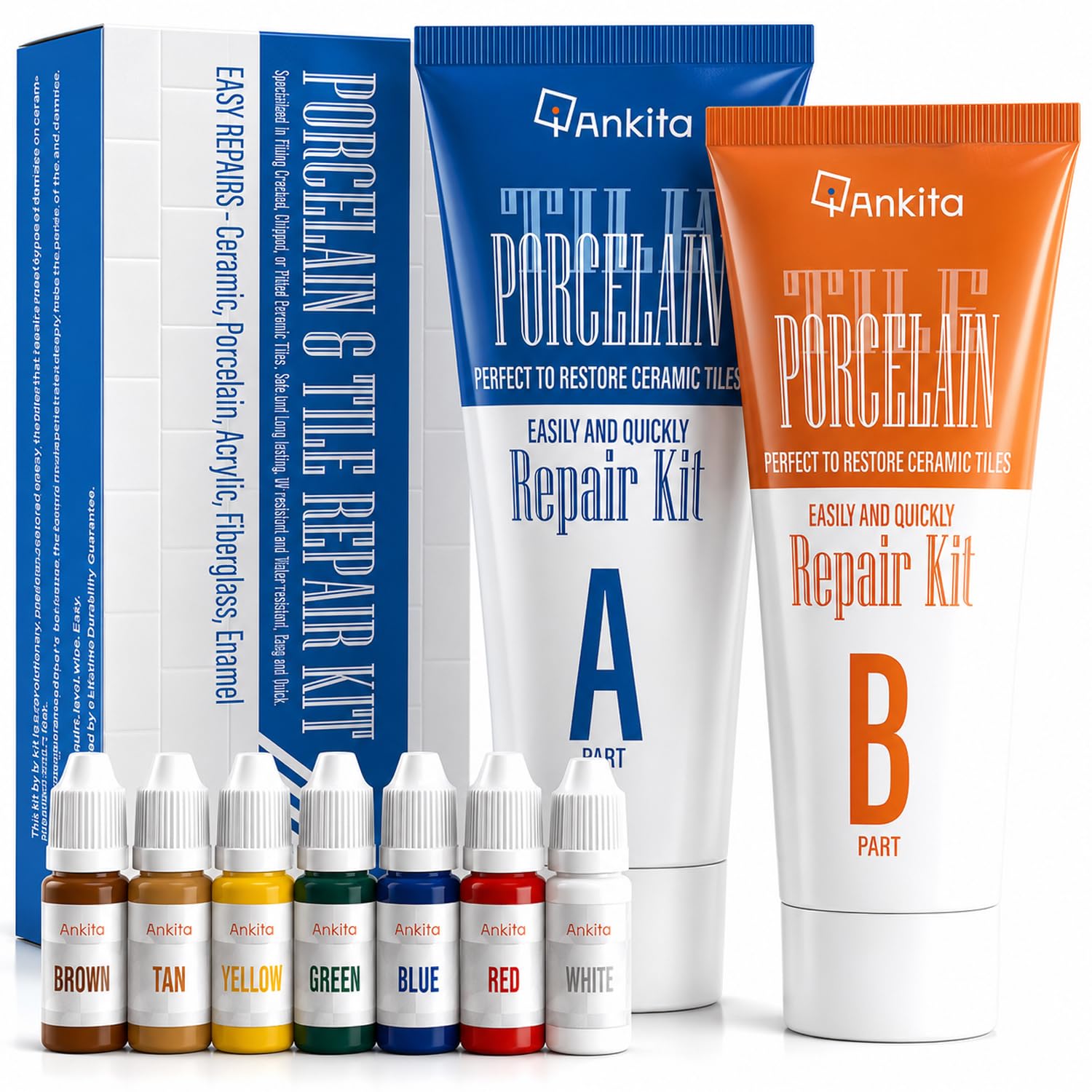
Ankita’s repair paste goes a step further in color selection by offering seven pigments including almond and blue, giving users more options for matching unusual tile shades. The two-part paste mixes into a thick putty that stays in place on vertical tub surrounds and backsplash tiles without dripping. After curing, the repaired area withstands moisture, heat, scratches, and daily cleaning cycles, which matters for high-use bathroom zones.
User experiences vary with color stability — one reviewer noted the initial match on a chipped tub looked promising but shifted slightly cream-toned over several weeks. Others reported that the paste sanded down smoothly and left a flush surface on enamel sinks and ceramic floor tiles. The kit caters to diy beginners by providing step-by-step instructions for small repairs, and the waterproof finish helps prevent future water intrusion beneath the damaged glaze.
This kit is optimized for small chips and hairline cracks rather than large missing sections. The putty can be difficult to tool smooth on textured tiles, and some users recommend applying thin layers rather than one thick fill to avoid a rough final surface. For those who need the broadest pigment palette in a single kit, Ankita offers the widest selection among the tested options.
Why it’s great
- Seven pigments for uncommon tile colors like almond and blue
- Stays put on vertical and overhead surfaces
- Waterproof finish holds up in showers and wet areas
Good to know
- Color may shift slightly during the first week of cure
- Thick putty requires careful smoothing on textured tile
- Limited effectiveness for gaps larger than ⅛ inch
5. 3M Scotch-Weld DP100 Plus
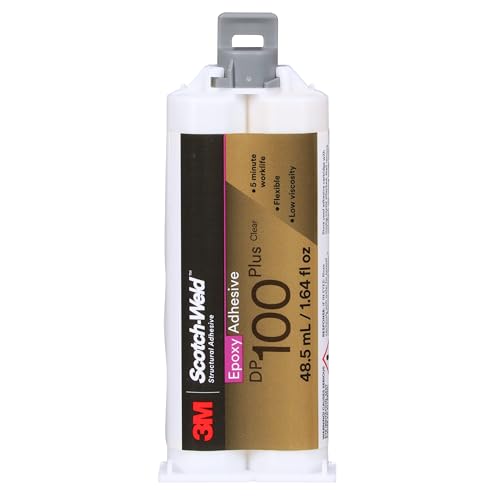
The 3M DP100 Plus is a professional-grade two-part epoxy that bonds ceramics, glass, metals, and many plastics with exceptional clarity and structural integrity. Its UL 94 HB certification confirms a moderate flammability resistance, making it suitable for electrical enclosures, automotive engine bays, and composite valve covers. The epoxy cures clear in roughly one hour, which is fast enough to keep a project moving without the frantic rush of a thirty-second instant glue.
Users highlight the bond’s resistance to thermal cycling — a 2015 Ford Explorer valve cover repair held securely against engine heat where other adhesives had softened and released. The 1.64-fluid-ounce duo-pak cartridge requires a separate dispensing gun, but the precise mix ratio built into the cartridge eliminates manual measuring errors. The two-to-five-minute open working time gives you room to position broken ceramic pieces accurately before the epoxy begins to gel.
This is not a consumer-friendly color-matched filler. The DP100 Plus cures optically clear, which works beautifully for glass repairs and translucent ceramics but does nothing to hide surface discoloration or fill gaps in colored glazes. It is a bonding agent first and a cosmetic filler second. For anyone repairing a functional ceramic part — a mug handle, a vase foot, a structural tile — where strength matters more than invisibility, this 3M epoxy is the most trustworthy option in the roundup.
Why it’s great
- Exceptional bond strength for structural ceramic repairs
- UL 94 HB certification for electrical safety
- Cures crystal-clear without yellowing
Good to know
- Requires a separate dispensing gun for the duo-pak
- No color pigments — not a cosmetic filler
- Small 48.5 mL volume for targeted applications
FAQ
Can I use sodium silicate on a bathroom sink chip?
How do I match the color of a beige or gray ceramic tile?
Final Thoughts: The Verdict
For most users, the best ceramic glue winner is the Globalcom G009 Tub Repair Kit because it delivers a waterproof, sandable bond with a simple mix ratio and no odor, covering standard household chips and cracks at an accessible entry point. If you need to match a non-white tile color, grab the MendMight Porcelain Repair Kit. And for high-heat kiln or fireplace repairs, nothing beats the Lynn Manufacturing 5602 Sodium Silicate.

Mo Maruf
I created WellFizz to bridge the gap between vague wellness advice and actionable solutions. My mission is simple: to decode the research and give you practical tools you can actually use.
Beyond the data, I am a passionate traveler. I believe that stepping away from the screen to explore new environments is essential for mental clarity and physical vitality.