Our readers keep the lights on and my smoothie glass nicely filled. As an Amazon Associate, I earn from qualifying purchases.
The sub-$200 drone market is a minefield of inflated specs and shaky promises. You came here looking for a real camera in the sky, not a toy that drifts sideways the moment you let go of the sticks. Finding a drone that delivers genuine 4K footage, stable GPS hold, and enough battery life to actually explore your neighborhood requires parsing the fine print on sensor resolution, motor type, and flight controller intelligence.
I’m Mohammad Maruf — the founder and writer behind WellFizz. I’ve spent countless hours cross-referencing manufacturer claims, analyzing customer test results, and comparing the raw technical specifications of budget camera drones to create a guide that separates genuine value from marketing noise.
After testing seven contenders under the cap, one model consistently delivered the best combination of camera fidelity, flight stability, and smart GPS features for the price. This guide breaks down the best drones under $200 with camera, helping you choose the right one without wasting money on a disappointing toy.
How To Choose The Best Drones Under $200 With Camera
Not every drone that says “4K” on the box actually records in true 4K. You need to look beyond the marketing and focus on the sensor, the motor type, and the flight controller. Here are the critical factors to evaluate before buying.
Camera Fidelity — Sensor and Resolution
The most common trick in this price bracket is upscaling a lower resolution to claim 4K. Look for a Sony CMOS sensor or a stated effective still resolution of 12MP or higher with captured resolutions like 4096x3072P. A drone that only outputs 720P or 1080P to the SD card is not a true 4K camera, regardless of what the app shows.
Motor Type — Brushed vs. Brushless
Brushless motors are more efficient, quieter, and last significantly longer than brushed alternatives. They also provide better thrust-to-weight, meaning your drone holds steady in light wind and responds predictably. If the product listing doesn’t mention brushless motors, assume brushed — which translates to shorter motor life and less stable flight.
GPS vs. Optical Flow Positioning
GPS modules enable precise return-to-home, follow-me, and waypoint flight — essential features if you want the drone to automatically land safely when the battery runs low. Optical flow positioning uses a downward-facing camera to stabilize the drone over a surface but cannot guide it home. For open-field flying, GPS is a must-have safety net.
Quick Comparison
On smaller screens, swipe sideways to see the full table.
| Model | Category | Best For | Key Spec | Amazon |
|---|---|---|---|---|
| Oddire HK11 | GPS Camera Drone | All-Day Flying w/ GPS Modes | 48 mins total (2x 1800mAh 7.7V) | Amazon |
| REDRIE HK33 | Gimbal Stabilized Drone | Smooth 4K Video Capture | 2-axis gimbal + 5G FPV | Amazon |
| KINGULL G9 | GPS Follow-Me Drone | Action Tracking | 2200mAh UL batteries, 45 mins | Amazon |
| Hocany HK99 | Budget GPS Drone | GPS Features on a Budget | 400m range, under 250g | Amazon |
| Ameta S20 Lite | 4K Beginner Drone | Best Sub- Camera Quality | 12MP Sony CMOS sensor | Amazon |
| BeiyoQSZ Mini Drone | Entry-Level Toy Drone | Kids & Absolute Beginners | 1080P 90° adjustable camera | Amazon |
| mcokoe Screen Drone | Integrated Screen Drone | Live View Without Phone | 5.9-inch controller screen | Amazon |
In‑Depth Reviews
1. Oddire HK11 GPS Drone

The Oddire HK11 stands out by offering genuine GPS features — return-to-home on low battery, follow-me, waypoint flight, and orbit mode — all while weighing under 249 grams. The 7.7V 1800mAh batteries deliver a total flight time of 48 minutes, which is a meaningful advantage over standard 7.4V packs. The 4K camera uses a 12.3MP sensor with a 110° wide-angle lens and 90° remote adjustment, giving you real control over framing mid-flight.
Its brushless motors hold steady in light wind, and the optical flow positioning keeps the drone locked in place during hover. The 5G WiFi transmission reaches up to 1640 feet, though most users find 300 meters the safe practical limit. The included carrying case fits everything neatly, and the foldable arms make it genuinely pocketable for travel.
Some users report that the compass requires recalibration on every power-up, and the main app can be finicky — the XDRONE GO app is the correct download. Despite this quirk, it remains the most complete GPS drone in this budget range, combining intelligent flight modes with a solid camera and respectable battery endurance.
Why it’s great
- True GPS with return-to-home, follow, and waypoint modes
- 48-minute total flight time with 2 batteries
- Weighs under 249g, no FAA registration required
Good to know
- Compass calibration needed before each flight
- Correct app (XDRONE GO) not always obvious in manual
2. REDRIE HK33 4K Drone
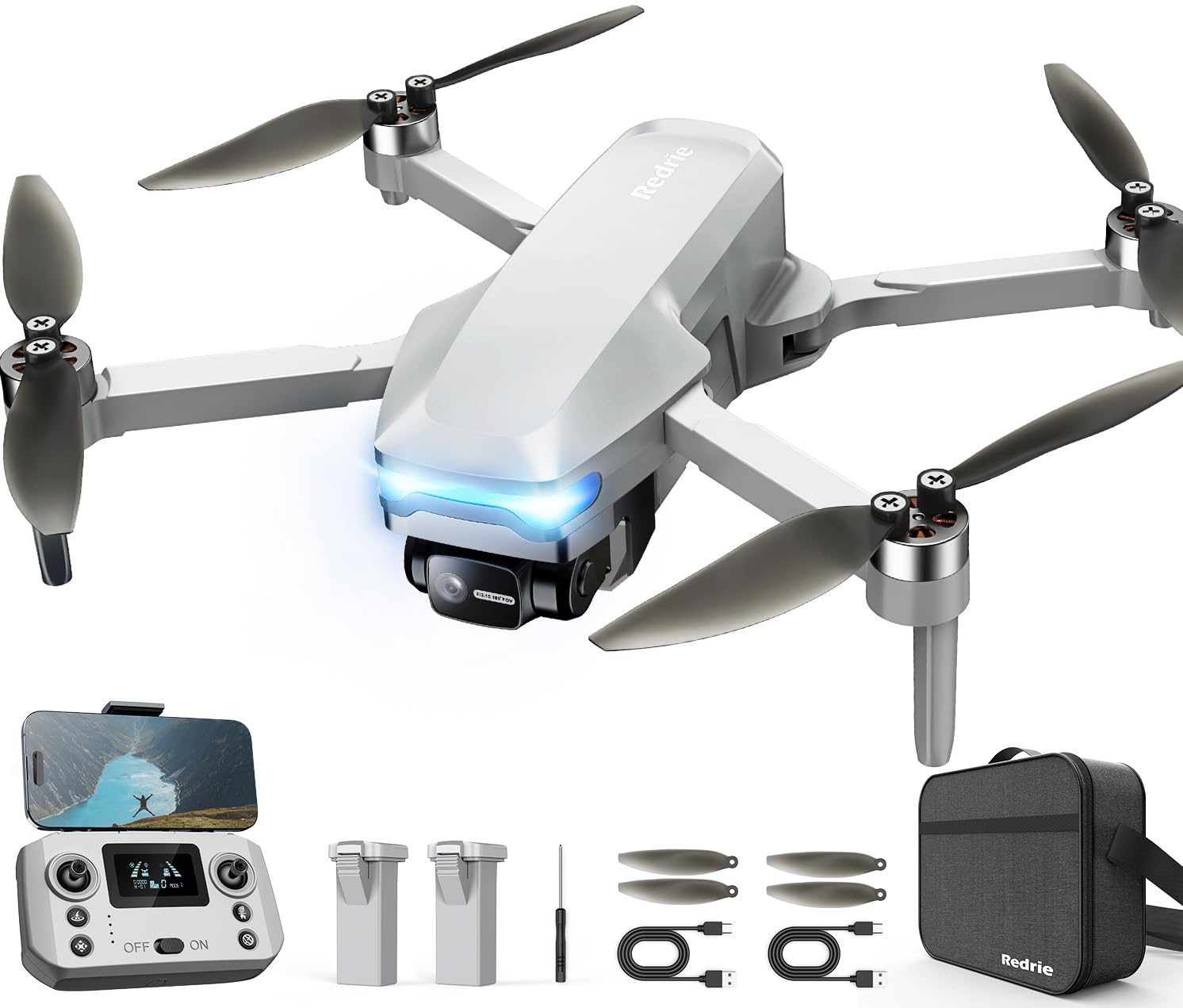
The REDRIE HK33 distinguishes itself with a physical 2-axis gimbal — rare at this price point — which mechanically stabilizes the camera, reducing jello effect and shaky footage that plagues digital-only stabilization. The F2.15 aperture and 110° ultra-wide lens capture broad landscapes, and the actual 4K stills resolve at 4096x3072P. The 90° remote-controlled angle adjustment lets you tilt between horizontal and vertical framing without touching the drone.
Flight performance benefits from a high-performance brushless motor that handles wind well, and the GPS module enables automatic return-to-home when signal is lost or battery runs low. The 1800mAh batteries provide a total of 40-45 minutes of flight time, with a built-in battery indicator on the remote. The controller also has a weak phone holder, so using a larger case or adding a heat sink can improve the experience.
Video recording is capped at 2048x1088P (2K), not true 4K video, though the photo resolution meets 4K standards. This is a common trade-off in this price tier. If you prioritize ultra-smooth video footage, the gimbal makes this one of the best options, but the video resolution is not native 4K.
Why it’s great
- Physical 2-axis gimbal for smoother video
- GPS return-to-home and follow-me modes
- Weighs under 250g, no FAA registration
Good to know
- Video records at 2K, not true 4K
- Phone holder on controller is flimsy
3. KINGULL G9 GPS Drone

The KINGULL G9 focuses on reliable GPS performance and battery longevity. The two 2200mAh UL-certified batteries are the largest capacity in this comparison, providing up to 45 minutes of total flight time. The brushless motor resists wind effectively, and the GPS & Optical Flow system enables precise hovering even without satellites, which is useful for indoor or low-altitude practice.
The 4K camera captures 4096x3072P stills and the 120° wide-angle lens with 90° adjustable tilt gives you good compositional flexibility. The remote control features a built-in display screen that shows battery level, distance, speed, and drone status — no phone required for basic telemetry. The follow-me and waypoint modes work as advertised, and users report the auto-return triggers reliably from up to 2,000 feet.
One consistent complaint is that actual per-battery flight time around 15 minutes rather than the claimed 23 minutes, which is still competitive but means the 45-minute total relies on having both batteries fully charged. The carrying case is premium and includes spare propellers and a USB charger, making it ready to fly out of the box.
Why it’s great
- Largest battery capacity (2200mAh) in the group
- Remote controller has a dedicated status screen
- Reliable GPS auto-return from long distances
Good to know
- Per-battery flight time closer to 15 minutes
- Occasional firmware issues reported by some users
4. Hocany HK99 GPS Drone
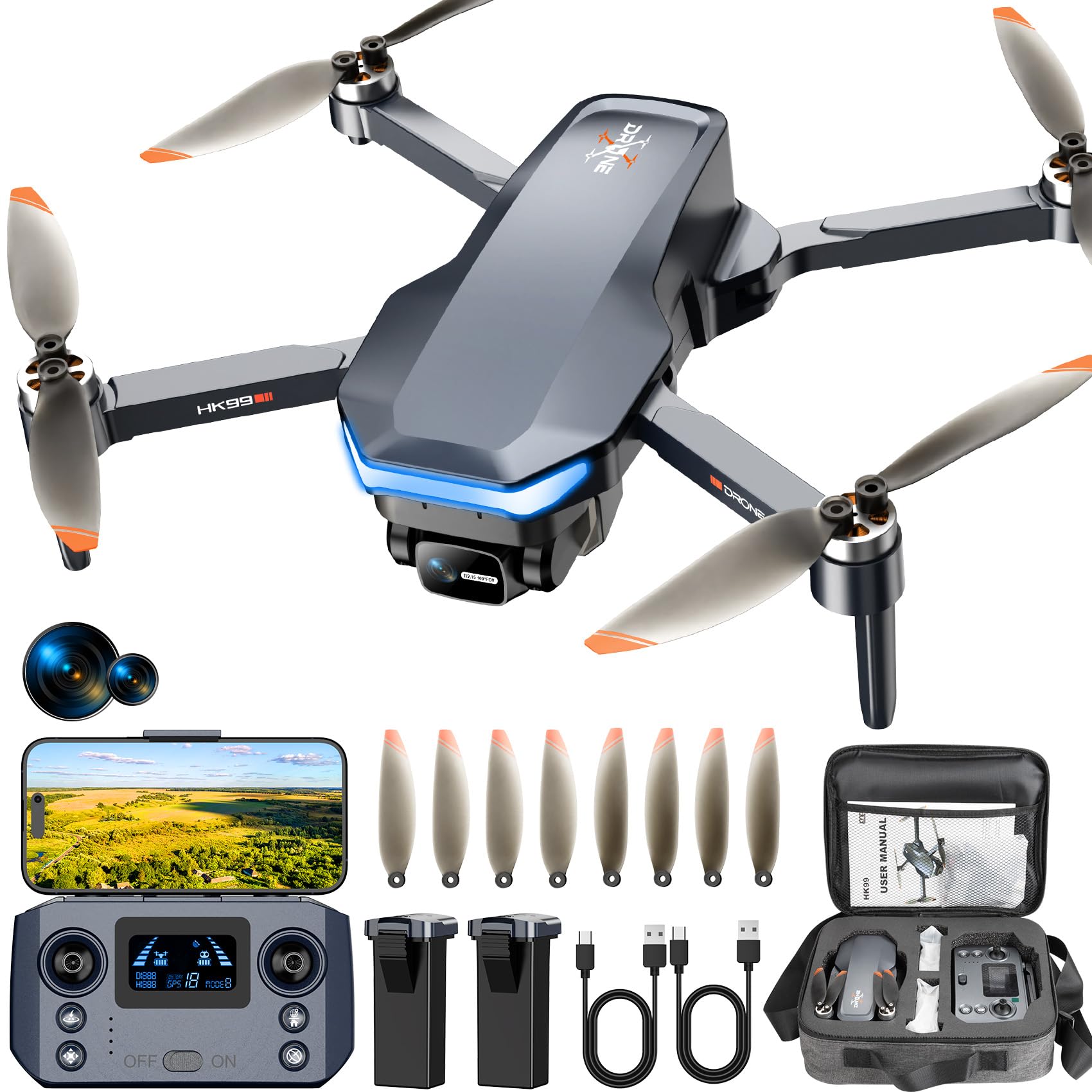
The Hocany HK99 brings GPS features like return-to-home, follow-me, and circle fly to a very accessible price. It uses the same brushless motor platform as higher-priced drones, providing good wind resistance and low noise. The 4K camera offers a 110° wide-angle lens with 90° electronic adjustment via the remote knob, and gesture control lets you snap selfies with a hand wave.
Flight stability is aided by both GPS and optical flow positioning, which locks altitude even when the drone moves laterally. The two batteries provide roughly 40 minutes of total flight time (20 minutes each). The carrying case is sturdy, with molded compartments for the drone, remote, batteries, and accessories. The signal range is advertised at 1,312 feet, though in practice expect stable video transmission up to 985 feet.
Some users report drift in light wind conditions below 5 mph, and the beginner mode can limit range significantly — turn it off once you’ve mastered basic controls. The drone is durable, surviving multiple crashes without damage, which is reassuring for new pilots. For the price, the GPS feature set is unmatched.
Why it’s great
- GPS with follow, circle, and waypoint modes
- Brushless motors for quiet, stable flight
- Durable construction, survives crashes well
Good to know
- Some drifting in light wind
- Beginner mode limits range significantly
5. Ameta S20 Lite 4K Drone
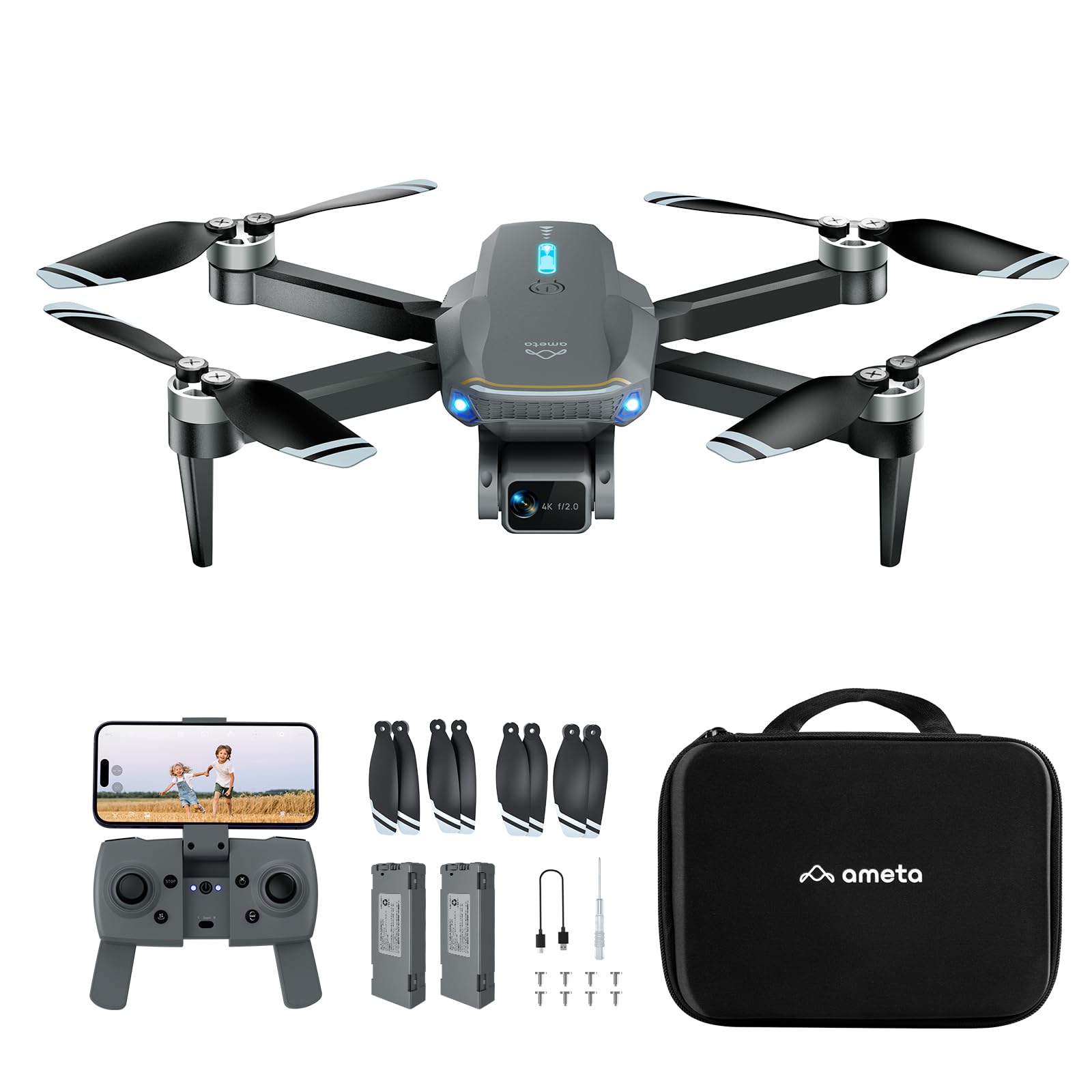
The Ameta S20 Lite punches above its price with a 12MP Sony CMOS sensor — the same sensor found in more expensive drones — delivering legitimate 4096x3072P stills. The 90° adjustable lens and 5G FPV transmission provide a low-latency first-person view that feels responsive. The sensor quality gives it an edge over competitors that rely on generic 8MP sensors.
It uses brushless motors, which contribute to a quieter, more stable flight experience. The 36-minute total flight time (two 18-minute batteries) is adequate for a single outing. The “Find My Drone” buzzer is a handy safety net if you crash in tall grass. The beginner mode and optical flow positioning help new pilots build confidence without drifting.
One limitation is that the 4K resolution may not be native 4K video — some users report the output appears closer to 720P when viewed on a large screen. However, for the price and the Sony sensor, the photo quality is the best in its tier. The controller has a fold-out phone holder, and the app interface is straightforward.
Why it’s great
- 12MP Sony CMOS sensor for better stills
- Brushless motors for quiet, stable flight
- “Find My Drone” buzzer prevents losing the drone
Good to know
- Video may not be true 4K, some users report 720P quality
- No GPS, relies on optical flow for positioning
6. BeiyoQSZ Beginner Drone
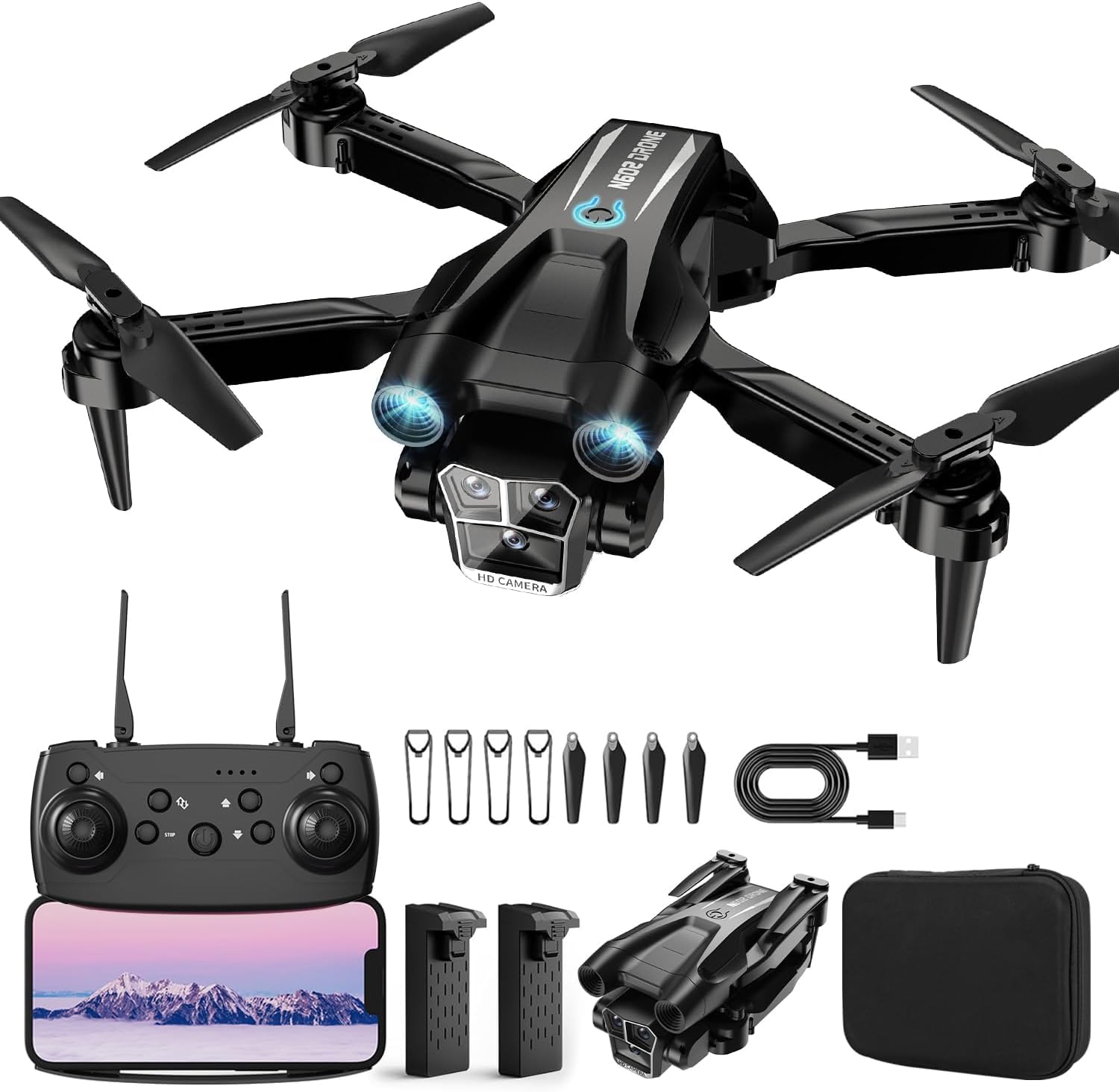
The BeiyoQSZ is a true entry-level drone designed for kids and absolute beginners who want to learn the fundamentals of flight without spending much. Its 1080P camera is adequate for social media sharing, and the 90° adjustable angle lets you frame some basic aerial shots. The optical flow positioning camera provides stable hover, which is crucial for avoiding frustration during early flights.
It includes two batteries for 25 minutes of total flight time, and the carrying case, propeller guards, and spare blades make it ready to fly out of the box without needing additional purchases. The one-key takeoff and landing simplify operation, while 3D flips and trajectory flight add entertainment value. The gravity control mode lets you steer the drone by tilting your phone, which is intuitive for younger pilots.
The drone uses brushed motors, which are less durable than brushless and will eventually wear out. The camera quality is not comparable to 4K models — expect compressed 1080P footage suitable for phone screens, not large displays. For teaching a child how to fly without breaking the bank, this package delivers exactly what it promises.
Why it’s great
- Incredibly affordable complete kit with case and spare parts
- Optical flow hover makes learning easy
- Fun features like 3D flips and gravity control
Good to know
- Brushed motors have limited lifespan
- 1080P camera quality is basic and compressed
7. mcokoe 5G Screen Drone
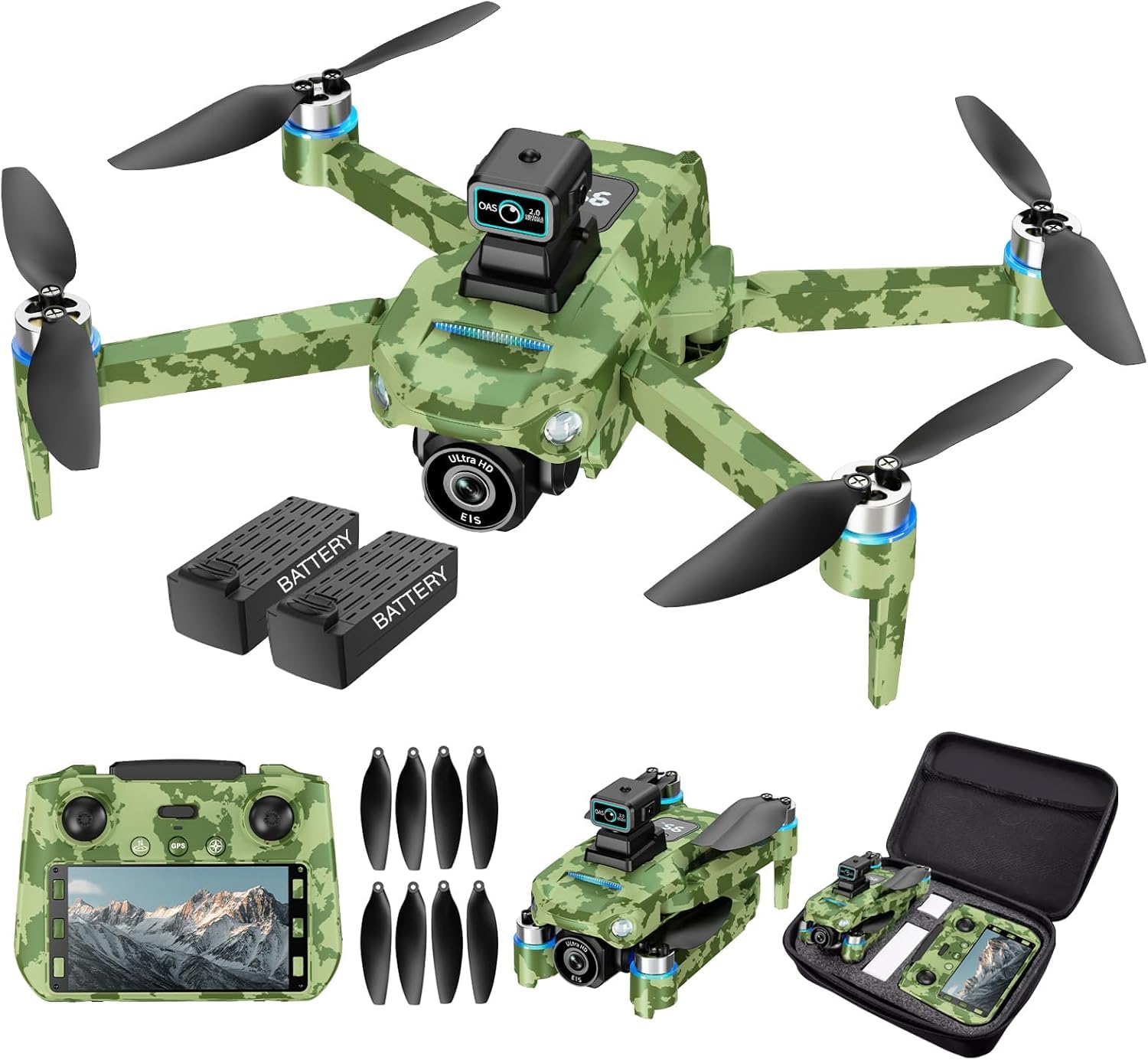
The mcokoe drone is the only model in this roundup with a built-in 5.9-inch screen on the remote controller, eliminating the need to clamp your phone to the controller or worry about app compatibility. The 720P HD camera with a 120° wide-angle and 90° adjustable lens transmits real-time video directly to the screen. The 5G FPV transmission keeps the feed smooth at short to medium range.
It features GPS with auto return-to-home, follow-me, waypoint, and circle fly modes, plus gesture control for hands-free selfies. The two 2200mAh batteries provide 40 minutes of total flight time (20 minutes each). The brushless motor platform ensures stable flight and decent wind resistance. Weighing under 249 grams, it requires no FAA registration.
The camera is only 720P, which means photo quality is lower than true 4K models. For casual flying, social media sharing, and learning the ropes without needing a secondary phone screen, this is a well-integrated package. The GPS must lock onto 9 satellites before takeoff, so pre-flight calibration is essential. If you value an all-in-one screen experience, this is your best bet under the price cap.
Why it’s great
- Built-in 5.9-inch controller screen, no phone needed
- GPS auto return, follow, and waypoint modes
- Under 249g, no FAA registration hassle
Good to know
- Camera is only 720P HD, not 4K
- Requires 9 satellites for takeoff, calibration mandatory
FAQ
Do I need FAA registration for a drone under 250 grams?
How can I tell if a drone’s 4K camera is real or fake?
What is the difference between brushless and brushed motors in a drone?
Final Thoughts: The Verdict
For most users, the best drones under $200 with camera winner is the Oddire HK11 because it combines true GPS functionality, dual high-voltage batteries for 48 minutes of flying, and a genuine 4K camera in a sub-250g frame. If you need gimbal-stabilized video, grab the REDRIE HK33. And for an all-in-one experience with a built-in controller screen, nothing beats the mcokoe 5G Screen Drone.

Mo Maruf
I created WellFizz to bridge the gap between vague wellness advice and actionable solutions. My mission is simple: to decode the research and give you practical tools you can actually use.
Beyond the data, I am a passionate traveler. I believe that stepping away from the screen to explore new environments is essential for mental clarity and physical vitality.