Our readers keep the lights on and my smoothie glass nicely filled. As an Amazon Associate, I earn from qualifying purchases.
Shooting 8K RAW or 4K 120fps on a Sony Alpha or FX body demands a memory card that can sustain high write speeds without choking the buffer. Standard SD cards fall short on both bandwidth and durability, which is exactly why CFexpress Type A exists — a compact, PCIe-based slot that unlocks your camera’s full video and burst potential. Finding the right card means balancing sustained write performance, capacity, and long-term reliability under demanding field conditions.
I’m Mohammad Maruf — the founder and writer behind WellFizz. I’ve spent hundreds of hours analyzing real-world benchmarks, VPG ratings, and user reliability data across the CFexpress Type A market to build this guide.
Whether you’re shooting fast-action wildlife or cinema-grade video, choosing the right storage directly impacts your workflow and peace of mind. This guide cuts through the specs and marketing claims to help you find the absolute best cfexpress type a cards for your exact camera setup and shooting style.
How To Choose The Best CFexpress Type A Cards
CFexpress Type A cards share the same physical dimensions as SD cards but pack significantly higher bandwidth thanks to a PCIe 3.0 or 4.0 interface. Choosing the right card requires understanding your camera generation, your shooting demands, and the real-world performance numbers behind the marketing.
Sustained Write Speed vs. Burst Write Speed
Peak write speeds (often listed as “max write”) only tell part of the story. A card that hits 900MB/s in burst mode may drop to 300MB/s under sustained load, causing the buffer to fill and the recording to stop. For video, look for “minimum sustained write speed” or VPG certification (VPG200 guarantees 200MB/s minimum; VPG400 guarantees 400MB/s). High-bitrate codecs like XAVC S-I 4K or ProRes RAW demand sustained writes above 400MB/s to avoid dropped frames.
Capacity Planning for Your Workflow
A single 8K RAW 30p clip consumes roughly 5–7GB per minute. A 80GB card holds about 12–15 minutes of footage — enough for short sessions but tight for all-day shoots. 160GB and 256GB capacities offer a better balance for hybrid photo and video users. If you shoot matching pairs for dual-slot redundancy, factor in carrying at least two cards of equal capacity.
Thermal Throttling and Heat Dissipation
CFexpress Type A cards run hot during sustained writes, especially in cameras with limited airflow like the Sony A7S III or FX3. Cards with integrated heatsinks or lower power draw designs (like Nextorage’s Dynamic Auto Power Save) maintain consistent write speeds longer before thermal throttling kicks in. Some premium cards include explicit heatsinks or dual-layer housings to improve heat dissipation.
Camera Compatibility and Firmware Updates
CFexpress Type A is exclusively used by Sony’s Alpha and FX series (A1, A7S III, A7R V, A9 III, FX3, FX30, FX6). Not all cards support all camera bodies equally — some older firmware versions may cause format errors or slower write speeds. Cards from Angelbird offer firmware-updatable controllers via their dedicated reader, which future-proofs your card across camera generations.
Durability and Warranty Confidence
Memory cards face extreme conditions: drops, temperature swings, and X-ray scanners. Look for IP57-rated cards (like the Sony Tough series) that resist water and dust ingress. Warranty length and data recovery services also matter — some brands (Angelbird, Delkin) include free in-house data recovery as part of the warranty, which can save you thousands in lost footage recovery costs.
Quick Comparison
On smaller screens, swipe sideways to see the full table.
| Model | Category | Best For | Key Spec | Amazon |
|---|---|---|---|---|
| Nextorage NX-A2SE 256GB | CFexpress 4.0 | High-speed transfer & future-proofing | 1900 MB/s Read, 1700 MB/s Write, VPG200 | Amazon |
| Angelbird AV PRO CFexpress A v4 256GB | CFexpress 4.0 | Consistent sustained writes & data recovery | 1800 MB/s Read, 1650 MB/s Write, VPG400 | Amazon |
| Sony CEA-G160T 160GB | Sony Tough | Durability & first-party reliability | 800 MB/s Read, 700 MB/s Write, IP57 | Amazon |
| Lexar Gold Series 160GB | VPG400 | 8K video & burst photography | 900 MB/s Read, 800 MB/s Write, VPG400 | Amazon |
| Nextorage NX-A1PRO 80GB | VPG400 | Low power draw & sustained video | 950 MB/s Read, 950 MB/s Write, VPG400 | Amazon |
| Sony CEA-G80T 80GB | Sony Tough | Rugged field use & reliability | 800 MB/s Read, 700 MB/s Write, IP57 | Amazon |
| Pergear 256GB CFexpress Type A | VPG200 | Budget-friendly high capacity | 780 MB/s Read, 780 MB/s Write, VPG200 | Amazon |
| Delkin G4 160GB | CFexpress Type B | Nikon/Canon shooters (Type B slot) | 1780 MB/s Read, 1700 MB/s Write | Amazon |
| SUNEAST Ultimate PRO 128GB | CFexpress Type B | Budget entry for Nikon/Canon | 1550 MB/s Read, 550 MB/s Write | Amazon |
In‑Depth Reviews
1. Nextorage Japan CFexpress 4.0 Type A 256GB NX-A2SE
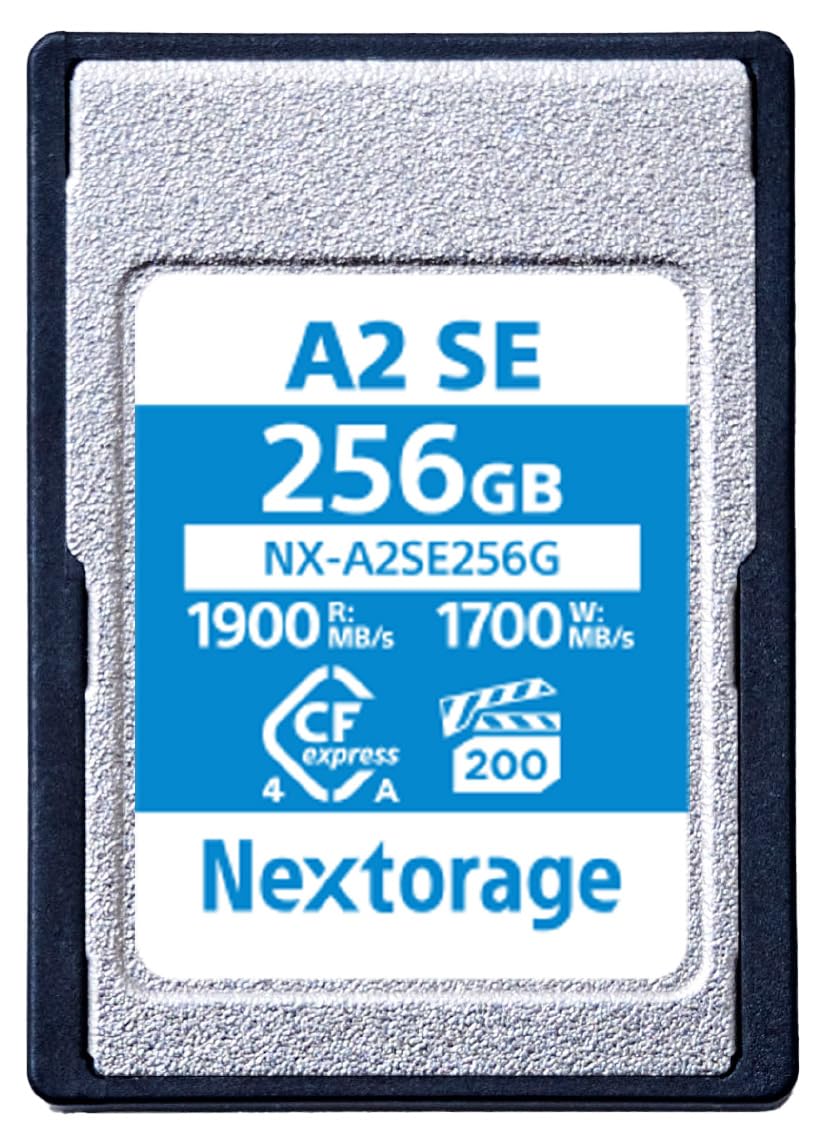
The Nextorage NX-A2SE is built around the CFexpress 4.0 interface, delivering up to 1900 MB/s read and 1700 MB/s write. When paired with a compatible 4.0 reader, it cuts transfer times for massive RAW sequences by more than half compared to older 2.0 cards. The 256GB capacity hits the sweet spot for hybrid shooters who need room for both high-res stills and extended video clips without juggling multiple cards on set.
Despite its 4.0 architecture, this card operates safely at full 2.0 speeds in existing Sony bodies like the A1, A7S III, and FX3. Users consistently report buffer-free burst shooting and flawlessly smooth 4K 120fps recording. The VPG200 certification guarantees a minimum sustained write of 200 MB/s, which is more than enough for XAVC S-I and compressed RAW formats. The card also passed five strict durability tests, including shock, temperature extremes, and X-ray exposure.
What sets Nextorage apart is their engineering history — founded by former Sony memory engineers with over 20 years of combined expertise. The NX-A2SE represents a rare intersection of next-gen speed, competitive capacity, and reliability that just works out of the box. For photographers moving to the latest CFexpress 4.0 ecosystems, this card future-proofs your workflow without breaking the bank compared to first-party alternatives.
Why it’s great
- Dramatically faster transfer speeds with CFexpress 4.0 reader support
- 256GB capacity offers excellent value per gigabyte for the speed class
- Proven reliability from ex-Sony engineers with 5-year warranty
Good to know
- Requires CFexpress 4.0 reader to unlock full read/write speeds
- VPG200 rating may not satisfy users who require VPG400 for specific workflows
2. Angelbird AV PRO CFexpress A v4 256GB

Angelbird’s AV PRO v4 uses the CFexpress 4.0 standard and delivers 1800 MB/s read and 1650 MB/s write, but the headline spec here is the sustained write performance. Their Stable Stream Technology maintains a consistent 800 MB/s write under load, which means the card won’t drop frames or overheat during long 8K RAW takes. The VPG400 certification (400 MB/s minimum sustained write) ensures compatibility with the most demanding video codecs available on Sony bodies.
Thermal management is a priority on this card — Angelbird engineered an advanced heatsink and minimal power draw design to keep temperatures down and battery life up during extended recording sessions. The included firmware updatable feature (via Angelbird’s dedicated reader) is a genuine advantage for owners who upgrade camera bodies and need compatibility patches without buying new cards. The 3-year limited warranty plus free in-house data recovery service in Austria gives added peace of mind for professionals who cannot afford data loss.
User feedback on the Sony FX6 and A7 IV confirms reliable performance at 8K and 4K 120fps without corruption or unexpected shutdowns. The 256GB capacity provides roughly 35 minutes of 8K RAW or over 60 minutes of 4K ProRes, making it a solid choice for documentary and event videographers who need one card per camera per shoot. The price per gigabyte is competitive with the premium tier, especially considering the data recovery service included.
Why it’s great
- Stable 800 MB/s sustained write prevents dropped frames during long takes
- Firmware updatable for ongoing camera compatibility
- Free in-house data recovery service included in warranty
Good to know
- Firmware updates require purchasing a separate Angelbird card reader
- 3-year warranty is shorter than some competitors offering 5-year coverage
3. Sony CEA-G160T 160GB Tough CFexpress Type A

The Sony Tough CEA-G160T is the first-party benchmark that other Type A cards measure themselves against. With read speeds of 800 MB/s and write speeds of 700 MB/s, it’s not the fastest on paper, but its durability story is unmatched. The card is rated IP57 for water and dust ingress protection, delivers up to 5x more drop impact resistance, and offers 10x more bending resistance than standard CFexpress cards. For photographers and videographers working in dusty, wet, or unpredictable environments, this physical resilience is a genuine advantage.
Thermal performance is handled by an integrated heatsink design that allows long recording times at 4K/120p without throttling. Users on the Sony A1 and FX3 report buffer-free burst shooting at 30 fps and seamless 4K 120fps recording for full card capacity. The included File Scan Utility and Memory Card File Rescue software provide diagnostic and recovery capabilities directly from Sony, which is convenient for owners already in the Sony ecosystem.
The 160GB capacity balances cost and runtime for hybrid shooters — roughly 20 minutes of 8K 30p or 40 minutes of 4K 120p. The price is significantly higher per gigabyte than third-party alternatives, but the first-party integration and IP57 ruggedization make it the go-to choice for professionals who prioritize physical durability above all else.
Why it’s great
- IP57 water and dust ingress protection for extreme shooting conditions
- Integrated heatsink prevents thermal throttling during long 4K 120p recordings
- First-party reliability with Sony diagnostic and recovery software included
Good to know
- Highest price per gigabyte among comparable capacity cards
- Read/write speeds are slower than newer CFexpress 4.0 offerings
4. Lexar Professional Gold Series 160GB CFexpress Type A

Lexar’s Gold Series Type A card delivers up to 900 MB/s read and 800 MB/s write with a minimum sustained write of 700 MB/s, exceeding the VPG400 standard significantly. This headroom matters for Sony shooters pushing XAVC S-I 4K at 600 Mbps or uncompressed RAW bursts on the A1. The 160GB capacity stores roughly 22 minutes of 8K 30p footage or 45 minutes of 4K 120p. The Gold Series has been a staple recommendation among wedding and wildlife photographers for its consistent performance across multiple camera firmware versions.
Users paired with the Sony A7R V and A1 report faster read-out speeds than the camera’s internal buffer can fill, effectively eliminating shutter lock during high-speed continuous shooting. The card also works without issues for 4K 120fps capture on the FX3 and FX30. Several reviewers noted they stopped using SD cards entirely after adopting Lexar Gold Type A cards for their primary slot, citing faster transfer speeds and greater reliability during extended shoots.
The lifetime limited warranty is a significant value add, especially when compared to the standard 3–5 year warranties from smaller brands. Lexar’s brand recognition and widespread availability also make it easy to purchase matching cards for dual-slot setups. While the price per gigabyte sits slightly above some mid-range competitors, the combination of proven performance, strong warranty, and broad compatibility makes it a reliable choice for demanding hybrid work.
Why it’s great
- Minimum sustained write of 700 MB/s exceeds VPG400 by a wide margin
- Lifetime limited warranty provides long-term investment protection
- Broad compatibility across Sony Alpha and FX bodies without firmware issues
Good to know
- 160GB may fill quickly for 8K RAW shooters on all-day projects
- No IP-rated dust or water ingress protection on this model
5. Nextorage Japan CFexpress Type A NX-A1PRO 80GB VPG 400

The Nextorage NX-A1PRO uses pSLC NAND flash memory to achieve an impressive 950 MB/s read and write, with a minimum sustained write of 850 MB/s — well above the VPG400 threshold. This makes it one of the fastest single-slot Type A cards available for the existing CFexpress 2.0 standard. The 80GB capacity is modest but sufficient for short-form video work, event coverage, or as a secondary card in a two-slot camera.
Nextorage’s proprietary Dynamic Auto Power Save system reduces power consumption by up to 88% during video recording compared to non-pSLC CFexpress cards. This translates to longer battery life in the field and less thermal buildup inside the camera body. Users on the Sony FX30 and A7R V report no overheating issues even during extended 4K 120fps recording sessions, which is a common pain point with other high-speed Type A cards. The card also ships with a dedicated case and free data recovery software.
Built from the same engineering DNA as the NX-A2SE (ex-Sony engineers), the NX-A1PRO carries a 5-year warranty and has passed drop, magnetic, temperature, and X-ray tests. For photographers who prioritize battery efficiency and sustained write speed over raw capacity, this card is a strong contender. The 80GB size works best as a primary card for focused sessions or as a reliable backup card in the second slot.
Why it’s great
- pSLC NAND delivers 850 MB/s minimum sustained write for demanding codecs
- 88% power reduction during video recording extends camera battery life
- 5-year warranty and comprehensive durability certification
Good to know
- 80GB capacity may be insufficient for all-day 8K video shoots
- No IP-rated dust or water ingress protection on this model
6. Sony CEA-G80T 80GB Tough CFexpress Type A

The 80GB version of Sony’s Tough series shares the same IP57-rated rugged build as its larger sibling, making it one of the most physically resilient Type A cards on the market. With 800 MB/s read and 700 MB/s write, it’s optimized for Sony’s own camera ecosystem and is the default recommendation for shooters who need a card that can survive moisture, dust, and accidental drops. The heatsink design allows sustained 4K 120p recording without thermal shutdown, even in warmer climates.
Users on the Sony A7S III and FX30 highlight that this card enables all available recording formats without restrictions, including XAVC S-I 4K at 600 Mbps and slow-motion 4K 120fps. The 80GB capacity holds roughly 12 minutes of 4K 120p or 20 minutes of standard 4K 60p, which fits well for controlled shoots like interviews, product videos, or short cinematic sequences. The included File Scan Utility helps check card health over time, which is a useful feature for professionals tracking storage reliability.
The main consideration is cost per gigabyte — the 80GB Tough card sits at a premium price point that competes with 160GB cards from other brands. For users who absolutely need the IP57 durability and first-party compatibility, the investment makes sense. For budget-conscious shooters or those needing more capacity at the same price, larger-capacity alternatives from Nextorage or Angelbird offer better value.
Why it’s great
- IP57 dust and water ingress protection for rugged field conditions
- Heatsink design prevents thermal throttling during 4K 120p recording
- Full compatibility with all Sony Alpha and FX recording formats
Good to know
- High price per gigabyte compared to third-party alternatives
- 80GB capacity fills quickly during extended, high-bitrate shoots
7. Pergear 256GB CFexpress Type A Memory Card
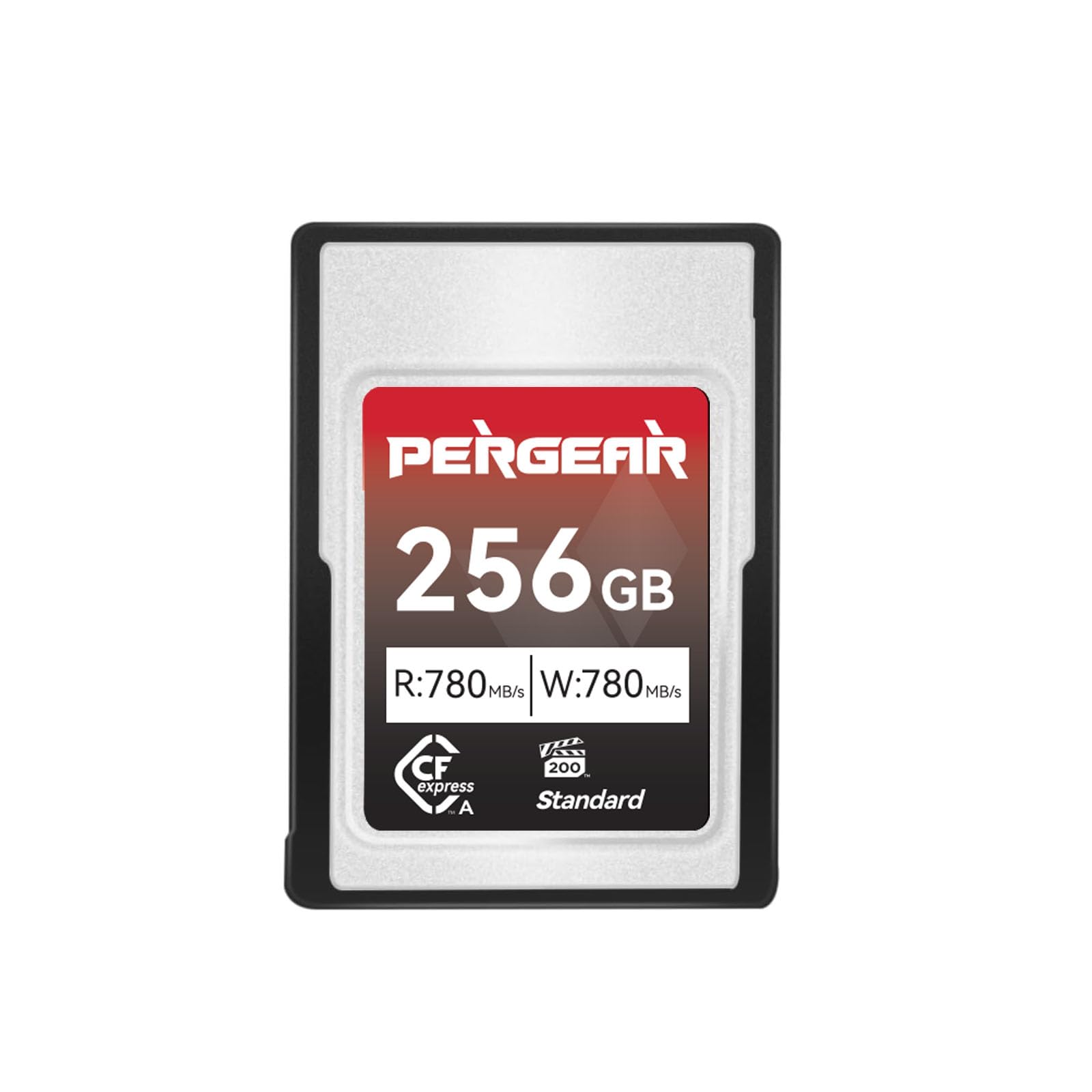
Pergear’s 256GB Type A card offers the highest capacity in the budget-friendly tier, with read and write speeds up to 780 MB/s and a sustained write of 380 MB/s. The VPG200 certification ensures stable recording for XAVC HS and standard 4K 60fps workflows. For videographers who need large capacity without paying premium prices, this card delivers the most gigabytes per dollar among the Type A options reviewed here.
Users on the Sony A7R V and FX30 report that the card works reliably for both RAW burst photography and 4K video recording. The 256GB capacity holds roughly 60 minutes of 4K 60p or about 40 minutes of 8K 30p, making it suitable for longer shoots without swapping cards. The card is physically compatible with all Sony Alpha and FX cameras that accept Type A, including the A1, A7S III, A7R V, FX3, and FX6.
The main trade-offs are the lower sustained write speed (380 MB/s) compared to VPG400 cards, which may cause issues with extremely high-bitrate codecs like XAVC S-I 4K at 600 Mbps. Some users noted that the card runs slightly warmer during extended writes, though no reports of thermal throttling emerged. Pergear backs the card with a 5-year support policy and a replacement guarantee for non-human damage, which adds confidence for a budget-oriented product.
Why it’s great
- Highest capacity (256GB) at the lowest price per gigabyte in this guide
- VPG200 certification ensures stable recording for standard 4K workflows
- 5-year replacement policy for non-human damage
Good to know
- Sustained write of 380 MB/s may not support high-bitrate 8K RAW codecs
- No IP-rated dust or water ingress protection
8. Delkin Devices 160GB CFexpress Type B G4
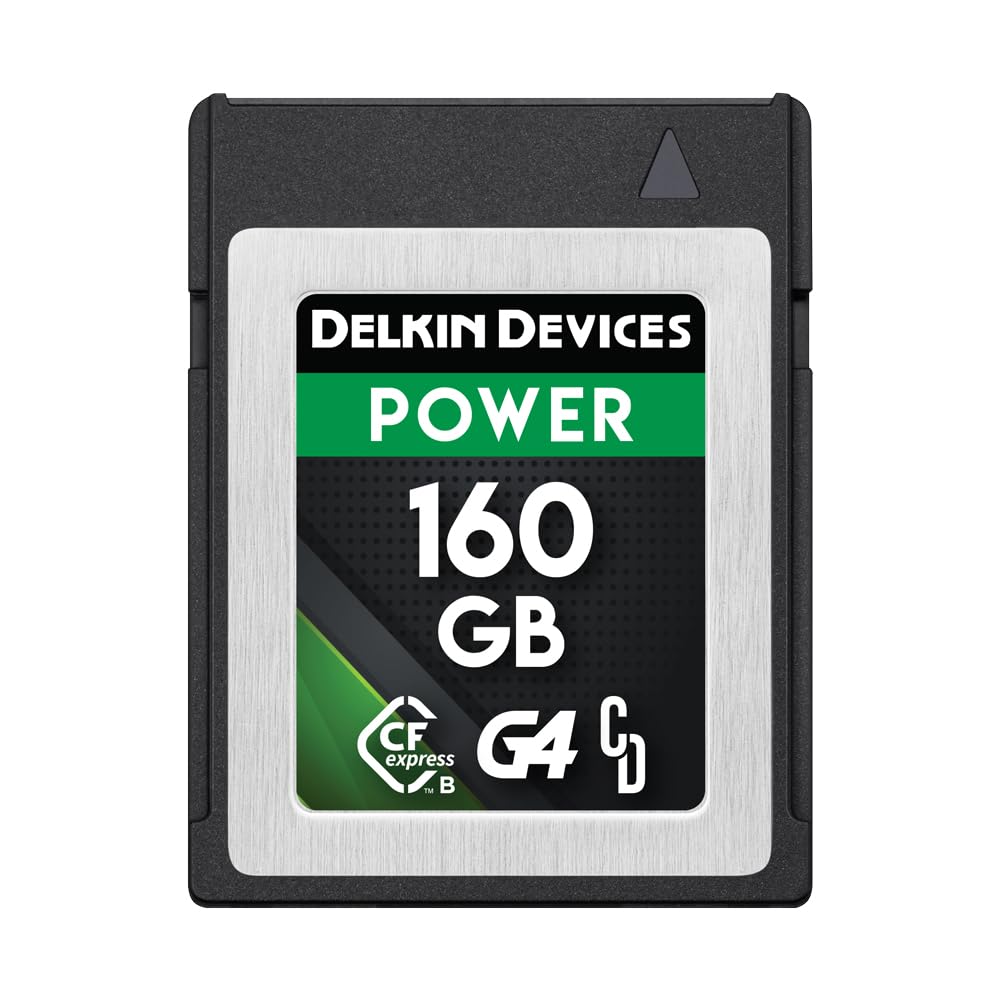
The Delkin G4 is a Type B card, not Type A, and is included here as a reference for Nikon and Canon shooters who are researching CFexpress options. It delivers exceptional burst speeds of 1780 MB/s read and 1700 MB/s write, with a sustained write of 805 MB/s. This makes it a strong contender for photographers using the Nikon Z8/Z9 or Canon R3/R5C who need maximum buffer clearing speed and reliable 8K video recording.
Delkin backs the G4 with a premium 48-hour replacement guarantee — if the card fails, they ship a replacement within two business days. This is a standout policy for professionals who cannot afford downtime. The card is also shockproof, waterproof, and X-ray proof, and is available in capacities up to 2TB. Users on the Nikon Z6 III and Canon R5 report flawless performance with both burst RAW shooting and ProRes recording.
The main consideration is physical compatibility — Type B cards are physically larger than Type A and are not interchangeable. If you shoot a Sony camera with a Type A slot, this card will not fit. For Canon, Nikon, Fujifilm, and RED users, however, the Delkin G4 is one of the fastest and most reliable Type B options available. The 48-hour replacement policy alone makes it a strong recommendation for professionals with tight deadlines.
Why it’s great
- 1700 MB/s burst write and 805 MB/s sustained write for 8K video and RAW bursts
- 48-hour replacement guarantee minimizes professional downtime
- Shockproof, waterproof, and X-ray proof construction for field durability
Good to know
- Incompatible with Sony Alpha/FX cameras that require Type A cards
- Capacity options start at 128GB, which fills fast for 8K RAW shooters
9. SUNEAST Ultimate PRO White CFexpress Type B 128GB
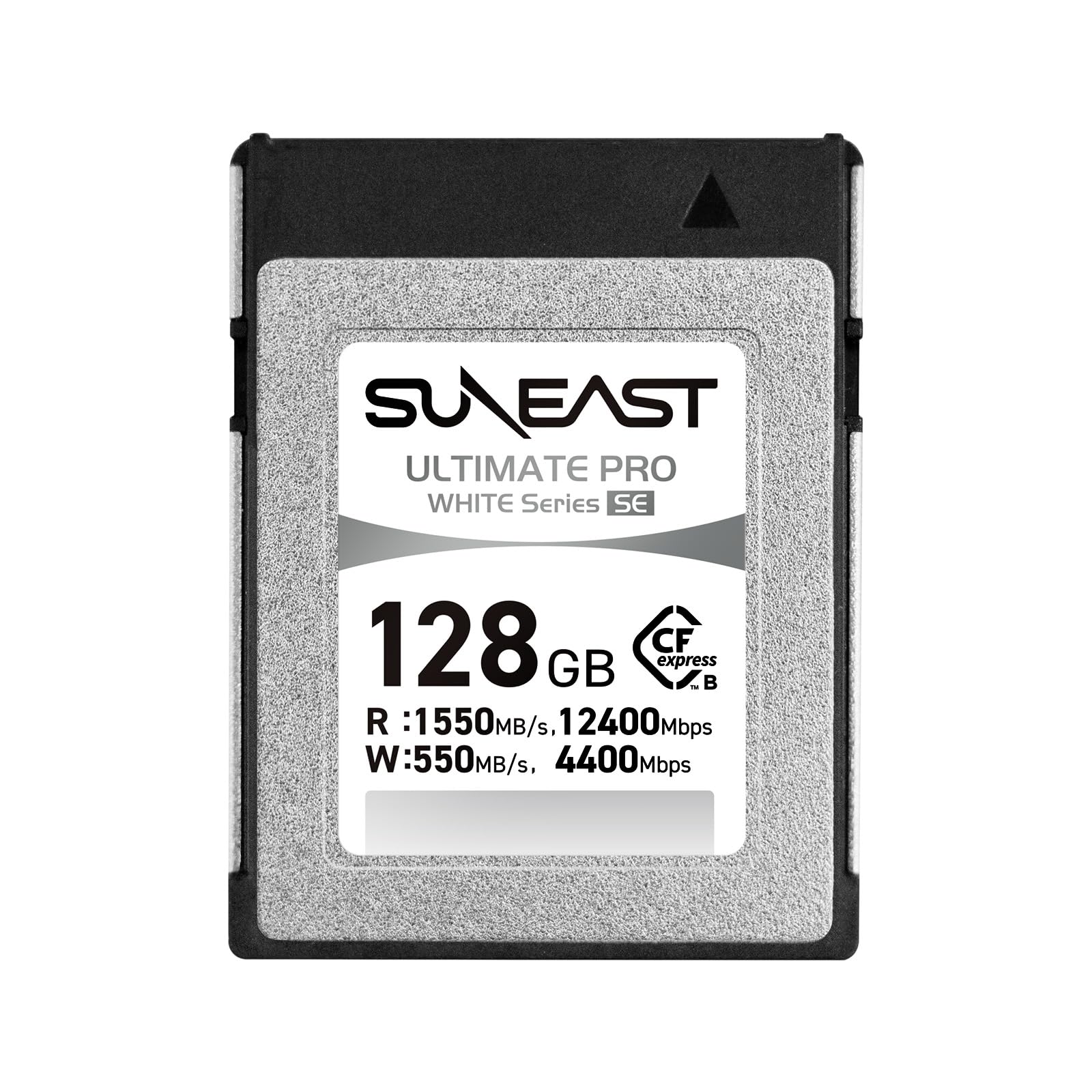
The SUNEAST Ultimate PRO is a budget-focused Type B card that offers 1550 MB/s read and 550 MB/s write, with a sustained write of 150 MB/s. This places it firmly in the entry-level segment for Nikon and Canon shooters who want to test CFexpress performance without committing to expensive premium cards. The 128GB capacity is adequate for casual burst photography and 1080p video recording.
Users on the Nikon Z8 and Z9 report that the card works reliably for RAW+JPEG shooting and standard video formats without latency or corruption. The card is also backward compatible with XQD slots, which adds flexibility for photographers using older cameras alongside newer bodies. The writable label surface is a practical feature for organizing multiple cards on location.
The main limitation is the low sustained write speed of 150 MB/s, which will cause buffer issues during extended 8K video recording or rapid-fire RAW bursts. Some users reported the card failing to format after two weeks of use, though this appears to be an outlier case. For shooters who plan to push high-bitrate video or need maximum burst depth, spending more on a Dellkin G4 or similar card is the safer bet.
Why it’s great
- Most affordable entry point for Nikon/Canon CFexpress Type B cameras
- Backward compatible with XQD devices for cross-system use
- Writable label surface helps organize multiple cards in a kit
Good to know
- Sustained write of 150 MB/s is too slow for 8K video and heavy RAW bursts
- Reports of card failures after short ownership in some user reviews
FAQ
Can I use a CFexpress Type A card in a Type B slot?
Does a CFexpress 4.0 Type A card work in a camera with a CFexpress 2.0 slot?
What is VPG400 certification and do I need it?
Why does my CFexpress Type A card get hot during recording?
How do I update the firmware on a CFexpress Type A card?
Final Thoughts: The Verdict
For most users, the best cfexpress type a cards winner is the Nextorage NX-A2SE 256GB because it combines blazing CFexpress 4.0 speeds with reliable sustained performance and a compelling price per gigabyte. If you want consistent VPG400-level sustained writes with built-in data recovery and firmware updatability, grab the Angelbird AV PRO v4 256GB. And for rugged field use where IP57 dust and water protection is non-negotiable, nothing beats the Sony Tough CEA-G160T 160GB.

Mo Maruf
I created WellFizz to bridge the gap between vague wellness advice and actionable solutions. My mission is simple: to decode the research and give you practical tools you can actually use.
Beyond the data, I am a passionate traveler. I believe that stepping away from the screen to explore new environments is essential for mental clarity and physical vitality.