Our readers keep the lights on and my smoothie glass nicely filled. As an Amazon Associate, I earn from qualifying purchases.
Orchestrating a drone light show is a unique blend of technical precision and creative vision. You are not just buying a flying camera; you are assembling a fleet of aerial pixels capable of painting the night sky with coordinated movements and brilliant colors. The core challenge lies not in lift power but in synchronization software, LED brightness measured in candelas, and the GPS lock precision that keeps hundreds of units in perfect formation without collision.
I’m Mohammad Maruf — the founder and writer behind WellFizz. I spend hundreds of hours reading technical datasheets, decoding swarm synchronization protocols, and analyzing customer feedback on GPS accuracy and LED luminosity to identify which drones can actually perform as a coordinated light show unit.
Below, I break down the top contenders that balance payload capacity for LEDs, integrated RGB lighting, and the flight control software necessary for a good show. Use this guide to find the perfect drones for light shows that match your budget and performance expectations.
How To Choose The Best Drones For Light Shows
Building a fleet for a drone light show requires a shift in thinking from traditional aerial photography. The key specs that define a good camera drone are different from what makes a great light show drone. You need to prioritize LED output, flight controller stability in a swarm, and battery endurance to keep the show going.
1. LED Brightness and Customization
The entire show is pointless if the audience cannot see the lights. Look for drones with built-in RGB LEDs that have a high luminous intensity, often measured in lumens or candela. More importantly, the drone must support software-based control over each LED’s color and pattern. Pre-programmed “light show” modes are useful, but true choreography demands that you or your software can map individual RGB values to each drone in the swarm.
2. Swarm Software and GPS Precision
For a multi-drone show, the drone’s individual autonomy is critical. Each unit needs a rock-solid GPS and GLONASS lock to know its exact position in 3D space. The flight controller must be able to receive a mission file and execute it with centimeter-level accuracy. Open-source or proprietary swarm software like Skybrush or DroneShowApp compatibility is a major plus, as it allows you to design patterns on a grid and assign them to each drone.
3. Flight Time and Battery Management
A show’s length is directly limited by the shortest battery life in the fleet. Drones with 30+ minute flight times are ideal, but the ability to quickly swap batteries between shows is equally important. Look for “Fly More” combos that include multiple intelligent batteries and a parallel charging hub. This allows you to run a show, land, swap batteries in under a minute, and launch the next sequence without a long break in the performance.
Quick Comparison
On smaller screens, swipe sideways to see the full table.
| Model | Category | Best For | Key Spec | Amazon |
|---|---|---|---|---|
| SKYROVER X1 | Mid-Range | Best Overall Balance | 360° Obstacle Avoidance | Amazon |
| DJI Avata 360 Fly More | Premium | Cinematic 360° Effects | 8K 360° Imaging | Amazon |
| Antigravity A1 Infinity | Premium | Immersive FPV Light Shows | 90° FOV Vision Goggles | Amazon |
| Bwine F7MINI 4K(RC3) | Mid-Range | Built-in Screen Controller | 5.5″ 1080P RC Screen | Amazon |
| Bingchat Tablet Remote | Mid-Range | Payload Release Effects | 84 Mins Total Flight Time | Amazon |
| Ruko F13PRVR8 | Mid-Range | Entry-Level Fleet Building | Under 249g FAA-Exempt | Amazon |
| Bwine F7GIM 6K | Mid-Range | Durability in Wind | Industrial Aesthetic Design | Amazon |
| DCX Volo X EZ AI | Budget-Friendly | AI-Assisted Show Flights | LiDAR Obstacle Avoidance | Amazon |
| Potensic ATOM 4K | Budget-Friendly | Best Value for Beginners | 96 Mins Flight (3 Batteries) | Amazon |
| DJI Mavic 4 Pro | High-End | Professional Cinematography | 100MP Hasselblad Camera | Amazon |
| Autel EVO II Dual 640T | Industrial | Thermal & Surveillance | 640×512 Thermal Sensor | Amazon |
In‑Depth Reviews
1. SKYROVER X1 Fly More Combo

The SKYROVER X1 strikes the best balance between advanced features and price for light show enthusiasts. Its 4K/60fps HDR video and 48MP photos are excellent, but for light shows, the 360° obstacle avoidance is a critical safety net when flying multiple units in close proximity. The 9.32-mile transmission range on the SkyBridge system ensures you maintain control even when the swarm is far away.
With three batteries providing a total of 96 minutes of flight time, this is a fleet-ready package. The AI Night Mode and f/1.7 aperture greatly improve visibility during dusk and evening performances. The 1080p/60fps live view feed is crisp, allowing the show operator to monitor each drone’s position in real time. It is a true DJI Mini 4 Pro competitor at a more accessible price point.
Setup involves syncing the controller and calibrating the compass. Users report that the drone is very stable in wind, which is essential for maintaining formation patterns. The only minor gripe is the bright yellow color, which some find less professional, though it improves visibility during daytime setup. For a starting fleet that offers premium performance without the enterprise cost, the X1 is a top choice.
Why it’s great
- Excellent 360° obstacle avoidance for safe swarm flying
- Long 9.32-mile transmission range for broad stage coverage
- AI Night Mode enhances low-light performance for evening shows
Good to know
- Bright yellow color may not appeal to all users
- Requires open field for initial flight calibration
2. DJI Avata 360 Fly More Combo (RC 2)
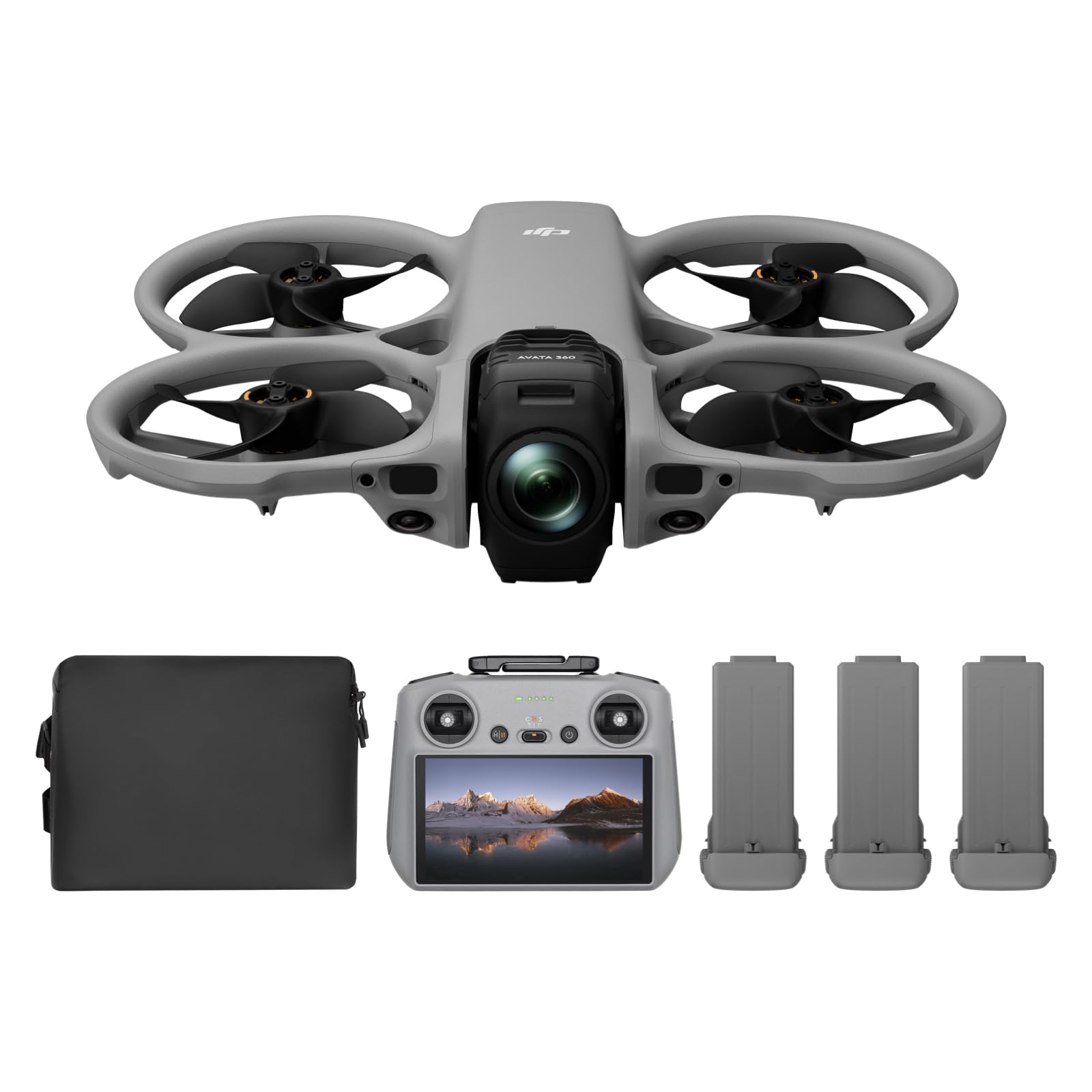
This is the drone for creating immersive light show footage from the inside. The 360° 8K camera captures the entire sphere of action, allowing you to reframe the shot later to show the swarm from any angle. For a light show, this is revolutionary — you film the entire performance and later choose the best perspectives for your final video.
The integrated propeller guard and omnidirectional obstacle sensing are crucial for safe flying, especially during FPV light show runs where the pilot is focused on the goggles. The O4+ FHD video transmission provides a 20 km range, ensuring the pilot has a crystal-clear view even when the show covers a large area. The three-battery combo offers solid endurance for extended shooting sessions.
Setup is straightforward within the DJI ecosystem. The 360° gimbal allows for infinite rotation, enabling dynamic camera sweeps that standard drones cannot achieve. Some users note that the software on the RC 2 requires a visit to the official DJI website due to Google Play restrictions. It is a fantastic tool for capturing the beauty of a light show, rather than being the light itself.
Why it’s great
- 360° 8K capture allows for versatile post-production reframing of shows
- Integrated propeller guard adds safety during FPV flights
- Long 20 km O4+ video transmission range
Good to know
- Larger and heavier than previous Avata models
- Battery life is limited to about 12-15 minutes per flight
- DJI Fly app not on Google Play; requires manual download
3. Antigravity A1 Infinity Bundle
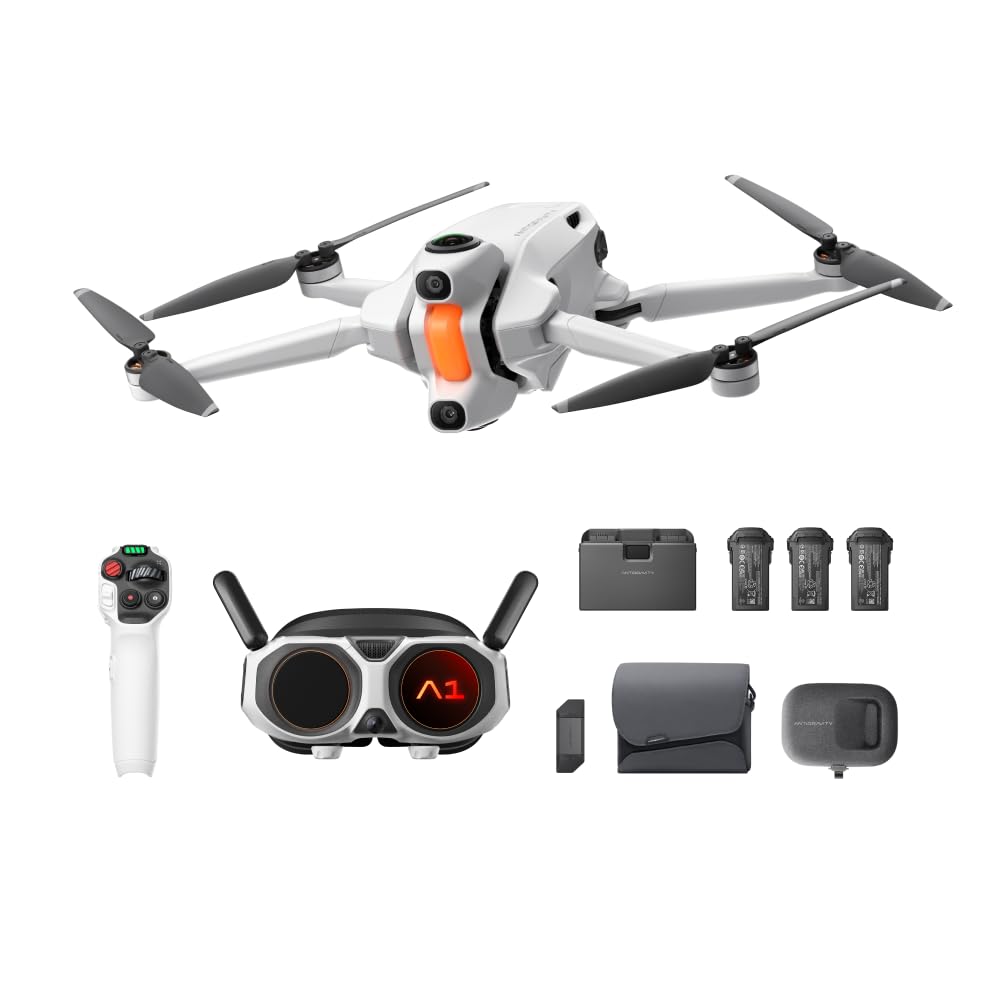
The Antigravity A1 is designed from the ground up for immersive experiences, making it a perfect centerpiece for a drone light show. The bundle includes Vision Goggles with a 90° FOV, creating a first-person perspective that feels like you are inside the display. The 8K 360° video capture means you can fly through your own light show and record it for later editing, a unique capability.
Its dual nature is its strength: you can use the Standard Battery to keep it under 249g for easy regulation, or use the High-Capacity Battery for 39 minutes of flight. The “FreeMotion Mode” allows anyone to pick it up and fly, which is great for quick show setups. The “Deep Track” feature keeps the drone focused on a subject, which could be a central performer or structure at an event.
Setup involves pairing the goggles and controller. The diopter adjustment on the goggles means users with glasses can get a sharp view without corrective lenses. Some early users reported minor software glitches, but updates have improved stability. It is a fantastic choice for a pilot who wants to be part of the show, not just an outside observer.
Why it’s great
- Immersive FPV experience with 90° FOV goggles included
- Under 249g option for regulatory flexibility
- FreeMotion mode makes it easy to pilot during live shows
Good to know
- Some users report connectivity issues and glitches on initial firmware
- 360 stitching software is not as polished as Insta360
- In-flight immersion FOV is narrower than expected by some
4. Bwine F7MINI 4K(RC3)
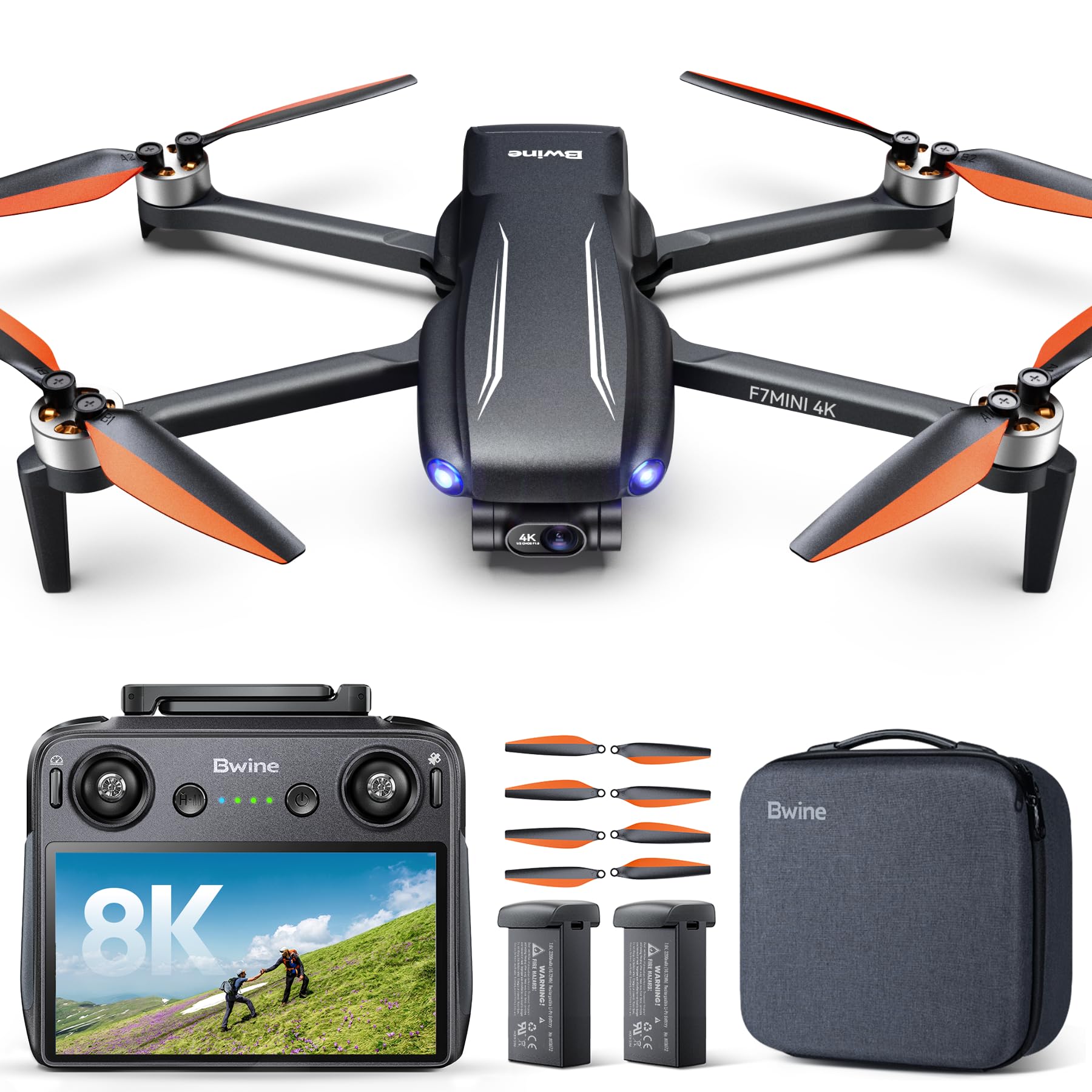
The F7MINI 4K(RC3) excels with its remote controller that features a built-in 5.5-inch 1080P screen. For a light show operator, this is a huge advantage — you no longer need to attach a smartphone that could overheat or receive calls mid-show. The 500-nit brightness ensures the screen remains visible even under bright ambient light at outdoor events.
Weighing under 249g, it is FAA-exempt, making it easier to scale a fleet of these units without heavy registration paperwork. The 3-axis gimbal and EIS keep the live feed stable, which is crucial for monitoring drone positions during choreographed formations. With two high-capacity batteries giving a total of 64 minutes of flight time, you have a solid base for a short to medium show.
Setup is quick, with one-button takeoff and landing. The GPS intelligent system includes Active Track and Waypoint Planning, which can be used to pre-program show routes. Users highlight the ease of use and the excellent value of the built-in screen controller. The only downside is that transferring video files from the controller to a phone is slow, so using a computer is recommended.
Why it’s great
- Built-in bright screen controller eliminates phone dependency
- Under 249g weight avoids FAA registration for each unit
- Stable 3-axis gimbal for clear live view monitoring
Good to know
- Slow file transfer speed from controller to phone
- Single battery life is around 30 minutes in practice
5. Bingchat 2026Upgraded Tablet Remote Professional Drone
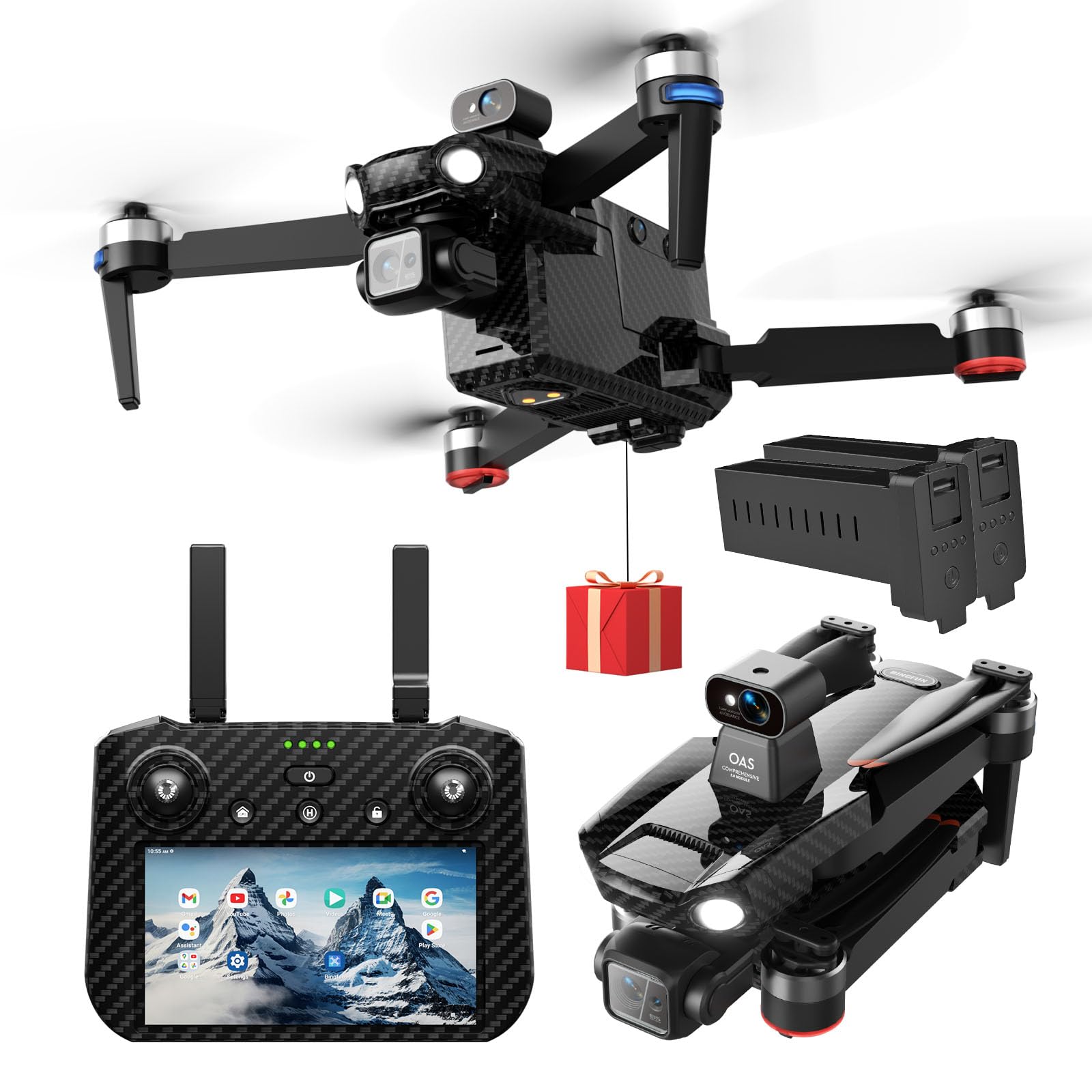
This drone stands out because of its payload release mechanism, which adds a physical interactive element to a light show. You can program the drone to drop lightweight glowing payloads, LED streamers, or small pyrotechnic effects (where legal), making the show truly three-dimensional. The “Tablet” remote is effectively an Android device with Google Play access, allowing you to run custom show control apps directly.
The 360° Laser Obstacle Avoidance system is a boon for swarm safety, and the 4K HD camera with a 3-axis gimbal provides a stable view for the operator. The combination of a tablet remote, payload drop, and robust flight time of 84 minutes from two batteries makes it a surprisingly versatile tool for creative show directors. Level 7 wind resistance also means shows can go ahead in breezy conditions.
Setup requires charging the batteries and controller. The company offers strong US-based support. Users praise the customer service and the drone’s stability, but a few have reported critical failures like battery disconnect mid-flight, which is a major concern for shows. The payload release function is a unique feature that can make your show stand out, but reliability testing is essential before a live performance.
Why it’s great
- Unique payload release function for interactive show effects
- Android tablet controller runs custom apps natively
- High wind resistance (Level 7) for outdoor show reliability
Good to know
- Critical user reports of mid-air battery disconnect incidents
- Battery charging is slow, though flight time is generous
6. Ruko Drone with 4K UHD Camera

The Ruko drone is a fantastic entry point for building a fleet for light shows. It is under 249g, so FAA registration is not required for each unit, significantly reducing the administrative burden when scaling up. The package includes three batteries for a total of 96 minutes of flight time, giving you three full performance windows per charge cycle.
The 8K photo and 4K/30fps video are high-quality, but the 3-axis brushless gimbal is the key feature. It ensures that the live feed sent to the controller is stable and smooth, allowing the show director to maintain a clear view of each drone’s position. The 20,000ft digital feed range provides plenty of space for a large show area.
Setup is beginner-friendly with one-button takeoff and auto-return features. The built-in beeper is a lifesaver if a drone lands in tall grass or bushes. Some users have reported issues with sensitive joysticks, and while customer service is responsive, occasional battery defects have been noted. For the price, it offers a solid foundation for learning swarm choreography without a huge financial risk.
Why it’s great
- Under 249g avoids FAA registration per unit for fleet building
- Triple battery kit provides long total show time
- 3-axis gimbal ensures stable live feed for monitoring
Good to know
- Joysticks can be very sensitive for new pilots
- Some users reported defective batteries in the kit
7. Bwine F7GIM 6K Photo Drone
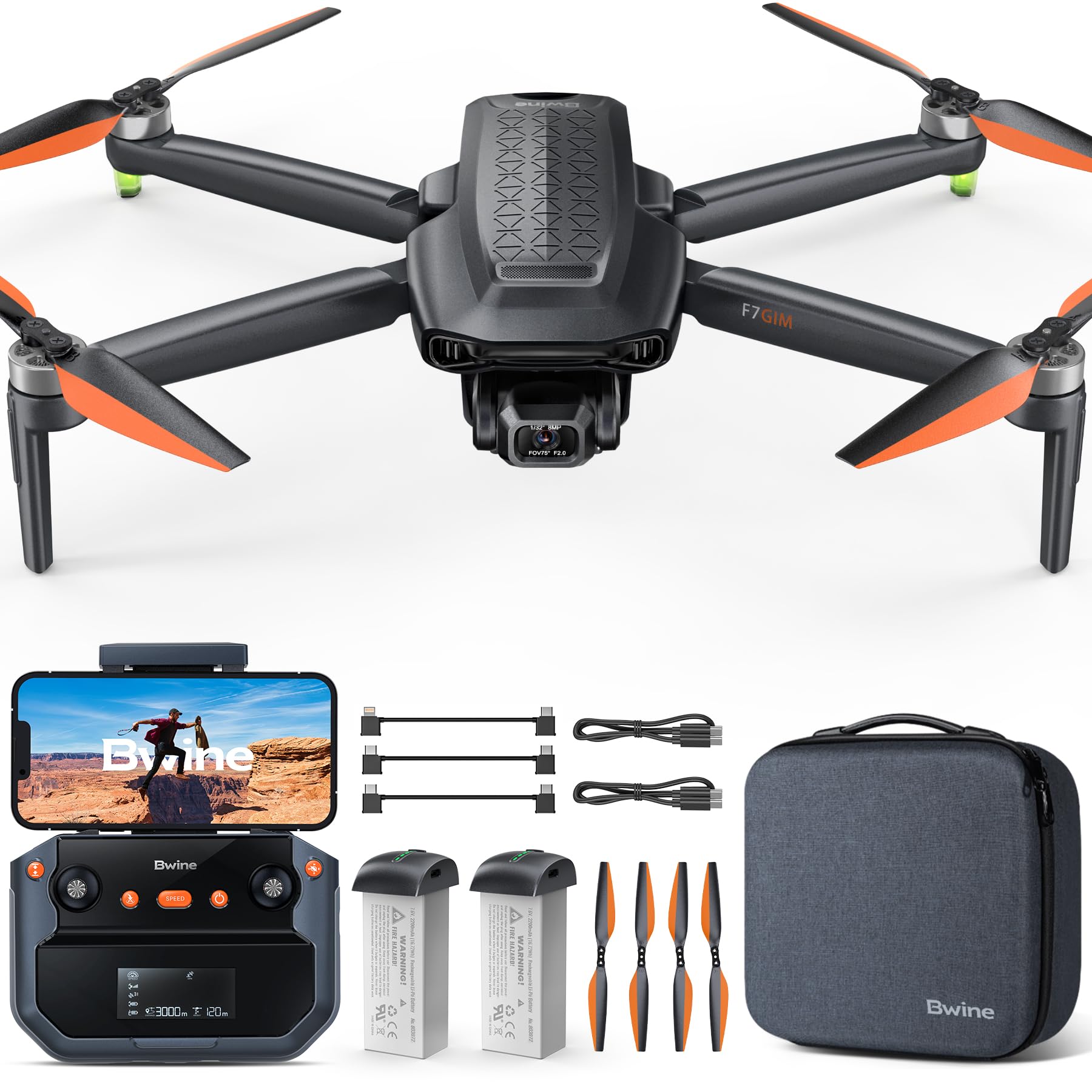
The F7GIM is built for durability and style. Its textured body with 3D laser engraving and orange propellers make it highly visible during twilight shows. This is not just a camera drone; it is a showpiece that looks good in the air. The 3-axis brushless gimbal raises stability accuracy by 300%, ensuring that the drone maintains its orientation during fast choreographed movements.
The flight time of 70 minutes from two batteries allows for long, continuous performance segments. The TOF and GPS 6 high-precision sensors drastically improve low-altitude stability, which is perfect for shows that require drones to fly low over an audience (with proper safety measures). The built-in Remote ID module ensures FAA compliance without extra hardware.
Setup includes downloading the “Bwine Mini” app. The drone uses wired digital transmission, not Wi-Fi, which reduces signal interference in a crowded RF environment. Users report it handles wind very well and that customer support is responsive. The only minor issue is that the remote screen can be hard to see in direct sunlight, but for evening shows this is less of a concern.
Why it’s great
- Unique industrial design with orange props for high visibility
- TOF sensors provide excellent low-altitude stability for close-proximity shows
- Wired digital transmission avoids Wi-Fi interference in swarm setups
Good to know
- Remote screen can be hard to see in bright sunlight
- SD card compatibility requires formatting for Mac users
8. DCX Volo X EZ AI Drone
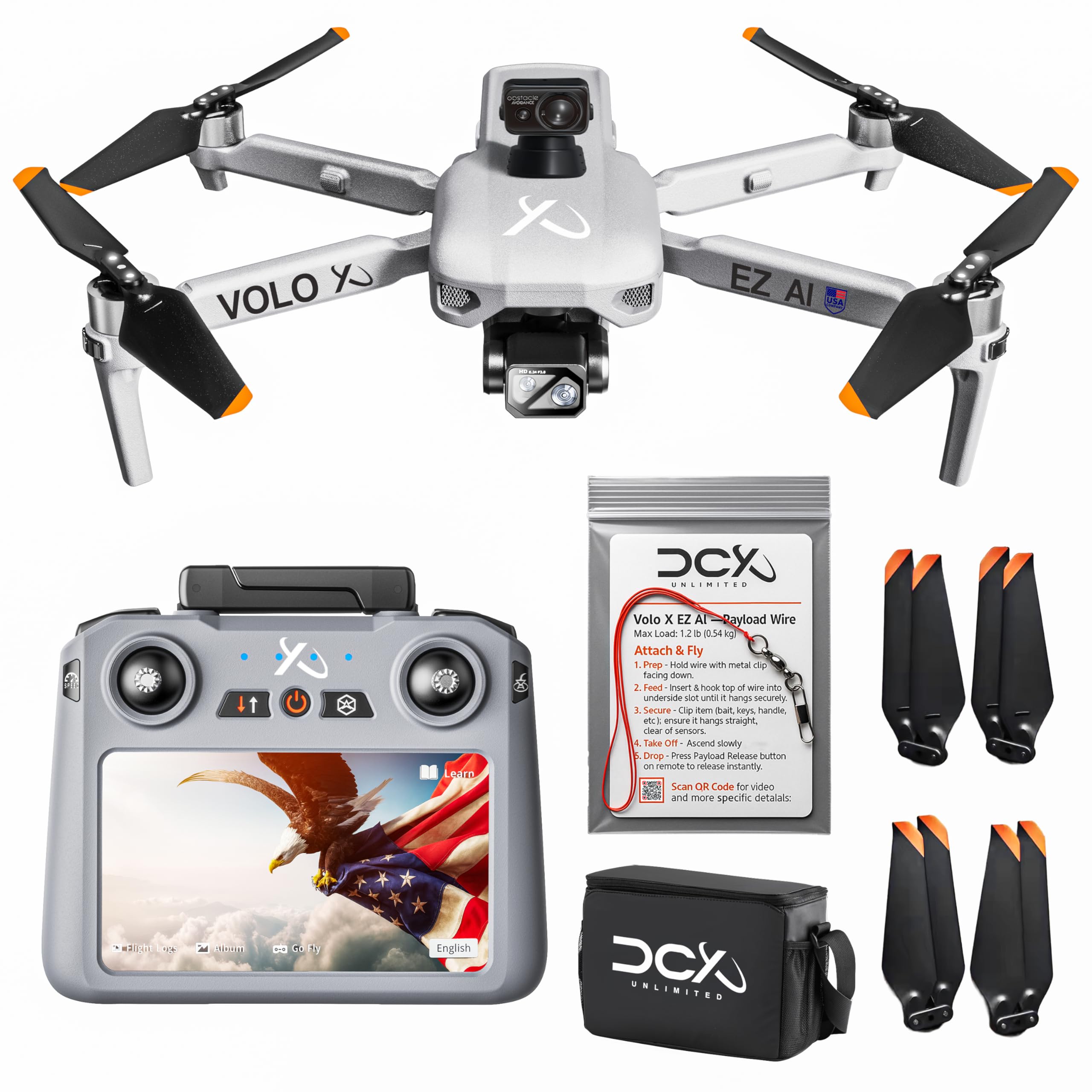
The DCX Volo X EZ AI is designed to make complex flying tasks simple. For a light show, its AI-assisted flight control can be a game-changer. The Follow Me mode can lock onto a performer or a moving vehicle, and the Precision Return-to-Home ensures the drone lands safely after its part in the show is done. The 360° LiDAR obstacle detection adds a layer of safety that other budget-friendly options lack.
The remote controller has a built-in screen, which simplifies the setup. The 45-minute flight time and 4-mile range give a decent operational window. One unique feature is the built-in Payload Release mechanism, capable of carrying and releasing up to 1.2 pounds. This could be used to drop small, lightweight glow sticks or tiny parachutes at a key moment in the performance.
Setup requires a specific power-on sequence (short press, wait, long press). The US-based customer support is a strong selling point, alongside the lack of geofencing limits. Some users have reported the controller losing sync with the drone mid-flight, causing screen freezes. It is a risk to consider for live shows where every second of connection is critical.
Why it’s great
- AI-assisted flight modes like Follow Me reduce pilot workload
- LiDAR 360° obstacle avoidance adds a critical safety layer
- Payload release mechanism for dropping show props
Good to know
- Some user reports of controller sync loss mid-flight
- Annoying power-on sequence required before each flight
9. DJI Mavic 4 Pro Drone
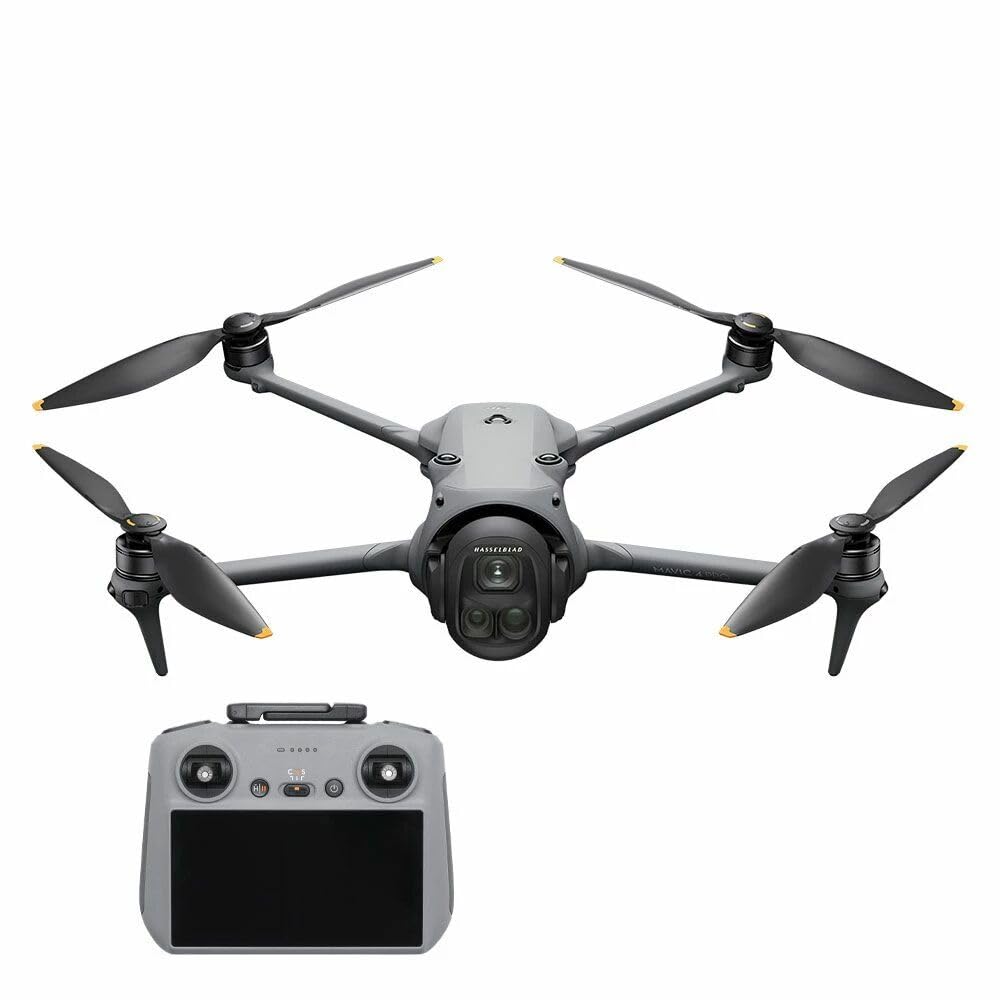
The DJI Mavic 4 Pro is not a light show drone per se, but it is the absolute best tool for *documenting* a light show. Its 100MP Hasselblad camera with a 4/3 CMOS sensor captures every pixel of light detail with stunning clarity. The tri-camera system allows for 24x zoom, letting the operator get tight shots of the swarm formations from a safe distance.
The 51-minute max flight time is exceptional for a prosumer drone, allowing for long recording sessions without battery swaps. The 0.1-Lux Nightscape Omnidirectional Obstacle Sensing is specifically designed for safe night flying, meaning it can follow the show without bumping into other drones or obstacles in the dark. The O4+ video transmission at 30km ensures you never lose the feed.
Setup is typical for the DJI ecosystem, requiring a download of the DJI Fly app (not on Google Play). The RC 2 controller is compact but powerful. The camera quality is genuinely breathtaking, making this the go-to choice for capturing high-quality sizzle reels of your drone light show productions. The price reflects its professional filmmaking pedigree.
Why it’s great
- Best-in-class camera for recording high-quality show footage
- 0.1-Lux night vision obstacle sensing for safe dark flying
- 30km video transmission ensures reliable feed over large show areas
Good to know
- Very expensive, overkill if only used as a light show drone
- Heavy at 2372 grams, requires FAA registration
- DJI Fly app not on Google Play
10. Potensic ATOM 4K GPS Drone

The Potensic ATOM is the best value proposition for someone starting their light show journey. At under 249g, it avoids FAA registration. The Fly More Combo comes with three batteries providing 96 minutes of total flight time, a parallel charging hub, and a 64GB micro SD card. This package is designed to keep you in the air for as long as possible, which is essential for practice and performance runs.
The 3-axis brushless gimbal and Sony CMOS sensor provide respectable 4K quality. For a light show, the GPS capabilities and auto-return feature are vital safety nets. The SurgeFly transmission system offers a 6km range, giving plenty of room to maneuver. It also includes visual tracking and QuickShots modes, which can add dynamic movement to a show without manual piloting.
Setup is straightforward. Users consistently praise the value, durability (surviving crashes well), and ease of use for beginners. The only downside is that the camera struggles in low light, and the range is realistically reliable to about 7000-8000 feet rather than the advertised 20k feet. As a first fleet unit, the ATOM offers incredible bang for the buck and a low barrier to entry.
Why it’s great
- Exceptional value with 3 batteries, a charging hub, and SD card
- Under 249g, no FAA registration needed for fleet units
- Durable and easy to fly, great for building show confidence
Good to know
- Camera quality degrades in low light conditions
- Real-world transmission range is less than advertised
11. Autel Robotics EVO II Dual 640T V3

The Autel EVO II Dual 640T V3 is an industrial-grade thermal imaging drone. It is not primarily a light show drone, but for high-stakes professional events, it is an invaluable safety asset. The thermal camera can be used to monitor equipment temperature backstage, scan the crowd for heat signatures in emergency scenarios, or even survey the show area for wildlife before launch.
The 8K RYYB visible camera is also incredibly detailed, allowing for high-resolution documentation. The SkyLink 2.0 transmission system delivers a 15km range on tri-band frequencies, ensuring rock-solid control. With three batteries in the bundle, it has the endurance to be on site for the entire event duration without needing to leave for power.
Setup is more complex than consumer drones, reflecting its pro-tier design. The smart controller V3 has a large, bright screen. Users love the thermal functionality and flight stability. However, it comes at a very high price and some users have reported the thermal camera failing after a year and warranty issues. For pure light show performance, it is overkill, but for integrated event safety, it is top-tier.
Why it’s great
- Thermal imaging provides a unique safety and surveillance layer for events
- 8K RYYB camera captures exceptional detail in daylight
- Tri-band SkyLink 2.0 transmission for interference-free control
Good to know
- Very high price point for a light-specific show tool
- Some reports of thermal camera failure after extended use
- Complex setup compared to consumer drones
FAQ
Can I use any drone for a light show?
What is the minimum number of drones I need for a show?
Do I need special software to program a drone light show?
How do weather conditions affect a drone light show?
Final Thoughts: The Verdict
For most users, the drones for light shows winner is the SKYROVER X1 because it blends 360° obstacle avoidance for safe swarming with a long transmission range and great value in its Fly More package. If you want to capture the show in stunning detail for social media, grab the DJI Avata 360. And for an entry-level fleet that is FAA-friendly and easy on the wallet, nothing beats the Potensic ATOM 4K for scaling up your practice operations.

Mo Maruf
I created WellFizz to bridge the gap between vague wellness advice and actionable solutions. My mission is simple: to decode the research and give you practical tools you can actually use.
Beyond the data, I am a passionate traveler. I believe that stepping away from the screen to explore new environments is essential for mental clarity and physical vitality.